Rare 1812 Half Dollar Errors (List & Pictures)
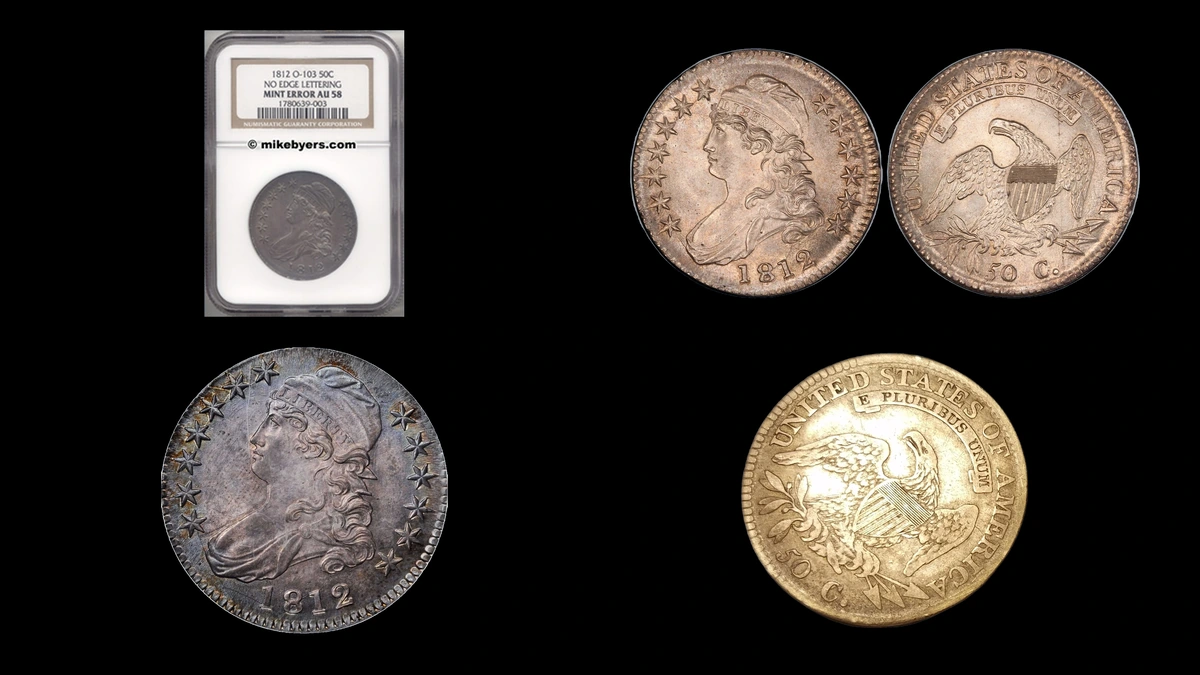
A plain edge deserves a closer look on an 1812 half dollar because these coins normally carry edge words. Other unusual features may be harder to separate when cracks, clashes, and a small strike shift share one coin.
The 1812 half dollar errors below have estimated comparisons of $150–$8,000. An MS63 with three of those features sold for $3,240 in March 2021.
Start at the edge, then compare the faces and their alignment.
| Observation | Category | Estimated range |
|---|---|---|
| Plain edge with wider margins | Missing edge lettering | $3,000–$8,000 around AU58 |
| Repeated front details | Double strike | $900–$1,800 around VF30 |
| Raised line from bust toward stars | Die crack | $150–$3,800 |
| Extra shapes below the scroll | Die clash | $200–$3,800 |
| Both designs displaced | Off-center strike | $600–$4,000 |
| Eagle tilted after a controlled flip | Rotated dies | $150–$700 when circulated |
A normal unworn half weighs 13.48 grams and measures about 32.5 millimeters across. The plain-edge coin described below is wider than normal, so its actual width must be recorded rather than assumed.
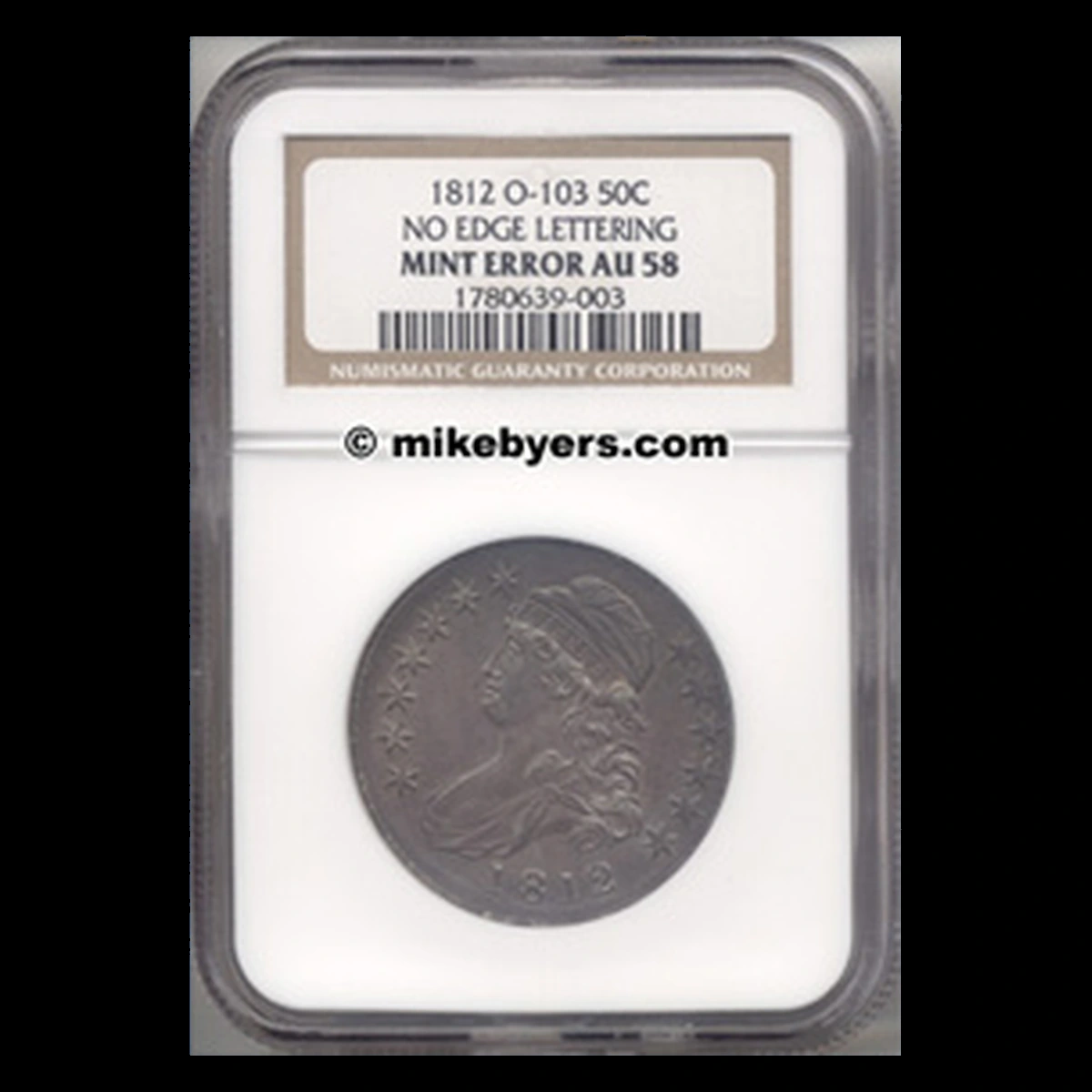
1. 1812 Half Dollar A Plain Edge and Wide Margins: Missing Edge Lettering Error
Henry Hilgard’s published examination describes a completely plain edge on an unusual O-103. The dealer identifies it as NGC AU58, meaning only slight wear.
The blank apparently missed the edge-lettering machine, which normally applied words while compressing its circumference. Without that preparation, it developed wider margins around the stars and reverse lettering.
The examination calls it broadstruck in appearance. This early production problem differs from the failed restraining ring behind a modern broadstrike.
How to Identify
Photograph a complete turn around the edge, looking for faint remaining letters, filing, or compressed metal. One smooth section does not establish a fully plain edge.
The published examination describes a rounded transition at the front edge and a sharper one at the back. Compare those profiles along with the wider margins on both faces.
Measure the actual width of a loose example and compare its weight with the normal standard. Original edge texture and matching profiles matter more than width alone.
What It’s Worth
Estimated range: $3,000–$8,000 for an authenticated lightly worn coin with both the omitted lettering and expanded form. The dealer marks the O-103 sold without publishing its selling price.
An ordinary PCGS AU58 brought $2,196 in February 2026. It supplies condition context rather than a plain-edge transaction.
The higher allowance estimates interest in the skipped production step. It is not a documented sale result for this specific coin.
2. 1812 Half Dollar A Second Front Impression: Double-Struck Obverse Error
Heritage identified a Large 8 half from the Merrill Collection as double struck on the front. Its PCGS VF30 grade indicates noticeable wear with useful detail remaining.
Movement before another blow can leave parts of the earlier impression beside the later one. Large 8 describes the date style rather than an additional error.
How to Identify
Study the full front and locate each repeated detail in a photograph. They should fit one coherent second impression, not a collection of unrelated nicks.
Use a magnifier to separate raised displaced shapes from flat shelves, scratches, or reflections. The source does not supply one fixed letter or a measured amount of shift to use for every example.
Examine the reverse too, while keeping the documented description limited to the front. Confirm the 1812 date, Large 8 style, and lettered edge.
What It’s Worth
Estimated range: $900–$1,800 for a similarly worn certified example with recognizable repeated front detail. The Merrill VF30 sold for $1,200 at Heritage in February 2018.
Clear separation and appealing surfaces make that comparison more useful. A vague second-looking edge without related details is not equivalent to the identified coin.
3. 1812 Half Dollar A Ridge from the Bust toward Two Stars: Die Crack Error
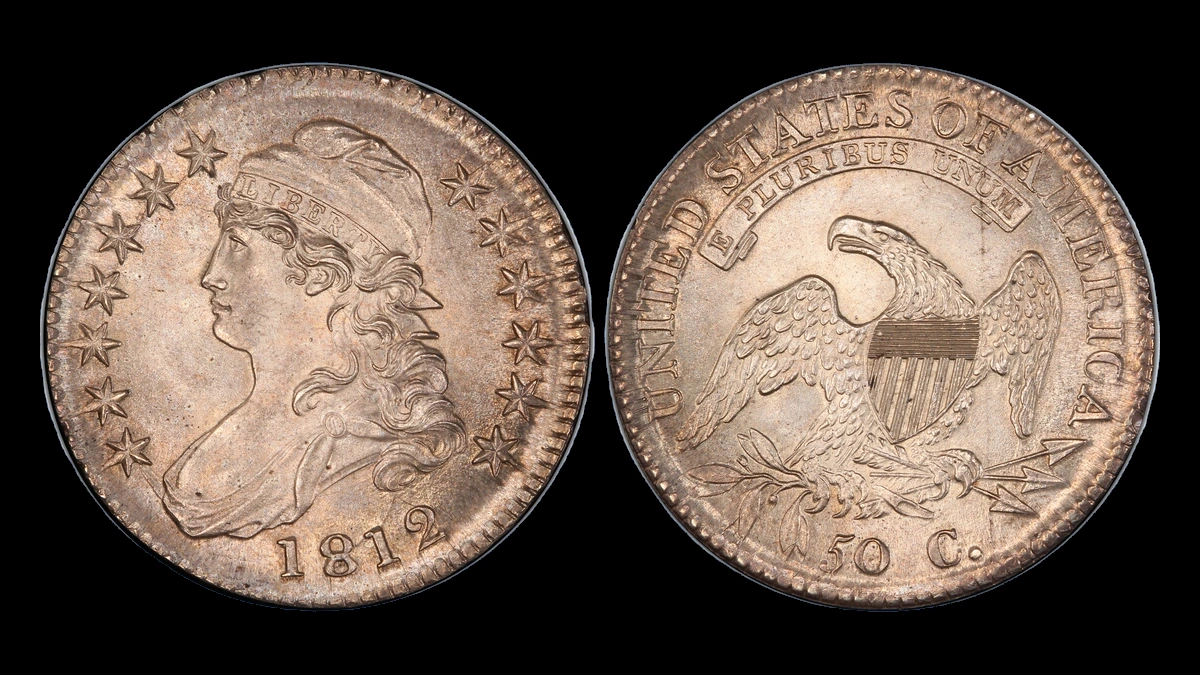
The later die stage called O-105a can show a raised line from Liberty’s bust tip toward stars one and two. It records a fracture in the steel stamping tool.
Silver entered that narrow opening on later strikes and left a ridge. The line could grow as the die continued to be used.
How to Identify
Trace the whole bust-to-stars route with a 10× magnifier. Use the nearby border and stars as landmarks rather than inspecting one isolated bright spot.
Move the light to opposite sides to judge whether the line stands above the metal. A scratch usually forms a cut and may show rough or dragged edges.
Compare both faces with an O-105a reference. A crack follows broken steel, while a clash should relate to a shape from the opposite design.
What It’s Worth
Estimated range: $150–$3,800 from ordinary circulated examples through a comparable MS63. The O-105a in that unworn grade sold for $3,240 in March 2021.
The sale coin also had clash marks and slight off-centering. Its price covers all those features and its condition together; it cannot be counted again as a separate payment for each mark.
4. 1812 Half Dollar Extra Shapes below the Scroll: Die Clash Error
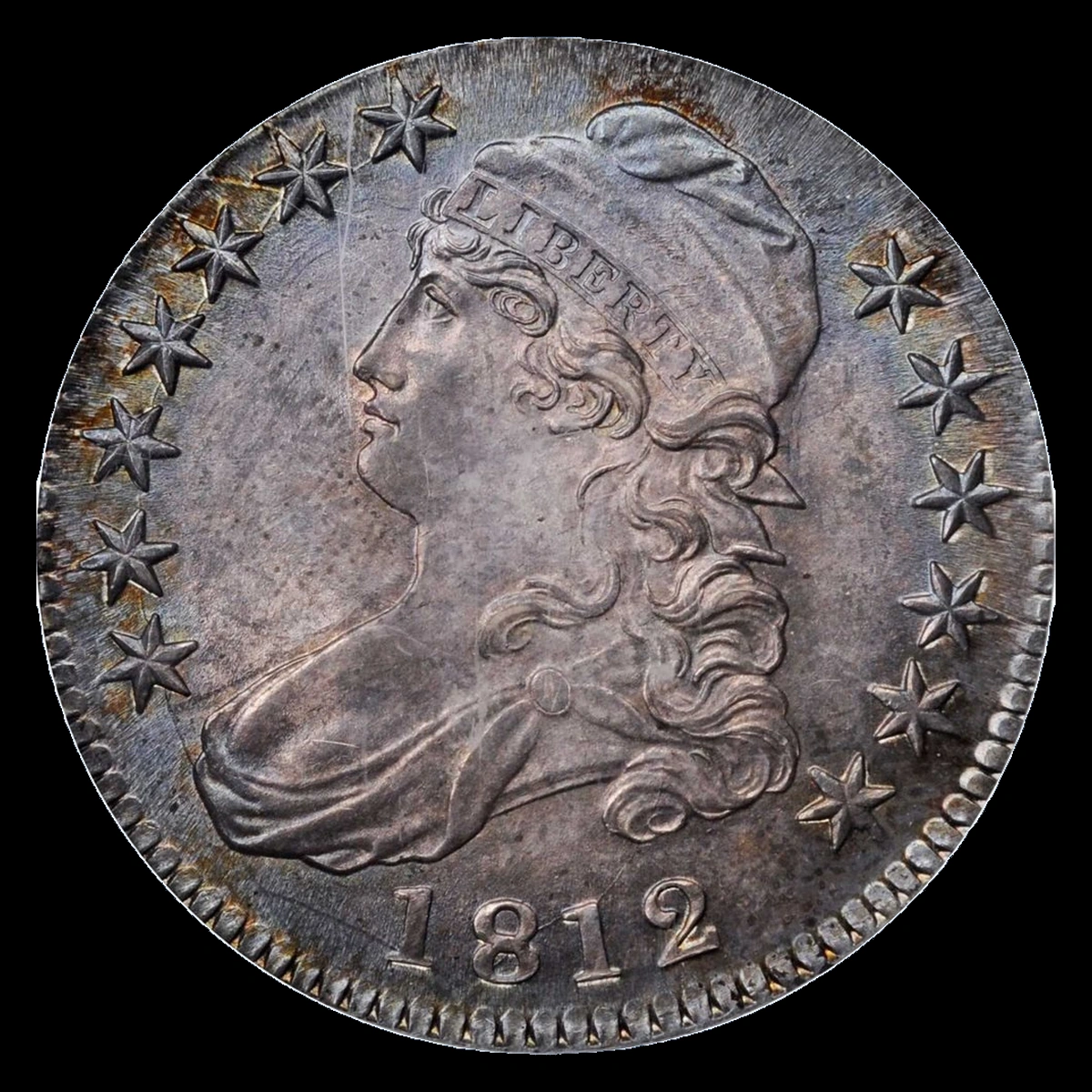
Clash traces on O-105a lie below the reverse scroll, particularly toward its right side. The MS63 sold in 2021 showed several sets of those marks.
The dies had contacted each other without a blank between them and picked up pieces of the opposite design. Repeated contact can leave a more complicated pattern.
How to Identify
Hold the reverse with the scroll level and inspect beneath it under side lighting. Compare the extra contours with Liberty’s design on the other face.
The shapes need to fit the way the opposing tools faced each other. A line of similar length, a scratch, or a die crack in the same area is not enough.
Keep a full reverse photograph beside the close-up. It preserves the scroll and eagle as landmarks for the transferred detail.
What It’s Worth
Estimated range: $200–$3,800 from circulated O-105a coins with clear clashes through a comparable MS63. The March 2021 result was $3,240.
This is the same transaction used for the cracks and slight displacement. Stronger transferred detail may interest specialists, but wear and surfaces still explain much of the price difference between examples.
5. 1812 Half Dollar A Small Displacement on Both Faces: Off-Center Strike Error
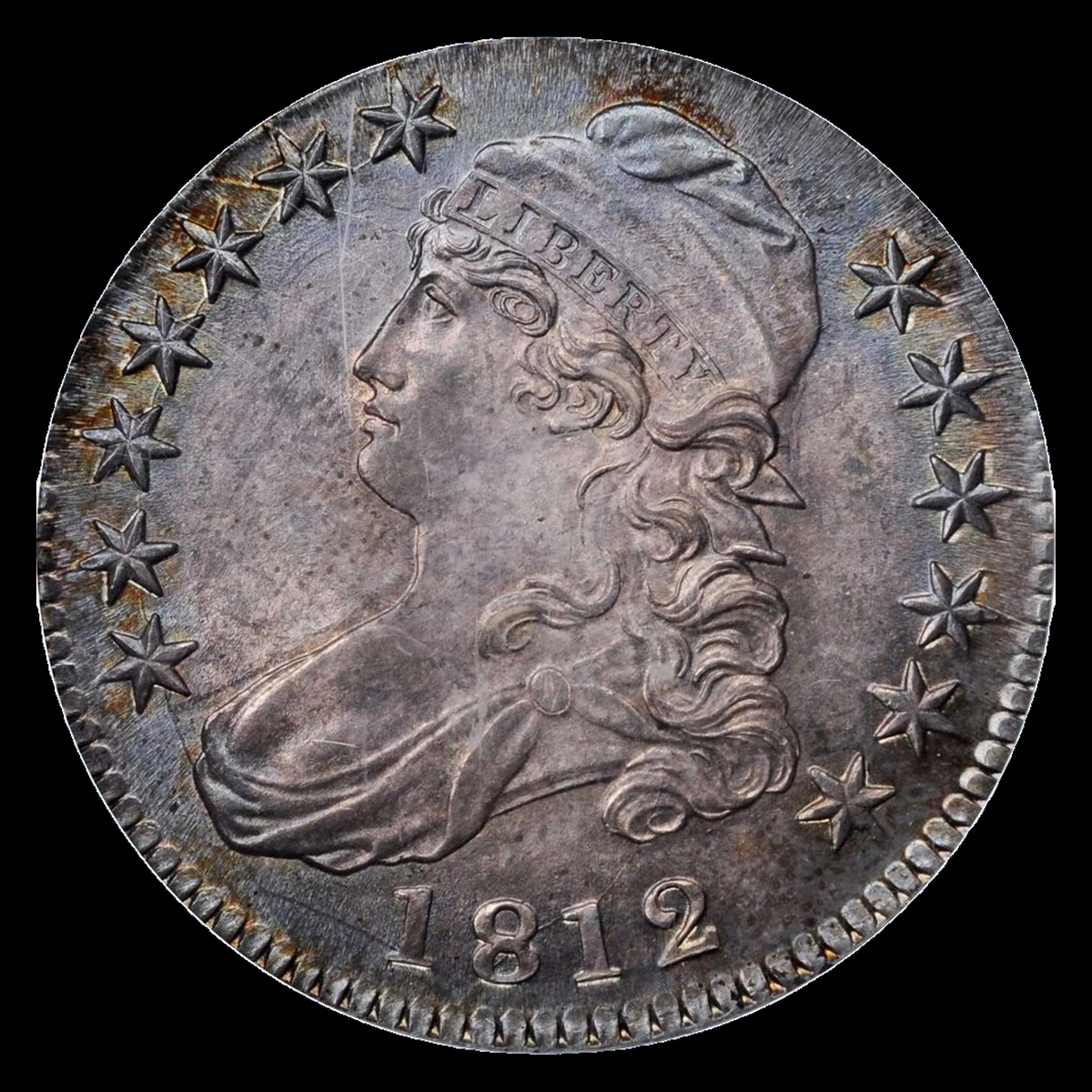
Two 1812 records describe different off-center coins: a Large 8 O-103 graded ANACS F15 and the much finer O-105a MS63. The second is described as only slightly off center.
Neither record supplies a measured percentage. Uneven borders on early half dollars also have other causes, so do not assign a percentage from a cropped rim photograph.
How to Identify
Show the full outline and locate where each design approaches the edge. Keep the coin’s orientation clear while turning it over.
Both faces should support a displaced blank. A centered reverse with only the front shifted may indicate a misaligned die instead.
Inspect the lettered edge for filing, compression, or trimming. Measurements support the examination but do not replace the paired design comparison.
What It’s Worth
Estimated range: $600–$4,000 for examples comparable to the documented worn and unworn coins. The ANACS F15 O-103 sold for $780 on July 29, 2020.
The separate MS63 O-105a brought $3,240 in March 2021. Its cracks and clashes remain part of that same whole-coin result.
This bracket does not price a hypothetical much more dramatic shift. A large blank crescent or very different preservation requires a closer comparison.
6. 1812 Half Dollar A Tilted Eagle after a Controlled Flip: Rotated Dies Error
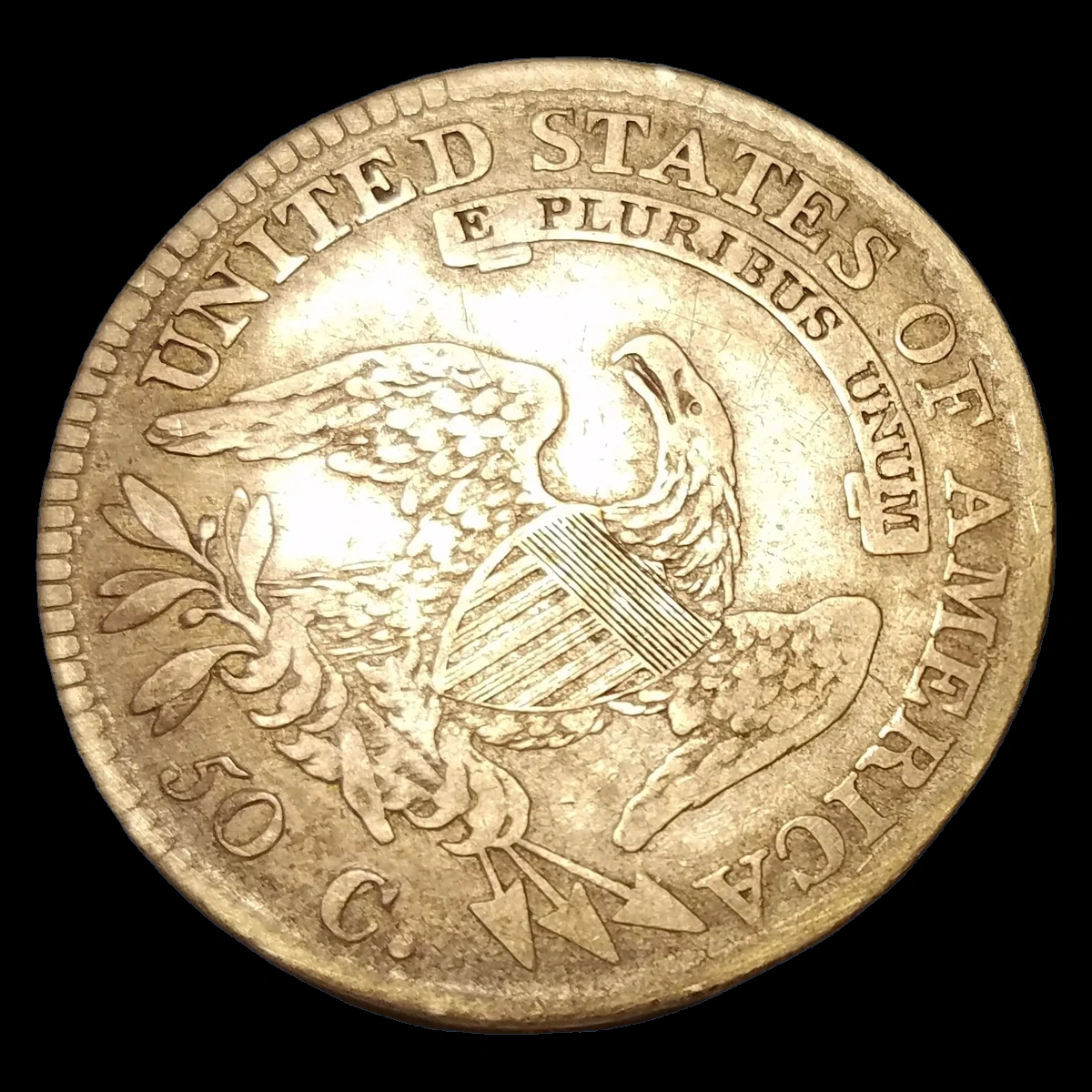
Separate examples show reverse rotations of about sixty degrees clockwise and nearly ninety degrees clockwise. The O-104 and O-104a labels identify related die pairings and stages.
A separate NGC VF Details offering gives no angle. The measured turns from other coins must not be assigned to it automatically.
How to Identify
Set Liberty upright beside a fixed line and flip top to bottom without twisting sideways. On a normal U.S. coin, the eagle should finish upright.
Repeat the motion and measure the resulting tilt using photographs whose orientation has been preserved. Two separately straightened auction images cannot demonstrate rotation.
Inspect the edge for a joining seam or other alteration. The direct evidence is the same repeatable reverse angle after each controlled flip.
What It’s Worth
Estimated range: $150–$700 for a circulated Very Fine example with a clear rotation. Surface problems tend to favor the lower part of the comparison.
The VF Details offering identifies rotation and a condition problem but has no publicly visible completed price. The ordinary $2,196 AU58 sale concerns a much better-preserved coin and is not a rotation-specific result.
Conclusion
A full edge sequence, linked face photographs, and a controlled flip answer different questions. Keep each test attached to the particular specimen instead of combining details from several examples.
The $150–$8,000 estimates cover different conditions and production problems. The MS63’s cracks, clashes, and slight off-centering share one price; the unusual plain edge points to a separate skipped preparation step.