Rare 1877 Half Dollar Errors (List & Pictures)
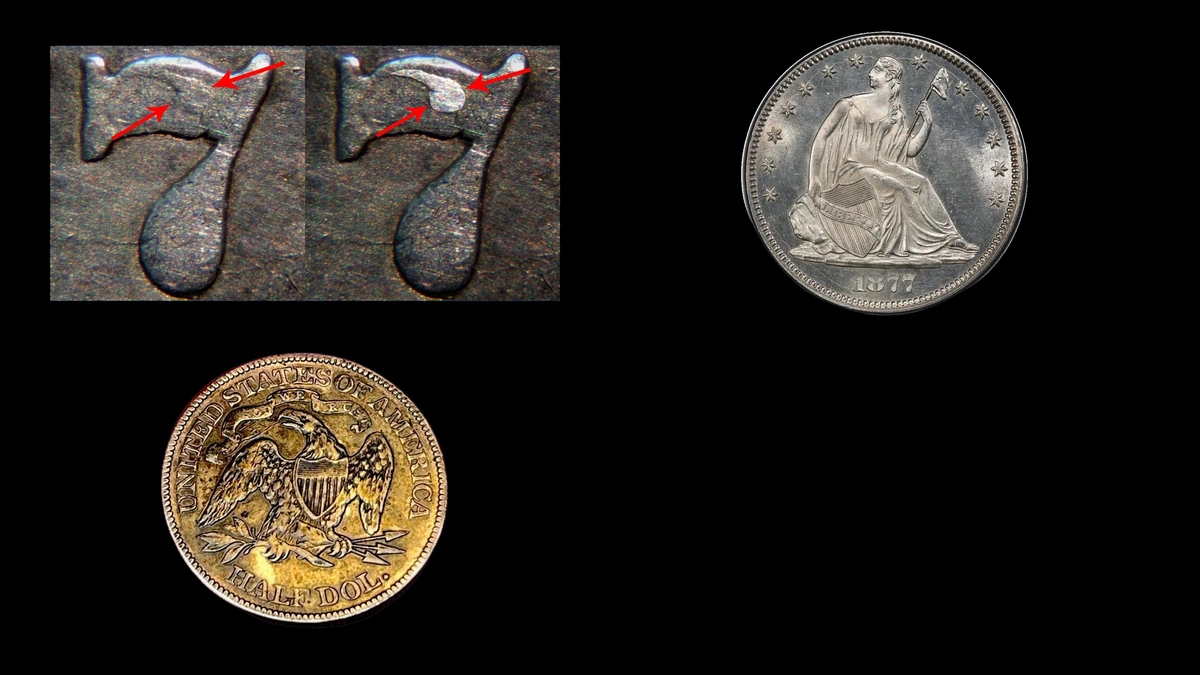
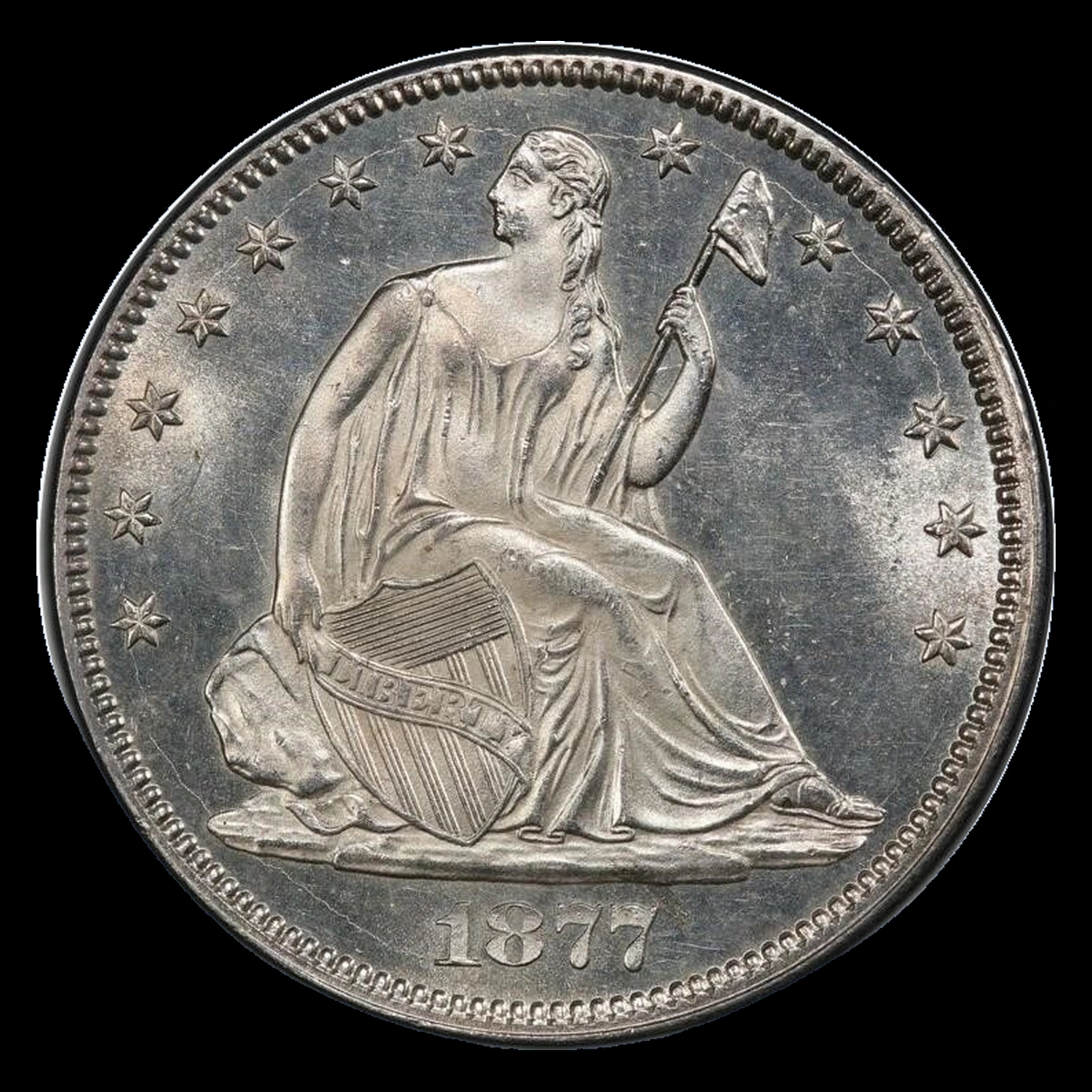
The final 7 is a good place to begin with 1877 Seated Liberty half dollar errors. One recognized Philadelphia variety has an unusual shape there and is traditionally called 1877/6.
A high-grade example sold for $22,325 in April 2021. The estimates and recorded sales in this guide span roughly $75–$22,325, covering small raised features as well as rare varieties and unusual strikes.
Inspect the date first, then the gown, reverse details, and edge.
| Clue | Type to compare | Estimated range or recorded upper sale |
|---|---|---|
| Unusual top of the last 7 | 1877/6 FS-301 | $1,000–$3,000 worn; exceptional sale $22,325 |
| Extra pieces at both 7 bases | Carson City repunched date | $350–$2,500 |
| Added curve in the gown | Reported die gouge | $100–$400 |
| Small raised bumps | Reported die chips | $75–$350 |
| Extra S or CC strokes | Repunched mintmark | $150–$2,000, depending on mint |
| Raised reverse lines | Die cracks | $250–$900 |
| Date fragments on the back | Die clash | $300–$1,500 |
| A sloping edge step | Tilted partial collar | $750–$3,500 |
| Design beside a blank crescent | Reported off-center strike | $3,000–$10,000 |
| Tilted back after a flip | Rotated dies | $150–$750 |
Normal halves began at 12.50 grams and about 30.6 mm across, with edge grooves. A 10× magnifier helps with date and mint-letter details; a scale and calipers provide supporting measurements for safely accessible coins.
1. 1877 Half Dollar The Top of the Final 7 Looks Different: 1877/6 FS-301 Error
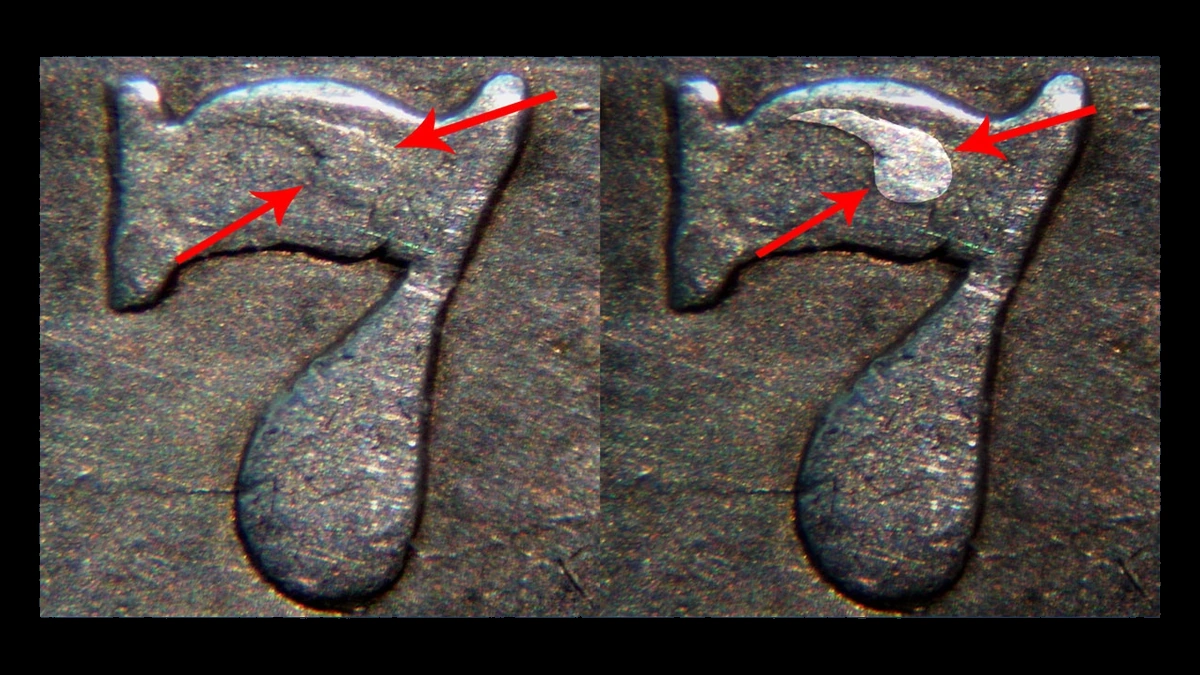
The traditional name treats the extra shape as part of a 6 beneath the final 7. PCGS recognizes coins with the matching feature as FS-301.
Specialists Wiley and Bugert questioned whether the old and new digit shapes actually fit that overdate explanation. The recognized variety and its market remain separate from the debate over its origin.
How to Identify
Focus on the upper part of the last 7 and compare its precise raised shape with a verified FS-301 photograph. Do not try to imagine a complete 6 from an unrelated curve.
The Philadelphia issue has no mint letter on the back. Check the whole date and nearby surface for damage or added cuts.
This feature differs from the extra pieces at the bases of both 7s on the Carson City variety below. Position matters as much as the date.
What It’s Worth
$1,000–$3,000 is the estimated range for worn through slightly worn examples. Recorded 2025 sales include $1,020 for XF40 and $2,280 for AU50.
An unworn MS64 reached $12,600 in 2025. The April 2021 record of $22,325 belongs to an MS64+ with CAC quality approval.
The higher sales reflect much better preservation and a matched recognized variety. They do not price every 1877 coin with a damaged last digit.
2. 1877 Half Dollar Earlier Pieces Show at Both 7 Bases: Repunched Date Error
The Carson City date was punched into its die in more than one position. Small parts of earlier 7 impressions survive beside the final numerals.
The study describes the repunching as toward the upper right. A cataloged MS62 example also has a Medium CC mintmark, a closed plant bud, and a clashed reverse.
How to Identify
Inspect the base of each 7 while keeping the entire date in view. Match the extra pieces to the expected numeral shapes rather than unrelated lines.
The Medium CC and closed-bud design on the back provide further reference points. A flat shelf caused during striking can shave a digit’s edge without leaving the same repunched pattern.
Check the clashed reverse separately. It records a different event from punching the date into the front die.
What It’s Worth
$350–$2,500 is the estimate from recognizable worn examples through selected lower-grade unworn coins. The MS62 cataloged piece had sold for $920 in February 2005 before another auction appearance in April 2019.
That $920 amount prices one coin with both the repunched date and clash. It should not be counted twice when those features are discussed separately.
3. 1877 Half Dollar An Extra Curve Runs through the Lower Gown: Reported Die Gouge Error
The reported 1877-S feature is an added raised curve in Liberty’s lower gown folds. A gouge in a die removes steel, allowing silver to fill the channel when coins are struck.
The resulting line rises from the coin. A scratch made afterward instead cuts into its surface.
How to Identify
Place a normal 1877-S image beside the candidate and compare the lower gown at the same size. The original folds already have curved lines.
Light the suspected extra curve from opposite sides to establish its height. A scratch with a pushed-up lip can look raised until you notice its cut center.
Check that the curve stays separate from normal artwork and is not residue sitting on top. Keep S and the date visible in the full views.
What It’s Worth
$100–$400 is the estimate for worn examples with a clear line from die damage. There is no supplied transaction for the specific reported curve.
An ordinary 1877-S in XF45 sold for $216 in December 2025. That worn but detailed coin gives a baseline for condition, not an error premium.
4. 1877 Half Dollar Small Bumps Interrupt the Design: Reported Die Chips Error
Reports place small 1877-S chips around the shield, gown folds, or eagle’s neck. They are localized raised features rather than large breaks reaching the rim.
When a small piece breaks from a die, metal fills the resulting hole during striking. That produces extra raised detail on the finished coin.
How to Identify
Inspect how the bump meets nearby design under a magnifier. It should join the struck surface naturally rather than attach along a seam.
Residue, corrosion, and metal pushed upward by an impact can imitate a chip. Turn the light and inspect the opposite face for related damage.
The reported areas are places to compare, not a requirement that one coin has all three. Record the actual location of the pictured bump.
What It’s Worth
$75–$350 is the estimate for worn 1877-S coins with small genuine chips. Much of the amount reflects the half dollar’s overall condition.
The $216 ordinary XF45 sale from December 2025 provides the same underlying-coin comparison used above. It does not document a chip on that auction coin.
5. 1877 Half Dollar Extra Mint-Letter Pieces Survive: Repunched S or CC Error
An earlier mintmark impression can remain beside the final letter when a punch moves between blows. The resulting extra strokes are built into the die.
Specialist work compares genuine 1877-S/S detail with flat strike doubling. Separately, an owner’s registry record reports repunching on a Medium CC coin.
How to Identify
Locate the mint letters below the eagle and decide which mint you are comparing. General letter thickness or a mintmark’s size alone does not prove repunching.
The specialist S/S study helps distinguish rounded letter remnants from low flat shelves. Use the Carson City example’s own pattern when checking CC.
A direction beside S cannot identify the separate CC report. Inspect the surrounding silver for scratches or mintmark alteration as well.
What It’s Worth
$150–$800 is the estimate for recognizable worn San Francisco examples. Carson City comparisons extend around $300–$2,000 through lower-grade unworn condition.
Ordinary XF45 sales were $216 for 1877-S and $552 for 1877-CC. Those are not repunched-mintmark sales, but they show why mint identity affects the whole-coin comparison.
6. 1877 Half Dollar Raised Lines Cross the Back Lettering: Die Cracks Error
HALF is a useful starting landmark on documented 1877-CC cracked dies. Reported routes extend through nearby lettering and toward olive leaves or arrowheads.
Silver entered narrow cracks in the die during striking and formed ridges on the coin. Different coins need not show every route, because die damage developed over time.
How to Identify
Begin with a visible line at HALF and trace it across letters and flat areas. Changing the light should reveal a physical ridge rather than just a dark streak.
Confirm CC below the eagle and compare the actual crack path. A bright lip beside a scratch is weaker evidence than a continuous raised route through the expected landmarks.
What It’s Worth
$250–$900 is the estimated whole-coin range for worn Carson City halves with modest clear cracks. A visible network may add interest without becoming a major error by itself.
Ordinary April 2025 sales include $264 in F15 and $552 in XF45. They compare condition rather than isolating a price for cracks.
7. 1877 Half Dollar Date Tops Appear on the Back: Die Clash Error
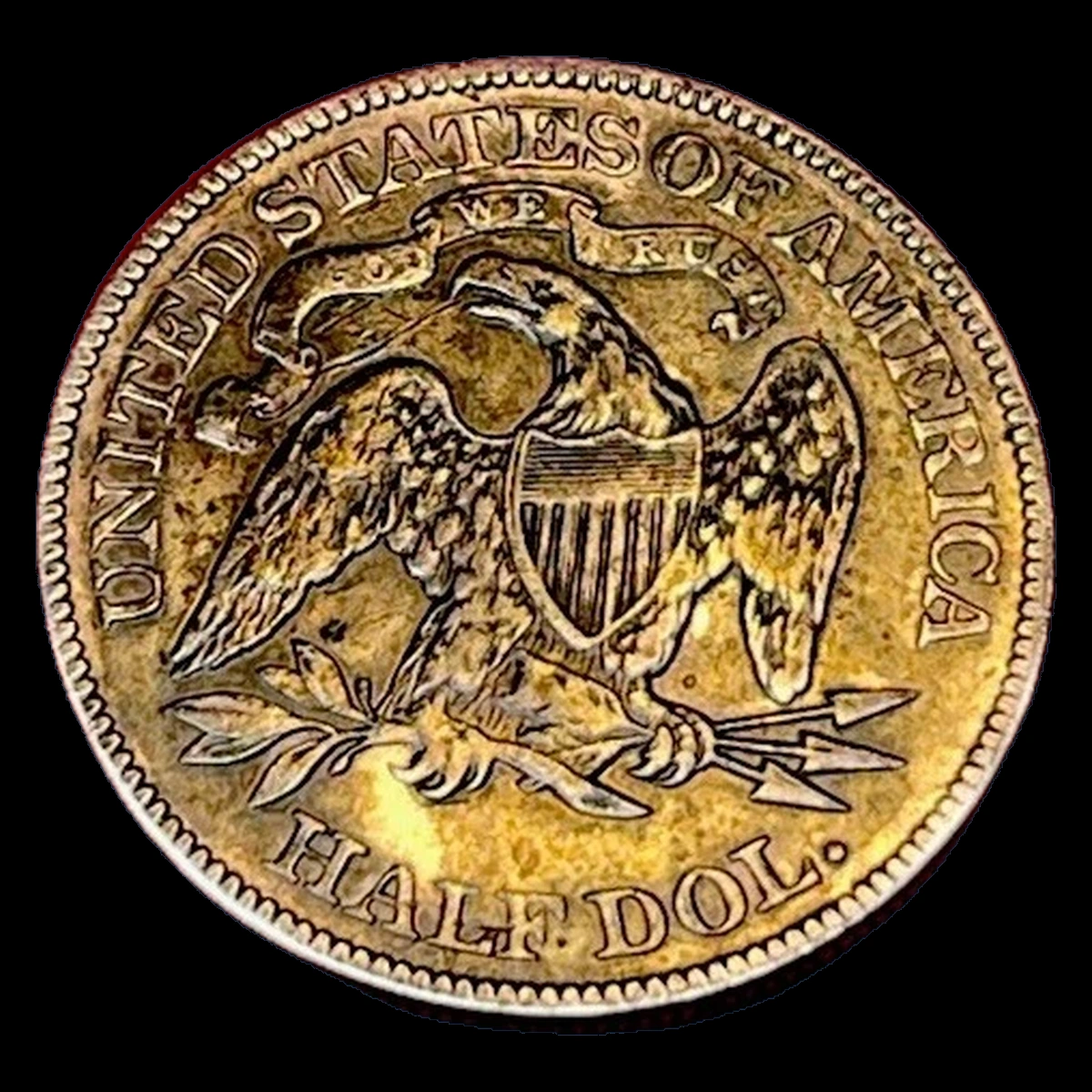
Carson City research describes transferred date fragments, including the tops of 87, on the reverse. The dies contacted each other without a blank between them and picked up pieces of the opposing picture.
The reverse on one repunched-date coin retained clash marks from an earlier pairing with another front die. Its current date and older transferred traces therefore need not come from the same pairing.
How to Identify
Compare the unusual reverse shapes with the documented date-top fragments. Keep their orientation and position visible within the full back design.
A recognizable numeral piece is stronger evidence than an isolated scratch. Identify those transferred shapes separately from repunching in the date on the front.
The clash does not require the finished coin to have received two strikes. The marked die could transfer the unwanted traces during an otherwise normal strike.
What It’s Worth
$300–$1,500 is the estimate for worn through lower-grade unworn examples. The MS62 coin with both date repunching and reverse clash had the $920 auction appearance in February 2005.
This is the same whole-coin result discussed in the date section. It does not establish separate amounts to add for the two features.
8. 1877 Half Dollar The Edge Step Slopes around the Coin: Tilted Partial Collar Error
A documented 1877-S shows what happens when a blank sits tilted in the retaining ring. Part of the metal stays restrained while another section spreads beyond the ring.
The result is a sloping change in edge height and groove coverage. The recorded example was graded MS63 and appeared at GreatCollections in March 2016.
How to Identify
Use an edge-on view and rotate the coin slowly. Follow the boundary between metal held by the ring and metal that spread beyond it.
The boundary should slope consistently around the edge rather than remain level. Changes in groove coverage and natural metal flow should support that tilt.
Check for filing, an attached band, or later bending. A face view alone cannot show the edge relationship clearly.
What It’s Worth
$750–$3,500 is the estimate for genuine examples in attractive worn through lower-grade unworn condition. The MS63 listing records the March 2016 sale without displaying its result.
A dealer’s $995 offer for an ordinary 1877-S MS62 supplies an underlying unworn-coin comparison. It is neither a partial-collar sale nor the price of the MS63 error.
9. 1877 Half Dollar A Bare Crescent Borders the Picture: Reported Off-Center Strike Error
A 1989 advertisement described an 1877 half as about 10% off center, called it MS63, and linked it to the Abe Kosoff estate. It gave no mint or grading-service certification.
The proposed mistake is a blank positioned away from the dies’ center. Some metal stays bare while part of the intended image falls beyond the opposite edge.
How to Identify
Read the surviving date and compare both complete faces. The bare area and missing design should agree with one displaced blank.
Inspect the unstruck crescent for later grinding or pressure. A single wide border is not enough to identify an off-center strike.
Record any actual mint letter instead of assuming Philadelphia. The advertiser’s MS63 description is not a modern certified grade.
What It’s Worth
$3,000–$10,000 is the estimate for a genuine well-preserved example with roughly 10% displacement. The advertisement’s $2,900 amount was an asking price, not a recorded sale.
A January 2025 specialist guide places Barber halves 10–15% off center near $4,000 in worn to slightly worn condition. That different-series guide comparison does not establish an 1877 result.
10. 1877 Half Dollar The Back Is Tilted after a Flip: Rotated Dies Error
A date-only report describes an 1877 half graded F12 with rotated dies. It gives neither the mint nor a measured angle.
Rotation changes how the two designs point relative to each other, even if both remain centered. It is tested by turning the coin over in a controlled way.
How to Identify
Hold Liberty upright and flip straight from top to bottom without twisting sideways. The reverse should finish upright on a normally aligned coin.
Repeat against a fixed vertical line and measure any consistent tilt. Separately straightened photographs cannot preserve the relationship needed for this test.
Check the edge for seams and record the coin’s mint. A tilt that changes between attempts may come from handling rather than die alignment.
What It’s Worth
$150–$750 is the estimated range for worn 1877 halves with obvious rotation. The report’s F12 grade alone cannot fix the price without the mint and angle.
The ordinary $264 Carson City F15 and $216 San Francisco XF45 sales provide underlying-coin context. Neither is a transaction for the reported rotated coin.
Conclusion
Date features can be very small but highly specific: the top of the last 7 identifies FS-301, while extra pieces at both 7 bases belong to the separate Carson City repunching. Matching the location avoids confusing the two.
For the larger striking errors, add edge views and controlled flips to your photographs. Keep each coin’s mint, grade, and evidence with its price, especially when an old advertisement or ordinary coin supplies the comparison.