Rare 1874 Half Dollar Errors (List & Pictures)
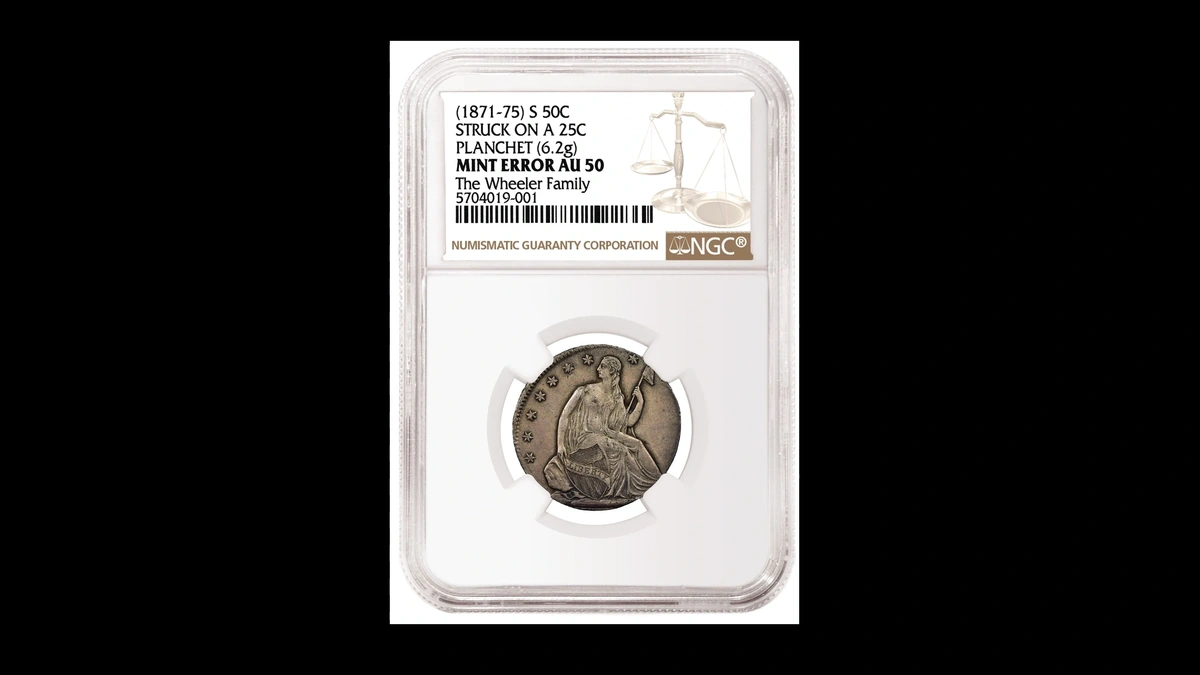
A date attribution is part of the evidence when examining 1874 half dollar errors. The standout quarter-blank coin sold for $51,754 in 2019, but its certified date range remains 1871–1875; the auction house proposed 1874.
Estimated whole-coin values across the categories below span $100–$65,000. Check the outline and surviving identity, then inspect the date arrows, mintmark, and reverse details with those different levels of evidence in mind.
| Observation | Relevant area | Category | Estimated value |
|---|---|---|---|
| Half-dollar design on smaller metal | Whole coin and surviving S | Quarter planchet; year unresolved | $35,000–$65,000 |
| A small missing edge section | Reported CC coin | Possible clip | $1,500–$8,000 if authenticated |
| Earlier arrow outlines | Philadelphia date arrows | Repunched arrows | $200–$2,500 |
| Possible numeral away from date | CC front; location unconfirmed | Misplaced-date inquiry | $1,500–$10,000 if authenticated |
| Part of a second S | San Francisco mintmark | Repunched mintmark | $150–$1,500 |
| Cowlick and raised tracks | CC eagle’s head and TES | Die gouge | $2,000–$18,000 |
| Raised route beside M | San Francisco AMERICA | Die crack | $100–$1,000 |
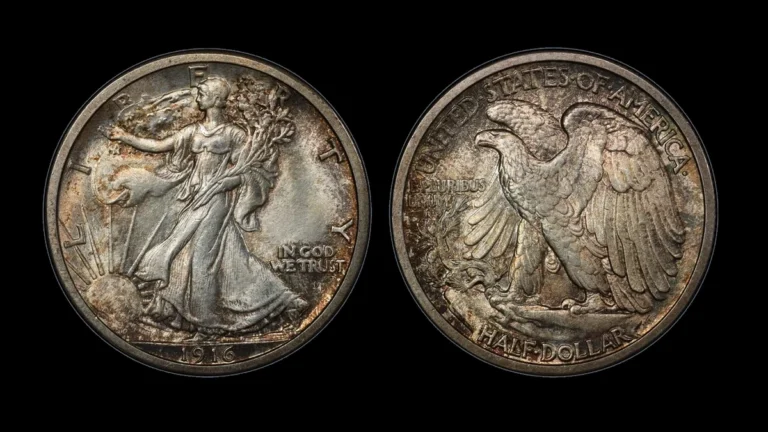
The normal 1874 half weighs 12.50 grams and measures about 30.6 mm across, with a grooved edge. S and CC below the eagle identify San Francisco and Carson City; Philadelphia used no mintmark.
1. 1874 Half Dollar A Cropped Design on Quarter-Sized Metal: Quarter-Planchet Error Candidate Error
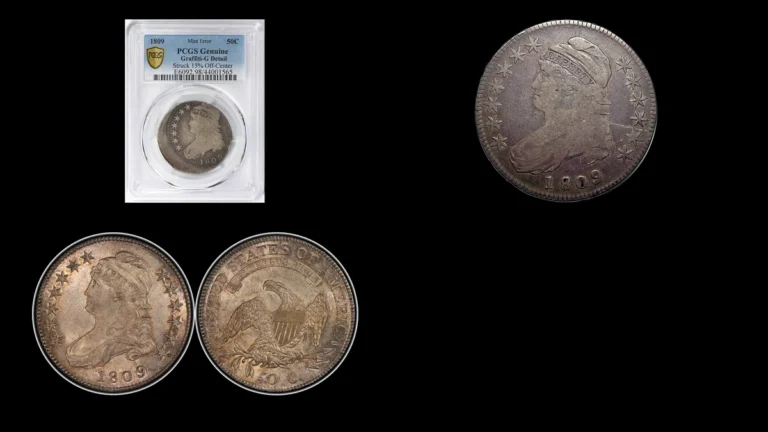
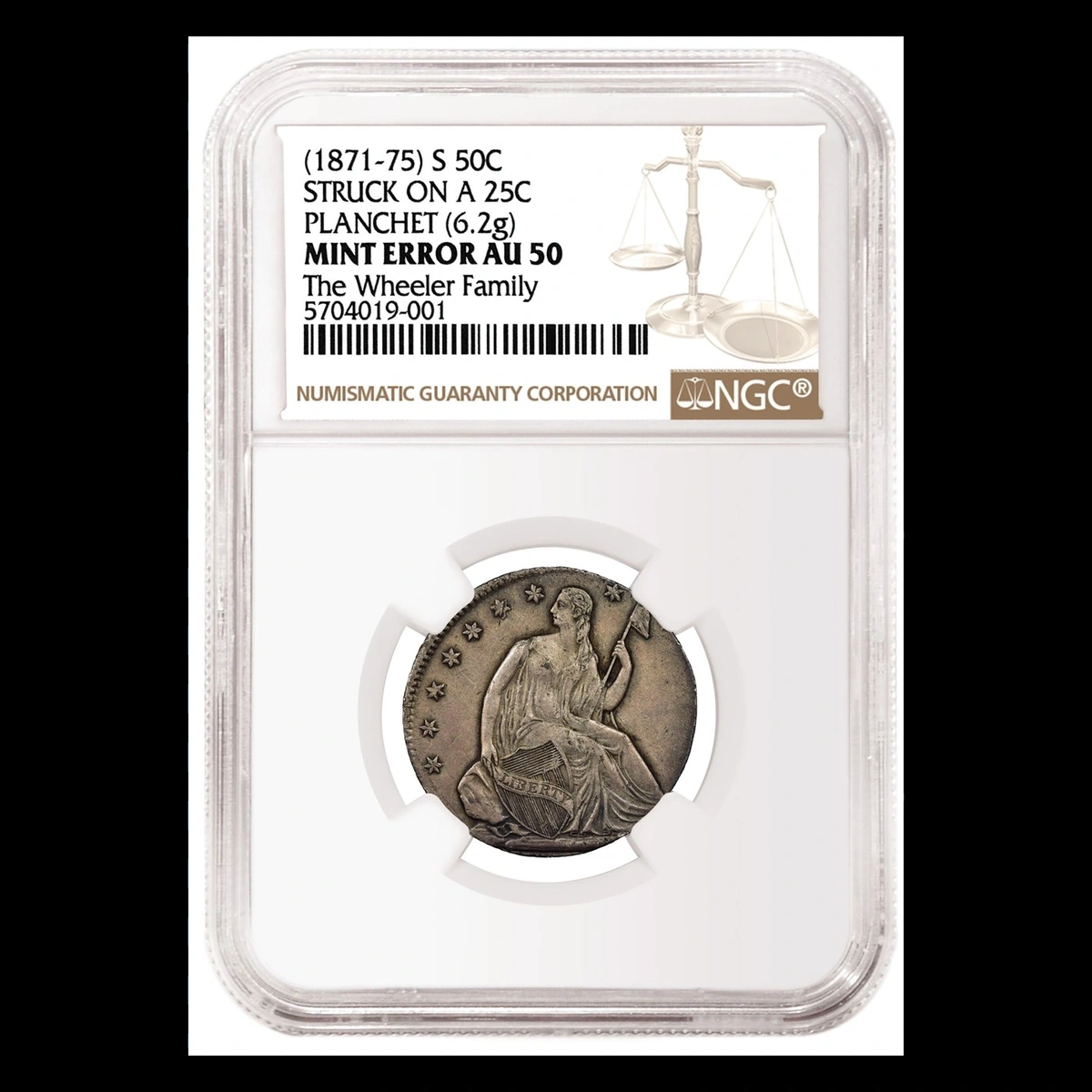
The Wheeler Family coin is a certified mint error, but its exact year is unresolved. NGC graded it AU50 and assigned 1871–1875, while GreatCollections proposed 1874 using die-related design clues.
A half-dollar die struck a silver quarter blank that could not contain the full design or date. The surviving S supports San Francisco identity without making a complete 1874 date appear.
How to Identify
Look for normal half-dollar proportions cut short by the smaller disc. A quarter’s properly scaled design and a trimmed finished half provide different explanations for small size.
Inspect the edge for cutting or machining and check the S. Quarter blanks across 1871–1875 start around 6.22–6.25 grams and 24.3 mm, compared with the half’s larger dimensions.
Natural striking surfaces and compatible measurements support the wrong blank. They do not independently resolve the exact date within the holder’s range.
What It’s Worth
Estimated range: $35,000–$65,000 for a comparable exceptional error. The nearly unworn Wheeler coin sold for $51,754 at GreatCollections on September 29, 2019, as reported by NGC.
The transaction concerns the certified 1871–1875 coin. It is not proof of a fully dated 1874-S example.
2. 1874 Half Dollar A Small Gap in the Edge: Possible Clipped Planchet Error
A collector discussion raised the possibility of a clip on an 1874-CC. It established neither authentication nor a measured gap size or location.
A genuine clip means part of the intended blank was already missing before striking. The adjacent design should form around that incomplete boundary.
How to Identify
Confirm both CC letters, then inspect the gap from the front, back, and edge. Sawing, filing, burrs, or freshly disturbed surfaces may indicate later removal.
Check where the remaining edge grooves meet the gap and look for opposite-rim weakness as supporting evidence. Weight loss must make sense for the missing metal, while an intact span may retain normal diameter.
What It’s Worth
Conditional estimate: $1,500–$8,000 for a worn 1874-CC with a small authenticated clip. The scarce date and mint account for much of this whole-coin bracket.
An ordinary PCGS VF30 1874-CC sold for $7,320 at Heritage in March 2026. That is a condition benchmark, not a clip sale or a confirmed premium for the discussion coin.
3. 1874 Half Dollar Smaller Shapes Beneath the Arrows: Repunched Arrows Error
Arrows beside an 1874 date are part of the normal design. The Philadelphia variety called large-over-small arrows retains earlier shapes beneath larger arrow impressions.
Workers applied larger punches after smaller arrows had already marked the die. Surviving earlier outlines appear where the shafts enter the heads and, in another described area, near the right arrow’s upper point.
How to Identify
Confirm Philadelphia, then inspect both shaft-to-head junctions and the upper point of the right arrow. Match recognizable small-arrow remnants with an attributed example.
A broad arrowhead alone does not demonstrate an earlier impression. Flat strike-related shelves or later cuts also need to be separated from the surviving punched shapes.
What It’s Worth
Estimated range: $200–$2,500 for worn examples. An ANACS AU55 large-over-small-arrows half brought $576 at Heritage in September 2018.
L&C Coins’ more recent offers of $1,500 for PCGS F12 and $2,500 for XF40 are asking prices. They must remain distinct from the older completed auction result.
4. 1874 Half Dollar A Suspected Digit Outside the Date: Misplaced-Date Inquiry Error
A specialist publication’s contents list names Paul Brill’s study of possible misplaced digits on an 1874-CC. The entry supplies neither a confirmed location nor the study’s conclusion.
A misplaced date would arise from a punch applied to the wrong part of the die. A surviving numeral fragment, rather than a merely suggestive line, is the evidence needed.
How to Identify
Photograph the entire front and keep each candidate mark in context with the normal date. The limited contents entry gives no basis for directing the search to one invented location.
Compare a suspected curve, upright, or base with actual numeral shapes. Match a repeated remnant on an identified die and distinguish it from cuts or random die damage.
What It’s Worth
Conditional estimate: $1,500–$10,000 for an authenticated worn Carson City example. The 1874-CC issue already has substantial value independent of any possible misplaced digit.
An 1857-O misplaced-date NGC MS65 brought $5,280 at Heritage in May 2025. That different date, mint, and exceptional unworn grade provide context, not a realized price for this unresolved attribution.
5. 1874 Half Dollar An Earlier Curve Beside the S: Repunched Mintmark Error
San Francisco used different normal S shapes, including taller narrow letters and smaller broad ones. A repunched mintmark instead needs evidence of an earlier S impression alongside the final letter.
A specialist dealer account reports double-punched examples but supplies no direction for the extra impression. Its position must come from a matching reference coin.
How to Identify
Select a normal S of the same punch style before comparing apparent thickness. Then inspect the complete letter for a recognizable extra curve or terminal.
Check neighboring metal for engraving or impact damage. The additional shape must reproduce part of another S, rather than simply make a broad letter look thicker.
What It’s Worth
Estimated range: $150–$1,500 for identified worn examples. No completed 1874-S repunched-mintmark sale is supplied.
An 1877-S AU50 offered by L&C Coins at $1,250 provides a different-year asking-price comparison. Clear earlier-letter evidence and original surfaces remain essential before using the estimate.
6. 1874 Half Dollar A Cowlick Behind the Eagle’s Eye: Die Gouge Error
The Carson City reference has an extra featherlike shape behind the eagle’s eye, below the first T in TRUST. Two groups of raised tracklike marks also cross TES in STATES.
The NGC MS62 description treats them as damage cut into the die, reproduced as raised metal on the coin. An object may have caused the tool damage, but its identity is not established.
How to Identify
Compare the cowlick and both TES track groups with the Stack’s Bowers catalog photographs. Their combined placement is more useful than an isolated raised patch.
Check that the marks stand above the surface and verify CC. A scratch added after striking cuts down into the silver, and appearance alone cannot name a screw or another particular damaging object.
What It’s Worth
Estimated range: $2,000–$18,000 from recognizable worn coins through ordinary unworn examples. The NGC MS62 brought $14,687.50 at Stack’s Bowers in 2013.
The cowlick and track groups are included in that one price. Scarce mint, preservation, and surfaces contribute alongside the identifying damage.
7. 1874 Half Dollar A Raised Route Beside AMERICA’s M: Die Crack Error
For the San Francisco crack described by Bill Bugert, locate the right side of M in AMERICA. The ridge runs from the rim beside the letter into the nearby flat field.
A split in the stamping tool filled with silver under pressure. The finished coin preserves the opening as added height.
How to Identify
Trace the complete rim-to-field route under changing light. A different line elsewhere near AMERICA does not establish the same die.
Confirm the S and distinguish the raised ridge from a scratch or an opening through the coin’s metal. The exact relation to M is the practical matching point.
What It’s Worth
Estimated range: $100–$1,000 for worn examples with the matching crack. Ordinary 1874-S guide comparisons rise through several hundred dollars as preservation improves.
Those guide figures are not transactions for this exact route. The bracket values the date, mint, condition, and visible feature together without inventing a separate auction premium.
Conclusion
Normal arrows and different normal S punches need no error label by themselves. Earlier outlines, matching gouge groups, or a genuine incomplete edge require more specific evidence.
The $100–$65,000 estimates cover distinct mints and conditions. Preserve the unresolved Carson City reports and the quarter-blank coin’s certified 1871–1875 range; the proposed 1874 attribution should never replace the date evidence on its label.