Rare 1942 Half Dollar Errors (List & Pictures)
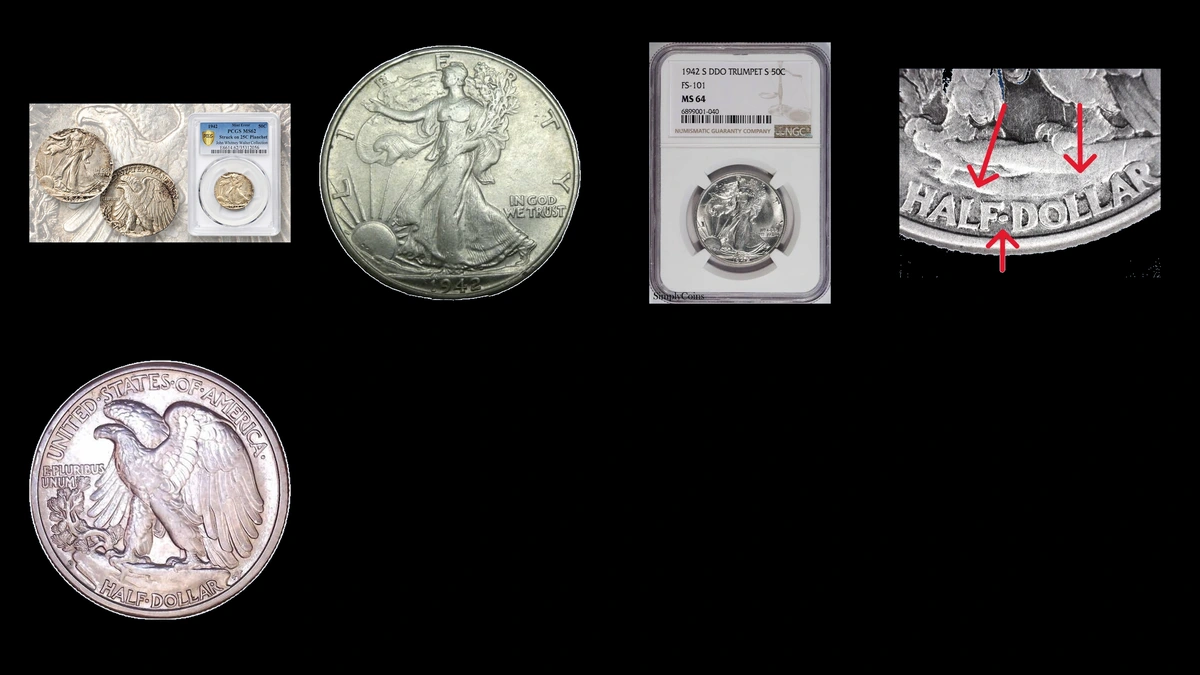
The “Headless Walker,” a 1942 half dollar struck on a quarter planchet, sold for $16,200 in 2018. Its small silver disc could not hold Liberty’s complete figure.
Estimated 1942 half dollar errors values span $60–$25,000. Work from the outline to the surface, then compare lettering and mintmarks under magnification.
A normal half dollar weighs 12.50 grams and measures 30.6 millimeters, with a reeded edge. Record both faces before deciding whether absent details were never struck or disappeared later.
| Visible clue | Possible error | Estimated whole-coin value |
|---|---|---|
| Small disc with missing outer design | Quarter planchet | $10,000–$25,000 |
| Gap at the rim | Clip | $60–$400 |
| Two positions of the design | Double strike | $400–$15,000 |
| Streaked hollow | Unresolved lamination or strike-through | $75–$600 for comparable surface defects |
| Extra front letter edges | Doubled die obverse | $70–$2,500 |
| Repeated reverse details | Doubled die reverse | $75–$6,000 |
| Extra D outline | Repunched mintmark | $75–$2,000 |
| Missing designer initials on a proof | No AW | $500–$3,000 |
1. 1942 Half Dollar Liberty’s Head Will Not Fit: Silver Quarter Planchet Error
The Headless Walker lacks Liberty’s head and outstretched hand, plus part of the eagle’s wing. A quarter planchet—the prepared silver blank for a quarter—entered the half-dollar press and received only the design that fit.
PCGS records the coin at 6.22 grams and MS62, an unworn grade with noticeable marks. All four date digits survived, but the mintmark area did not.
How to Identify
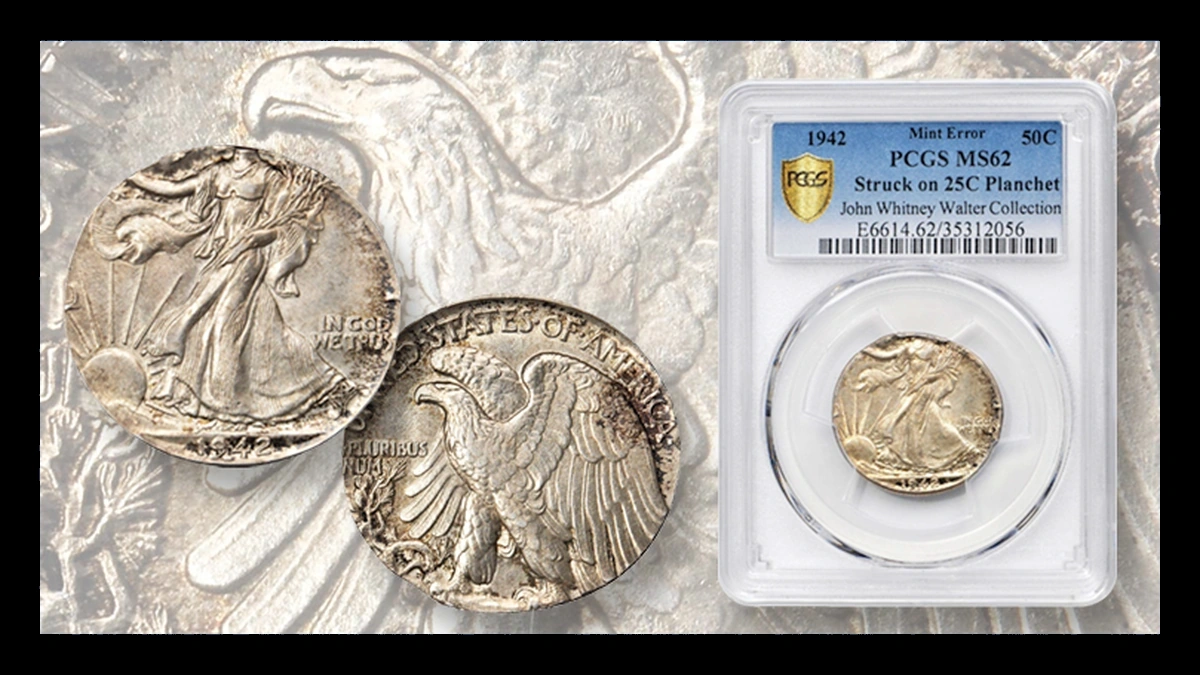
Weigh and measure a suspected small-planchet coin before relying on its appearance. A silver quarter blank starts at 6.25 grams and about 24.3 millimeters, although striking can spread it wider.
Study the edge where the design runs out of metal. Filing a normal half smaller leaves altered surfaces; an original undersized strike should show compatible metal flow and naturally truncated design.
The readable date establishes 1942, but the absent mintmark cannot establish Philadelphia when its location is missing. All three mints producing halves that year remain possible for this specimen.
What It’s Worth
The working estimate is $10,000–$25,000 for a genuine identifiable quarter-planchet error. Date visibility, preservation, and the surviving design affect the result.
The PCGS account records the Headless Walker’s $16,200 sale at Stack’s Bowers in 2018. An undated Walker on a quarter blank sold for $15,000 at Heritage in May 2022, but it cannot be counted as another confirmed 1942.
2. 1942 Half Dollar A Small Gap Interrupts the Round Edge: Rim Clip Error
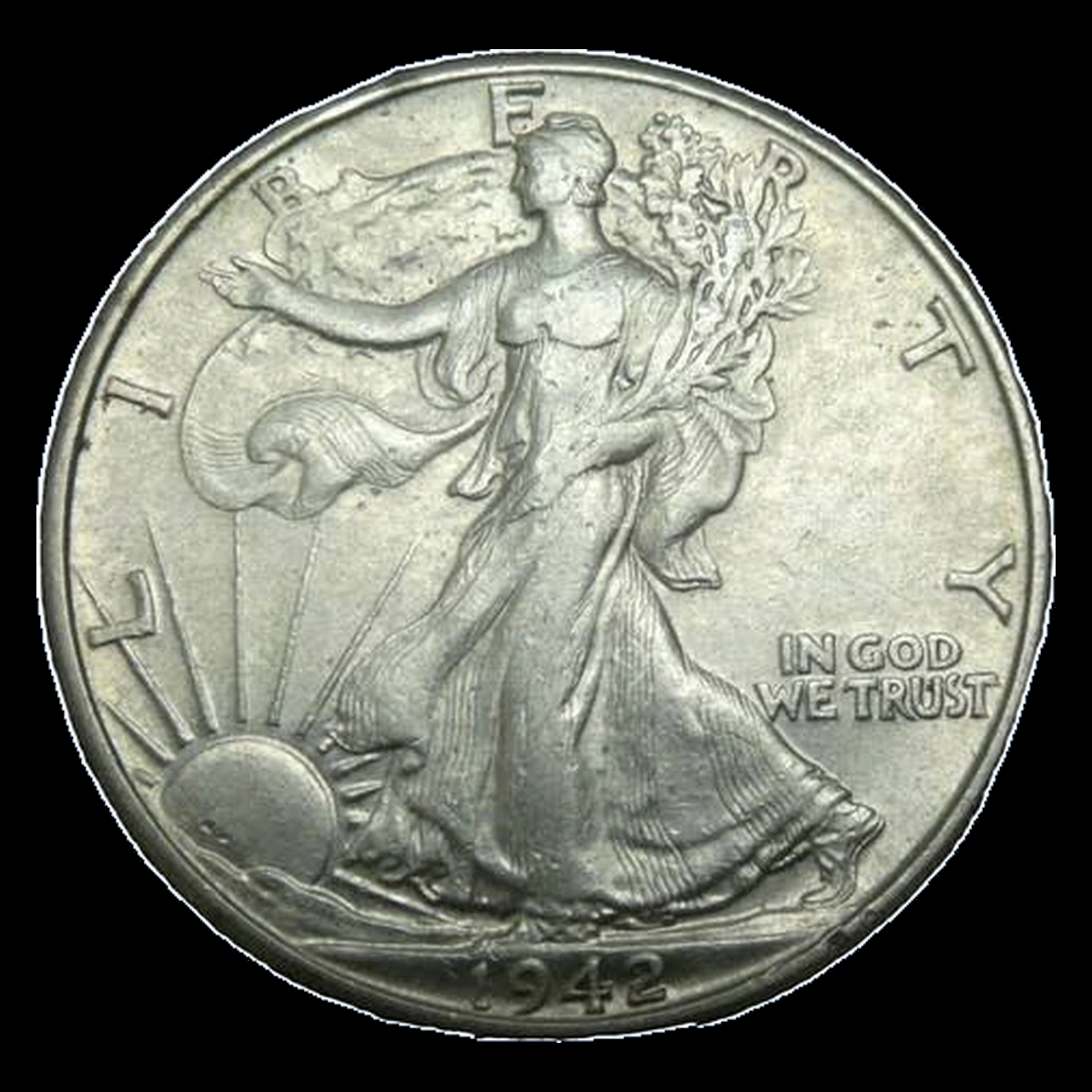
The known 1942-S rim-clip example was graded ANACS MS62. Unlike the quarter-planchet coin, it began as a half-dollar blank with only part of its edge missing.
The incomplete outline existed before striking. Metal and design therefore formed around the gap instead of being cut away from a finished coin.
How to Identify
Find the reverse S to establish San Francisco, then inspect both ends of the gap. Look for compatible transitions in the rim and nearby lettering rather than a sharply sliced design.
Turn the coin sideways to examine the edge grooves for saw marks, burrs, or pushed metal. Weakness directly opposite the clip may offer additional support.
A small clip may produce only a slight weight difference. Consider wear as well as missing metal, and measure across an intact part of the coin.
What It’s Worth
Genuine examples from worn through ordinary unworn condition have an estimated $60–$400 range. A clearer gap and better surfaces may attract more interest.
The 1942-S ANACS MS62 sold at Pristine Auction on May 19, 2025, for $81.90 including the buyer’s fee. Its winning bid was $70, so those two figures describe the same transaction at different stages.
3. 1942 Half Dollar Parts of Two Designs Remain: Double Strike Error
Not every double strike is dramatically displaced. One 1942 has close overlapping impressions, while another has a later strike far off center.
After the first design formed, another blow hit the same coin. Remaining within the collar, the ring that controls width during striking, can limit movement and leave a comparatively subtle overlap.
How to Identify
On the PCGS XF45 close-overlap example, search below the date for earlier digits and outward from STATES for repeated letters. A thin raised reverse edge extends roughly from seven to eleven o’clock.
These features must be read together as remnants of a second design position. The same coin’s front hollow is a separate observation and does not prove the extra strike.
For the more displaced example, follow the two impressions across both faces. Later front scratches affect condition but are not part of the minting sequence.
What It’s Worth
The estimated range is $400–$15,000, reflecting very different degrees of displacement and preservation. A large visible second impression can command a different price from a close overlap.
The XF45 close-overlap coin sold for $417.13 in June 2017. The coin with an off-center later impression sold for $8,400 in December 2022, with NGC describing unworn details but noting scratches rather than assigning a normal numerical grade.
An undated S-mint double strike brought $11,400 in August 2025. It is a series comparison whose year cannot be assumed to be 1942.
4. 1942 Half Dollar A Streaked Hollow Crosses the Front: Unresolved Surface Defect Error
The lower-front hollow on the close-overlap double strike has two possible explanations in the Heritage description. A layer may have separated from the alloy, or material caught during striking may have left a recessed impression.
The first is lamination; the second is a strike-through. The available description does not settle the cause, so neither should be promoted to a confirmed diagnosis.
How to Identify
Direct light across the hollow and inspect its boundary. A flaky seam can support separation within the metal, while a pressed texture may support an obstruction during striking.
Follow any split toward the edge without scraping the surface or lifting a flap. Missing metal can lower weight, while an impressed mark may leave it near normal.
Evaluate the hollow independently of the doubled date. A coin can carry more than one mint-made feature without each feature proving the cause of the other.
What It’s Worth
Comparable confirmed mint-made hollows on worn or ordinary unworn 1942 halves are estimated at $75–$600. Size, visibility, and the condition of the remaining surface matter.
The illustrated coin’s $417.13 June 2017 sale includes its double strike and cannot be divided into a separate hollow price. A 1947 lamination offered by Northeast Numismatics for $275 supplies only a different-year asking comparison.
5. 1942 Half Dollar The Motto and Date Have Repeated Edges: Doubled Die Obverse Error
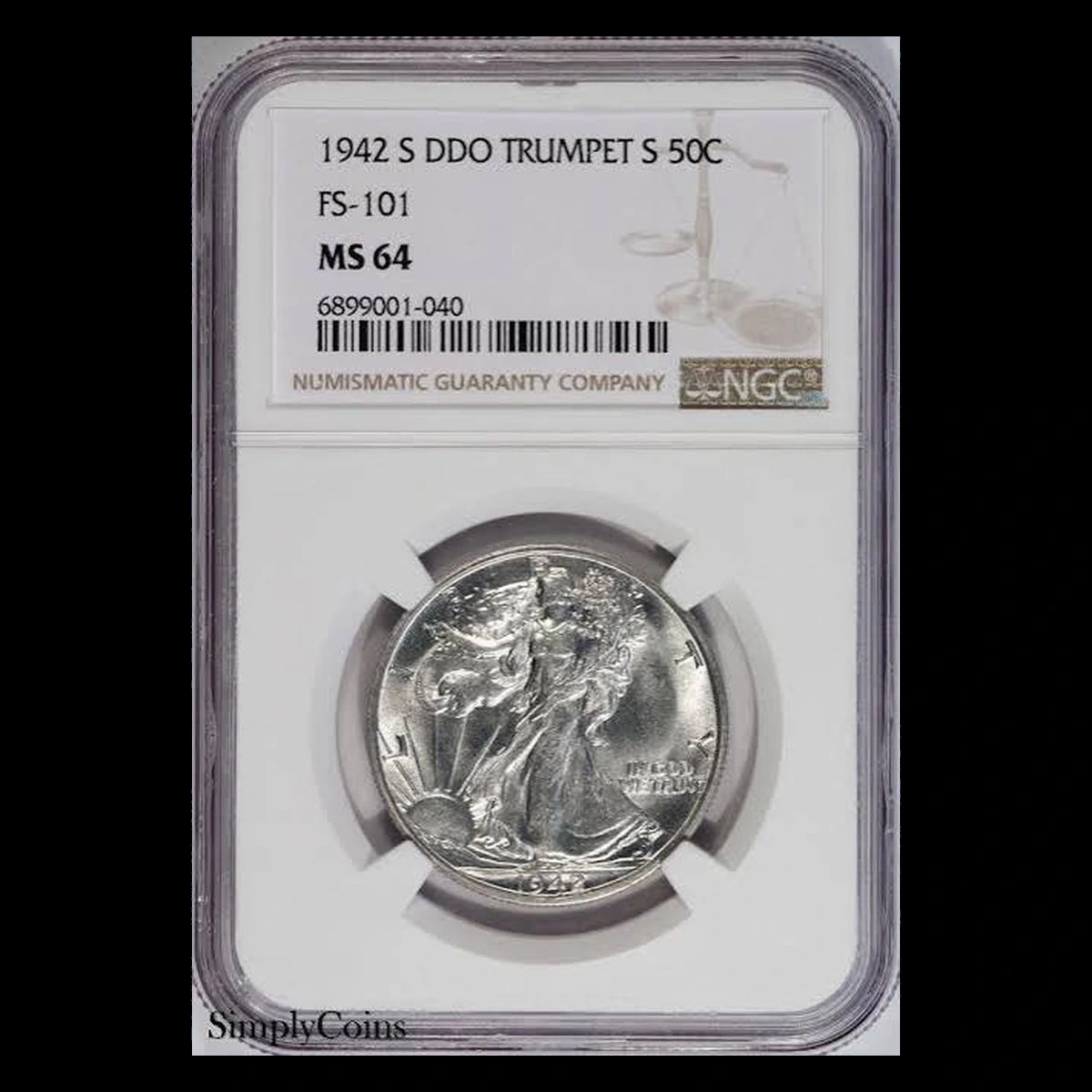
For the reported Philadelphia doubled obverse, examine IN GOD WE TRUST together with the date. Repeated design details originated in the die, the steel tool that stamped the front.
Every coin made from that die could receive the same pattern in one strike. This differs from the earlier-date remnants on the double-struck coin above.
How to Identify
Use a normal Philadelphia 1942 with similar wear as a comparison, then inspect the suspected pattern under moderate magnification. Match the location and shape of repetition in more than one area.
Rounded extra contours are more useful than a low, flat shelf caused by movement during striking. Change the light to separate relief from reflections.
Do not rely on one date digit, especially if additional traces lie far below the main date. Those may require a second-strike explanation rather than a doubled die.
What It’s Worth
Identified examples from worn through well-preserved unworn condition have an estimated $70–$2,500 range. The year guide places a Fine example, with substantial wear, around $70.
A 1939-D FS-101 graded NGC MS67+ sold for $2,160 at Stack’s Bowers in April 2025. That exceptional later comparison helps frame the upper estimate but is not a 1942 sale.
6. 1942 Half Dollar Reverse Letters and Feathers Show Extra Outlines: Doubled Die Reverse Error
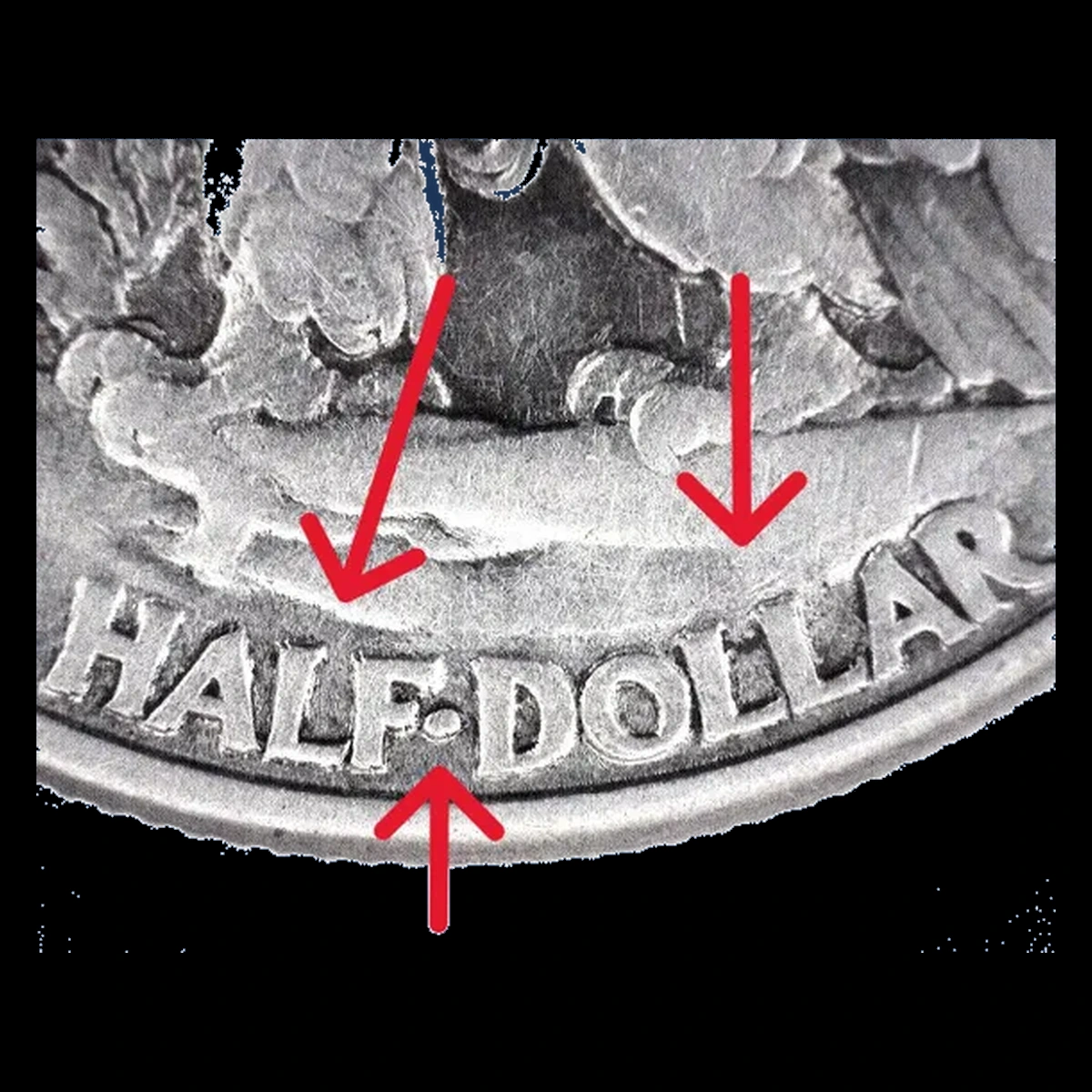
The reported ordinary Philadelphia reverse variety is inspected at HALF DOLLAR, UNITED STATES OF AMERICA, the tail feathers, and the pine branch. Its repeated shapes were already present in the reverse die.
The description does not assign the same variety to Denver, San Francisco, or proofs. Establish the issue before comparing small details.
How to Identify
Confirm the 1942 date and an intact, undamaged mintmark area with no letter. Then compare several letters for rounded extra edges or splits where strokes meet.
Extend the comparison to the tail and branch only where the same variety shows repetition. One flattened letter or random contact mark cannot establish a doubled reverse.
A full reverse image helps prevent normal eagle detail from being mistaken for unrelated extra lines. Keep suspected marks in their design context.
What It’s Worth
The estimated range is $75–$6,000, from worn coins through unusually well-preserved unworn examples. Attribution and condition must both support the comparison.
The 1942 guide lists $550 at MS65 and approximately $5,980 at MS67. Those are guide estimates, not documented completed sales or guaranteed purchase offers.
7. 1942 Half Dollar Another Curve Appears beside D: Repunched Mintmark Error
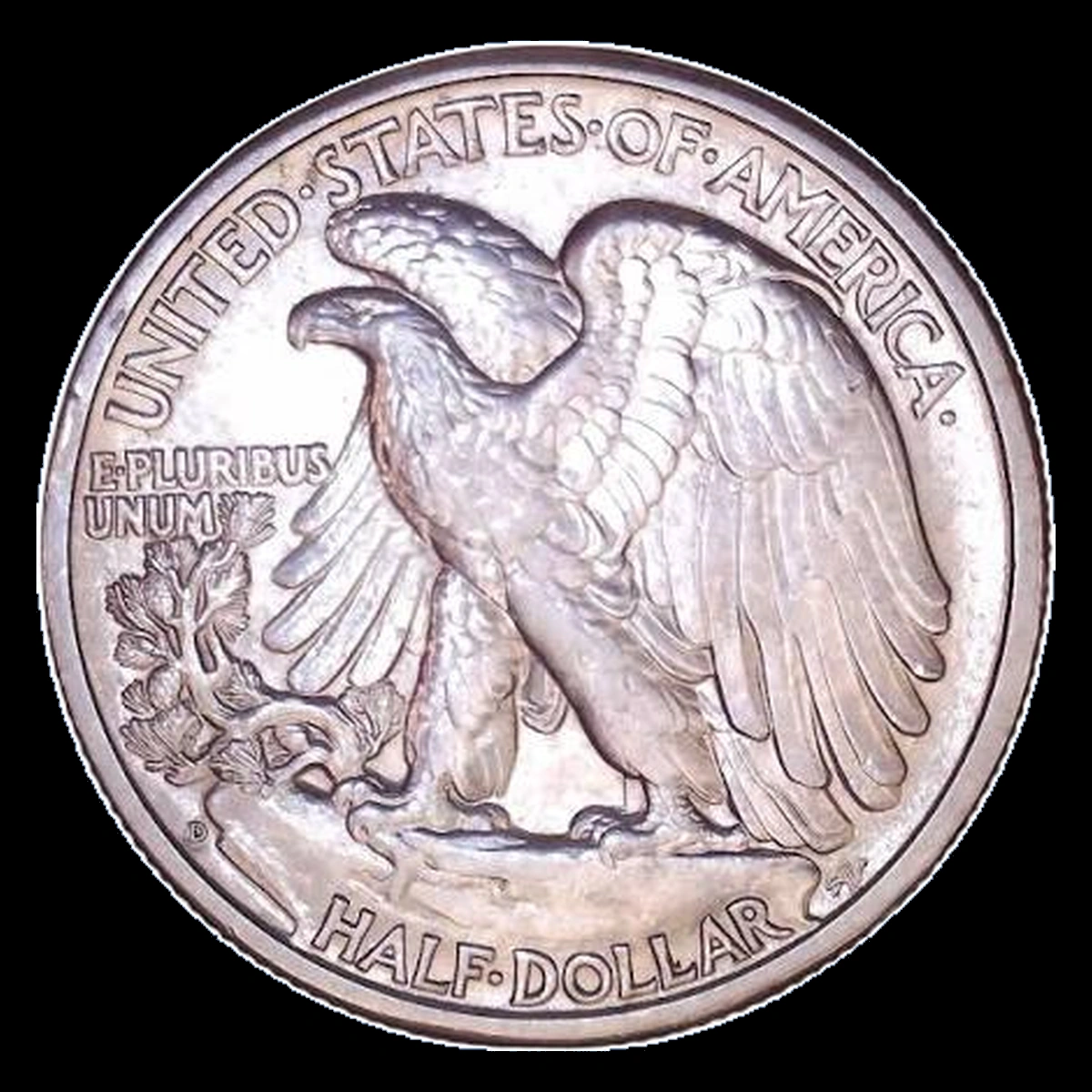
Mintmarks were entered by hand into dies, and a second placement could fail to cover the first. The remaining portion of the earlier D then appeared on coins struck with that die.
Reported 1942-D patterns include a lower D fragment and tilted outlines from different dies. Those separate patterns should not be required together on one coin.
How to Identify
Match the extra D’s shape to one entry in Wexler’s photographs. Keep the reverse upright so the direction of the fragment can be compared accurately.
For the first downward version, a thin raised line joining F in OF, the nearby dot, and the first A in AMERICA provides a supporting marker. It should not be transferred to every 1942-D/D.
Distinguish an earlier rounded letter fragment from a flat strike-related shelf or a dent. Overall thickness alone is not enough.
What It’s Worth
Identified repunched-D examples are estimated at $75–$2,000 from worn through attractive unworn grades. Clear repetition and a specific variety match help narrow the range.
A different-year 1939-D/D graded PCGS MS64+ sold at Kagin’s for $1,292.50 in September 2017. That is a historical comparison for repunching, not a recorded 1942-D transaction.
8. 1942 Half Dollar Designer Initials Are Absent on a Proof: Missing AW Error
Near the eagle’s tail, AW normally identifies designer Adolph Weinman. Some specially made 1942 collector proofs are known without these small initials.
Work on the die can remove such shallow details before striking. Wear, rubbing, or material covering the letters can produce a similar appearance on a finished coin and must be excluded.
How to Identify
Establish that the coin is a proof through its overall manufacture, including sharp detail and reflective fields. Shiny surfaces alone may result from cleaning.
Compare the expected initials’ position with an intact proof, then inspect surrounding detail for rubbing, scratches, or covering material. Leave the area untouched.
AW is not a mintmark, and Philadelphia proofs normally lack a mintmark. Clear nearby detail around an undisturbed empty initials area is the useful diagnostic combination.
What It’s Worth
Attractive certified examples have an estimated $500–$3,000 whole-coin range. Much of that value belongs to proof preservation rather than an automatic large missing-initials premium.
For comparison, 1941 No AW proofs graded NGC PR67 and PR67+ sold for $690 in March 2025 and $780 in July 2025, respectively. They are previous-year results, not transactions for the 1942 variety.
Conclusion
A 1942 error assessment improves when missing metal, repeated design, and missing tiny details are treated as separate questions. The small-planchet coin requires measurements, while doubled dies and repunched mintmarks require close pattern matches.
Keep the unresolved hollow unresolved unless better evidence identifies its cause. When a single coin combines features, compare its complete appearance and condition with a complete sale rather than adding separate estimated premiums.