Rare 1935 Half Dollar Errors (List & Pictures)
A peeling surface and two overlapping pictures are very different finds, even though both may be called errors. For 1935 Walking Liberty half dollar errors, the first step is deciding which feature you actually see.
The estimated ranges here span $50–$15,000. An undated Walking Liberty double strike brought $11,400 in August 2025, providing a same-series comparison rather than a dated 1935 record.
Check the surface and rim before moving to repeated details and the alignment of the two faces.
| Your coin shows | Start here | Estimated value |
|---|---|---|
| A thin peeling layer | Lamination | $50–$500 |
| A missing edge segment | Clipped blank | $75–$700 |
| A raised mound | Die break or cud | $50–$1,000 |
| Extra front letter outlines | Front doubled die | $75–$2,500 |
| Extra back details | Reverse doubled die | $75–$2,500 |
| A shifted picture beside bare metal | Off-center strike | $100–$12,000 |
| Two overlapping pictures | Double strike | $5,000–$15,000 |
| An eagle that stays tilted after a flip | Rotated dies | $60–$500 |
A normal Walking Liberty half started at 12.50 grams and about 30.6 mm across, with grooves around the edge. Weight and size help with some checks, but wear or later damage can also change them.
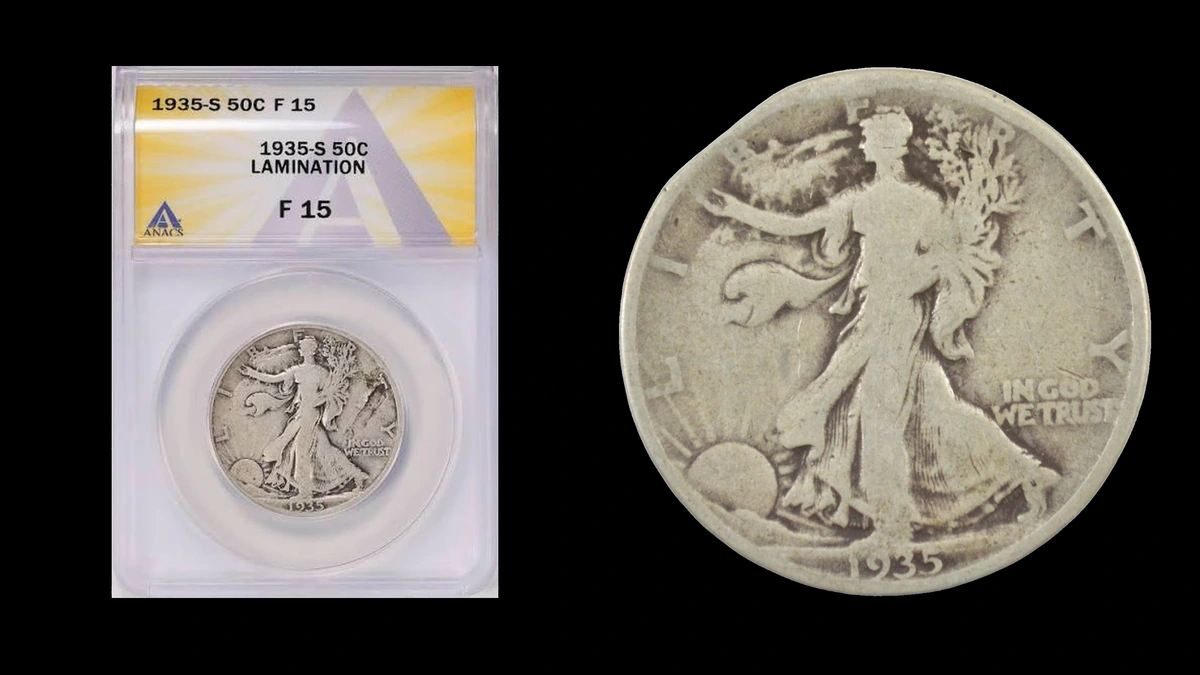
1. 1935 Half Dollar A Thin Layer Lifts from the Surface: Lamination Error
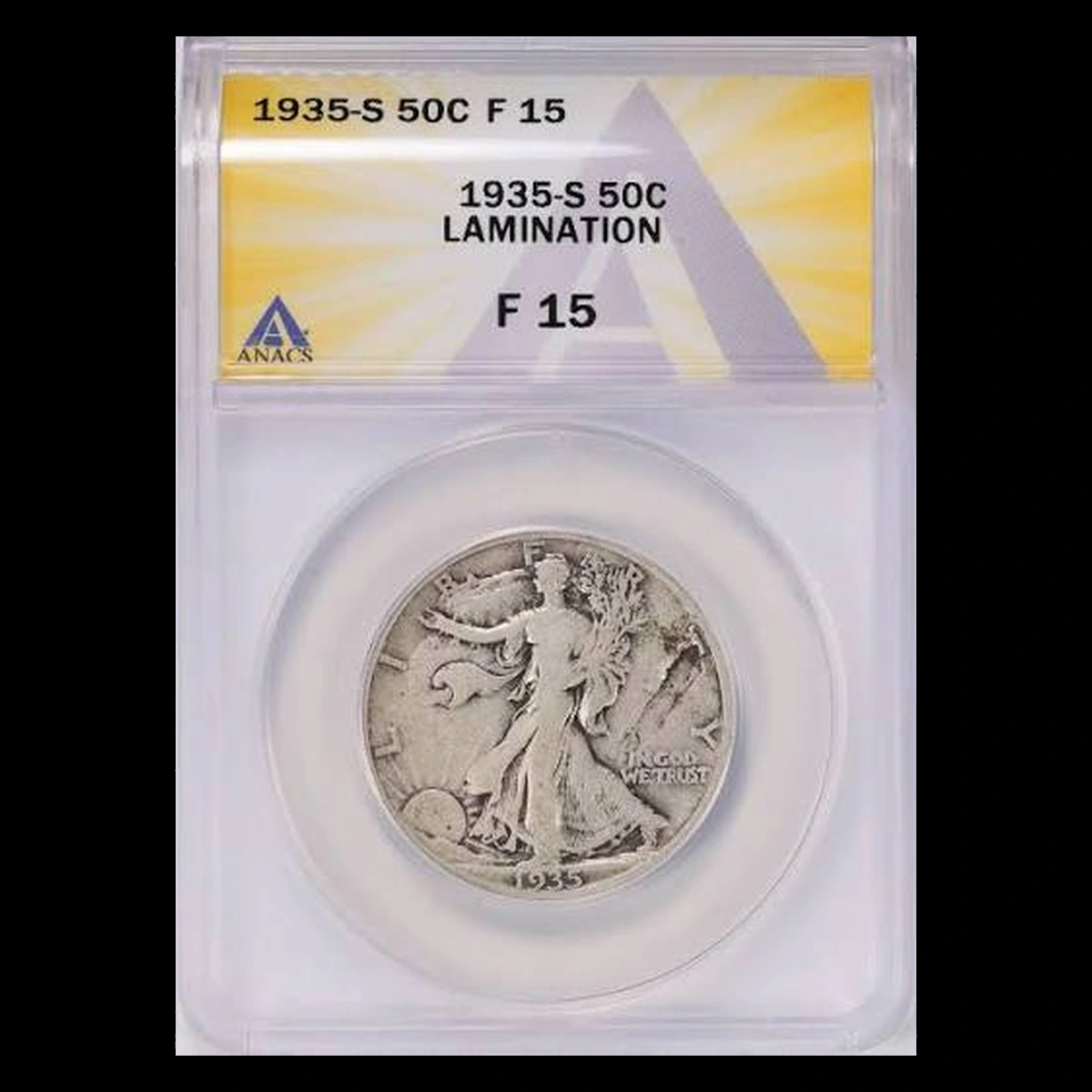
Lamination means a layer separates within the coin’s metal. A weakness in the strip used to make blanks can survive striking and later appear as a lifted flake or shallow missing patch.
The 1935 report does not name a mint or exact location. Look at the actual boundary of the separation rather than expecting one fixed shape.
How to Identify
Leave any attached flake in place. Side lighting and a magnifier can reveal its thin edge without pressing or lifting it.
A peeling sheet should join the original metal along a natural boundary. Scraping can push metal up around a gouge, while corrosion often leaves separate rough pits.
A small missing layer may change the weight only slightly. A low reading alone cannot prove lamination.
What It’s Worth
$50–$500 is the rounded estimate for ordinary circulated through modest unworn examples. The 1935 guide gives approximately $48–$500 and above, rather than a named auction sale.
A clear attached layer may attract error collectors. A broad missing patch can also reduce the appeal of an otherwise attractive coin, so more surface loss does not always mean more value.
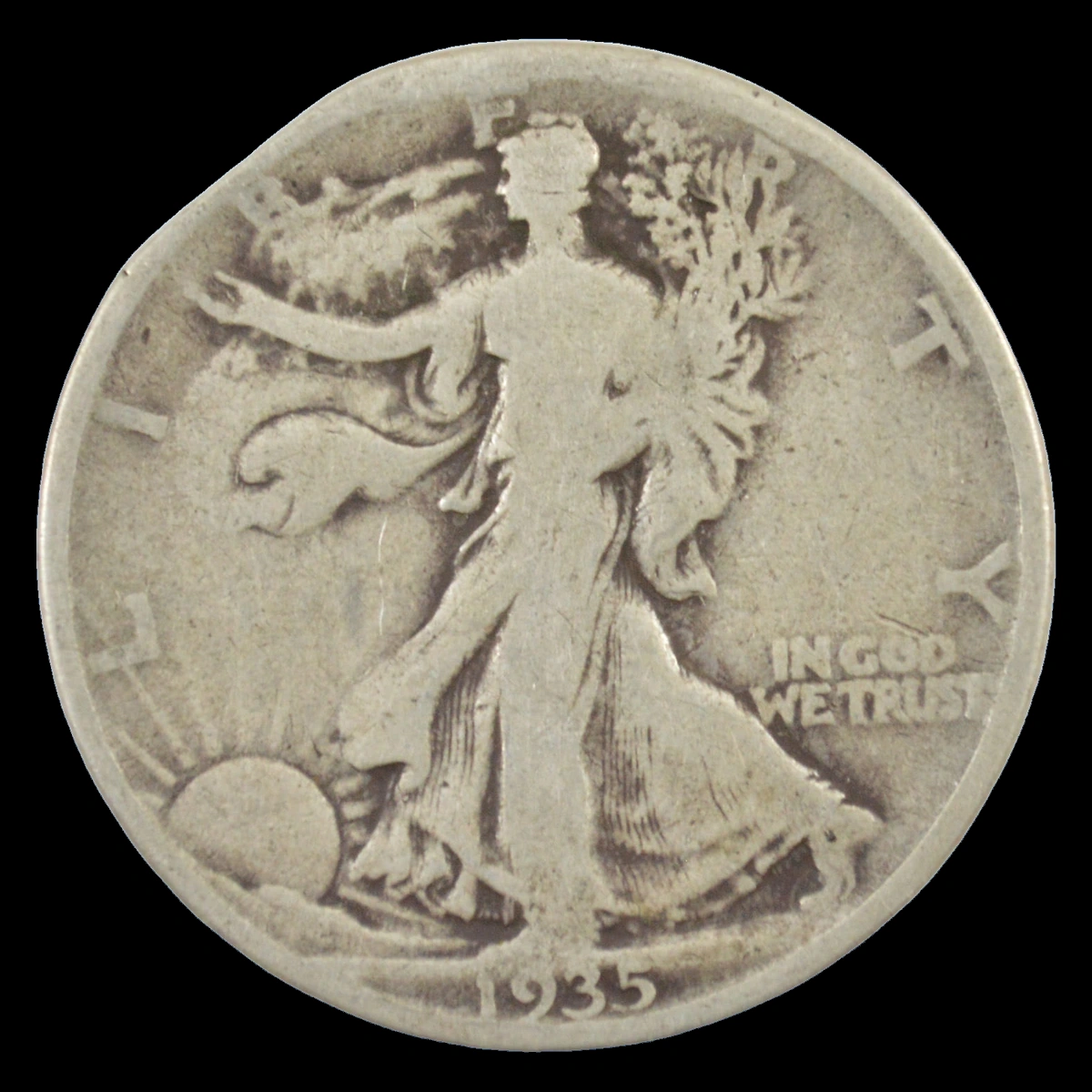
2. 1935 Half Dollar Part of the Edge Is Missing: Clipped Blank Error
A clip begins before the coin receives its design. The blank-cutting punch may overlap an earlier hole or meet the edge of the metal strip.
That can leave a curved, straighter, or irregular missing segment. The year report does not specify one shape or position for a recorded 1935 example.
How to Identify
Examine both ends of the gap where normal edge grooves meet the missing area. File tracks or sharp cuts through a finished design point toward later damage.
Check how the struck metal flows beside the gap and whether the opposite rim is weak. The opposite-rim clue can vary, so use it with the boundary evidence.
An old cut can darken to the same color as the rest of the coin. Matching color does not establish a mint-made clip.
What It’s Worth
$75–$700 is the guide-based estimate, from small circulated clips to larger, attractive examples. The missing area and the condition of the remaining coin both matter.
A 1942-S rim clip graded MS62 sold for $81.90 including the buyer’s premium in May 2025. That different-year sale concerns a small defect on an unworn coin, not a 1935 record.
3. 1935 Half Dollar A Raised Mound Replaces Detail: Die Break or Cud Error
A piece breaking from a die leaves a hole for coin metal to fill. The result is a raised area where normal design detail is missing.
An interior lump can be a chip or die break; a mass that joins the rim is called a cud. The 1935 list reports both forms without fixing a location on a particular coin.
How to Identify
Look around the entire lump under side lighting. A seam can reveal added solder, and smeared metal can indicate an impact.
If the feature is called a cud, follow its connection into the rim. A separate bump merely close to the edge does not meet that description.
Weak detail directly opposite the lump can offer supporting evidence. Judge it together with the raised area rather than on its own.
What It’s Worth
$50–$1,000 is the estimated range for circulated and ordinary unworn examples. Small chips fit near the lower end; large, confirmed rim cuds can draw more attention.
A 1976-D Kennedy with a reverse die break sold for $256 in June 2026 in MS65 condition. It is a different-series comparison for a broken-die feature, not a direct Walking Liberty sale.
4. 1935 Half Dollar Rounded Extra Front Outlines: Doubled Die Obverse Error
“Obverse” simply means the front of the coin. A doubled die has extra design outlines in the steel tool before that tool strikes the blank.
The report suggests checking front lettering but names no confirmed 1935 variety. LIBERTY, the motto, and the date are inspection areas, not a verified map of doubled features.
How to Identify
Compare the suspect area with a normal 1935 coin at the same angle and size. Look for rounded extra strokes or split letter corners through a 10× magnifier.
Flat shelves may come from movement during striking instead. Normal folds in Liberty’s gown and flag can also create overlapping lines without any error.
A matching pattern on a confirmed example from the same die is the strongest comparison. One thick-looking letter does not establish the variety.
What It’s Worth
$75–$2,500 is the estimate for a confirmed example, depending on visibility and condition. This is not a catalog price for a named 1935 doubled die.
A recognized 1939-D FS-101 sold for $2,160 in April 2025 in MS67+ condition. That exceptionally well-preserved coin belongs to another year and should not set the price of faint doubling on a worn piece.
5. 1935 Half Dollar Repeated Details around the Eagle: Doubled Die Reverse Error
The back needs its own examination because a separate die made it. Real repeated contours may follow letters, feathers, or another part of the design.
The supplied source groups front and back doubling together but does not establish one specific doubled reverse detail. A location should not be chosen by guesswork.
How to Identify
Trace each suspected extra outline from beginning to end. Change the lighting to check that it remains a distinct shape rather than a reflection.
Normal feather borders can look doubled in a close-up. Compare the full eagle and surrounding letters before deciding that a second contour is unusual.
A flat shelf needs a different explanation from rounded doubled detail. So does a large second picture crossing the first, which may indicate another strike.
What It’s Worth
$75–$2,500 is the comparison-based range for a confirmed 1935 reverse-doubling candidate. The identification and preservation need to support the comparison.
A 1946 FS-801 in MS65 sold for $2,040 in November 2024. That established variety provides a different-year reference, without proving a corresponding 1935 variety exists.
6. 1935 Half Dollar A Blank Margin beside an Incomplete Picture: Off-Center Strike Error
An off-center blank misses the intended striking position. Some metal remains bare while part of the design lands beyond the edge.
The 1935 guide reports this type without a certified specimen’s mint or measured percentage. Both details must come from the actual coin.
How to Identify
Compare uncropped views of both faces. The displaced design and remaining blank area should tell the same story on each side.
A wide rim on only one face can come from a single shifted die instead. Inspect the boundary between struck and bare metal for grinding, pressing, or other alteration.
Keep the date visible in photographs. An undated Walker may have a genuine striking error without being identifiable as 1935.
What It’s Worth
$100–$12,000 is the broad estimated range, including exceptional authenticated pieces. The year guide’s more ordinary figures start near $100 and extend through about $2,500 for larger shifts.
A 1918 half struck 10% off center brought $10,575 in April 2013 in MS65 condition. That unusual unworn example explains the higher comparison, not a guaranteed price based on percentage alone.
7. 1935 Half Dollar One Design Crosses Another: Double Strike Error
After a first strike, a coin can move and receive another blow. Parts of the earlier picture may remain while the second strike flattens other parts.
The 1935 reference includes this category without naming a recorded coin’s mint, angle, or displacement. Those details cannot be supplied from the undated comparison.
How to Identify
Find an earlier design feature and follow it through a crossing with the later picture. Several related outlines should show a consistent second strike.
A few doubled-looking letters are insufficient. A mirrored design pressed down into the surface can instead come from contact with another finished coin.
The two strikes normally act on the same blank, although they may spread its outline. Weight, edge, and crossing design details should be considered together.
What It’s Worth
$5,000–$15,000 is the estimate for substantial, confirmed double strikes. Clear overlapping designs and attractive surfaces matter far more than simply having two impressions.
An undated San Francisco Walker in AU53 sold for $11,400 in August 2025, with its second strike 90% off center. That is a lightly worn same-series example, not a dated 1935 sale.
8. 1935 Half Dollar The Eagle Ends Up Tilted: Rotated Dies Error
Rotation changes how the two faces point relative to each other. Both pictures can remain centered even when one die has turned to the wrong angle.
The 1935 report provides no confirmed angle or mint for a particular example. Measure the coin instead of assigning it another piece’s tilt.
How to Identify
Hold Liberty upright and flip the coin straight from top to bottom. The eagle should stand upright after that movement on a normally aligned coin.
Repeat against a vertical reference line without twisting sideways. A consistent tilt can be measured with a protractor.
Separately turning both photographs upright hides the relationship you need to see. Keep the coin’s orientation controlled through the flip.
What It’s Worth
$60–$500 is the estimate for circulated 1935 coins with clear rotation. Small tilts may add little, while a larger angle and better condition can increase interest.
A 1941 rotated half received a $70 winning bid in May 2026, excluding any buyer’s premium. Its AU55 description came from the auctioneer, not an independent grading service.
Conclusion
Choose the check that fits what you see: inspect a peeling boundary for lamination, compare both faces for an off-center strike, and use a controlled flip for rotation. Repeated letters and a repeated whole picture need separate explanations.
The price ranges assume the stated feature is established. Keep different-year sales with their own dates and grades, and preserve the coin’s surface while examining it.