Rare 1997 Half Dollar Errors (List & Pictures)
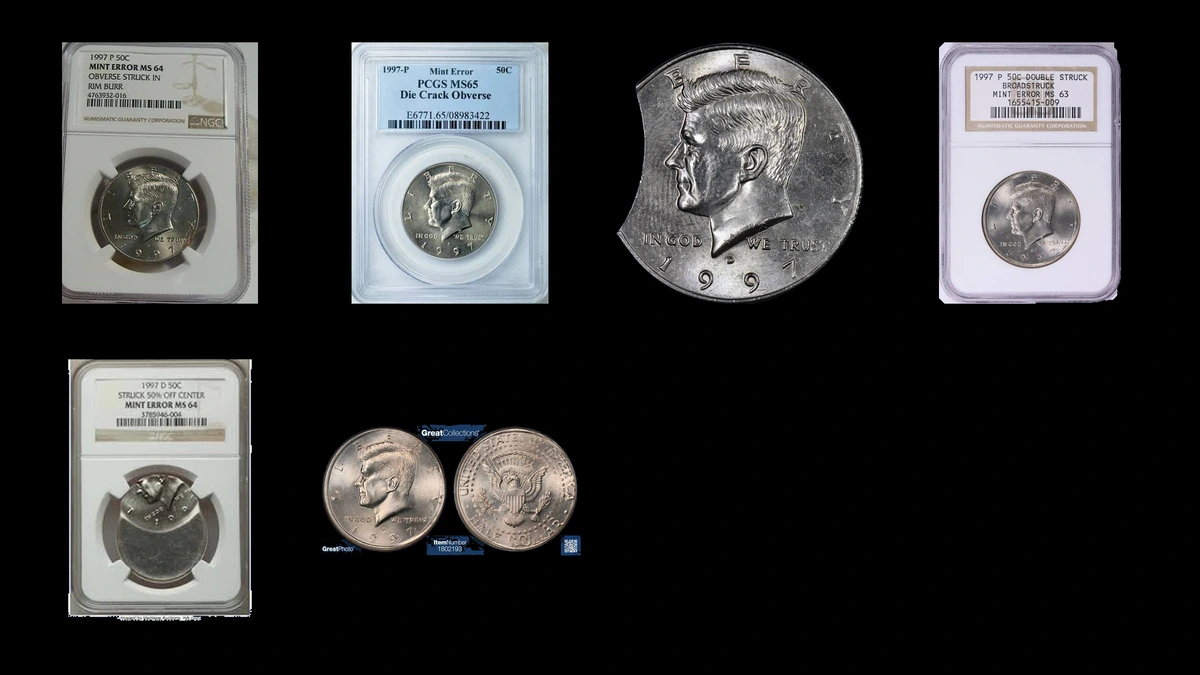
A double-struck 1997-D half dollar realized $840 in April 2018. Its second strike landed 70 percent off center, producing a conspicuous overlap.
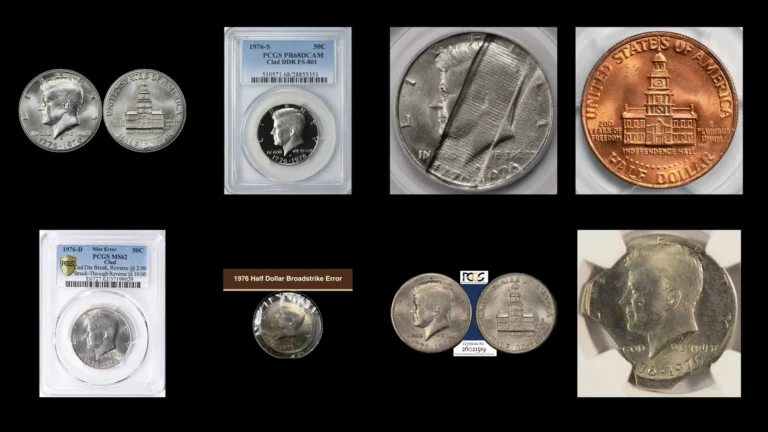
Estimated 1997 half dollar errors values span $5–$1,500. Separate unusual color from missing metal, then inspect the surface and shape of each impression.
Ordinary clad halves weigh 11.34 grams; 90-percent-silver S proofs weigh 12.50 grams. Both are approximately 30.61 millimeters across with reeded edges, so establish composition before judging a weight difference.
| Observation | Possible feature | Estimated whole-coin value |
|---|---|---|
| Unusual original dark surface | Improper annealing | $75–$350 |
| Absent covering, exposed copper | Missing clad layer | $150–$600 |
| Interrupted design or texture | Strike-through | $10–$300 on ordinary clad coins |
| Raised front line | Die crack | $5–$100 |
| Gap in the edge | Clip | $25–$250 on ordinary clad coins |
| Complete design in spread metal | Broadstrike | $100–$500 |
| Single displaced image | Off-center strike | $75–$650 |
| Overlapping images | Double strike | $250–$1,500 |
1. 1997 Half Dollar A Dark Surface Retains the Metal: Improperly Annealed Planchet Error
For the confirmed 1997-D example, NGC identified improper annealing and assigned MS63, an unworn grade allowing noticeable marks. Annealing is the heating of metal before striking to make it easier to shape.
A production problem during heating can leave unusual surface color or texture that survives the strike. That diagnosis is more specific than saying a coin looks dark.
How to Identify
Compare the surface across both flat areas and the design with the NGC example illustrated by CONECA. Similar color alone cannot establish when heating occurred.
Inspect for coatings, corrosion, blisters, and altered texture that may suggest other causes. Examine the edge layers and confirm a weight compatible with an intact clad coin.
Normal weight supports retained metal, not the annealing diagnosis by itself. The surface evidence and a reliable identification must work together.
What It’s Worth
Confirmed 1997 examples have an estimated $75–$350 range. Original surface quality and convincing attribution are central to the premium.
A 1974-D with the same category of heating-related error, graded NGC MS66, sold for $139 at Heritage in June 2023. The published 1997-D photograph is not a sale record, and ordinary storage toning does not inherit that comparison.
2. 1997 Half Dollar An Outer Covering Is Absent: Missing Clad Layer Error
A missing layer exposes the copper core and removes metal, unlike a color change on an otherwise intact coin. Ordinary clad Kennedy halves have copper-nickel coverings on both faces.
The 1997 report supplies no exact mint or affected face. This category applies to clad coins, including clad proofs, rather than the year’s 90-percent-silver proofs.
How to Identify
Inspect the face and edge together for an actual missing covering and an intact counterpart. Compare weight with the clad standard only after establishing the composition.
Look for original struck detail on the exposed copper. Abrasion can remove metal and color the surface copper, but it also damages the existing design.
Diameter alone cannot distinguish the metal issues because their normal widths are alike. A convincing candidate combines physical layer evidence, compatible weight loss, and an undamaged struck surface.
What It’s Worth
A confirmed missing-layer 1997 in ordinary collectible condition is estimated at $150–$600. A clear exposed face with attractive remaining detail can increase appeal.
A 1974-D missing its obverse layer sold for $432 in March 2023, graded NGC MS64 and weighing 9.34 grams. That is a different-year specimen measurement, not an exact target weight for every 1997 error.
3. 1997 Half Dollar A Patch Interrupts the Struck Detail: Strike-Through Error
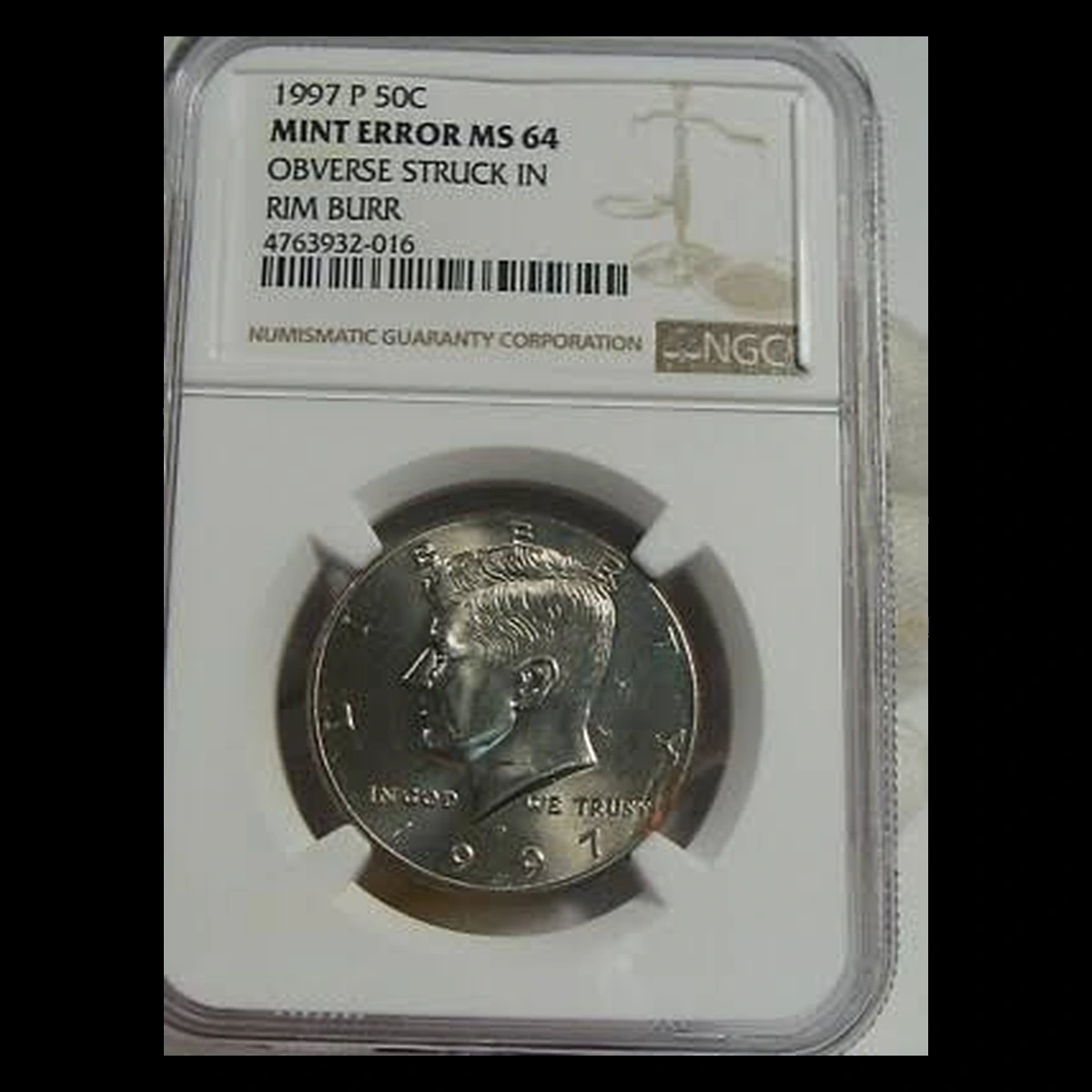
Material between a die and the blank can prevent normal contact. Soft material may leave weak detail, while something firmer can leave an impression of its shape or texture.
The supplied 1997 report names no particular obstruction or individually identified specimen. A narrow line or weak patch should not automatically be labeled wire, cloth, or grease.
How to Identify
First establish that the mark is on the coin rather than scratched into its holder. Then trace where the normal design stops and resumes around the affected area.
Look for displaced metal or a rough damage lip that could indicate a later scrape. Photograph original surfaces under several light angles without cleaning them.
Account for proof versus ordinary finish before comparing appearances. Normal dimensions document the piece but do not identify what interrupted the strike.
What It’s Worth
Ordinary clad examples are estimated at $10–$300, ranging from small weak patches to clear obstruction impressions. A proof requires its underlying collector value to be assessed separately.
A 1976-D struck through material on both sides sold for $114 at Heritage in March 2025. This is a different-year comparison; no individual 1997 sale is established.
4. 1997 Half Dollar A Fine Ridge Runs across the Front: Obverse Die Crack Error
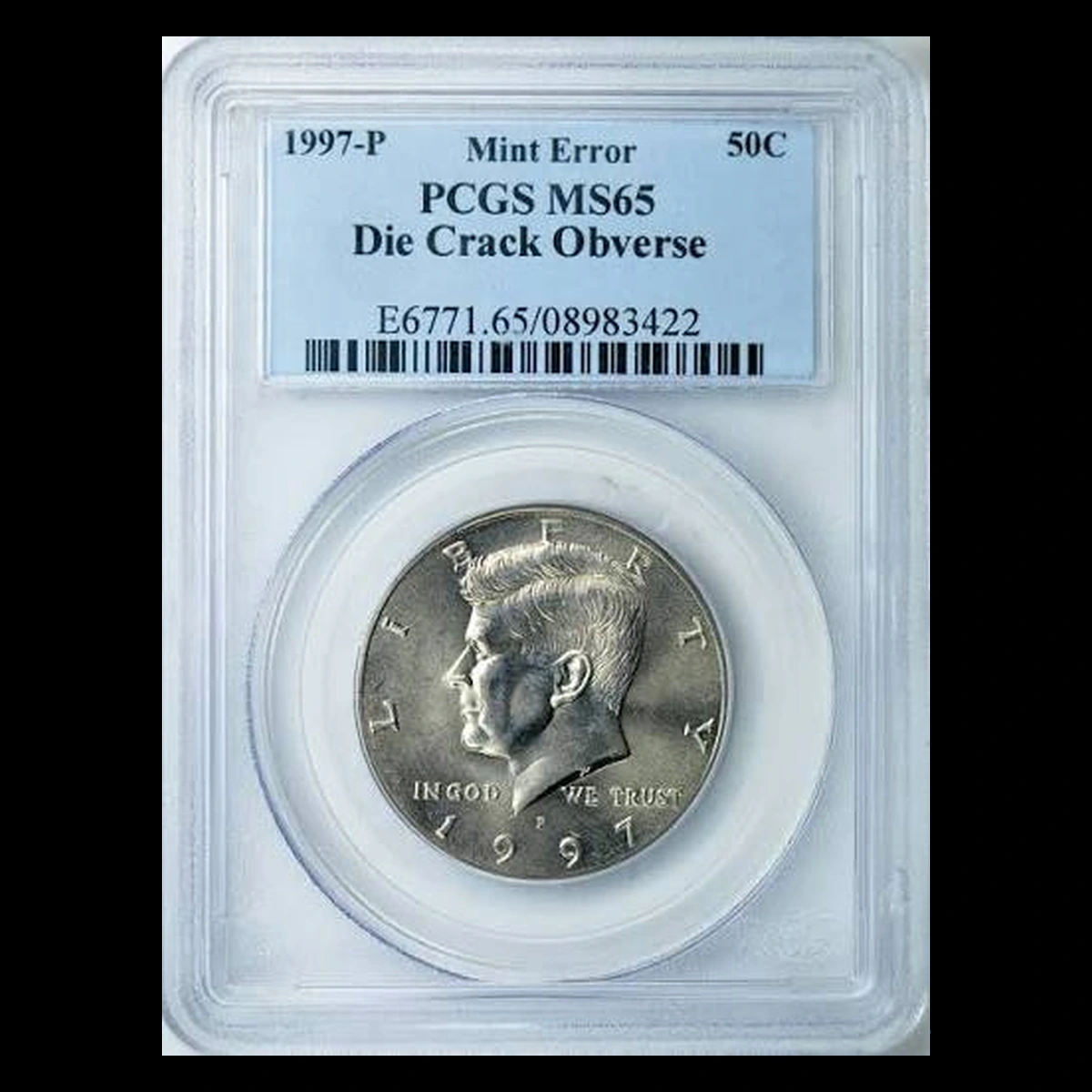
The known 1997-P example is listed as an obverse die crack and graded PCGS MS65. A fracture in the obverse die allowed coin metal to enter the opening and form a raised line.
The coin itself need not be split. The listing establishes the affected face but supplies no exact route to apply to every candidate.
How to Identify
Move a lamp across the line and trace its entire length under magnification. A die-crack ridge rises from the surface, while a scratch usually includes a cut groove even if it pushes up a lip.
If the feature reaches the rim, check the adjacent edge grooves for crushing from an impact. Do not infer a die crack from displaced rim metal alone.
Confirm 1997-P and preserve a full-front image with the closeup. The actual route should come from the specimen, not an invented description.
What It’s Worth
Minor through clearly visible obverse cracks on ordinary 1997-P coins have an estimated $5–$100 range. Visibility and the surrounding coin’s condition affect it.
The GreatCollections MS65 listing supplies no public sale amount in the reference material. A large rim-connected break is a more severe feature and should not determine a thin line’s price.
5. 1997 Half Dollar A Gap Interrupts the Edge: Clipped Planchet Error
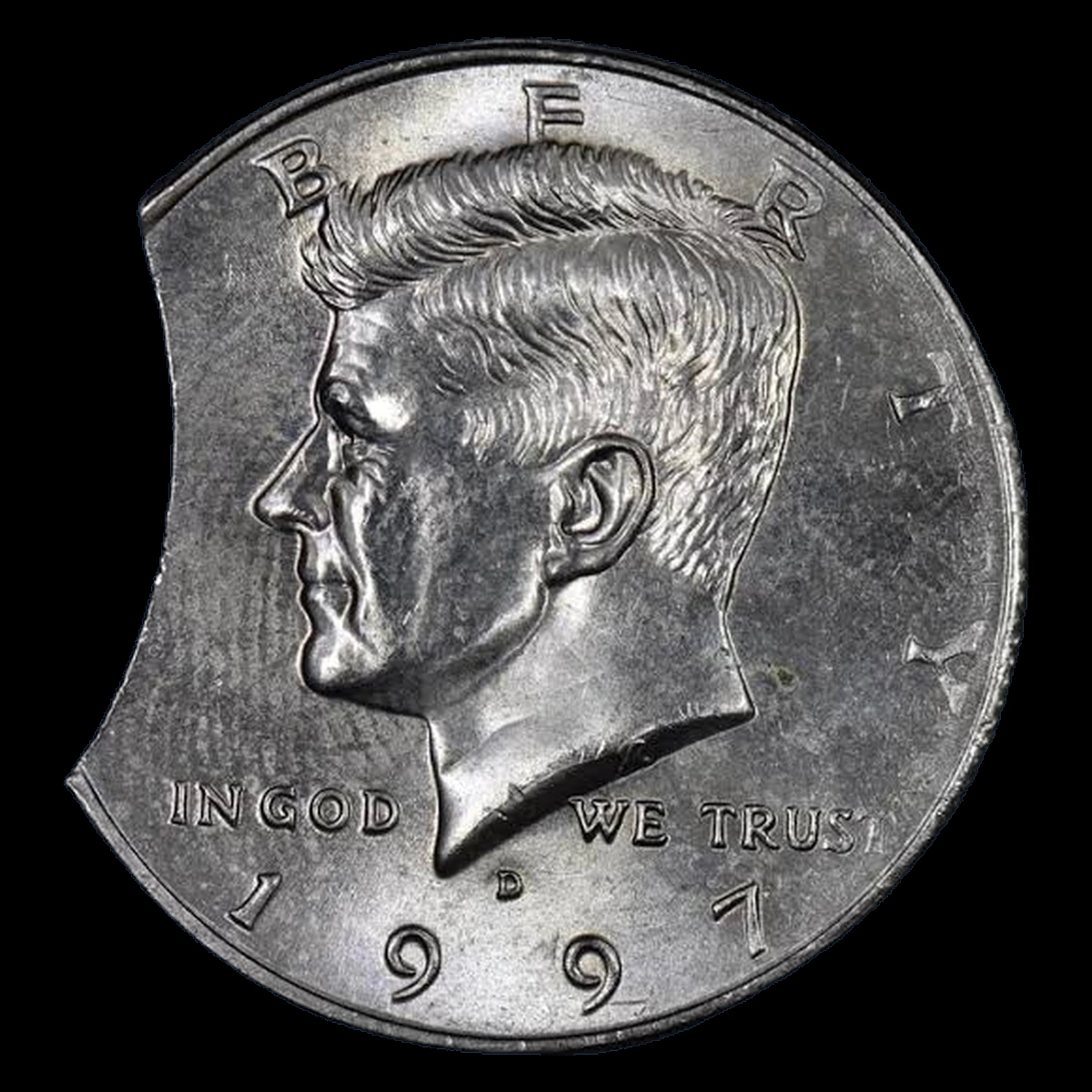
A genuine clip was present in the blank before striking. The remaining rim and design formed around an incomplete metal disc.
The 1997 reports mention curved and straight shapes without locating a particular specimen. Shape alone cannot distinguish either from later removal.
How to Identify
Inspect both ends of the opening for original rim formation and compatible weakening of nearby details. Examine exposed layers and edge grooves for saw marks or sharp burrs.
A weak opposite rim can be helpful but is not conspicuous on every clip. Its absence alone cannot rule out a genuine example.
Measure across intact metal and compare weight against the correct clad or silver-proof standard. Weight loss should be interpreted with the actual missing area and wear.
What It’s Worth
An ordinary clad 1997 clip has an estimated $25–$250 value. A clear modest clip can be more appealing than a larger gap accompanied by damage.
A 1993-D curved clip graded ANACS MS64 sold for $34.74 including the buyer’s fee in August 2025. It supports a lower-priced nearby-year comparison, not a reported 1997 sale.
6. 1997 Half Dollar Spread Metal Surrounds the Complete Picture: Broadstrike Error
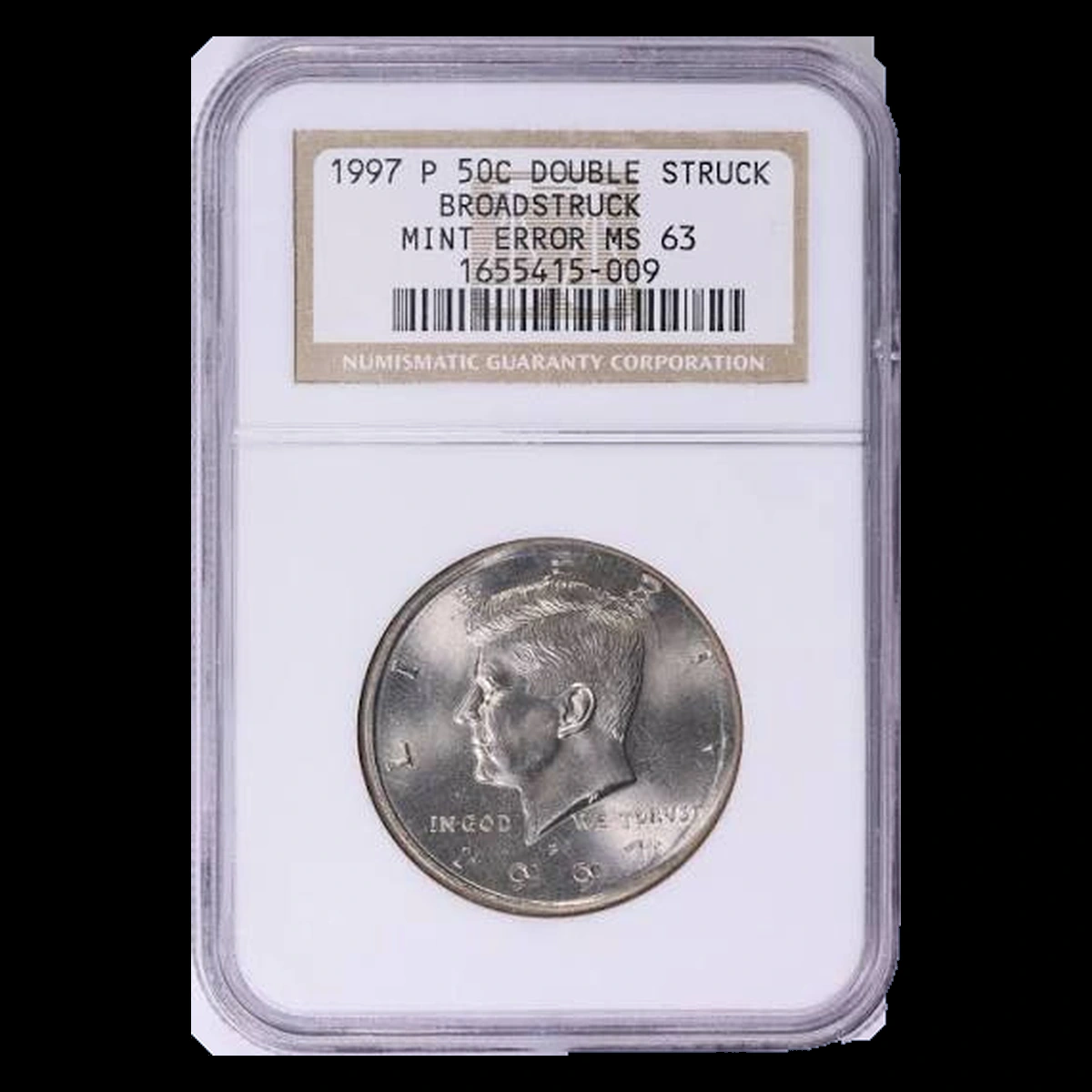
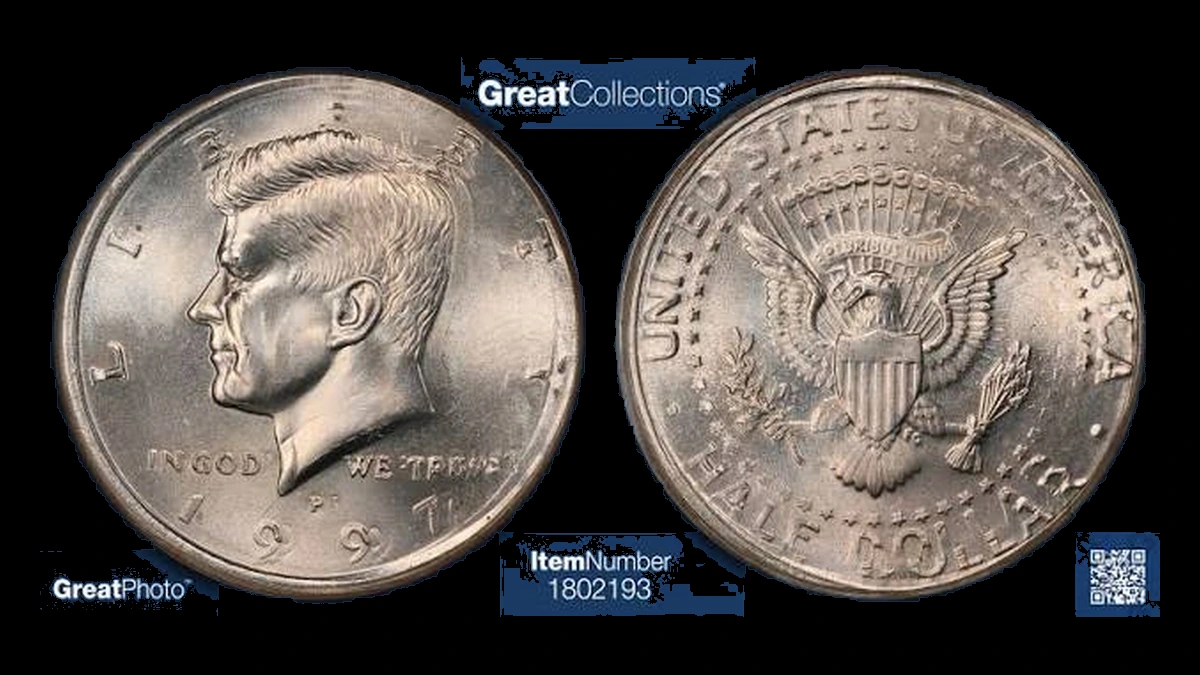
The documented 1997-P is broadstruck and double struck after a slight turn. Its broadened outline records inadequate restraint from the collar, the ring that normally controls the blank’s diameter.
Study that expansion separately from the overlapping designs. A broadstrike can exist without a second strike.
How to Identify
Verify that the complete outer design remains on both faces, then inspect the expanded edge for original metal flow and changes in reeding. Missing design suggests another striking category.
Measure several widths and compare weight with the clad standard. Outward spreading itself removes no metal.
Look for crushed finished detail or grinding that could show later flattening. A broad border by itself does not establish a mint-made broadstrike.
What It’s Worth
Ordinary broadstrikes of similar collector quality have an estimated $100–$500 range. A different-year 1990-P graded ANACS MS61 sold for $192 in March 2025.
The actual 1997-P NGC MS63 sold for $460 at Heritage in April 2006. That price includes both its broadstrike and double strike and cannot be counted separately for each feature.
7. 1997 Half Dollar One Image Is Displaced toward Ten O’Clock: Off-Center Strike Error
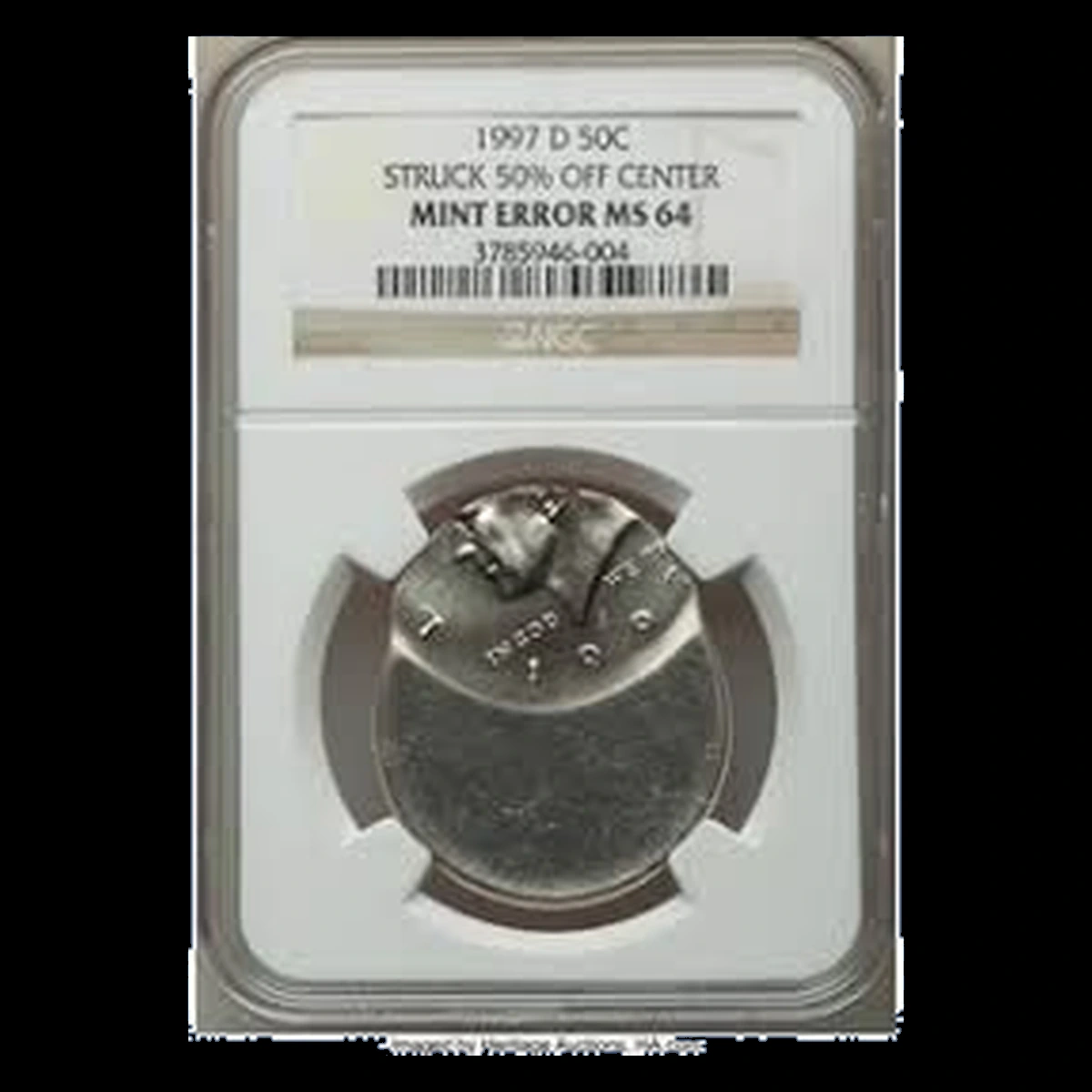
The documented 1997-D NGC MS64 is described as off center toward ten o’clock. That describes direction, not a ten-percent displacement.
Only the portion of the blank beneath the dies received the design, leaving untouched metal beside missing outer details. This single-strike example is separate from the Denver double strike with a 70-percent-off-center second impression.
How to Identify
Keep Kennedy upright when comparing the stated direction with the auction image. Locate the date and D, then compare the corresponding shift on the reverse.
Examine the unstruck area for original texture instead of later smoothing. Both faces should fit one displaced blank rather than show an uneven rim on only one face.
Record the actual outline and remaining reeding. No percentage is established by the ten-o’clock description.
What It’s Worth
The estimated range is $75–$650 for ordinary through particularly attractive examples. Coin World records $408 on April 16, 2021, for the NGC MS64 sold by Heritage.
A 1990-P graded NGC MS66 and struck ten percent off center sold for $198 in September 2025. Its percentage belongs to that different-year coin and must not be transferred to the 1997-D.
8. 1997 Half Dollar Two Design Positions Survive: Double Strike Error
The Philadelphia coin has closely overlapping impressions after a slight turn, while the Denver coin’s second strike lies 70 percent off center. Both received another blow after an initial design had formed.
The Philadelphia example also broadened, as described above. That additional feature should not be assigned to the Denver example without evidence.
How to Identify
Trace several portions of both impressions and check whether their positions agree on the movement between strikes. One flat shelf beside a letter does not establish another blow.
The Philadelphia catalog description specifies a slight turn. The Denver specimen requires a much more displaced later impression rather than that same close overlap.
Inspect the edge and any spreading for effects compatible with the two strikes. A doubled die is different because repeated details already exist in the tool and can transfer in one blow.
What It’s Worth
Genuine double strikes have an estimated $250–$1,500 range. Clarity of both designs and the condition of the surfaces affect appeal.
The Philadelphia combination error sold for $460 in April 2006, and the Denver example brought $840 in April 2018. A different-year 1998-P with a broadened second strike, graded CACG MS64, sold for $317.20 in June 2026.
Conclusion
A useful 1997 assessment separates dark surface color from actual missing cladding and separates outward spreading from repeated striking. Each feature needs its own physical evidence before a price comparison becomes meaningful.
Establish composition before weighing an S proof, preserve original surfaces, and keep different specimens’ directions and percentages distinct. Where one coin has both a broadstrike and double strike, its recorded sale remains one whole-coin price.