Rare 1999 Half Dollar Errors (List & Pictures)
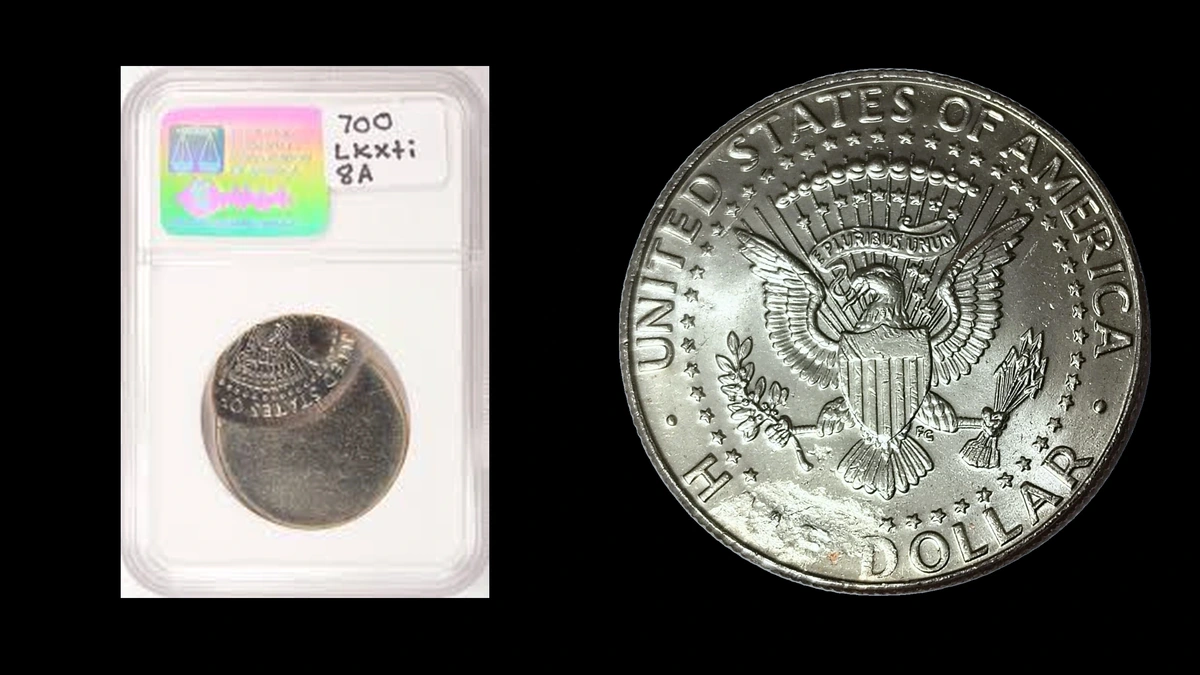
The most expensive example here is more than a brown half dollar. An 8.5-gram 1999-P was struck without either outer metal layer and sold for $5,280 in May 2022.
Across these 1999 Kennedy half dollar errors, estimated values run from $15–$6,500. Some are documented coins, while doubled-die and No-FG entries remain candidates needing a firm match.
Check the outline and metal first, then move to small surface and design details.
| Starting clue | Feature | Estimated range |
|---|---|---|
| A large curved gap | Clipped blank | $50–$300 |
| Uneven expansion and thickness | Tilted broadstrike | $150–$500 |
| A picture far from the blank’s center | Off-center strike | $100–$750 |
| Two copper faces and low weight | Bare copper-core strike | $3,500–$6,500 |
| An interrupted surface patch | Strike-through | $25–$450 |
| Fragments of the opposite picture | Die clash | $15–$150 |
| Extra rounded outlines | Doubled-die candidate | $60–$350 |
| No visible designer initials | No-FG candidate | $75–$400 |
Clad halves normally weigh 11.34 grams and have outer copper-nickel layers around a copper center. Silver Proofs are a separate collector issue weighing 12.50 grams; both versions measure about 30.6 mm across and have grooved edges.
1. 1999 Half Dollar A Large Curved Segment Is Absent: 1999-P Clip Error
Heritage cataloged a 1999-P with a 25% curved clip in MS63 condition. Its blank was missing metal before the design was struck.
An overlapping blank-cutting punch can create that arc. The later strike then shapes the remaining silver-colored outer layers and copper core around the opening.
How to Identify
Inspect both points where the gap meets the intact rim. Natural strike flow differs from saw tracks, fresh cuts, or burrs through finished details.
Follow the surviving edge grooves into the missing section and examine the opposite rim for possible weakness. That supporting sign is not equally visible on every genuine clip.
Keep the full date and P in the photographs. The cataloged 25% and curved shape describe one specimen, not every possible 1999 clip.
What It’s Worth
$50–$300 is the estimate for collectible genuine 1999 clips. No sale amount is assigned here to the cataloged Philadelphia example.
A 1998-D with a 10% triple clip sold for $99 in March 2025, also graded MS63. Its different missing-metal arrangement makes it a comparison rather than an exact match.
2. 1999 Half Dollar A Wide Coin Has Uneven Thickness: Reported Tilted Broadstrike Error
A dealer describes a 1999-P as an NGC MS63 tilted broadstrike. The proposed sequence combines outward spreading with a blank sitting at an angle instead of being held normally by the retaining ring.
The border and thickness can therefore vary around the coin. No tilt direction is provided in the supplied report.
How to Identify
View the edge from several directions and compare thickness around the perimeter. The differences should agree with naturally spread metal and the face designs.
A stepped edge may indicate partial restraint and deserves its own examination. Width alone cannot distinguish a tilted broadstrike from a coin flattened later.
Check for filing and repeated pressure marks. A scale helps show whether the coin kept its normal metal while its outline expanded.
What It’s Worth
$150–$500 is the estimate for an identifiable unworn 1999-P with visible tilt and original surfaces. The dealer’s displayed offer was £242.22, an asking price in pounds rather than a US-dollar sale.
A 1998-P broadstrike on a Type 1 blank sold for $106 in January 2010. Its unfinished rim preparation and older sale date make it a limited different-year comparison.
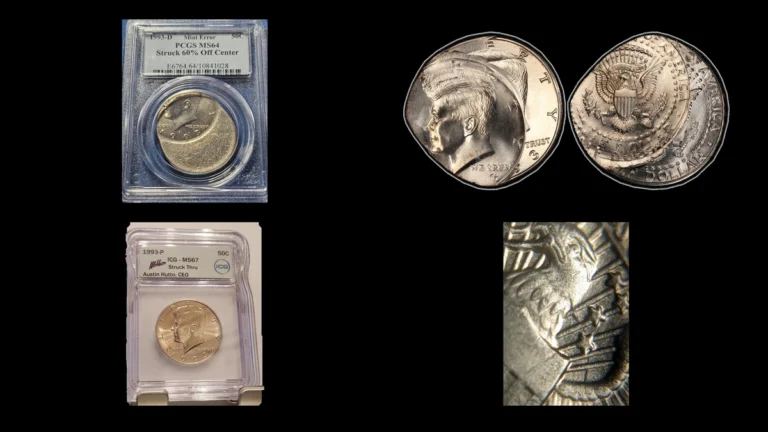
3. 1999 Half Dollar A Large Bare Area Surrounds a Shifted Picture: 1999-D Off-Center Strike Error
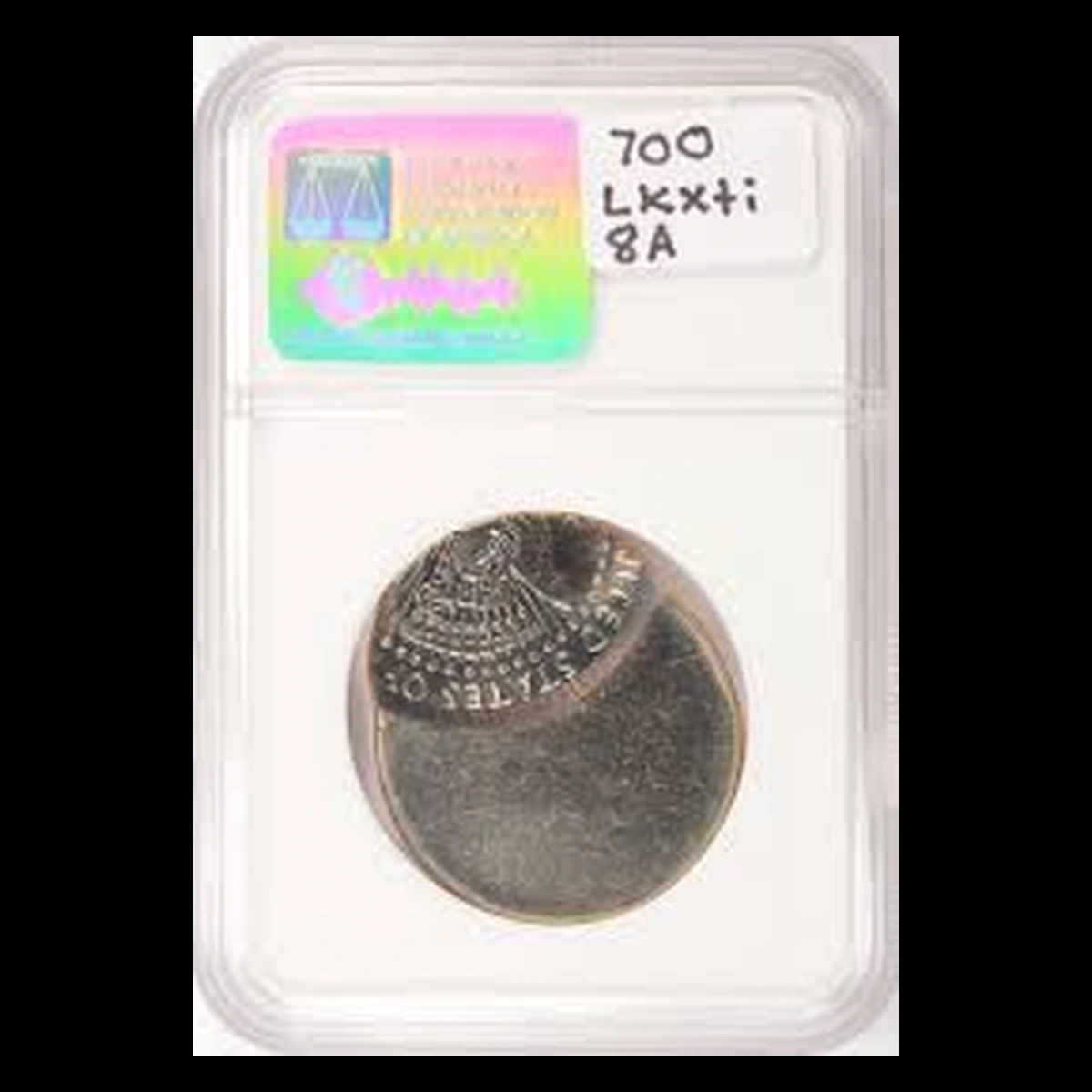
The documented Denver example was struck 65% off center and graded MS66. Its blank sat mostly outside the dies, so only part of the available metal received the picture.
That leaves a large area of untouched surface. The percentage belongs to this particular coin.
How to Identify
Read the date and mint letter before comparing the amount of shift. A Kennedy portrait alone cannot establish 1999 if the date is gone.
Keep both faces in matching orientation and inspect the boundary of the bare metal. Grinding that erased a design leaves different surface evidence.
Both faces should support the same displaced blank. A single moved die may shift one picture while leaving the other centered.
What It’s Worth
$100–$750 is the estimate for collectible off-center 1999 halves. The MS66 65% example sold for $552 on March 20, 2023.
A dramatic shift with a readable date and attractive surfaces makes a useful comparison. Price does not increase by a fixed amount for each extra percentage point.
4. 1999 Half Dollar Both Faces Are Copper and the Coin Is Light: Bare Copper Core Error
The documented 1999-P was struck on an 8.5-gram copper core with neither normal outer layer present. Its AU58 grade indicates slight wear.
The thinner blank offered less metal to fill the outer design, helping explain the weak details. Copper extending beyond the outer layers of an irregular metal strip provides a way for such a blank to be punched.
How to Identify
Compare the substantial weight difference with a normal 11.34-gram clad half. Low weight is important, but destructive alteration can also remove metal.
Inspect both faces and the edge for the absence of both outer layers. Look for etching, filing, plating, or peeling that could have happened after striking.
The thin body and weak outer details should support an original strike on reduced metal. Brown color by itself cannot establish the error.
What It’s Worth
$3,500–$6,500 is the estimate for a comparably identified 1999-P with sound surfaces. The AU58 copper-core example sold for $5,280 on May 6, 2022.
This comparison concerns both layers missing before striking. A partly missing layer, copper plating, or simple staining needs a different assessment.
5. 1999 Half Dollar A Local Surface Area Is Interrupted: Reported Strike-Through Error
A seller identifies a 1999-P as struck through without supplying certification or naming the trapped material. An obstruction during striking can leave a hollow, texture, or local area where normal detail never formed.
The description does not establish cloth, wire, or grease. Guessing an object from an unclear mark can confuse a minting error with a later dent.
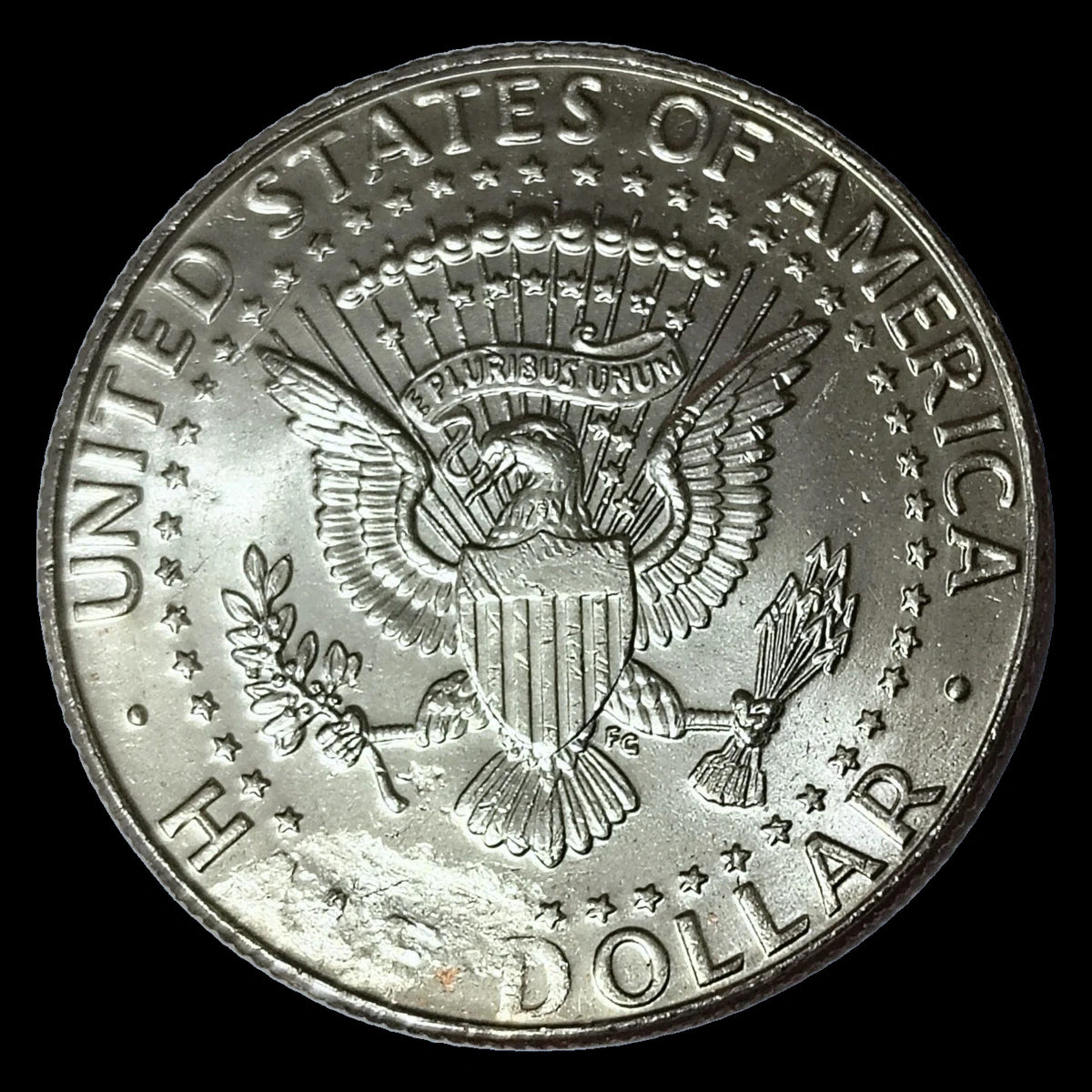
How to Identify
Inspect the boundary of the seller-reported feature under low light. Compare how the normal picture meets the affected surface.
Look for impressed texture without removing anything from the area. Metal torn or pushed up beside a gouge suggests a different event.
Check the opposite side for pressure damage and compare with untouched surface. Normal measurements alone do not prove a surface error.
What It’s Worth
$25–$450 is the estimate from a small interruption to a clear object impression on an attractive unworn coin. The reported 1999-P has no assigned grade or recorded sale amount in this comparison.
A 1992-D struck through an identifiable edge-groove fragment sold for $336 in July 2021 in MS64 condition. Its known obstruction illustrates the broad mechanism without identifying the material on the 1999 coin.
6. 1999 Half Dollar Unwanted Traces Resemble the Other Face: Reported Die Clash Error
The dies can contact each other if the press closes without a blank between them. A fragment of one picture may mark the opposite tool and appear on later coins.
A 1999-P account reports a small number of clashed examples without a specific certification or location map. The actual shapes still need to match.
How to Identify
Compare enlarged views of both faces in their normal relationship. Ask whether an unusual outline could come from the opposing design at that location.
A scratch or polishing streak may look unusual without copying any recognizable feature. Later contact with another finished coin can also create misleading sunken reversed marks.
Use changing light to inspect the surface rather than judging only color. Keep the complete date and P with the comparison.
What It’s Worth
$15–$150 is the estimate for a clearly recognizable 1999-P clash. Easily seen transferred shapes can attract more interest than faint traces.
No documented clash sale is supplied. The $552 Denver off-center result shows the scale of a much more dramatic same-year error, rather than a direct price match.
7. 1999 Half Dollar A Letter or Design Edge Appears Twice: Doubled-Die Candidates Error
A doubled die carries repeated shapes before it strikes the coin. Either the front or back can be affected, and each proposed feature needs its own reference match.
The 1999 discussion uses the familiar 1974-D TRUST example but does not establish that same pattern on a 1999 half. Neither face receives a definite variety identification from that discussion.
How to Identify
Examine the whole outline of a suspected letter or digit. A rounded extra shape differs from a low shelf that narrows the main stroke during striking.
Use a normal coin of the same issue at the same size and angle. For reverse details, keep enough of the eagle and lettering visible to preserve the exact location.
A front candidate does not imply the back is doubled too. The same extra shape on another coin from the matching die gives a stronger identification.
What It’s Worth
$60–$350 is the conditional estimate for a clearly identified doubled die on an unworn 1999 half. Stronger patterns and collector recognition can support the higher portion.
The lower comparison draws on roughly $60 guidance for modern Kennedy varieties of 2007. That different-year guide figure is not a 1999 transaction or proof that a candidate is genuine.
8. 1999 Half Dollar No Part of FG Can Be Found: No-FG Candidate Error
The guide presents complete absence of FG as a possibility without identifying an established 1999 specimen. One surviving stroke means weak initials rather than completely missing initials.
Heavy die polishing can remove these shallow letters on recognized varieties of other years. Wear, blockage during striking, or later smoothing can also hide them.
How to Identify
Search beside the eagle’s tail and the leg on the viewer’s right under a 5×–10× magnifier. Change the light to reveal strokes hidden by glare or toning.
Compare a normal reverse of the same finish, including the nearby feathers. General wear and rubbing may affect the surrounding detail as well as FG.
Do not clean the area to make letters appear. Preserve the surface evidence needed to explain their absence.
What It’s Worth
$75–$400 is the conditional estimate for a 1999 candidate with proven mint-made absence and collectible surfaces. A photograph too dark or soft to show FG does not establish that condition.
A recognized 1972-D No FG in MS64 sold for $900 in December 2022. Its established earlier variety demonstrates interest in the feature without identifying or pricing a 1999 specimen.
Conclusion
The copper-core example shows why color, weight, edge structure, and strike quality need to agree. The off-center coin likewise needs both faces and a surviving date, not just an unusual outline.
Apply that same approach to smaller features: find the physical detail and its correct reference before using a value range. Keep the reported and candidate entries distinct from coins with documented identities and sales.