Rare 1921 Half Dollar Errors (List & Pictures)
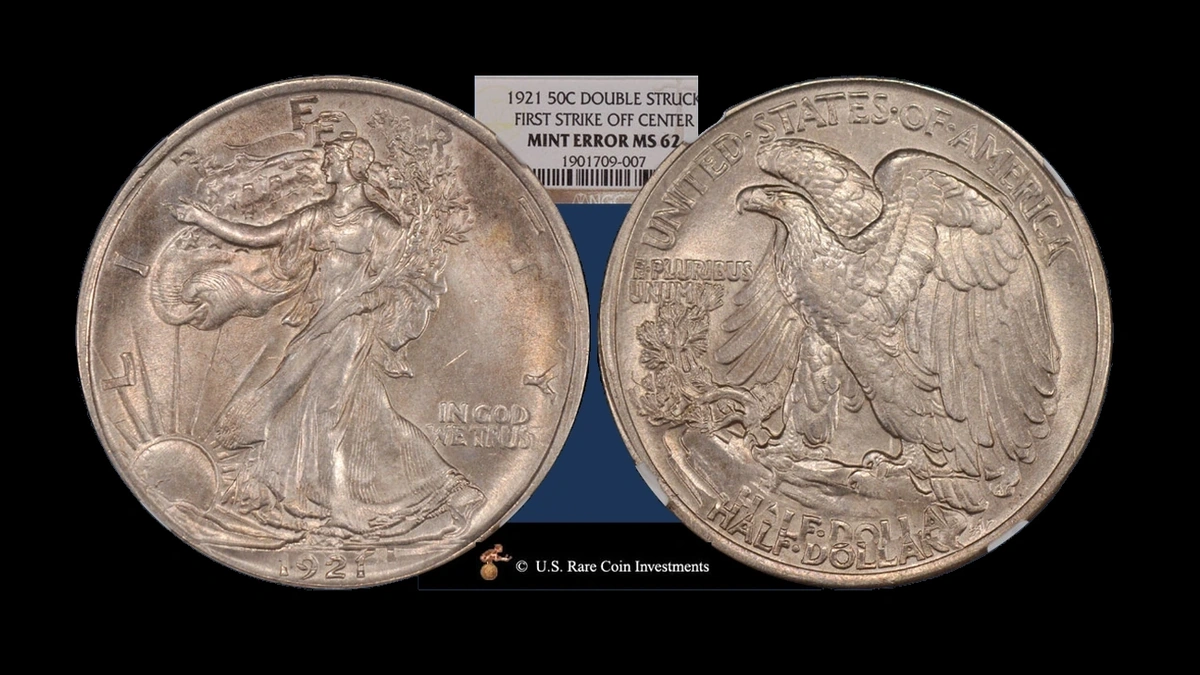
A historical Heritage auction compilation lists $16,100 for a double-struck 1921 half dollar graded ANACS MS61.
Estimated 1921 half dollar errors values span $100–$25,000. Inspect the outline, surface, and repeated details in that order, keeping mint and condition in mind.
Normal specifications are 12.50 grams, 30.6 millimeters, and a reeded edge. Denver’s D and San Francisco’s S appear at the lower left of the reverse; Philadelphia has no mintmark.
| Observation | Category | Estimated whole-coin value |
|---|---|---|
| Widened disc, complete designs | Broadstrike | $3,000–$15,000 |
| Design displaced toward edge | Off-center strike | $500–$20,000 |
| Two overlapping impressions | Double strike | $10,000–$25,000 |
| Missing edge section | Clip | $150–$1,500 |
| Layer opening beside Liberty | Lamination | $100–$800 |
| Raised ridge near rim | Die crack | $100–$600 |
| Repeated front or back details | Doubled die | $200–$2,500 |
| Second fragment of D or S | Repunched mintmark | $200–$2,500 |
1. 1921 Half Dollar The Disc Is Wide but the Design Fits: Reported 1921-D Broadstrike Error
A broadstrike is worth considering when the complete designs remain inside an unusually wide outline. Without normal restraint from the collar, the ring around the blank during striking, metal can spread beyond its intended diameter.
The supplied material mentions a 1921-D example through a later-year value discussion. It does not provide a fully traceable specimen, so the physical diagnosis remains essential.
How to Identify
Measure across several directions and photograph both complete designs with the D visible. Spreading alone should not remove metal, although circulation wear may reduce weight.
Inspect the edge for absent or irregular reeding and examine the faces for pressure damage. A coin flattened after minting can also become wider.
Missing design beside original blank metal points toward an off-center strike instead. A broadstrike needs evidence that the full design was struck while the metal spread without normal collar restraint.
What It’s Worth
A genuine worn 1921-D broadstrike has an estimated $3,000–$15,000 range. Much of the assessment depends on the scarce Denver coin’s underlying condition.
The 2025 specialist guide places ordinary-date broadstruck Walkers around $3,000–$7,000 across moderately worn and unworn grades. These guide figures do not establish a completed sale of a confirmed 1921-D.
2. 1921 Half Dollar An Earlier Design Ends at a Blank Boundary: Off-Center Strike Error
An off-center impression forms when the blank is not fully beneath the dies as they strike. The documented 1921 dealer example is more complicated: its first blow was off center, and a second strike followed.
The later impression can cover part of the first design’s boundary. Reading only the final outline may therefore conceal how the first strike was positioned.
How to Identify
Locate surviving portions of the earlier design on both faces and follow where they meet originally unstruck metal. Keep those boundaries separate from intersections made by the later blow.
The NGC MS62 dealer description supplies neither a percentage nor a direction for the initial shift. A measurement from another Walker cannot fill that gap.
Retain full views of the date, outline, and edge alongside closeups. They help distinguish displaced striking from metal later removed or smoothed.
What It’s Worth
Genuine off-center 1921 coins have a broad estimated $500–$20,000 range, depending heavily on condition and the surviving design. This is not a price assigned to one simple certified 1921 off-center specimen.
A 1918 struck ten percent off center, graded PCGS MS65, sold for $10,575 in April 2013. The dealer’s displayed $21,850 for the 1921 MS62 includes its double strike and cannot be treated as a separate off-center-only sale.
3. 1921 Half Dollar Two Positions of the Design Overlap: Double Strike Error
A second strike should leave more evidence than one thick letter. Look for several remnants of a design that agree on a different position from the main impression.
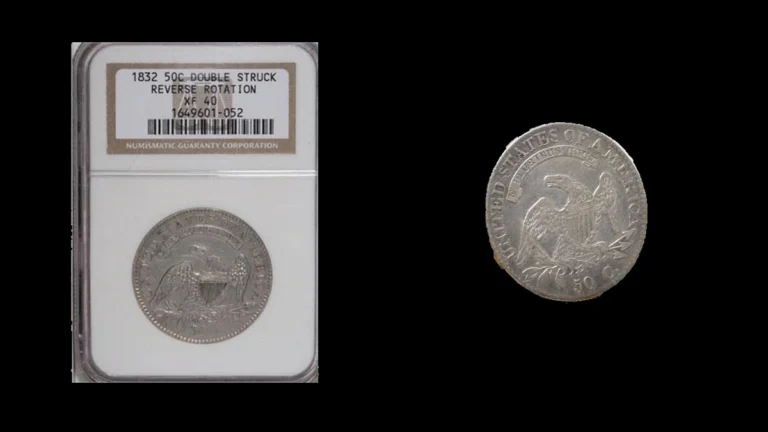
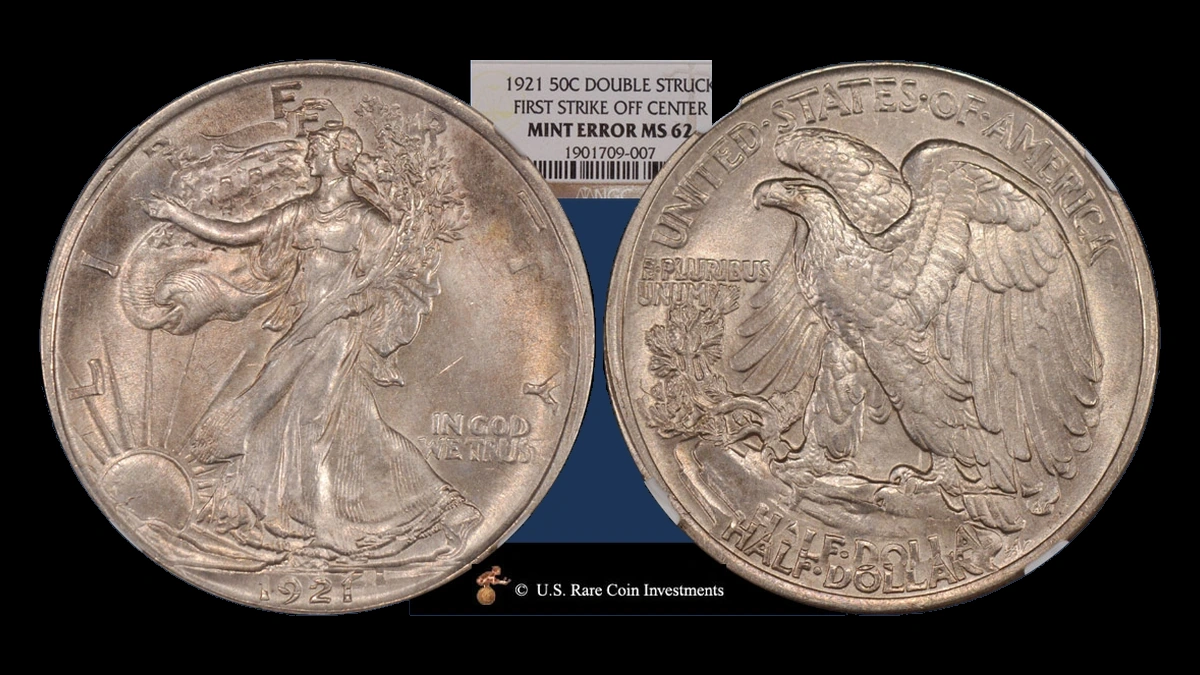
The dealer’s Philadelphia 1921 is described as double struck after an off-center first strike. A historical auction compilation also records a double-struck 1921 in an ANACS MS61 holder, but the records do not establish whether these are different coins or one coin seen at different times.
How to Identify
Trace where a later image crosses or flattens recognizable portions of the first. Check whether the date, lettering, and larger design remnants support a consistent sequence on both faces.
For the dealer-described coin, preserve the stated order: off-center first strike, followed by another blow. Do not borrow the sequence of a coin whose second strike was off center.
Record the changed outline and edge reeding without assuming that holder changes prove a regrading history. A isolated ridge or a later vise impression is not sufficient evidence of two genuine strikes.
What It’s Worth
Substantial genuine double strikes are estimated at $10,000–$25,000. The historical auction compilation records $16,100 for the ANACS MS61.
The NGC MS62 dealer record displays $21,850 and was marked sold in May 2015. It does not independently establish the final negotiated amount, and the off-center and double-strike features must not be priced twice.
4. 1921 Half Dollar Metal Is Absent from the Edge: Clipped Planchet Error
A clip concerns an incomplete blank, rather than a complete disc struck in the wrong position. The missing area must have existed before the rim and designs formed.
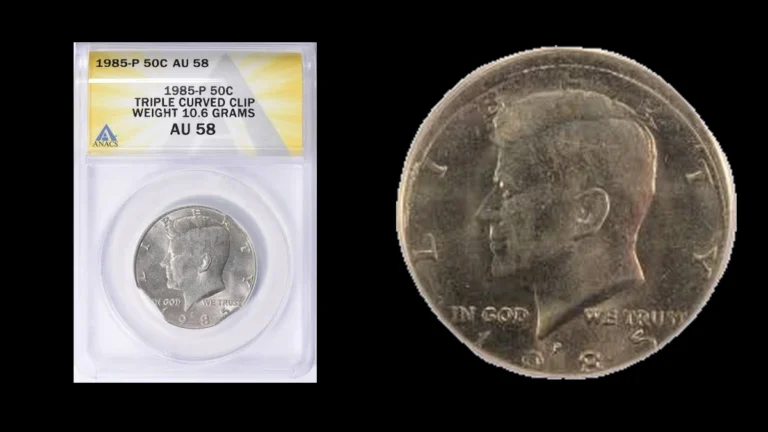
No confirmed 1921 double-clip specimen is identified in the supplied reference material. An actual coin must establish whether it has one gap, several gaps, or later damage.
How to Identify
Inspect every missing section individually, including the nearby rim, lettering, and edge grooves. Original striking should be compatible with the pre-existing gap, whereas cutting after minting interrupts completed details.
A weak opposite rim can support the diagnosis when visible. It is not equally clear on every genuine example and should not be used alone.
Compare weight loss with both the missing area and wear, and photograph the complete date and mintmark region. A clip shown on another denomination or year does not identify this coin.
What It’s Worth
A genuine clip on a worn 1921 Walker has an estimated $150–$1,500 whole-coin value. The scarce date and mint remain part of the price.
A more common 1942-S with a rim clip, graded ANACS MS62, sold for $81.90 including buyer’s premium in May 2025. That comparison does not establish a 1921 example or an automatic premium for each additional gap.
5. 1921 Half Dollar A Layer Has Separated Beside Liberty: 1921-S Lamination Error
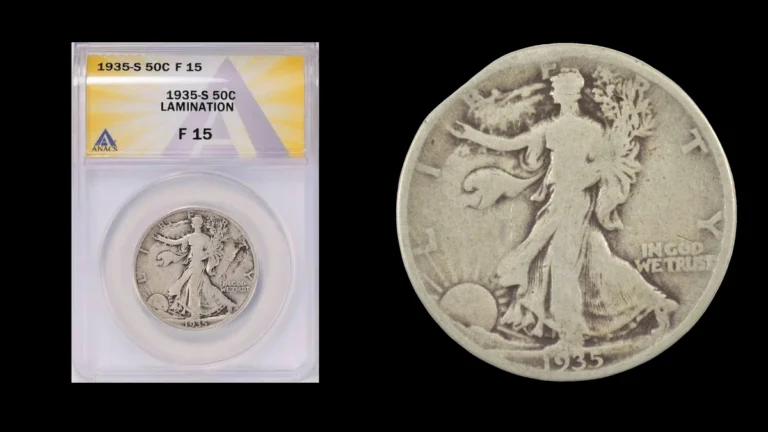
The ANA’s illustrated 1921-S has a disturbed area to Liberty’s right while the eagle side remains unaffected. A weak layer within the silver alloy has separated, producing a lamination.
The useful feature is the opening and its connection to surrounding metal. A differently colored patch without a layer boundary needs another explanation.
How to Identify
Compare the front area with the ANA teaching illustration, then inspect its margins under changing light. Look for a thin layer rather than a cut, fabric texture, or extra design impression.
Record the S and the unaffected reverse. An attached layer may leave weight nearly unchanged, while missing material can reduce it.
Leave loose metal in place. Peeling it farther can destroy both the feature and evidence of how it formed.
What It’s Worth
Worn 1921-S coins with clear lamination have an estimated $100–$800 range. Wear and remaining original surface are central to the comparison.
The ANA example carries no supplied grade or sale price. A different 1947 front-lamination coin graded NGC MS65 was offered by a dealer for $275; that asking price concerns a more available date in unworn condition.
6. 1921 Half Dollar A Raised Line Meets the Rim: Reported Die Crack Error
A worn Philadelphia coin graded PCGS G06 was advertised with a rim crack. G06 describes heavy wear; it does not authenticate the seller’s added error claim.
A genuine die crack can leave a raised line because coin metal enters a fracture in the steel die. The supplied listing does not identify its face or clock position.
How to Identify
Follow the suspected ridge to both ends with light coming from different directions. A scratch cuts into the surface, while a rim hit can compress the border and push metal inward.
Inspect the rim and edge together for that displaced metal. Wear may soften an original ridge but does not make a sharp groove into a die crack.
Confirm the date and absence of a reverse mintmark before using the Philadelphia estimate. The seller’s wording supplies no exact path for an image match.
What It’s Worth
A worn Philadelphia example with a genuine visible rim crack is estimated at $100–$600. The underlying scarce-date coin accounts for much of that amount.
No reliable final price is supplied for the G06 listing. A larger break on a 1976-D Kennedy graded NGC MS65 sold for $256 in June 2026, but that different series and condition offer only broad tool-damage context.
7. 1921 Half Dollar Front Details Show Repeated Raised Contours: Doubled Die Obverse Error
A doubled die contains repeated design details before it strikes a coin. It differs from the broad overlapping impressions of a double strike.
The 1921 material suggests examining Liberty, the date, and nearby lettering, but identifies no named variety or fixed diagnostic location. These are inspection areas, not confirmation that a particular 1921 variety has been established.
How to Identify
Compare the candidate with a normal 1921 of the same mint under similar light. Check whether an apparent extra contour persists when reflections change.
Look for rounded, repeated raised detail rather than a low flat shelf alongside a reduced letter. Wear can also thicken or blur small elements.
Before assigning a variety premium, seek a reliable identification of the same repeating pattern on coins from that die. One broad date digit is not enough.
What It’s Worth
Genuine identified obverse doubling on worn 1921 coins has a provisional estimated $200–$2,500 range. The supplied material does not attach that range to a named 1921 doubled die.
A known 1939-D FS-101 graded NGC MS67+ sold for $2,160 in April 2025. This exceptionally preserved later Walker is a comparison, not proof of a 1921 variety or its premium.
8. 1921 Half Dollar Extra Outlines Appear on the Eagle Side: Doubled Die Reverse Error
Normal feather detail is a common source of false doubling impressions. Establish what belongs to the eagle’s intended design before labeling another line an error.
A genuine doubled reverse comes from repeated details in the reverse die and can occur independently of the front. No specific 1921 specimen or set of doubled letters is identified in the supplied account.
How to Identify
Compare the same feather or letter with a normal reverse, keeping the entire eagle in view. Random contact marks or reflections should not be gathered into a supposed pattern.
Seek consistent raised repetition matching a reliably identified die. Large displaced portions of the whole image would instead require investigation as another strike.
Normal weight and diameter cannot verify doubled details. Their role is to document the coin, not authenticate a die variety.
What It’s Worth
Identified reverse doubling on worn 1921 examples has a provisional estimated $200–$2,500 whole-coin range. A well-preserved 1921 may already exceed it without an error.
A known 1946 doubled reverse graded NGC MS65 sold for $2,040 at Heritage in November 2024. That later variety’s result cannot establish a 1921 attribution.
9. 1921 Half Dollar A Second D or S Fragment Remains: Repunched Mintmark Error
The last small area to inspect is the reverse mintmark below the branch. An earlier punch impression could remain when a worker entered the letter more than once into the die.
Only Denver and San Francisco coins can show this feature; Philadelphia has no mintmark to repunch. The supplied 1921 discussion uses another year’s example and names no exact 1921 direction or variety.
How to Identify
Compare the normal letter shape with a suspected extra curve or tip. A heavy-looking D or S alone does not show a second punch entry.
Inspect nearby metal for signs of adding or altering the mintmark, especially because the mint identity matters to this scarce date. A professional attribution should establish the coin before pricing an extra fragment.
Use a reliably identified 1921 of the same mint for a positive variety match. Do not transfer the repunching direction from a 1939-D illustration.
What It’s Worth
Genuine identified repunching on worn 1921-D or 1921-S coins has a provisional estimated $200–$2,500 range. Date, mint, and condition may account for most of that value.
A 1939-D/D graded PCGS MS64+ sold for $1,292.50 in September 2017. It supplies historical series context without proving a corresponding 1921 variety.
Conclusion
Start a 1921 assessment with its date, mint, and condition, since those can carry substantial value before any error is considered. Then use the actual outline or surface feature to choose a comparison.
The documented double strike requires careful reading of two impressions, while several smaller-variety categories still lack a named 1921 example in the supplied material. Preserve that distinction and value the complete coin once, even when it has multiple features.