Rare 1994 Half Dollar Errors (List & Pictures)
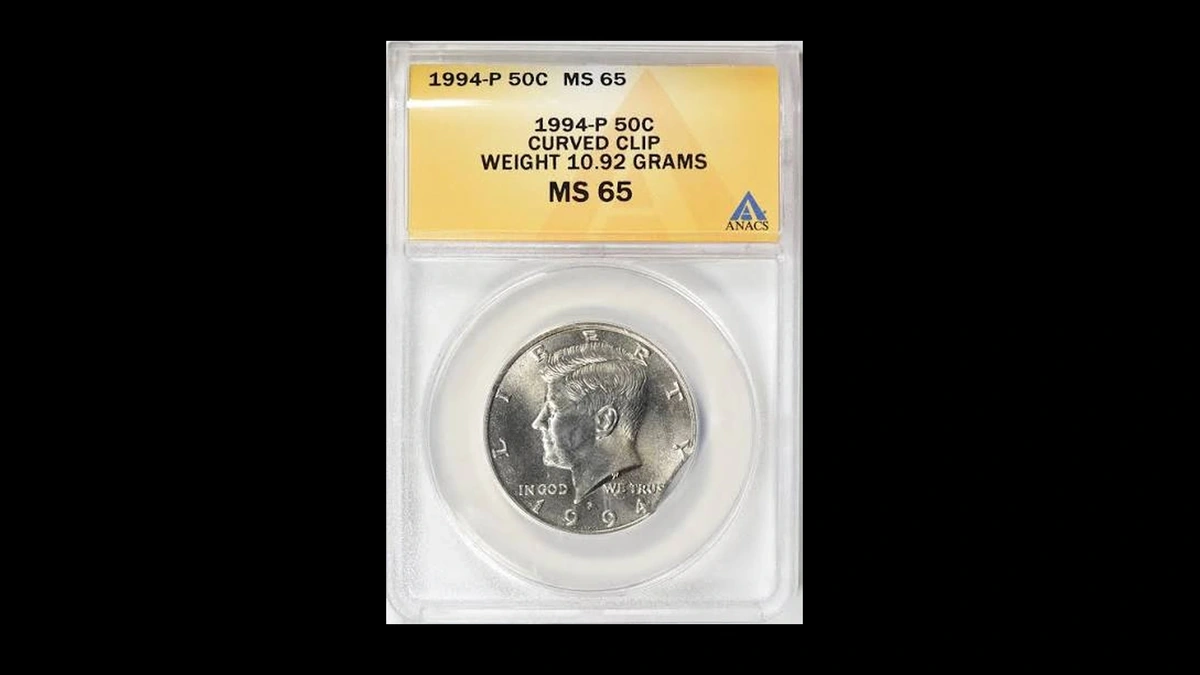
The cataloged silver-proof star-ring varieties provide specific reference points among 1994 half dollar errors. Other categories remain general reports, with supplied estimates from $10 to $600.
A different-year 1973-S proof clash sold for $720 in 2022, showing why finish and condition must stay attached to any price. Inspect the outline and metal layers, then move through the portrait, reverse stars, and designer’s initials.
| Clue | Category | Estimated range |
|---|---|---|
| Curved or straight rim gap | Clipped planchet | $25–$250 |
| Wide border, complete designs | Broadstrike | $100–$500 |
| Plain crescent, incomplete designs | Off-center strike | $50–$550 |
| Exposed copper face | Missing clad layer | $150–$600 |
| Weak portrait patch | Strike-through | $10–$150 |
| Eagle-like extra outline | Die clash | $20–$100 ordinary clad coins |
| Repeated front contours | Doubled die report | $25–$300 |
| Repeated upper star ring | Silver-proof doubled reverse | $75–$450 |
| Absent FG beside eagle’s tail | No FG candidate | $40–$400 if confirmed |
Ordinary P and D halves and clad proofs weigh 11.34 grams; the S silver proof weighs 12.50 grams. All measure about 30.61 millimeters and have grooved edges, so the S mintmark alone cannot distinguish the two proof compositions.
1. 1994 Half Dollar A piece missing from the perimeter: Clipped planchet Error
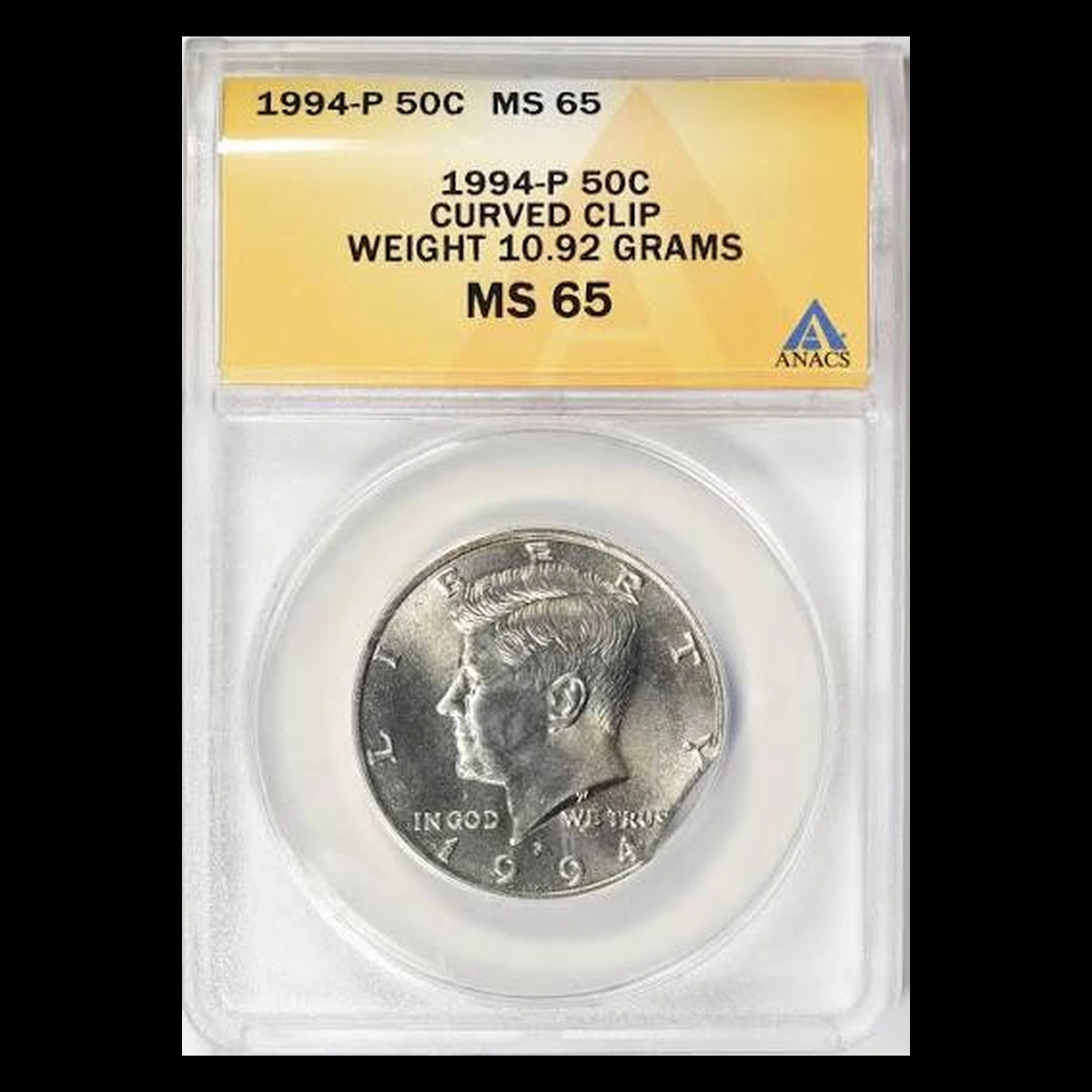
A clip leaves an incomplete blank before the design is struck. The 1994 circulation-coin reports mention curved and straight shortages without identifying a particular mint, percentage, or position.
How to Identify
Follow the exposed sidewall and both ends of the gap, including the copper center and pale outer layers. The surrounding rim and letters should have formed around missing metal rather than been cut through afterward.
Look for saw marks, filing, and sharp interruptions of completed details. Weakness at the opposite rim can support a genuine clip, and the weight loss should broadly agree with the absent metal.
What It’s Worth
Genuine clips on ordinary 1994-P or D halves are estimated at $25–$250. A 1993-D curved clip graded ANACS MS64 sold for $34.74 including fees in August 2025.
That nearby-year result illustrates a modest unworn example, not a 1994 sale. Size, originality, and condition matter more than assuming that curved gaps always outrank straight ones.
2. 1994 Half Dollar The whole design inside a widened border: Broadstrike Error
A broadstrike can expand beyond normal diameter while keeping the portrait, eagle, and outer lettering complete. This happens when the collar ring fails to contain the blank during striking.
How to Identify
Check both complete designs, then measure the outline in several directions. The edge should show changes consistent with incomplete collar contact, such as missing normal grooves.
Later squeezing can also widen a coin but often crushes detail or leaves pressure marks. The supplied Philadelphia and Denver reports identify no measured 1994 specimen, so no exact expanded diameter can be assigned.
What It’s Worth
Comparable genuine broadstrikes are estimated at $100–$500. A 1990-P ANACS MS61 sold for $192 in March 2025, while a separate ANACS MS65 of that year brought $119 in January 2023.
The lower-grade coin brought more in these two transactions. Their differing appearance and market circumstances matter, and neither establishes a 1994 auction price.
3. 1994 Half Dollar Bare metal beside shifted, incomplete designs: Off-center strike Error
An off-center blank lies partly outside the dies, leaving an unstruck crescent while some intended design misses the metal. The reports include P and D circulation coins without a certified example’s direction or percentage.
How to Identify
Read the date and mintmark directly and compare both design boundaries. A matching shift on both faces supports an off-center blank; a centered reverse with only the front displaced may indicate one misaligned die.
Inspect the plain area for untouched blank texture rather than grinding or scraping. Off-centering itself removes no metal, so a normal-range weight can agree with the error.
What It’s Worth
Ordinary 1994 clad examples are estimated at $50–$550 from modest to obvious offsets. A readable date and original surfaces help collectors compare the coin accurately.
A 1990-P 10% offset graded NGC MS66 sold for $198 in September 2025, while a 1991-D 50% offset graded PCGS MS62 brought $546.25 in 2009. These different-year records do not establish a specific 1994 specimen.
4. 1994 Half Dollar Design struck into a copper-colored face: Missing clad layer Error
A pale outer layer lost before striking can expose the copper core to the die. The reported 1994 P and D category does not specify which face was affected on an identified coin.
How to Identify
Inspect the boundary between remaining cladding and exposed metal, looking for a design formed directly in that surface. A matching weight deficit supports actual loss but does not by itself establish when the layer disappeared.
Grinding, chemicals, and later stripping can also remove metal; plating or toning can simply change color. The normal silver proof lacks the usual copper edge stripe because of its alloy, not because it lost a layer.
What It’s Worth
An authenticated missing outer layer on a collectible clad half is estimated at $150–$600. A 1974-D NGC MS64 missing its obverse layer sold for $432 in March 2023 and weighed 9.34 grams.
That known face and weight belong to the 1974-D. They should not be assigned to an undocumented 1994 coin merely because it has similar color.
5. 1994 Half Dollar A weak portrait area beside sharp details: Strike-through Error
The year report describes filled-die or strike-through effects on the portrait without naming a particular mint or retained object. Both involve material preventing normal contact during the strike.
How to Identify
Compare the patch’s boundary with nearby high points before interpreting general softness. Broad wear across exposed details differs from a limited interruption surrounded by sharp design.
Look for scrapes or displaced metal from later contact, and ensure a holder mark is not being mistaken for a coin defect. The report provides no basis for naming a particular solid obstruction.
What It’s Worth
Genuine localized obstruction effects on an ordinary clad half are estimated at $10–$150. Very faint weakness may add little to the coin’s normal value.
A 1976-D struck through on both faces sold for $114 at Heritage in March 2025. Its two-sided error is a different-year comparison, not a diagnosis or realized value for any vague 1994 portrait patch.
6. 1994 Half Dollar A reverse-design outline on Kennedy’s side: Die clash Error
An eagle-like outline on the obverse is reported without an exact 1994 mint, finish, or diagnostic location. A clash can transfer opposing design traces to a die when the tools meet without a blank.
How to Identify
Compare the extra shape with the eagle design at the appropriate size and orientation. Follow enough of the contour to establish a recognizable fragment rather than an isolated scratch suggesting a bird.
Inspect for crushed rims or disturbed surfaces from later pressing of finished coins together. An eagle-shaped mark alone does not prove empty-die contact at the Mint.
What It’s Worth
A light but clearly identified clash on an ordinary clad coin is estimated at $20–$100. The strength and legibility of the transferred outline influence its appeal.
A 1973-S proof with a strong clash, graded PCGS PR68 Deep Cameo, sold for $720 in October 2022. That proof’s strong frosted-design contrast and preservation put it in a different category from a faint ordinary 1994 report.
7. 1994 Half Dollar Extra nose, ear, chin, or letter contours: Reported doubled die obverse Error
The Denver report names the nose, ear, and chin; broader P and D reports also mention lettering and date details. These descriptions do not establish that all features appear on one die or on coins from both mints.
How to Identify
Compare a Denver candidate with a normal D portrait and evaluate its lettering claim separately. Use a Philadelphia reference for a P coin rather than importing the Denver report’s diagnostic areas.
True repeated die contours can show rounded additional outlines or separated corners. Flat shelves caused by striking movement may reduce the original letter instead, and the supplied year sources mix these explanations.
What It’s Worth
Clearly identified minor obverse doubling is estimated at $25–$300 on ordinary collectible examples. Flat shelves or damaged outlines do not automatically receive the same variety premium.
A recognized 1974-D FS-101 graded ANACS MS64 sold for $49 in May 2026. Its catalog number belongs to that earlier variety and cannot fill the missing attribution for a reported 1994 coin.
8. 1994 Half Dollar Repeated upper star-ring lines on a silver proof: Doubled die reverse Error
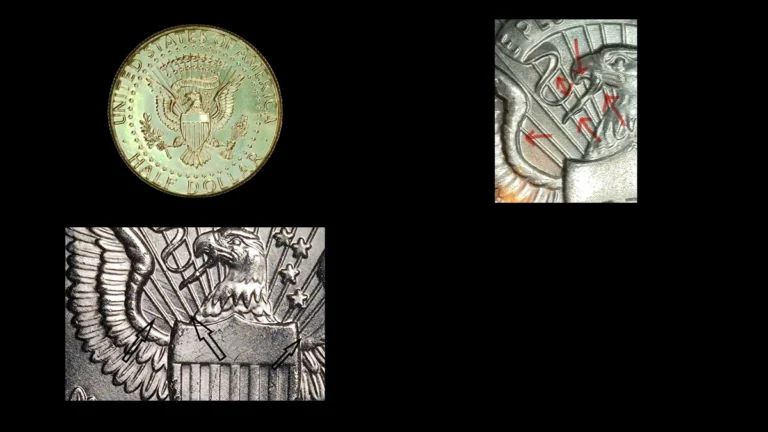
CONECA records separate 1994-S silver-proof reverses as DDR-001 and DDR-002. Extra contours appear around the upper star ring, with lighter repeated detail among stars and rays.
An early DDR-001 also has a small raised gouge mark near the rim just left of H in HALF. That supporting mark does not make the two cataloged dies interchangeable.
How to Identify
Establish the silver-proof composition using the label or appropriate measurements before naming a variety. Same-year clad proofs should not receive silver-proof catalog identities merely because the star ring looks thick.
Match the repeated upper-ring contours, stars, and rays with the CONECA DDR-001 photographs. DDR-002 needs its own reference, and the gouge beside H is an early-DDR-001 marker.
What It’s Worth
Correctly identified silver proofs in ordinary collectible grades are estimated at $75–$450. Clear added lines and undamaged reflective surfaces support stronger interest.
A 1965 SMS doubled reverse graded ANACS MS66 sold for $408 in March 2024. Its special-set finish and 40% silver composition differ from these 1994 proofs, and the result does not establish equal rarity or value for DDR-001 and DDR-002.
9. 1994 Half Dollar FG cannot be seen beside the eagle’s tail: Missing-initials examination Error
FG represents designer Frank Gasparro’s initials near the eagle’s tail. A suggestion to search 1994 halves for absent initials appears alongside established examples from other dates, but does not document a 1994 No FG specimen.
How to Identify
Locate the initials on a normal half first, then inspect the same area under several light angles. Bright photographs can hide weak surviving strokes.
Check the surrounding detail and fields for wear, residue, rubbing, or fine polishing scratches. Genuinely absent letters on original surfaces differ from initials removed from a finished coin.
What It’s Worth
A confirmed mint-made omission on an ordinary clad 1994 could fall within the supplied $40–$400 comparison estimate. No identified 1994 sale is claimed.
The recognized 1982-P polished-die No FG variety, graded PCGS MS66+, brought $384 at Heritage in May 2024. Its established demand cannot automatically be transferred to a different date with faint or photographically hidden initials.
Conclusion
Begin a 1994 attribution with the correct mint, finish, and composition. The silver-proof doubled reverses offer specific catalog markers, while broad category reports require evidence from the individual coin.
Compare complete designs, original borders, and the actual shape of extra or missing detail. Keep another year’s variety name and price attached to that other coin, especially when examining a reported doubled obverse or a possible No FG example.