Rare 1972 Half Dollar Errors (List & Pictures)
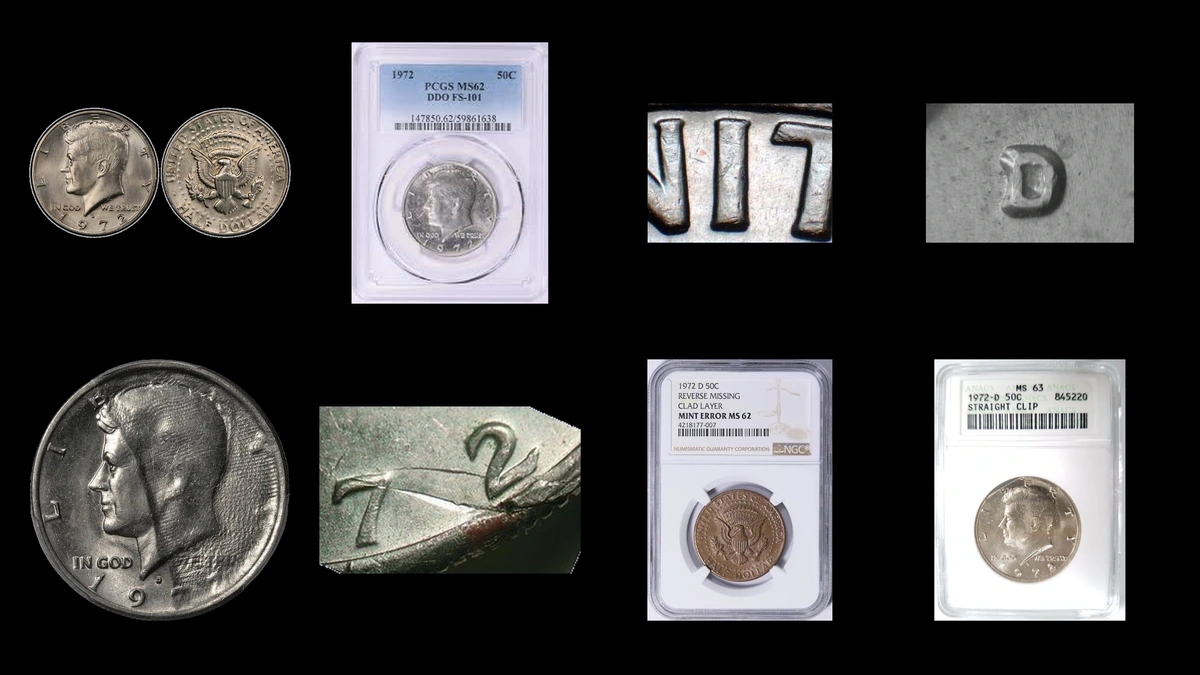
The initials beside the eagle’s tail are a useful first check for 1972 Kennedy Half Dollar errors, but they are only part of the story. A Proof struck twice on a nickel blank reached $9,000 in 2021.
Estimated values across these nineteen groups run from $5–$20,000. The top range concerns a matching three-piece set, whose historical $15,000 figure was an asking price; begin with fine detail, then compare missing metal and unusual strikes.
| Clue | Group | Estimated range |
|---|---|---|
| FG completely absent | No FG | $200–$3,500 |
| Common small Proof doubling | Shared tool detail | $5–$30 |
| Extra front outlines | Front doubled die | $30–$3,500 |
| Repeated reverse letters or stars | Doubled or tripled reverse | $25–$600 |
| Earlier D or S contour | Repunched mintmark | $20–$200 |
| Weave or missing motto detail | Strike-through | $20–$1,200 |
| Attached strip over 72 | Struck-in rim burr | $75–$500 |
| Exposed copper face | Layer defect | $75–$900 |
| Missing edge sections | Clips | $30–$800 |
| Raised rim patch | Cud or die break | $40–$1,500 for a coin alone |
| Only one face shifted | Misaligned die | $20–$300 |
| Wide, complete picture | Broadstrike | $100–$500 |
| Bare metal beside incomplete design | Off-center strike | $150–$2,500 |
| Upside-down eagle after normal flip | Medal alignment | $200–$800 |
| Several overlapping designs | Multiple strikes | $700–$5,000 |
| Small copper body | Cent blank | $2,500–$5,500 |
| Other small blank types | Nickel or quarter blank | $1,000–$10,000 |
| Cent-sized hollow | Indentation | $2,000–$6,000 |
| Three matching pieces | Mated Proof trio | $10,000–$20,000 for the set |
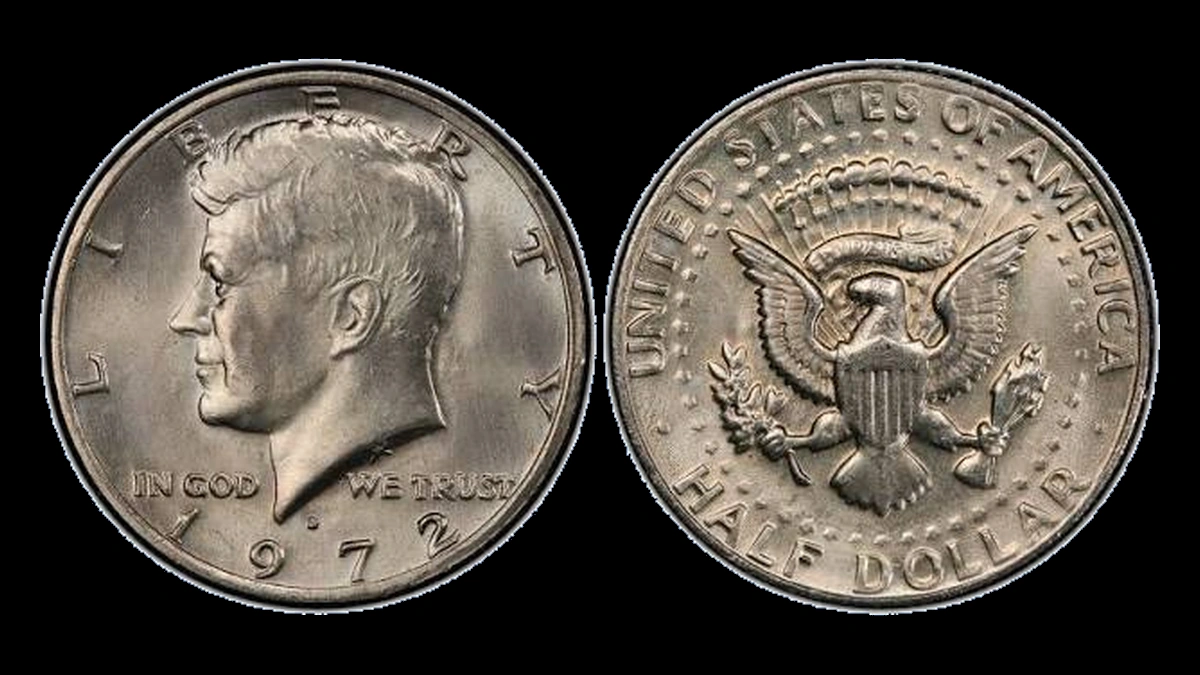
A normal 1972 half has copper-nickel outer layers bonded around a copper center. It weighs 11.34 grams and measures about 30.61 mm; a Proof is a specially made collector coin.
1. 1972 Half Dollar Both Designer Initials Are Missing: 1972-D No FG Error
Frank Gasparro’s FG normally appears beside the eagle’s leg and tail. Heavy die polishing removed those shallow details on the recognized Denver FS-901 variety.
Coins made with that polished tool can lack both letters. Faint initials, general wear, and a blurry photograph do not meet the same test.
How to Identify
Confirm 1972-D, then inspect the FG location at 5× magnification while moving the light. Under the PCGS complete-absence test, any surviving part of either letter rules out complete No FG.
Check nearby feathers for wear and the empty area for fresh scraping or polishing. The letters must be absent from an original mint-made surface.
What It’s Worth
$200–$3,500 is a working range for confirmed examples across circulated and desirable unworn grades. PCGS records an MS63 sale at $2,485.13 in 2016.
MS63 means unworn but still showing marks. Surface quality matters, and a normal half with faint visible initials does not inherit the variety’s price.
2. 1972 Half Dollar Similar Small Outlines Appear on Many Proofs: Shared Tool Doubling Error
Some 1972-S Proof doubling came from earlier tools used to make several working dies. These earlier tools, called hubs and master dies, passed along similar small repeated details.
Reported patterns include front letters and hair, plus separate reverse star-point features. One reverse pattern’s relationship to shared doubling remains under review.
How to Identify
Compare ordinary Proofs as well as variety photographs. A small pattern repeated across coins with different other die marks may be shared background detail.
Keep front and reverse examples separate. Require an additional matching feature before assigning a scarce independent variety to otherwise common doubling.
What It’s Worth
$5–$30 is an estimated whole-coin range for ordinary Proofs with only this shared detail. Much of that value comes from condition and collector finish.
Inherited doubling does not automatically create an extra rarity premium. An exceptional grade or additional distinct variety needs its own comparison.
3. 1972 Half Dollar Front Letters Show a Distinct Repeated Pattern: Doubled Die Obverse Error
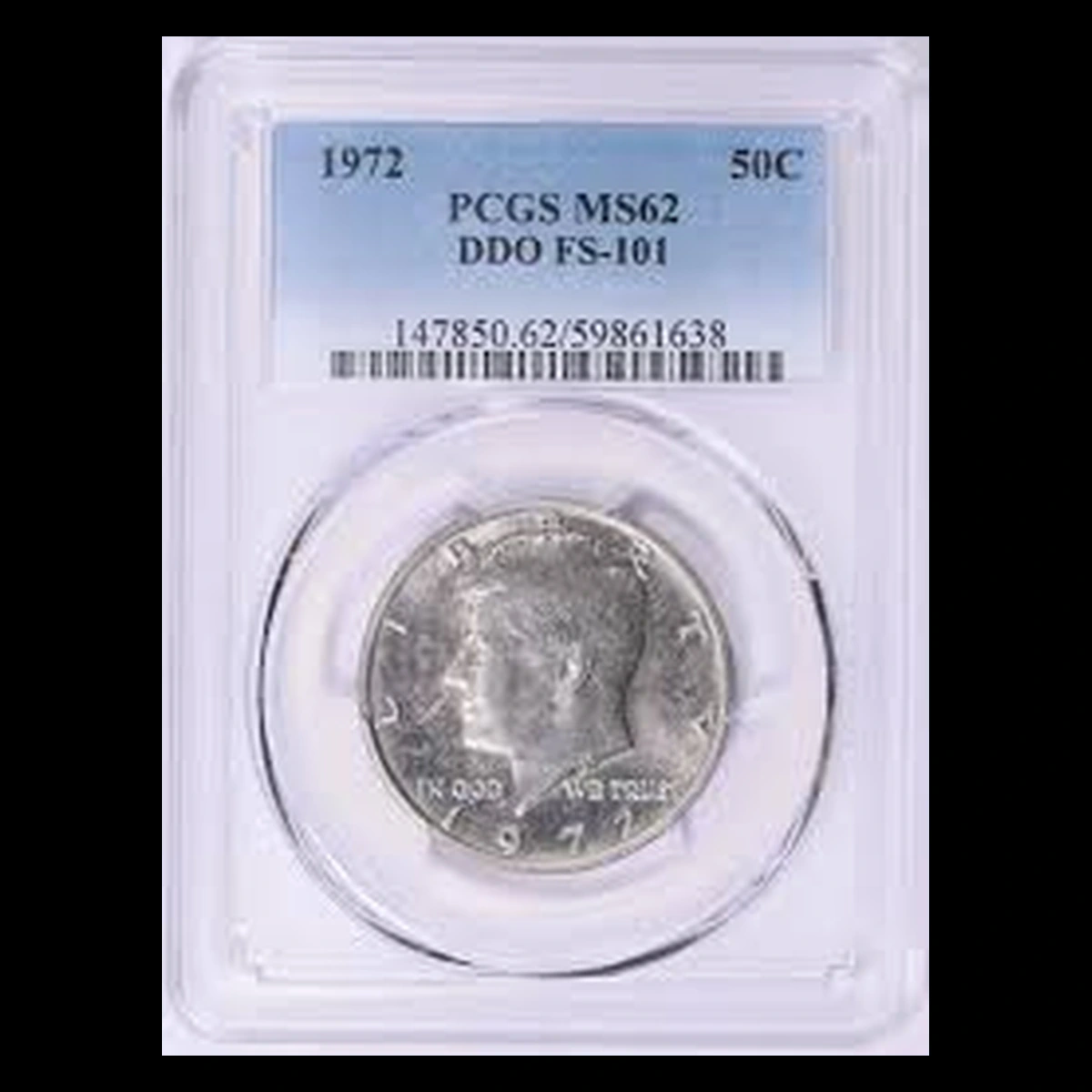
Philadelphia FS-101 has strong extra outlines turning counterclockwise around a point near eleven o’clock. Denver’s closer doubling and the separate San Francisco Proof patterns need different matches.
Some Proof varieties show three outlines in parts of the motto. The repeated image existed on the die before it struck the coin, so it does not imply an extra blow to each half dollar.
How to Identify
Choose the correct mint and finish before comparing rounded letter separation. Two slanting reverse lines near ER can support the Philadelphia match, while Proofs use their own eye, throat, or letter details.
A flat shelf that trims a letter is a different effect caused during striking. Similar catalog wording does not make two die patterns interchangeable.
What It’s Worth
$30–$3,500 is an estimated range across the recorded front varieties. GreatCollections records a Philadelphia FS-101 in MS66 at $2,680.88 in August 2026.
That strong variety in fine unworn condition is not a price match for every subtle Denver or Proof example. A separate $2,000 offering figure was only a starting bid.
4. 1972 Half Dollar Back Letters and Stars Repeat: Doubled and Tripled Reverse Error
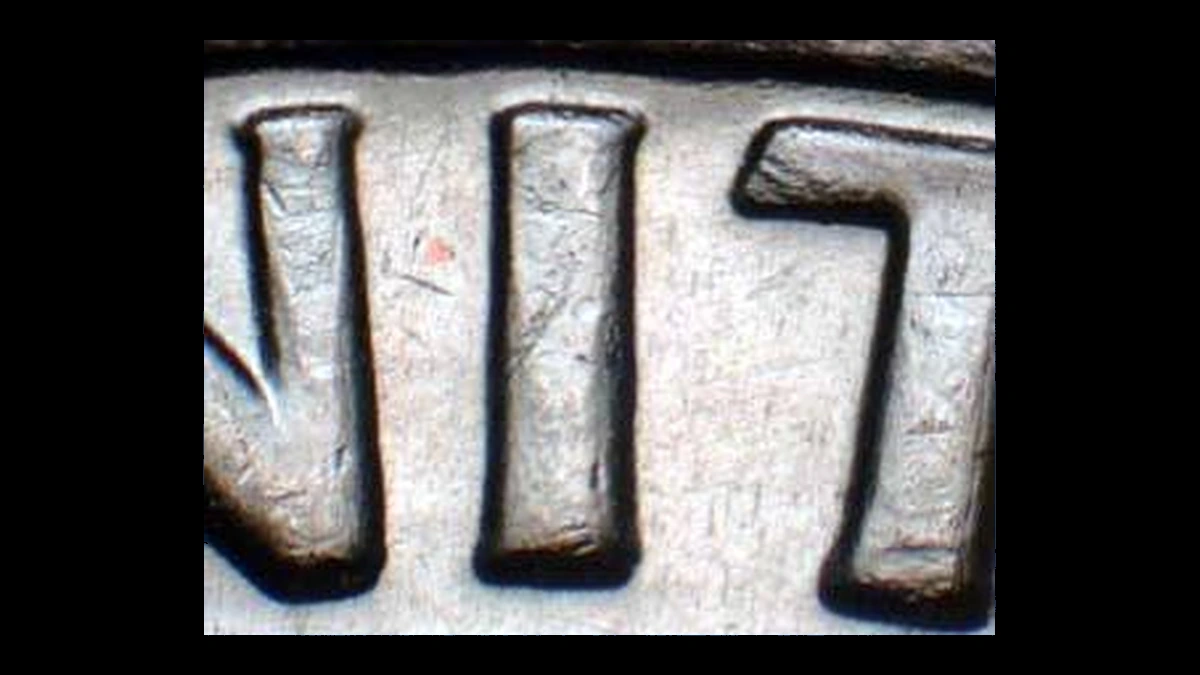
The reverse varieties have several different directions of extra detail. Philadelphia shows a counterclockwise spread, Denver includes strong and subtle forms, and San Francisco Proofs include inward tripling and other doubling patterns.
Star points can reveal the difference more clearly than thick-looking letters. Shared doubling from earlier tools must be separated from additional detail on an individual working die.
How to Identify
Match one clearly pictured star point or letter corner, then confirm a second feature on the same variety. Keep the mint and finish attached to that comparison.
Clash marks near DOLLAR and the talon can support a later stage of Denver’s stronger variety. Their absence on an earlier stage does not automatically rule it out.
What It’s Worth
$25–$600 is an estimated range for minor through stronger identifiable reverse varieties. A correct match and clear extra outlines matter more than the number of catalog labels.
A different 1976-S clad FS-801 in PR66 brought about $881 in 2016. Its different reverse design and established strong variety keep that result separate from the 1972 estimates.
5. 1972 Half Dollar Another Curve Sits beside D or S: Repunched Mintmark Error
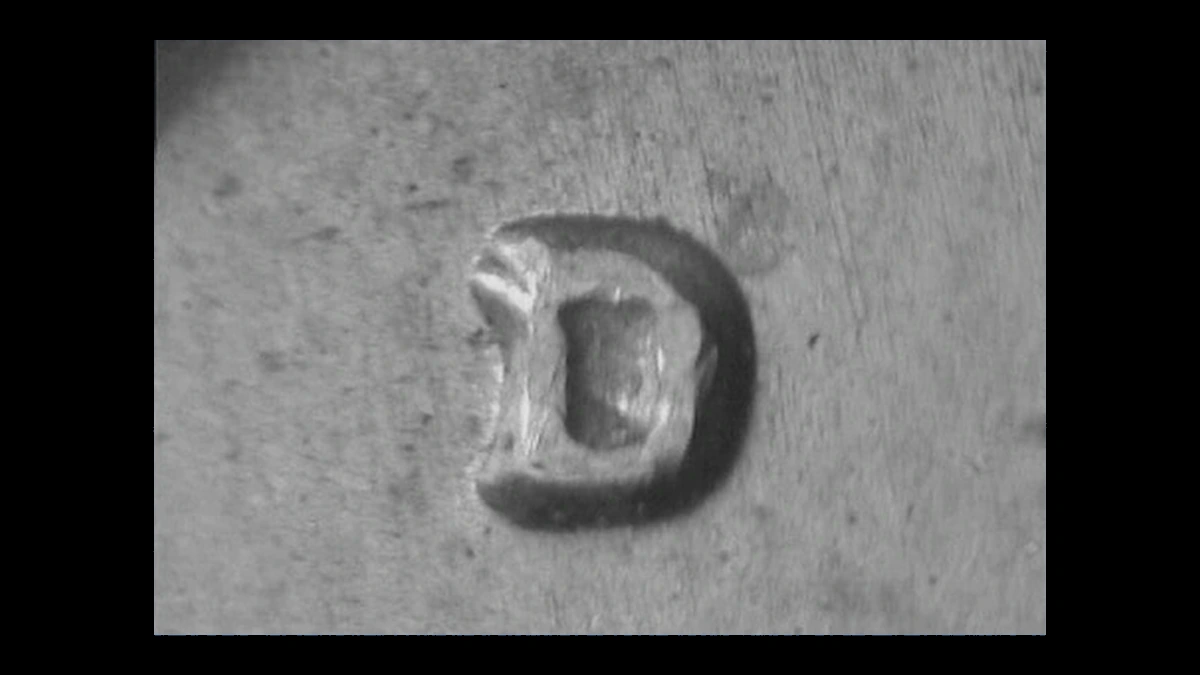
Workers punched mintmarks into the dies by hand in 1972. A partly surviving earlier punch can leave a second D or S contour on coins struck afterward.
One Denver form has the earlier D above the final letter, while another earlier impression is tilted. The San Francisco Proof report shows an extra S to the left.
How to Identify
Follow the extra curved line into the shape of a second letter and compare its exact position. The tilted Denver example needs its own photograph rather than the northward-D reference.
Supporting cracks can appear as the tool ages, so not every stage shows them. Reported hair or star doubling on the S coin needs separate attribution beyond its repunched mintmark.
What It’s Worth
$20–$200 is an estimated range for clear examples in ordinary collectible grades. Strong detail and attractive Proof surfaces can improve appeal.
A published estimate of about $40 for a 1969-D MS65 repunched mintmark gives a modest comparison. It is a guide figure for another year, not a completed 1972 sale.
6. 1972 Half Dollar A Woven Patch or Missing Motto Interrupts the Design: Strike-Through Error
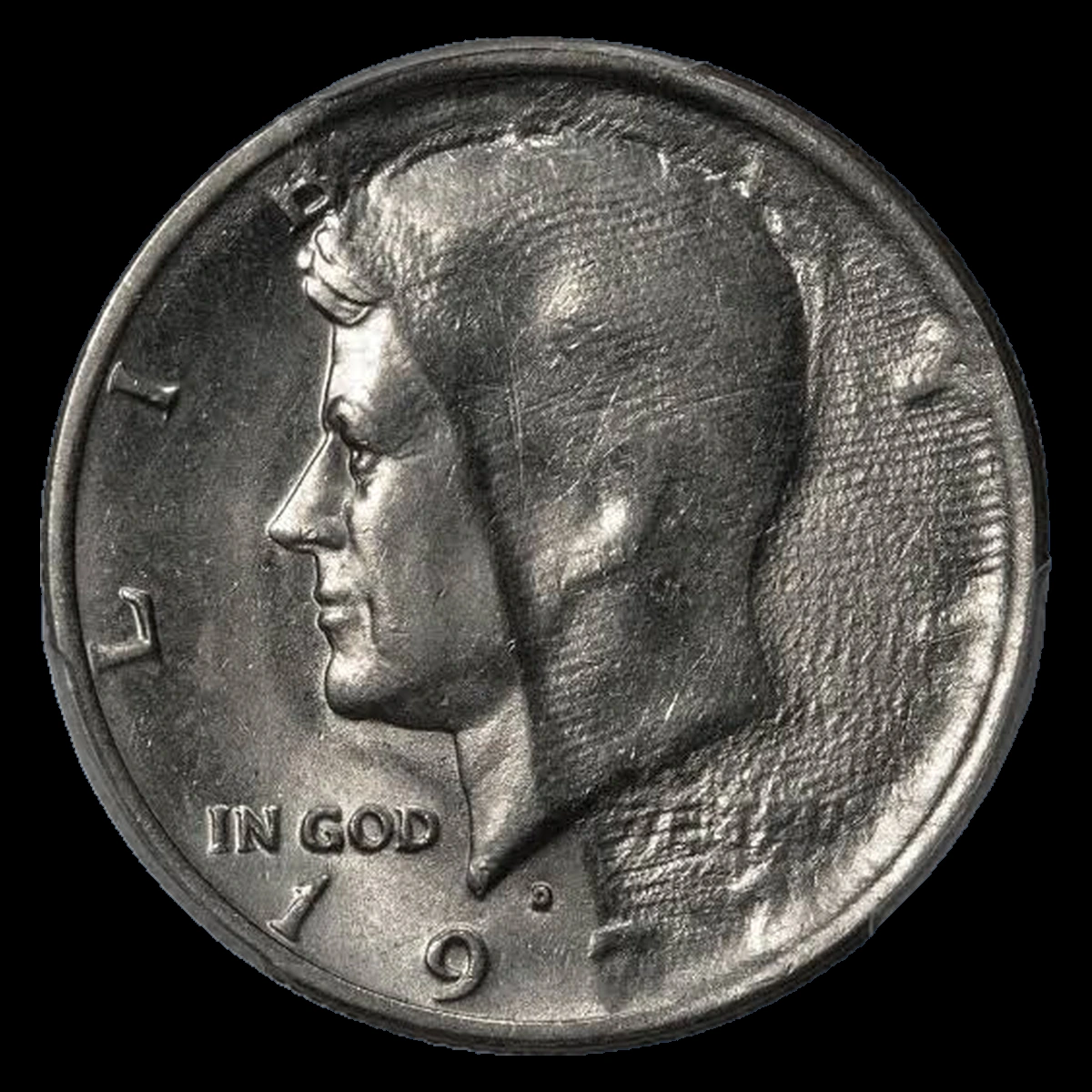
The Denver cloth report describes a PCGS MS64 with about 55% of one face affected. A separate Philadelphia report uses the nickname GODLESS for missing motto detail attributed to grease.
Both involve material blocking the design during striking, but they require different surface evidence. Neither report establishes retained fabric.
How to Identify
A cloth impression should show a connected weave across the affected area, rather than random pits. The reported 55% describes surface coverage, not lost metal.
For missing motto detail, look for original surface through the weak area without grinding or scratches. The nickname does not mean the Mint intentionally changed the wording.
What It’s Worth
$20–$150 is an estimate for a clear local grease obstruction. A large readable cloth impression is estimated at $200–$1,200.
A different 1971-D wire strike-through in AU58 sold for $1,320 in December 2022. It shows interest in identifiable material impressions without supplying a direct cloth or grease price.
7. 1972 Half Dollar A Strip from the Edge Crosses 72: Struck-In Rim Burr Error
Mike Diamond’s reported example has a narrow strip of rim metal across the last two date digits. An adjacent edge gouge exposes the copper center.
He proposes that a moving machine part raised this burr before striking. The strip comes from the coin’s rim and should not be described as a separate trapped wire.
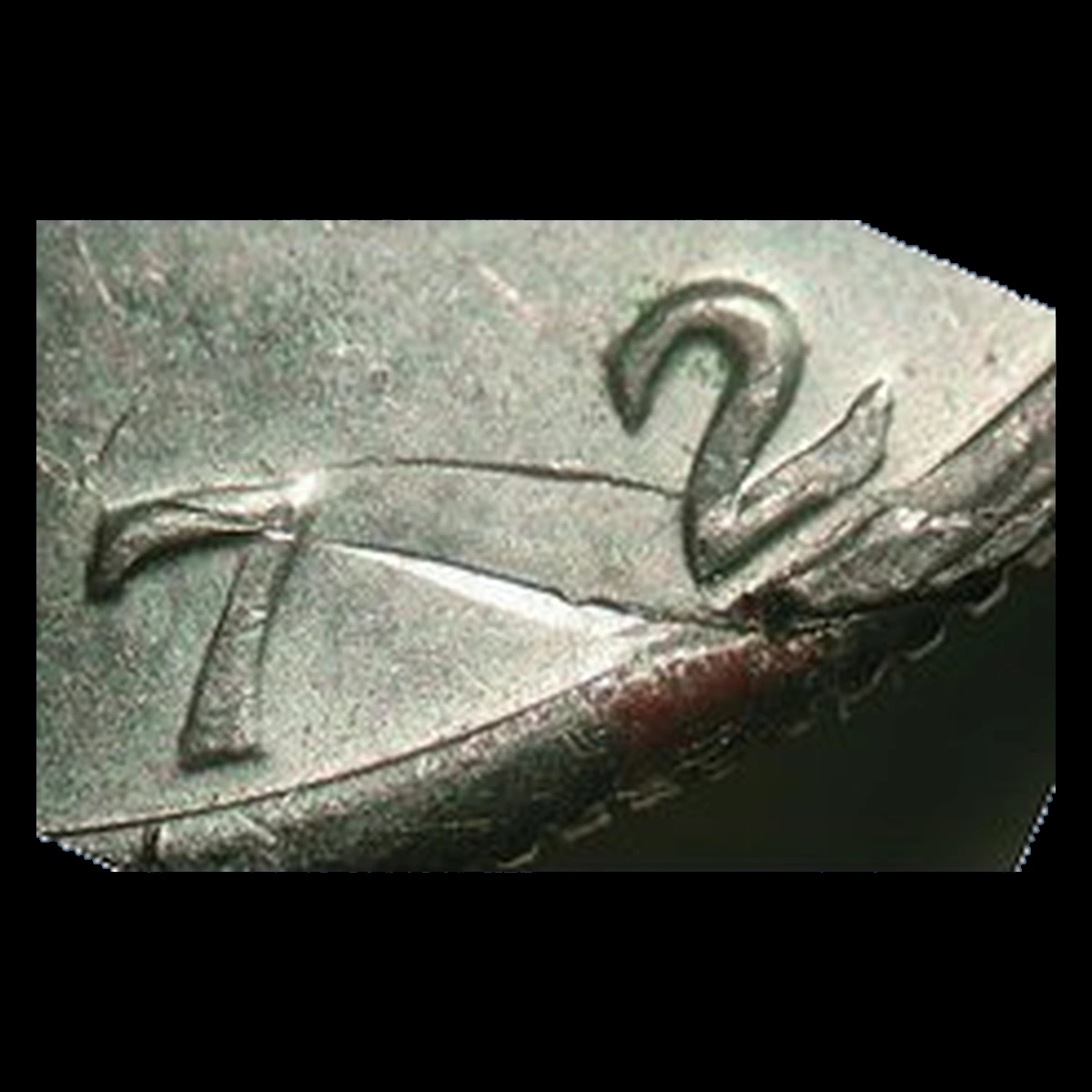
How to Identify
Trace the strip back to its attachment and inspect the neighboring gouge. The date should show how striking acted on metal already raised into that space.
A rim folded over a finished date can imitate the position while disturbing completed details differently. Keep the proposed machine cause separate from the visible connected strip.
What It’s Worth
$75–$500 is an estimated range for an original struck-in rim burr. Clear attachment and interaction with the date make the feature easier to understand.
A 1971-D with retained wire in MS64 sold for $228 in 2017. That separate-material error is a comparison, not a sale of this burr or proof that it is wire.
8. 1972 Half Dollar Copper Replaces an Outer Surface: Missing or Defective Clad Layer Error
The documented Denver MS64 weighs 9.3 grams and lacks its front copper-nickel layer. Other reports cover an MS62 missing its reverse layer and an AU58 with only a local defective patch.
A full missing face and a small patch are different amounts of the same broad layer problem. The missing outer metal is copper-nickel alloy, not pure nickel.
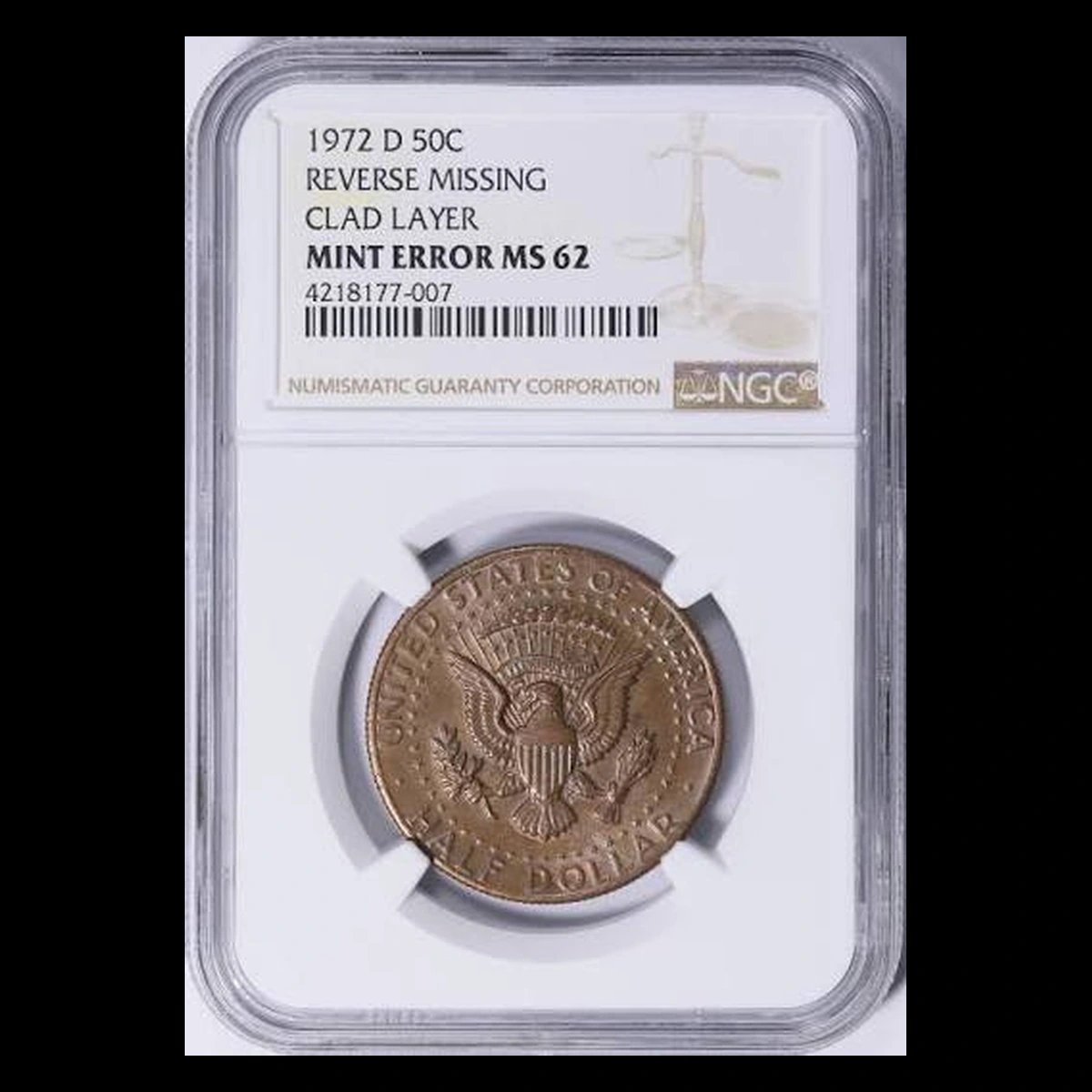
How to Identify
Compare the copper area with the intact side and edge. Original design struck into exposed copper and a natural layer boundary support the defect.
Scraping through finished letters or adding a colored coating tells a different story. Use the actual weight of each coin; 9.3 grams is the documented example’s reading, not a fixed target for every layer loss.
What It’s Worth
$75–$900 spans local defects through attractive whole-face losses. The front-layer MS64 sold for $299 in December 2009.
The reverse-layer example opened at $250 in 2026. That was a starting bid, and should not be presented as a newer completed sale.
9. 1972 Half Dollar Gaps Change the Outline: Curved, Multiple, and Elliptical Clips Error
Recorded 1972 clips include a Philadelphia elliptical MS65 and Denver single, double, and triple gaps. These begin with incomplete blanks before the design is struck.
One Denver MS65 is cataloged as a 25% curved clip and weighs 6.9 grams. Keep the reported percentage and measured weight as separate pieces of information.
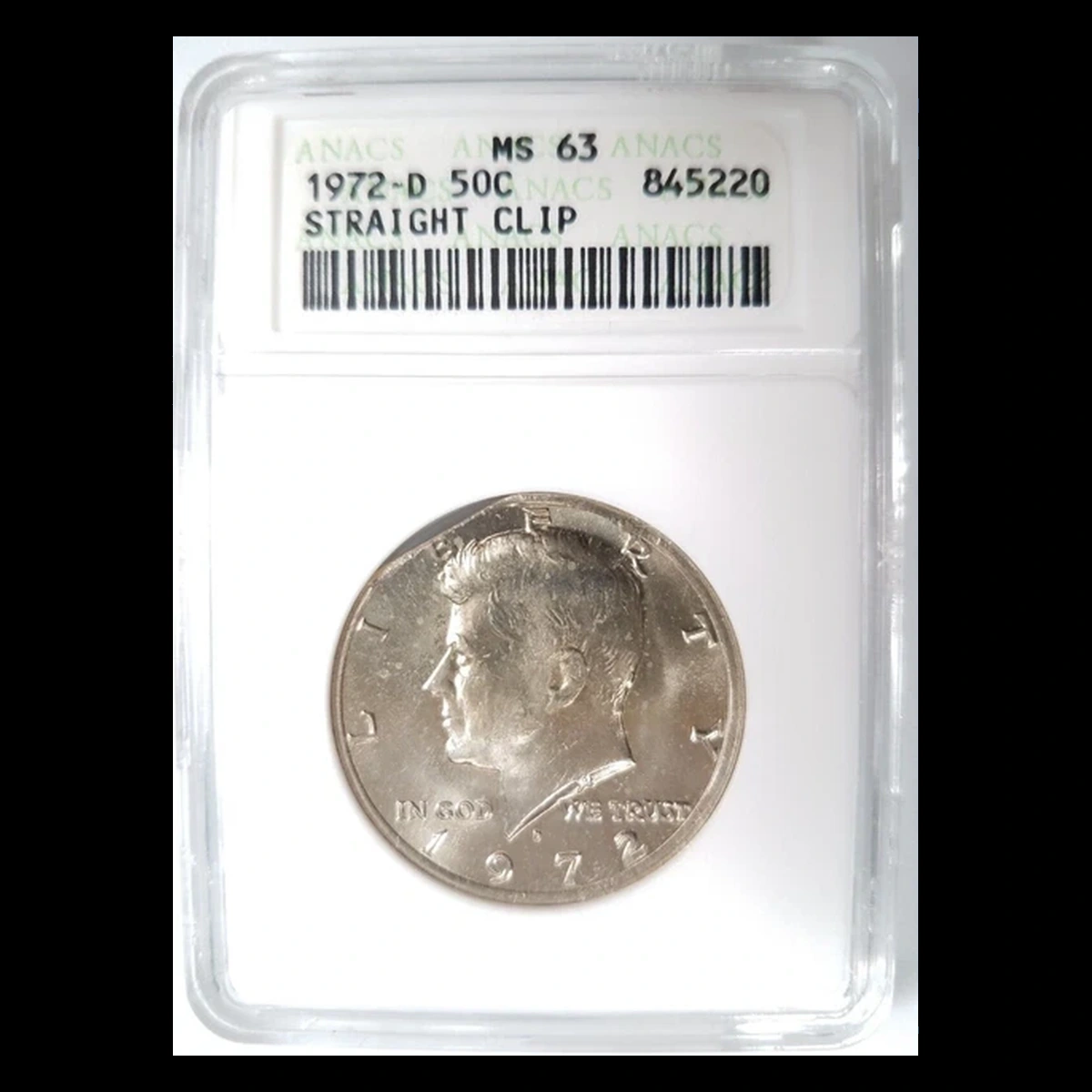
How to Identify
Inspect every gap for original striking at its boundary and nearby weakened detail. Saw marks or cuts through finished letters suggest later removal.
Record the weight without adjusting it to fit the catalog percentage. The separate Proof trio discussed below was sheared during striking and is not another ordinary clipped-blank example.
What It’s Worth
$30–$800 is an estimated range from modest gaps through conspicuous multiple or elliptical clips. The 6.9-gram Denver MS65 sold for $240 in July 2021.
A 1971-D MS65 double clip brought $74 in 2021. The number of gaps alone does not set the price.
10. 1972 Half Dollar A Raised Patch Replaces Detail: Cuds and Die Breaks Error
A broken piece of die leaves space that coin metal can fill. The raised patch is called a cud when it connects to the rim.
Denver reports include separate front and reverse breaks, while a San Francisco PR69 Star Cameo has a lower-left front break. Another S-mint report includes a coin with its matching broken steel die fragment.
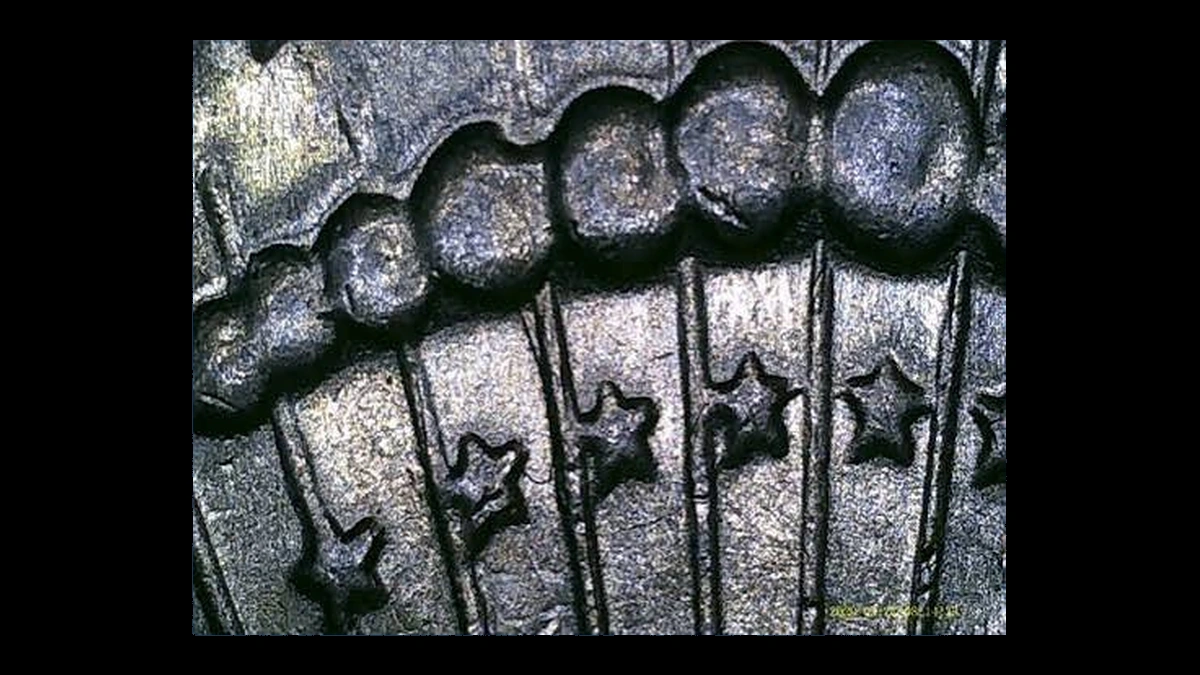
How to Identify
Match the raised outline and affected letters to the actual specimen. Different Denver cuds should not be treated as one pattern.
For the coin-and-fragment report, the steel’s broken boundary and recessed design must correspond to the coin’s missing-design area. Weigh the coin separately and do not force the fragment against it.
What It’s Worth
$40–$1,500 is an estimated range for individual breaks and cuds. The PR69 Star Cameo sold for $1,140 in June 2023.
The separately reported matching coin and steel fragment have an estimated pair range of $2,000–$15,000. That appraisal concerns both matching objects, not a small cud coin offered alone.
11. 1972 Half Dollar Kennedy Is Shifted within the Rim: Misaligned Front Die Error
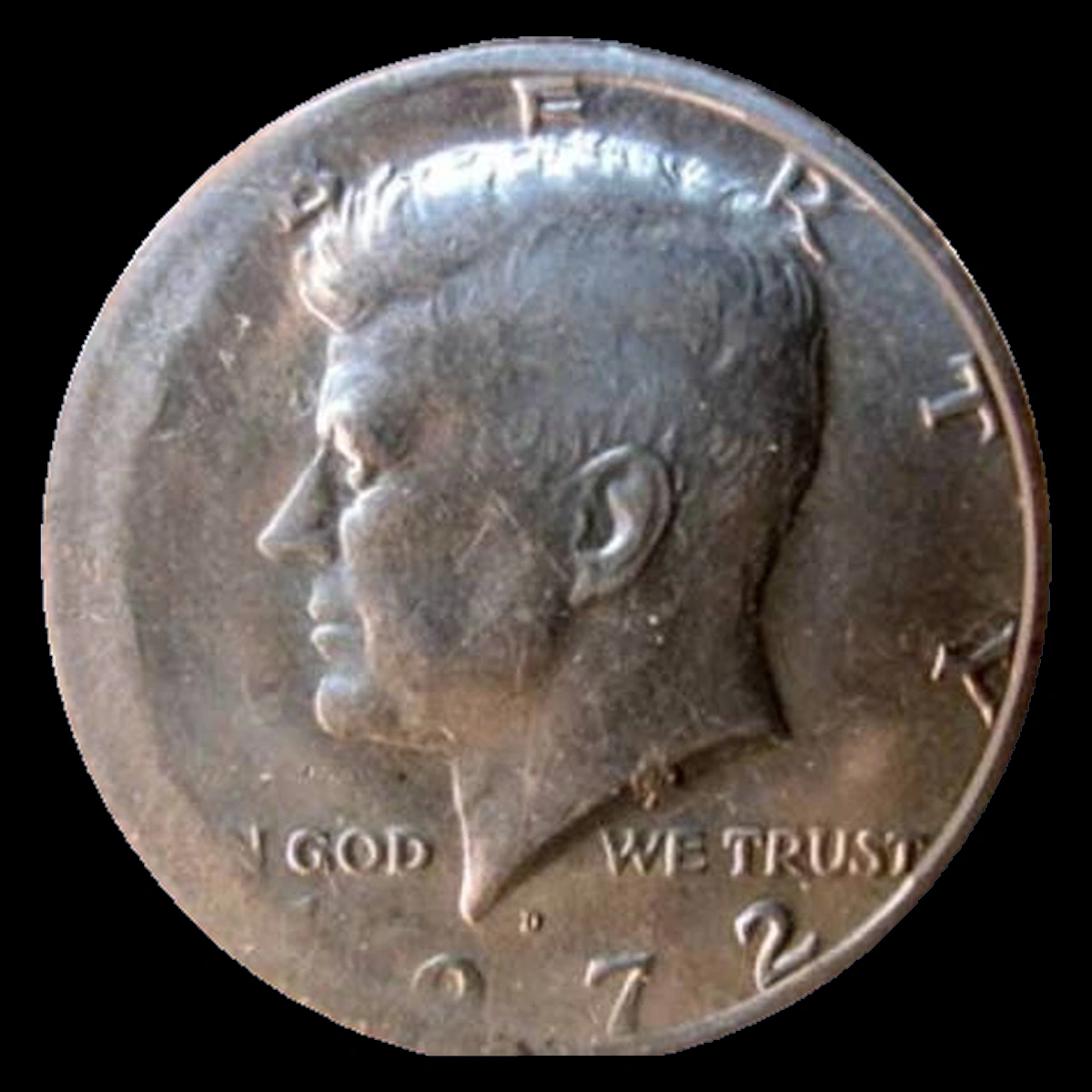
The reported Denver ANACS AU58 has front-side die misalignment. One tool moved sideways, placing Kennedy unevenly within the coin while the reverse stayed centered.
AU58 describes very light wear, not the amount of shift. No exact percentage or direction is established in the supplied report.
How to Identify
Align equal-sized full photographs by the coin’s metal outline. Compare each design’s position inside that outline rather than judging one narrow rim alone.
Both faces moving together suggests an off-center blank instead. Inspect the edge for filing that might imitate an uneven border.
What It’s Worth
$20–$300 is an estimated range for visible original misalignment. Small shifts belong nearer modest values, and the listed AU58 has no supplied sale price.
A 1971 half struck 70% off center in MS64 sold for $312 in 2023. That much larger two-sided error is context rather than a direct one-die comparison.
12. 1972 Half Dollar Both Complete Pictures Remain on a Wide Coin: Broadstrike Error
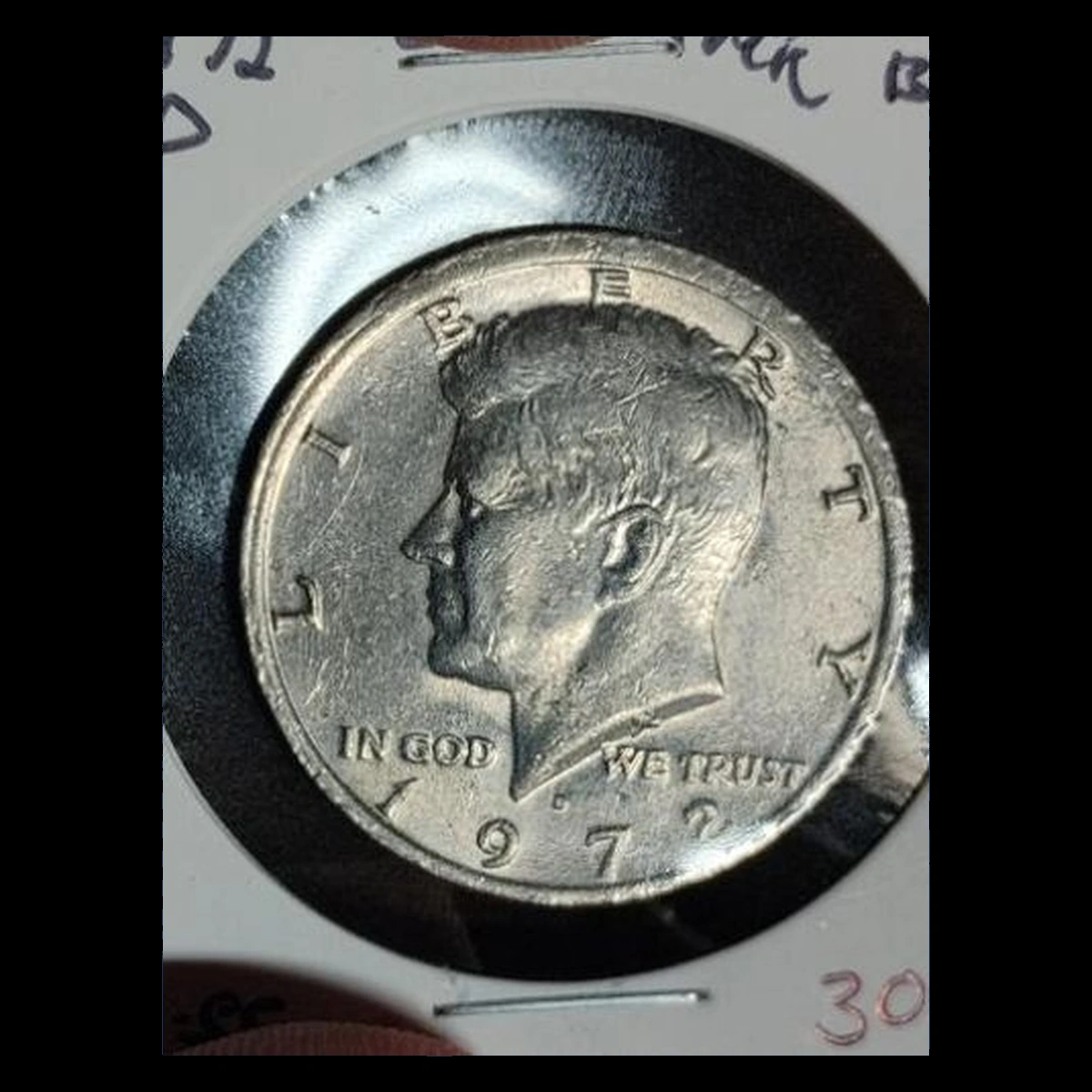
A seller-reported Denver example spread beyond its normal width when the retaining ring, or collar, failed to contain it. The report does not establish its exact diameter or grade.
How to Identify
Measure the outline and account for the complete design on both faces. A broadstrike spreads existing metal, while grinding removes it.
Missing or incomplete edge grooves can support loss of collar restraint. A smooth edge alone is not enough, especially if the faces show later flattening or the edge shows tool marks.
What It’s Worth
$100–$500 is an estimated range for a confirmed attractive broadstrike. A 1995 Kennedy in PCGS MS64 sold for $312 in July 2021.
That result concerns the same general collar failure on another date. It does not supply a sale price for the reported 1972-D.
13. 1972 Half Dollar Only Part of the Blank Received Design: Off-Center Strike Error
The extreme recorded 1972-S Proof is 98% off center, leaving only a small struck sliver. PCGS graded it PR62.
A separate ordinary-strike report has no firmly assigned mint. Its identification should not borrow the Proof’s mint or nearly blank appearance.
How to Identify
Use the extreme Proof’s certified photographs rather than expecting a complete readable year and mintmark in its tiny struck area. A large displacement can remove most identifying detail.
For a more ordinary off-center coin, compare the struck-to-blank boundary on both faces. Consistent displacement beside original blank texture differs from one misaligned die or later grinding.
What It’s Worth
$150–$2,500 is an estimated range across the discussed types. The 98% off-center PR62 sold for $900 in June 2023.
A more moderate error with a clear date may appeal differently from a nearly blank disc. The largest percentage therefore need not produce the highest price.
14. 1972 Half Dollar A Sideways Flip Leaves Both Faces Upright: Medal Alignment Error
The recorded 1972-S PR68 Cameo uses medal alignment, a half-turn from the normal United States coin arrangement. Its design can otherwise be centered and its shape ordinary.
How to Identify
Hold Kennedy upright and flip straight sideways without twisting: the eagle stays upright on this error. A straight top-to-bottom flip instead leaves the eagle upside down.
Repeat against a fixed vertical line to preserve orientation. Also inspect the continuous edge for seams or alteration rather than relying on two independently turned photographs.
What It’s Worth
$200–$800 is an estimated range for comparable confirmed Proofs. The PR68 Cameo sold for $396 in January 2025.
Its Cameo label describes frosted designs against reflective fields. Original surfaces matter, and a slight tilt is not the same as the documented half-turn.
15. 1972 Half Dollar Several Dates or Portraits Overlap: Multiple Strikes Error
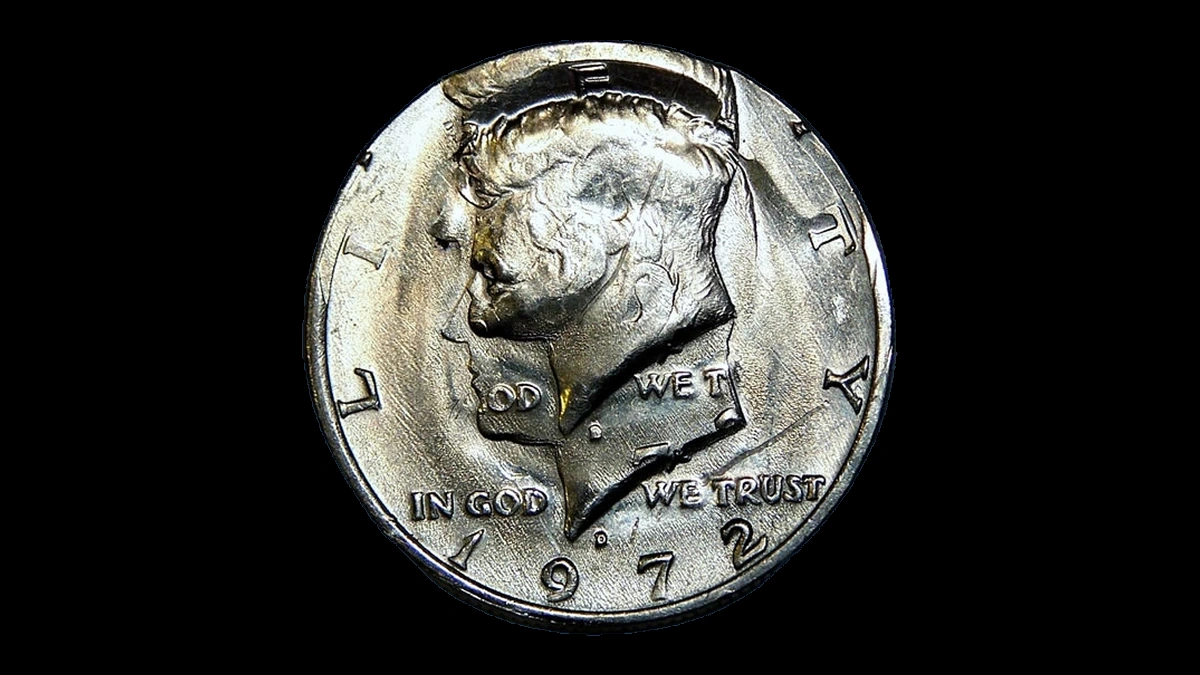
Denver examples record second blows about 60% and 70% off center, plus a double strike turned about 60 degrees inside the collar. A separate flipover mixed opposite-face designs.
The triple-struck MS63 began centered, received a second blow about halfway off center, and a final strike near the rim. These are different sequences on separate coins.
How to Identify
Trace dates and larger details through each impression to see which design crosses another. On the triple strike, the second impression preserves a complete Denver date and the final rim impression only part of it.
An in-collar double strike can remain near normal size. A turned second strike repeats the same face, while a flipover can put front and reverse details together.
What It’s Worth
$700–$5,000 is an estimated range across the sequences. The 60% and 70% shifted double strikes sold for $1,320 and $1,080 in June 2023.
The turned in-collar MS63 brought $2,070 in April 2006, and the triple-struck MS63 $1,495 in January 2011. Readability and condition matter more than simply counting blows.
16. 1972 Half Dollar Kennedy Appears on a Small Copper Body: Cent Blank Error
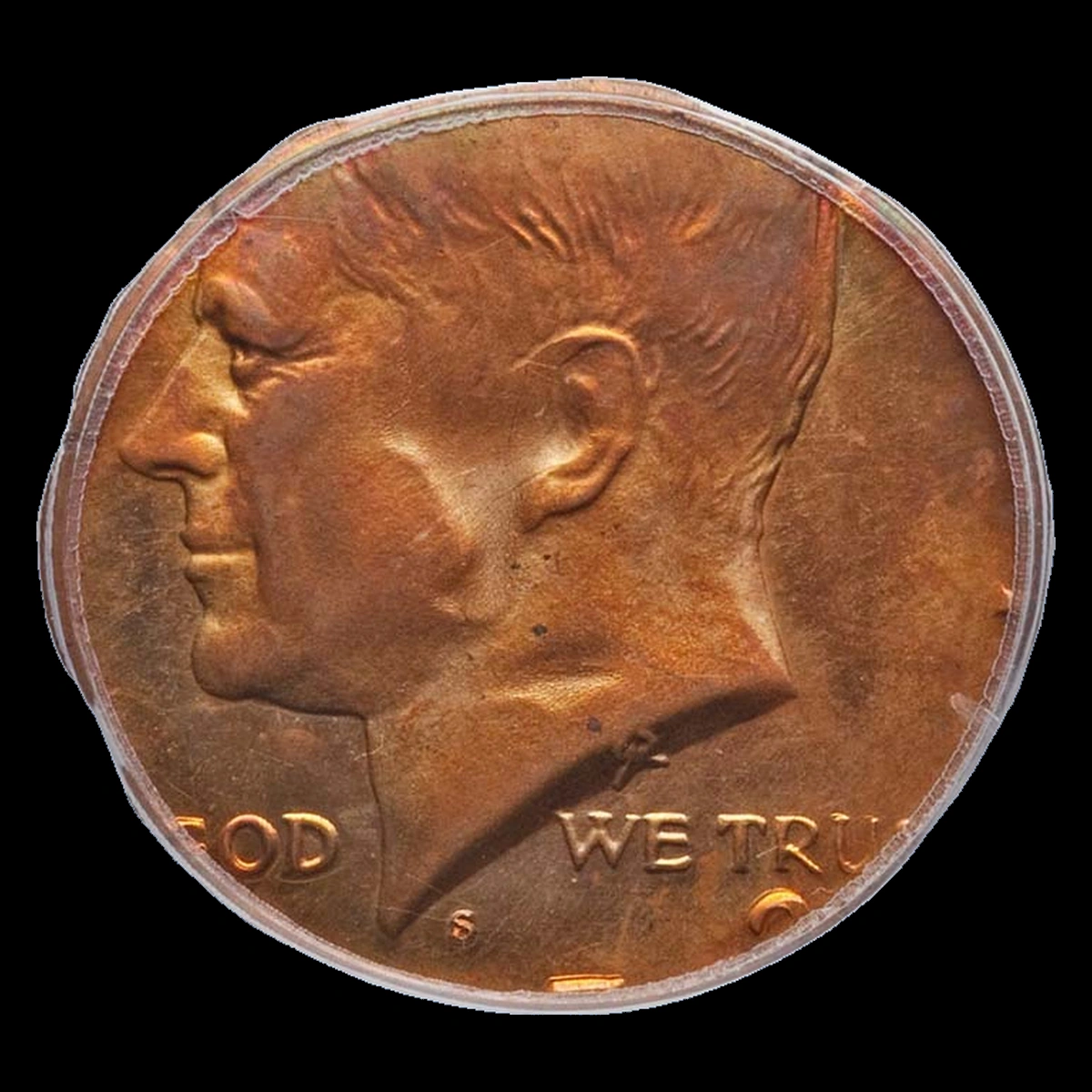
The half-dollar dies struck a bronze cent blank too small to hold the complete design. Recorded examples include a Denver NGC MS65 Red and Brown and a San Francisco PCGS MS63 Red and Brown.
Red and Brown describes copper color. Preserve the S coin’s recorded MS63 wording without using it to invent a regular San Francisco half-dollar issue for 1972.
How to Identify
A contemporary bronze cent blank starts near 3.11 grams, much lighter than a normal half. Its small body should carry genuine surviving Kennedy design with naturally cut-off outer details.
Inspect for trimming or plating and match the date and mint evidence to the certified example. A full-size copper-coated half is not the same error.
What It’s Worth
$2,500–$5,500 is an estimated range for comparable cent-blank strikes. The Denver MS65 sold for $3,720 in August 2024, and the S-mint MS63 brought $3,360 in June 2023.
These prices belong to half-dollar designs on cent blanks. They do not value ordinary cents or a full-size half with a cent-shaped hollow.
17. 1972 Half Dollar The Half-Dollar Design Crowds a Different Small Blank: Nickel or Quarter Blank Error
The nickel-blank Proof records include a single displaced strike and a separate double-struck PF66 Cameo. The double-struck coin weighs five grams and shows two impressions offset in opposite directions.
Reported Denver nickel- and quarter-blank pieces need their own measurements and identification. They do not inherit the Proof’s grade or strike pattern.
How to Identify
A nickel blank starts near 5 grams and 21.21 mm; a clad quarter blank starts near 5.67 grams and 24.26 mm. Compare actual weight, edge construction, and surviving design while allowing for expansion.
The single-strike Proof has recorded grooves around five to eight o’clock. The double strike instead needs its earlier motto remnant near the neck and clearer second date and S.
What It’s Worth
$2,500–$10,000 is an estimated range for the Proof forms. The same double-struck nickel-blank coin sold for $9,000 in October 2021 and $3,720 in June 2023.
For comparable Denver pieces, estimate $1,000–$4,000. Related comparisons include a 1971-D nickel-blank coin at $2,040 and a 1976 quarter-blank coin at $1,020, rather than confirmed sales of the reported 1972-D examples.
18. 1972 Half Dollar A Cent-Sized Hollow Marks a Full Half: Blank Indentation Error
A smaller blank overlapped the Denver half during striking and left a cent-sized depression. The rest of the full-size half received its normal design.
The recorded NGC MS64 does not retain the cent. It is a single surviving half, rather than a documented two-piece set.
How to Identify
Measure the full outline and the smaller hollow separately. Near-normal weight can fit an indent because the metal moved rather than disappearing.
Follow the curved boundary where it meets original design and compare the opposite face. A later punch can damage completed details without reproducing the same striking relationship.
What It’s Worth
$2,000–$6,000 is an estimated range for a comparable clear cent-blank indent. The NGC MS64 sold for $4,320 in June 2023.
That amount paid for the half alone. A proposed matching cent would need its own evidence and valuation rather than an automatic extra amount.
19. 1972 Half Dollar Three Pieces Explain One Connected Accident: Mated Proof Trio Error
The trio represents two original blanks, not three complete coins. The first half was struck twice inside the collar and indented when the second blank partly overlapped it.
The overlapping blank received a sunken mirrored image, called a brockage, from contact with the first coin. Pressure and the collar separated it into two pieces, completing the three-part set.
How to Identify
Compare all three pieces in their documented positions without pressing them together. The first coin’s indent should match the overlap, and the two fragments should reconstruct the second blank.
Look for connecting boundaries, mirrored detail, and collar-contact marks. Individual fragment weights should not be compared with a whole half dollar as though each began as one.
What It’s Worth
$10,000–$20,000 is an estimated range for the intact documented trio. Mint Error News carried a historical $15,000 asking price, not a recorded sale.
The first coin is described as PF64, and all matching components contribute to the set’s meaning. An isolated fragment does not automatically receive one-third of the group value.
Conclusion
Start with a specific visible clue and keep the correct mint, finish, and specimen beside its reference. Shared small doubling, a recognized No FG variety, and a shifted second strike require different checks.
For unusual blanks or matching pieces, measurements and the design sequence explain more than a dramatic shape alone. A coin, a coin with its die fragment, and a complete trio are different things to value.