Rare 1836 Dime Errors (List & Pictures)
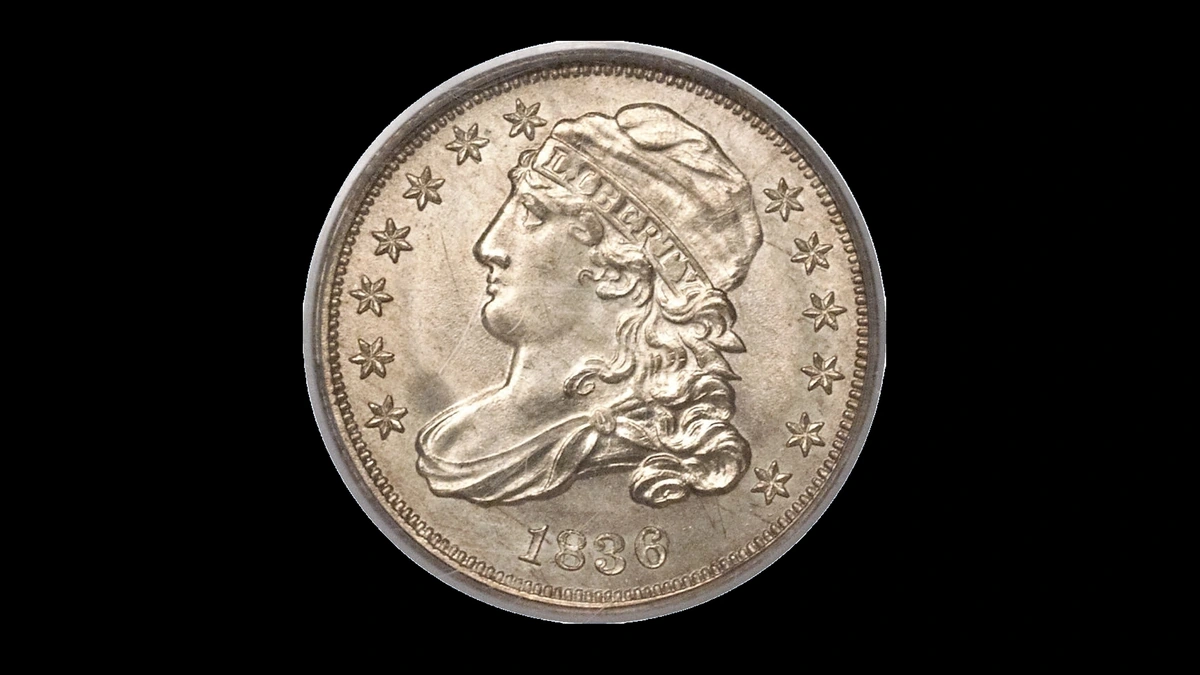
The date and portrait offer two different clues to 1836 dime errors: an 8 entered over another 8 and a long raised crack. Estimated whole-coin values range from $100–$5,000, with an MS65 JR-2 bringing $3,840 in August 2019.
Inspect the numeral first, then follow the crack across Liberty to understand which feature came from preparing the die and which developed as it wore out.
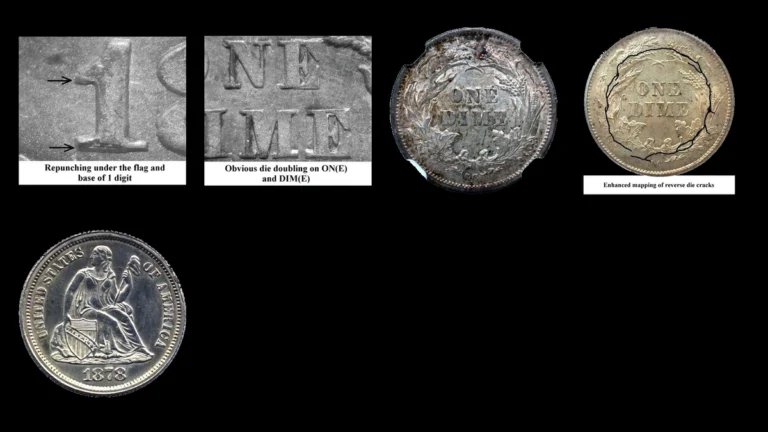
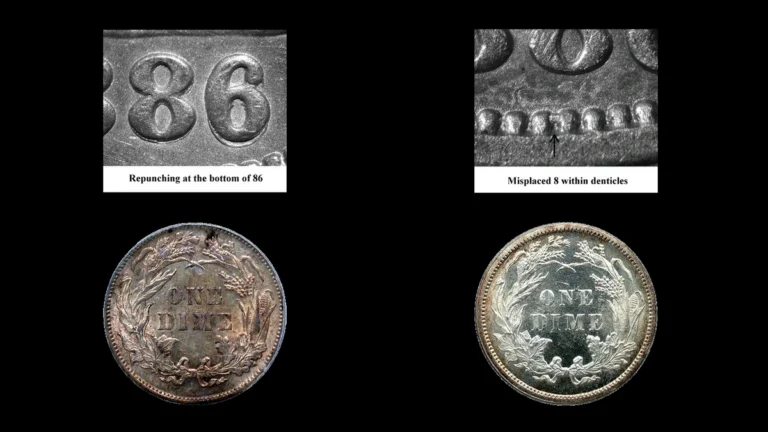
1836 Dime Overlapping Shapes in the Date: Fancy 8 over Block 8 Error
The JR-2 date contains traces of two differently styled 8s. A plainer Block 8 was punched into the die before a decorative Fancy, or Script, 8 was entered over it.
The second punch did not entirely remove the first numeral’s outlines. The remaining portions of that earlier shape are the evidence to find, rather than the decorative appearance of the visible 8 alone.
How to Identify
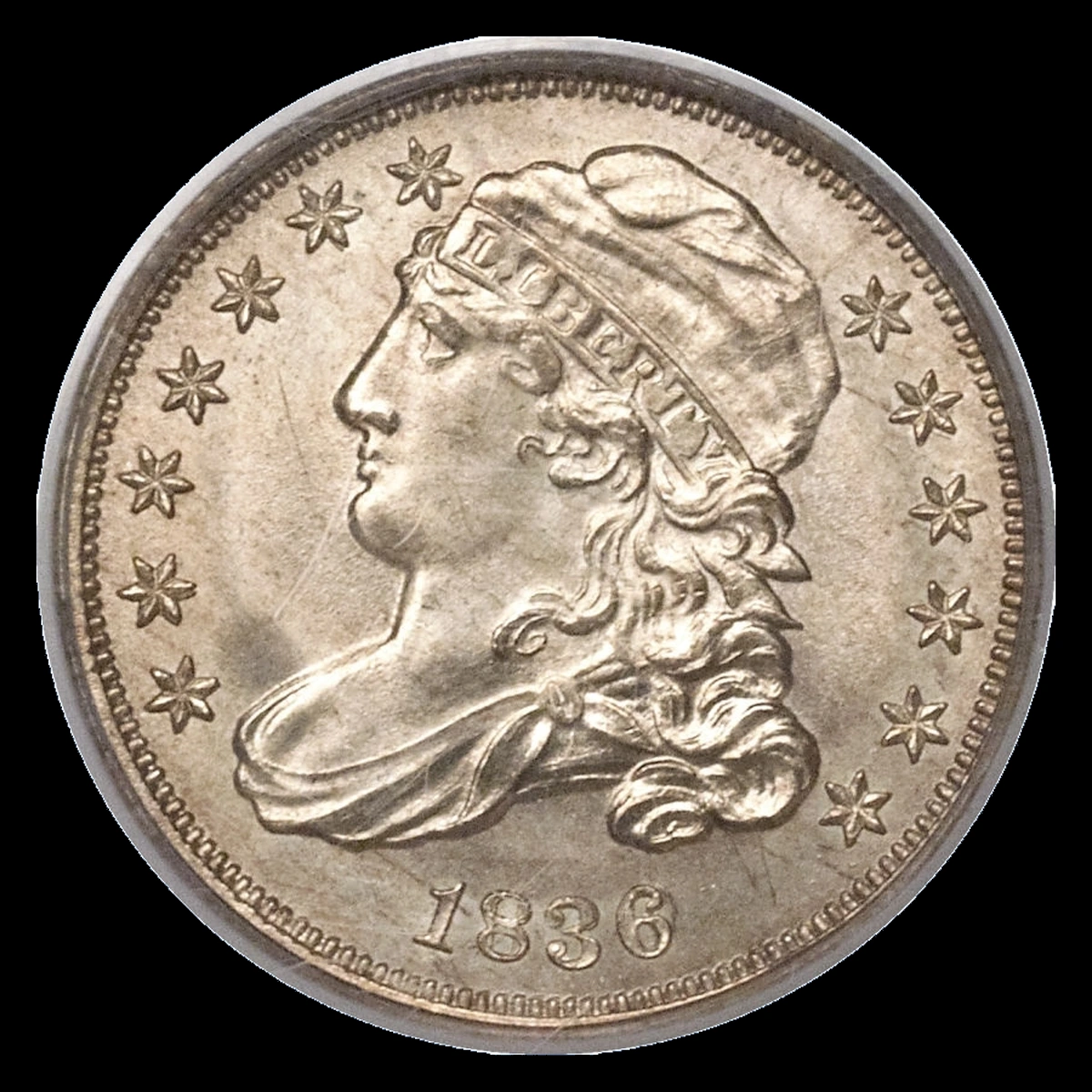
Study a focused image of the full date so the neighboring numerals remain available for comparison. The suspected underdigit should agree with an attributed JR-2 example in both shape and placement.
Move the light across the 8 to distinguish actual relief from a dark toning boundary. A flat ledge alongside the numeral can result from movement during striking and does not establish two differently styled date punches.
The PCGS registry description associates this date feature with the long obverse crack. The altered 8 existed first, however, so an early strike need not display the later crack boldly.
What It’s Worth
Identified examples are estimated at $100–$5,000, covering worn coins through approximately MS65 preservation. The JR-2 graded PCGS MS65 sold for $3,840 in August 2019.
That grade indicates no circulation wear and relatively few marks, which helps explain the result. The price covers the entire dime, including its surfaces and remaining design, rather than a separate charge for the underdigit.
1836 Dime A Raised Line Crossing Liberty: Bisecting Obverse Die Crack Error
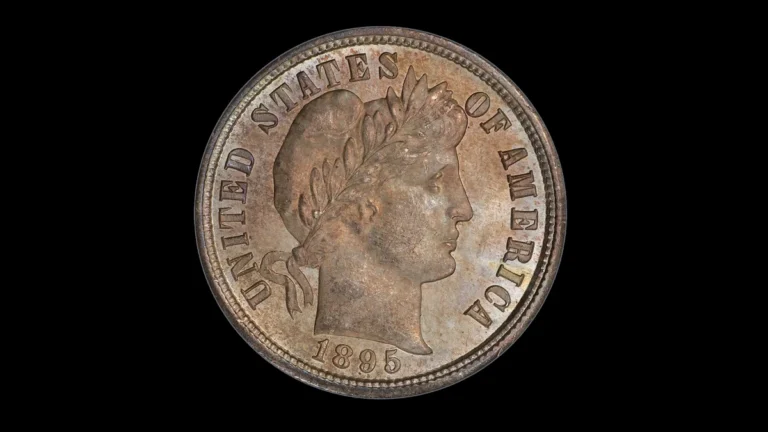
From the upper rim, the JR-2 crack passes through T in LIBERTY and the hair toward the upper left of the date’s 3. Its long route can appear to divide the front design.
The line records a split in the steel die, not a split through the dime itself. During striking, metal entered that narrow opening and formed a ridge on the coin.
How to Identify
Follow the line through all of those landmarks rather than matching a single bright section. Wear or an earlier stage of the die’s deterioration can make portions less obvious.
A scratch cuts below the field and may push small ridges up along its sides. The die-crack feature itself should stand above the surface and follow the documented route.
Check that the reference and coin are both dimes, since a similarly dated half dime is a different denomination. The normal dime standard is approximately 2.70 grams and 18.5 millimeters, with a grooved edge and possible weight loss from wear.
What It’s Worth
Whole-coin values for the crack examples are estimated at $100–$3,000. An MS64 JR-2 brought $1,860 in June 2018, while a different JR-1 graded VF25 sold for $198 in July 2025.
Those records illustrate the importance of variety and condition, not a calculated crack premium. A longer or more visible line does not by itself override cleaning, heavy wear, or other surface problems.
Conclusion
The overlapping 8 and the long crack can share one 1836 JR-2 dime while recording different moments in the die’s life. Match the date shapes independently, then examine the crack’s route and strength.
Use a sale with similar wear and surface quality to estimate the whole coin, and never add the two feature ranges together to price a single example.