Rare 1797 Dime Errors (List & Pictures)
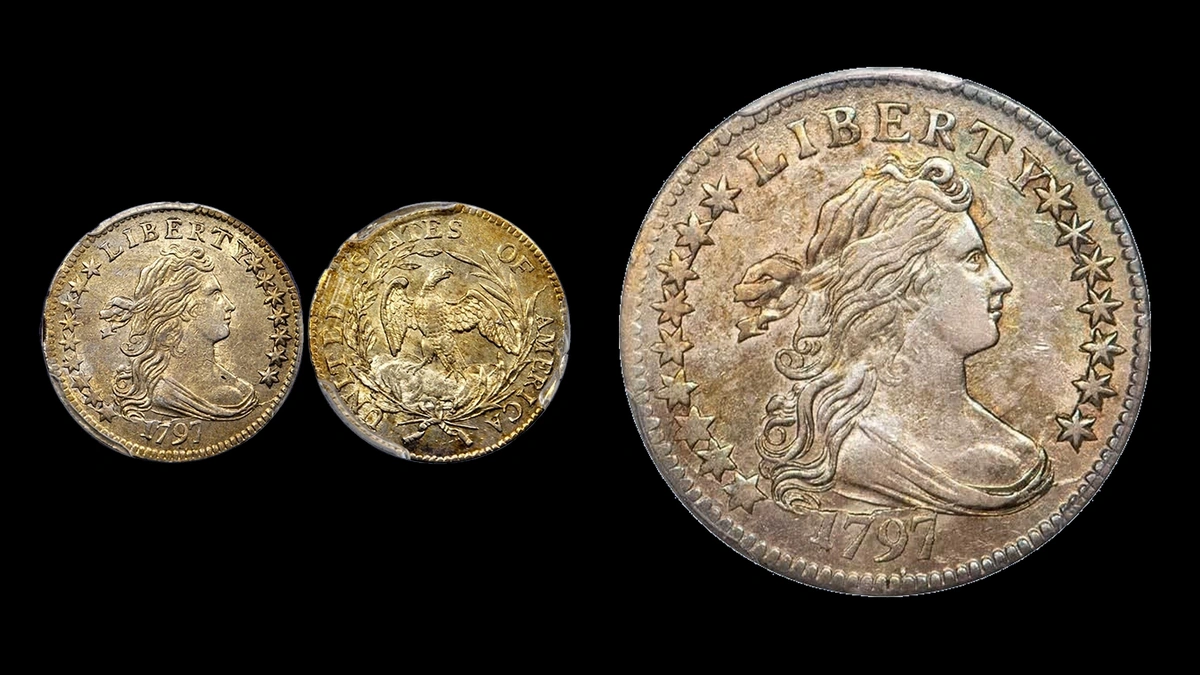
A weak date on an early silver dime can reflect a failing die rather than simple wear. The 1797 dime errors below carry estimated whole-coin values of $1,500–$25,000, with a sixteen-star XF45 providing a documented $10,575 January 2016 comparison.
Count the stars, inspect the lower portrait and date, then compare the opposite face to separate cracks, an advanced break, and clash traces.
| Visible evidence | Feature | Estimated whole-coin range |
|---|---|---|
| Raised lines below the bust and near lower-right stars | Die cracks | $1,500–$20,000 |
| Broad date-area failure and weak final S on reverse | Advanced rim-connected break | $2,500–$25,000 |
| Faint shapes related to the opposite design | Die clash | $1,500–$20,000 |
The examples concern the sixteen-star Draped Bust dime with the small eagle reverse, not a similarly dated half dime or the different thirteen-star variety. A normal dime originally weighed about 2.70 grams and measured 19.8 millimeters, with a grooved edge; wear may reduce the weight.
1. 1797 Dime Raised Lines below Liberty: Die Cracks and Date-Area Failure Error
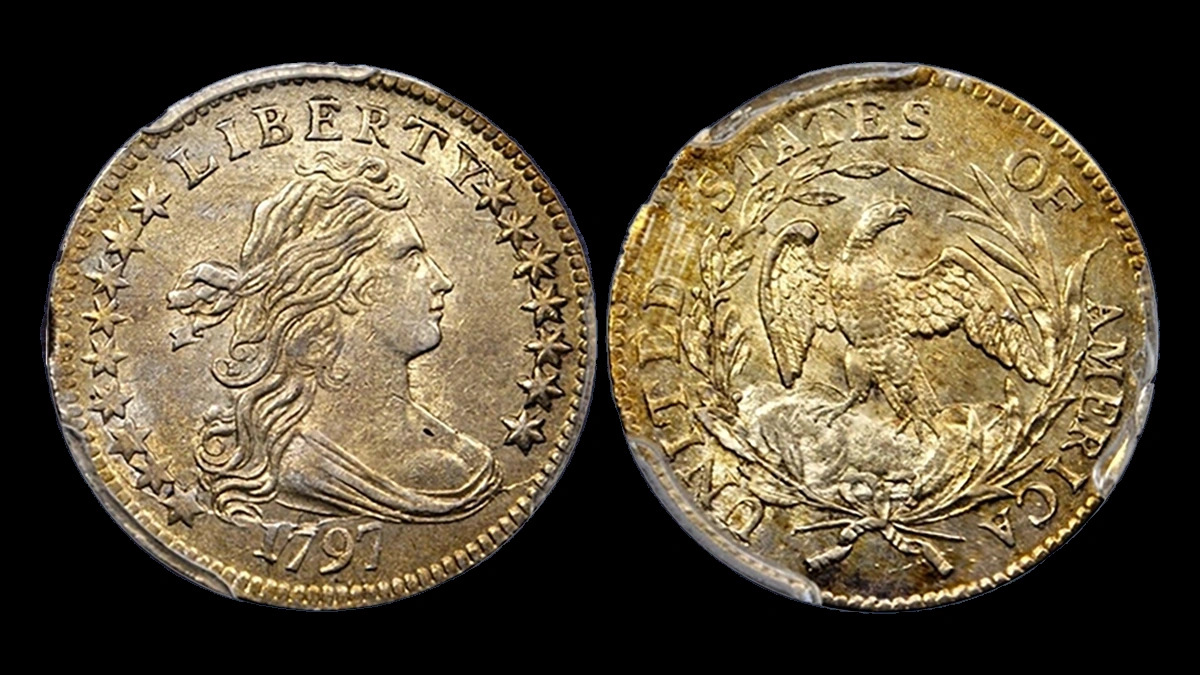
The lower-right stars and the space beneath Liberty’s bust show where the damaged obverse die began to reveal itself. Raised lines cross above the date, which can weaken as the failure advances.
A crack in a striking die provides a narrow opening that fills with coin metal. The resulting ridge does not mean the silver dime itself has split.
How to Identify
Count all sixteen obverse stars before comparing the crack route. Then follow each line beside the lower-right stars and under the bust, noting whether separate cracks remain separate or join a broader affected area.
Under side lighting, distinguish a raised feature from a scratch cut into the field. A freshly abraded date area or a lowered patch calls for another explanation even if the date has become hard to read.
Compare more than the weakest numeral. The position of each line relative to the bust and nearby stars makes a stronger match than a generally faint date.
What It’s Worth
Circulated examples of this cracked-die form are estimated at $1,500–$20,000. A PCGS XF45 with CAC approval sold for $10,575 in January 2016, as quoted in a Legend catalog.
The result reflects the entire scarce early dime, including its condition and surfaces. The catalog’s AU50 with cracks and clashes is a separate specimen, and its guide figures are not completed auction prices.
2. 1797 Dime A Nearly Lost Date with Opposite-Side Weakness: Advanced Rim Break Error
On the documented Fine-15, the portrait retains much more detail than the date area, where only faint lower parts of 79 were described. The die damage had grown into a broad rim-connected failure approaching a complete break.
The reverse contributes a useful clue: weakness near the final S of STATES lies opposite the affected obverse area. This combination represents a later stage than the separated cracks on the AU50 example.
How to Identify
Compare the remaining date traces with Liberty’s stronger portrait, then turn directly to the final S on the back. Both areas should agree with the advanced-stage photographs.
Follow the broad front boundary to the rim and inspect the edge for cutting or a physically missing piece of the coin. Two thin, disconnected cracks do not by themselves establish the large later failure.
A uniformly worn coin may also have a poor date, but it lacks the same relationship between localized failure and stronger surrounding design. Keep that contrast within the coin in view when examining a close-up.
What It’s Worth
Estimated whole-coin values range from $2,500–$25,000 for advanced examples of varying preservation. The Fine-15 brought $7,050 at Stack’s Bowers in 2013.
That sale provides a direct record for the illustrated late-stage coin. It should not be attached to the earlier AU50 or used to price any 1797 dime whose date happens to be weak.
3. 1797 Dime Unexpected Shapes in the Fields: Die Clash Error
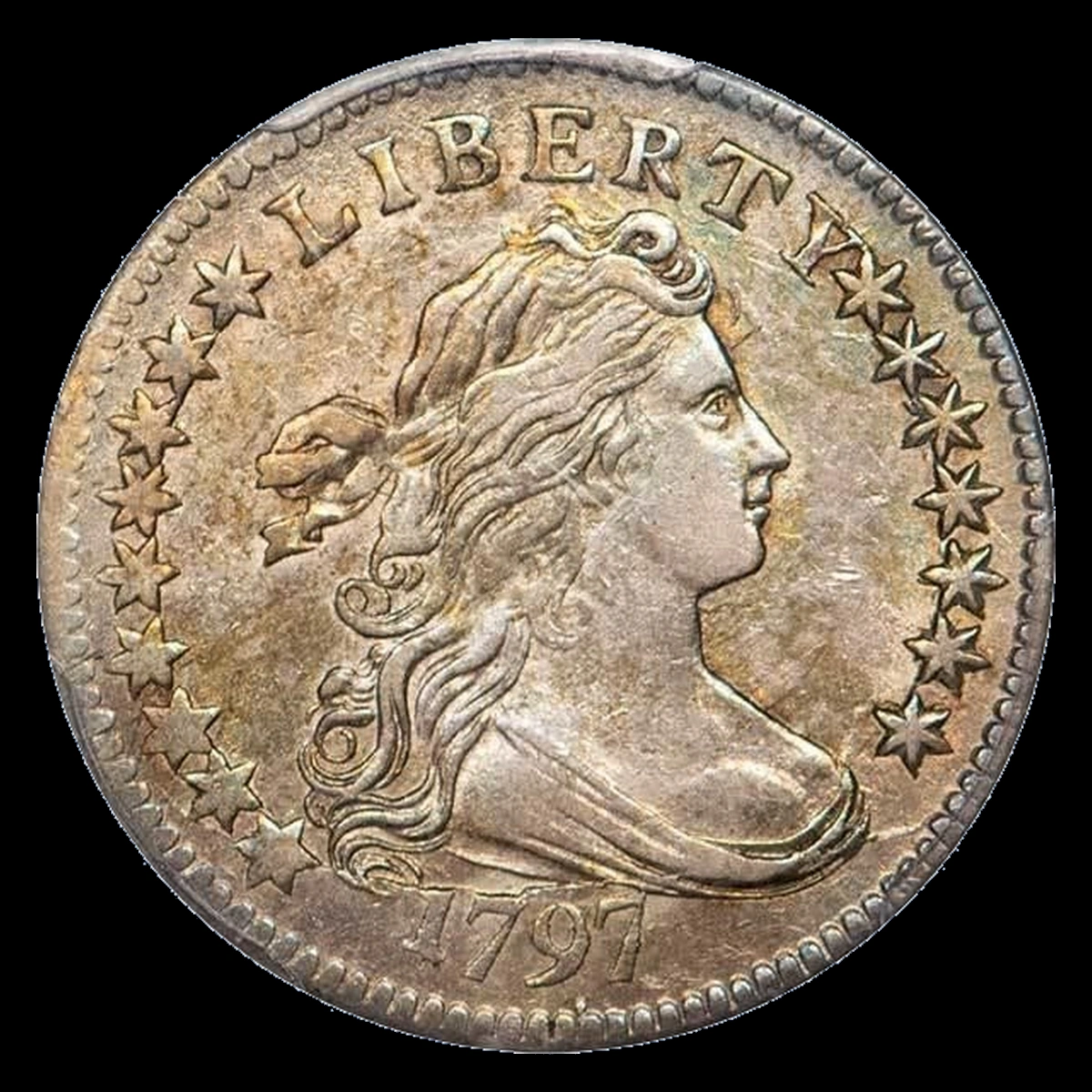
The cataloged sixteen-star AU50 also shows faint extra outlines identified as clash marks. These formed after the two dies struck each other without a blank and then transferred the resulting marks to later coins.
A clash is separate from a crack: its shape relates to part of the opposing design. The supplied description does not map every mark’s exact position, so the actual AU50 photographs remain important.
How to Identify
Examine a faint outline under low light and compare it with recognizable parts of Liberty or the eagle on the opposite face. Its placement and shape must fit that relationship rather than merely resemble a scratch.
Use photographs of the correct dime and die stage. A half-dime image cannot supply the pattern, and the separate date-area cracks on the AU50 do not prove it had already developed the Fine-15’s large rim break.
What It’s Worth
Circulated sixteen-star dimes with recognizable original clashes are estimated at $1,500–$20,000. The AU50 catalog used the $10,575 XF45 sale as a comparison; that amount is neither a reported sale of the AU50 nor an isolated clash premium.
Because the AU50 combines cracks and clashes, it still represents one coin for valuation. Original surfaces and remaining detail should be compared before trying to distinguish the appeal of each feature.
Conclusion
Read the date area alongside the portrait, stars, and reverse rather than judging it alone. Separate raised cracks, broad rim-connected failure, and faint opposite-design traces can record different kinds or stages of die damage.
The AU50 and Fine-15 illustrate different stages on different coins, so keep their photographs and price references distinct while valuing the whole dime’s preservation and originality.