Rare 1828 Dime Errors (List & Pictures)
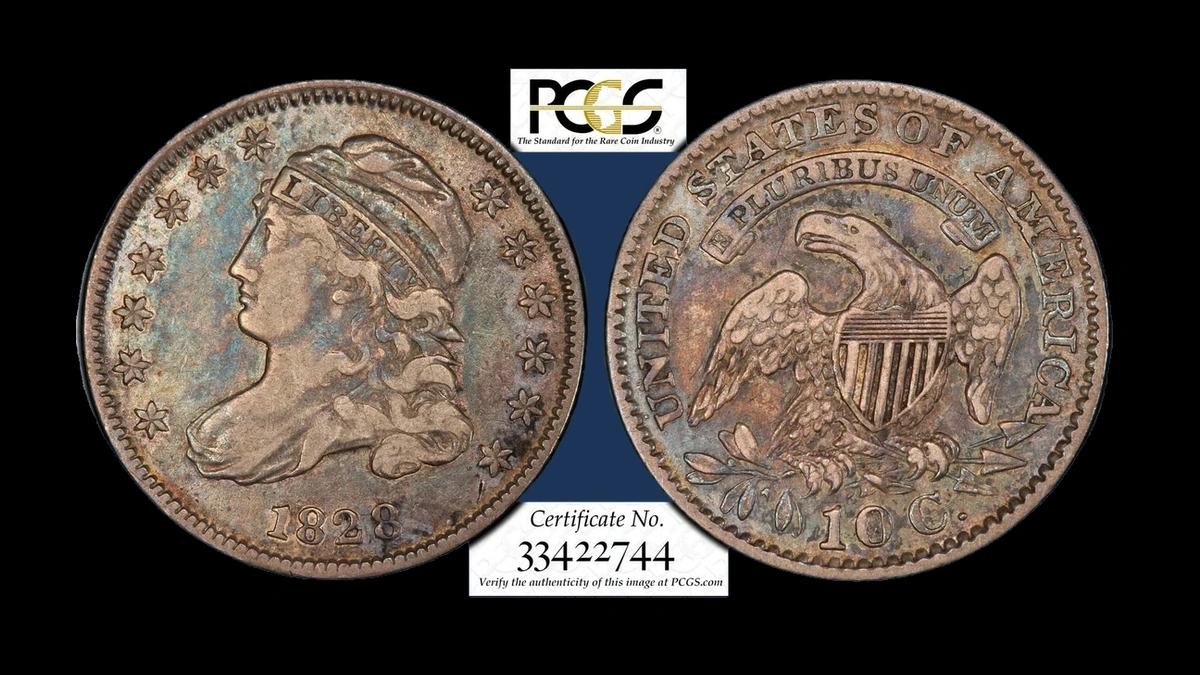
A reversed portrait can remain striking even on a heavily worn coin: an 1828 brockage graded AG3 sold for $5,750 in February 2009. The 1828 dime errors discussed here span estimated values of $100–$8,000, from a small internal die break to that unusual transferred portrait.
Examine the height and location of the feature, then check whether the coin belongs to the Small Date or Large Date type.
1828 Dime A Raised Lump inside the Reverse: Internal Die Break Error
On an early Small Date JR-1, a small raised chip appears near M. A later stage described in a guide extends from the letter labeled A2 toward the banner.
The die pair’s JR-1 designation covers more than one stage of deterioration. An early chip photograph therefore does not demonstrate every part of the larger later break.
Metal entered a damaged area inside the reverse die to form the raised feature. No rim connection is established, so the supplied example is an internal break rather than a rim cud.
How to Identify
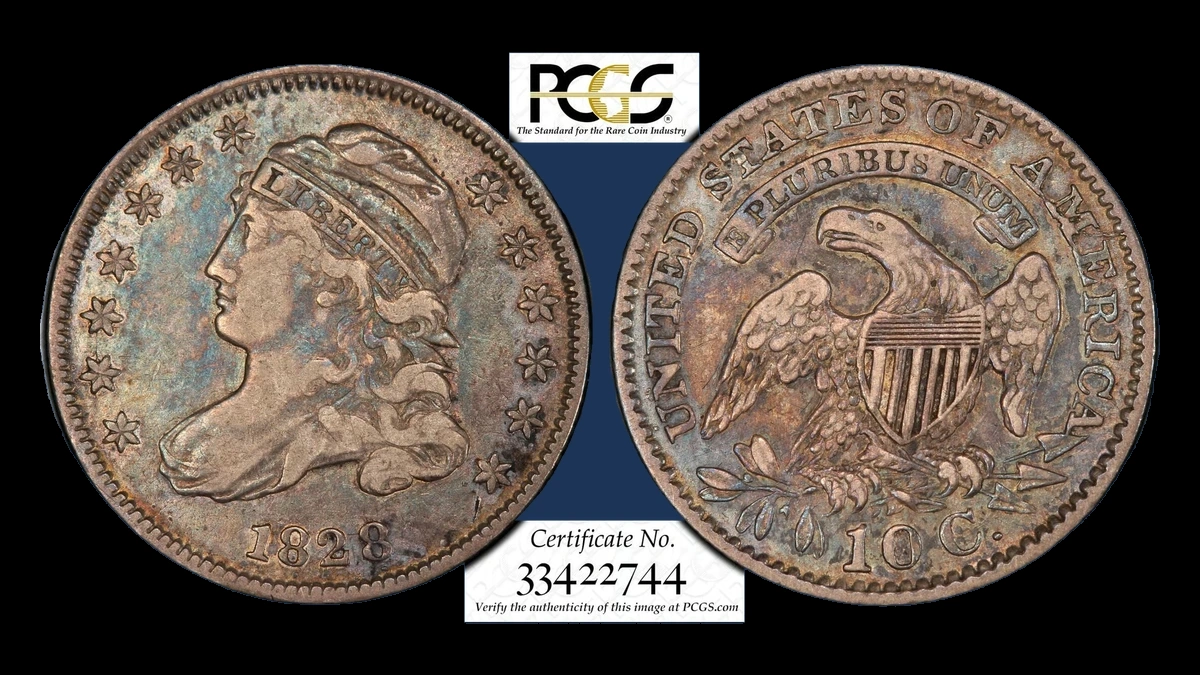
Find the feature near the documented lettering and trace its boundary under side lighting. Check whether clear field separates it from the rim before deciding what kind of break it is.
The collector discussion distinguishes the small early chip from the larger A2-to-banner stage. Select the relevant comparison rather than assigning the most advanced description to every JR-1.
This Small Date type measures about 18.50 millimeters and originally weighed approximately 2.70 grams, with roughly 89.2% silver and a grooved edge. Check for added solder or gouging around the raised area, since an unrelated swelling does not establish the same die failure.
What It’s Worth
Circulated Small Date examples with identified chips or internal breaks are estimated at $100–$1,200. That is a whole-coin range, with no completed sale supplied for the collector’s pictured example.
A small early chip calls for a different comparison from a strong later break on a better-preserved coin. Cleaning, corrosion, and other surface problems still affect value even when the variety is identifiable.
1828 Dime A Backward Liberty below the Surface: Reverse Brockage Error
The Large Date brockage shows Liberty recessed and reversed on the back instead of the normal eagle. A previously struck coin trapped against the blank pressed its raised design into the receiving dime.
The front retains the normal design, but heavy circulation left its date and stars weak. The protected recessed portrait remains clearer, which does not raise the coin’s overall AG3 grade.
How to Identify
Check both direction and relief: Liberty should be a mirror image sunk below the surface. A plain depression, a faint normal portrait, or ordinary doubling would not produce that combination.
Compare the surviving front date and complete back impression with the documented JR-2 photographs. Examine both faces and the edge for damage suggesting a later squeeze between finished coins.
The Large Date type is approximately 19 millimeters across, somewhat larger than the Small Date example above. Its original weight was also about 2.70 grams, so allow for substantial wear instead of expecting the circulated brockage to retain its full starting weight.
What It’s Worth
A genuine example with clear brockage and secure identity is estimated at $3,000–$8,000. The NGC AG3 sold for $5,750 on February 6, 2009.
That historical result shows how a recognizable unusual error can retain appeal despite severe wear. It is not a current offer or a guaranteed return for a newly found coin.
Conclusion
The two 1828 errors require opposite relief checks: the internal break rises from the reverse, while the brockage portrait is recessed and backward. Their Small Date and Large Date identities also call for different reference photographs and slightly different diameter expectations.
Identify the feature and type before comparing prices, and keep the early chip, later internal break, and heavily worn brockage as separate examples.