Rare 1801 Dime Errors (List & Pictures)
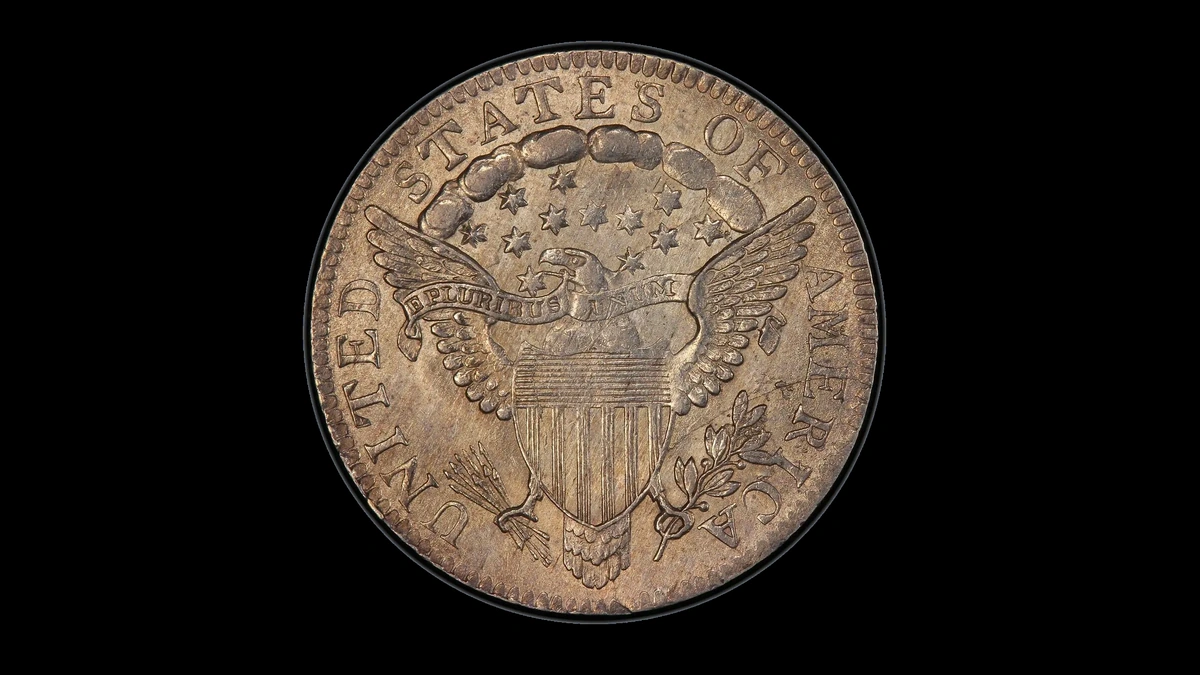
Wear can leave very different kinds of evidence on 1801 dime errors: raised ridges from a cracked tool or fragments of an overlapping second strike. Estimated whole-coin values for worn examples span $1,000–$10,000, with a crack-bearing dime selling for $8,050 in 2007.
Trace any lines across the eagle before deciding whether other surviving details repeat the design.
1801 Dime Raised lines travel across the eagle: Reverse Die Cracks Error
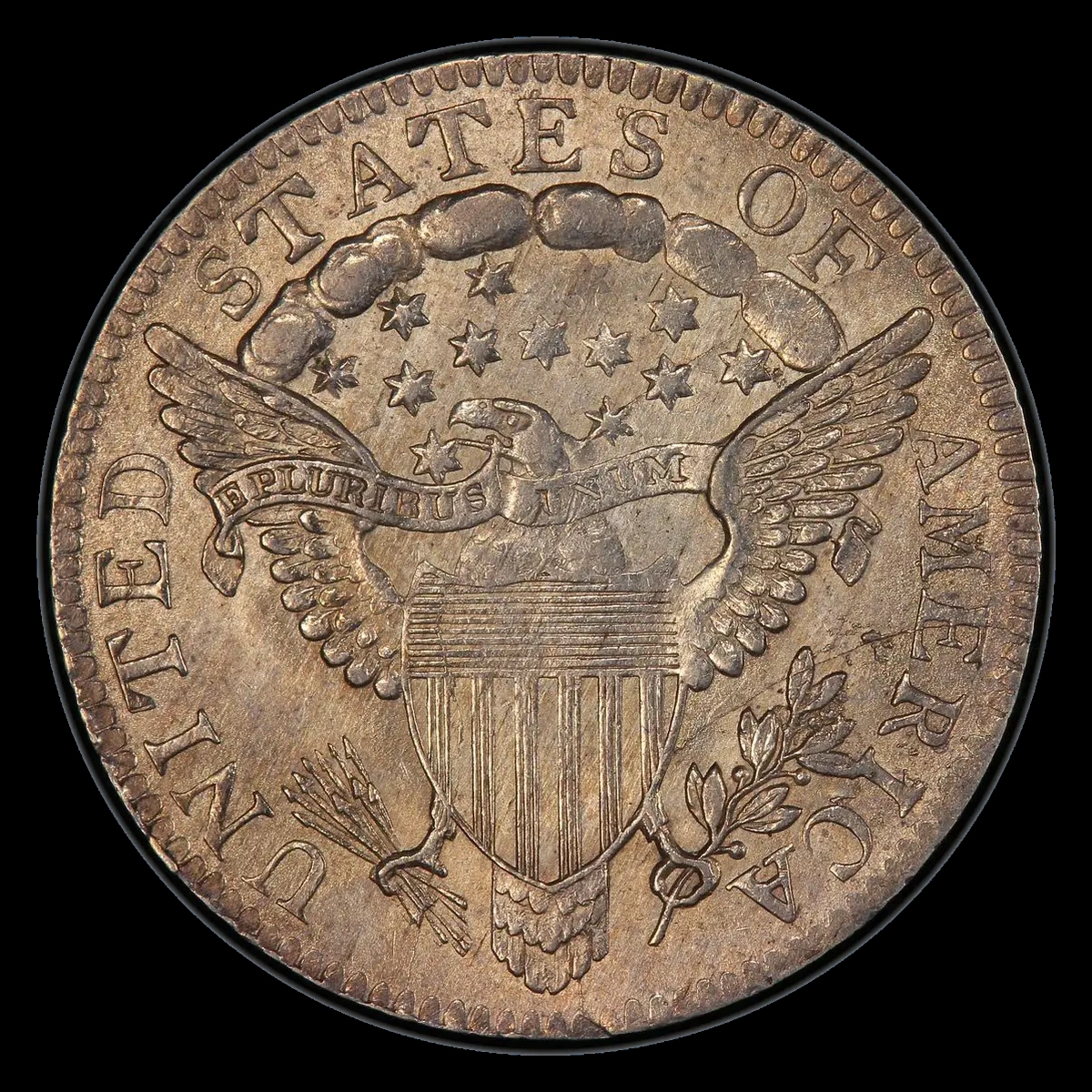
The documented reverse has several connected-looking routes worth studying separately. One line curves from the shield’s right side toward the E in AMERICA.
Another enters from the rim, crosses the arrows and the eagle’s leg, and reaches the shield. Two smaller lines extend from the tail toward the rim.
These ridges reproduce openings in a cracked die, the steel tool that stamped the reverse. Metal was pressed into those openings, so the visible lines do not mean the silver coin itself split along the same paths.
How to Identify
Confirm that the reverse shows the large eagle and shield used in 1801. A small-eagle reverse from an earlier Draped Bust issue is the wrong design for this comparison.
With light falling across the surface at a low angle, inspect the shield-to-E line under a 10× magnifier. Determine whether it stands above the field rather than cutting into the silver as a scratch would.
Next examine the arrows-and-leg route, followed by the smaller tail lines. Several correctly placed ridges offer stronger support than a single line that merely points toward the same letter.
An accessible example can be compared with original specifications of approximately 2.70 grams and 19.8 millimeters, with a grooved edge. Allow for metal lost through wear, and inspect the edge for cuts or other later damage.
What It’s Worth
Estimated values are $1,000–$10,000 for worn whole coins. The scarce date, amount of remaining design, and surfaces contribute heavily to that range.
The documented PCGS XF45 dime sold at Heritage for $8,050 on August 9, 2007. XF45 describes noticeable wear with much of the detail still present.
This is a historical price for the complete specimen. It does not establish a current $8,050 premium for cracks, and cleaning or other surface problems can change the comparison substantially.
1801 Dime Fragments of the design appear twice: Double Strike Error
A heavily worn 1801 dime from the Ed Price Collection preserves evidence of two strikes. Its PCGS AG3 grade means that much of the original detail has disappeared through circulation.
The second blow acted on an already struck coin, leaving parts of the design in overlapping positions. That history differs from a die carrying a repeated design before it ever touched this particular blank.
The supplied description does not establish a precise rotation or displacement for the second strike. Those measurements should not be inferred from the error name.
How to Identify
On a coin this worn, begin with the surviving landmarks rather than expecting two complete portraits. Compare both faces with photographs of the attributed example and identify which details actually appear in two positions.
Each proposed remnant should have a recognizable relationship to the normal design. A rough patch, isolated lump, or irregularly worn edge cannot prove another strike by itself.
Use different light angles to separate a faint second impression from scratches. Examine the edge as well, because later squeezing can displace metal without reproducing the relationship between two genuine struck faces.
Photographs should preserve the full coin around any close detail. That context helps show how the proposed second impression relates to the first and avoids assigning an unsupported angle.
What It’s Worth
The supplied estimate is $1,500–$5,000 for heavily worn examples with a recognizable second impression. The PCGS AG3 coin brought $2,185 in Heritage’s 2008 Ed Price Collection sale.
A double-struck 1802 dime in the same collection sold for $3,450 at Fair 2, an even more worn grade. Its different date makes it a comparison, not a second 1801 record.
Neither result sets a price for an unworn double strike. The clarity of the surviving overlap, along with date and surface condition, matters more than simply finding the words “double struck” on a description.
Conclusion
Use the type of surviving evidence to guide identification: cracks leave raised routes across the eagle, while a second strike leaves repeated design fragments. Wear can weaken either clue without making unrelated scratches part of the error.
The estimated $1,000–$10,000 span includes the underlying early dime. Compare condition and the specific visible feature before applying either historical sale to another coin.