Rare 1853 Dime Errors (List & Pictures)
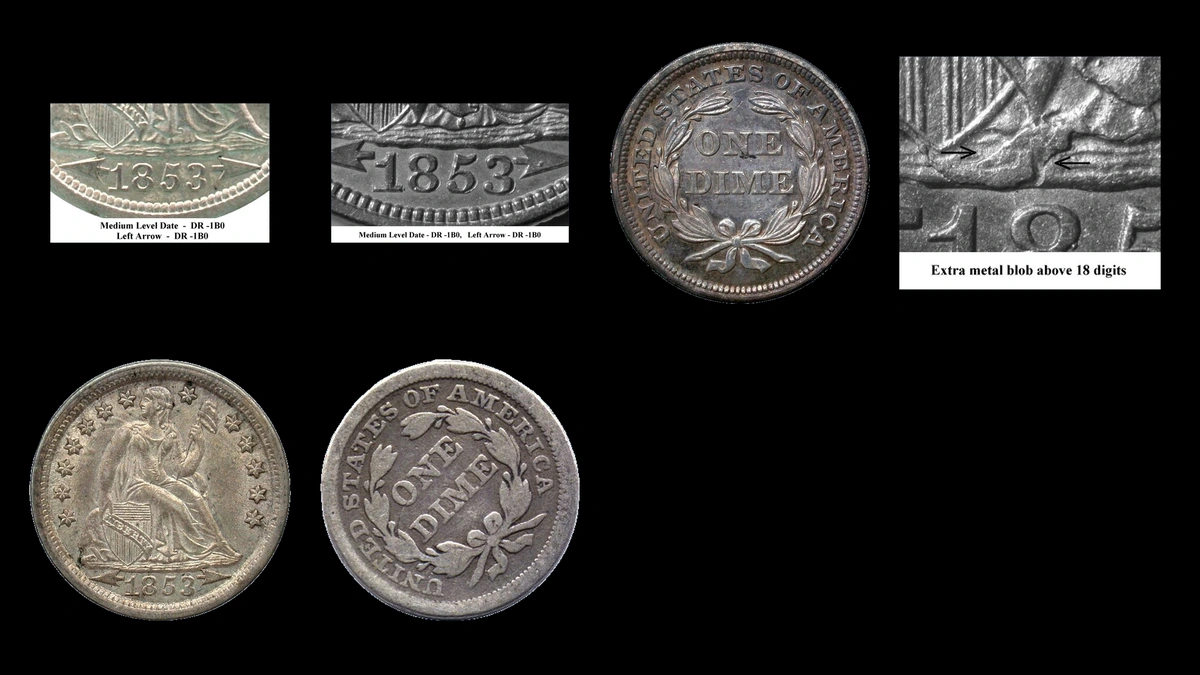
Normal arrows beside the date mark a weight change, while repeated arrow outlines are among the 1853 dime errors discussed here. Estimated whole-coin values span $25–$100,000, with a rare PR66 collector Proof selling for $52,875 in June 2014.
Establish the arrows, mint, and manufacturing category before comparing date strokes, reverse details, or damaged-die features.
| Inspection area | Feature | Estimated whole-coin value |
|---|---|---|
| Left arrow stem | Repunched arrows | $40–$1,500 regular; $20,000–$100,000 Proof |
| Numerals 8, 5, or 3 | Repunched date | $50–$1,500 |
| UNITED | Reported reverse doubling | $25–$600 |
| Raised routes through design | Die cracks | $25–$700 |
| Rim-connected patches | Cuds and retained cuds | $75–$2,000 |
| Borrowed design traces | Clashed dies | $40–$3,000 by issue |
| Reverse lean after a controlled flip | Rotated reverse | $75–$1,000 |
1. 1853 Dime An earlier outline borders the left arrow: Repunched Arrows Error
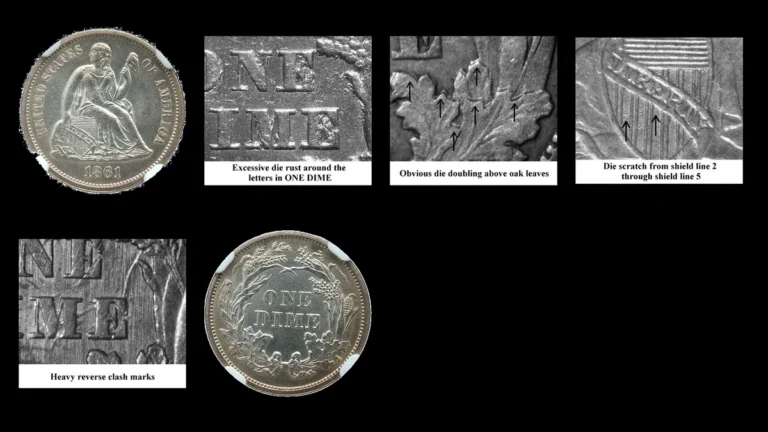
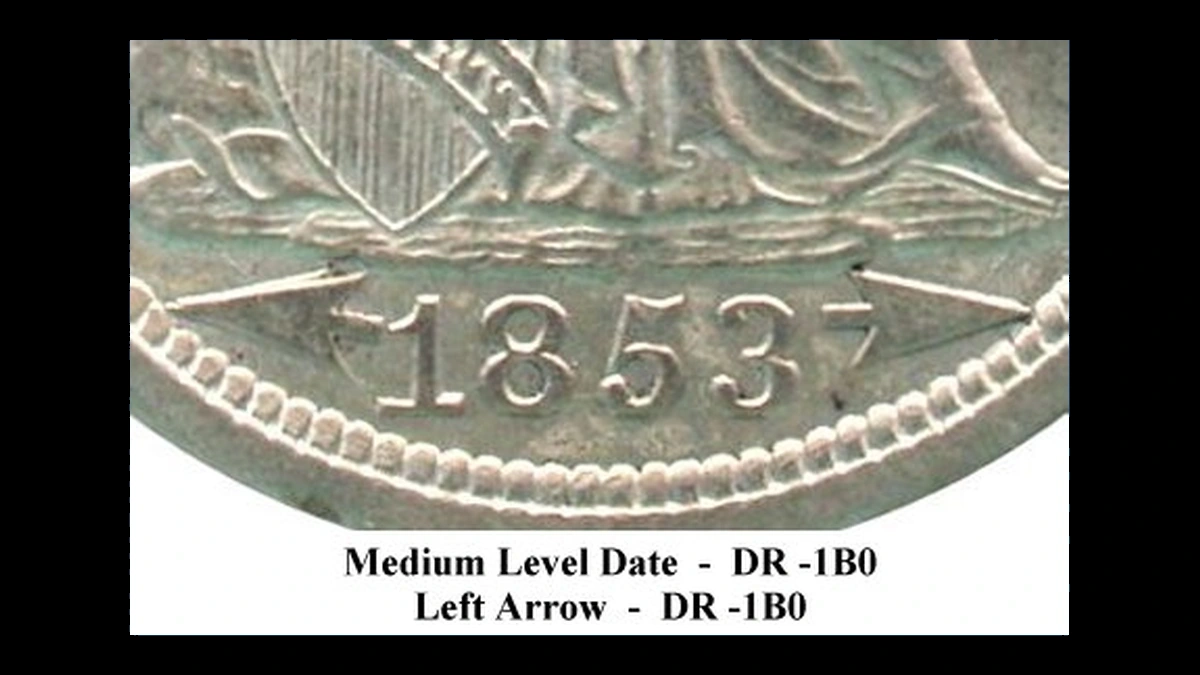
Philadelphia F-101 Proofs and F-103 regular strikes have reported extra detail from an earlier left-arrow punch position. The unusual feature is that secondary outline, not the intentional presence of arrows.
F-103 also has a high date, with the arrow stem overlapping the short end stroke of 1. Both listed examples have clash marks, but those shared observations do not turn a regular strike into a Proof.
How to Identify
Compare the left stem at 10× magnification with the appropriate Proof or regular-strike reference. For F-103, confirm the high date and stem-to-1 relationship.
Follow the actual arrow-shaped remnant rather than nearby crack or clash lines. Each kind of mark records a different event.
A Proof needs agreement in surfaces, strike, and tool details. Polishing an ordinary coin cannot create that manufacturing history.
With Arrows dimes began at 2.49 grams, compared with 2.67 grams for No Arrows examples. Both versions are 90% silver, measure about 17.9 millimeters, and have grooved edges; measurements of accessible coins must allow for wear.
What It’s Worth
Estimates are $40–$1,500 for worn through lower-grade unworn regular coins and $20,000–$100,000 for the rare Proofs. These are whole-coin values.
PCGS records $52,875 for the PR66 Gardner Proof in June 2014. Its rarity, collector manufacture, and excellent preservation explain much of that result.
A regular strike with a similar arrow remnant cannot inherit Proof pricing. The extra outline is only one part of the complete identification.
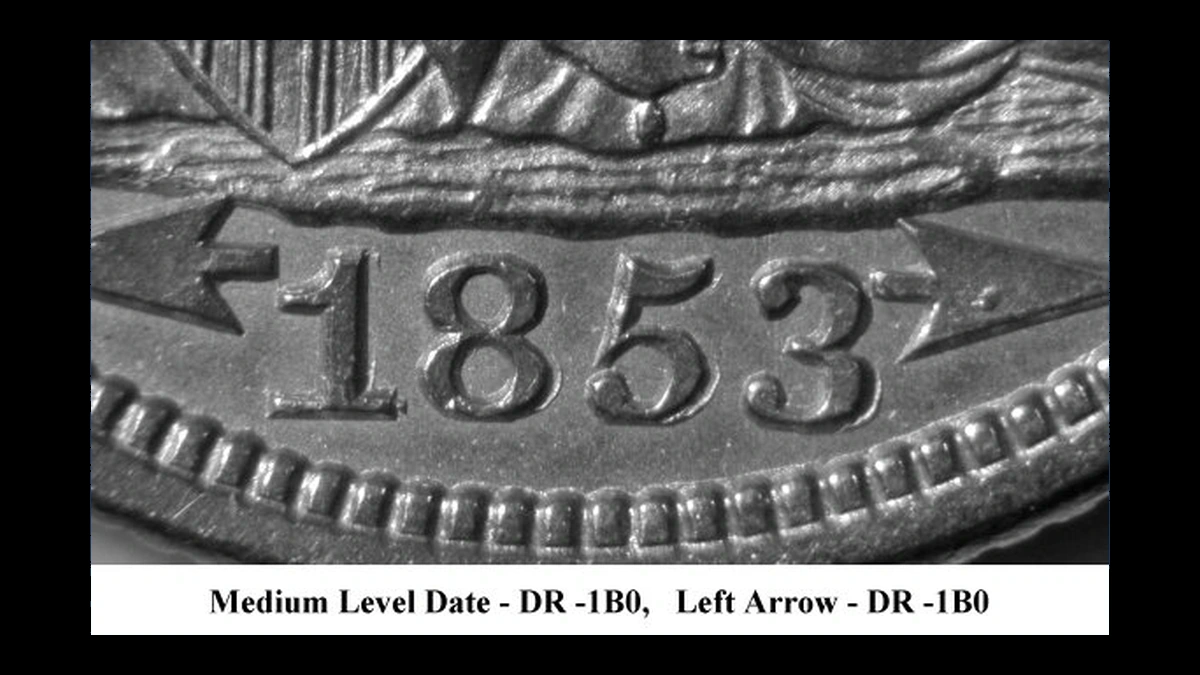
2. 1853 Dime Earlier numeral pieces sit below or beside the date: Repunched Date Error
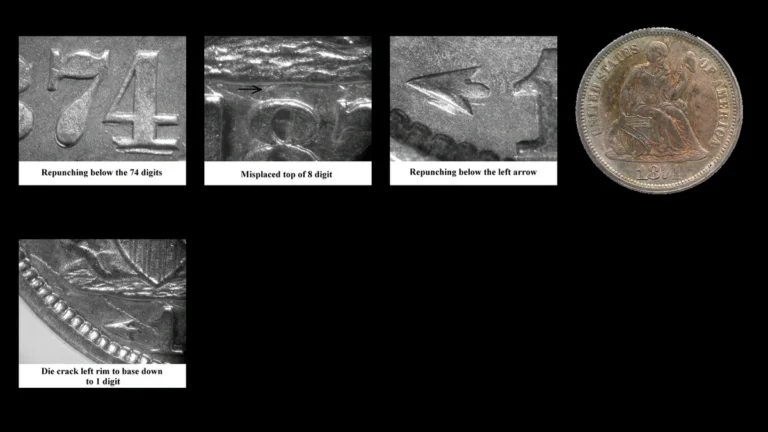
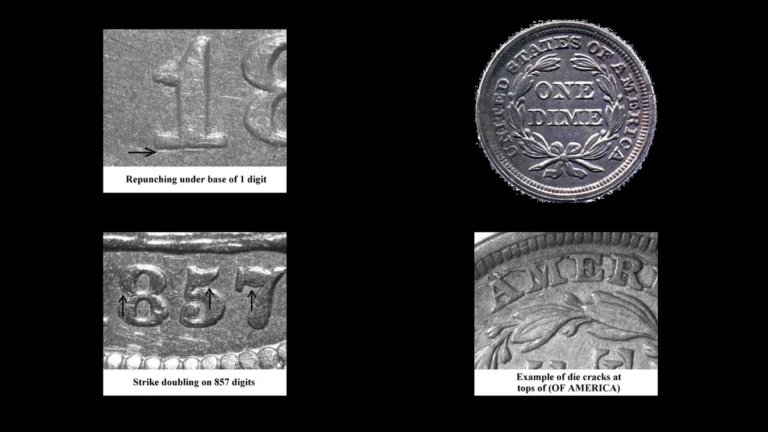
Reported Philadelphia With Arrows varieties have remnants near 8, 5, or 3, often below or to the right of a numeral. These pieces came from earlier placements of the date punch in the die.
Not every obverse was prepared the same way. The affected numeral and direction depend on the particular tool rather than forming one universal 1853 pattern.
How to Identify
Confirm both arrows and the absence of O, then compare the complete date with a matching reference. Follow each raised fragment into the shape of the earlier numeral it represents.
Do not require all three numbers to repeat in the same direction. A scratch cut into the surface or a flat shelf caused during striking cannot establish another punch position by itself.
What It’s Worth
The estimated whole-coin range is $50–$1,500 for worn through lower-grade unworn examples with matching remnants. Clear strokes and original surfaces support a stronger comparison.
An ordinary Philadelphia With Arrows graded PCGS AU55 sold for $288 in November 2025. That slightly worn coin was not identified as a repunched date in the supplied record.
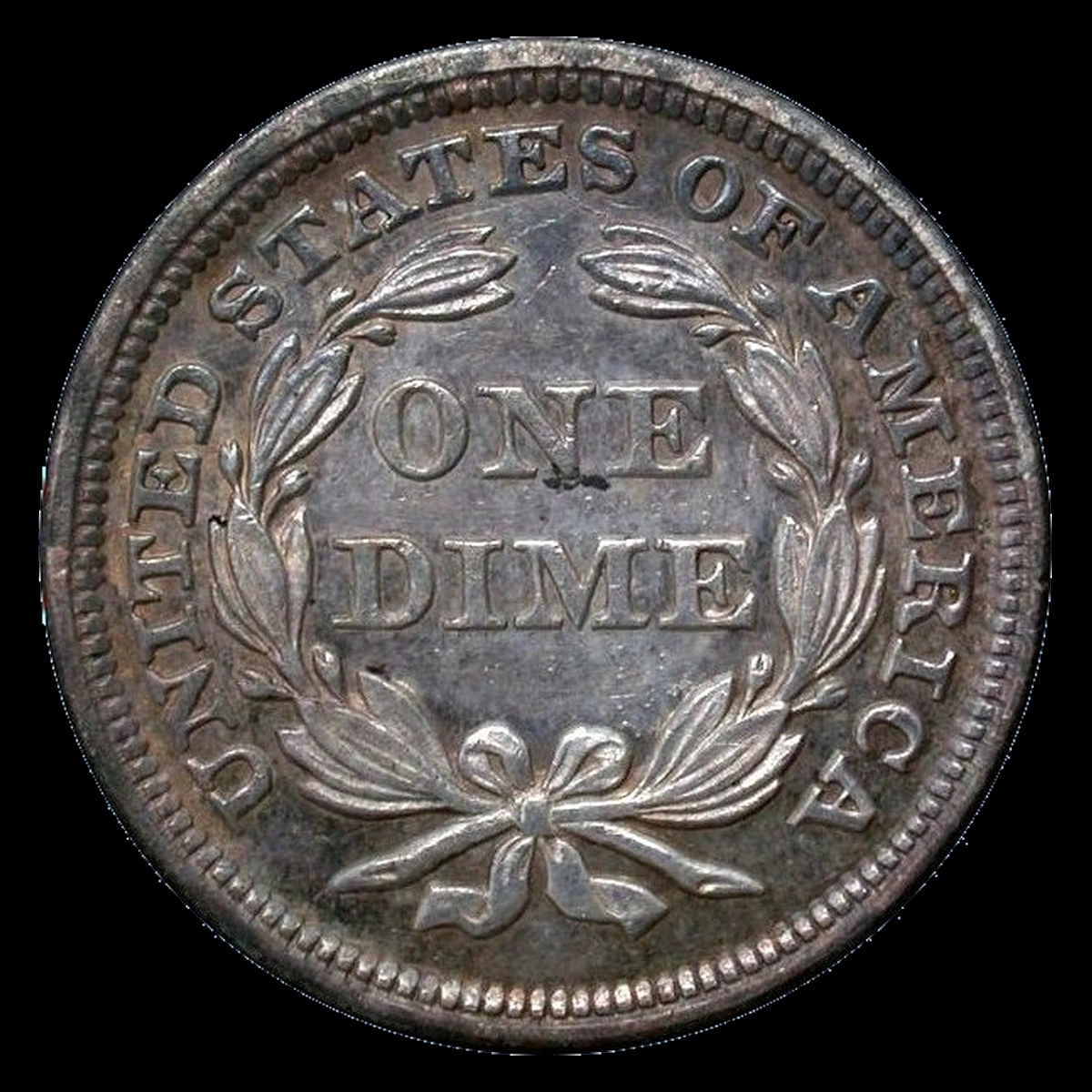
3. 1853 Dime UNITED has a repeated edge: Reported Reverse Doubling Error
Philadelphia F-109 With Arrows is described with doubling on UNITED and cracks from the later letters toward the rim. Its paired obverse has the right arrow stem joining the date’s 3.
The catalog description establishes the appearance without a specific cause for the doubling. It should not be promoted to a confirmed doubled die from the word “doubling” alone.
How to Identify
Compare the actual repeated contours on UNITED while moving the light. A rounded extra edge and a flat shelf may have different origins.
Check the supporting cracks and arrow-stem connection on the same coin. Those features help select the correct reference but do not replace inspection of the letters.
What It’s Worth
The estimate is $25–$600 for worn through lightly worn whole coins. Overall condition contributes much of the price.
The ordinary AU55 result of $288 in November 2025 supplies condition context, not a sale of the F-109 doubling. An unqualified “doubled” label does not establish an additional premium.
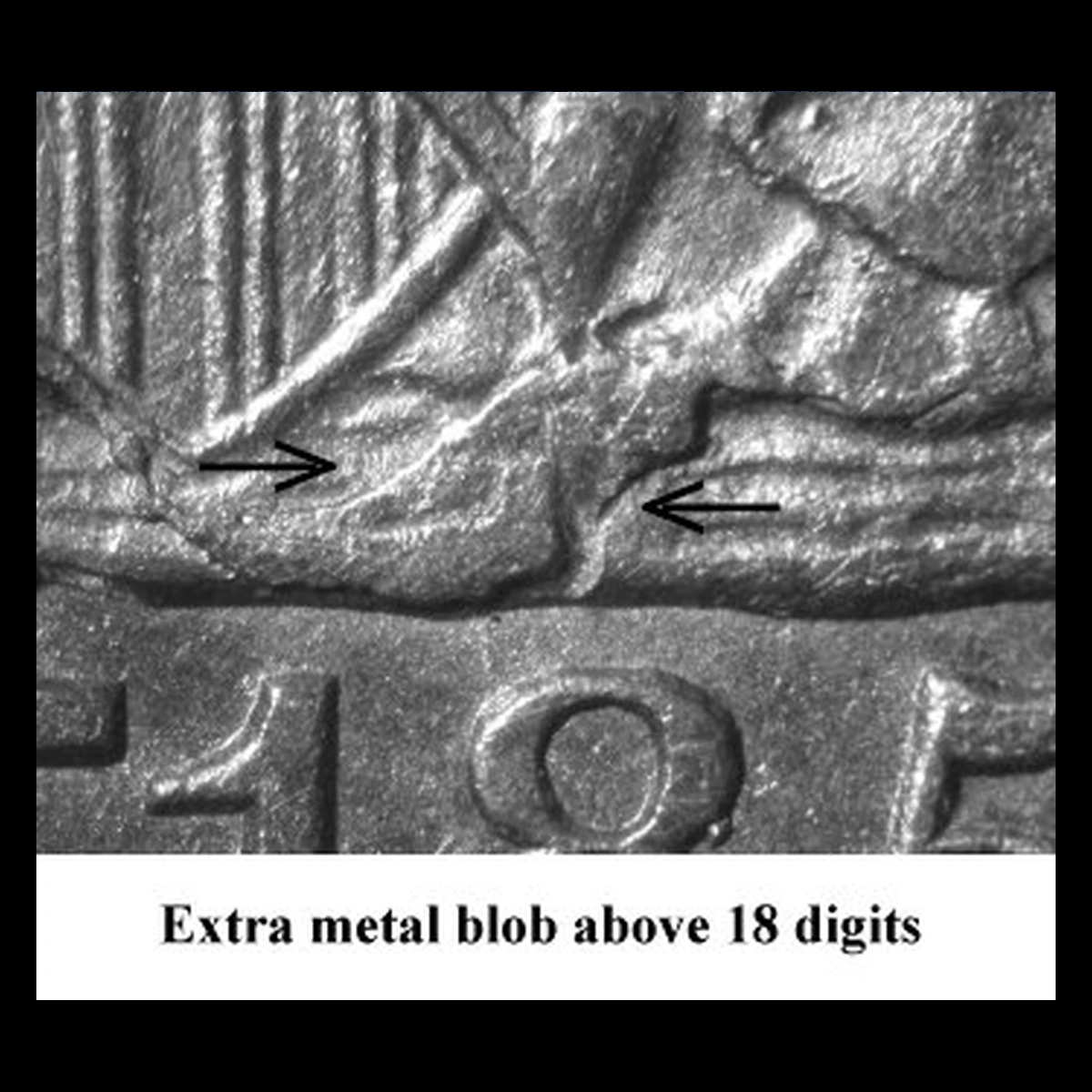
4. 1853 Dime Raised lines cross the wreath or obverse base: Die Cracks Error
Philadelphia reports include reverse cracks from STATES toward the wreath. New Orleans examples instead include front-side breaks around the base above 8 and near star one.
The lines formed as metal entered cracks in the steel stamping tools. Growth and branching record changing die condition, but the separate mint patterns should not be combined.
How to Identify
Check for O before selecting the affected face and reference. Philadelphia calls for the STATES-to-wreath comparison, while the described New Orleans features direct attention to the obverse base and first star.
Side lighting should reveal a raised ridge rather than a scratch or material resting on the surface. Keep the arrows and mint identity visible in the photographic record.
What It’s Worth
The estimated whole-coin range is $25–$700 for worn through lightly worn examples. A clear network may draw more attention than an isolated faint line.
The $288 Philadelphia AU55 sale is not an assigned price for either reported network. Compare mint, remaining detail, and surface quality as well as the crack itself.
5. 1853 Dime A bounded raised area reaches the rim: Cuds and Retained Cuds Error
Separate Philadelphia With Arrows examples have rim breaks around two to three o’clock on the reverse and four or nine o’clock on obverses. Other reverse examples have retained breaks near twelve to one or eight to nine o’clock.
A retained break leaves the broken die fragment in place, allowing some design to survive within the affected area. A missing fragment can produce a larger raised patch with less detail.
How to Identify
Orient the appropriate face upright before assigning a clock position. Follow the patch to the rim and compare its boundary with the matching 1853 With Arrows photograph.
Surviving detail inside a shifted or raised boundary is compatible with a retained fragment. An interior bump without rim connection needs a different diagnosis.
Check for a folded edge from impact or for added solder. A cud changes how existing silver is struck; it does not require a piece of the coin itself to be missing.
What It’s Worth
The estimate is $75–$2,000 for worn through lightly worn whole coins. A large clear boundary and attractive original surfaces can strengthen a comparison.
The ordinary $288 AU55 result was not a cud sale. Multiple affected areas on one coin also do not justify adding several full-coin estimates together.
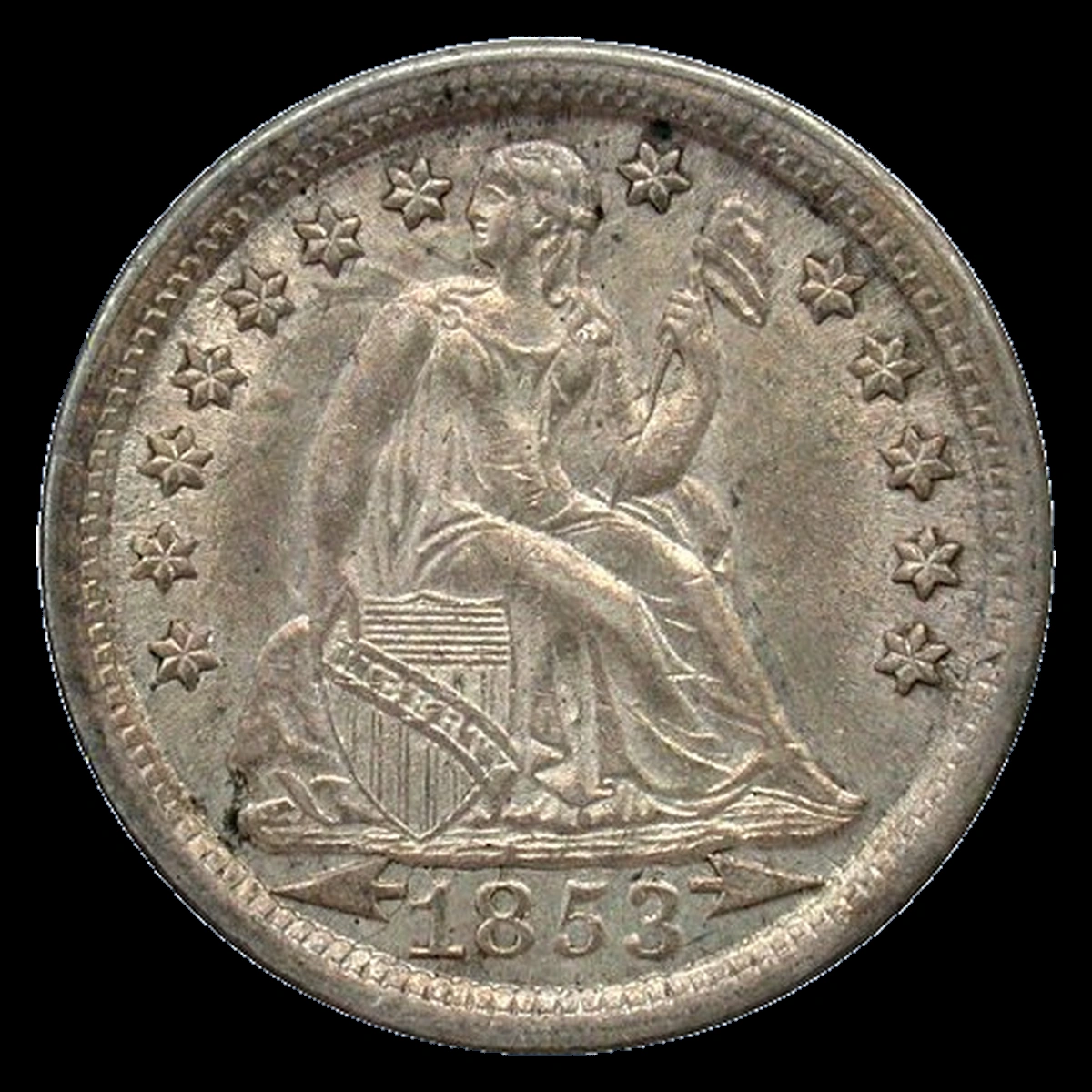
6. 1853 Dime Unfamiliar shapes resemble the opposite face: Clashed Dies Error
A Philadelphia No Arrows example has clash traces beside Liberty’s right arm. A separate New Orleans With Arrows report describes reverse clashing without the same detailed shape information.
Clashes begin when the dies meet without a blank and acquire pieces of the opposing design. Later coins can reproduce those unexpected traces.
The two reports concern different weight versions and different mints. Their images and locations are not interchangeable.
How to Identify
Read the arrows and mintmark before examining the supposed borrowed shape. On the Philadelphia No Arrows obverse, inspect beside the right arm; for New Orleans, select a With Arrows reverse reference.
The shape should correspond to recognizable opposite-side detail. A random scratch or a sunken backward impression pressed in by another coin has a different explanation.
What It’s Worth
Estimates are $200–$3,000 for Philadelphia No Arrows and $40–$700 for New Orleans With Arrows, covering worn through lightly worn whole coins. The scarcer No Arrows issue has a different underlying value.
Neither range applies to rare collector Proofs. The ordinary Philadelphia With Arrows AU55 at $288 offers only broader condition context and is not a direct sale of either clash pattern.
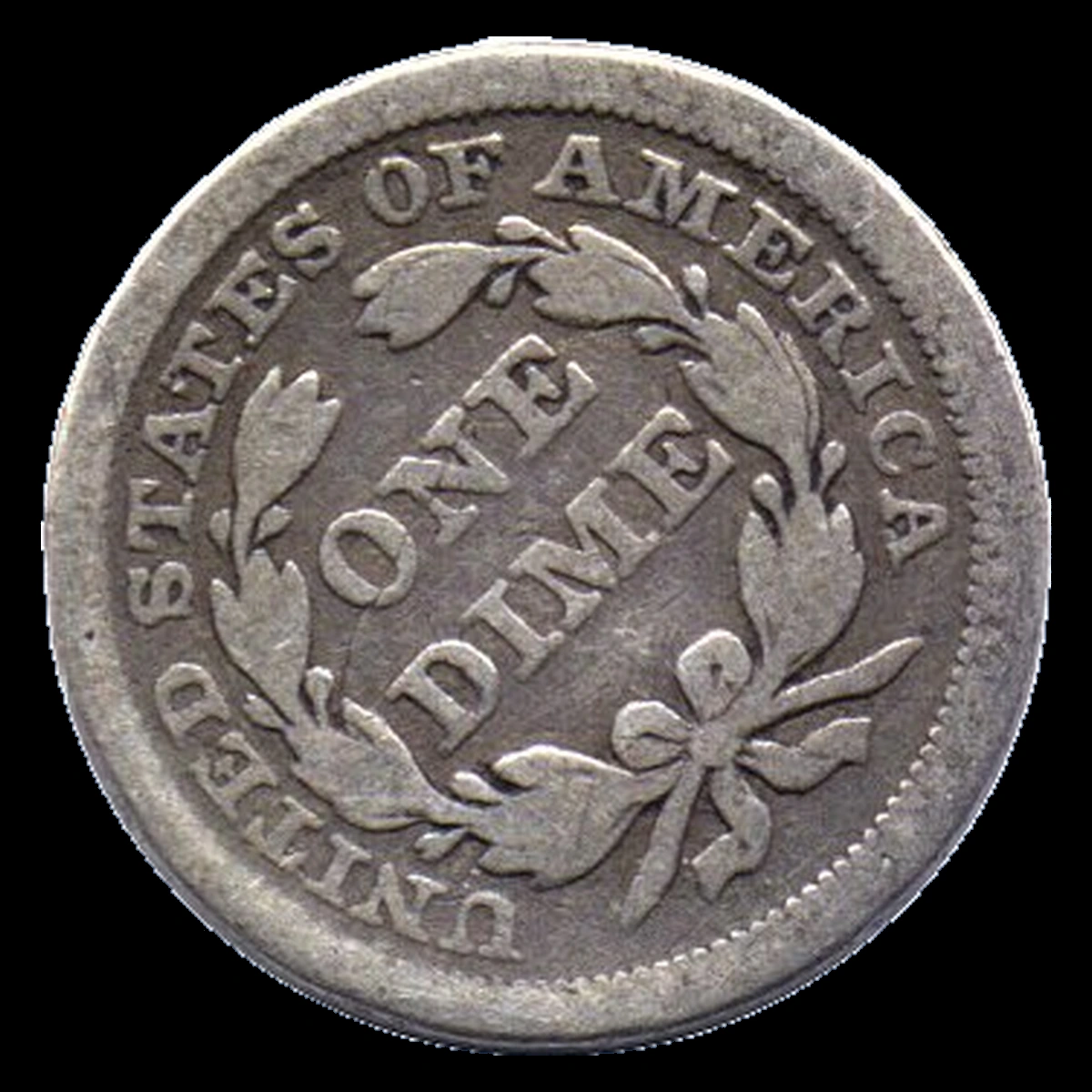
7. 1853 Dime The reverse consistently leans to the right: Rotated Reverse Error
Two listed Philadelphia With Arrows examples have different reported angles: 45 degrees right for F-104a and 32 degrees right for F-115. Those measurements belong to their respective examples.
F-104a had the date and arrows entered separately, whereas F-115 received them together from the master design. That preparation detail helps distinguish the varieties but does not change the physical rotation test.
How to Identify
Hold Liberty upright and flip the holder from top to bottom without a sideways twist. Compare the reverse’s lean with a vertical guide and repeat the movement.
A consistent angle between the designs is meaningful; a coin lying diagonally in a holder is not. Keep the appropriate date-and-arrow arrangement paired with its own 45- or 32-degree reference.
Record the two orientations during the same controlled turn. Independently straightened face photographs cannot establish that relationship.
What It’s Worth
The estimated whole-coin range is $75–$1,000 for worn through lightly worn examples with demonstrated rotation. PCGS lists an F-115 MS62 sale for $600 in January 2025.
MS62 describes an unworn coin with noticeable marks. The result compares the variety and condition but does not establish the recorded 32-degree angle on the auction specimen.
Conclusion
Arrows, mint, and manufacturing category determine which 1853 comparison applies before any small error is assessed. Match individual numeral strokes, rim boundaries, or borrowed design traces to one correct example, and test rotation with a controlled flip.
The $25–$100,000 span includes rare Proofs at the top. Ordinary worn coins belong to much lower ranges, even when their arrow or date features are clear.