Rare 1823 Dime Errors (List & Pictures)
All known genuine 1823 dimes share an overdate, but a second strike is a separate event. These 1823 dime errors have estimated circulated values of $100–$5,000; a different-year 1802 double strike sold for $3,450 in 2008, while an 1823/2 XF40 brought $900 in April 2025.
Examine the last date digit, then search beyond it for connected remnants of an earlier impression.
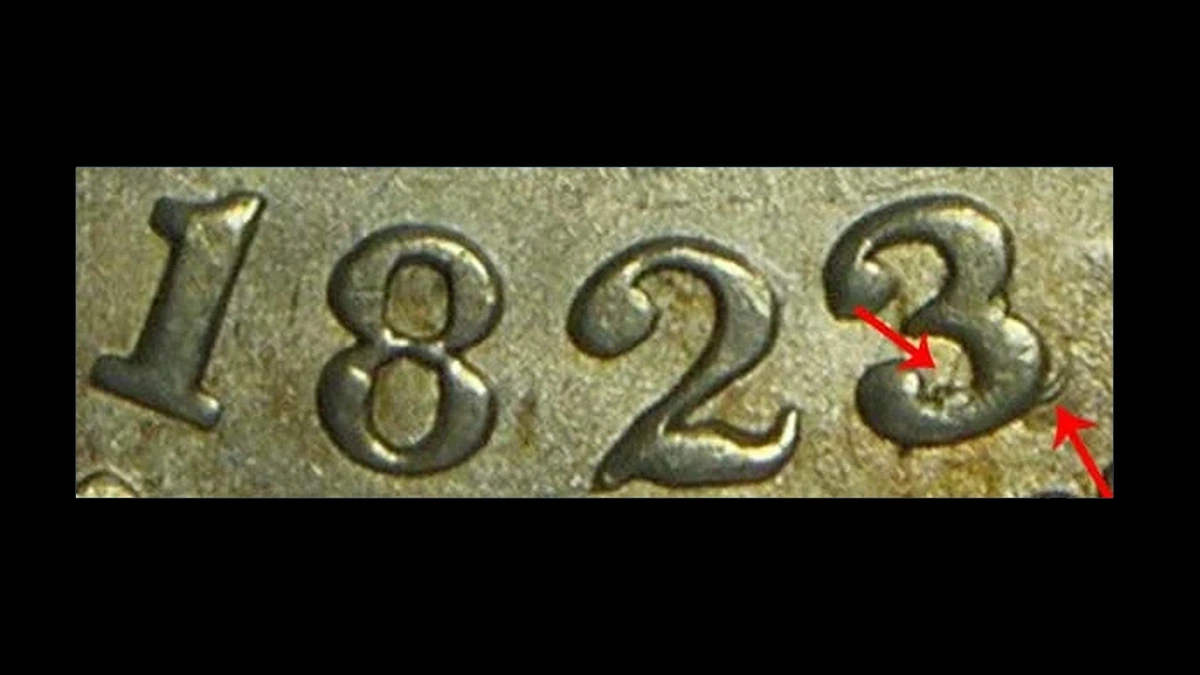
1823 Dime An Earlier 2 beneath the Final 3: Overdate Error
The familiar 1823 date was made by entering a 3 over a 2 in the die. Small portions of the earlier numeral remained and transferred to the finished coins.
There is no separate known plain-date 1823 dime issue against which to treat this as an occasional extra feature. Both the Small Es and Large Es reverse forms belong to the 1823/2 issue.
How to Identify
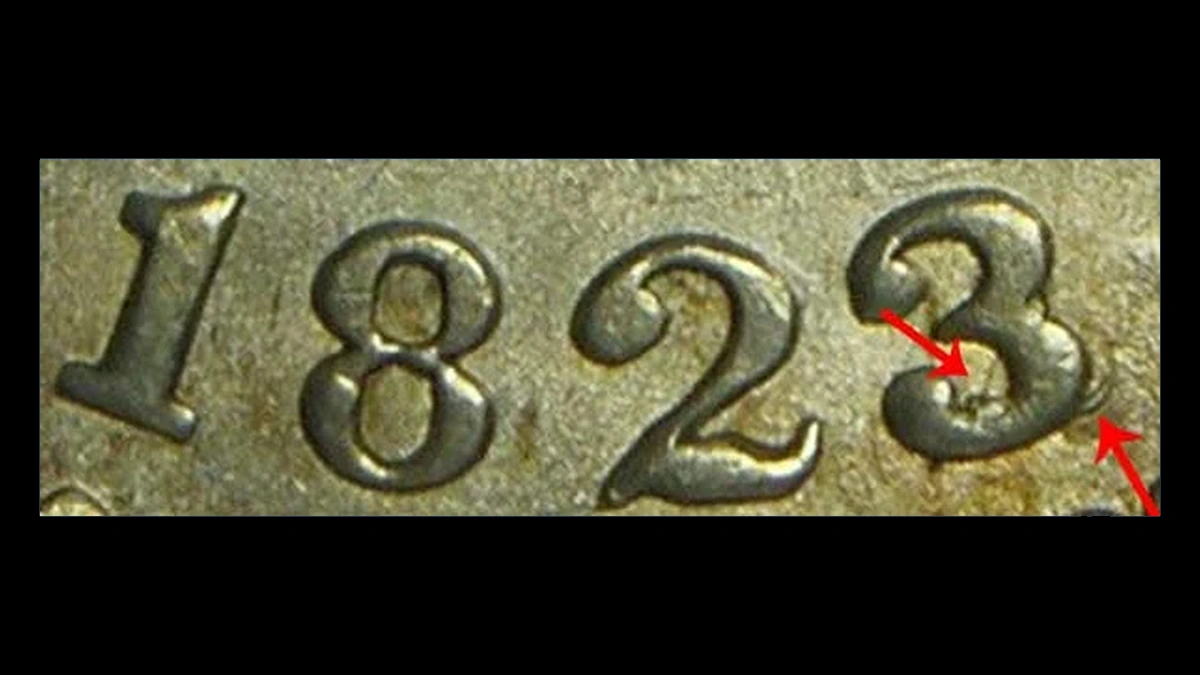
Bring the lower-right portion of the final 3 into focus and compare the surviving hook or foot with the documented 3-over-2 variety. Move the light to distinguish the original raised stroke from a scratch or a dark border.
Wear can hide some of the earlier numeral, so the expected location matters more than finding any stray mark near the date. The reverse E size helps assign the variety, but it does not create another kind of overdate.
A normal dime of this period is roughly 89.2% silver, originally about 2.70 grams and approximately 19 millimeters across. Its grooved edge and overall condition provide useful physical context when evaluating a loose coin.
What It’s Worth
Collectible circulated examples are estimated at $100–$1,500. In April 2025, a PCGS VF25 Large Es sold for $312 and an XF40 with CAC approval brought $900.
Those whole-coin results already include the overdate, since it belongs to the year’s issue. Unworn coins require their own comparisons and can exceed this circulated range.
1823 Dime Extra Rim Teeth beneath the Main Design: Double Strike Error
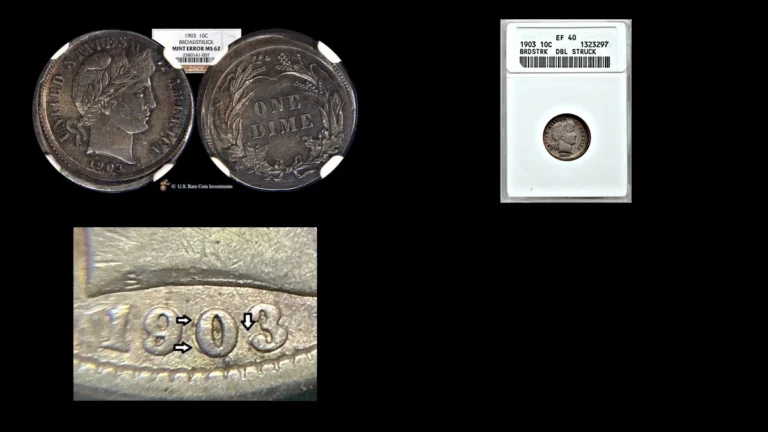
A second row of small rim teeth can survive where an earlier, off-center strike was mostly covered by a later blow. Specialist Louis Scuderi described several 1823/2 Small Es dimes preserving this evidence.
One example sold by Bowers in 2002 had a first impression described as about 40% off center toward 1 o’clock. A separate Heritage specimen had a 45% displaced first strike, with no supplied basis for assigning it the same direction.
How to Identify
Search outside the final date digit for a connected remnant of an earlier design or rim. A thick-looking 3 is insufficient because the ordinary issue already contains the underlying 2.
Use both faces to trace which impression overlaps the other, following the specialist account’s examples individually. The two strikes should explain the remaining details on one continuous piece of metal.
Inspect the edge and surviving surfaces for trimming or later damage that could obscure the sequence. Heavy circulation does not necessarily remove every useful clue, as reported Good and Very Good examples demonstrate.
What It’s Worth
Clear circulated double strikes are estimated at $800–$5,000. An 1802 JR-3 graded PCGS Fair 2 sold for $3,450 in 2008, offering a different-date comparison rather than a price for either 1823 specimen.
The arrangement and legibility of the surviving impressions matter alongside wear. Two strikes describe one error coin and do not justify adding two ordinary dime values.
Conclusion
The 1823/2 date is expected on a genuine dime of this year, while displaced remnants elsewhere can reveal a separate double strike. Identify the underdigit first, then seek an earlier rim or design that explains a second striking position.
Keep each specimen’s percentage and direction together, and select comparisons with similar wear and equally readable evidence rather than pricing every unusual date as a double strike.