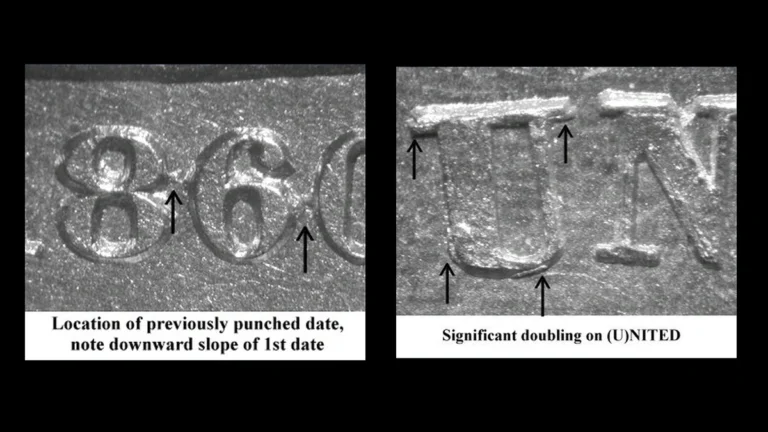
Rare 1796 Dime Errors (List & Pictures)
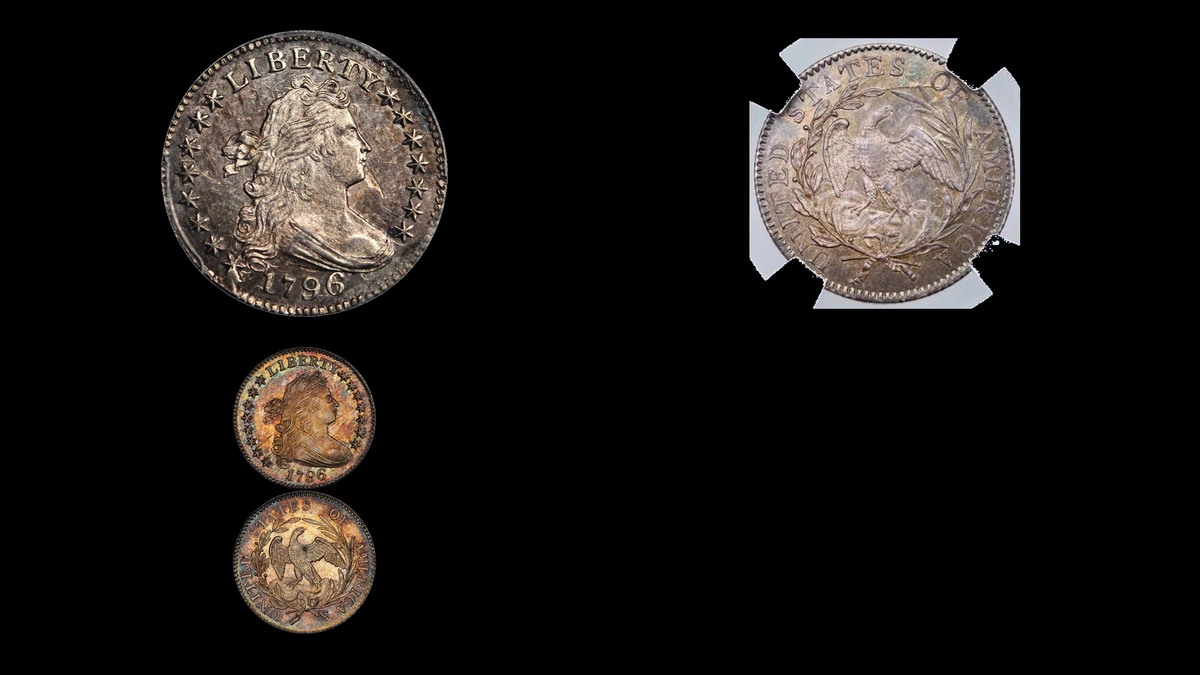
A first-year United States dime can have valuable original minting flaws without those flaws accounting for its entire price. The 1796 dime errors below span an estimated $2,000–$60,000 in whole-coin value, with a JR-1 MS63 selling for $35,250 in June 2017.
Begin beside Liberty’s chin, distinguish faint copied design from damage, and then inspect the date and rim for raised breaks.
| What appears | Explanation | Example to match |
|---|---|---|
| Thin shallow hollow by the chin | Planchet void | Blue Moon JR-1 |
| Faint opposite-design outlines | Die clash | Separate 2013 JR-1 MS63 |
| Raised date line, small lump, or rim patch | Crack, chip, or cud | Specific JR-6, JR-1, or JR-3 features |
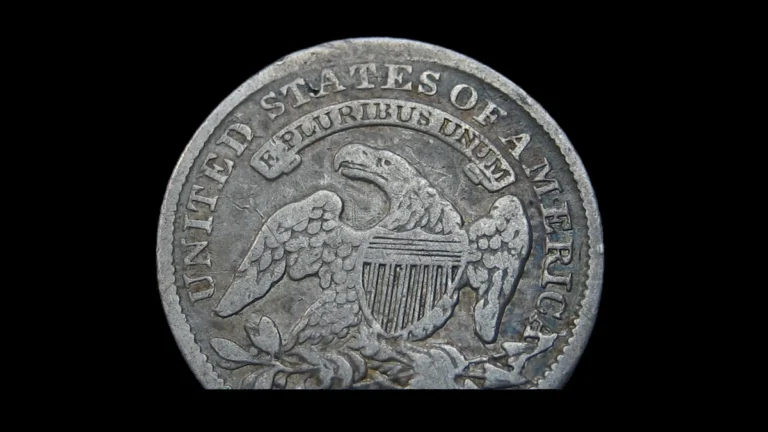
JR numbers identify particular front-and-back die pairs, not a single mark common to every 1796 dime. The dime has a small-eagle reverse and no written denomination, with an original standard of about 2.70 grams, 19.80 millimeters, and a grooved edge.
1. 1796 Dime A Shallow Hollow beside the Chin: Planchet Void Error
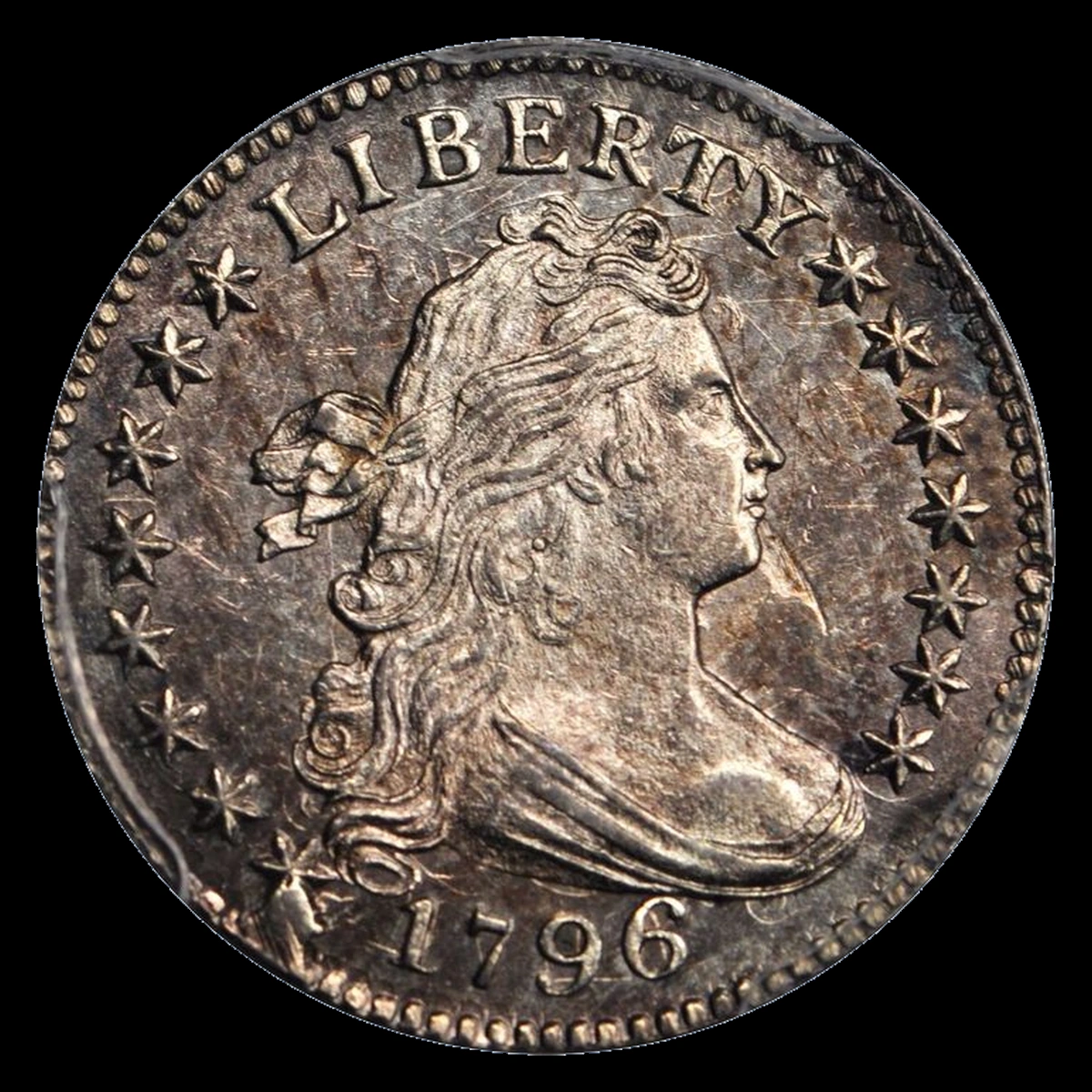
The Blue Moon Collection JR-1 has a thin depression in the field just in front of Liberty’s chin. Its catalog describes the flaw as present when the coin was made.
A planchet is the blank that receives the design, and a void is a shortage within that starting metal. This particular feature is local and shallow, not a hole through the dime or a large peeling sheet.
How to Identify
Compare the hollow’s outline and surrounding original surface with the documented coin. Freshly cut walls, displaced metal, or scratches entering the depression can suggest later digging or impact.
The small flaw may make little measurable difference to the weight. Its location and relationship to the struck surface are therefore more useful than treating a large weight deficit as the expected diagnostic.
Check the grooved edge for trimming or repair while allowing for normal circulation loss on a worn coin. A deeper puncture or a different pit should not automatically inherit this specimen’s identification.
What It’s Worth
A broad whole-coin estimate is $2,000–$60,000, covering worn examples through well-preserved unworn coins with comparable original flaws. The PCGS MS63 sold for $35,250 in the June 2017 Blue Moon sale.
MS63 indicates no circulation wear, with visible marks still possible. Demand for the scarce first-year dime accounts for much of that total; the shallow hollow was not separately priced at $35,250.
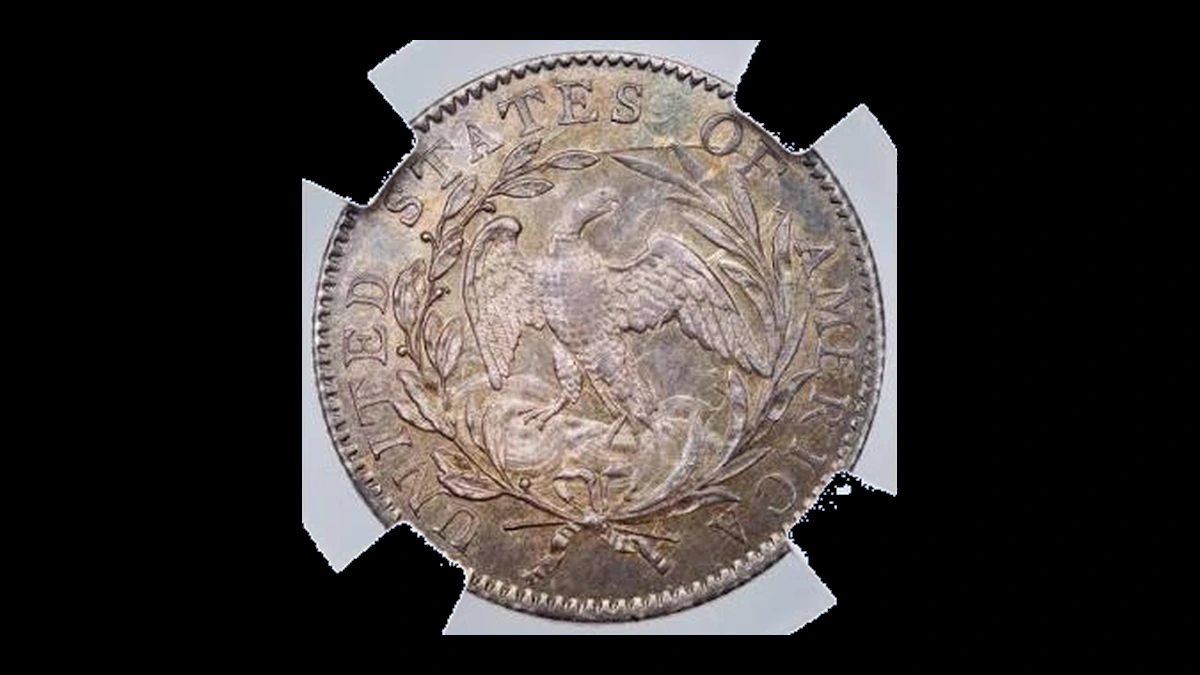
2. 1796 Dime Faint Extra Outlines on the Front: Die Clash Error
A different JR-1, graded NGC MS63 and cataloged in 2013, has obverse traces identified as die clashes. These arise when the dies meet without a blank and mark one another before striking later coins.
The same catalog separately calls a curved mark in Liberty’s hair later damage. Its presence on a clashed coin does not make that conspicuous curve part of the clash.
How to Identify
Use the eagle design on the opposite face to interpret a faint suspected outline on the front. The shape and position should fit a transferred part of that design instead of merely forming an interesting curve.
The 2013 auction catalog is useful because it distinguishes original clash traces from the hair mark. Compare those features separately rather than labeling every extra line as a mint error.
What It’s Worth
Circulated through well-preserved unworn examples are estimated at $2,000–$60,000 for the whole coin. The $35,250 Blue Moon MS63 provides same-year condition context, but it is not a reported result for the separate 2013 clashed coin.
Surface originality and the underlying first-year issue remain central to the comparison. An attractive clash does not cancel the effect of unrelated damage elsewhere on the coin.
3. 1796 Dime Raised Date Lines and Rim Lumps: Die Cracks, Chips, and Cuds Error
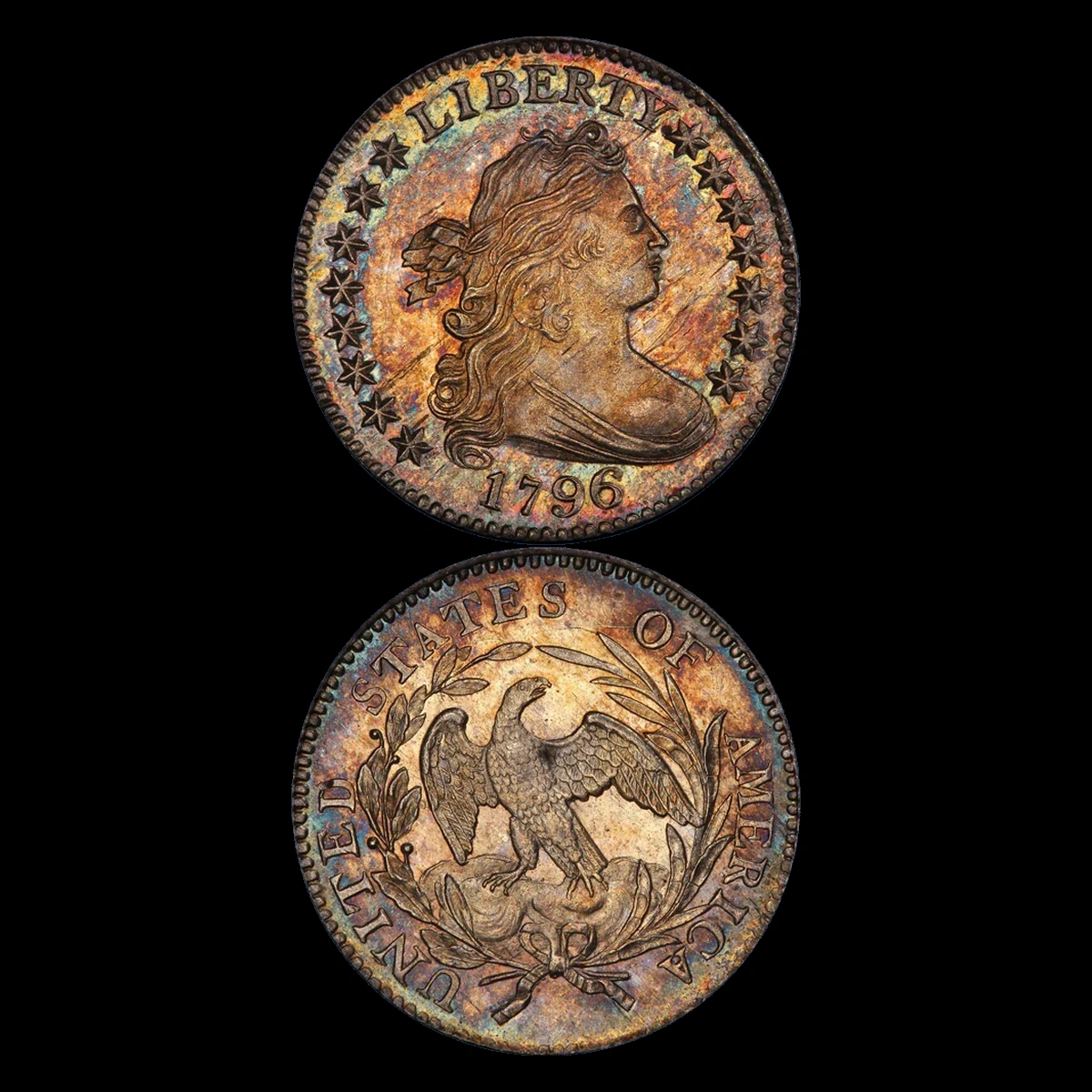
On JR-6, a raised line crosses 179 in the date and a small chip appears inside the upper portion of 7. Both record openings in the die that filled with metal during the strike.
Other die pairs developed larger rim-connected breaks called cuds. JR-1 examples have a break joining the first obverse star to the border, while a separate JR-3 has a reverse cud above T in STATES.
How to Identify
Choose the correct location for the suspected die pairing rather than expecting all three sets of marks on one dime. The JR-6 description connects the date crack with the chip inside 7.
For a cud, follow the raised patch into the original rim and compare its border with the relevant reference. A dent or folded edge can create a lump, but often damages finished design and leaves evidence of crushing.
Tilting the coin helps establish whether a line rises above the field or cuts into it. The raised form is expected from a cracked die; an incuse scratch is a different observation.
What It’s Worth
The practical whole-coin range is $2,000–$60,000, depending heavily on die pairing and preservation. The Blue Moon MS63 had the first-star cud as well as its chin-side void, with both included in the single $35,250 sale.
An exceptional JR-6 graded MS68 sits in a different condition class. The working estimate is not a ceiling for the finest surviving examples and should not be extended to them without suitable comparisons.
Conclusion
A shallow original void, a clash trace, and a raised die break tell different stories even when two occur on the same early dime. Match each feature to its documented location and keep later damage separate.
Then assess the whole coin’s preservation and originality, remembering that the scarce 1796 issue supplies much of the value and that the absence of a written denomination is normal.