Rare 1832 Dime Errors (List & Pictures)
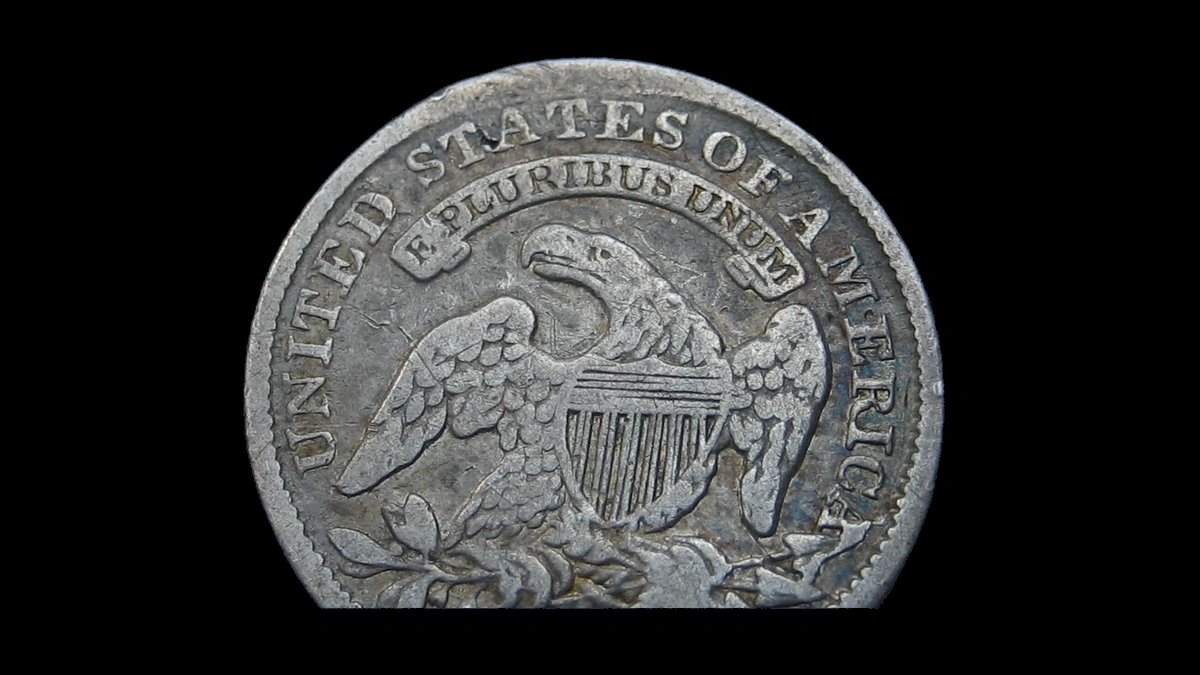
A genuine mint feature and later surface damage can coexist on the same coin, as the documented 1832 dime errors here demonstrate. A JR-3 with a retained break sold for $139 in February 2022, while estimated whole-coin values for worn examples range from $100–$1,000.
Focus above the upper two arrowheads, then separate the broken-die evidence from any later surface treatment.
1832 Dime Design remains inside a raised patch above the arrows: Reverse Cracks and Retained Cud Error
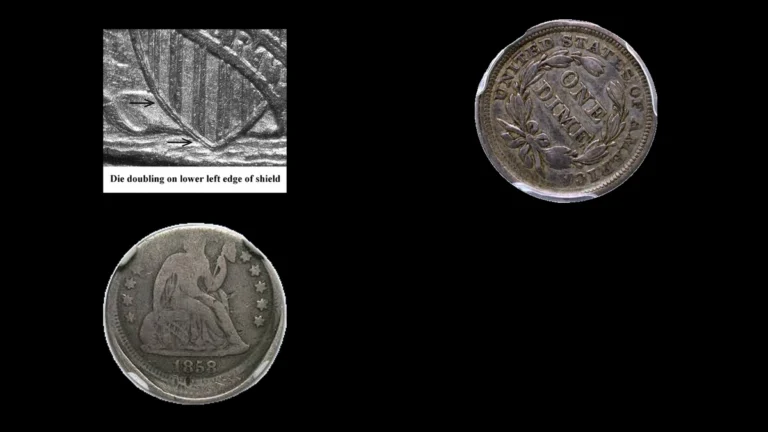
The important feature is not simply a bright spot on the reverse. Above the upper two arrowheads, the reported JR-3 has a raised break with portions of the original design still inside its boundary.
That surviving detail helps explain the tool’s condition. A broken piece of the die, the steel tool that stamped the coin, remained in place and continued to impress some design after cracking or shifting.
Collectors call the resulting feature a retained cud. Fine cracks around the outer reverse design accompany it on the documented dime.
The auction specimen also had whizzed surfaces, meaning mechanical treatment had been used to imitate original shine. This happened after minting and is distinct from the die break.
How to Identify
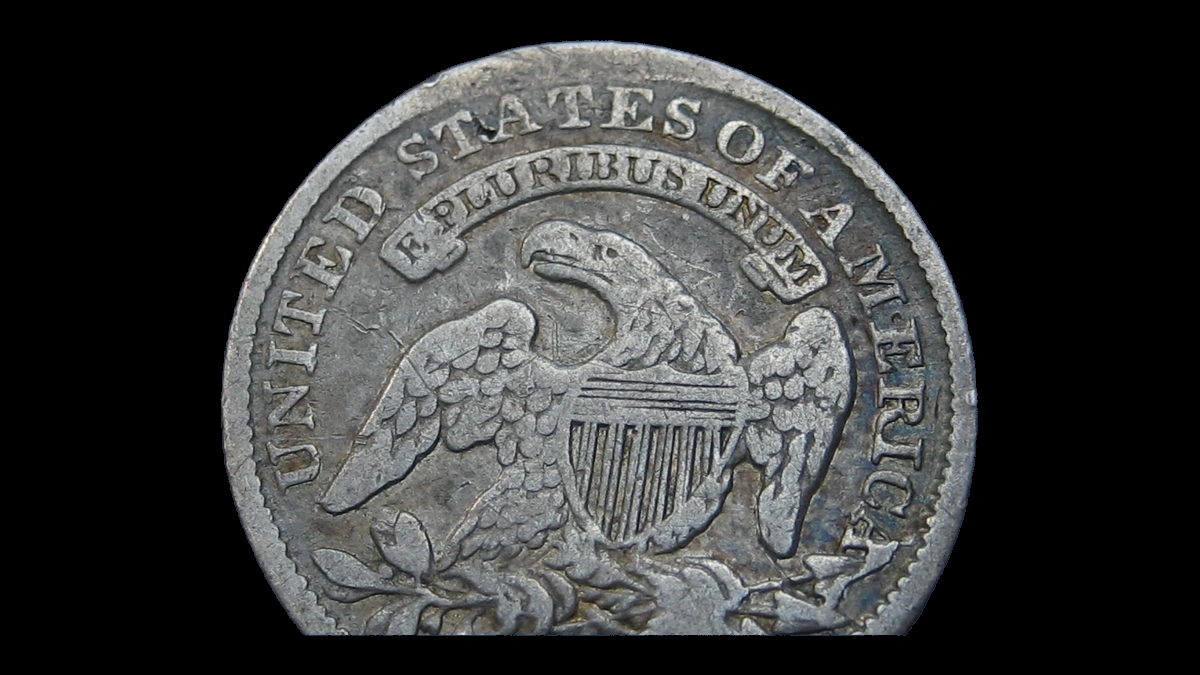
Locate the upper pair of arrowheads before magnifying the affected area. Under a 10× magnifier, look for a raised patch with a defined outline and design detail surviving inside it.
Rotate the light to reveal the difference in height across the boundary. A retained fragment can continue to make recognizable detail, so readable design within the patch does not rule out the error.
Next compare the fine peripheral cracks with a clear JR-3 photograph. Follow the visible paths through their surrounding landmarks rather than treating every thin line on the reverse as part of the same event.
Mechanical treatment can also leave fine lines and unusual brightness. A light streak alone cannot tell you whether it came from the mint’s tool or from later work on the coin.
The two conditions can exist together: real die damage does not prove original surfaces, and damaged surfaces do not necessarily erase every genuine mint feature. Assess the break’s shape and the surface quality as separate questions.
For an accessible coin, original specifications of about 2.70 grams and 18.50 millimeters provide a basic comparison. The dime is roughly 89.2% silver with a grooved edge, though wear may reduce its weight.
What It’s Worth
The supplied estimate is $100–$1,000 for worn whole coins. A clear retained break and better-preserved original surfaces can support a stronger comparison within that range.
The Heritage archive record for the altered example reports $139 on February 6, 2022. NGC graded it AU Details, indicating slight wear but a problem preventing a normal numerical grade.
Its whizzed surfaces are relevant to that result. The price should not be treated as a ceiling for an otherwise comparable coin with substantially better preservation.
The peripheral cracks and retained break are features of the same specimen. Their presence does not justify adding separate complete-coin values together.
Conclusion
Examine the boundary above the arrowheads and the detail preserved within it, then compare the surrounding crack routes. Together they describe a broken tool fragment that continued to participate in striking.
Keep that mint history separate from later whizzing or other surface problems. The $100–$1,000 estimate concerns whole coins, and the documented $139 result shows how surface treatment can influence a genuine error’s price.