Rare 1862 Dime Errors (List & Pictures)
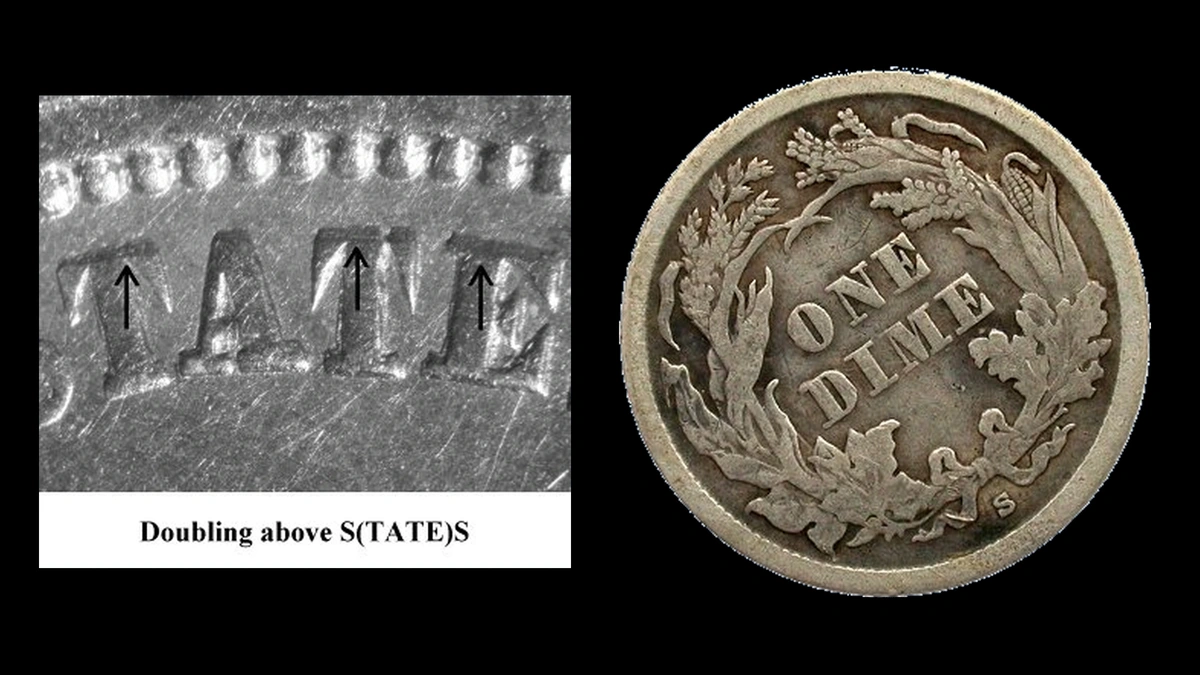
A normal 1862-S VF20 dime brought $600 in June 2025, while an F-102a with its known rotated reverse sold for $504 in August 2022. The 1862 dime errors below have estimated whole-coin values of $30–$3,500.
Check the date and lettering, turn to ONE DIME, then test alignment. Normal specifications are 2.49 grams, 17.9 millimeters, and 90% silver.
| Inspection point | Feature | Estimated whole-coin range |
|---|---|---|
| Date | Repunched digits | $30–$2,000 |
| Above ITED STATES | Doubled die obverse | $30–$2,000 |
| N and E in ONE | Raised die gouge | $30–$2,000 |
| Relationship between faces | Rotated reverse on 1862-S | $150–$3,500 |
1. 1862 Dime Small repeated date outlines: repunched date Error
The Philadelphia F-103 has an extra outline below the sloping stroke of the 2. It is a surviving piece of an earlier date entry in the die.
A separate variety, F-105, has traces below the top and base of the 1 and faint remnants below the 8. Its date sits low and slopes upward, a useful clue when die wear makes the tiny extra outlines faint.
How to Identify
Choose the relevant group of digits before making a comparison. The F-103 repeated 2 and the F-105 marks beside 1 and 8 are separate patterns, not a checklist that every coin must satisfy.
Match rounded numeral remnants rather than a flat shelf along a stroke. Keep the entire date in view so its placement can support the finer detail.
Both varieties are Philadelphia circulation strikes without a mintmark. The absence should be checked in a clear, undamaged area below the reverse wreath.
What It’s Worth
Estimated whole-coin values are $30–$350 for worn examples and $400–$2,000 for lower-grade through well-preserved unworn coins. The clarity of the attribution and the surfaces affect the comparison.
Greysheet’s F-103 guide spans approximately $9–$1,716 across its listed grades. Those figures are published estimates rather than auction results, and they do not independently value the separate F-105 pattern.
2. 1862 Dime Extra edges above the letters: doubled die obverse Error
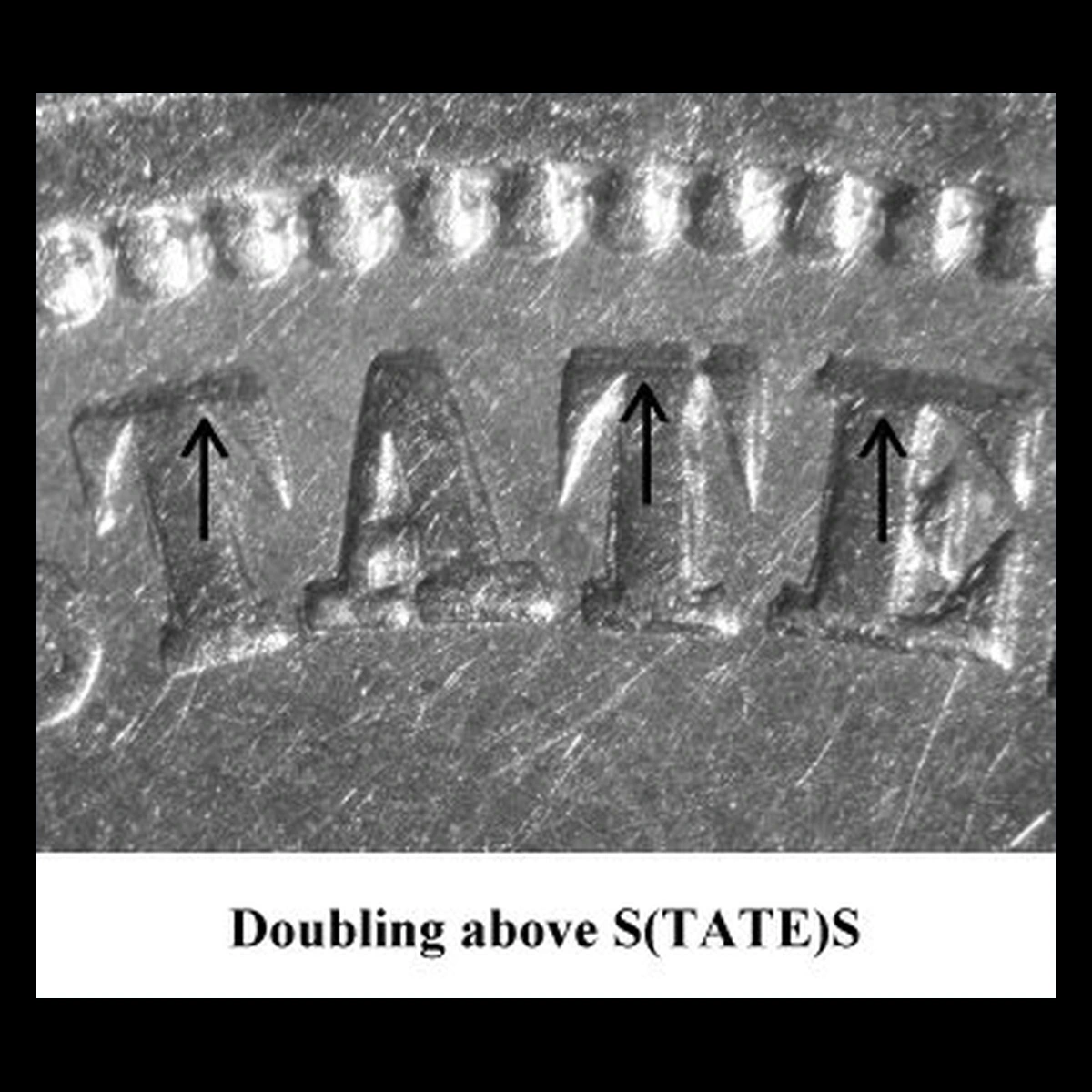
F-103 also has repeated raised outlines above ITED STATES on the front. The design was doubled in the die, allowing a single strike to transfer both outlines.
This differs from repunching the date, which involved a separate date-entry step. Both can appear on one coin without evidence that the coin was struck twice.
How to Identify
Examine several neighboring letters in ITED STATES, following the added contours above them. A sharp F-103 reference should agree in position and shape.
Change the light to separate genuine repeated edges from reflection and flat shelf-like doubling. The repeated 2 supports the variety identification, but it does not replace direct evidence in the letters.
The reverse ridge described next is another useful companion feature. Together these clues identify one Philadelphia variety rather than three unrelated coins.
What It’s Worth
The estimated whole-coin range is $30–$2,000 for F-103 across worn through well-preserved unworn examples. Clear lettering can make the variety easier to recognize and more attractive to a collector.
The roughly $9–$1,716 published guide span already mentioned concerns this same variety. It is not an additional amount to add because the letters are doubled.
3. 1862 Dime A diagonal ridge through ONE: reverse die gouge Error
A diagonal raised feature crosses the N and E area of ONE on F-103. Although it resembles a scratch at first glance, the original cut was in the die rather than in the coin.
Metal filled that cut during striking and emerged as a ridge. The F-103 reference connects it with the repeated 2 and front-side letter doubling.
How to Identify
Illuminate ONE from the side and trace the entire diagonal feature. Confirm a raised ridge in the documented position, not simply a bright line across the letters.
A later scratch may leave pushed-up metal beside a sunken groove. Inspect the center of the mark so those damaged edges are not mistaken for a die gouge’s raised impression.
Return to the front to check the two companion features. Their agreement helps distinguish a genuine F-103 from an ordinary dime scratched in roughly the same area.
What It’s Worth
Use the same estimated $30–$2,000 whole-coin range for an F-103 carrying this ridge. The guide figures refer to the complete variety, not the ridge’s length or prominence alone.
A coin with all three features still has one market price. Wear, cleaning, and damaged surfaces can matter more than which of its identifying marks is easiest to see.
4. 1862 Dime A tilted reverse after flipping: rotated dies Error
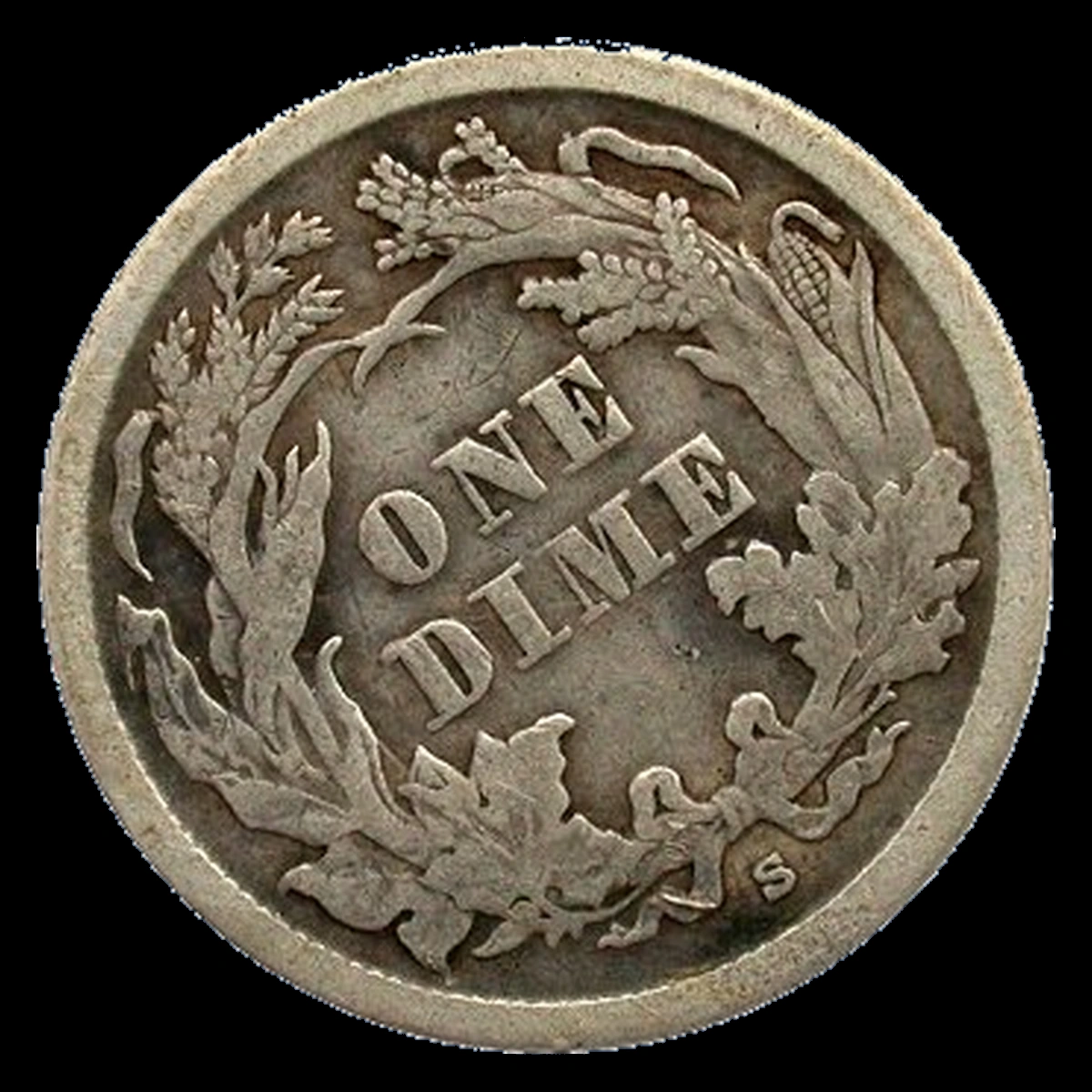
San Francisco examples introduce a different check: the reverse can be rotated relative to the front. The F-102a example has a recorded 35-degree rightward tilt, while a separate auction example was described at approximately 45 degrees.
The designs can remain centered even though their orientation differs. The cause concerns how the dies were aligned, not where the blank sat.
How to Identify
Find the S below the wreath, then hold Liberty upright and flip the coin top to bottom without a sideways twist. Repeat the movement and check whether ONE DIME keeps the same tilt.
Use photographs that preserve the relationship between faces. Straightening each image separately would erase the evidence needed to assess rotation.
Keep the 35-degree and approximately 45-degree reports attached to their respective examples. Inspect the edge for seams or damage if the face relationship raises questions about alteration.
What It’s Worth
Genuine rotated 1862-S dimes have an estimated whole-coin range of $150–$3,500 in worn through lightly worn condition. The mint issue’s scarcity, surface quality, and actual angle all matter.
A PCGS VF30 F-102a sold for $504 in August 2022. A normal 1862-S VF20 brought $600 in June 2025, showing why condition, individual quality, and sale circumstances prevent a simple fixed rotation premium.
Neither sale establishes a price for the separate approximately 45-degree example. There is no supported dollar amount to add for each degree of tilt.
Conclusion
The Philadelphia F-103 rewards checking three linked details: its 2, the upper lettering, and the reverse ridge. Finding all three strengthens an attribution without creating three separate prices.
For San Francisco rotation, retain the faces’ alignment and repeat a controlled flip. Match the actual mint, variety, and condition before using a published guide or auction figure to value the complete dime.