Rare 1931 Dime Errors (List & Pictures)
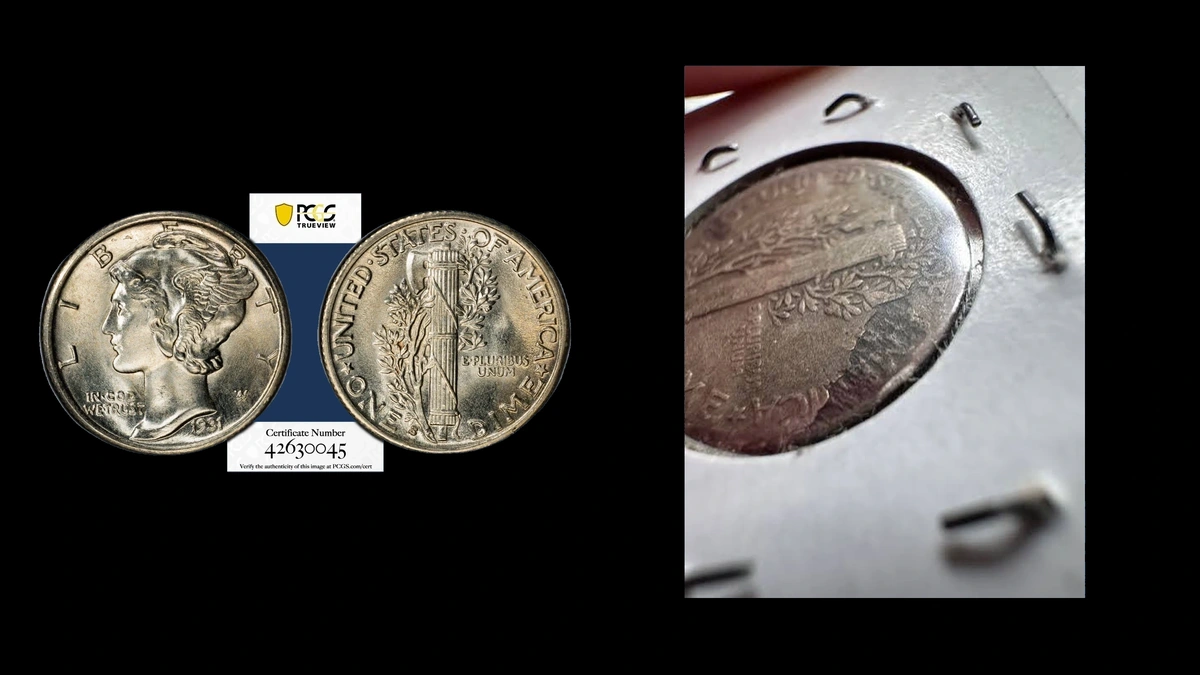
A Denver doubled die in exceptional MS67+ condition sold for $2,640 in November 2023. The broader selection of 1931 dime errors has estimated whole-coin values of $35–$3,000, including subtle design repetition and several very different kinds of metal defects.
Match the mint-specific doubling first, then distinguish peeling alloy, an opening in the blank, a missing segment, and a displaced design.
| Visible evidence | Identification | Estimated range |
|---|---|---|
| Repeated date details | Doubled die | $90–$3,000 |
| Thin lifting layer | Lamination | $35–$500 |
| Opening extending from rim | Cracked planchet | $60–$700 |
| Original missing arc | Clip | $50–$1,200 |
| Unstruck margin and cropped design | Off-center strike | $200–$2,500 |
Mercury dimes use a silver-copper alloy throughout, with an original weight of 2.50 grams and diameter of 17.90 millimeters. Full Bands refers to separation of the central reverse bands and does not establish the cause of an edge flaw.
1. 1931 Dime Slight Date Separation: Doubled Die Error
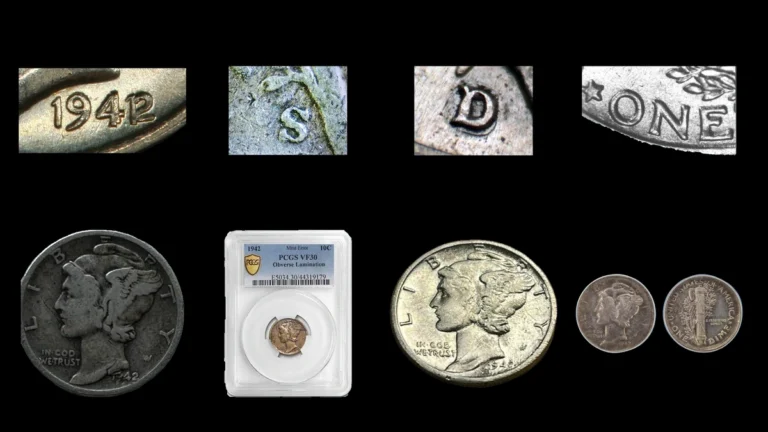
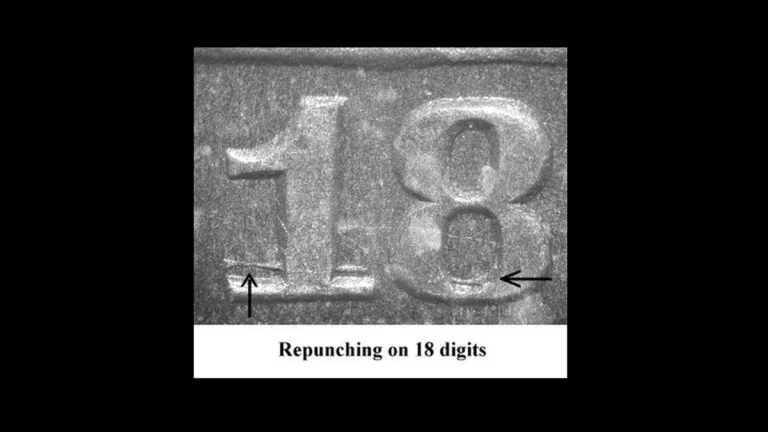
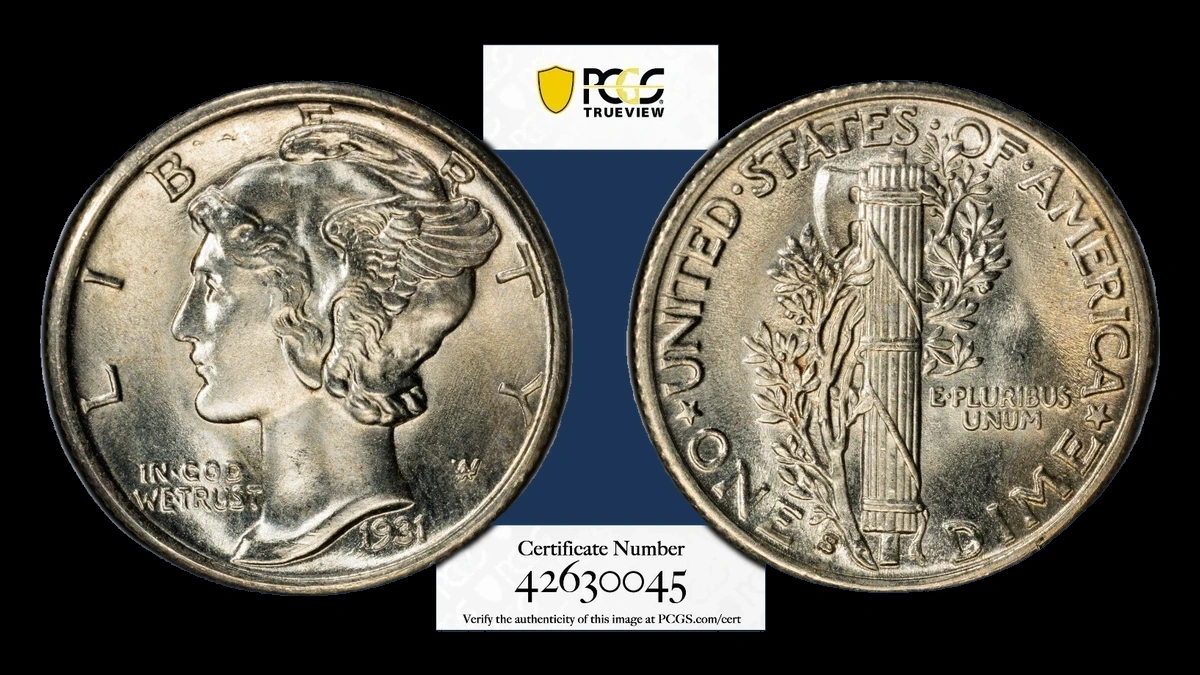
Denver and San Francisco each have a recognized obverse variety called FS-101, but their patterns differ. The Denver date 1 shows a small inward separation, while San Francisco requires its own date and lettering comparison.
The extra image existed in the die and could appear with one normal strike. Older titles also mention Denver reverse doubling without supplying an exact diagnostic in the available material.
How to Identify
Read D or S before choosing a reference, then compare the complete relevant date pattern. A rounded extra outline differs from a low shelf that reduces the main stroke.
Examine any claimed reverse doubling independently. Neither the front’s FS-101 name nor a historical listing title supplies a specific back feature to assume.
What It’s Worth
Clearly attributed examples are estimated at $90–$3,000. The 1931-D FS-101 MS67+ sold for $2,640 in November 2023, reflecting exceptional preservation as well as variety.
Worn examples need much lower-condition comparisons. A reverse-doubling claim also does not create a second automatic premium on top of that full coin price.
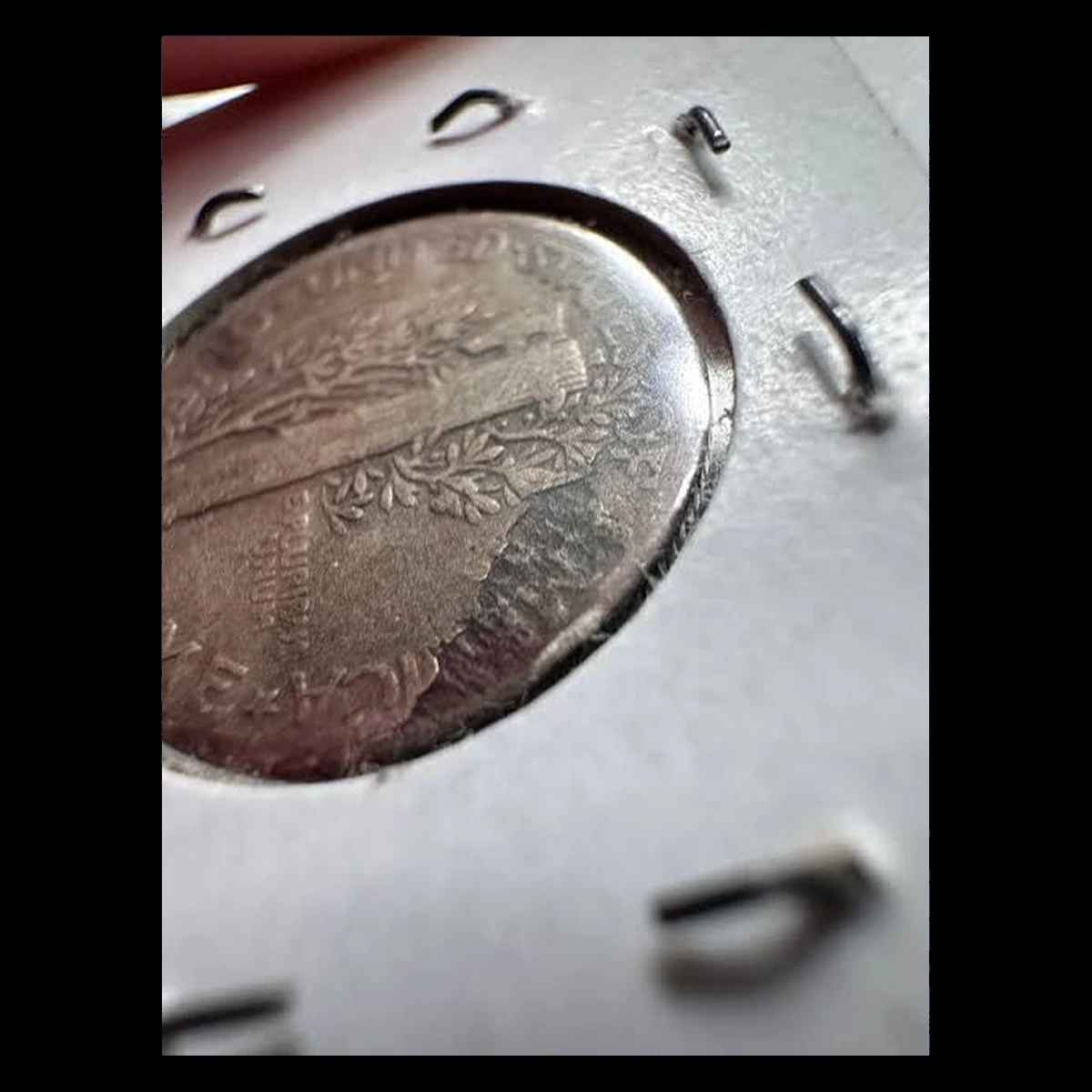
2. 1931 Dime A Thin Layer Lifts from the Surface: Lamination Error
The San Francisco year guide reports lamination without a fixed location. Weakness within the alloy can produce a peeling flap, shallow split, or patch where a layer detached.
This is not missing silver plating from an ordinary base-metal coin. Silver is present throughout the original alloy.
How to Identify
Follow a thin layer beneath adjacent intact metal, using side lighting and leaving every flap attached. Corrosion holes or a bright gouge need not have the same layered structure.
Inspect both faces and the edge because the report supplies no universal search position. An attached layer can leave almost normal weight, so a scale alone cannot decide the cause.
What It’s Worth
Estimated values run from $35–$500 for circulated through modest unworn examples. A different-year 1921-D reverse lamination graded NGC VG8 sold for $74 in 2013, a heavily worn comparison rather than a 1931-S result.
3. 1931 Dime An Opening at the Lower Rim: Cracked Planchet Error
A June 2014 catalog describes a Denver dime with a blank crack at 6 o’clock. Here the coin’s own metal opens, unlike a die crack that produces a raised line from a damaged tool.
The NGC MS62 Full Bands example was offered together with two other error dimes. Its grade and sharp bands describe preservation and strike quality, not a separate minting error.
How to Identify
Compare the lower opening with the 2014 catalog example. Follow it to the edge and inspect the corresponding opposite-side area without assuming it passes all the way through.
Check for distortion, stress marks, or pushed rim metal from later bending. A largely intact cracked blank can remain close to normal weight and diameter.
What It’s Worth
Genuine examples are estimated at $60–$700. The three-coin lot supplies no separate price for this Denver dime; a different-year 1945-D AU50 cracked-planchet example sold for $77 in September 2024.
The latter is a lower-condition, more common-date comparison. It cannot automatically price a 1931-D MS62 Full Bands.
4. 1931 Dime A Curved Segment Is Missing: Clipped Planchet Error
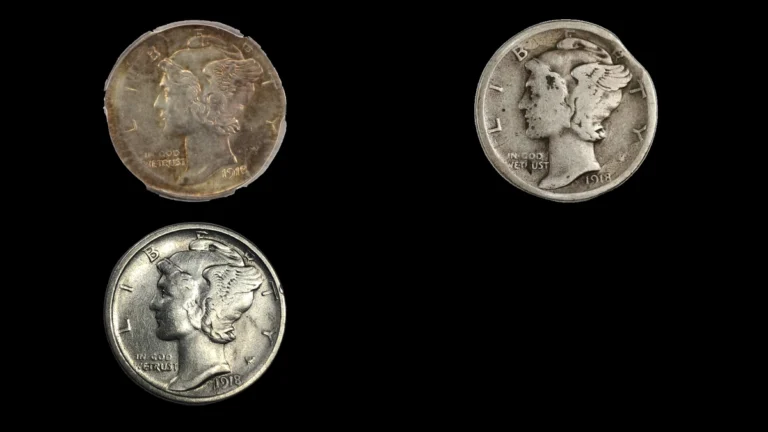
A blanking punch that overlaps a previously cut hole can produce an incomplete disc. Once struck, that disc has an original curved shortage in its edge.
For 1931, reports include a seller-described Philadelphia MS66 Full Bands and San Francisco clips. A grade or curved outline alone does not prove how the shortage formed.
How to Identify
Inspect the design and metal flow at both ends of the arc. A burr, parallel tool marks, or a sharply sawn face can indicate later cutting.
Compare the surviving grooves and possible weakness opposite the clip. Weighing documents missing metal but cannot distinguish mint-made loss from a later cut by itself.
What It’s Worth
Estimated whole-coin values are $50–$1,200. Different-year comparisons include a 1942 MS66 clip at $192 in March 2025 and a 1924 MS66 Full Bands at $305.50 in 2013.
Neither is a 1931 sale. The broader range allows for the underlying date, mint, preservation, and band detail as well as the clip.
5. 1931 Dime Blank Silver beside a Shifted Design: Off-Center Strike Error
Unlike a clip, an off-center strike can leave the original blank largely intact. Some surface misses the dies while some intended design falls beyond the opposite edge.
The year guide gives no particular mint or displacement for a confirmed specimen. Those details need to be established from the actual coin.
How to Identify
Read all of 1931 and compare both faces for the same misplaced-blank event. A shift limited to one design can instead involve a moved die.
Examine original texture where the design meets the unstruck margin, then inspect for grinding or cutting. The expanded or displaced outline need not remain perfectly circular.
What It’s Worth
Readable-date examples are estimated at $200–$2,500. A 1944 AU58 struck 10% off center brought $360 in December 2025, while a 1920-D MS62 sold for $1,020 that September.
Both are other-year comparisons, showing the effect of identity and condition. The upper estimate is not a documented 1931 auction result.
Conclusion
A lifted layer, a crack in the blank, and an original missing arc should be described separately even when all look like damaged metal at first. Off-center striking instead changes where the design reaches an otherwise intact blank.
For doubling, match the correct mint’s details and treat reverse claims independently, then choose whole-coin comparisons with similar preservation and strike quality.