Rare 1875 Dime Errors (List & Pictures)
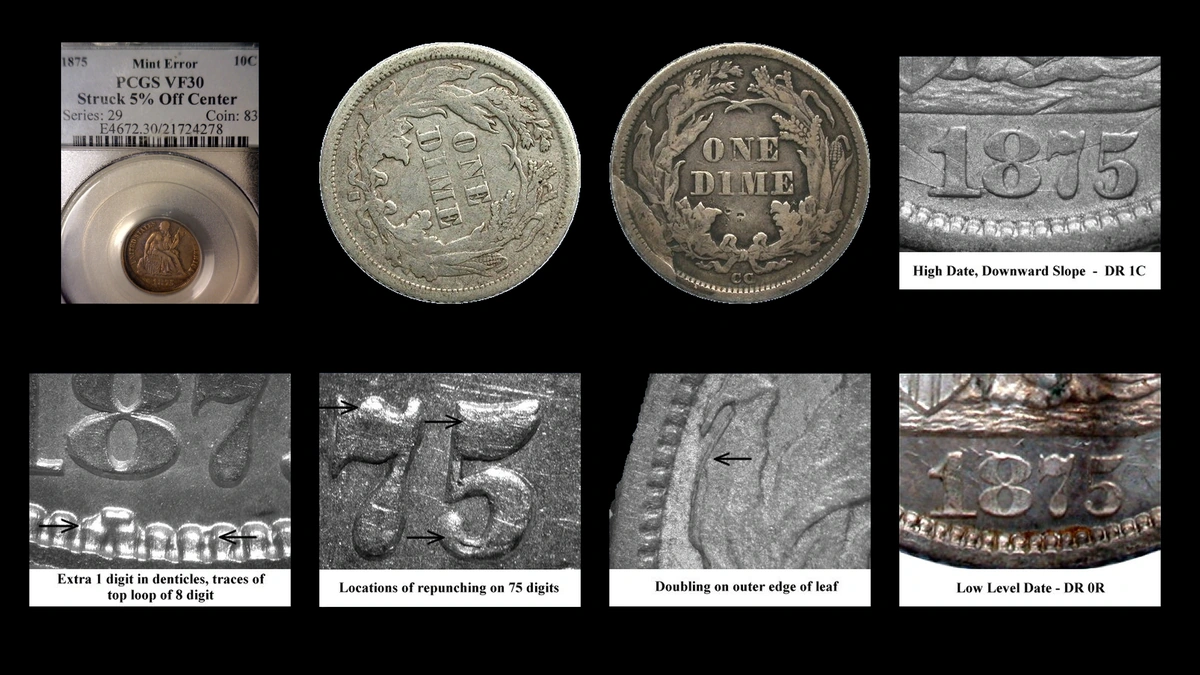
Mint-letter position is a useful starting point for 1875 dime errors, especially when comparing Carson City and San Francisco pieces. Estimated whole-coin values span $25–$20,000; an exceptional MS67 1875-S with a shattered reverse sold for $18,300 in May 2026.
Identify the mint and its position, then inspect displacement, rim breaks, and the smaller date or wreath features.
| Visible clue | Feature | Estimated whole-coin value |
|---|---|---|
| Design misses the blank | Off-center strike | $400–$5,000 by mint |
| Reverse leans markedly left | Rotated reverse | $100–$1,500 |
| A shifted or raised rim section | Cud or retained break | $150–$3,000 |
| Raised crack networks | Die cracks and shattered dies | $30–$1,500 ordinary worn; $15,000–$20,000 exceptional MS67 level |
| Stray numerals below date or in base | Misplaced date | $40–$1,200 |
| Earlier strokes beside main numerals | Repunched date | $30–$3,500 by manufacture |
| Repeated O or wreath contours | Doubled die reverse | $50–$3,500 by manufacture |
| Traces of the opposite design | Die clash | $25–$800 |
1. 1875 Dime Bare metal faces missing design: Off-Center Strike Error
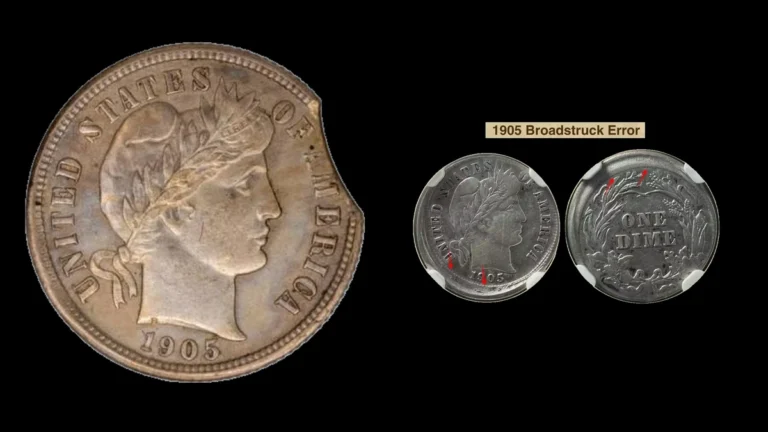
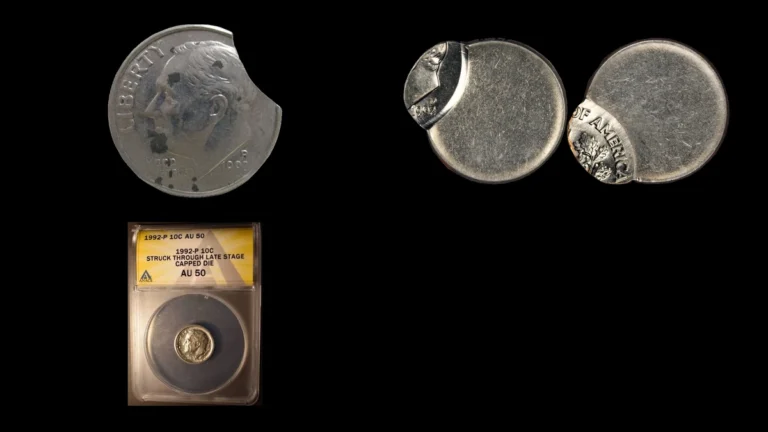
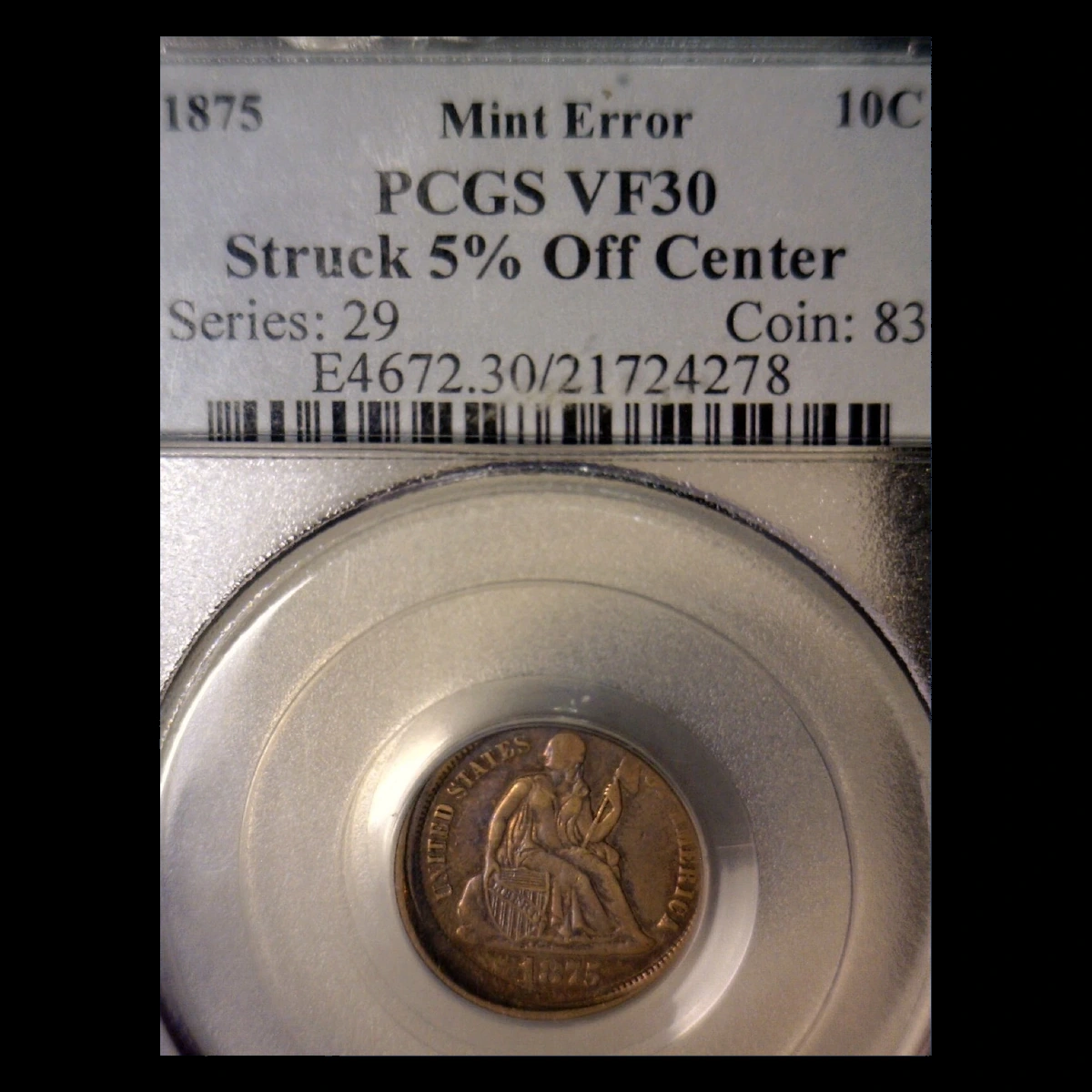
An 1875-CC catalog example is described as 10% off center at XF45, with CC above the wreath bow. A separate dealer XF40 was struck toward nine o’clock.
The blank sat outside its intended striking position, so some design missed the metal. Reports also include Philadelphia and below-bow CC examples, whose details should remain separate.
How to Identify
Locate the date and mint letters before evaluating the shift. CC above the bow is normal for the cataloged variety and is not itself an error.
Compare both faces for incomplete design beside genuine unstruck metal. Inspect the transition for scraping or grinding that removed finished detail later.
Do not assign the XF40 coin’s nine-o’clock direction to the XF45. Original specifications of 2.50 grams, 17.9 millimeters, 90% silver, and a grooved edge provide general checks for accessible coins, allowing for wear and changed shape.
What It’s Worth
Estimated whole-coin ranges are $400–$2,000 for Philadelphia and $800–$5,000 for Carson City, covering worn or slightly worn examples. No sale amount accompanies the cataloged XF45.
A 1907-D Barber dime struck 20% off center sold for $1,207.50 on September 11, 2004, at AU55. Its different year, design, and light wear make it a comparison rather than an 1875 transaction.
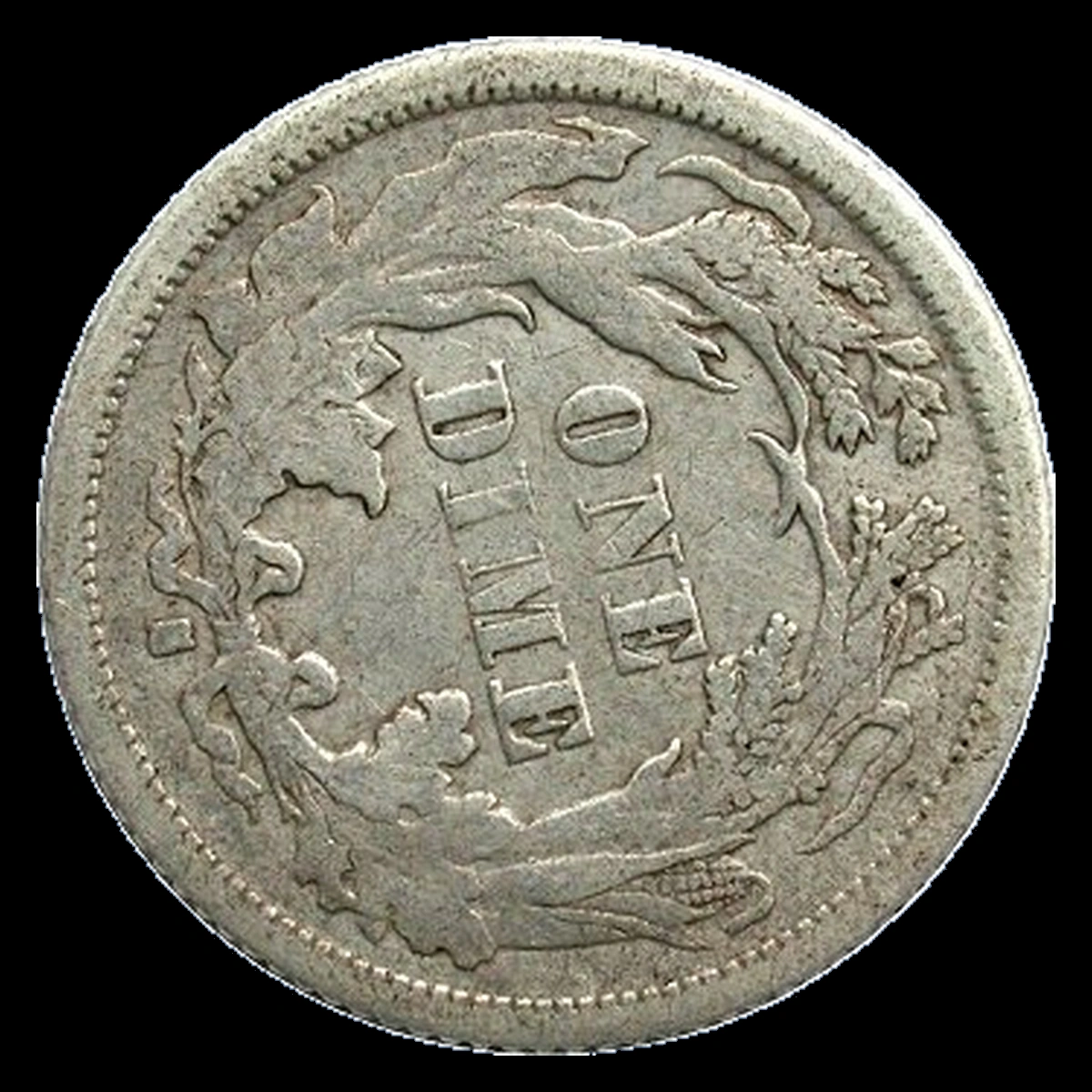
2. 1875 Dime The reverse returns to a strong leftward lean: Rotated Reverse Error
San Francisco F-109 is recorded at 50 degrees left, while F-118a is recorded at 80 degrees left. Both have S below the wreath, and their separate tool pairings must stay attached to their own angles.
The designs can be complete and centered despite their angular mismatch. Rotation measures the relationship between the two dies, not the slant of the coin inside its holder.
How to Identify
Start with Liberty upright against a vertical guide and flip the holder from top to bottom. Prevent sideways movement, measure the reverse’s lean, and repeat the sequence.
Confirm S below the wreath before selecting either reference. Independently straightened photographs cannot preserve the angle between the faces.
What It’s Worth
The estimate is $100–$1,500 for worn through lightly worn whole coins with these substantial rotations. Neither listed example has an assigned auction price.
The larger 80-degree angle does not automatically outweigh differences in wear or surface damage. Value the actual measured result together with the complete coin.
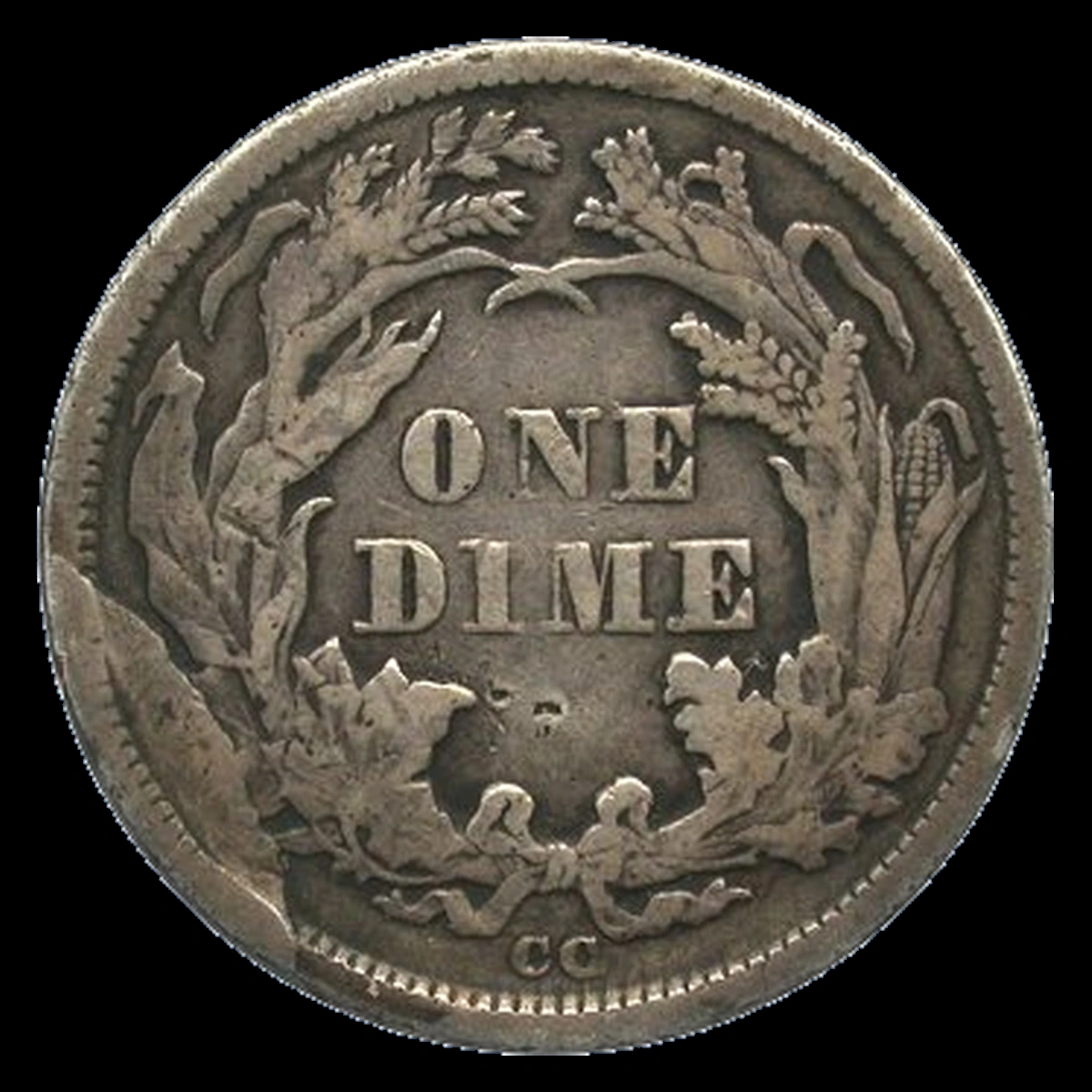
3. 1875 Dime A bounded rim section rises or shifts: Cud and Retained Die Break Error
A broken die fragment that remains in place may still stamp design while leaving a step around its boundary. If the fragment falls away, metal can fill the opening and create a raised rim-connected cud.
Inside-wreath CC examples have reported reverse sections around 8:30–9:30 and 3:30–5:00. Below-wreath CC reports include obverse breaks beneath the date and a lower-left reverse cud.
A separate inside-wreath S example has a reverse cud at six o’clock. These locations describe different specimens rather than a required set on one coin.
How to Identify
Determine whether CC or S sits inside or below the wreath, then compare the relevant boundary with the specialist examples. Orient the correct face upright before assigning a clock position.
Low light can reveal a step and any design retained within the affected area. A narrow crack alone does not prove that the larger break had developed.
Inspect for a folded rim or added material from later damage. The rim connection and matching boundary are more specific than the apparent size of a lump.
What It’s Worth
The estimated whole-coin range is $150–$3,000 for worn through lightly worn CC and S examples. Mintmark position, break visibility, and surfaces all influence comparison.
No new auction result is established for the illustrated breaks. A subtle retained section and a large missing-fragment cud can draw different interest, even at similar wear levels.
4. 1875 Dime A network of raised ridges crosses the design: Die Cracks and Shattered Dies Error
The 1875-S F-105a has S above the bow and an extensive reverse crack network. Broken detail in the first S of STATES and the O of OF provides additional landmarks.
Other issues show different patterns, including Philadelphia date or wreath cracks, ring-like Carson City obverse routes, and San Francisco wreath or ribbon cracks. They cannot all identify the same die.
“Shattered” describes the damaged stamping tool, whose openings leave raised lines. A network alone does not prove that a fragment shifted or fell away.
How to Identify
For F-105a, confirm S above the bow and trace the entire reverse network. Compare the damaged S and O alongside the crack paths.
Use side lighting to distinguish ridges from scratches cut downward. For another mint or mintmark position, select the matching reference rather than borrowing the F-105a pattern.
What It’s Worth
Ordinary worn or slightly worn cracked coins across the mints have an estimated $30–$1,500 range. The exceptional MS67 F-105a level is estimated separately at $15,000–$20,000.
A PCGS MS67 F-105a with CAC approval sold for $18,300 on May 1, 2026. Its exceptional unworn preservation contributes strongly to that whole-coin result.
It is not a premium to add for cracks on an ordinary circulated dime. Match condition and variety before applying the comparison.
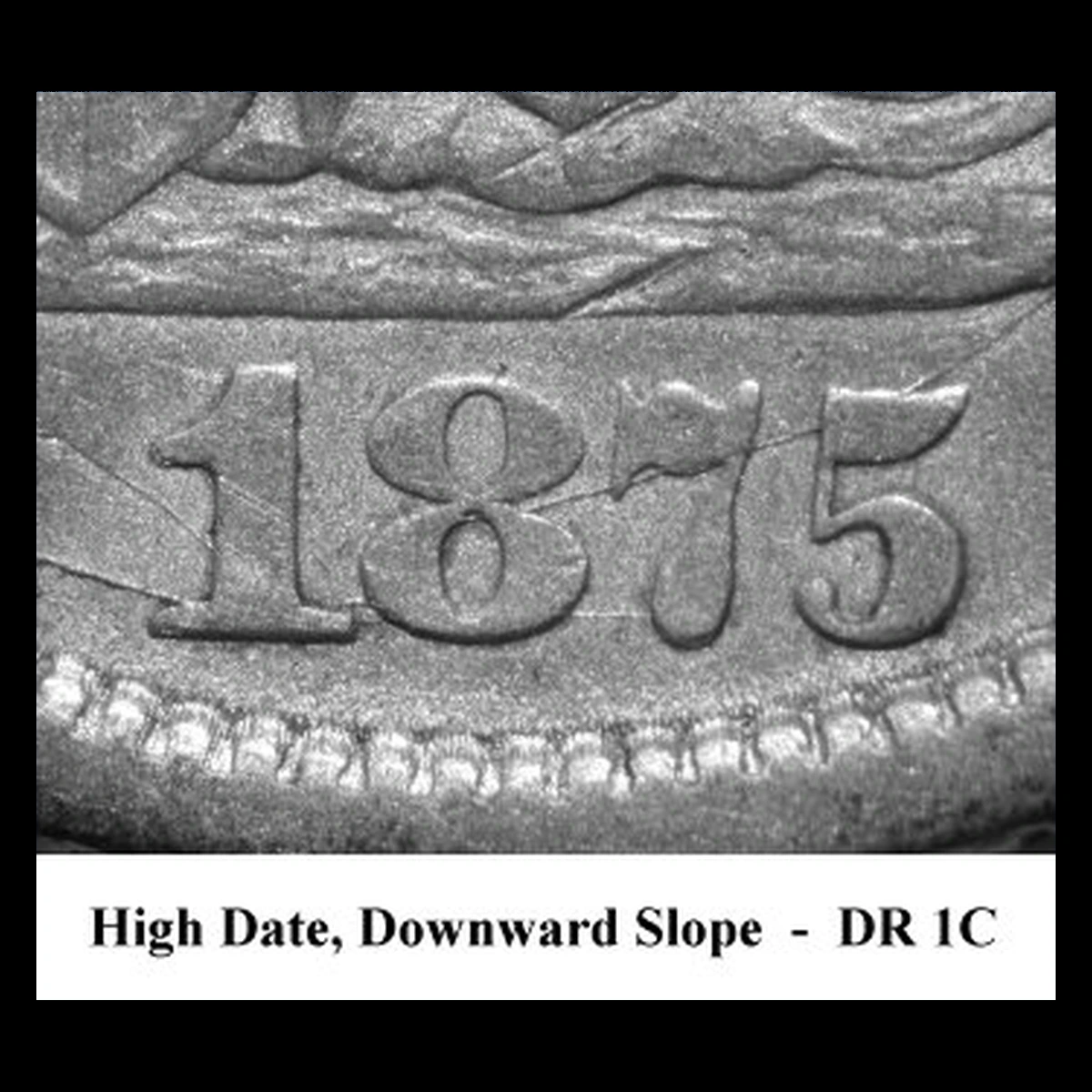
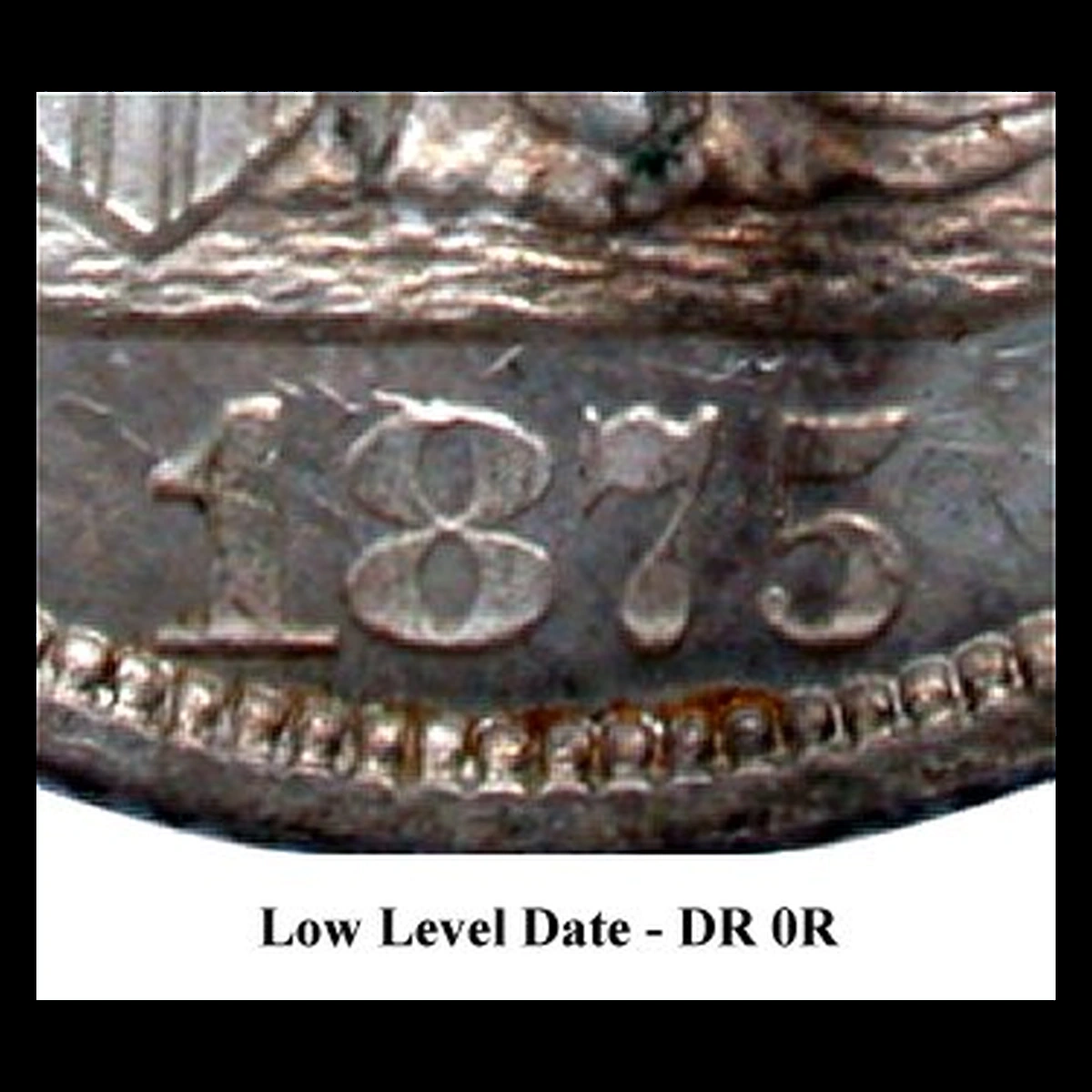
5. 1875 Dime Numeral pieces appear below the date or in Liberty’s base: Misplaced Date Error
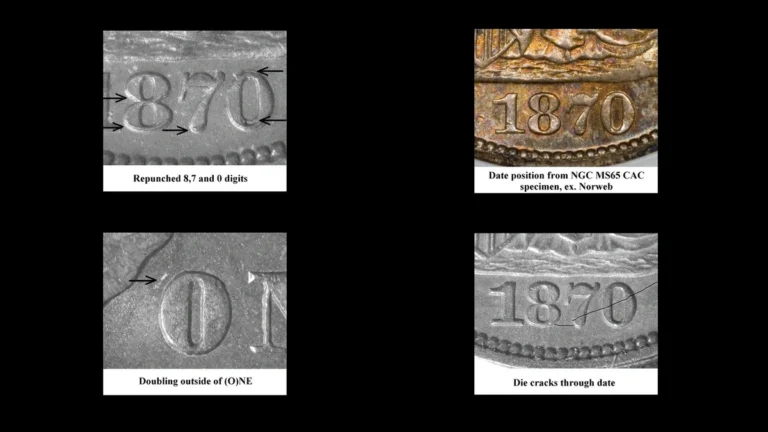
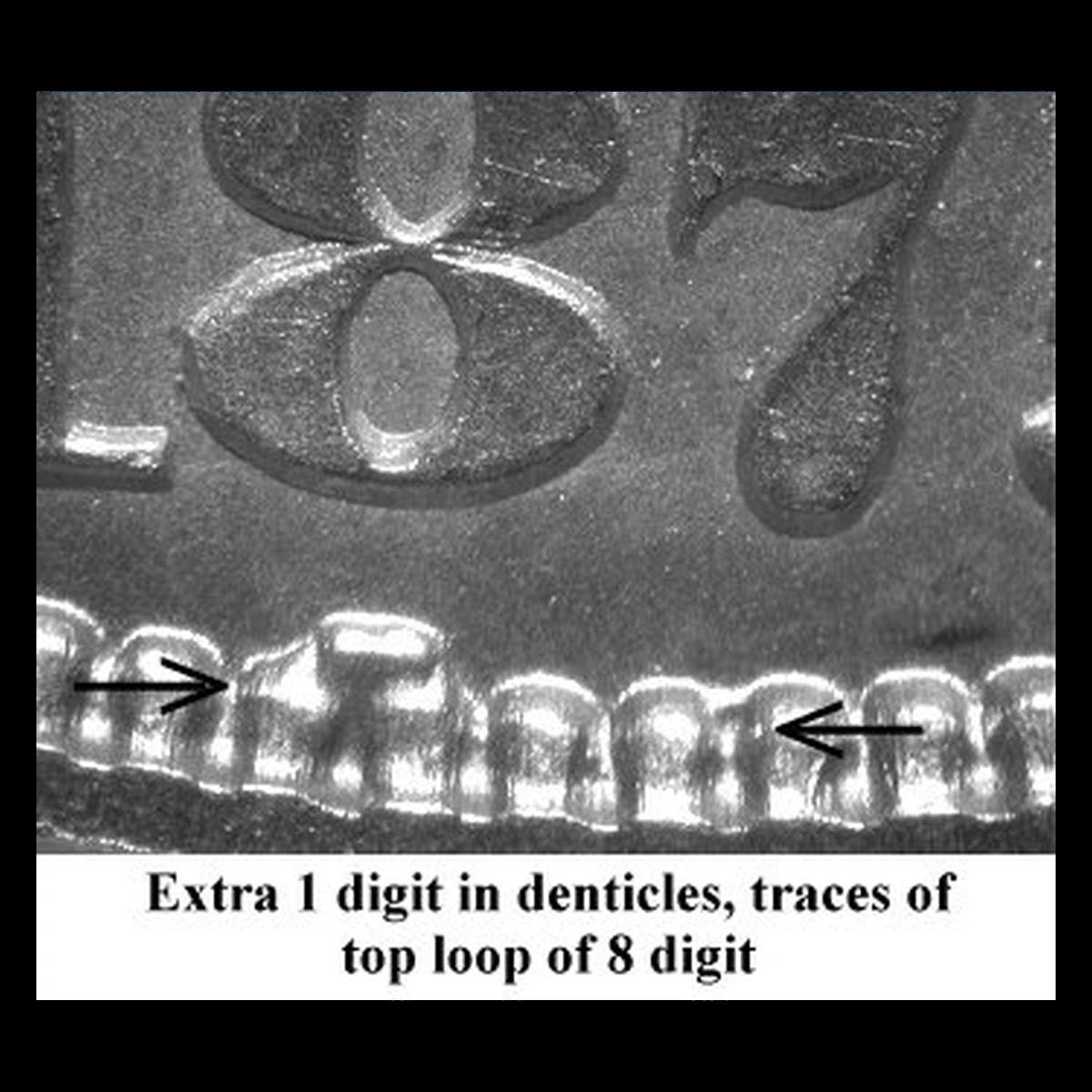
Philadelphia F-107, also called FS-301, has the top of an extra 1 below the date’s 8 and an 8-loop trace below 7 among the denticles, the small border teeth. A separate variety has a misplaced 5 in Liberty’s base.
The date punch entered the die outside its proper position, leaving stray fragments when the normal date was completed. F-107 can also carry clashes and right-wreath cracks.
How to Identify
Keep the full date and lower denticles in one close view. Compare both F-107 fragments in their specific positions rather than counting normal border teeth as numeral tops.
For the misplaced 5, inspect the base above the date using that variety’s own image. Its position should not be moved to the F-107 border locations.
What It’s Worth
The estimated whole-coin range is $40–$1,200 for worn through lower-grade unworn examples. GreatCollections records $93.48 for PCGS XF45 in November 2025 and about $61 for F12 that June.
XF45 retains much detail, while F12 has heavier wear. The stronger upper estimate assumes better preservation, and the separate misplaced 5 needs its own assessment.
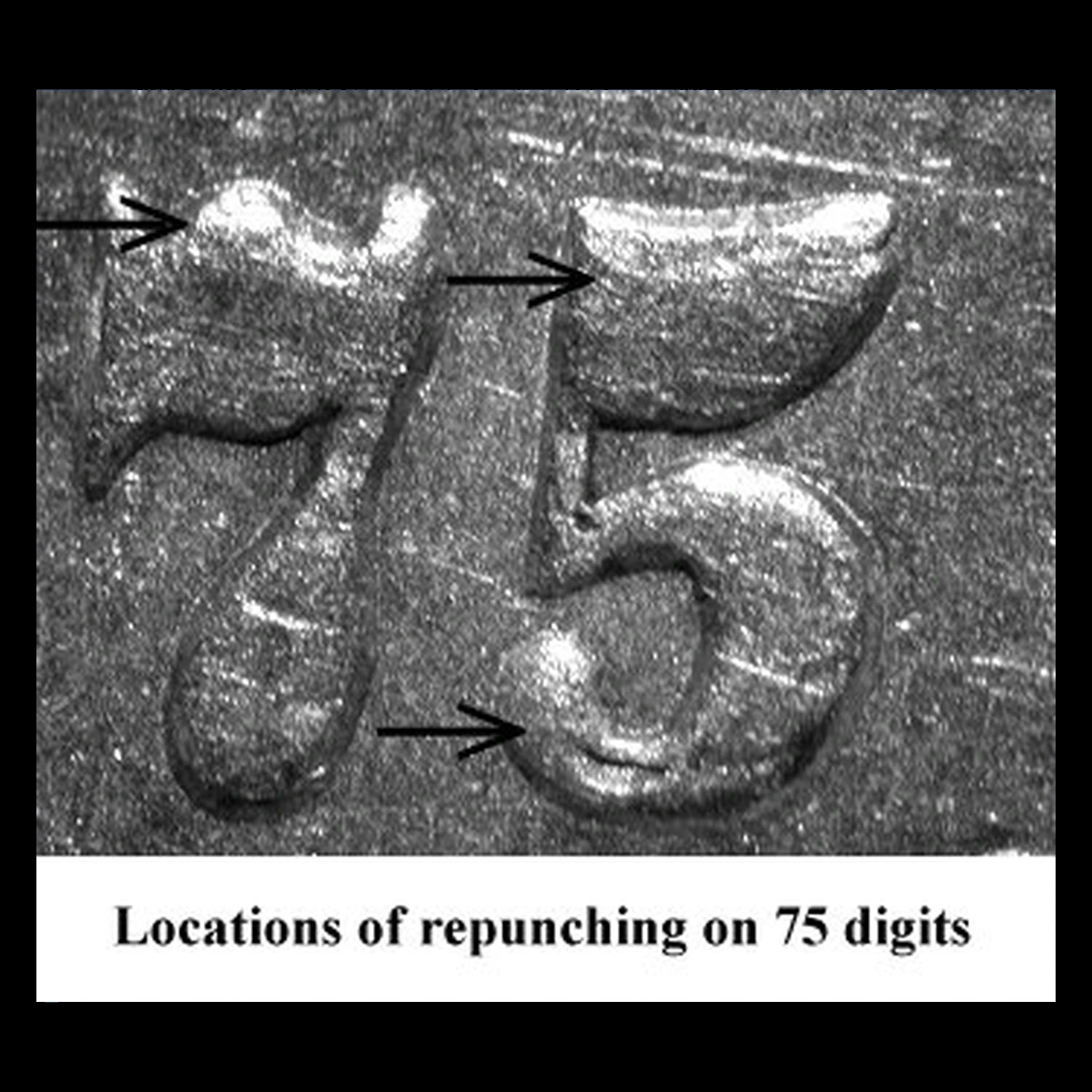
6. 1875 Dime Earlier strokes sit beside the intended numerals: Repunched Date Error
Philadelphia Proof F-101 repeats parts of 1 and 5. Regular strikes made for everyday use include different reported patterns involving 18 or 75.
Earlier date-punch positions left these fragments in the die before the coins were struck. They lie beside the intended numerals, unlike misplaced pieces elsewhere in the design.
How to Identify
Establish Proof or regular manufacture before selecting the date reference. A shiny surface alone cannot establish a collector Proof.
Inspect 1 and 5 for F-101, or the appropriate 18 or 75 pattern for a regular variety. Each raised remnant should fit an earlier numeral shape in the correct location.
What It’s Worth
Estimates are $30–$900 for worn through lower-grade unworn regular coins and $400–$3,500 for lower-to-middle-grade Proofs. No exact-variety sale establishes those ranges here.
The worn F-107 sales around $61–$93 involve a different date mistake. They provide nearby context but cannot establish either a repunched-date premium or a Proof price.
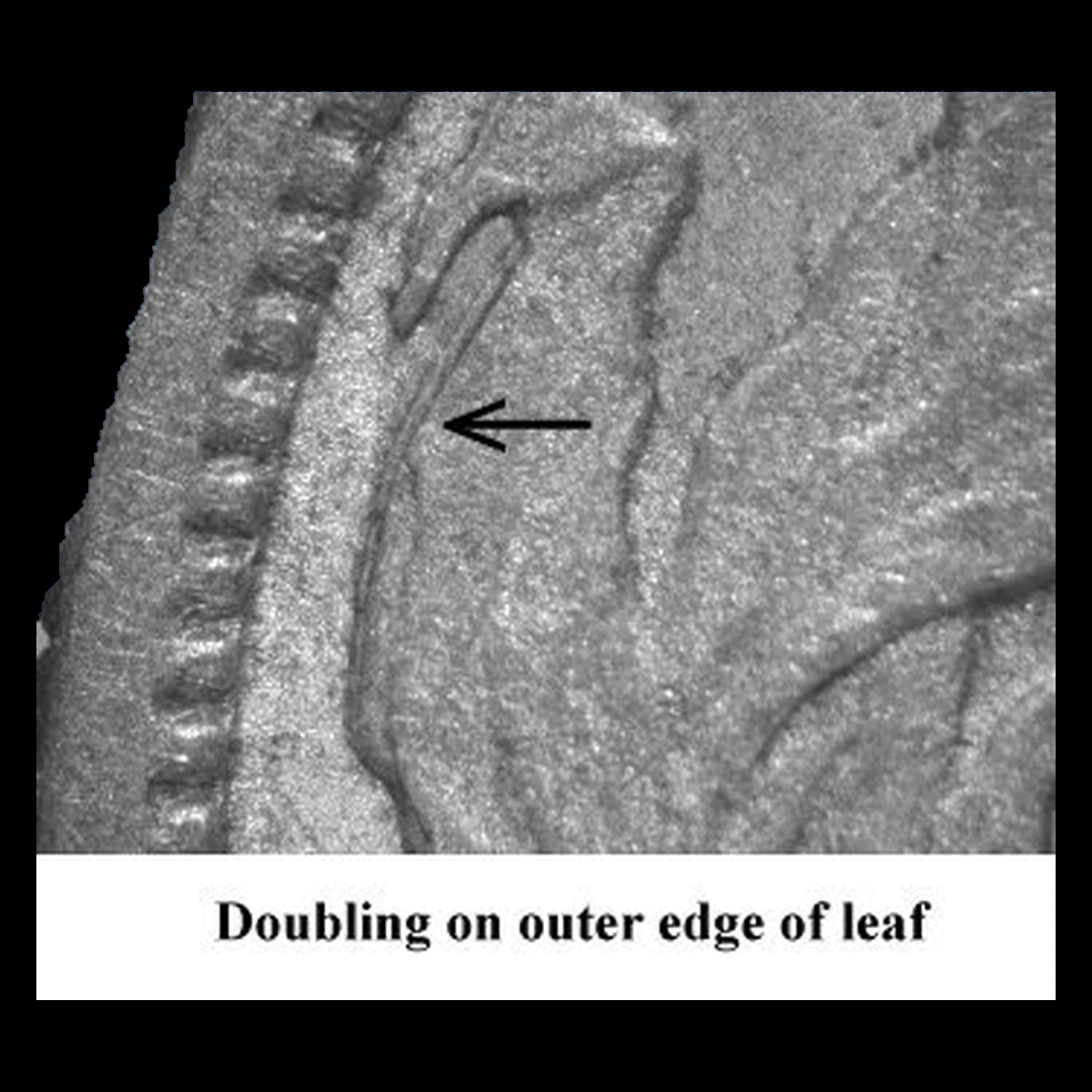
7. 1875 Dime O or the left wreath carries another contour: Doubled Die Reverse Error
The F-101 Proof has doubling on O in ONE, whereas the regular-strike F-117 has doubling on the left wreath. These locations belong to separate examples.
The repeated design was built into the die as the design was transferred to it. A single strike could reproduce it, without the coin being struck twice.
How to Identify
For the Proof with repeated 1 and 5, compare O with a verified F-101 reverse. For F-117, examine the left wreath against its own reference instead.
Distinguish a second raised contour from a low flat shelf. F-117 may also carry faint clashes, but borrowed opposite-side shapes should not be counted automatically as doubling.
What It’s Worth
The estimate is $50–$1,000 for worn through lower-grade unworn regular coins and $400–$3,500 for lower-to-middle-grade Proofs. These are guidance ranges rather than sales of the exact examples.
The Proof’s repunched date and doubled reverse describe one coin. Adding their full estimates would count that underlying specimen twice.
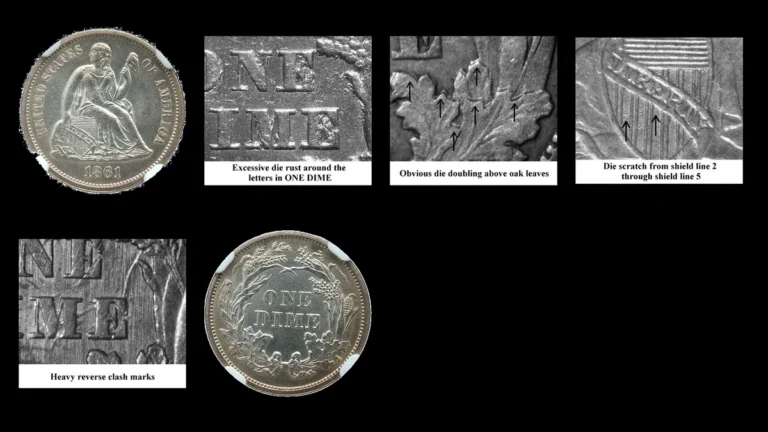
8. 1875 Dime Faint shapes copy the opposite face: Die Clash Error
Philadelphia F-107 carries clash traces on both sides, along with misplaced date pieces and right-wreath cracks. Another Philadelphia report places traces beside the date.
The dies met without a blank and acquired parts of the opposing design. They subsequently passed those shapes onto coins, rather than receiving them through pressure applied after minting.
How to Identify
Compare each unexpected shape with the opposite design in the correct orientation. Near the date, distinguish a recognizable borrowed form from a numeral fragment or scratch.
Use F-107’s date and wreath features to select the correct example, without treating every adjacent line as a clash. Both faces should agree with the same pairing.
What It’s Worth
The estimated whole-coin range is $25–$800 for worn through lower-grade unworn Philadelphia examples. Clear transferred shapes are more useful than simply counting extra marks.
The $93.48 XF45 F-107 sale values the complete variety, not its clash alone. Assess any date remnants, cracks, and clashes together when they occur on one specimen.
Conclusion
Mint-letter location separates several otherwise similar 1875 comparisons. After establishing it, match the actual rim boundary, crack network, numeral fragment, or repeated design rather than borrowing details from another pairing.
The $25–$20,000 span includes exceptional preservation at its upper end. A clear feature on a circulated coin does not inherit the MS67 sale, and several features on one coin still receive one whole-coin valuation.