Rare 1905 Dime Errors (List & Pictures)
A smaller mintmark can be worth a closer look than a much larger surface mark. Among these 1905 Barber Dime errors, an MS65 Micro O sold for $12,650 in January 2005, and a separate MS63 brought $6,405 in May 2026.
Estimated values across six groups span $30–$15,000. Compare the O and S first, then check whether missing metal, spreading, displacement, or a foreign blank explains an unusual outline.
| Clue | Type | Estimated range |
|---|---|---|
| Compact O below the knot | Micro O | $500–$15,000 |
| Extra contours at the S ends | Repunched mintmark | $50–$750 |
| Missing edge segment | Clip | $30–$400 |
| Full design inside extra width | Broadstrike | $75–$800 |
| Design cut off beside bare metal | Off-center strike | $200–$1,500 |
| Small one-gram body | Costa Rica blank | $2,000–$10,000 |
A normal Barber dime weighs 2.50 grams and measures about 17.9 mm. Use these as starting measurements, with wear allowed for, and inspect the grooved edge along with both faces.
1. 1905 Dime The O Is Small, Rounded, and Low: Micro O Error
The recognized Micro O has thick sides around a small oval opening. It sits farther below the ribbon knot than the normal dime’s O.
PCGS explains that a mintmark punch intended for Barber quarters was used on the dime’s die. The quarter design had less room for its mintmark, which is why its punch was smaller despite the larger coin.
How to Identify
Compare normal and Micro O photographs at the same enlargement using the PCGS examples. Check the compact outer shape, thick sides, oval center, and spacing below the knot together.
Dirt can make the center look small without changing the letter’s full outline. Wear also obscures detail, so apparent size in one cropped photograph is not enough.
What It’s Worth
$500–$3,000 is an estimated range for clearly identified circulated coins. Desirable unworn examples run roughly $3,000–$15,000.
The MS65 sold for $12,650 in January 2005, while the separate FS-501 MS63 brought $6,405 in May 2026. Keep those grades with their results instead of assigning the higher price to every small O.
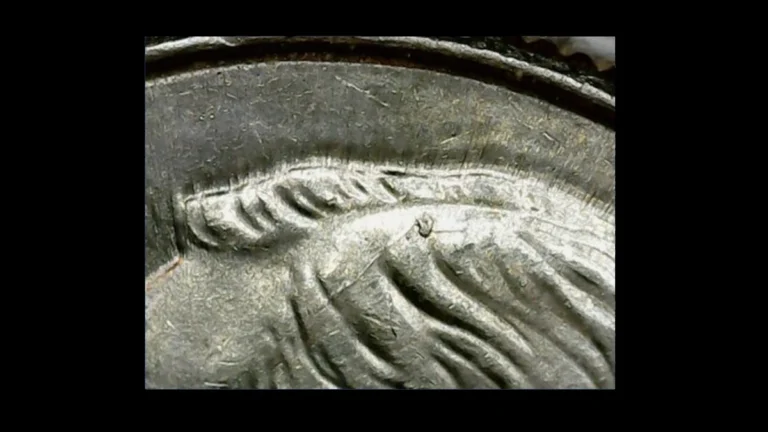
2. 1905 Dime Extra Curves Appear at Both Ends of S: Repunched Mintmark Error
The 1905-S report shows earlier outlines at the upper and lower ends of the mintmark. Repeated punching into the die left pieces of an earlier S beside the final letter.
This is S/S, a repunched mintmark. Its cause differs from using the wrong-sized punch on the New Orleans Micro O.
How to Identify
Place a normal S and the candidate at equal scale, then inspect both ends under magnification. The extra shapes should be raised parts of another S, not the normal curves seen under bright light.
A low flat shelf can come from movement during striking. Nicks or pushed-up damage around the letter also need to be separated from original punch remnants.
What It’s Worth
$50–$750 is an estimated whole-coin range from circulated through lightly worn identified examples. The underlying San Francisco dime’s value is included.
A different 1899-O O/O in AU Details sold for $115 in May 2023. Its light wear and damage make it a limited broader mintmark comparison, not a direct 1905-S price.
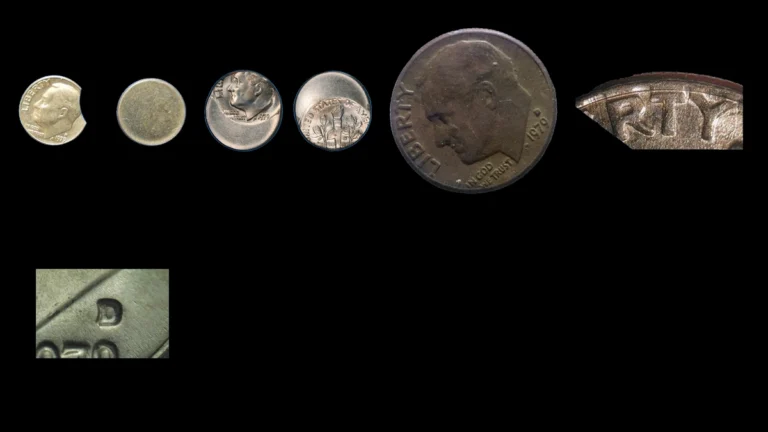
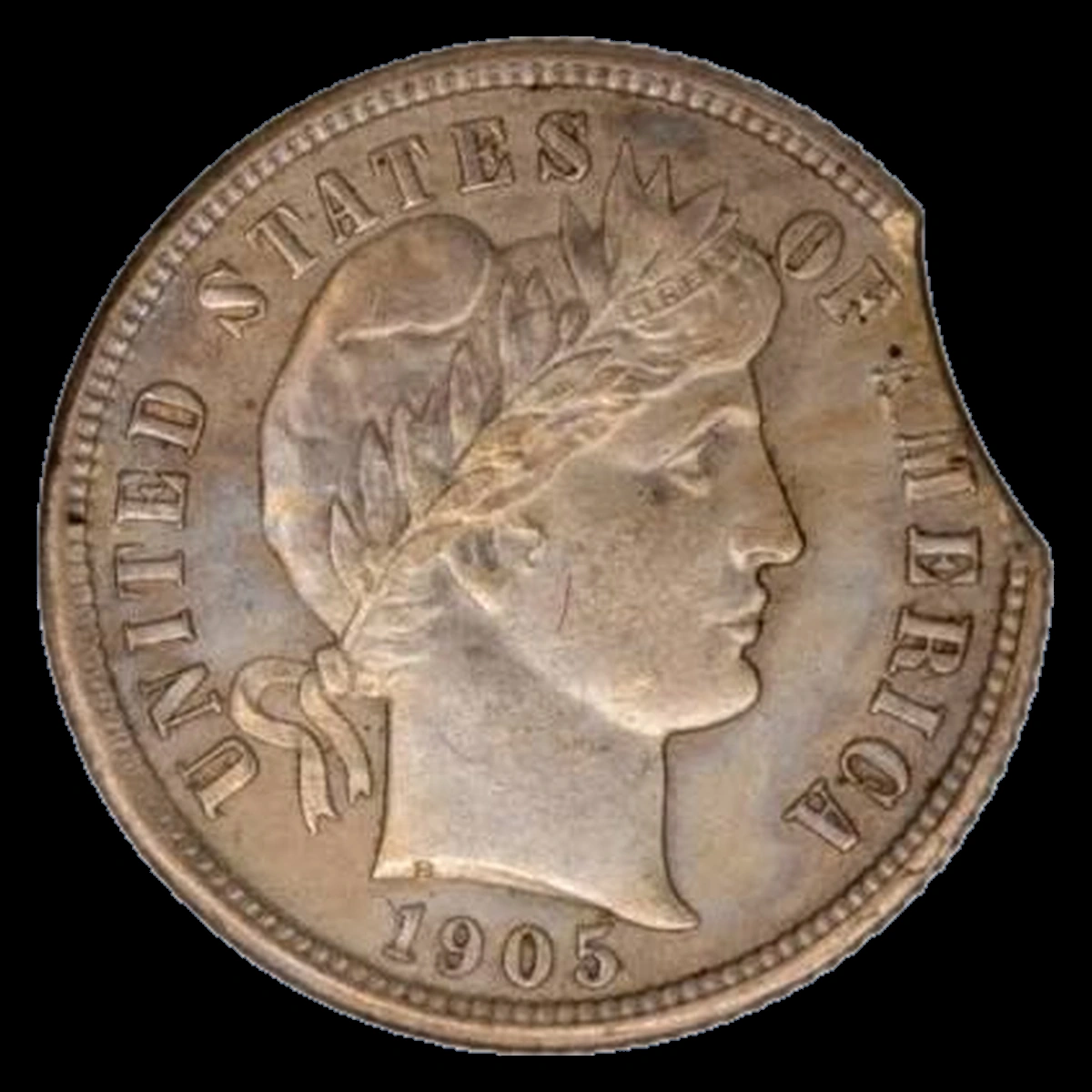
3. 1905 Dime The Rim Meets a Missing Section: Clipped Blank Error
A blank punch can overlap a previously cut hole in the metal strip, leaving an incomplete disc. The dime’s design is then struck around the missing area.
The published 1905 list includes clips without identifying one mint, location, or certified example. The actual specimen must supply those details.
How to Identify
Check both ends of the gap for natural rim formation and design meeting an existing boundary. Fresh filing, cutting through completed detail, or a sharp displaced lip suggests later alteration.
The opposite rim may be weak, although wear can make that clue difficult to judge. Missing metal should explain the weight loss, but a later cut also makes a coin lighter.
What It’s Worth
$30–$400 is an estimated range for modest genuine clips on circulated 1905 dimes. The mint, readable date, gap size, and surfaces all affect value.
An undated clipped silver dime blank in PCGS MS60 sold for $59 in March 2025. It had never received a coin design, so it is a lower-priced comparison for clipped metal rather than a 1905 Barber sale.
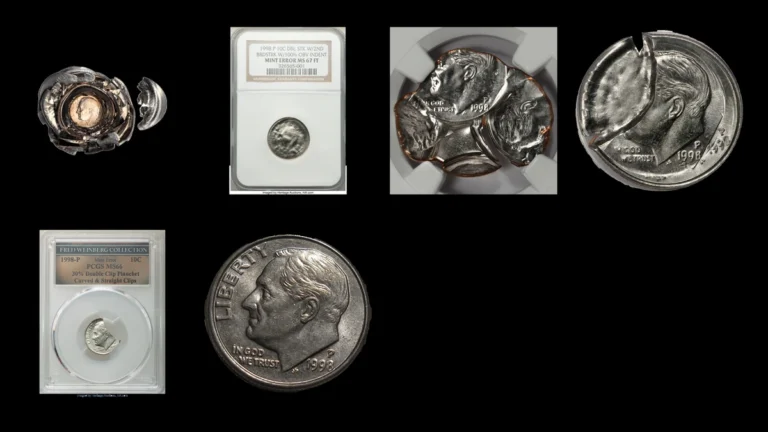
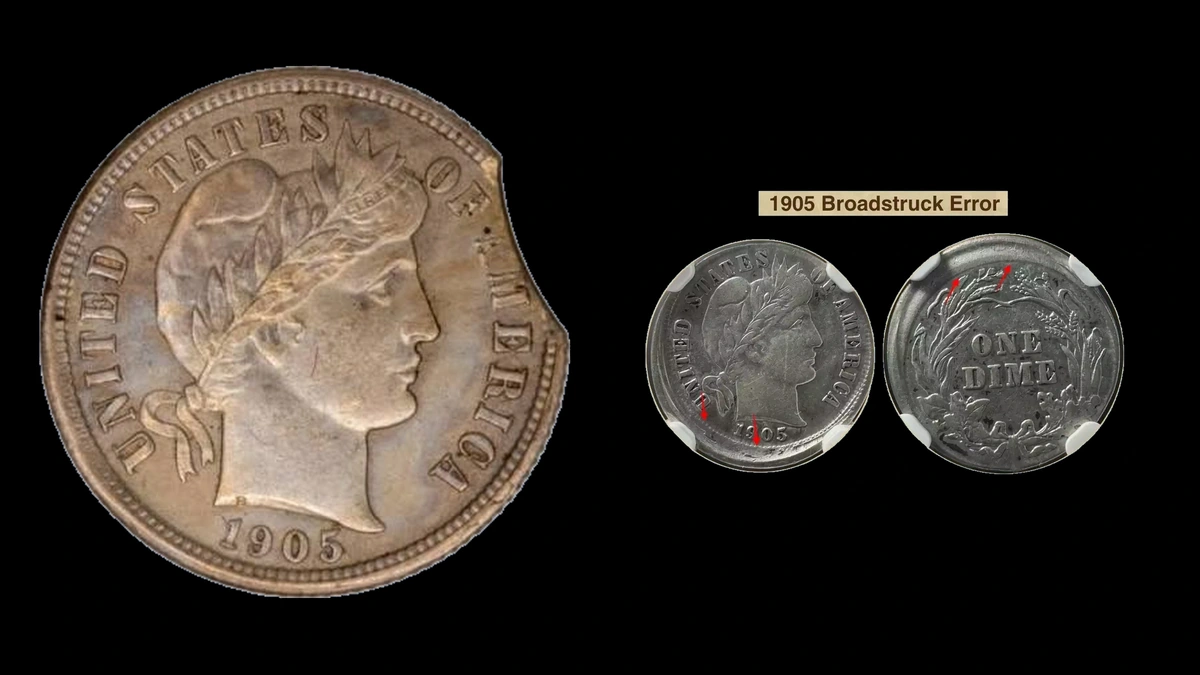
4. 1905 Dime A Wider Border Surrounds All the Design: Broadstrike Error
The collar normally restrains silver as the dies strike the blank. Without that ring’s control, metal can spread beyond the normal width while retaining the whole picture.
The 1905 guide includes this broadstrike type without specifying every example’s mint or grade. A wide border alone should not supply those missing details.
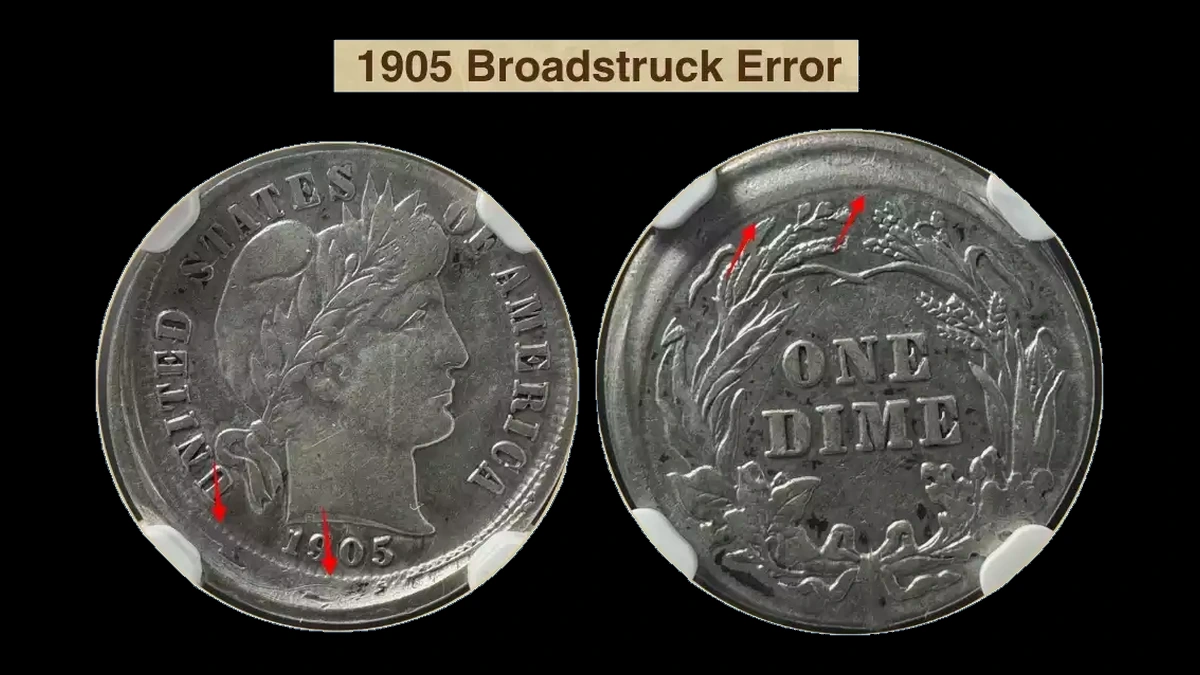
How to Identify
Trace all outer inscriptions on both sides and confirm that the design remains within the metal. Then inspect the edge for missing or incomplete collar-made grooves.
A flattened finished dime can also be wide, but may have crushed portrait or wreath detail and pressure marks. An original broadstrike spreads the existing metal rather than grinding it away.
What It’s Worth
$75–$800 is an estimated range from worn through attractive lower-grade unworn coins. The guide gives about $400 for an AU58 Barber broadstrike and $575 for an MS65.
Those are series comparisons without a specific 1905 transaction attached. The range assumes genuine expansion during striking, not later flattening.
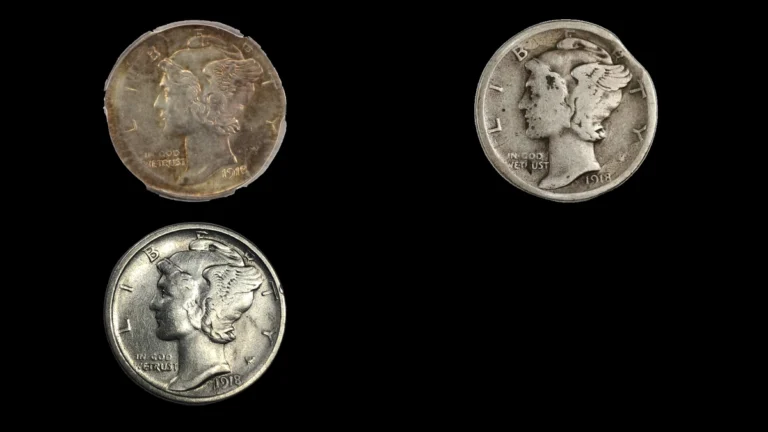
5. 1905 Dime Part of the Picture Falls beyond the Metal: Off-Center Strike Error
An off-center blank leaves untouched metal beside an incomplete design. Both faces record the displaced blank, although the missing letters and details differ.
The 1905 list does not provide a universal percentage or direction. A readable date and any surviving mintmark must be checked on each actual coin.
How to Identify
Compare full views of both faces against the same outline. A centered reverse with only the front shifted may instead indicate one misaligned die.
Inspect the bare margin for original texture rather than grinding or reshaping. Do not complete a missing date digit from expectation, and do not call a complete design in a wide border off center.
What It’s Worth
$200–$1,500 is an estimated range for readable-date examples from modest worn shifts through attractive lower-grade unworn condition. A larger displacement can be more visible without automatically being more valuable.
A Philadelphia 1899 dime 10% off center in NGC VF25 reportedly sold for $312 in June 2023. That circulated different-year piece provides context rather than an exact 1905 valuation.
6. 1905 Dime The Design Fills a Small Foreign Blank: Costa Rica Five-Cent Blank Error
The illustrated NGC XF40 is identified as a Barber dime struck on a Costa Rica five-cent blank. A related auction description records a weight of one gram.
The small, thin blank could not hold the complete design or fill every die detail. Outer lettering ends at the edge, and some surviving design is weak.
How to Identify
Compare actual weight, thickness, outline, and surviving design with the certified coin in Mint Error News. A normal dime’s 2.50 grams and 17.9 mm are baselines, not the required measurements for this foreign blank.
Inspect the original edge for filing or trimming. Small size or low weight alone cannot establish a country of origin.
What It’s Worth
$2,000–$10,000 is the specialist estimate for the illustrated form. Mint Error News records it as unsold at the 2010 Central States auction.
A 1972-S Kennedy Proof on a nickel blank brought $3,720 in June 2023 as broad wrong-blank market context. Its different denomination, metal, and finish do not turn the unsold Barber offering into a completed sale.
Conclusion
Judge the complete mintmark shape, not just its opening: the Micro O’s size mismatch differs from earlier S punch traces. For unusual outlines, decide whether metal was missing, spread freely, or received only part of the design.
The foreign-blank attribution needs its documented measurements and certified comparison. Keep asking figures, estimates, unsold offerings, and completed sales attached to the specific evidence they provide.