Rare 2020 Dime Errors (List & Pictures)
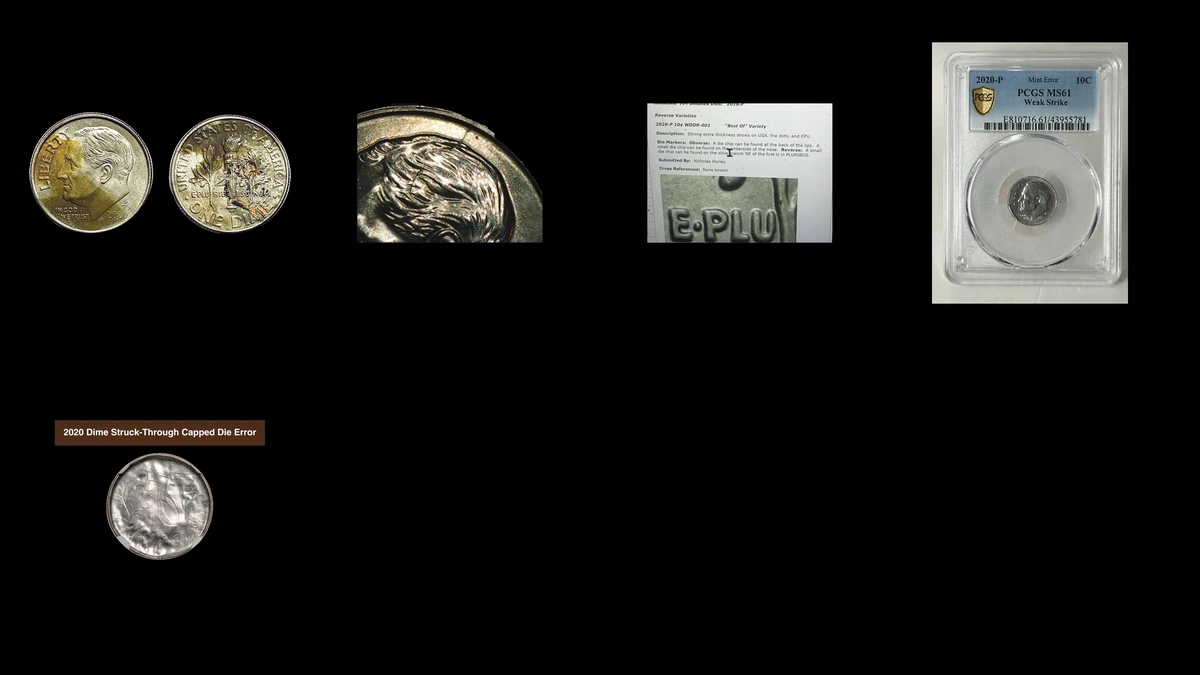
A brown dime and a dime nicknamed “Drooling Roosevelt” need very different checks. One may have lost an outer metal layer; the other may carry a tiny raised chip from the stamping tool.
Estimated values for these 2020 dime errors run from $5–$600. A useful comparison is a 2018-P missing-layer dime that sold for $384 in July 2021; that is another year’s result, not a sale of every copper-colored 2020 coin.
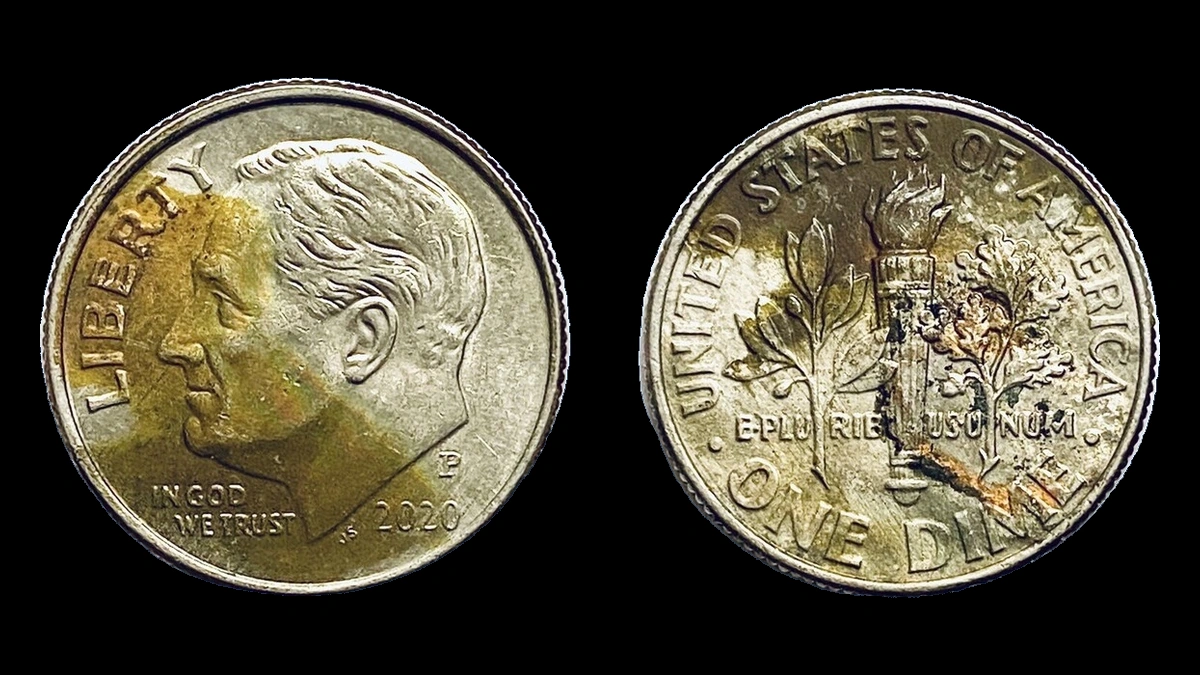
1. 2020 Dime Copper Shows through the Pale Surface: Missing Clad Layer Error
An ordinary dime has pale outer layers bonded to a copper center. If part or all of an outer layer is absent, the exposed center can change both the color and weight.
The specially made 2020 silver Proofs use .999 silver instead. They do not have the same layered metal structure and should not be checked as ordinary clad coins.
How to Identify
Confirm the coin type, then inspect the boundary between pale and copper-colored areas. If a whole face is exposed, the edge and surviving struck detail become especially useful.
Staining, heat, and chemicals can also make a dime brown. Look for actual missing material and naturally struck features, rather than color alone.
A standard ordinary dime weighs 2.268 grams and measures about 17.91 millimeters. A missing layer can lower weight, but acid damage can do the same, so the surface structure must agree with the measurement.
What It’s Worth
$50–$600 is the estimate for genuine partial through complete missing-layer errors in collectible condition. The size and clarity of the exposed area help determine a useful comparison.
A 2018-P missing its front layer sold for $384 in July 2021 at PCGS MS64. A 2019-P with 80% missing brought $139 in September 2024.
Those are different-year examples with different characteristics. They guide the range without establishing a premium for ordinary discoloration.
2. 2020 Dime A Bump Appears near the Mouth: Die Chips, Cracks, and Cuds Error
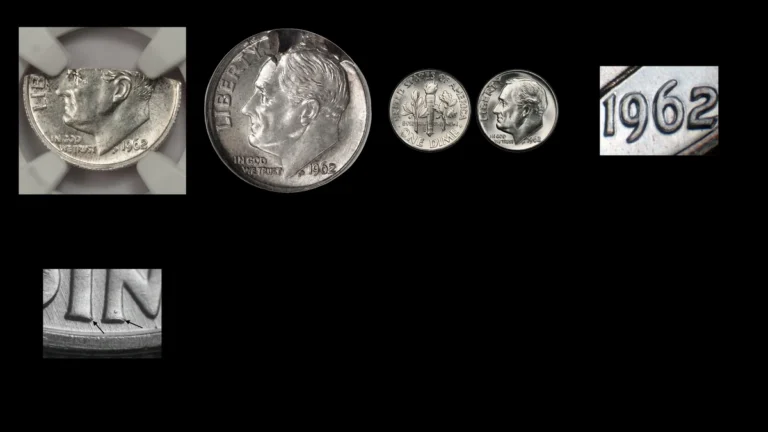
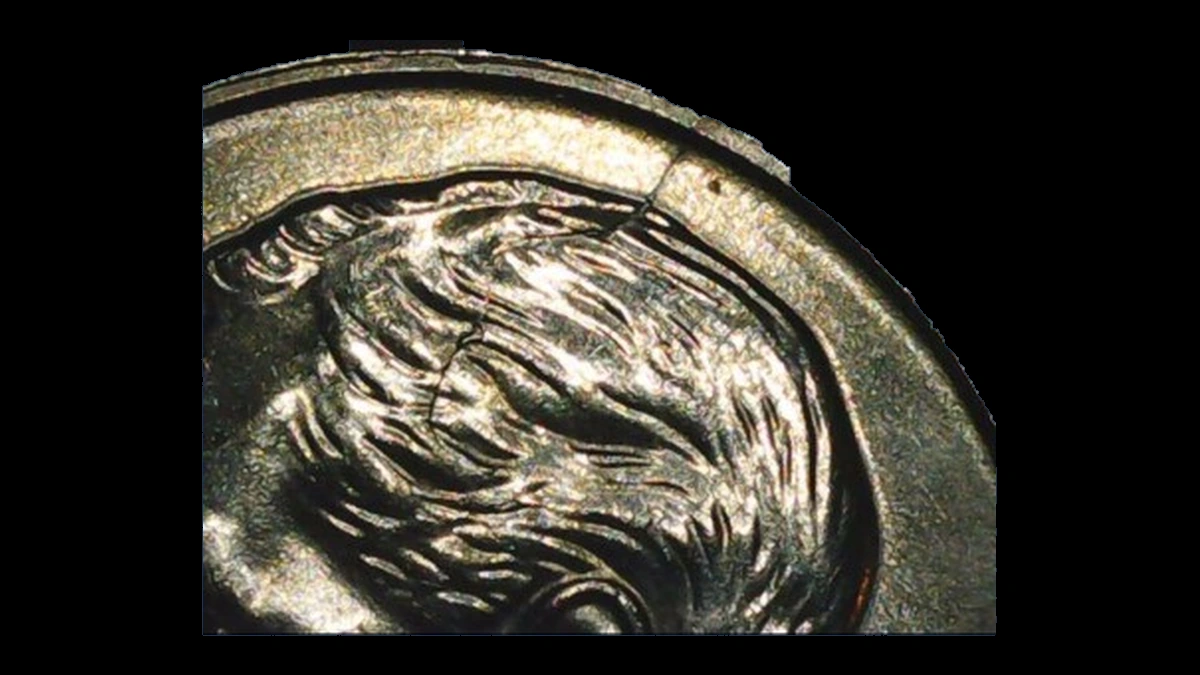
Reported 2020-P mouth, chin, or under-nose bumps have earned the nickname “Drooling Roosevelt.” A small piece missing from the die lets coin metal rise into that opening during striking.
A narrow crack in the tool instead leaves a raised line, including reports on Denver coins. A larger break connected to the rim produces a broad patch called a cud.
How to Identify
Trace where the raised feature starts and ends. A small portrait bump, a thin line, and a broad rim-connected patch are different sizes and shapes within this die-failure group.
Check for dirt sitting on the surface or metal pushed upward beside an impact dent. Those can look like a chip in a photograph.
An internal mouth bump is not a cud unless the break connects to the rim. Look at both faces and the edge before relying on a nickname.
What It’s Worth
$5–$300 is the estimated whole-coin range from tiny chips and cracks to stronger rim breaks. Small portrait bumps generally belong near the lower end.
No specific 2020 auction result is claimed for this range. A clear large cud may attract more interest, while “Drooling Roosevelt” by itself does not set a fixed price.
3. 2020 Dime An Olive Leaf Has an Extra Edge: Doubled Die Error
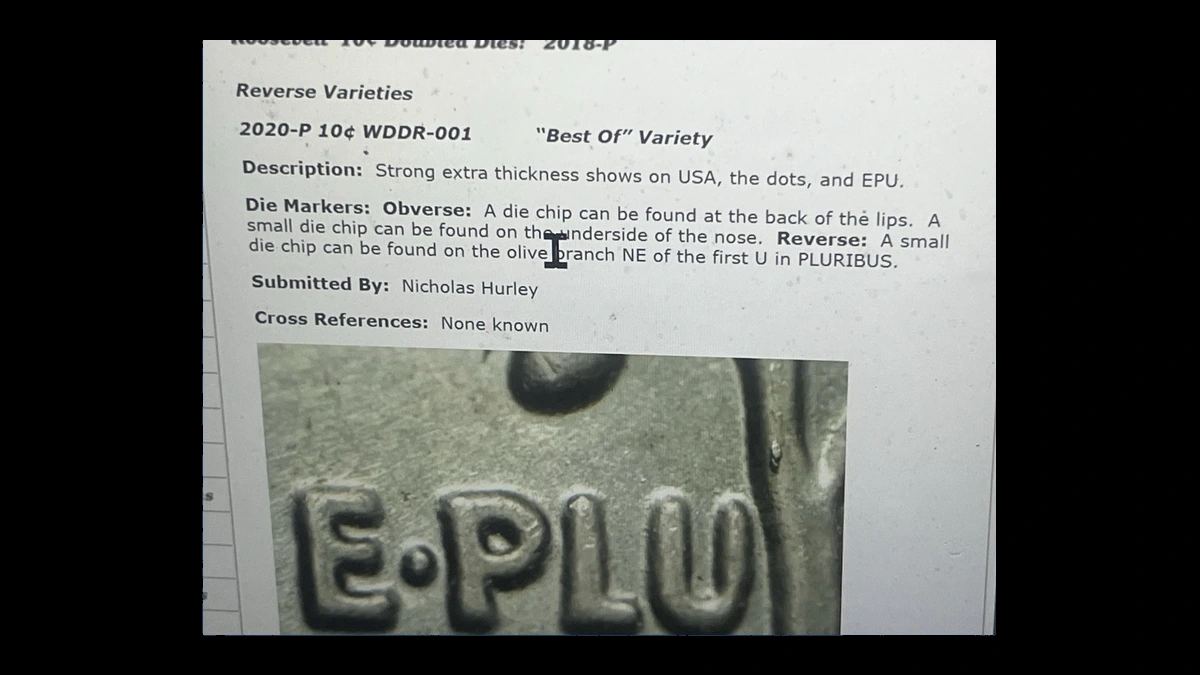
On reported 2020-P reverses, the olive leaf above RIB in E PLURIBUS UNUM is a useful starting point. Its extra detail is more specific than saying all the lettering looks thick.
A doubled die carries repeated design on the tool before the coins are struck. Other reverse lettering patterns and a Denver front-doubling claim need their own separate matches.
How to Identify
Read P or D on the front before selecting a reference. For the Philadelphia leaf pattern, examine the right edge of the olive leaf above RIB.
Compare the contour with Wexler’s pictured 2020-P details. Keep other lettering patterns separate instead of combining every reported shape into one expected variety.
A flat shelf can come from movement during striking, and a portrait chip does not establish doubling. A Denver front candidate cannot be confirmed by a Philadelphia reverse photograph.
What It’s Worth
$20–$300 is the estimate for genuine doubled dies with recognizable matching detail. Stronger, well-documented patterns generally have more appeal than tiny features.
This is an editorial comparison range rather than a recorded 2020 sale. An unconfirmed Denver front claim needs its own identification before a doubled-die price is applied.
4. 2020 Dime Both Faces Look Shallow: Weak Strike Error
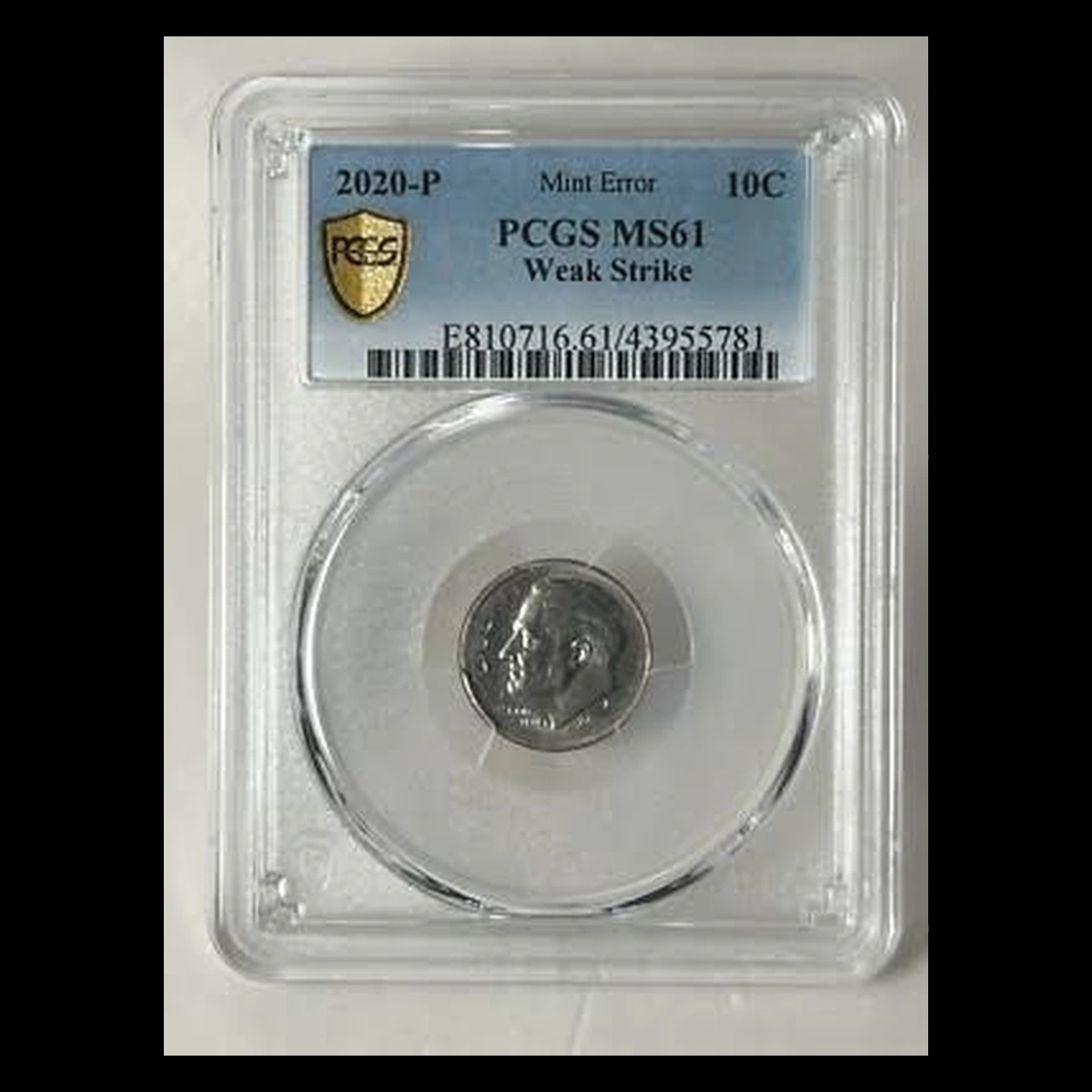
Some dimes leave the press with a faint portrait and shallow lettering because the design was not fully impressed into the metal. That is different from normal raised detail being rubbed away later.
The 2020 type is sometimes called a die-adjustment strike. The appearance can establish a weak strike, but does not by itself prove that the press was being set up at that moment.
How to Identify
Compare both faces with an ordinary 2020 dime. Broadly shallow central and outer details are more useful than one missing letter surrounded by a sharp design.
Wear mainly attacks the high points, while rubbing, scratches, or chemical roughness may explain other faint-looking surfaces. Inspect the weak areas for those changes.
The date must still support 2020. A genuine weak strike need not remove metal, so normal weight is compatible with the error but does not prove it.
What It’s Worth
$30–$200 is the estimate for clearly visible genuine weak strikes with readable dates and collectible surfaces. Better evidence of an undamaged shallow strike makes a comparison more useful.
A dateless Roosevelt dime with a weak strike and scratches sold for $114 at Heritage in October 2022. PCGS described that different coin as having almost-uncirculated detail, and its damage and missing year limit the comparison.
5. 2020 Dime One Face Is Distorted beneath a Clearer Design: Capped-Die Strike Error
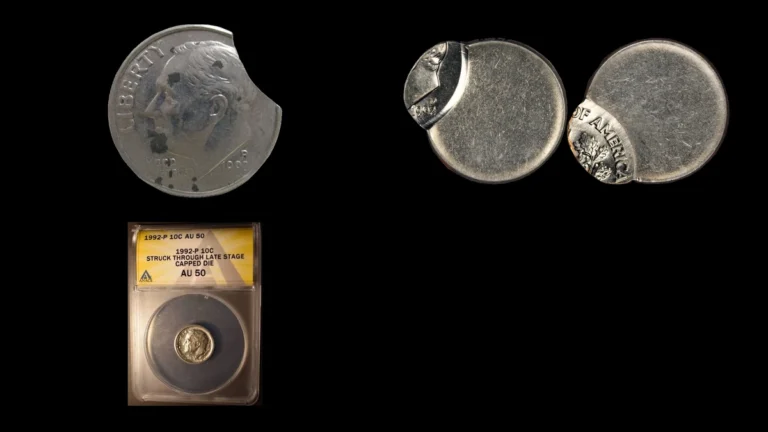
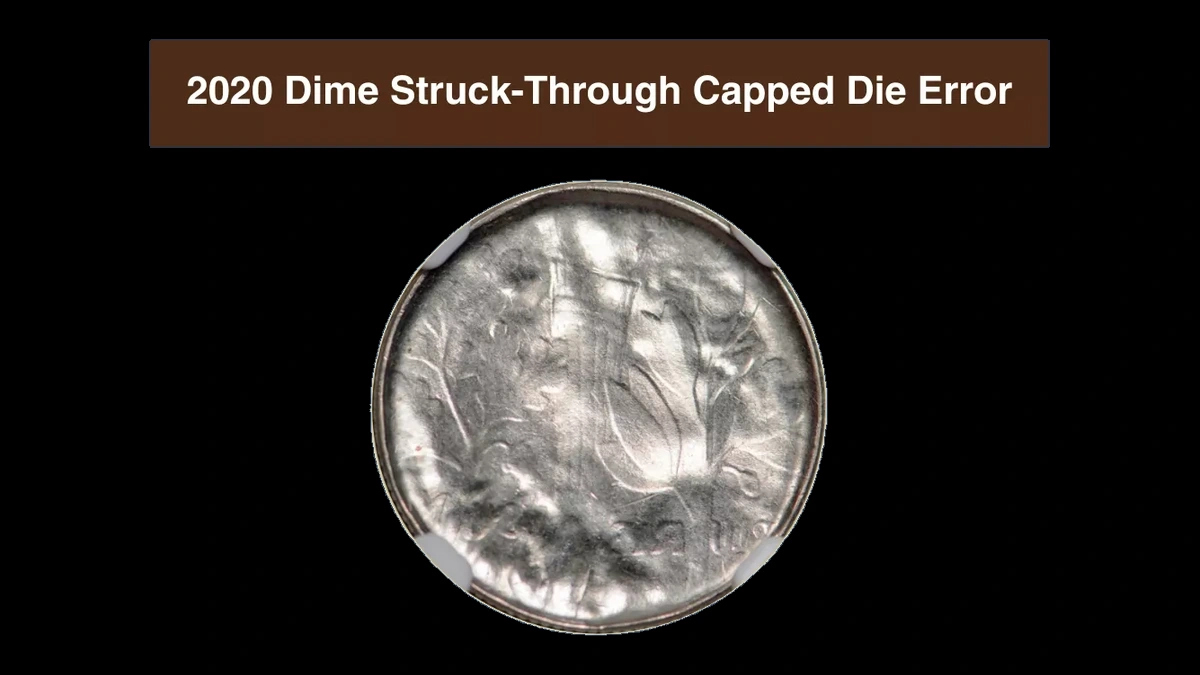
A struck coin can stick to a die and act as a cap between that tool and the next blank. The next coin receives a blocked or distorted design on the affected side.
The effect changes as the cap becomes thinner and spreads. Some examples show backward, sunken traces, while later stages may look faint or blurred instead.
How to Identify
Compare the clarity of the two faces and study the distorted side as a whole. A complete backward design is not required by the reported 2020 error name.
Look for reverse-facing sunken traces when present, then compare the actual effect with a confirmed cap-struck example at a similar stage. General weakness alone is less specific.
Grinding, hammering, or scraping can erase one face after minting. Check the surface and edge for those explanations before attributing the mark to a coin stuck on the die.
What It’s Worth
$40–$350 is the estimate from modest to stronger examples with a clear capped-die effect. Preservation and the visibility of the distortion affect collector interest.
A 1997-P struck through a late-stage cap sold for $49 at Heritage in October 2022. ANACS graded that different-year coin MS60, meaning unworn but noticeably marked.
6. 2020 Dime The Design Fits inside a Wider Outline: Broadstrike Error
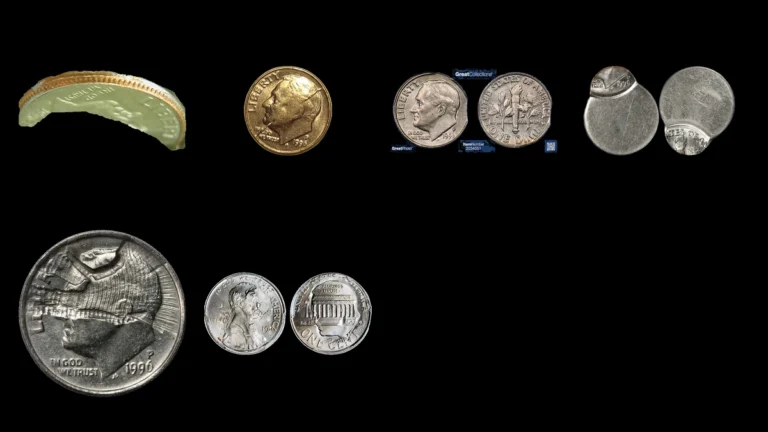
A broadstrike forms when the collar does not restrain the blank during striking. The collar is the ring that normally controls the dime’s width and makes the edge grooves.
The metal can spread unevenly, but the design remains on the coin. There is no single error diameter that every 2020 broadstrike must reach.
How to Identify
Follow the outside design on both faces and measure several widths. Check that the intended picture stays within naturally spread metal.
Edge grooves may be incomplete or absent where the collar failed. Later hammering can also widen a dime, but tends to crush the portrait and letters.
The metal is being moved outward rather than cut away. An intact ordinary blank should remain near its standard weight, allowing for wear.
What It’s Worth
$50–$400 is the estimate for genuine 2020 broadstrikes. Bold expansion with a well-preserved design generally displays the error more clearly.
A 2000-P that was both broadstruck and struck several times brought $159 in September 2025 at NGC MS65. Its different year and combined errors make it a broad comparison rather than a price for a simple 2020 broadstrike.
7. 2020 Dime A Small Blank Crescent Borders Lost Design: Off-Center Strike Error
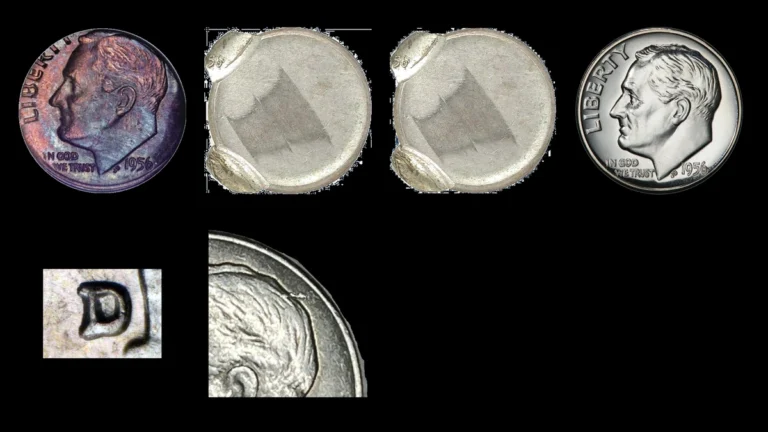
The reported 2020-P offset is about 5%. The blank sat partly outside the dies, leaving a plain crescent while some design missed the metal at the opposite side.
At a small offset, the uneven border can be easy to misread. A shifted die on only one side can create a similar first impression.
How to Identify
Find the date and P for the reported example, then compare both faces against the same outline. A displaced blank should affect the two designs in corresponding positions.
If one face shifts while the other remains differently centered, check for die misalignment. If the entire design stays on a wider coin, compare broadstrikes.
The plain arc must still be metal rather than a cutout. Inspect for filing or scraping along the boundary so removed finished detail does not imitate an unstruck area.
What It’s Worth
$30–$500 is the estimate for genuine readable-date 2020 off-center dimes. The small reported offset normally fits nearer the modest end unless other features add interest.
A 1977 dime struck 10% off-center sold for $109 in June 2026 at NGC MS64 Full Bands. That different-year result includes sharp separated torch bands and does not set a price per percentage of offset.
Conclusion
Start with the kind of change on a 2020 dime: exposed copper, raised metal, repeated detail, weak design, or displaced design. Each directs you to a different physical check.
The mouth-chip nickname does not replace those checks, and a brown surface does not prove a missing layer. Keep the actual mint, face, and visible feature together when choosing an identification photograph or price comparison.