Rare 2017 Penny Errors (List & Pictures)
Before searching for 2017 penny errors, set aside one normal feature: Philadelphia’s P mintmark commemorates the Mint’s 225th anniversary. The eleven reported groups here have estimated values of $2–$5,000.
A different-year 1983 bronze error cent sold for $4,800 in January 2020, providing a broad composition-error comparison. Inspect the portrait and lettering first, then compare design placement, outline, and metal to identify what makes an individual 2017 cent unusual.
| Observation | Possible explanation | Estimated value |
|---|---|---|
| Gap below Lincoln’s head | Floating-head feature | $2–$50 |
| Extra letter contours | Doubled designs | $5–$200 |
| Raised bar or blob | BIE, chip, or cud | $2–$250 |
| Unexpected opposite-design trace | Die clash | $10–$200 |
| Impression interrupting detail | Struck-through | $5–$300 |
| Foreign patch in the metal | Proposed rolled-in material | $25–$500 |
| One face shifted | Misaligned die | $5–$100 |
| Both designs miss part of the blank | Off-center strike | $15–$500 |
| Complete designs on a wider disc | Broadstrike | $25–$400 |
| Backward, sunken image | Brockage | $100–$1,000 |
| Unusual weight and composition | Wrong-composition planchet | $500–$5,000 |
The standard coin is a zinc core with thin copper plating, weighing 2.50 g and measuring 19.05 mm across. Its edge is normally smooth, and an intact coating need not expose gray zinc anywhere.
Record measurements only when safely accessible; use the grading record for a sealed coin. Preserve the coating and any unusual material rather than polishing, scratching, or probing them.
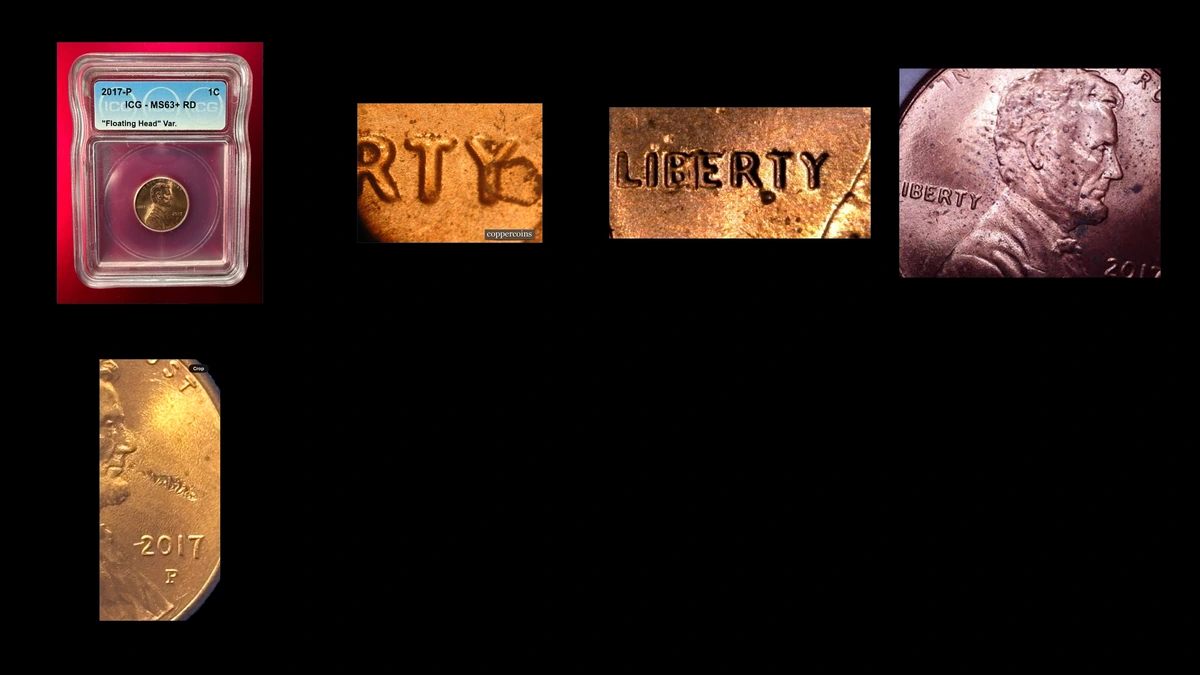
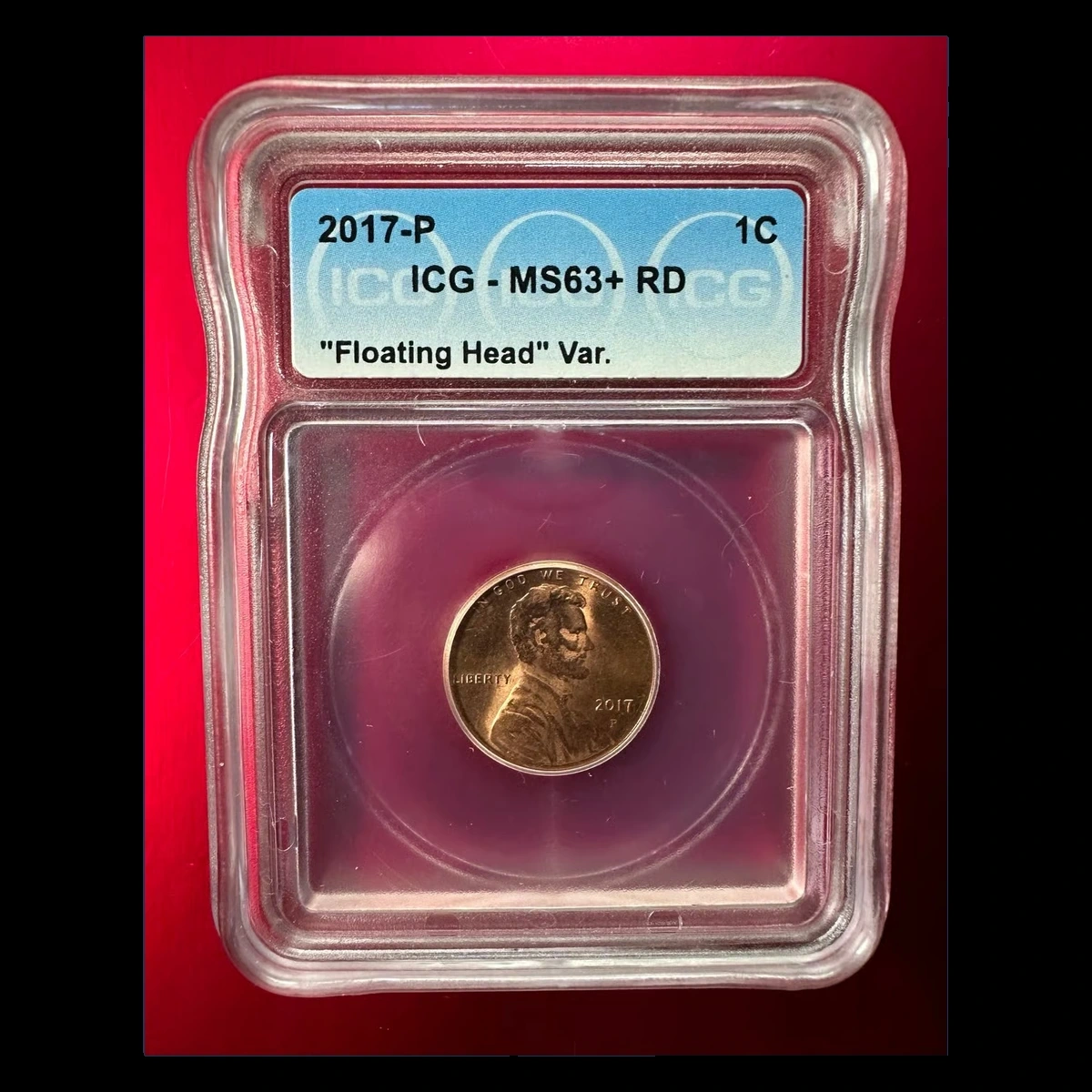
1. 2017 Penny A gap between the jaw and collar: Floating Head Error
Compare the connection between Lincoln’s head and clothing with an ordinary cent. When neck detail is weak or absent, collectors sometimes describe the portrait as a floating head.
Philadelphia and Denver examples have been reported, but the name identifies an appearance rather than one proven cause. Excessive die polishing or material blocking shallow design detail are possible mint explanations.
How to Identify
Look for a sharp jaw and collar surrounding the gap, then examine the missing connection under changing light. A shadow can create the impression of separation without any detail actually being absent.
Scraping, bright smoothing, and ordinary wear offer other explanations. Check nearby high points and the reverse before deciding that a local loss of design originated during production.
What It’s Worth
$2–$50 is the estimate for a clear mint-made missing-neck feature. It compares modest design-loss features on modern Shield cents rather than documenting a certified 2017 floating-head auction.
Sharp surrounding detail makes the gap easier to assess. The nickname itself supplies no fixed premium, especially when wear or scraping explains the effect.
2. 2017 Penny A thick Y or repeated lettering: Doubled Designs Error
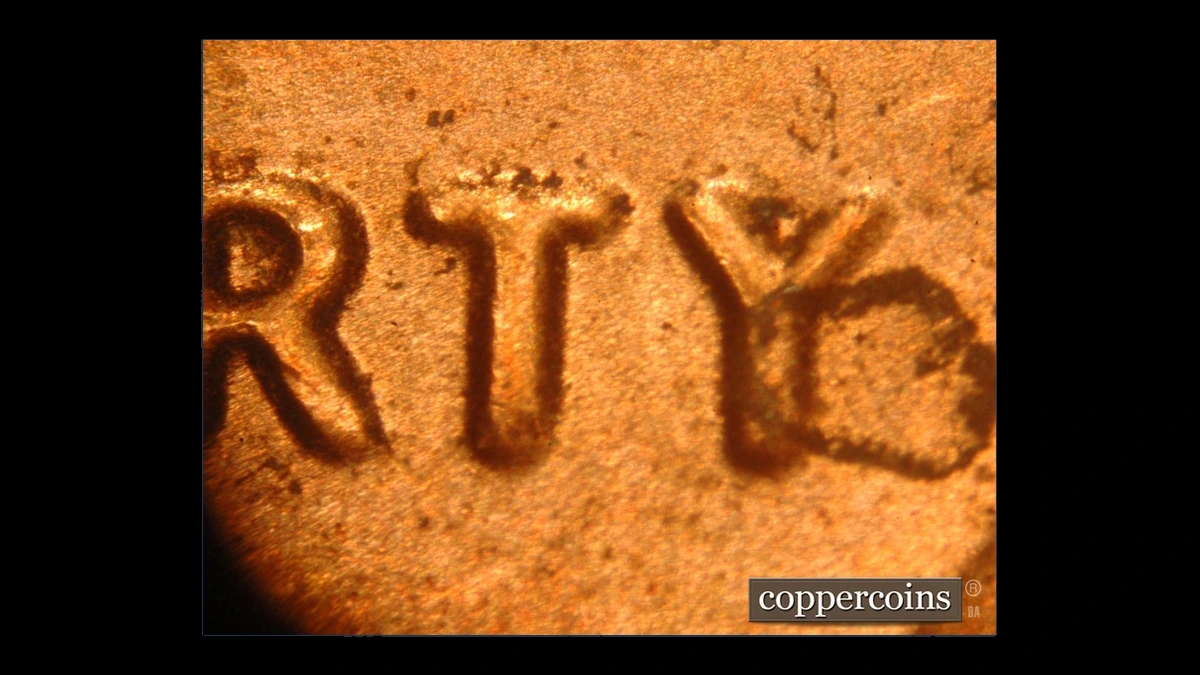
LIBERTY’s Y deserves a careful distinction: the reported Fat Y has a thick left arm associated with a shared master-tool pattern. It does not identify one uniquely damaged coin or automatically establish a scarce working-die variety.
Other doubled details originate in a working die, the steel tool that directly stamps coins. Philadelphia obverses are cataloged, while reports also mention Denver obverses and Philadelphia reverses.
How to Identify
Inspect the Y alongside the rest of LIBERTY and IN GOD WE TRUST. Separate simple thickening from a distinct repeated stroke, then compare the appropriate 2017-P catalog photographs if the coin is Philadelphia.
A Denver feature or reverse shield detail needs its own matching reference. Flat strike-related shelves and torn copper plating can resemble extra outlines without coming from a doubled tool.
What It’s Worth
$5–$30 is estimated for minor recognizable doubling, with roughly $30–$200 for stronger, clearly matched examples. No particular 2017 auction result is assigned to these comparison ranges.
The shared Fat Y pattern should not automatically receive a scarcer variety’s price. Assess any front and back features as parts of one coin rather than adding two complete estimates.
3. 2017 Penny An extra bar, internal bump, or rim blob: BIE, Die Chips, and Cuds Error
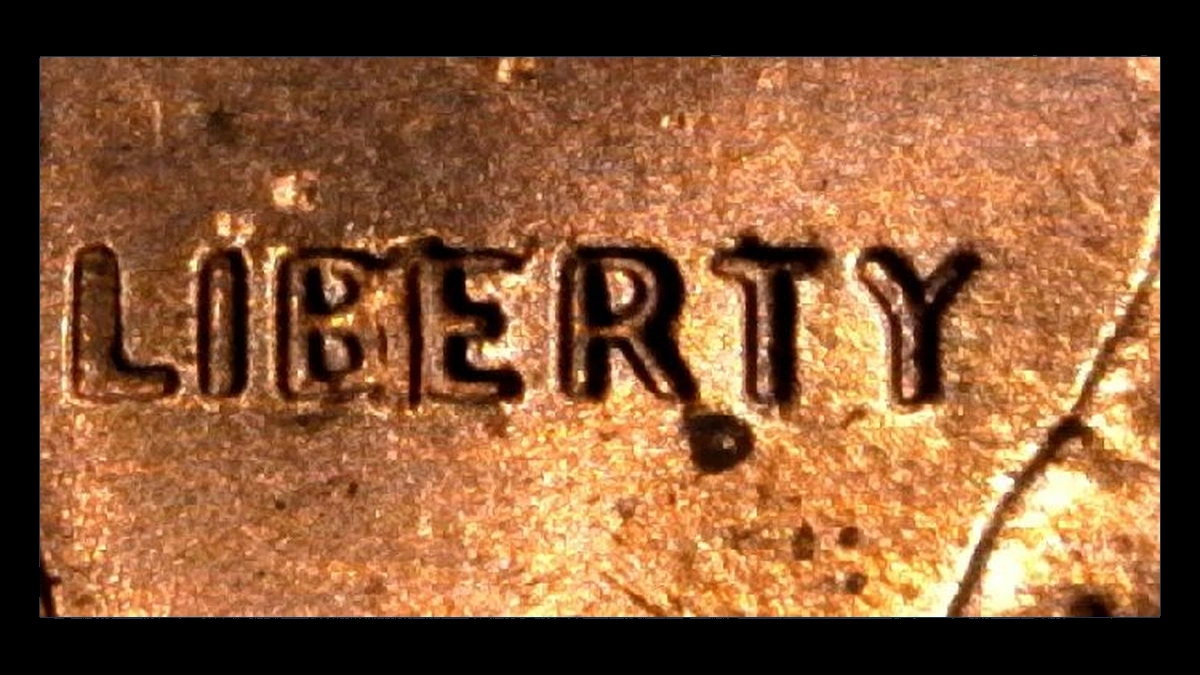
Raised metal between B and E in LIBERTY can make the word appear to contain another I. This BIE form results when metal fills a small missing area in the die.
Other chips occur within the portrait or shield, whereas a larger break reaching the die’s edge produces a rim-connected cud. Reports include internal chips on 2017-P and BIE features on both P and D coins.
How to Identify
Locate the feature on the complete face before enlarging its base. A BIE bar should be raised coin metal, while dirt, an impact lip, or loose plating can create a misleading bump.
A cud must connect with the rim; an isolated lump inside ONE does not meet that description. Leave a suspected plating blister untouched rather than pressing it to see whether it moves.
What It’s Worth
$2–$50 is estimated for small chips or a clear BIE bar, and approximately $30–$250 for larger genuine cuds. These are whole-coin comparisons, with no supplied sale of a specific 2017 example.
Visibility and clean surfaces help explain differences within the ranges. A dramatic nickname does not give a tiny bump the value of a substantial rim break.
4. 2017 Penny A shield or portrait fragment in the wrong place: Die Clash Error
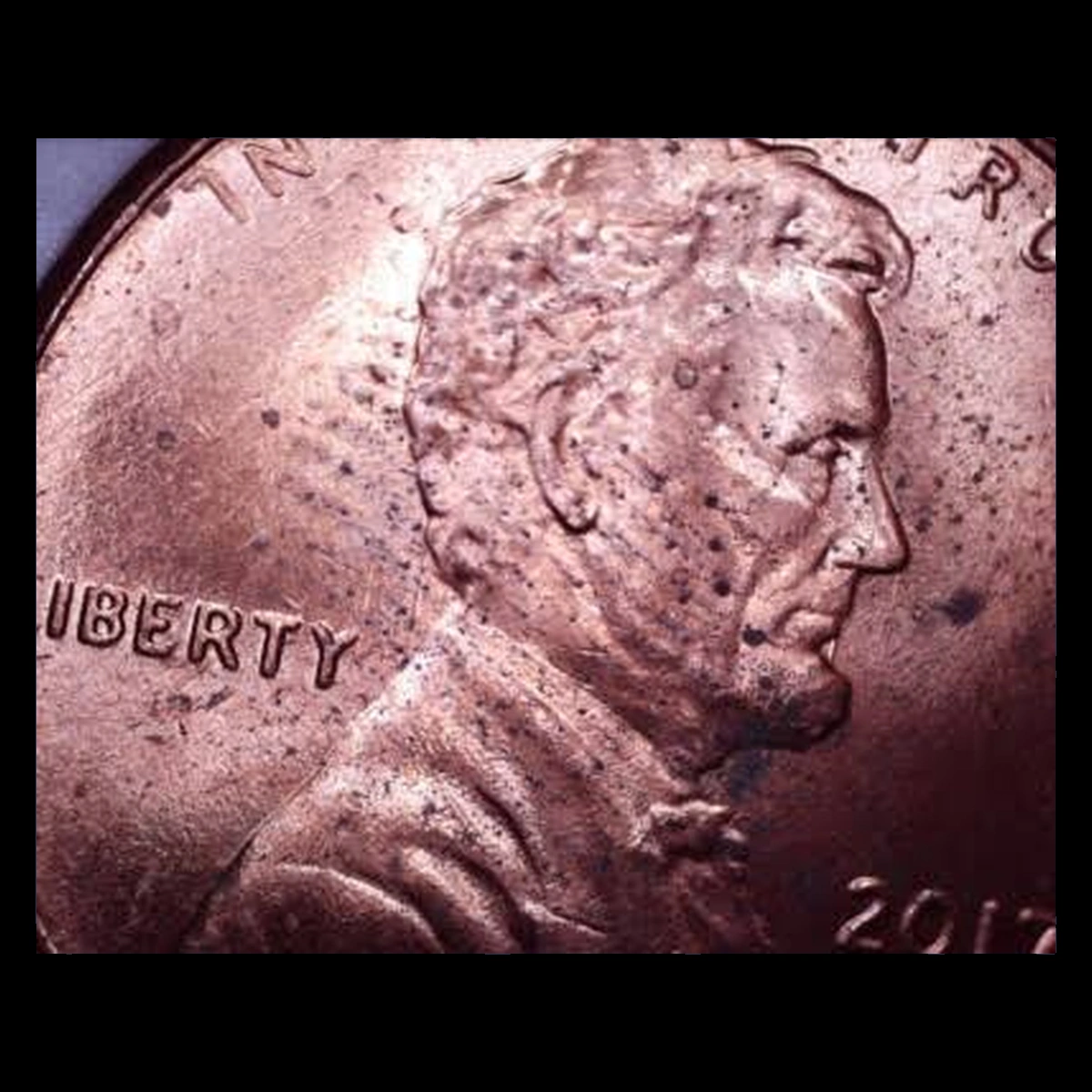
An extra outline that resembles neither a chip nor duplicated nearby lettering may belong to the opposite face. The dies can mark each other when they meet without a blank, then pass those traces to later coins.
Both Philadelphia and Denver clashes are reported for 2017. The relevant designs are Lincoln and the shield, not the Memorial reverse found on older cents.
How to Identify
Find the proposed source of the contour on a normal shield or portrait and compare its position and angles. Random scratches in an open area are insufficient without a recognizable design relationship.
Move the lamp to distinguish reflections from a feature in the metal. Check the other face for related evidence without requiring both sides to display equally strong traces.
What It’s Worth
$10–$200 is the estimate for genuine examples ranging from faint recognizable marks to stronger transfers on attractive coins. No certified 2017 auction price is attached to the range.
A trace that can be recognized readily is generally more useful than several unexplained lines. Wear, corrosion, and scratches can reduce that clarity even when a clash is genuine.
5. 2017 Penny Clear design interrupted by a hollow: Struck-Through Error
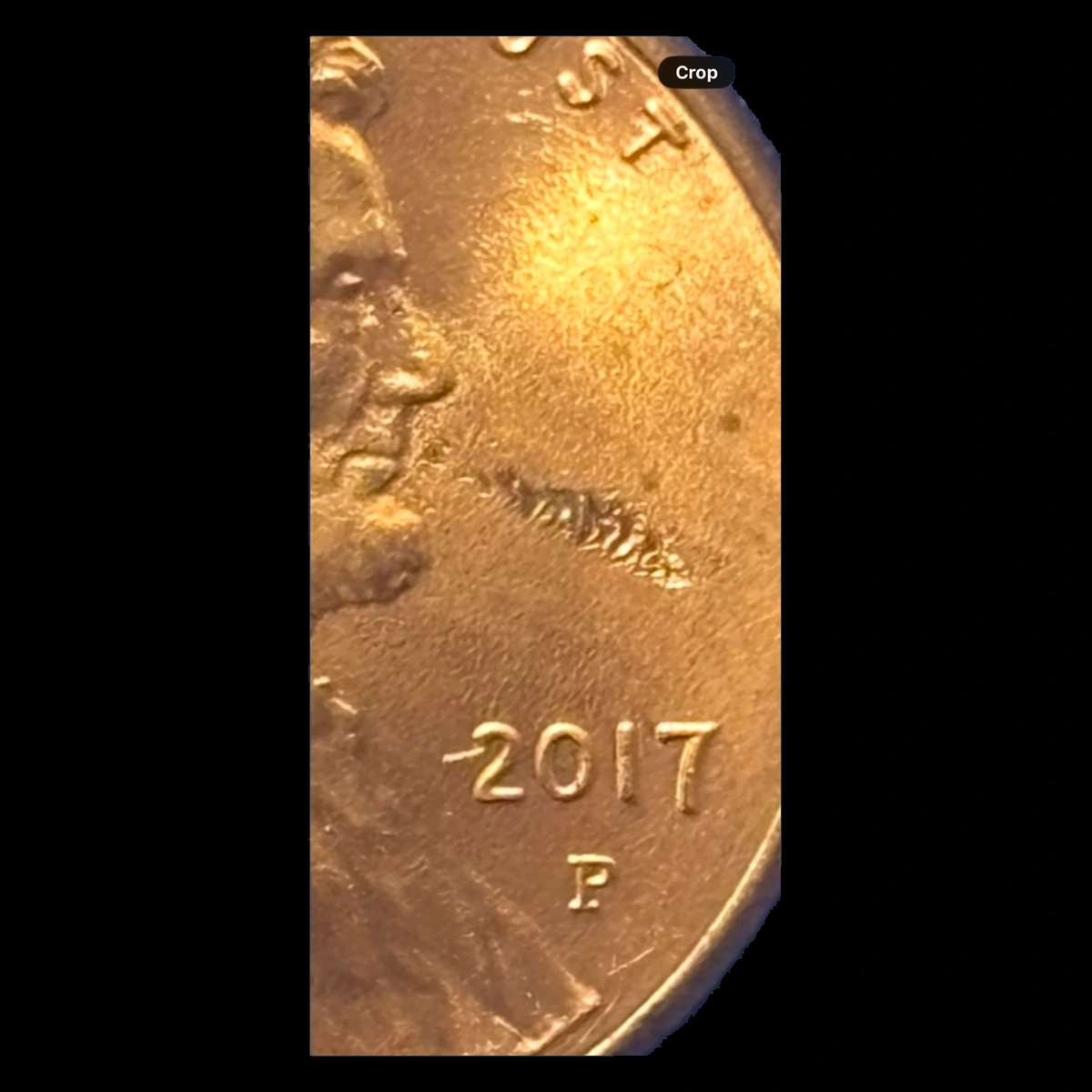
Localized missing lettering or a smooth impression can record an obstruction present during striking. Grease may block small details, while a firmer object can leave a more definite shape.
The reported 2017-P type concerns the front without establishing one location or material for every example. Weakness alone cannot identify the obstruction.
How to Identify
Compare a sharp adjacent letter with the affected area to locate the transition. Inspect the hollow for cuts or metal pushed up along its sides, which may reveal later damage.
Check the reverse for a corresponding impact and assess wear across both faces. Corrosion and a damaged die can also suppress detail, so a faint letter needs a fuller explanation than the label struck-through.
What It’s Worth
$5–$300 spans the estimated values from small blocked details to large, distinct impressions. Modest missing detail belongs closer to the lower end than a readily understood, dramatic shape.
A 2021-D Shield cent struck through grease, graded PCGS MS64 Red, brought $84 in September 2025. That unworn, copper-red example is a nearby-year comparison rather than a 2017 transaction.
6. 2017 Penny A patch apparently embedded in the surface: Proposed Rolled-In Material Error
The unusual area on a reported 2017-P collector find has been attributed tentatively to material incorporated before striking. The Numista discussion does not confirm the material or how it entered the coin.
Such material could remain embedded or leave an opening if it later fell out. A hollow by itself cannot separate that proposal from scraping or corrosion.
How to Identify
Document whether foreign material remains and how the copper coating meets it. Follow nearby design across the boundary to assess whether striking occurred with the material already present.
Scratches crossing completed detail or widespread corrosion support different explanations. Measurements may record metal loss, but they cannot establish its timing.
Leave the area intact for an error specialist to examine. Removing a patch destroys evidence that could help distinguish an inclusion from later damage.
What It’s Worth
$25–$500 is a conditional estimate for confirmed material incorporated before striking. It is neither an authentication nor a sale price for the reported 2017-P candidate.
A visible inclusion on an attractive coin can be more compelling than an unexplained hole. The opening’s size alone does not establish the proposed cause or justify the upper estimate.
7. 2017 Penny Uneven centering confined to one face: Misaligned Die Error
Compare border widths all the way around Lincoln, then do the same around the shield. One shifted design opposite a centered design can indicate that a die moved sideways from its intended position.
A 2017-P example graded NGC MS61 Red appears in a GreatCollections listing. The designation describes an unworn coin with many marks and copper-red color.
How to Identify
Keep both entire faces in the photographs to preserve the centering relationship. A crushed rim can create an apparent uneven border, so inspect the edge for pressure or hammering.
If both designs miss the same part of the blank, consider an off-center strike instead. Sideways misalignment does not by itself demonstrate rotation between the portrait and shield.
What It’s Worth
$5–$100 is estimated for slight through clearly visible misalignment. A very small uneven border may contribute little premium.
The graded 2017-P listing supports the category, but no completed amount is used here. An obvious difference between the two faces displays the error better than a subtle border change on a damaged coin.
8. 2017 Penny Both designs extending beyond the blank: Off-Center Strike Error
A plain crescent containing original metal distinguishes this observation from an actual missing piece. The blank was displaced between the dies, leaving some design beyond its edge on both faces.
The reported category establishes neither a fixed direction nor an offset percentage for 2017. Those details must be read from the particular coin.
How to Identify
Confirm the year wherever the date survives, then document any visible mintmark. Do not infer a mint when the relevant area never received the design.
Compare the design boundaries on both faces and inspect the plain crescent for scraping or grinding. Matching incomplete designs should be explained by the same misplaced disc.
What It’s Worth
$15–$75 is estimated for modest readable-date shifts, with about $75–$500 for stronger, attractive examples. These are comparisons with modern Lincoln striking errors, not identified 2017 auction results.
Greater displacement is only part of the assessment. A lost date, severe marks, or corrosion can reduce appeal despite a large blank area.
9. 2017 Penny A widened border around complete designs: Broadstrike Error
Complete Lincoln and shield designs inside an oversized outline point toward another striking problem. When the collar fails to contain the edge, pressure can spread the blank outward.
A Philadelphia example is reported, without one established enlarged diameter. Since cents ordinarily have smooth edges, smoothness adds no special evidence of this error.
How to Identify
Measure several spans and trace the outer lettering on both faces. Distinguish incomplete design that missed the metal from weak detail that still lies within the expanded coin.
Check high points for crushing and the coating for damage from later pressure. A hammered cent can become wider too, but flattening its finished design differs from original outward flow during striking.
What It’s Worth
$25–$400 is the estimate for genuine collectible broadstrikes. Clear spreading with attractive complete designs usually supplies a stronger comparison than slight enlargement.
The range uses comparable modern striking errors and is not a verified sale of the reported 2017-P. Condition remains important even when the width is conspicuous.
10. 2017 Penny Backward lettering sunk into one face: Brockage Error
A recognizable mirror image impressed below the surface requires a different explanation from ordinary doubling. In a brockage, an already-struck coin acts against a fresh blank while the other face can receive a normal raised design from the die.
A Denver example is reported for 2017, but the supplied report does not establish which face bears the backward image. Inspect both sides before describing it.
How to Identify
Use low side lighting to confirm that letters are both reversed and recessed. The image should form a coherent recognizable design rather than a few unrelated contact marks.
Glue transfers and two finished coins squeezed together can imitate parts of a brockage. Examine surface material, rim distortion, and edge pressure damage before treating a backward impression as mint-made.
What It’s Worth
$100–$1,000 is the estimate for clearly identified modern Lincoln brockages with collectible surfaces. A strong, nearly complete image can support more interest than faint transferred detail.
No independently verified sale is assigned to the reported 2017-D. Professional confirmation matters because normal weight and apparent reversed letters alone cannot exclude later alteration.
11. 2017 Penny A heavier copper-rich cent: Reported Wrong-Composition Planchet Error
The supplied report describes a 2017-P weighing about 2.87 g with 99.1% copper and 0.9% zinc. It also describes a PCGS MS64 Red Brown example, but these remain source-reported details rather than a verified identification here.
The claimed mixture differs from a standard older bronze-cent blank. Mostly copper does not automatically mean a leftover pre-1982 planchet.
How to Identify
Compare the measured weight with the normal specification, then inspect for extra coating or attached material. Added plating can make a cent heavier and produce a copper-rich surface reading.
For a sealed example, consult its grading record and recorded metal analysis. The analysis must be interpreted alongside the coin’s structure rather than assuming the surface alone represents the entire blank.
Have the composition and weight assessed professionally without scratching through the plating. The proposed unusual metal mixture needs evidence beyond color and a single heavy reading.
What It’s Worth
$500–$5,000 is the estimate for a confirmed unusual-composition 2017-P. No sale price is assigned to the reported coin itself.
A different 1983 cent on a 3.1 g bronze planchet sold for $4,800 in January 2020, graded NGC MS61 Red Brown. That older composition-change error differs in date, metal, and grade, so its result provides only broad context.
Conclusion
Identify what changed before assigning an error name: missing neck detail, added strokes, misplaced designs, and unusual composition require different evidence. A normal P mintmark and a shared thick-Y pattern do not establish a rare individual error.
The $2–$5,000 estimates apply to clearly identified features and confirmed examples where required. Keep reported candidates distinct from authenticated coins, and preserve the surface evidence that makes a sound comparison possible.