Rare 2024 Penny Errors (List & Pictures)
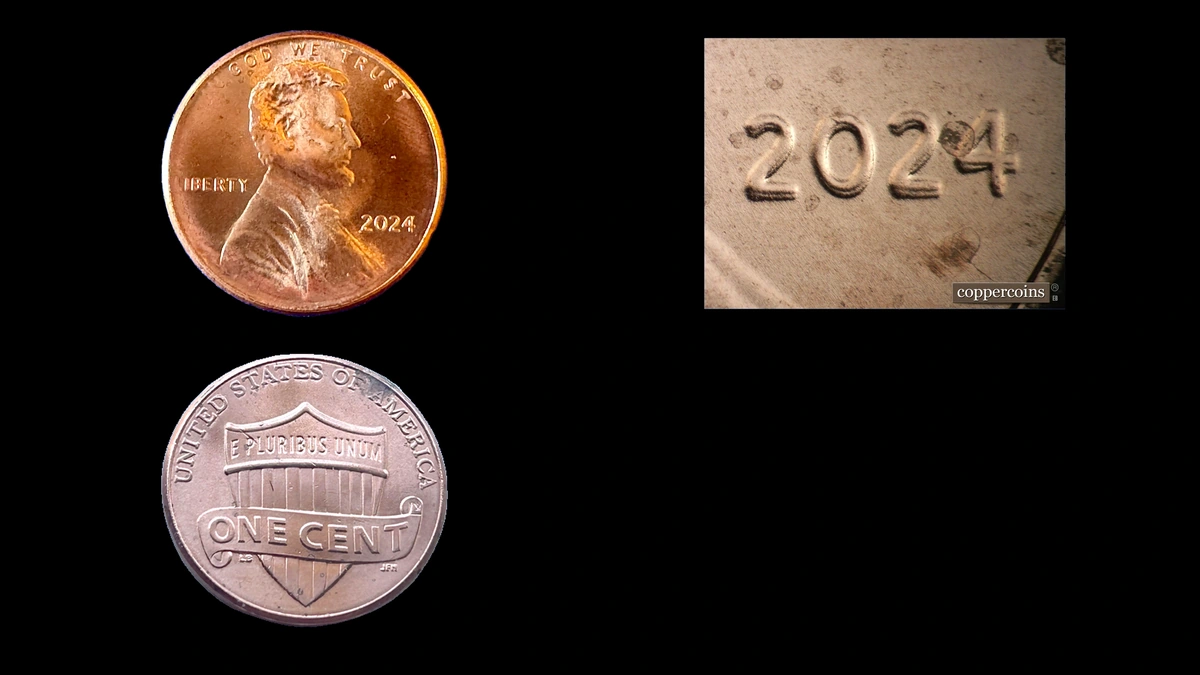
A double-struck 1979 cent sold for $204 in September 2023; it is an older comparison, not a recorded 2024 sale. The reported 2024 penny errors below have estimated values of $2–$750.
Begin at Lincoln’s shoulder, where several small features can be confused, then check the shield, rim, and alignment of both faces. A normal copper-plated zinc cent weighs 2.50 grams, measures 19.05 mm, and has a smooth edge.
| What you see | What to investigate | Estimated value |
|---|---|---|
| Raised W on shoulder | Die gouge | $5–$50 |
| Faint designer initials | Weak or missing VDB | $5–$75 |
| Extra letter contours | Doubled die | $10–$150 |
| Local weak design | Struck-through grease | $5–$200 |
| Raised lines or patches | Die crack or break | $2–$400 |
| Reverse tilts after flipping | Rotated die | $20–$300 |
| Design misses part of blank | Off-center strike | $15–$500 |
| Two design placements | Double strike | $100–$750 |
1. 2024 Penny A W Shape on the Shoulder: Die Gouge Error
The reported W-shaped mark sits on the coat of 2024-D cents. It is attributed to a small groove in the die, which fills with metal during striking and leaves a raised mark.
How to Identify
Locate the D near the date, then move to the shoulder. The W-like feature is separate from that genuine mintmark and does not identify another mint.
Side lighting helps show whether the lines rise above the surface or cut into it. Crossing scratches can resemble a letter, but a gouge in the finished coin is not the same as a gouge in the stamping tool.
What It’s Worth
A clear, original 2024-D shoulder mark has an estimated value of $5–$50. A recognizable shape on an unworn coin is generally more appealing than an uncertain mark on a worn one.
No named auction result is supplied for this feature. Its value rests on the actual raised mark, not on interpreting its shape as a rare W mintmark.
2. 2024 Penny Initials That Fade Away: Weak or Missing VDB Error
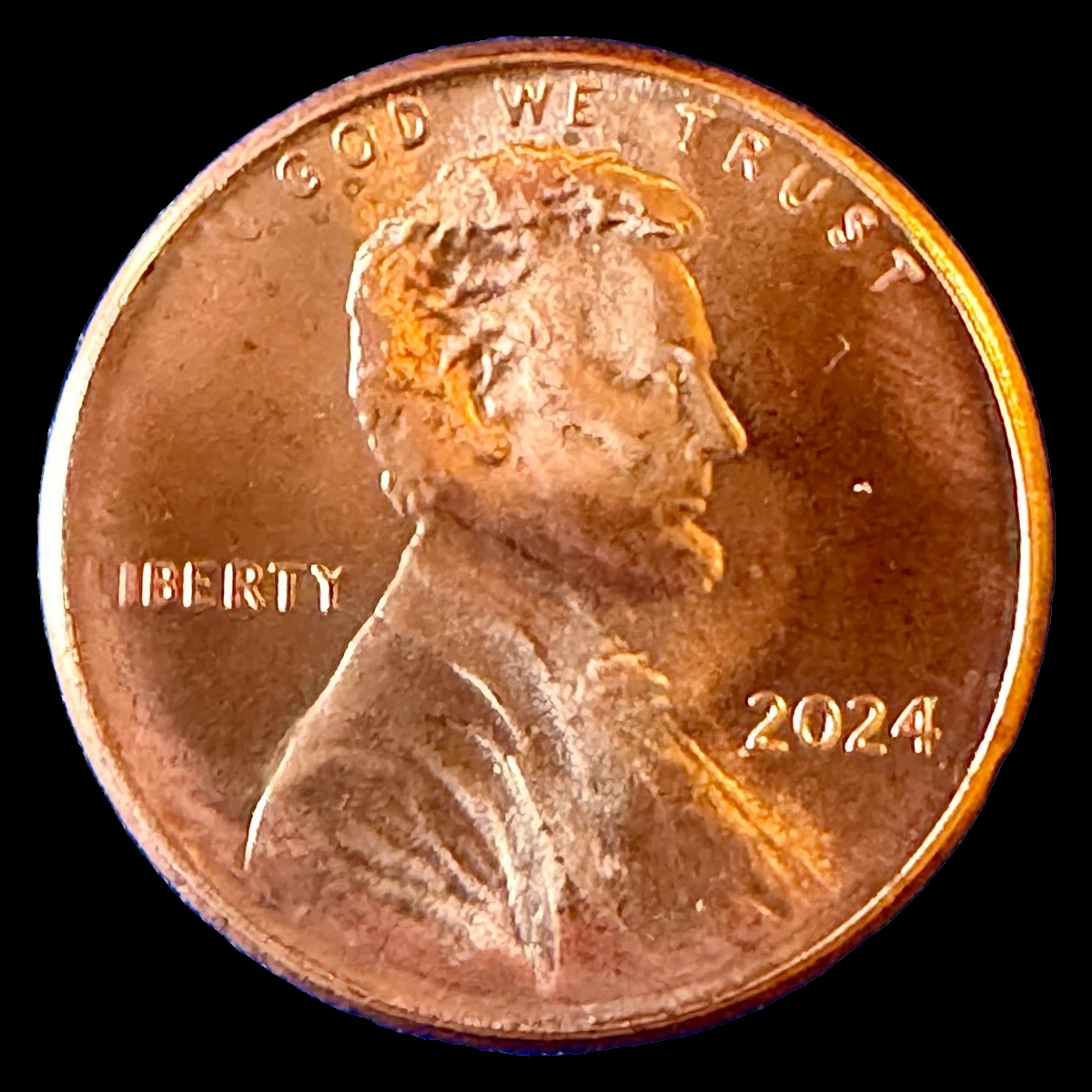
VDB is the portrait designer’s set of initials, normally visible at Lincoln’s shoulder. Reports describe 2024-D cents with weak or missing letters while other nearby details survive.
Blocked recesses or polishing of the die can weaken tiny details. The appearance alone does not establish which process affected an individual coin.
How to Identify
Use an ordinary 2024-D cent to locate the initials precisely, then inspect the candidate under magnification. Faint strokes may emerge when you change the angle of the light.
Compare the coat with wear on the cheek and other exposed parts of the portrait. Scraping or a rubbed patch can remove VDB after minting, and the report does not establish an intentional no-VDB design.
What It’s Worth
Mint-made weakness or absence of VDB has an estimated value of $5–$75. A sharp, original shoulder surrounding the affected letters gives stronger evidence than a worn or polished surface.
This is an estimate for the reported feature, with no named 2024-D sale attached. Missing letters need an explanation before a premium makes sense.
3. 2024 Penny Extra Outlines at VDB or LIBERTY: Doubled Die Error
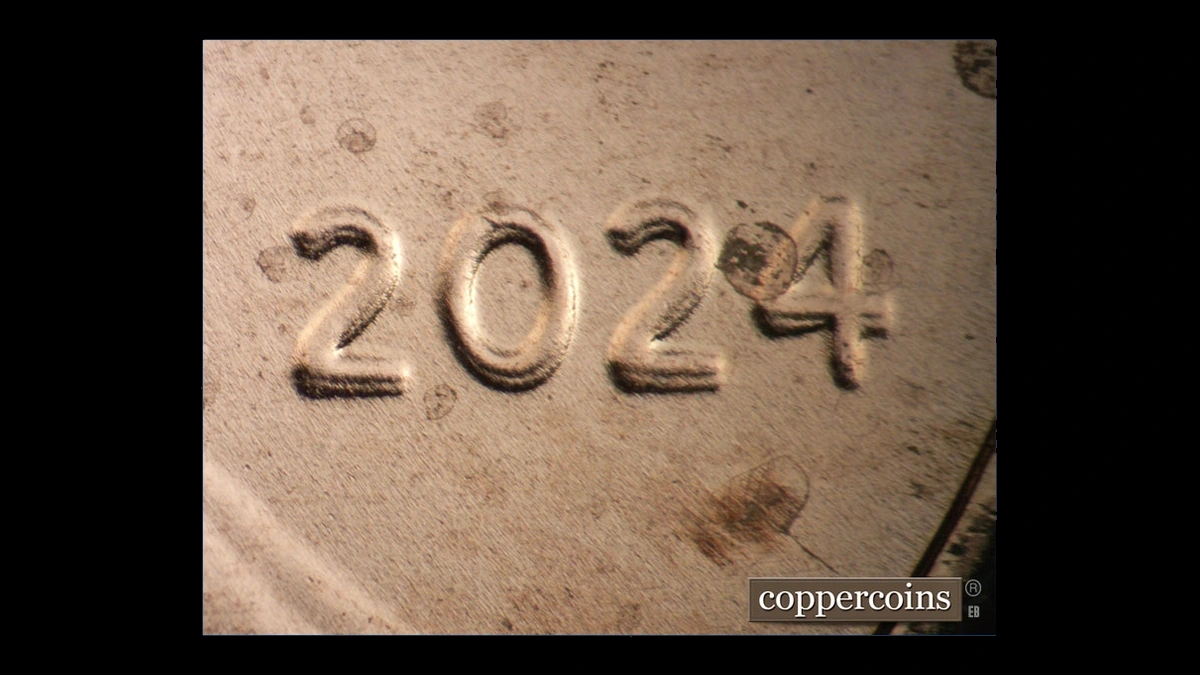
Some reports point to repeated front-side details on 2024-D cents. With a doubled die, the repeated design is already in the tool and can appear on a coin during one strike.
How to Identify
Keep the date and D visible in a full-front photograph before taking close-ups of VDB or LIBERTY. Look for fixed extra strokes that follow the shape of the letters.
The supplied information does not assign one exact catalog pattern. Flat shelves from movement during striking, bright reflections, and thick lettering should not be treated as proof of a doubled die.
What It’s Worth
The estimated range for reported 2024-D doubled dies is $10–$150. Minor identified doubling fits about $10–$50, with clearer examples on attractive coins estimated around $50–$150.
No named auction or specific rare-variety number is supplied. The repeated detail must be convincing enough to distinguish the coin from ordinary cents.
4. 2024 Penny A Weak Patch Beside Clear Design: Struck-Through Grease Error
Grease or similar material can fill a die’s small recesses, preventing some details from forming. On a Shield cent, the result may be incomplete letters beside sharper parts of the reverse.
How to Identify
Compare the weak area with the surrounding shield and lettering. Wear tends to affect exposed high points, while scratches or rubbing may leave evidence that detail was removed later.
A single missing letter does not identify the material that blocked the die. This remains a reported 2024 category without a specific specimen established by the supplied evidence; an auction held in 2024 does not establish a coin’s date.
What It’s Worth
The estimated value is $5–$200 for a genuine 2024 struck-through grease error. Small weak areas fit approximately $5–$50, while a stronger, clearly mint-made effect may reach $50–$200.
A 2021-D cent graded PCGS MS64 Red with a grease strike-through sold for $84 in September 2025. That different-year sale offers context rather than a transaction for a 2024 coin.
5. 2024 Penny Raised Lines and Rim Patches: Die Cracks and Breaks Error
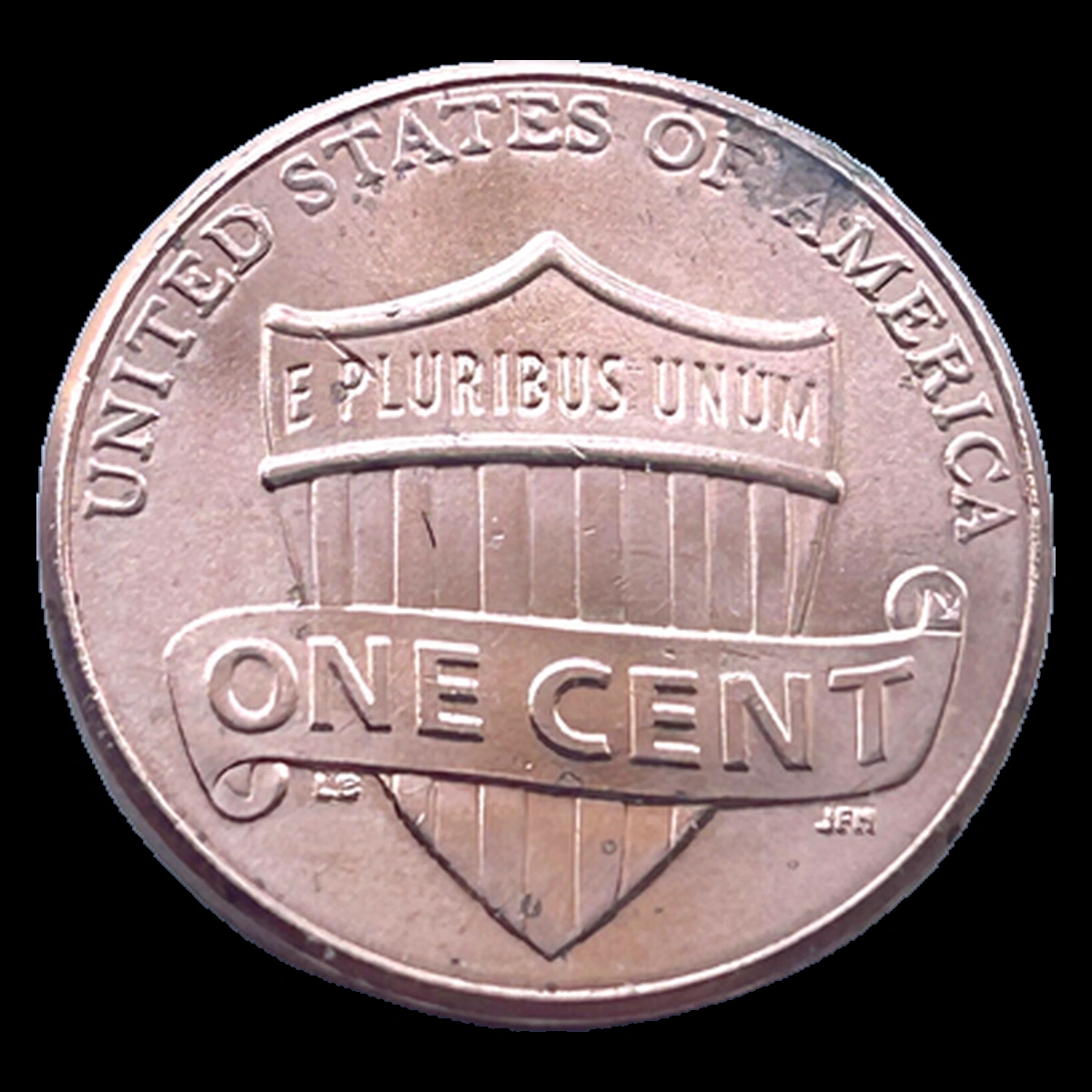
A narrow raised line can form when metal enters a crack in a die. Reports include a line extending from Lincoln’s head toward the rim and a separate mouth-area line, sometimes nicknamed “Spiked Head” and “Spitting.”
A larger cracked portion can remain in the tool and create a retained break. If a rim-connected piece falls away entirely, the resulting raised patch is called a cud.
How to Identify
Follow each line to see whether it is raised and continuous, then check the surface for cuts or displaced metal. Small plating blisters on modern cents can mimic bumps but do not establish a broken die.
A retained break may preserve design within its boundary, while a full cud replaces the affected design with a raised area at the rim. A 2024 Spiked Head listing illustrates the reported category, not a completed auction result.
What It’s Worth
Estimated values span $2–$400, from small cracks to larger retained breaks or cuds. Minor lines generally fit $2–$50, while a substantial confirmed break may fit $50–$400.
A 2021-D retained-cud cent graded PCGS MS64 Red sold for $186 in September 2025. It is a comparison from another date, and a thin 2024 head crack should not inherit that price.
6. 2024 Penny The Shield Sits at an Angle: Rotated Die Error
The relative direction of the two faces comes from how the dies are installed. If a die turns from its normal position, the reverse can sit at an unexpected angle when the coin is flipped correctly.
How to Identify
Hold Lincoln upright and flip the coin from top to bottom around a horizontal axis. The shield should then be upright; turning the coin like a book produces a misleading result.
Repeat the check with a normal cent beside it and record the amount of rotation. No exact angle or individual 2024 specimen is established in the supplied report.
What It’s Worth
A confirmed 2024 rotated-die cent has an estimated value of $20–$300. Smaller rotations are estimated around $20–$100, with larger clear deviations around $100–$300.
A 1943 steel cent with an Uncirculated Details grade sold for $114 in September 2023 as a rotated-die comparison. Its different metal, date, and problem grade prevent a direct price match.
7. 2024 Penny Design Beside Plain Metal: Off-Center Strike Error
When a blank is not fully between the dies, only part of it receives the design. The coin may retain an unstruck crescent beyond the displaced image.
How to Identify
Look for a readable 2024 date and photograph both faces, including the plain area. Original blank surface should accompany the displaced design, rather than a section that has been ground away.
The supplied material reports the category without establishing a particular 2024 example. If the mintmark area never received a strike, do not infer the mint from that missing portion.
What It’s Worth
The estimated range for a genuine 2024 off-center cent is $15–$500. Small shifts may fit $15–$75, while bold examples with an identifiable date may fit $75–$500.
No 2024 auction result supports the range here. Displacement, date visibility, and preserved surfaces should all be considered together.
8. 2024 Penny Two Separate Design Positions: Double Strike Error
A cent can receive another strike if it fails to leave the press properly or returns between the dies. Movement between strikes can place parts of the portrait, lettering, or shield in two positions.
How to Identify
Trace the repeated elements to see whether they form coherent portions of a second design. The amount visible need not be identical on both faces.
There is no specific 2024 arrangement established in the supplied report. Backward, sunken impressions may have another cause, and a few doubled letter edges are not equivalent to two strikes.
What It’s Worth
A genuine 2024 double-struck cent has an estimated value of $100–$750. Distinct design placements, an identifiable date, and limited damage are useful features when comparing examples.
A 1979 cent with its second strike off center, graded NGC MS63 Brown, sold for $204 in September 2023. Its older composition and reverse design make it a broad comparison rather than a 2024 price record.
Conclusion
Small shoulder features need close-up evidence, while rotation and displaced strikes require a view of the entire coin. Keep the date and mintmark connected to each photograph so an attractive detail does not become separated from its identity.
Several 2024 categories remain reports without a documented sale in the supplied material. Use the ranges as estimates, and distinguish a confirmed mint-made feature from wear, plating problems, or later damage.