Rare 2010 Penny Errors (List & Pictures)
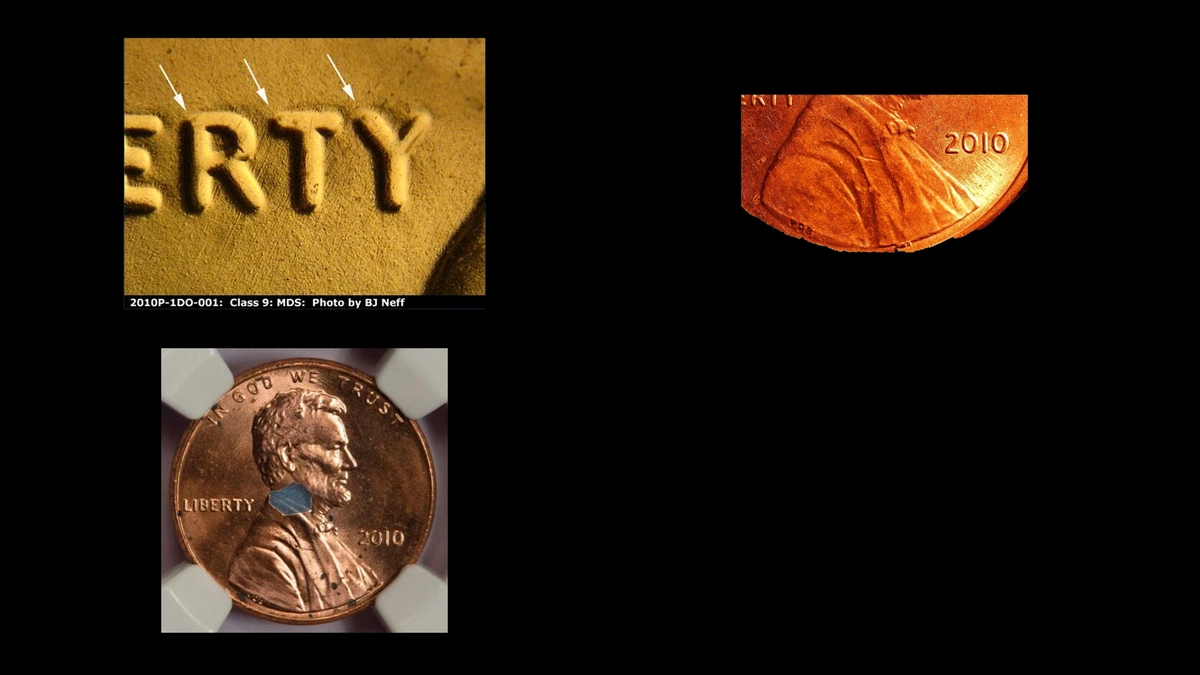
The first Shield cents introduced small reverse details that reward careful comparison. Among 2010 penny errors, estimated values run from $2 for minor die features to $1,000 for an authenticated cap.
A 2000 die cap brought $312 in June 2025, the highest supplied completed comparison, from an earlier design. Use the lettering, surface, and overall shape to distinguish eight reported groups.
| Visible clue | Category | Estimated value |
|---|---|---|
| Split corners or repeated initials | Doubled designs | $5–$200 |
| Raised ridge, bar, or rim patch | Die cracks, BIE, or cuds | $2–$400 |
| Interrupted design, possibly retained material | Struck-through | $10–$400 |
| Unusual dark surface | Reported color or annealing claim | $5–$150 if confirmed |
| Gray zinc beside copper | Missing coating | $25–$500 |
| Complete design on a wide disc | Broadstrike | $20–$350 |
| Blank crescent and lost design | Off-center strike | $15–$500 |
| Upturned wall and stretched detail | Die cap | $100–$1,000 |
The ordinary cent is copper-plated zinc, weighing 2.50 g and measuring 19.05 mm across, with a smooth edge. Measure only an accessible coin, keeping certified examples sealed and consulting any recorded measurements.
1. 2010 Penny Split LIBERTY corners or extra initials: Doubled Designs Error
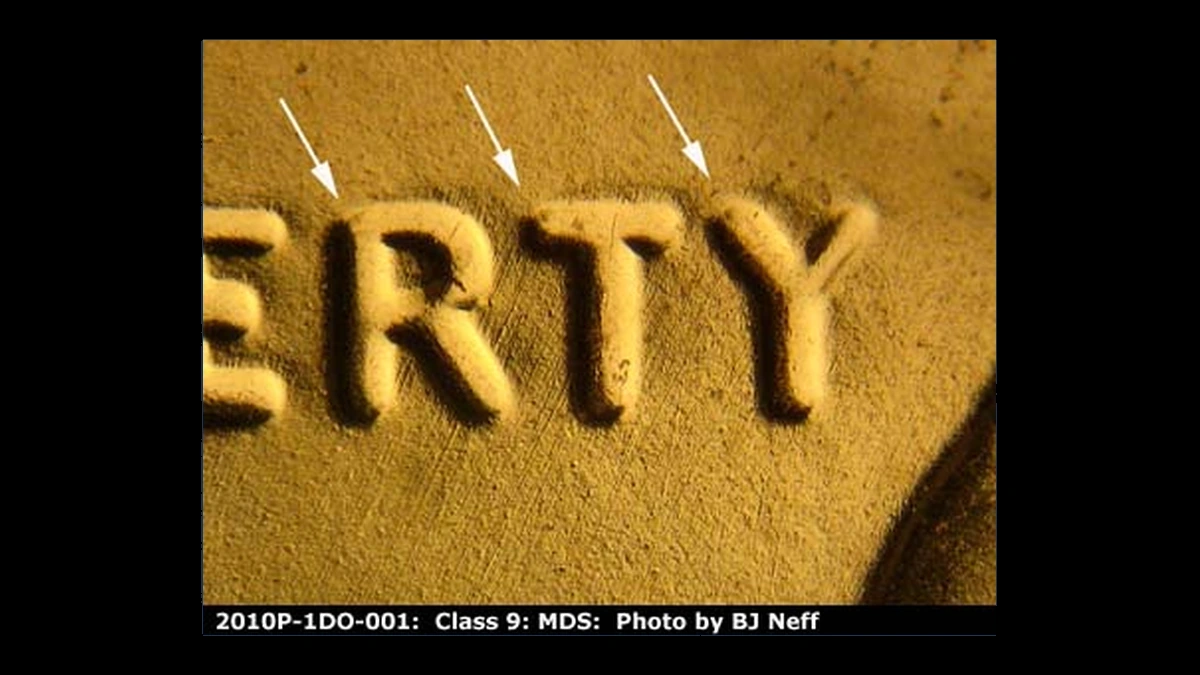
Begin with the small letter contours rather than overall thickness. A cataloged Philadelphia obverse shows splits and extra thickness at the upper-left corners of ERTY in LIBERTY.
Separate reverse varieties involve LB or JFM, with a lower-right notch on L reported in the LB group. These features arise from repeated detail in a die, the steel tool that stamps coins.
How to Identify
Establish the mint and affected face before choosing a reference from the 2010 variety photographs. Philadelphia normally has no mint letter, and a Denver report needs its own match.
Compare the exact corner or initial shape without expecting every listed feature on one coin. Low flat shelves from strike movement and copper splits exposing gray zinc can imitate added design edges.
What It’s Worth
$5–$40 is estimated for minor matched varieties, with approximately $40–$200 for clearer repeated shapes on attractive unworn examples. These figures are modern-variety comparisons rather than a shared auction result for the different dies.
Sharp photographs help make tiny initial details understandable. Thickness caused by die wear or a bright reflection should not receive the same attribution or premium.
2. 2010 Penny Raised lines, letter-gap bars, or rim blobs: Die Cracks, BIE, and Cuds Error
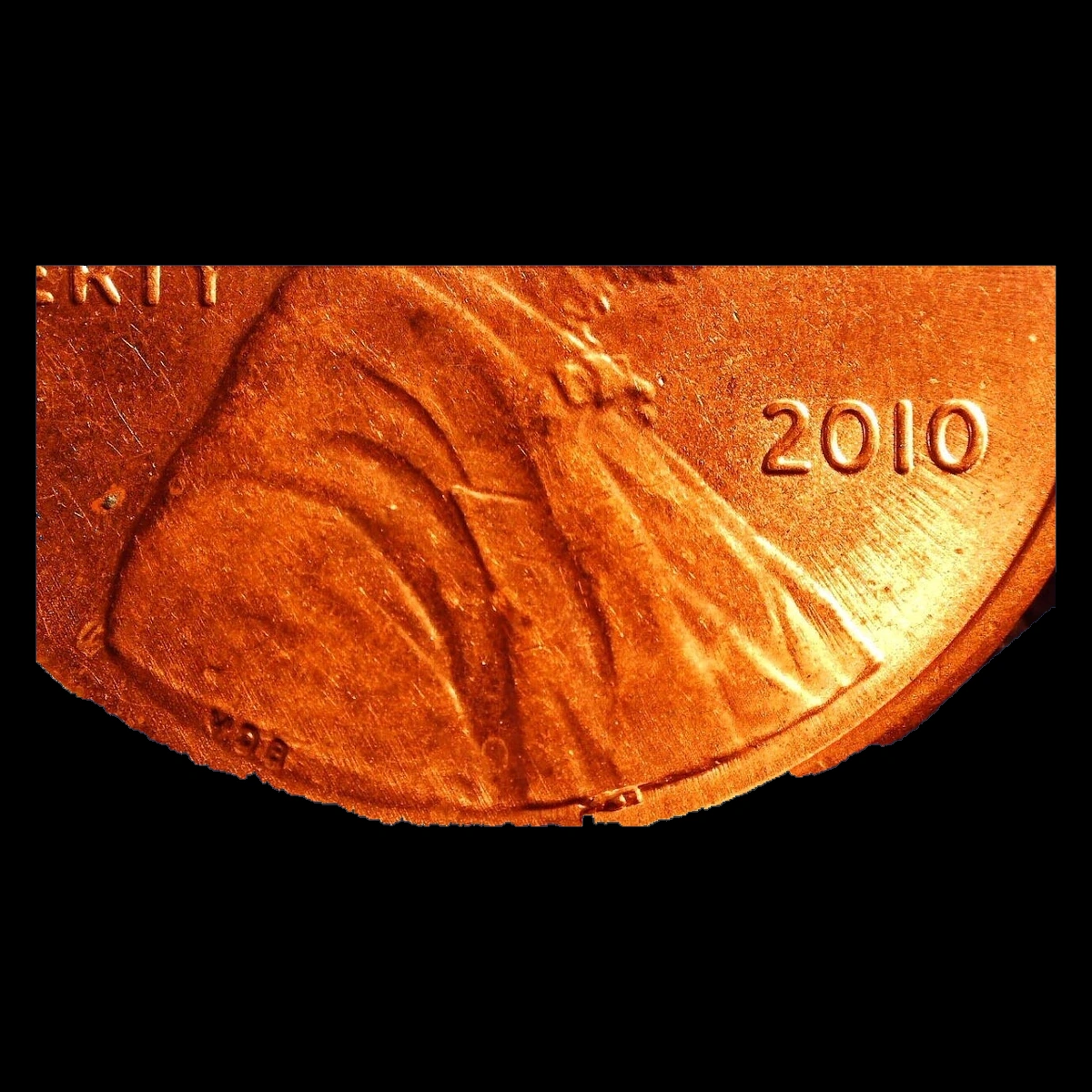
Inspect raised lines across Lincoln or near the shield border as possible records of a cracked tool. Metal filling a narrow die opening leaves a ridge, while a missing die fragment can leave a broader bump.
A bar between B and E in LIBERTY gives the BIE appearance. A larger edge break produces a rim-connected cud, with a Denver 2010 example reported in that group.
How to Identify
Trace each ridge under side lighting to distinguish it from a scratch cut into the coin. Do not connect unrelated lines into a larger imagined crack.
A fine line reaching the border is not itself a cud; that name requires a substantial raised patch connected to the rim. Inspect for plating bubbles or added material and check the opposite face for related weakness.
What It’s Worth
$2–$50 is estimated for fine cracks and small BIE bars, with roughly $50–$400 for larger clear cuds. Several marks on one coin should be appraised together.
A 2021-D retained-cud cent brought $186 in September 2025. Its broken tool section remained partly in place, making it a related different-year comparison rather than a price for every missing-piece break reported in 2010.
3. 2010 Penny An interrupted design with material still attached: Struck-Through Error
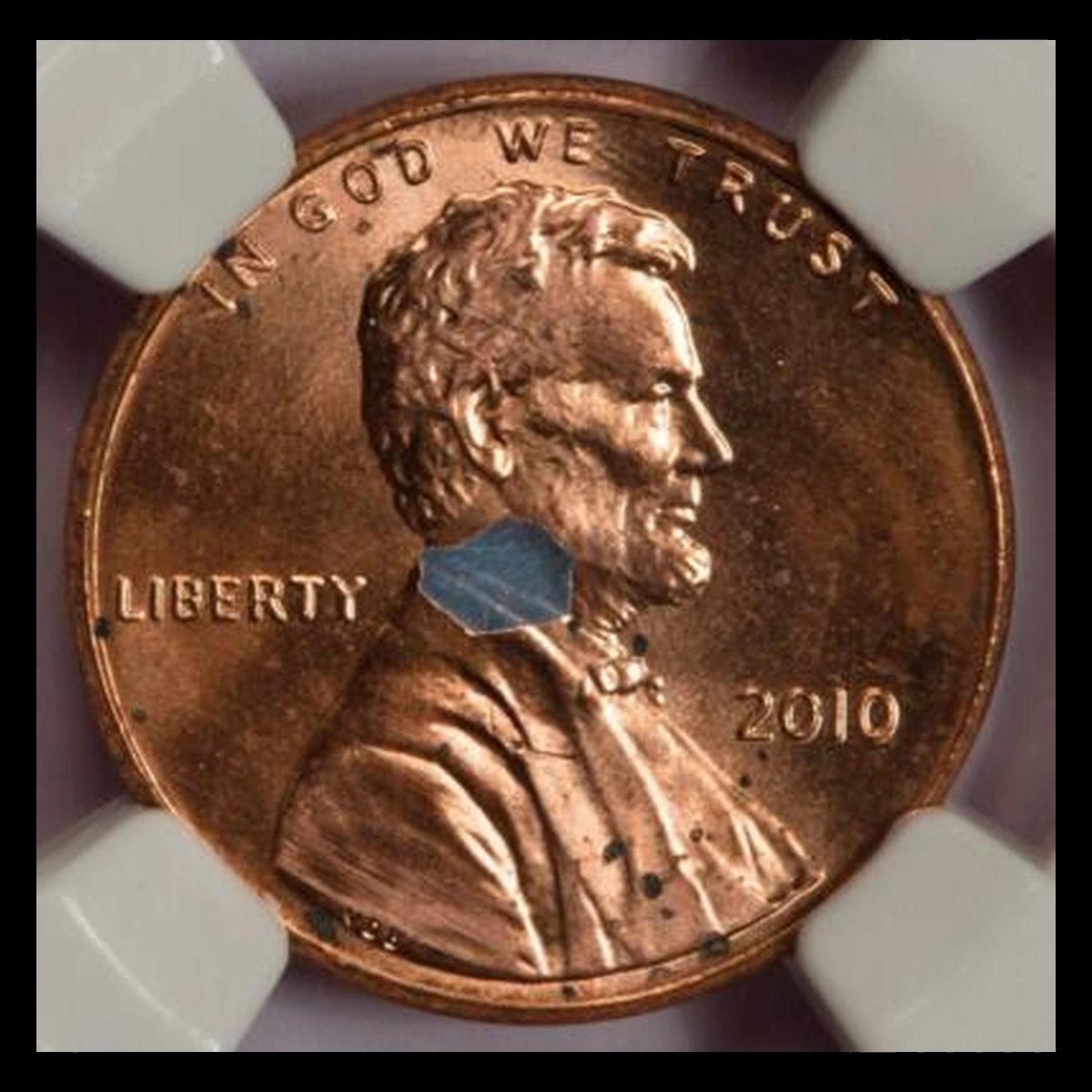
Foreign material can block normal detail or press a shape into the blank during striking. The Denver 2010 report includes a claim of retained material, but neither its substance nor its exact location is established here.
A fragment resting on a finished surface is different from an obstruction involved in the strike. The surrounding design and the attachment therefore carry more information than the object alone.
How to Identify
Leave any attached material untouched and follow the design into its boundary. An original interruption must be distinguished from glue or dirt covering a previously complete letter.
Look for corrosion, a later gouge, or other damage around the area, then photograph the opposite face. Keep the date and D connected to the same specimen in the record.
Retained material can affect the weight, so a reading should be interpreted with the actual attachment in mind. Removing it to obtain a cleaner measurement would lose important evidence.
What It’s Worth
$10–$100 is estimated for smaller confirmed impressions, and approximately $100–$400 for stronger examples or genuine retained material. The upper range depends on identifying the feature’s original connection to the strike.
A 2017-D obverse struck-through cent graded MS65 Red sold for $228 in March 2025. That unworn copper-red coin provides a different-year price reference, not confirmation of retained material on the reported 2010-D.
4. 2010 Penny A dark or otherwise unusual surface: Color and Annealing Reports Error
Color becomes a mint-error clue only when its production cause can be established. A Philadelphia 2010 report links unusual color to improper annealing, meaning heating during metal preparation.
This cent’s copper-coated zinc construction must guide the explanation. Processes associated with other coin metals should not automatically be applied to it.
How to Identify
Use neutral light to compare the candidate with an ordinary cent. Inspect high points, backgrounds, and the edge for chemical roughness, corrosion, or an added layer.
Normal browning, later heating, and surface treatment can all change appearance. Measurements cannot date a color change, so keep the surface intact for examination rather than polishing or heating it.
What It’s Worth
$5–$150 is a conditional estimate for a confirmed mint-made surface problem. Normal toning and later treatment fall outside that production-error range.
The reported MS65 description indicates an unworn coin with relatively few marks; it does not prove why the surface looks different. No sale price is supplied for the Philadelphia report.
5. 2010 Penny Gray zinc where the copper coating is missing: Coating Defect Error
The Philadelphia report describes copper loss without establishing that the blank entered the press entirely unplated. Copper absent before striking and a coating that separates later involve different sequences.
Either can reveal zinc, as can chemicals or abrasion after minting. This thin coating should not be confused with the thick bonded outer layers of a clad dime.
How to Identify
Inspect how the original design crosses from surviving copper into the gray area. Loose flaps, rough chemical attack, or rubbed high points can help explain the timing and cause of the loss.
A minor coating loss may barely change weight. Do not scrape the edge or clean the gray area to expose more metal for a test.
What It’s Worth
$25–$500 is estimated for a confirmed original coating defect, depending on extent and preservation. The estimate does not assume the copper was absent before striking.
The reported MS63 coin is described as unworn with noticeable marks, but no transaction is supplied. A large chemically stripped area does not gain the same value simply because it is visually striking.
6. 2010 Penny Wider metal surrounding complete designs: Broadstrike Error
Trace all the outer lettering when a cent appears oversized. A broadstrike can spread outward because the collar, the ring that normally limits width, did not contain the blank.
The reported Philadelphia example is described as MS62, allowing noticeable marks on an unworn coin. Both the portrait and shield should remain within its expanded metal.
How to Identify
Record several widths and compare the original detail with signs of later crushing. A broadstrike can be uneven, so a perfect circle is not required.
Hammering or squeezing can also enlarge a cent while flattening letters and high points. Its normally smooth edge means absent grooves provide no additional evidence of broadstriking.
What It’s Worth
$20–$350 is the estimate from modest expansion to stronger examples with clear original design. Both visibility and condition affect the comparison.
The reported MS62 description has no verified transaction attached here. Added diameter alone cannot place a later-flattened penny within the mint-error range.
7. 2010 Penny Incomplete designs beside a plain crescent: Off-Center Strike Error
A displaced blank can leave metal outside the area reached by the dies. The result loses design on both faces while retaining an original unstamped crescent.
The 2010 report establishes no single mint, percentage, or direction. Each specimen must supply those details through its surviving design.
How to Identify
Locate the 2010 date and compare both complete faces. Their incomplete designs should meet the same physical area of original blank metal.
Inspect the boundary for grinding, scraping, or polishing that removed finished detail. A cutout lacks metal, while a broadstrike retains complete designs inside a widened outline.
What It’s Worth
$15–$100 is estimated for modest date-visible shifts, with approximately $100–$500 for stronger, well-preserved offsets. A readable year and original surfaces affect value alongside the amount of displacement.
A 2006 four-percent off-center cent sold for $39 in March 2025. Its Memorial reverse makes it a price comparison only, not an identification image for a 2010 Shield cent.
8. 2010 Penny An upturned wall with stretched detail: Die Cap Error
Look from the side when a penny has become cup-shaped. A coin that stays attached to a die can spread around that tool under repeated blows, raising a wall.
The stuck coin is the cap, while separate coins struck underneath it may have blocked designs without the same cup shape. The reported 2010-D cap is described as MS63, with no exact depth or number of strikes established.
How to Identify
Follow the transition from the center into the wall and look for stretched original design. Sharp folds, plier marks, and crushed detail can indicate a coin bent after minting.
Preserve the shape and measure accessible width and height gently. A merely broad or softly struck cent does not become a cap without the evidence of attachment and stretching.
What It’s Worth
$100–$1,000 is estimated for genuine 2010 caps, depending on wall height, recognizable design, and preservation. A deeper appearance matters only if it is original.
A 2000 obverse die cap graded PCGS MS64 Red sold for $312 in June 2025. That earlier Memorial-cent result does not identify which tool held the reported Denver 2010 cap.
Conclusion
Small split corners in LIBERTY and a large upturned wall are both useful observations, but they record very different events. Match the relevant shape while preserving the surrounding design, copper boundaries, and any retained material.
The $2–$1,000 estimates cover identified features and authenticated examples where required. A dark surface or a broad outline needs its own explanation before it can share the price range of a documented production error.