Rare 1929 Penny Errors (List & Pictures)
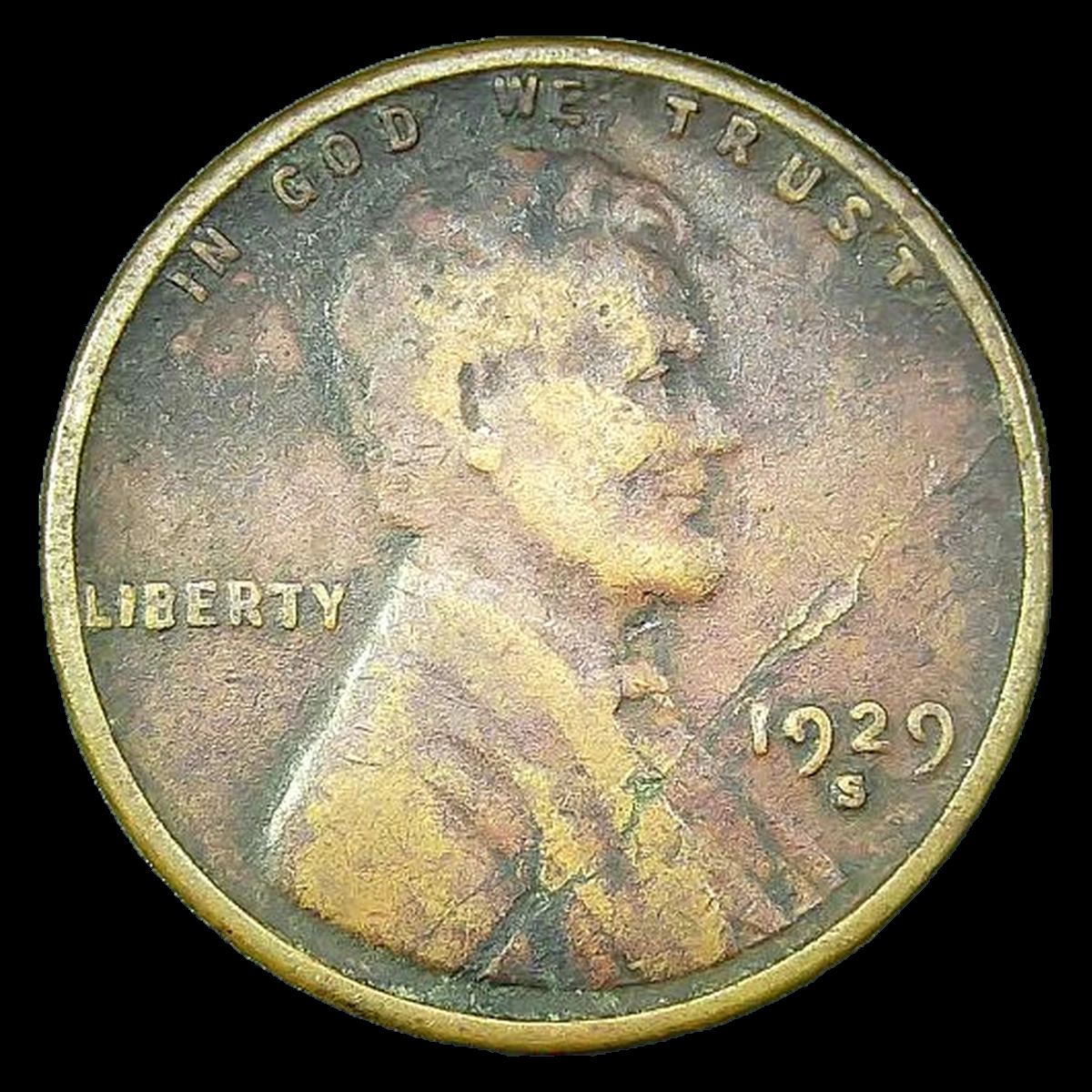
A tiny S can command more than a conspicuous gap in a coin. The strongest supplied auction result for these 1929 penny errors is $3,565 in June 2010 for the San Francisco FS-501 repunched mintmark in MS65 Red.
Estimated values run from $3–$5,000. Begin at peeling metal and the edge, compare design placement next, then examine small surface interruptions and die varieties.
| Visible clue | Category | Estimated value |
|---|---|---|
| Thin surface layer peels | Lamination | $10–$250 |
| Gap runs into the coin | Cracked planchet | $75–$400 |
| Section missing from outline | Curved, straight, or ragged clip | $15–$300 |
| Two levels along edge | Partial collar | $50–$350 |
| Complete design inside wide metal | Broadstrike | $50–$600 |
| Blank crescent and lost outer design | Off-center strike | $40–$2,000 |
| Separate overlapping impressions | Multiple strike | $150–$1,500 |
| Local blocked detail | Strike-through | $5–$150 |
| Raised bar, mouth line, or rim patch | Die chip, crack, or cud | $3–$500 |
| Repeated eye, date, or lettering | Doubled die | $5–$750 |
| Earlier S or D strokes | Repunched mintmark | $5–$5,000 |
An ordinary 1929 bronze cent weighs 3.11 g and measures 19.05 mm across a plain edge. Record the actual mint, surfaces, and both-face photographs before using a scale, calipers, and a 10× magnifier on an accessible coin.
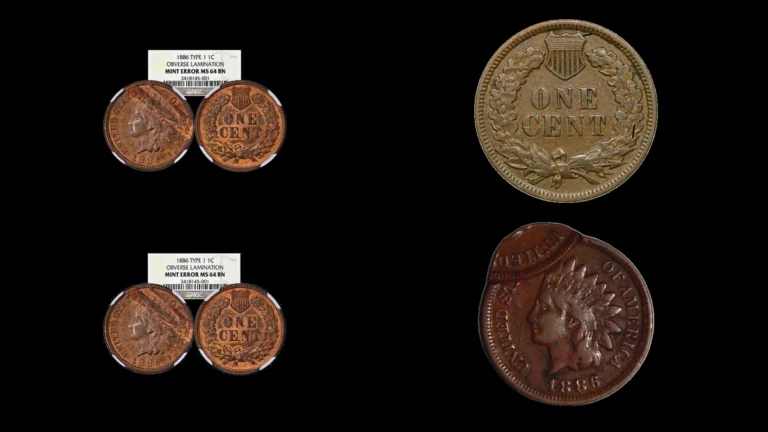
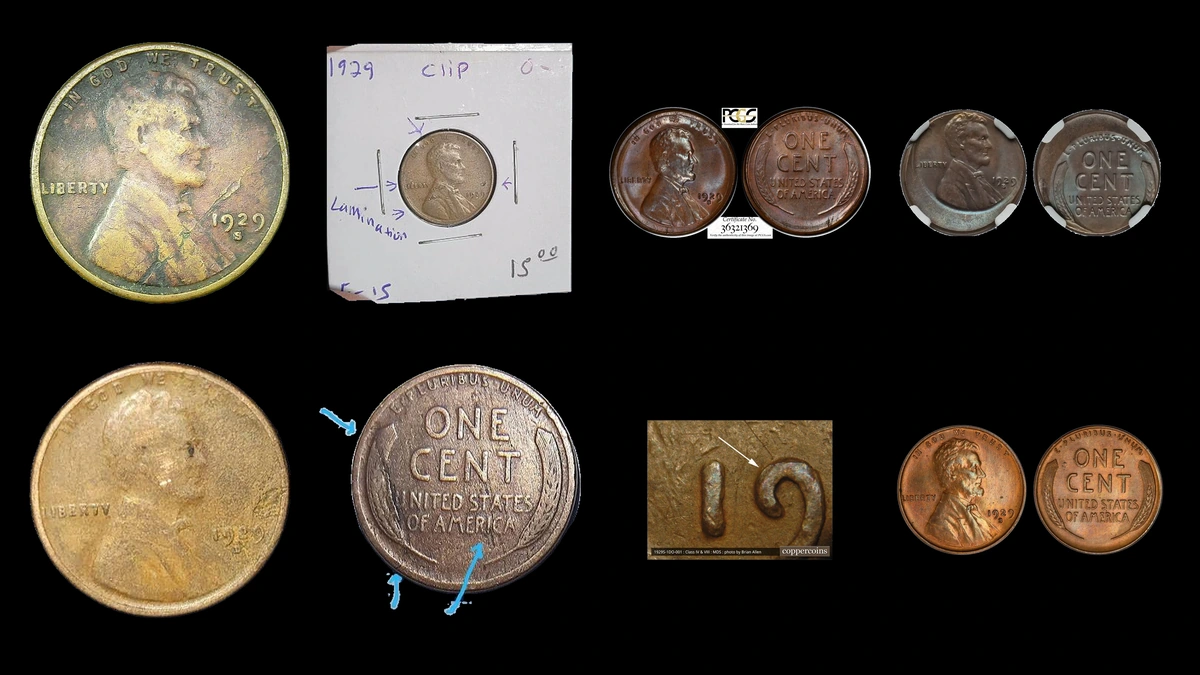
1. 1929 Penny A Thin Layer Peels from the Bronze: 1929 Lamination Error
Internal weakness can let a shallow alloy layer lift or detach. One San Francisco specimen combines lamination with a five-percent off-center strike.
A different San Francisco front-lamination coin appeared in a five-coin group. Another report describes cracks or peeling on both faces without proving that they connect through the blank.
How to Identify
Locate the affected face and examine the layer’s natural attachment without lifting it. This is bronze separation, not a distinct plated coating coming away.
Photograph each face separately if both are affected, then use an edge view to investigate any connection. Two surface cracks alone do not establish a complete split.
What It’s Worth
Laminations have an estimated $10–$250 range. Separation visibility and the condition of the whole coin shape the comparison.
The five-percent off-center San Francisco coin in PCGS MS64 Brown brought $124 in March 2025 for the entire combination. The other specimen’s five-coin lot total cannot supply its individual price.
2. 1929 Penny An Opening Reaches into the Metal: 1929-S Cracked Planchet Error
A dealer described an NGC MS64 Red cent as struck on a defective cracked blank. The opening concerns the blank’s own metal rather than a raised line copied from a cracked die.
The supplied description establishes no reliable clock position. A deeper opening needs its own edge view instead of a thin-peeling photograph.
How to Identify
Inspect how the struck design meets the gap and whether nearby metal formed around it. Later bending or cutting can tear a completed design instead.
Do not flex the opening or force it shut for measurements. Follow its depth toward the edge to distinguish a physical crack from a raised die-crack trace.
What It’s Worth
Confirmed cracked-planchet examples have an estimated $75–$400 range. Depth, visibility, and preservation influence the comparison.
The dealer listed the NGC MS64 Red specimen at $189. That is an asking price, not evidence of a completed transaction.
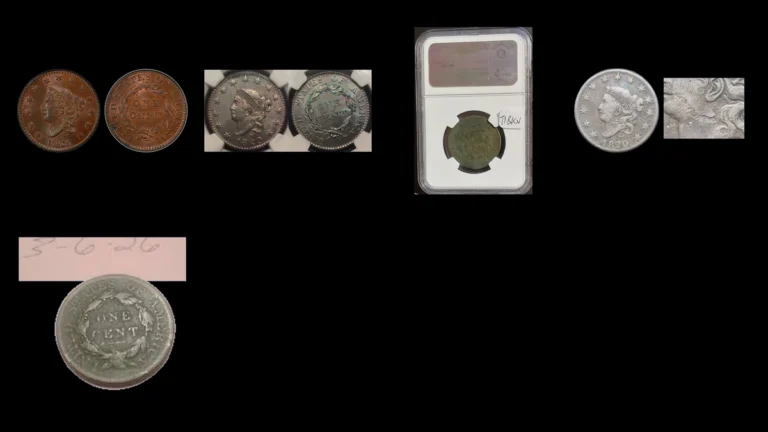
3. 1929 Penny Curved, Straight, or Ragged Metal Is Missing: 1929 Clips Error
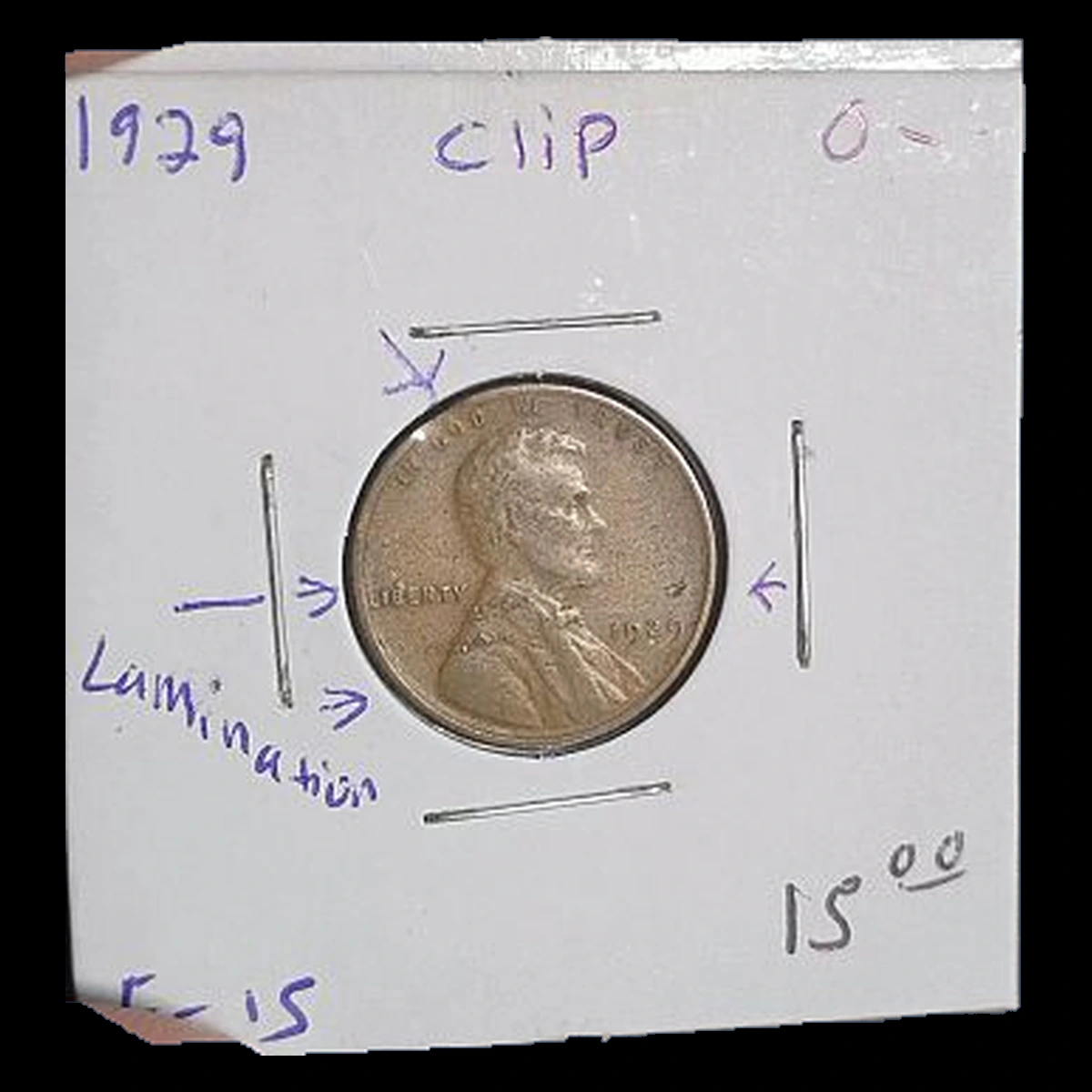
The Philadelphia curved-clip example weighs 2.87 g, while a San Francisco straight clip weighs 3.00 g. Both are recorded as ANACS XF40.
Denver also has a thirteen-percent ragged end clip, and a separate older listing describes a ten-percent straight gap near the upper-left edge. Curved overlaps and unfinished sheet edges can produce different incomplete blanks.
How to Identify
Compare like shapes and keep each weight with its own specimen. Inspect original rim and lettering as they approach the boundary.
Fresh cuts, parallel file lines, and folded metal may reveal later removal. Measure surviving intact spans rather than expecting a gap-crossing measurement to equal the normal diameter.
What It’s Worth
Genuine clips have an estimated $15–$300 range. Original boundaries and preservation can matter more than an impressive percentage label.
The Denver thirteen-percent ragged clip in PCGS MS63 Brown brought $55 in April 2020. Its irregular gap does not inherit the weights or positions of the separate curved and straight examples.
4. 1929 Penny A Ledge Divides the Edge into Two Levels: 1929-S Partial Collar Error
One part of a blank can remain inside the collar while another part lies above it. The differently restrained metal forms an edge step during striking.
An ICG MS63 Brown San Francisco example appears in a Heritage listing. A face-only photograph can conceal its most useful identifying feature.
How to Identify
Rotate the coin edge-on and find the transition between narrower and wider sections. Lincoln cents have plain edges, so normal grooves are not part of the required comparison.
Check for a crushed lip and damaged nearby lettering from later squeezing. The usual 3.11 g specification is not a recorded measurement of the listed ICG specimen.
What It’s Worth
A clear partial collar has an estimated $50–$350 range. A legible side view and original surfaces make the feature easier to assess.
No realized result is assigned to the recorded coin here. A slight uneven rim with dents needs more evidence before it can share the same comparison.
5. 1929 Penny The Full Design Sits inside an Expanded Outline: 1929 Broadstrike Error
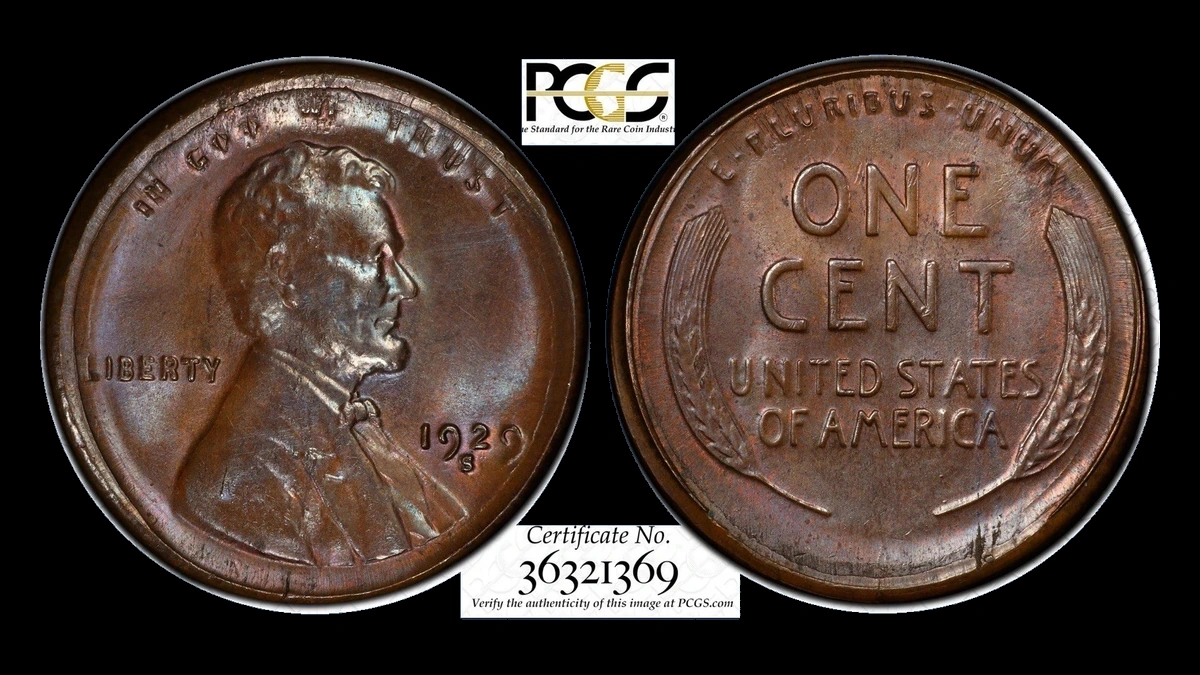
A broadstrike can look unevenly centered while still retaining its intended outer design. Metal spread because the collar did not fully contain it.
Recorded examples include worn Denver and unworn San Francisco coins, plus a separate lightly worn cleaned San Francisco piece. Cleaning changes preservation after the original spread.
How to Identify
Trace all outer lettering, especially beside the narrowest border, before calling the coin off center. Complete design within enlarged metal supports broadstriking.
Inspect for hammer marks or crushed detail from later widening. Cleaning lines on the separate San Francisco specimen should be assessed apart from its original shape.
What It’s Worth
Broadstrikes have an estimated $50–$600 range across mint, wear, and spread differences. A problem surface requires its own adjustment.
A San Francisco example in PCGS MS64 Brown brought $288 in August 2020. That unworn sale should not be assigned to either the worn Denver coin or the cleaned San Francisco piece.
6. 1929 Penny A Blank Crescent Borders Incomplete Designs: 1929 Off-Center Strike Error
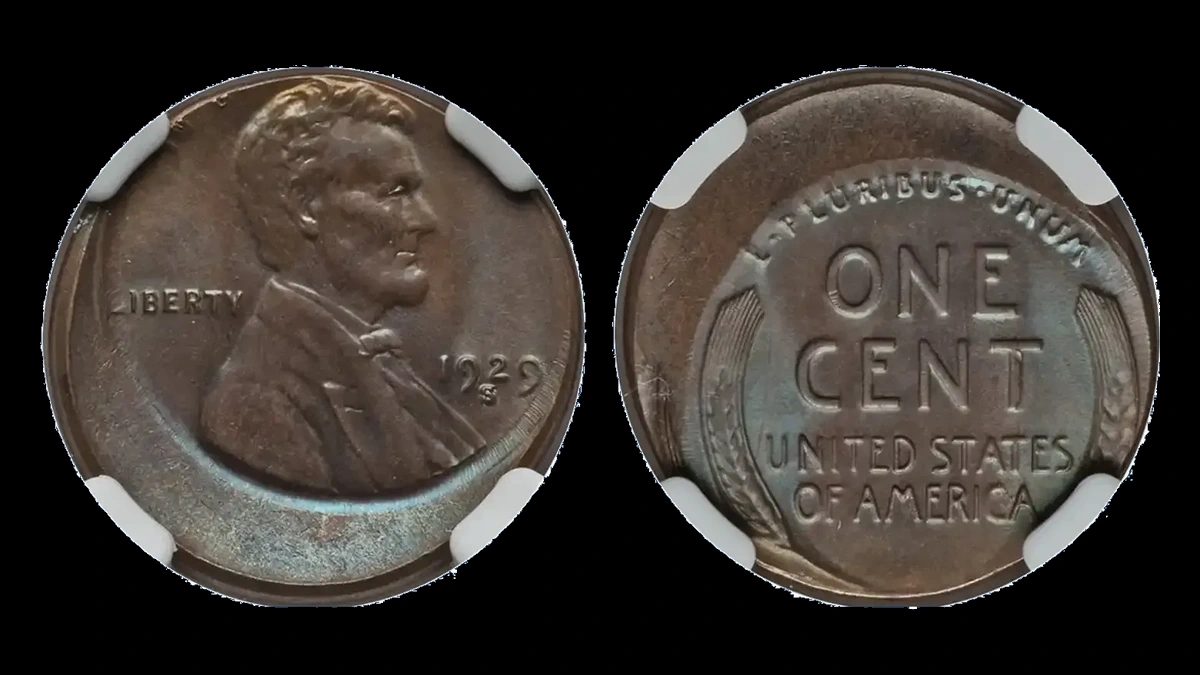
The Philadelphia report includes a ten-percent offset. San Francisco examples include separate fifteen- and twenty-five-percent strikes.
The twenty-five-percent piece is displaced toward two o’clock and has a faint final 9. Much of its right wheat ear and front motto misses the struck area.
How to Identify
Read the surviving date carefully and compare both faces for consistent design loss. Check the supposedly untouched crescent for grinding that could have erased ordinary detail.
Establish each coin’s own direction rather than transferring two o’clock to the fifteen-percent specimen. The other coins also need not share the weak final digit.
What It’s Worth
Identified examples have an estimated $40–$2,000 range. Preservation and remaining year-and-mint detail can outweigh displacement size.
The fifteen-percent San Francisco coin in NGC MS66 brought $1,320 in December 2023. The twenty-five-percent PCGS MS61 Brown example brought $360 in September 2019, despite the larger offset.
7. 1929 Penny Additional Design Groups Overlap: Reported 1929 Multiple Strike Error
A coin failing to leave the press normally can receive another blow. Separate date fragments, portrait positions, or letter groups may survive the overlap.
The broad 1929 report supplies no specific mint, number of blows, or displacement for a certified example. A complicated outline alone cannot establish a triple strike.
How to Identify
Map a recognizable feature from each impression and compare the groups across both faces. Count coherent designs rather than every flattened rim or random dent.
Check where one impression crosses another for original struck relationships. Later crushing can alter an outline without adding another Mint strike.
What It’s Worth
A genuine multiple strike with readable overlap has an estimated $150–$1,500 range. Clear individual impressions and original surfaces support the comparison.
A 1945 flipover double strike in NGC MS65 Brown brought $675.63 in January 2016. Its year, flipover arrangement, and grade do not become attributes of the general 1929 report.
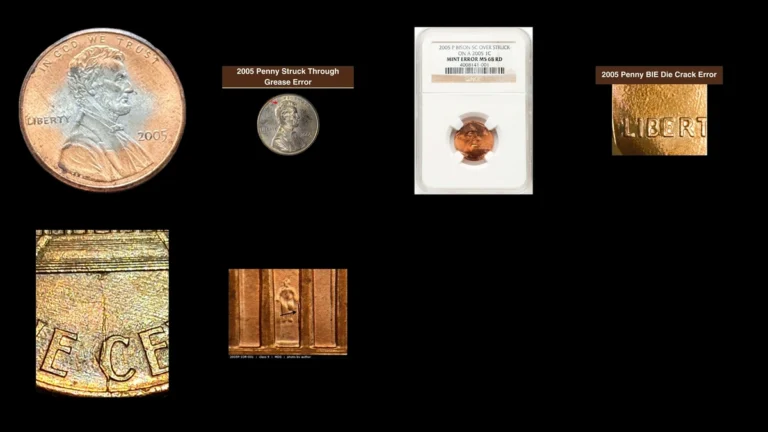
8. 1929 Penny Local Detail Is Blocked or Missing: 1929 Strike-Through Error
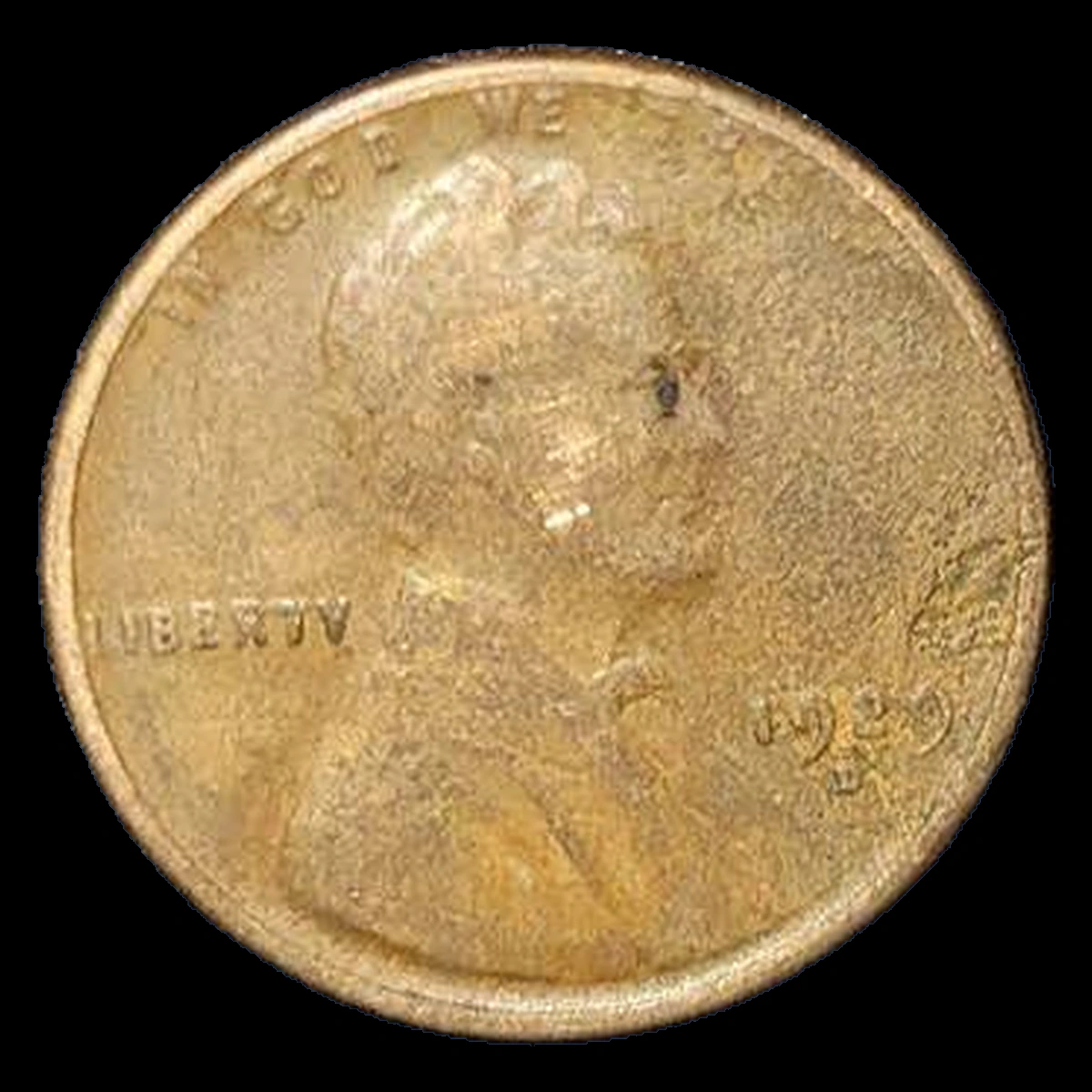
Material between the blank and die can prevent part of the design from forming. The supplied 1929 descriptions do not identify cloth, wire, grease, or a retained object.
A simple visible description is therefore more accurate than an elaborate material claim. Surrounding intact detail helps show the extent of the interruption.
How to Identify
Compare the patch with equally high details elsewhere to assess ordinary wear. Inspect its boundary for cuts or pushed metal from a later blow.
Use light from several directions and record where design fades or stops. Without a recognizable texture, the impression cannot identify what caused it.
What It’s Worth
An identifiable original strike-through has an estimated $5–$150 range. A larger clear shape usually offers more information than a tiny weak patch.
A 1933-D reverse strike-through in PCGS VG10 brought $30 in October 2022. That nearby-year worn example is not a 1929 transaction or evidence of a particular obstructing material.
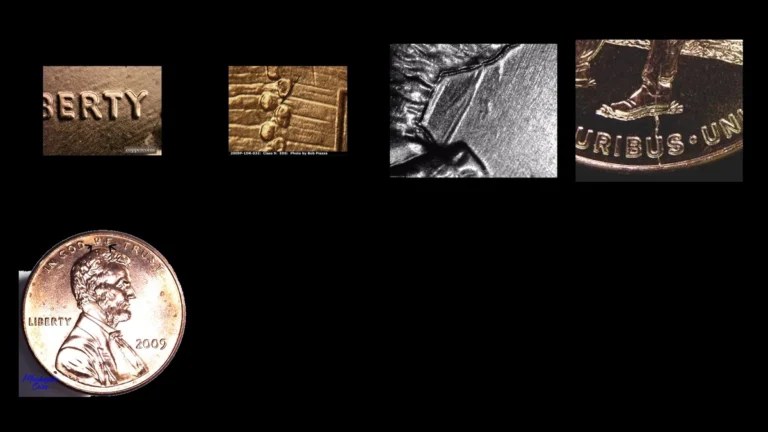
9. 1929 Penny A Bar, Mouth Line, or Rim Patch Is Raised: 1929 Die Breaks Error
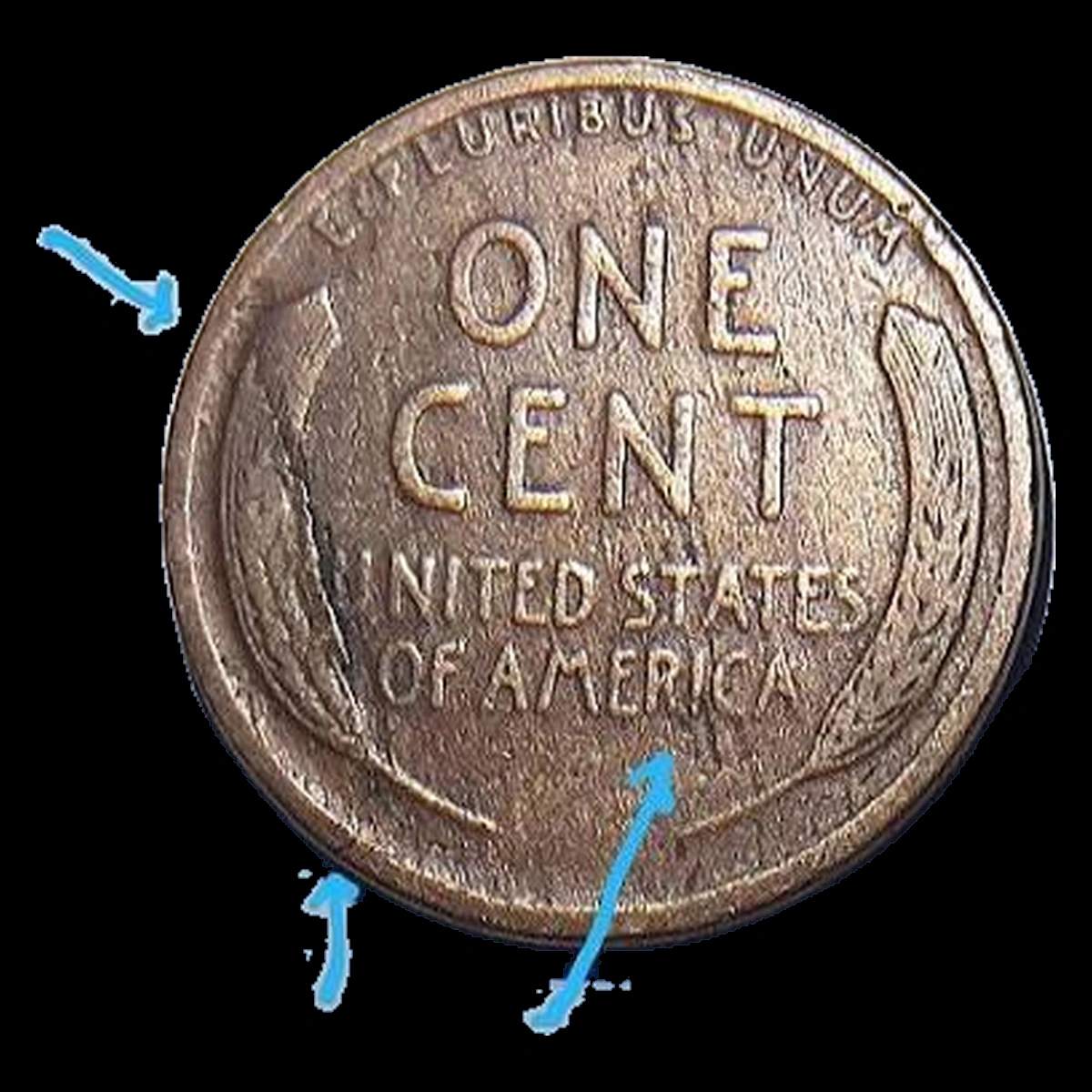
A BIE chip occupies the gap between B and E. The separately reported “Spitting Lincoln” feature is a raised line from the mouth or chin area.
A larger San Francisco reverse break reaches the rim beside the left wheat ear. These are separate reports with different positions, not one coin carrying all three features.
How to Identify
Confirm the letter gap or trace the mouth line under side lighting. A line cut into the portrait is a scratch rather than a raised die crack.
For the reverse cud, follow its natural connection to the rim and compare the cataloged San Francisco example. A seam or separate metal color may indicate an attachment.
What It’s Worth
Small BIE bars and mouth-area cracks have an estimated $3–$40 range. Clear San Francisco rim cuds are approximately $40–$500.
No specific auction results are assigned to these shapes here. The nickname alone does not establish a rare variety or even a particular mint.
10. 1929 Penny An Eyelid, Date, or Motto Repeats: 1929 Doubled Dies Error
Philadelphia examples include an extra eyelid above and right of the main one. Denver reports separately affect the motto or R, T, and Y of LIBERTY, while reverse varieties can thicken motto, dots, wheat ears, and stems.
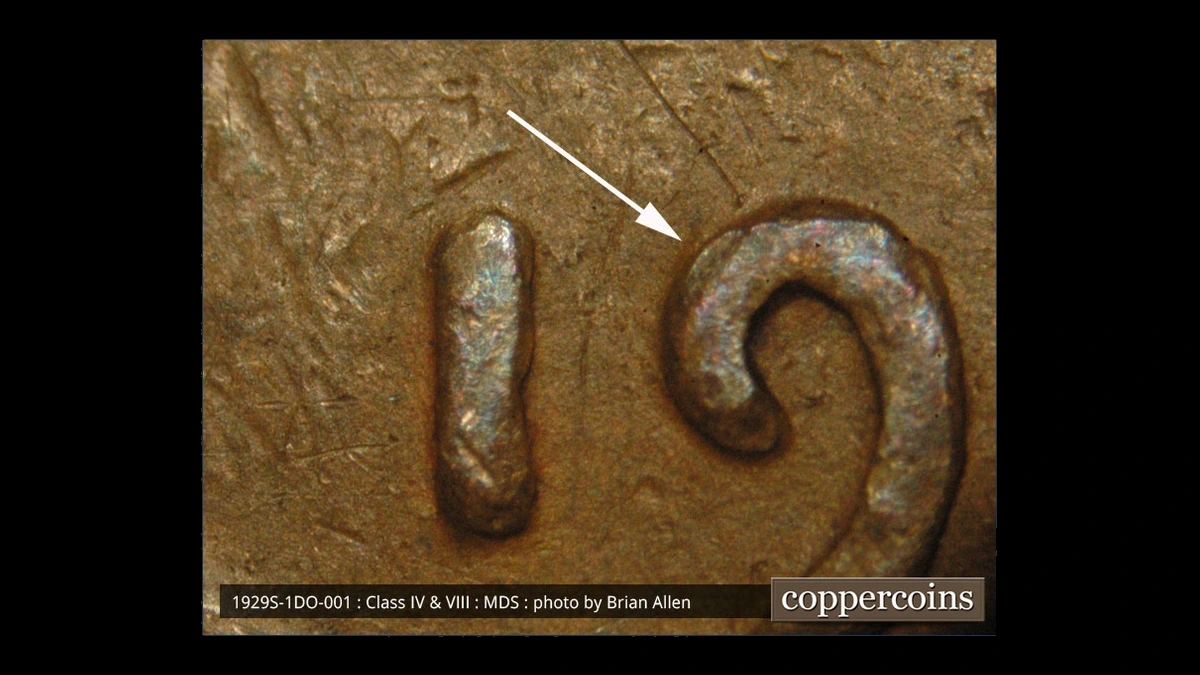
One San Francisco die combines doubled 19 with an eastward repunched S and slight motto doubling of a separate shared-tool origin. Another S pattern affects the 9 and part of TRUST.
How to Identify
Choose mint and face before tracing the repeated pattern. A Denver motto match cannot substitute for a Denver LIBERTY match, and reverse varieties need their own wheat and lettering checks.
On the San Francisco combination, inspect the date independently of the S. Mintmark repunching does not prove doubled date detail.
What It’s Worth
Identified doubled dies have an estimated $5–$750 range. Visibility, correct attribution, and preservation influence the result.
No realized amount is supplied for every catalog number. The combined San Francisco variety receives one overall value that can reflect both features.
11. 1929 Penny Earlier S or D Strokes Survive: 1929 Repunched Mintmark Error
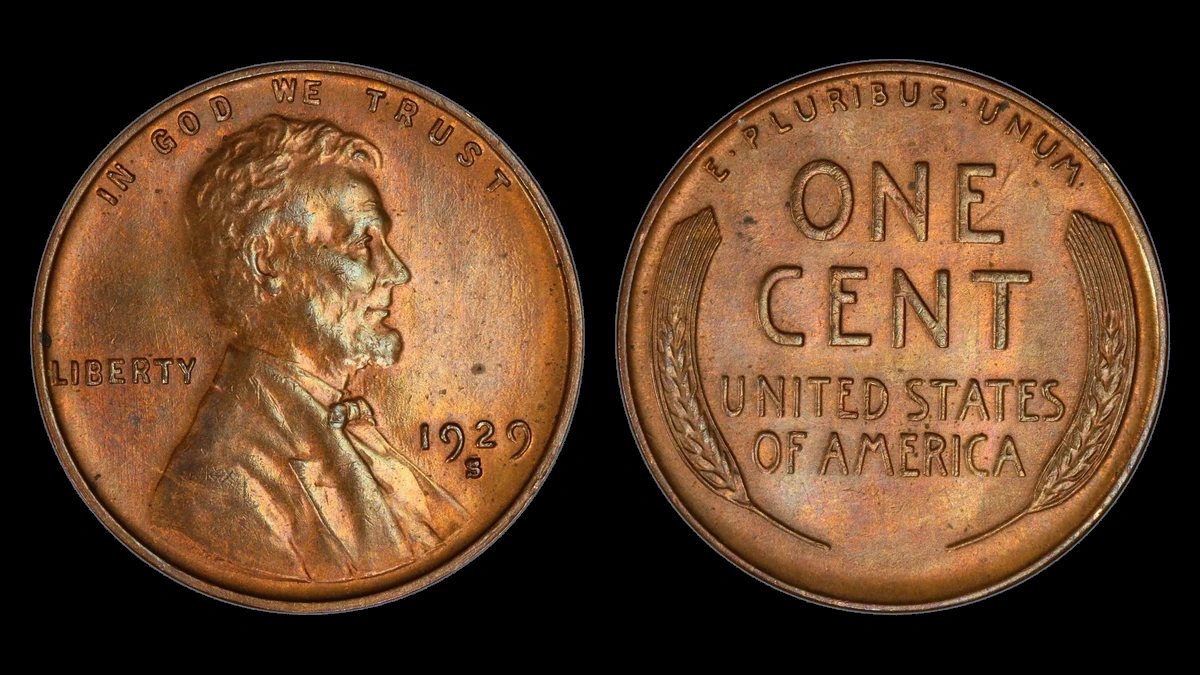
Early San Francisco FS-501 examples can show remnants above and toward the upper left of S. Several shifted hand-punch impressions remained in the die.
Those small traces can weaken as the die wears. Other S varieties point differently, and Denver has separate D patterns with their own curves and split ends.
How to Identify
Compare the whole mintmark with a photograph from the appropriate stage of die use. A curved remnant must resemble part of another letter rather than a shapeless bump.
Use Denver references for D patterns and check supporting marks around LIBERTY or TRUST where needed to separate similar northward repunches. Normal weight and diameter cannot establish FS-501.
What It’s Worth
The broad repunched-mintmark group has an estimated $5–$5,000 range. Modest worn varieties belong to a different comparison from exceptional named examples.
PCGS records $3,565 in June 2010 for FS-501 in MS65 Red. GreatCollections lists brown examples around $124–$389 across several grades, showing why the red result is not universal.
Conclusion
The estimated $3–$5,000 range reflects both error type and the quality of the actual coin. A small well-preserved mintmark variety can exceed a much more visible missing section.
Keep each weight, direction, and grade tied to its specimen, and value a combination as one object. An asking price remains an offer, a group sale does not establish an individual result, and unknown strike-through material should remain unidentified until the evidence supports more.