Rare 1946 Penny Errors (List & Pictures)
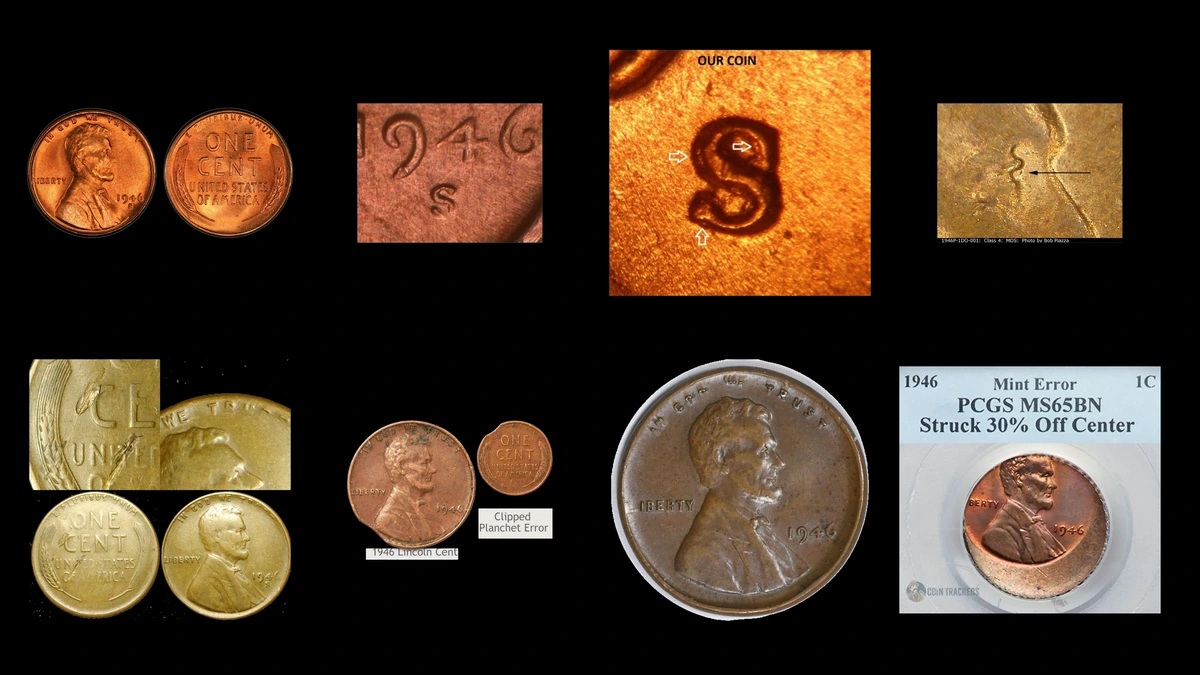
The same S can suggest several different 1946 penny errors, from a repeated punch to an inverted letter or an S over D. Estimated values across this guide run from $5 to $6,000.
A top-condition 1946-S/D sold for $3,172.50 in September 2019; the highest supplied completed-sale comparison is $3,840 for a different-year 1950 Philadelphia silver dime-planchet cent in May 2022. Examine mintmark structure first, then compare surfaces, outline, strike position, and metal.
| Feature | Identification to consider | Estimated range |
|---|---|---|
| Unusual D or S outline | Repunch, inverted S, or S/D | $5–$4,000 |
| Repeated lettering or Wheat details | Doubled die | $5–$400 |
| Peeling or folded surface layer | Lamination | $5–$300 |
| Missing, expanded, or displaced outline | Clip, broadstrike, or off-center strike | $15–$800 |
| Recessed interruption | Struck through or blank indent | $15–$1,000 |
| Small pale coin | Silver dime-planchet error | $400–$6,000 |
An ordinary copper-alloy 1946 cent weighs about 3.11 grams and measures 19.05 millimeters across its plain edge. Measurements help assess blank identity or later alteration, while magnified views establish the small die features.
Photograph the whole coin as well as the unusual area. Keep certified coins sealed and do not lift a loose layer to inspect underneath it.
1. 1946 Penny An S contains remnants of a D: Overpunched Mintmark Error
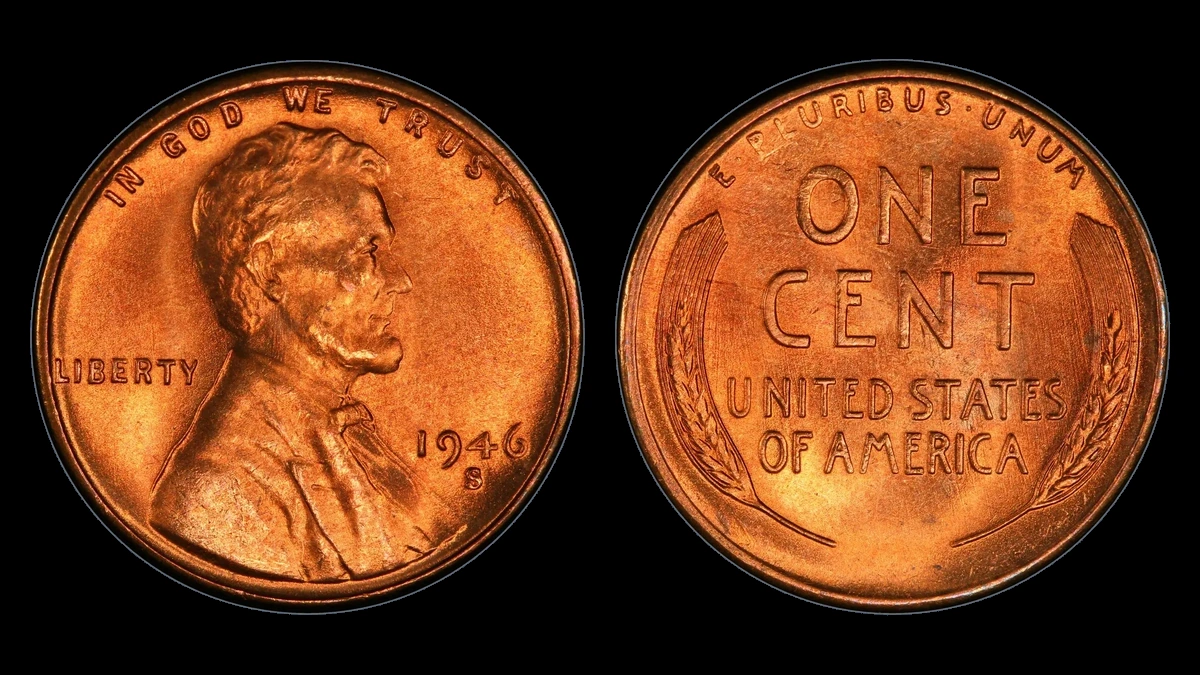
The 1946-S/D, commonly cataloged FS-511, has an S punched over an earlier D in the die. The main visible S determines the order of the name.
Parts of the D can remain inside the S loops, including an upright in the lower opening. The overlapping punches do not mean a finished coin traveled between two mints for separate strikes.
How to Identify
Keep the date upright and trace both openings of the S against a confirmed FS-511 image. The earlier strokes should fit a D rather than another rounded S.
A chip can fill an opening without leaving coherent letter structure. Match several surviving parts rather than using one isolated bump as the attribution.
What It’s Worth
Many identified S/D examples are estimated at $50–$1,000, with outstanding pieces extending toward $4,000. Grade and preserved copper color create a wide spread within the same variety.
PCGS auction data records $3,172.50 for an MS66+ Red example in September 2019. A separate MS65 Red coin brought $350 in January 2023.
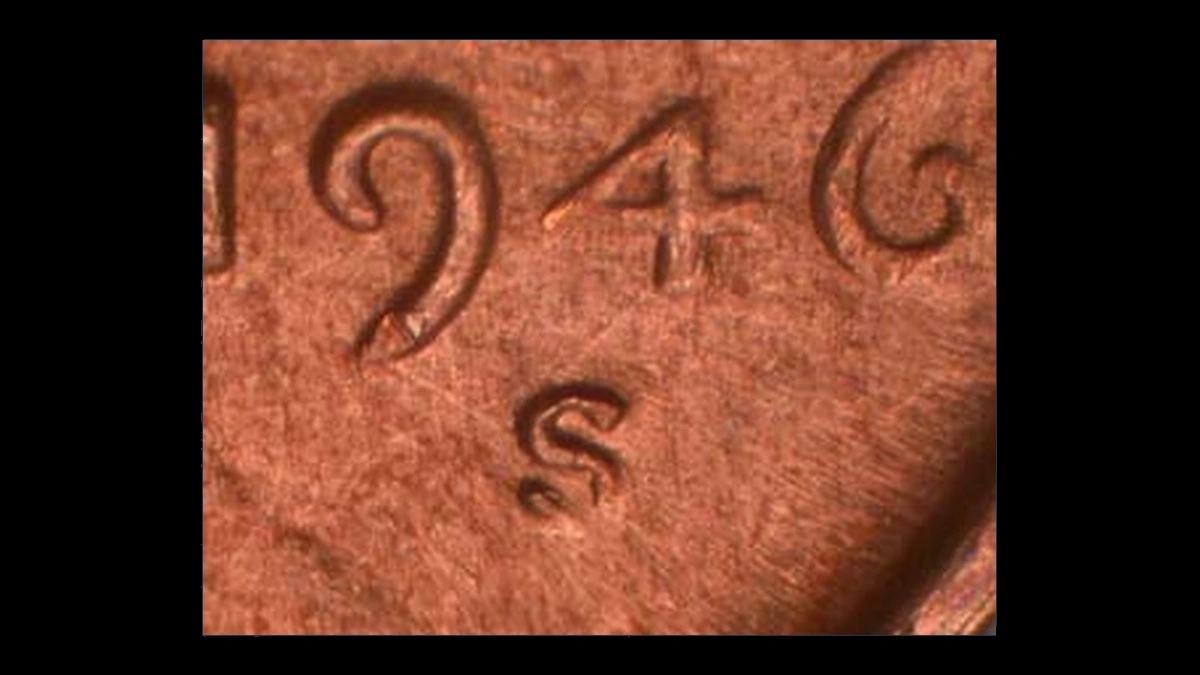
2. 1946 Penny The S ends exchange their normal positions: Inverted Mintmark Error
An inverted S comes from placing the mintmark punch upside down. It need not have another S outline alongside it.
The identified 1946 form uses a Ball Serif S, whose normal upper end is rounded and lower end flatter. Inversion exchanges those positions.
How to Identify
Identify the S style first using the Wexler comparison. Normal alternative styles, including one with a trumpet-like lower end, should not be called inverted simply because they differ.
With the date upright, compare the rounded and flatter ends. Do not rotate the image until an ordinary letter seems to fit, and inspect for damage that reshaped an end.
What It’s Worth
Correctly identified inverted-S examples are estimated at $50–$800. Readable ends and original surfaces help demonstrate the orientation.
A brown MS62 example is recorded at $179 in July 2019. Its unworn but noticeably marked condition provides context for a modest preserved specimen, not a premium for every different-looking normal S style.
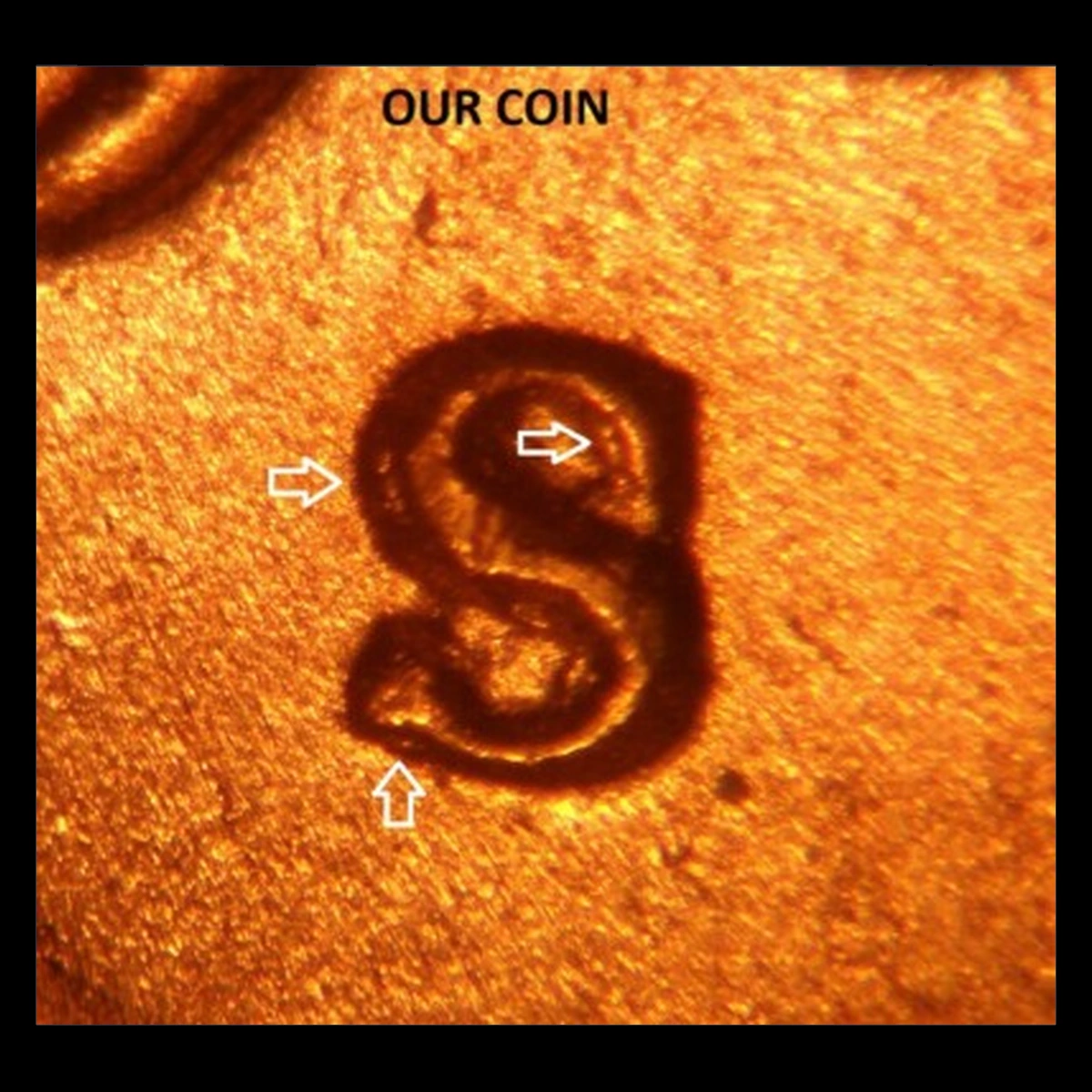
3. 1946 Penny The same mint letter appears twice: Repunched Mintmark Error
Repeating a hand punch in a changed position can leave an earlier D or S beside the main letter. Both Denver and San Francisco repunches are reported for 1946.
One published S/S has its earlier impression above the final S and also carries a doubled reverse. The mintmark and reverse features share a coin but have distinct formation histories.
How to Identify
Match the whole letter and its extra curve with the specific mintmark reference. The published upper-S trace cannot identify every D/D or another S/S.
Check for added metal at the letter’s base and separate a chip from a recognizable earlier letter outline. A thick patch alone does not establish repunching.
What It’s Worth
Modest identified repunches are estimated at $5–$200. A visible extra stroke on a well-preserved coin generally offers a stronger comparison than a worn trace.
This minor-variety range does not inherit the much higher S/D record. The published S/S and doubled-reverse combination needs one whole-coin assessment, rather than two maximum estimates added together.
4. 1946 Penny Extra edges repeat in lettering or Wheat details: Doubled Die Error
A doubled die carries repeated design before it stamps coins. Reports cover front and back varieties from Philadelphia, Denver, and San Francisco.
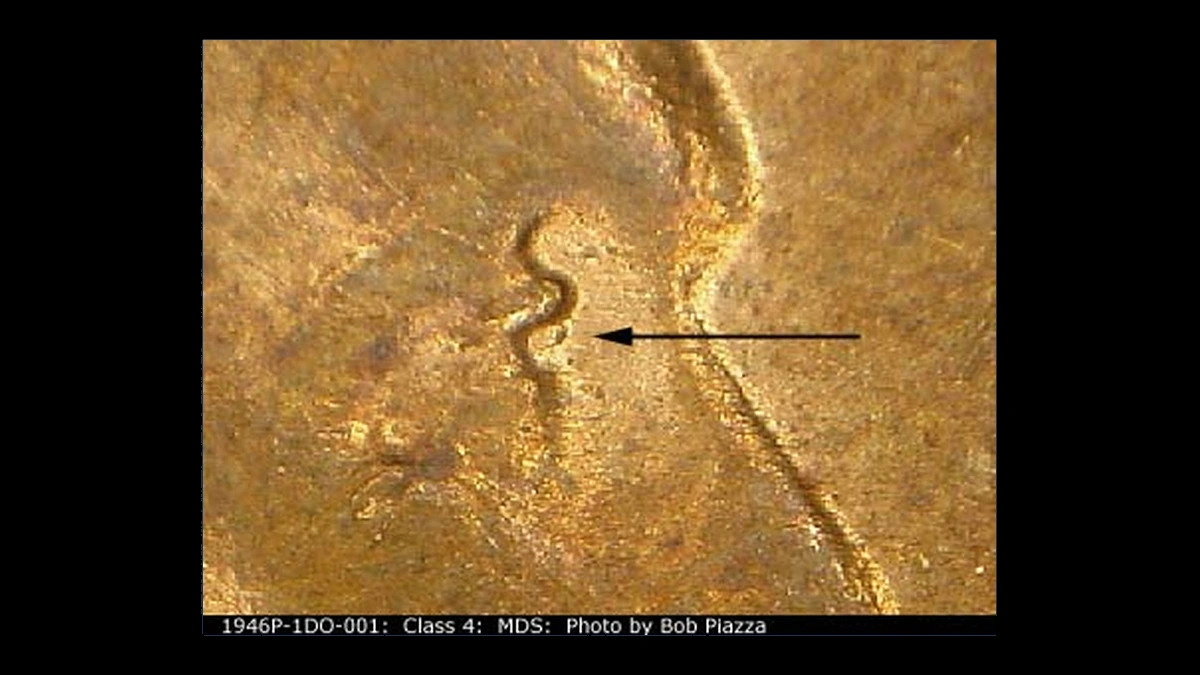
The described San Francisco reverse has inward doubling around the upper Wheat ears, E PLURIBUS UNUM, and its dots. That specimen also has the repunched S discussed above.
How to Identify
Select references using both mint and face. A Philadelphia obverse comparison cannot establish the design on a San Francisco reverse.
For the described S reverse, compare the related inward outlines across the ears, letters, and dots. The extra S is a separate feature and cannot replace the reverse match.
For obverse varieties, inspect their own date, motto, or portrait diagnostics. Flat shelves produced during the strike need to be distinguished from repeated raised design.
What It’s Worth
Minor matched varieties are estimated at $5–$200, with stronger well-preserved examples potentially reaching $400. General thick lettering is insufficient for either attribution or premium.
A 1936 FS-103 obverse variety graded MS63 Brown brought $70 in June 2024. That different-year result does not assign a completed transaction to each 1946 mint and face.
5. 1946 Penny A thin layer peels or folds across the surface: Lamination Error
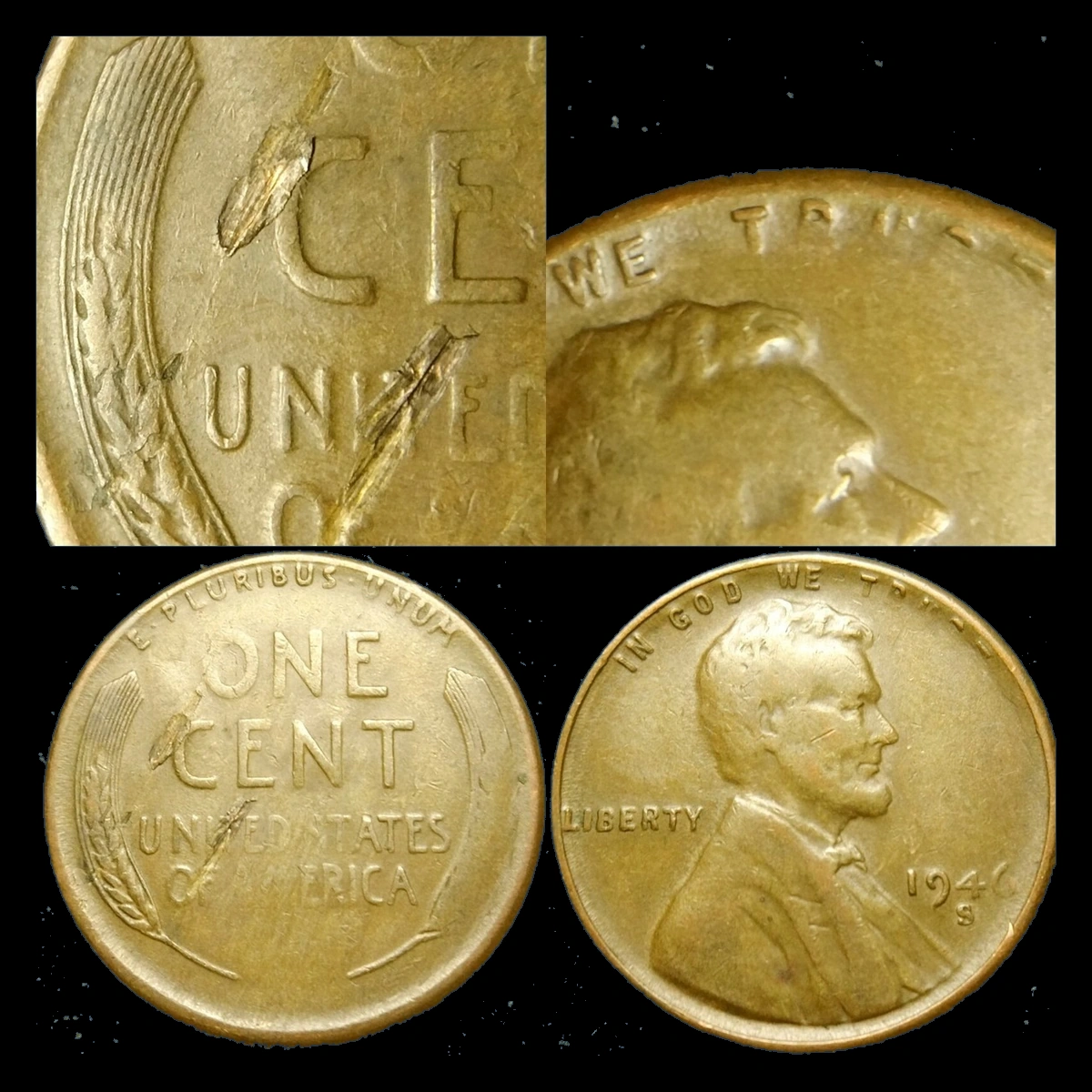
A layer of the cent’s own alloy can loosen and fold over before striking. If struck in that position, the flap can receive design on top of its folded surface.
A collector reports this sequence on a 1946-S coin with weak reverse detail opposite the affected area. Separate records describe a San Francisco ANACS MS65 Red and Brown lamination and a Philadelphia coin with severe obverse peeling.
How to Identify
Use an angled view to follow the thin layer’s connection without lifting it. A natural alloy separation differs from peeling copper plating on a modern zinc-centered cent.
For the folded example, compare the design on the flap with surrounding detail and the corresponding reverse weakness. Those clues belong to that reported sequence and need not appear on every lamination.
Inspect for prying or cuts that could show the layer was moved later. Preserve the existing fold and any attachment rather than trying to straighten it.
What It’s Worth
Modest peeling is estimated at $5–$100; a clearly preserved struck folded flap at $50–$300. The natural connection and surviving design make the stronger feature understandable.
A 1941-S retained reverse lamination graded PCGS MS66 Red sold for $69 in April 2020. That attached-layer comparison does not establish a sale of the reported 1946 folded piece.
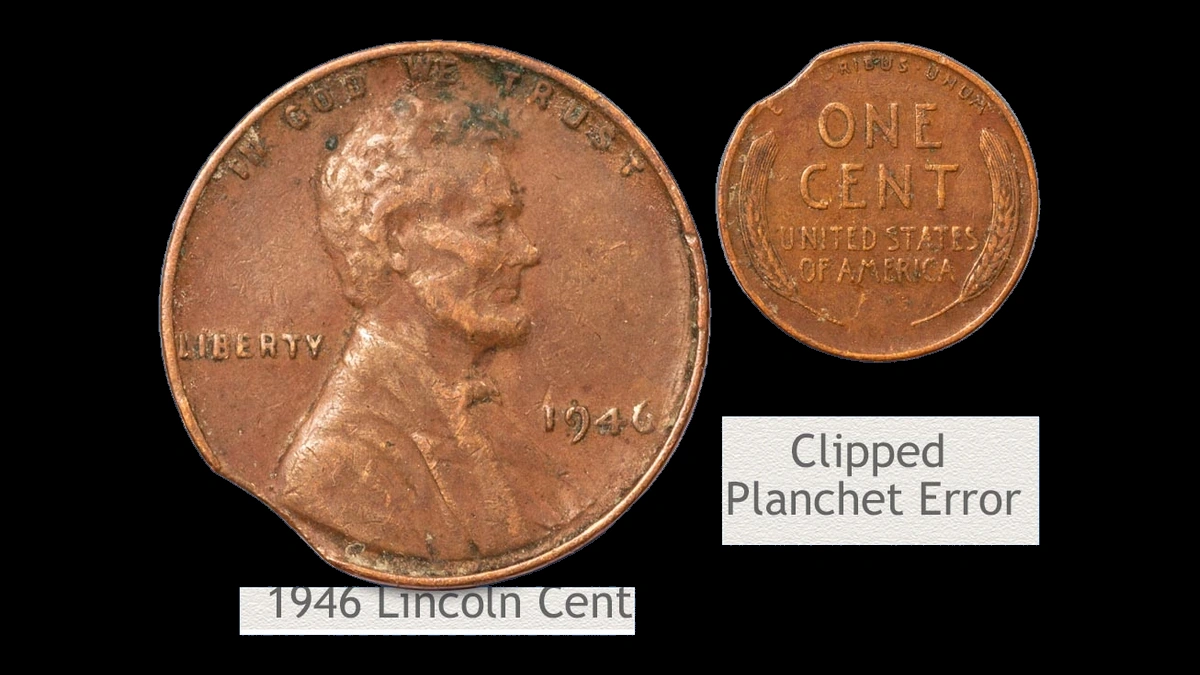
6. 1946 Penny A missing section interrupts the outline: Clipped Blank Error
A blank can reach the dies with part of its metal already absent. The rim and design then form around the original missing boundary.
The recorded 1946-S NGC MS66 Red coin has a clip near six o’clock. An older Philadelphia record separately describes a 5% curved clip.
How to Identify
With the date upright, the San Francisco example’s clip lies at the bottom of the outline. Its position should not be combined with the Philadelphia coin’s 5% figure.
Examine both ends of the gap for original rim formation rather than a cut through completed detail. File marks and fresh burrs can reveal later removal.
A weak opposite rim may support the diagnosis without proving it. The 5% description also does not supply the S specimen’s measured weight.
What It’s Worth
Genuine clips are estimated at $15–$350. Original boundary structure, size, and preservation determine the useful comparison.
A 1953-D curved clip weighing 2.68 grams sold for $51 in March 2022. Neither that weight nor its sale belongs to either of the 1946 coins.
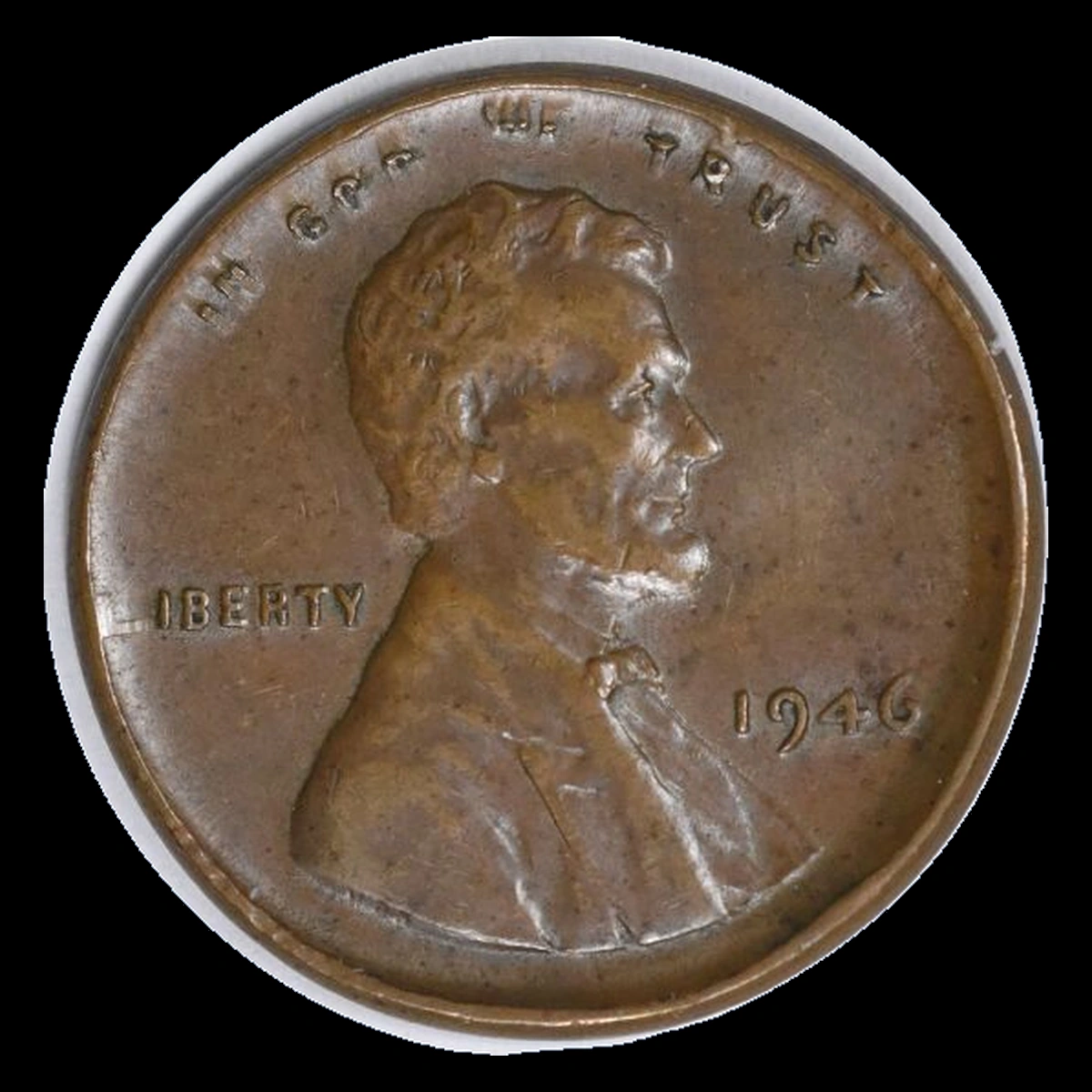
7. 1946 Penny A wider outline encloses the full design: Broadstrike Error
The collar controls the blank’s edge during striking. If it fails to contain the metal, the coin can spread outward while retaining all the intended design.
Philadelphia and San Francisco 1946 examples are recorded. One S coin has a PCGS description indicating unworn detail with cleaning, a later condition problem.
How to Identify
Follow the outer lettering on each face and establish completeness within the expanded border. An off-center strike instead loses intended design beyond the blank.
Check for an added ring or evidence of hammering that crushed finished details. Extra width from genuine striking does not require extra weight.
Examine surfaces under moving light and record cleaning separately. Its presence does not create the broadstrike, but remains relevant to condition.
What It’s Worth
Genuine 1946 broadstrikes are estimated at $25–$450. Original surfaces can make a stronger comparison than unworn detail on a cleaned coin.
The cleaned San Francisco example is recorded at $29 in February 2024. That result does not supply the Philadelphia specimen’s transaction history or remove the cleaning issue.
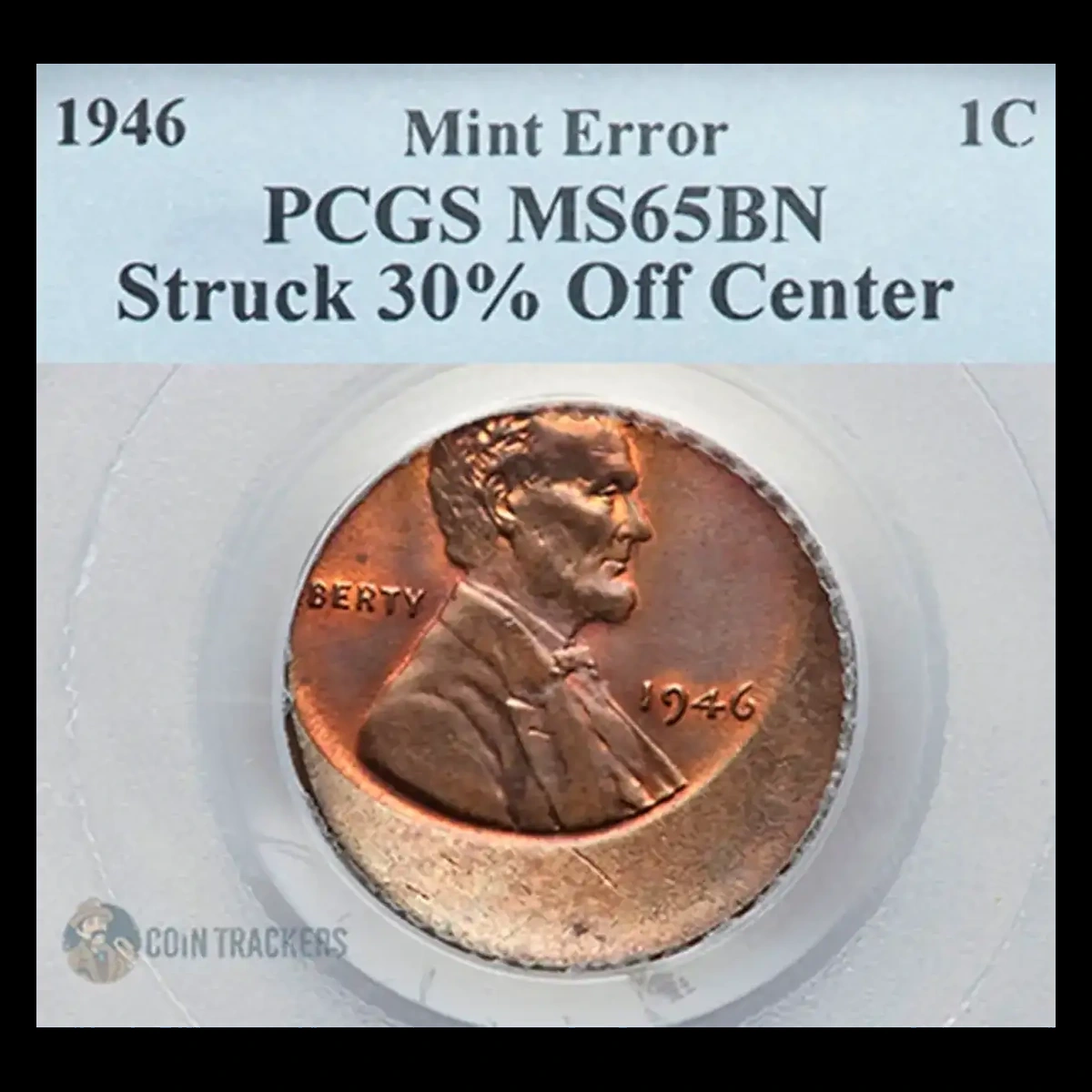
8. 1946 Penny A plain crescent sits beside missing design: Reported Off-Center Strike Error
A displaced blank receives only part of the dies’ designs, leaving an unstruck crescent. The blank can remain physically complete even though its image is incomplete.
The 1946 reports do not establish one mint, percentage, or direction for every example. A surviving readable date is needed to identify an individual coin as 1946.
How to Identify
Compare both faces and check whether their incomplete designs fit the same displaced blank. If only one face shifts while the other remains centered, consider die misalignment instead.
Inspect the unused surface for grinding and the edge for cuts. An undated Wheat cent cannot acquire a 1946 identity merely by resembling a reported example.
What It’s Worth
Genuine dated examples are estimated at $25–$800. Clear identity, original blank texture, and the visible shift support a useful comparison.
A 1950-D 35% example sold for $192 in October 2021, and a separate 65% example brought $264 in July 2022. Both graded MS63 Brown, but their percentages and sales remain different-year comparisons rather than facts about the general 1946 report.
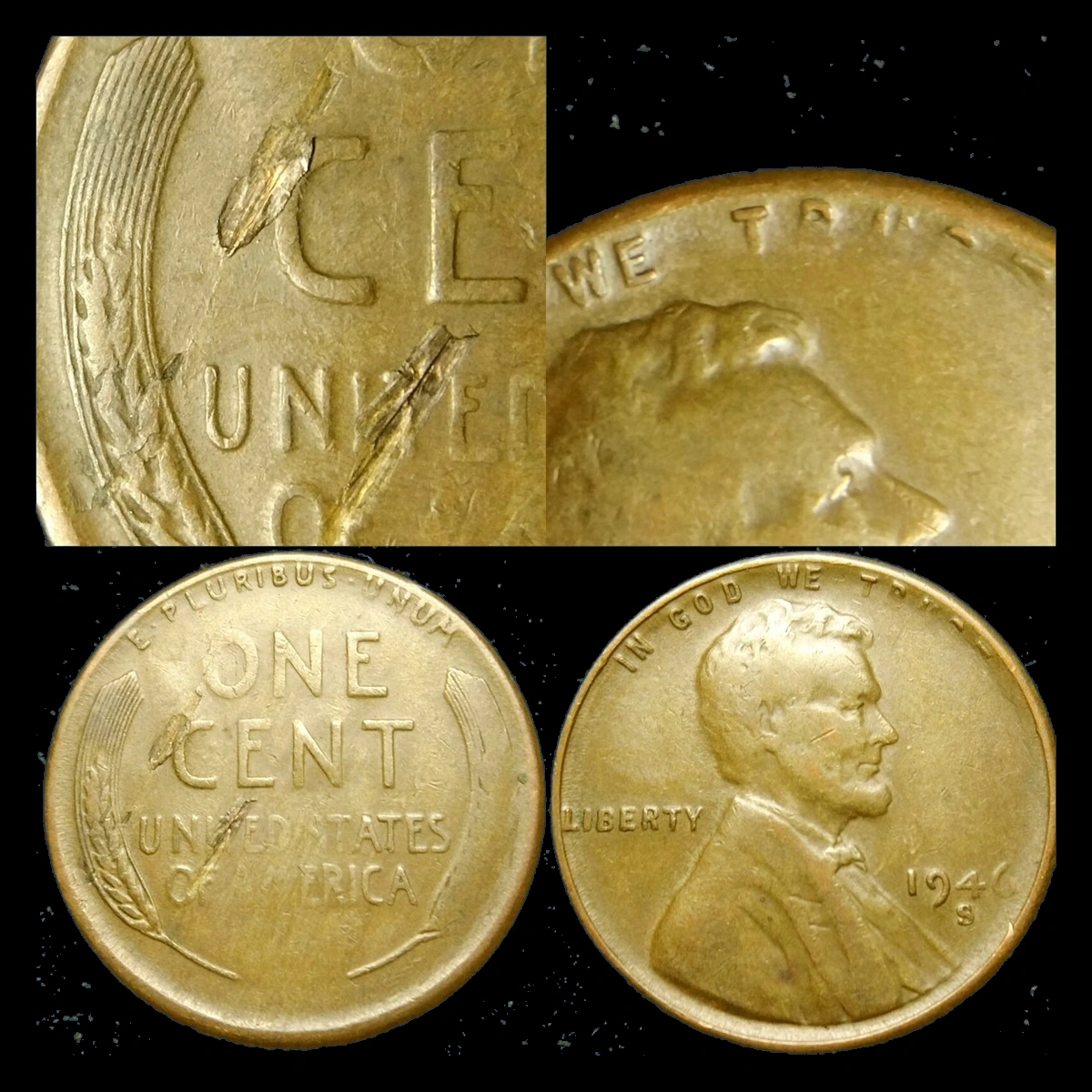
9. 1946 Penny A depression interrupts the design: Struck Through or Blank Indent Error
An overlapping blank can block a broad portion of a cent and press an indent into it. An older record describes this on the right side of a Philadelphia 1946 obverse.
A separate San Francisco record describes a reverse struck-through error without naming the obstructing material. Neither account establishes that an object remains attached.
How to Identify
For the Philadelphia example, compare the broad curved boundary with a blank overlap and inspect how design formed beside it. A later impact can crush completed lettering or push up a sharp lip.
For the S coin, assess the actual reverse interruption without borrowing the Philadelphia obverse position or object. Leave its material unnamed unless the specimen provides further evidence.
Anything apparently retained should remain untouched. Removing it would alter the evidence rather than clarify the original event.
What It’s Worth
Modest struck-through marks are estimated at $15–$200; substantial confirmed blank indents at $75–$1,000. These ranges cover different obstruction sizes and clarity.
A 1964 broadstrike with a 7% indent sold for $54 in March 2025. That later small combination does not give a sale price for either recorded 1946 coin.
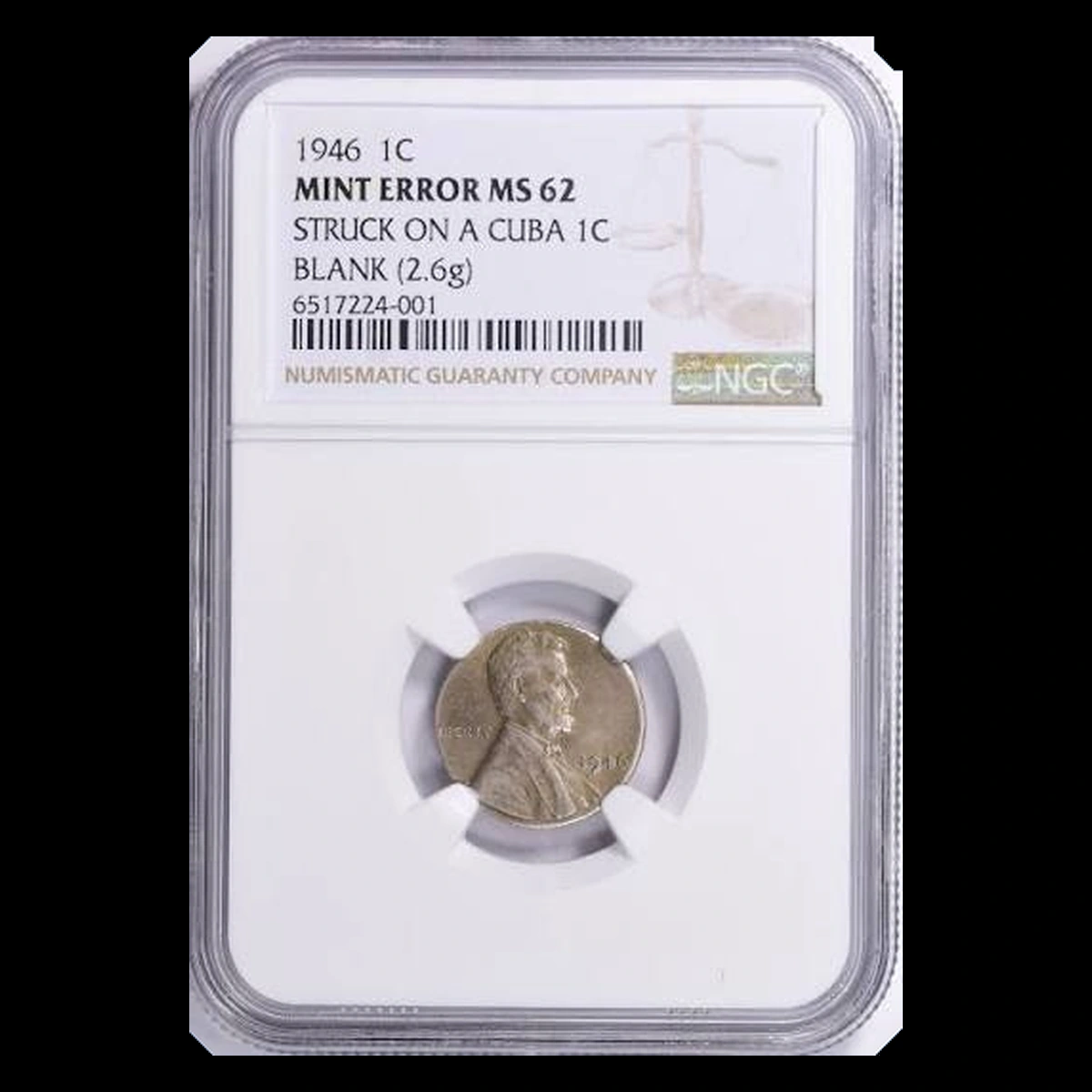
10. 1946 Penny A smaller silver blank carries Lincoln: Dime Planchet Error
A silver dime blank entering the cent press provides less room for the cent’s outer design. The documented 1946-D example weighs 2.53 grams and has an ANACS AU50 Details label noting damage.
The blank alloy for a normal dime of this period was 90% silver and 10% copper. A plated ordinary cent can mimic the pale color without sharing that material.
How to Identify
Compare the actual 2.53-gram record with the normal silver dime standard of 2.50 grams. Its starting diameter would be near 17.91 millimeters, though the cent strike can change the final outline.
Inspect the edge for a coating and have the alloy and original strike confirmed without damaging the coin. Keep the date, D, wear, and later damage visible in the documentation.
What It’s Worth
Authenticated 1946-D silver dime-planchet cents are estimated at $400–$6,000 across condition levels. A rare blank does not erase wear or damage.
The damaged AU50 Details example sold for $470 in January 2013. A different-year Philadelphia 1950 example graded MS64 brought $3,840 in May 2022.
The later unworn coin supports a broader comparison, rather than a higher assigned sale price for the damaged 1946 specimen.
Conclusion
An unusual 1946 S can mean repeated punching, inversion, or remnants of another letter, so inspect its structure before choosing a variety name. The same discipline separates an original folded layer from damage and a broadstrike from a displaced blank.
Keep each coin’s mint, measurements, and condition together when using price evidence. Cleaning and damage remain part of an error coin’s identity, even when its manufacturing mistake is genuine.