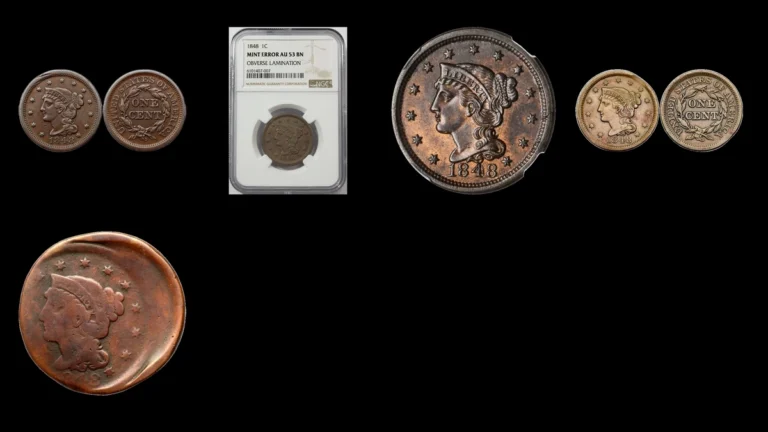
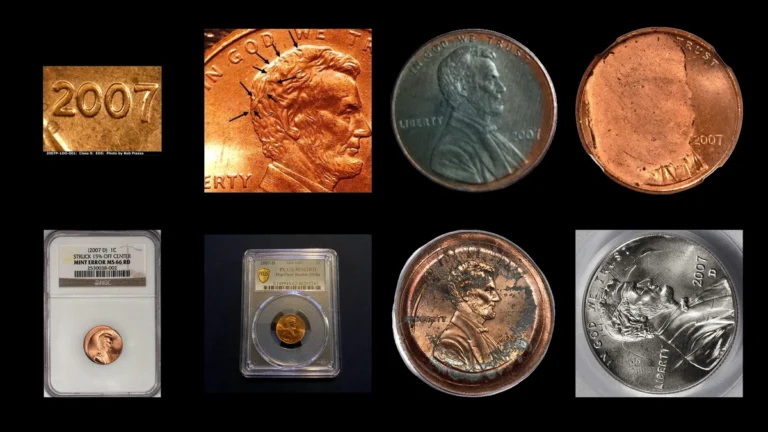
Rare 2019 Penny Errors (List & Pictures)
Collector finishes matter when comparing 2019 penny errors: a normal W mintmark identifies West Point, while an unwanted impression is a separate feature. Estimated values across nine groups run from $2–$2,000.
A 1981-D cent on a dime blank brought $372 in September 2025, the highest supplied completed comparison, from a different year. Identify the coin’s finish, then compare surface interruptions, added detail, and changes to its outline.
| Inspection clue | Category | Estimated value |
|---|---|---|
| Impression or blocked detail | Struck-through | $5–$800, depending on finish |
| Generally shallow hair or shield detail | Weak strike | $5–$100 |
| Additional ear or letter contours | Doubled designs | $5–$200 |
| Bubble or split copper coating | Plating defect | $2–$250 |
| Raised ridge or lump | Die cracks, breaks, or cuds | $2–$400 |
| Letter crowded against the rim | Possible die misalignment | $2–$50 if confirmed |
| Extra width, complete designs | Broadstrike | $20–$350 |
| Plain crescent, incomplete designs | Off-center strike | $15–$500 |
| Different metal and measurements | Wrong blank | $300–$2,000 if authenticated |
A normal copper-plated zinc cent weighs 2.50 g, measures 19.05 mm, and has a smooth edge. Measure loose accessible coins and preserve sealed collector examples in their holders, using their records when available.
1. 2019 Penny An impression interrupting the finish: Struck-Through Error
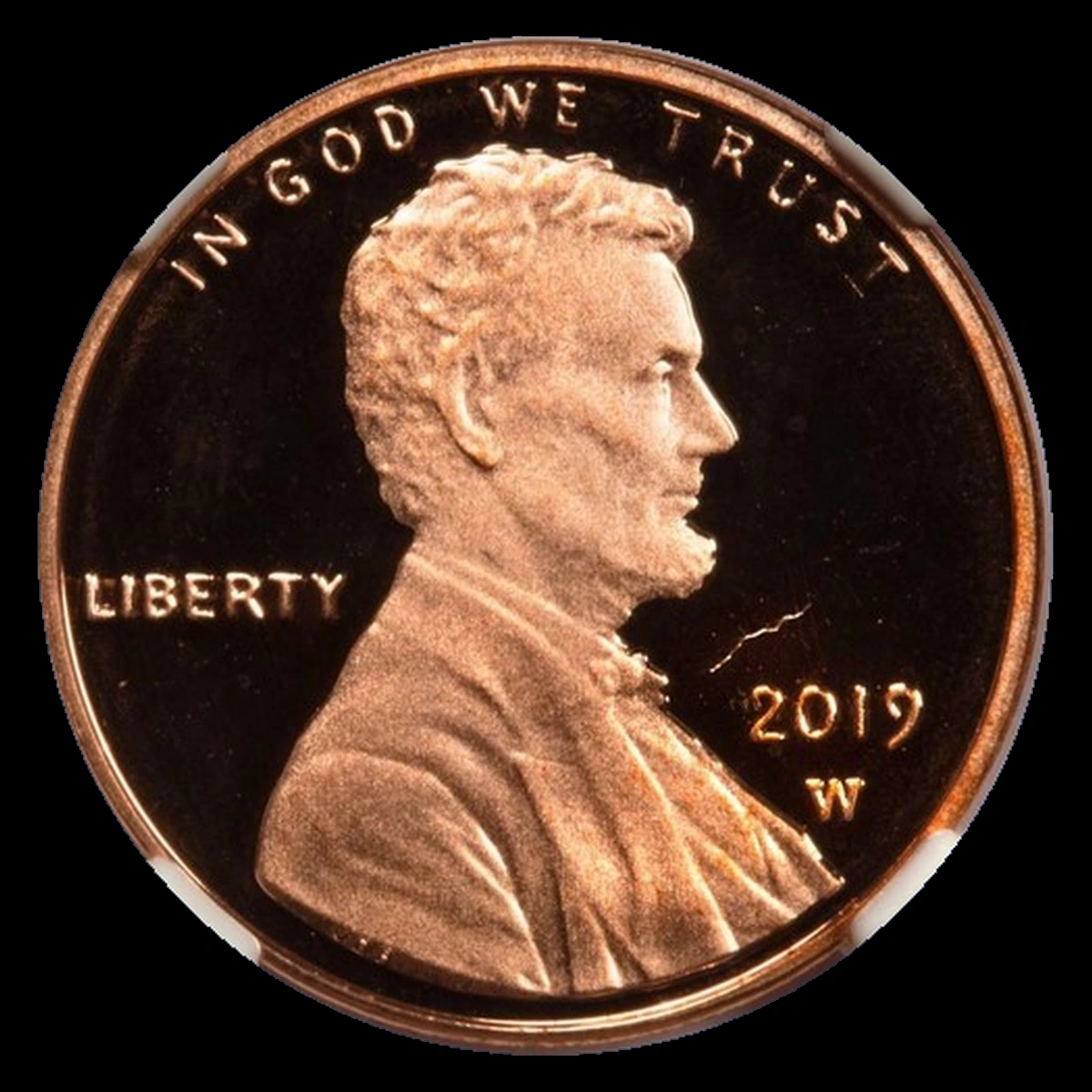
Determine whether the coin is an ordinary cent, a W Proof, or a W Reverse Proof before comparing an unusual patch. Proofs normally contrast mirrorlike backgrounds with frosted designs, while Reverse Proofs reverse that contrast.
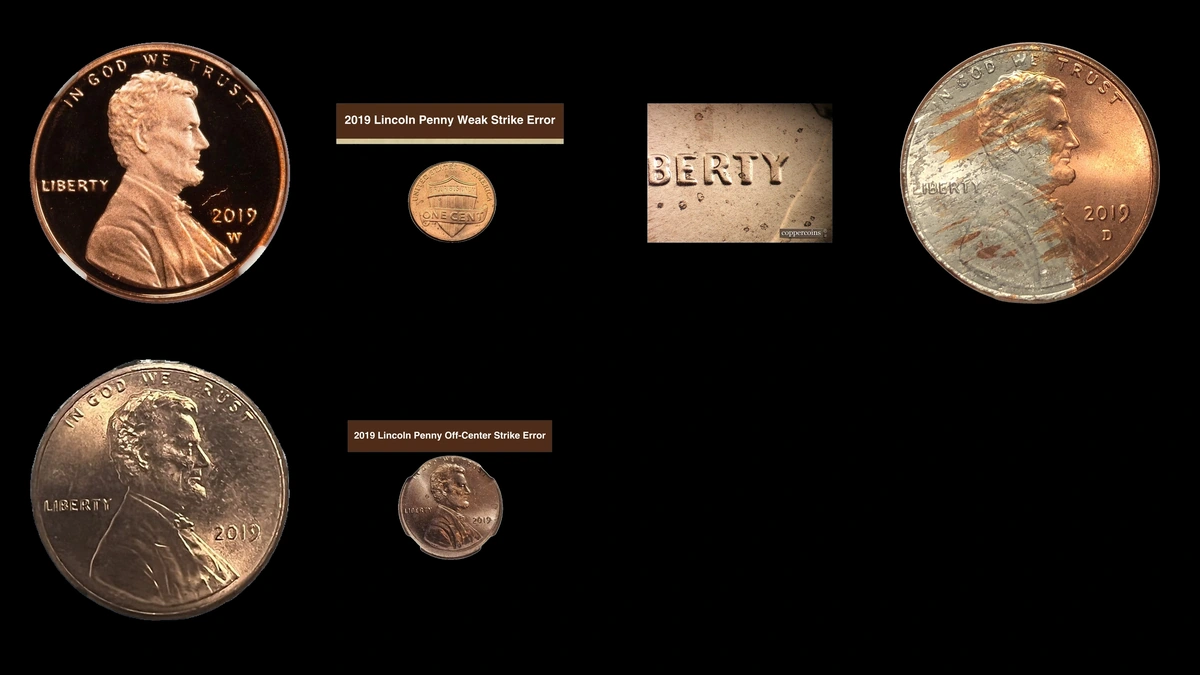
Material caught during striking can interrupt any of these surfaces. Ordinary 2019 reports include weak BU in E PLURIBUS UNUM and separate portrait or date weaknesses.
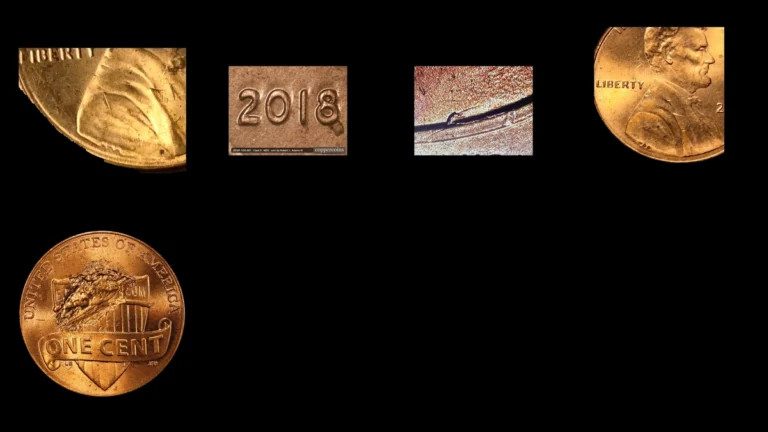
A W Proof struck through threads shows impressions beside Lincoln’s face and in the upper background. A separate W Reverse Proof has an obverse strike-through that should retain its own description.
How to Identify
Inspect where the impression or weak area meets normal design, looking for an interruption formed during the strike. Later scratches cut the finished surface instead.
The published W Proof example provides the thread-mark comparison. Do not assign those threads, locations, or finish to the separate Reverse Proof.
For ordinary cents, compare the specified weak lettering with nearby sharp detail. A W mintmark alone proves neither an obstruction nor an error.
What It’s Worth
$5–$200 is estimated for ordinary cents with confirmed blocked detail, while comparable W Proof and Reverse Proof errors are estimated at $100–$800. Match finish, condition, and impression strength before using either range.
No completed prices are supplied for the two W specimens. A 2021-D grease-struck cent sold for $84 in September 2025, providing different-year context for the ordinary-coin category.
2. 2019 Penny Shallow hair and shield detail: Weak Strike Error
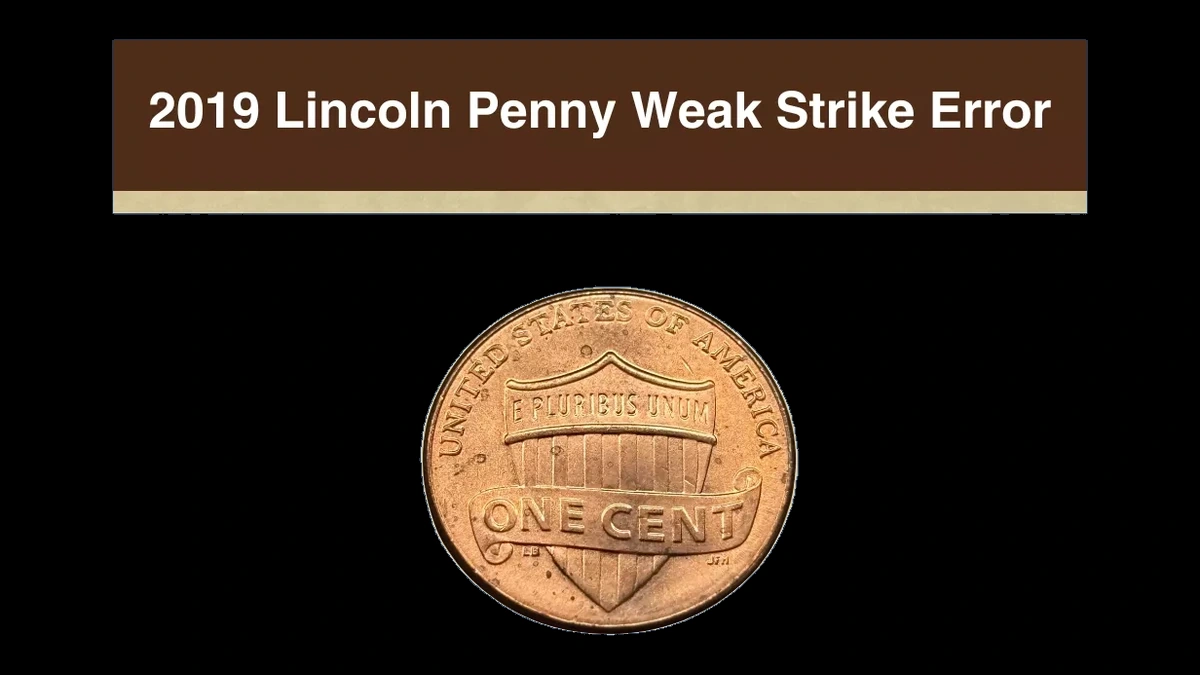
If several areas look soft, compare the whole design rather than seeking one obstruction outline. Pressure, worn dies, or blocking material can each contribute to weak detail.
The 2019 report does not establish the same cause for every example. It also does not show that a weak coin was deliberately made while testing a press.
How to Identify
Compare the hair with Lincoln’s cheek and other exposed high points. Wear tends to affect those high areas, whereas shallow original detail needs evidence of preserved surfaces.
Inspect the shield and look for grinding or other metal disturbance. Local grease blockage may better explain a confined weak patch than a general weak-strike label.
What It’s Worth
$5–$100 is estimated for clearly identified weak strikes, with slight ordinary softness contributing very little. Distinctive weakness on original surfaces is easier to demonstrate.
This is a comparison range for modern striking problems. It does not document the sale of a particular 2019 test strike or include worn coins merely because their details are faint.
3. 2019 Penny A second earlobe or extra design contour: Doubled Designs Error
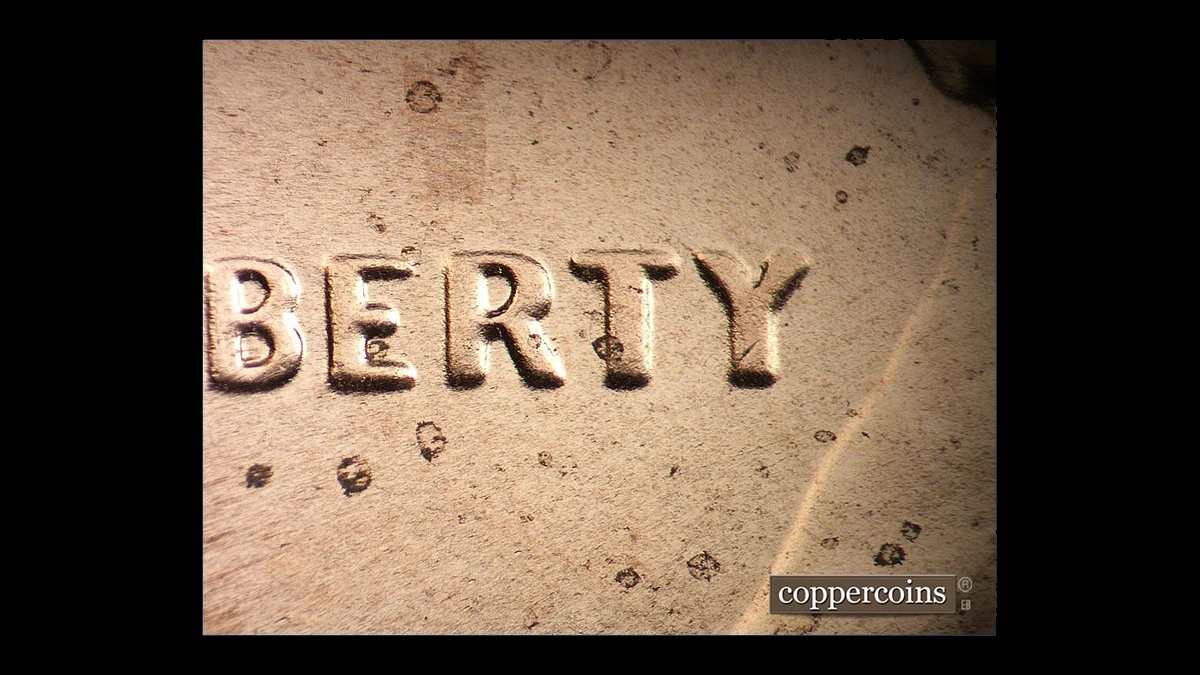
A reported Denver variety places an additional rounded outline just below Lincoln’s earlobe. Separate Philadelphia entries and reverse reports require different matches.
A doubled die carries repeated detail before striking and can reproduce that pattern on multiple coins. Reported reverse areas include shield stripes, ONE CENT, and E PLURIBUS UNUM, without making every area part of one variety.
How to Identify
For the doubled-ear report, verify the D mintmark and compare the shape immediately below the ear with the correct Lincoln variety catalog entry. A Philadelphia coin cannot inherit the Denver ear attribution simply because it has an extra mark nearby.
Compare reverse details independently using a matching mint and pattern. Flat shelves from strike movement and splits in the copper coating can outline letters without duplicating a die’s design.
What It’s Worth
$5–$40 is estimated for minor identified doubling, with approximately $40–$200 for stronger, clearly matched examples. These modest modern-variety estimates are not one auction result applicable to all 2019 doubling.
An obvious ear contour can display more readily than a slight change in a reverse letter. Value the complete specimen when features occur on both sides rather than adding two whole-coin prices.
4. 2019 Penny A copper bubble or a split exposing zinc: Plating Defects Error
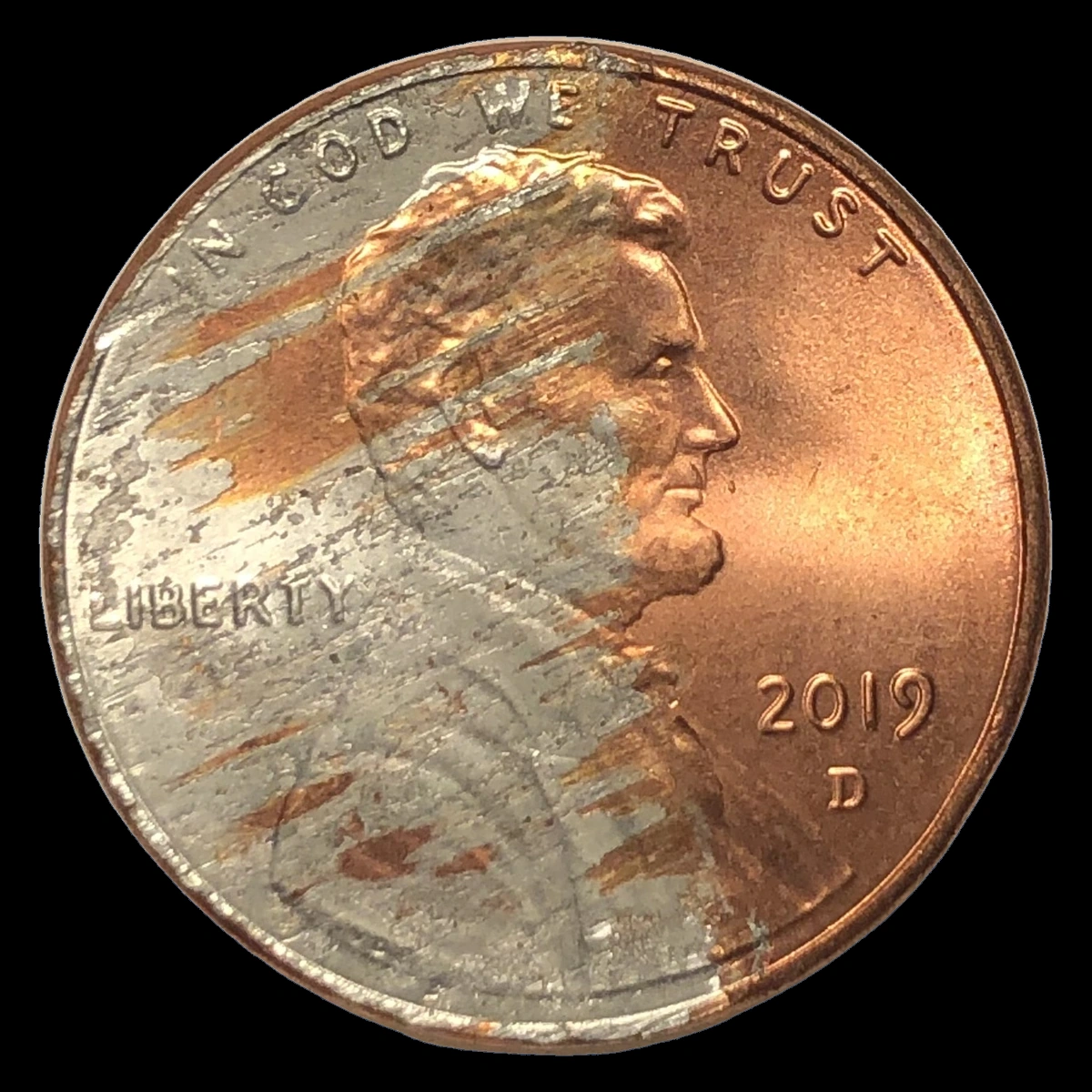
Inspect the thin coating separately from the design it carries. Weak bonding can let copper rise into a blister, while stretching during striking can split it near letters or an edge.
Both appearances are reported for 2019 and need not have the same cause. Later heat, corrosion, or chemicals can also disturb the copper covering.
How to Identify
Use low side lighting to establish whether the coating lifts or separates along a narrow opening. Examine its boundary without pressing a bubble or lifting a flap.
Check both faces and the edge for corrosion, scraping, and added treatment. Exposed gray zinc identifies the underlying metal but does not establish when the copper was lost.
What It’s Worth
$2–$50 is estimated for small confirmed original plating defects, with roughly $50–$250 for larger, clearer examples. Narrow splits around lettering can be common and add little.
The larger estimate depends on both size and a convincing production origin. Heat damage and corrosion after minting do not qualify merely because they expose a large patch.
5. 2019 Penny A line across the head or a raised reverse patch: Die Cracks, Interior Breaks, and Cuds Error
Raised metal can also come from openings in a damaged stamping tool. A crack leaves a ridge, while a missing die fragment can produce a broader lump.
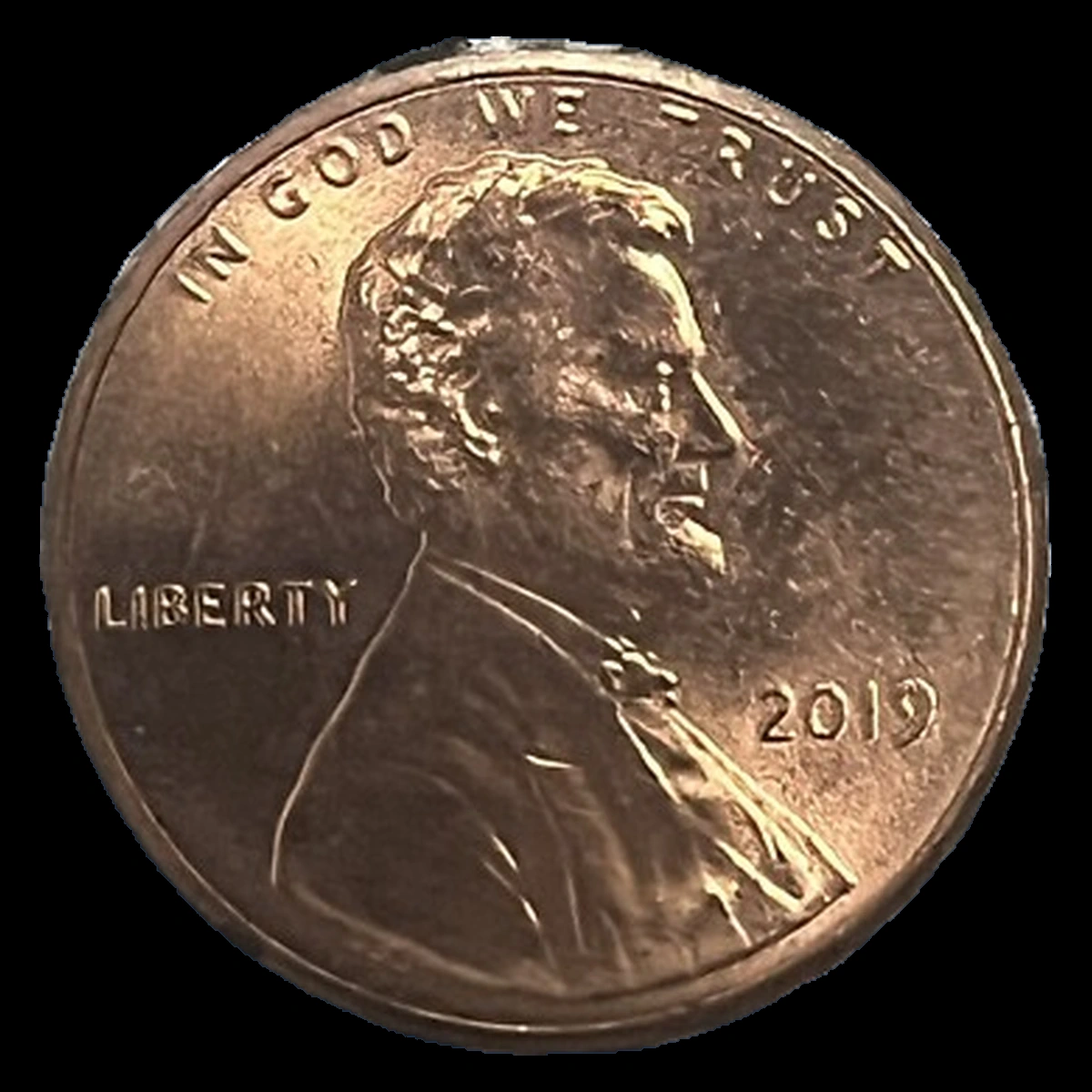
Reports include a rim-to-head line sometimes nicknamed Assassination and an interior break above T in ONE CENT. A cud is a separate form whose raised patch reaches the rim.
How to Identify
Follow the feature with angled light to establish that it rises above the coin. A scratch cuts down, while dirt or a plating bubble can sit above the surface for other reasons.
For the reported interior break, inspect above the T rather than assuming a rim connection. A cud candidate needs its connection traced to the edge before receiving that name.
What It’s Worth
$2–$50 is estimated for small cracks or interior bumps, while larger clear rim breaks can fit approximately $50–$400. The head-line nickname supplies no separate premium.
A 2021-D retained-cud cent sold for $186 in September 2025. Its broken die section remained partly in place, so that comparison differs from many 2019 cracks and missing-piece breaks.
6. 2019 Penny L crowded against the border: Letter Near the Rim and Die Misalignment Error
A close gap between L and the rim does not establish a valuable error. Genuine die misalignment involves an entire design shifting sideways while the opposite face can remain centered.
Normal border variation, worn tools, or a later impact can also crowd a letter. AMERICA on the reverse needs to be assessed within that face’s own centering.
How to Identify
Photograph both complete faces straight on and trace the border around each. A tight crop of L removes the context needed to decide whether the whole design shifted.
Look for impact marks that moved rim metal inward beside the letter. Consistent displacement across one face, contrasted with a centered other face, is stronger evidence than letter contact alone.
What It’s Worth
$2–$50 is estimated for confirmed visible one-sided misalignment. A minor shift belongs toward the lower end.
The range does not price every near-rim L as an error. Ordinary spacing or an inward-pushed rim remains outside that comparison.
7. 2019 Penny A larger disc still holding all the design: Broadstrike Error
Check whether the outer words remain complete inside a visibly expanded outline. A broadstrike occurs when the collar, the ring controlling outward flow, does not restrain the blank normally.
The expansion can be uneven. The supplied mention of 21 mm is not a required measurement for every 2019 broadstrike.
How to Identify
Measure in several directions and inspect the outer lettering on both faces. Complete original designs help distinguish broadstriking from an off-center strike that loses design beyond the blank.
Look for crushed high points or hammering that could explain later enlargement. Neither perfect symmetry nor a completely rimless appearance is required for a genuine broadstrike.
What It’s Worth
$20–$350 is the estimate from modest expansion to stronger, attractive broadstrikes. The original detail should support the explanation for the wider outline.
No recorded sale is supplied for a 2019 specimen measured at 21 mm. The actual coin’s dimensions and condition must guide the comparison.
8. 2019 Penny A large plain crescent beside incomplete designs: Off-Center Strike Error
The blank can be intact while missing much of its intended design. When it is displaced between the dies, only the area beneath them receives the strike.
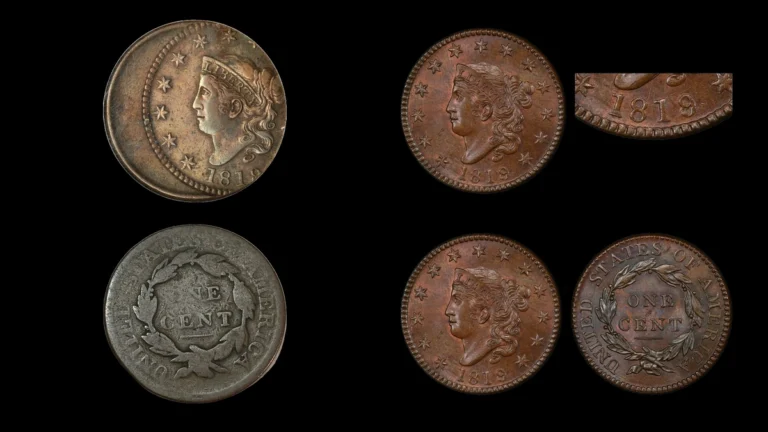
A 2019 example is reported as roughly half off center. That report does not establish a fixed direction or degree for other coins.
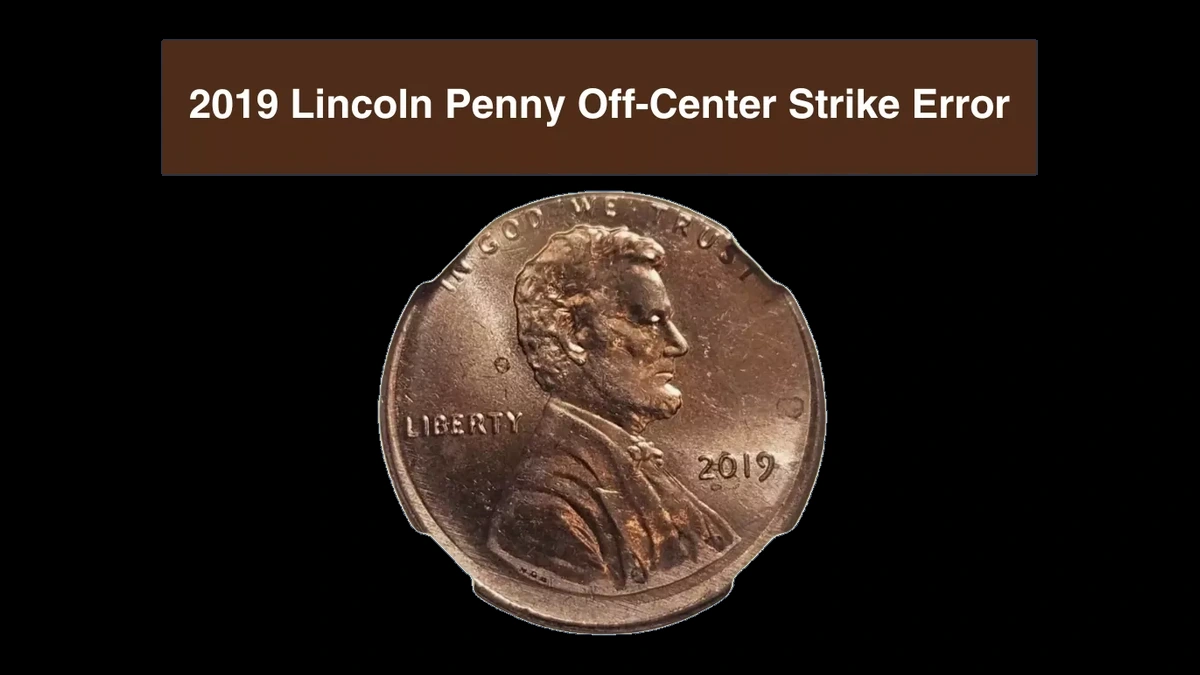
How to Identify
Keep the full outline visible and locate the surviving date and any mintmark. The unstamped crescent contains metal, unlike a clipped section where metal is absent.
Compare the lost design on both faces to confirm one misplaced blank explains them. Grinding at the boundary or a centered reverse with only the front shifted calls for a different diagnosis.
What It’s Worth
$15–$100 is estimated for modest genuine offsets, with roughly $100–$500 for stronger examples retaining readable dates. Surface condition and clear identification affect appeal alongside the blank area’s size.
A 2006 cent struck four percent off center brought $39 in March 2025. That smaller different-year error does not establish the price of the roughly half-offset 2019 report.
9. 2019 Penny Metal and measurements suggesting another coin: Wrong-Blank Claims Error
A wrong-planchet error carries the cent design on a prepared disc intended for another coin. If the blank is smaller, the dies do not shrink the design to fit it.
The supplied 2019 category requires an identified specimen before naming the blank. A gray surface can simply expose a normal cent’s zinc, and low weight can result from corrosion or removal of metal.
How to Identify
Record weight and dimensions before selecting a proposed denomination. Examine original design coverage alongside the metal structure and any signs of filing or chemical attack.
An unused dime blank does not arrive with the grooves created in a finished dime strike, so grooves are not required evidence. A professional nondestructive metal examination can help establish whether the proposed blank fits the whole coin.
What It’s Worth
$300–$2,000 is the estimate after a different blank is authenticated. The actual metal, condition, and surviving design determine the appropriate comparison.
A 1981-D cent on a clad dime blank sold for $372 in September 2025. That older coin provides a transaction reference, not proof that a particular gray 2019 cent used a dime blank.
Conclusion
A W collector coin, a raised interior break, and a wide border each need a different starting comparison. Identify the intended finish and then isolate the physical change, keeping reported locations and measurements attached to their actual examples.
The $2–$2,000 estimates assume the relevant feature is established. Full-face photographs, preserved surfaces, and appropriate measurements make that identification more reliable than a close-up of one unusual-looking detail.