Rare 1842 Penny Errors (List & Pictures)
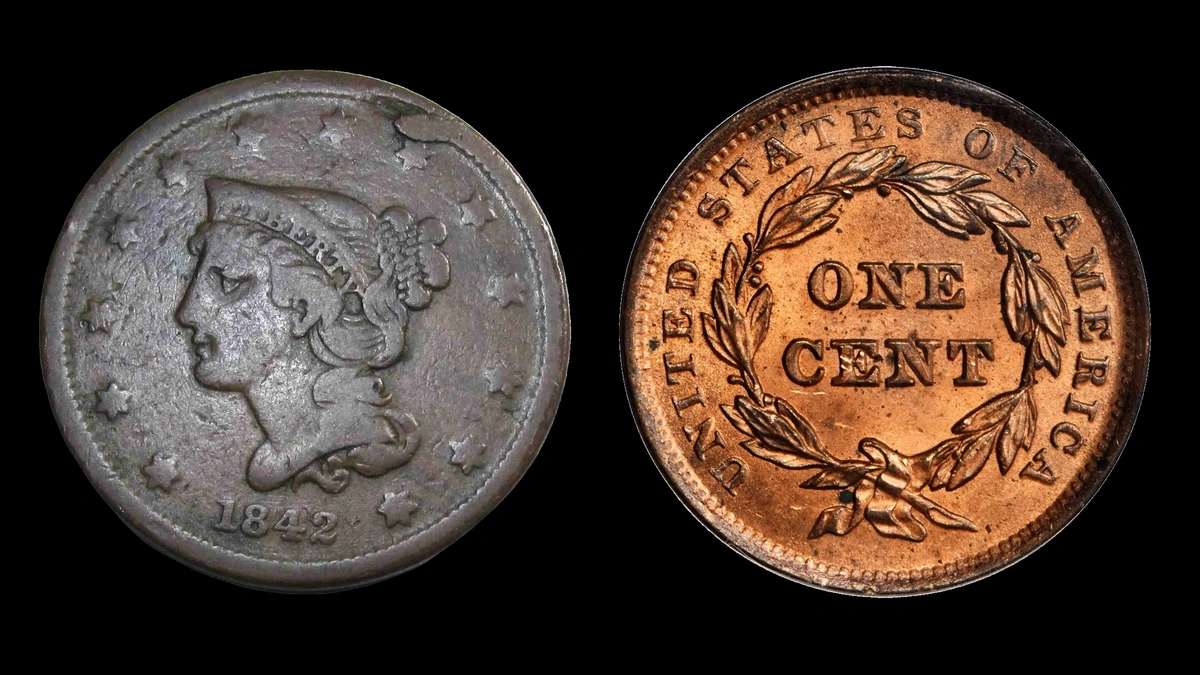
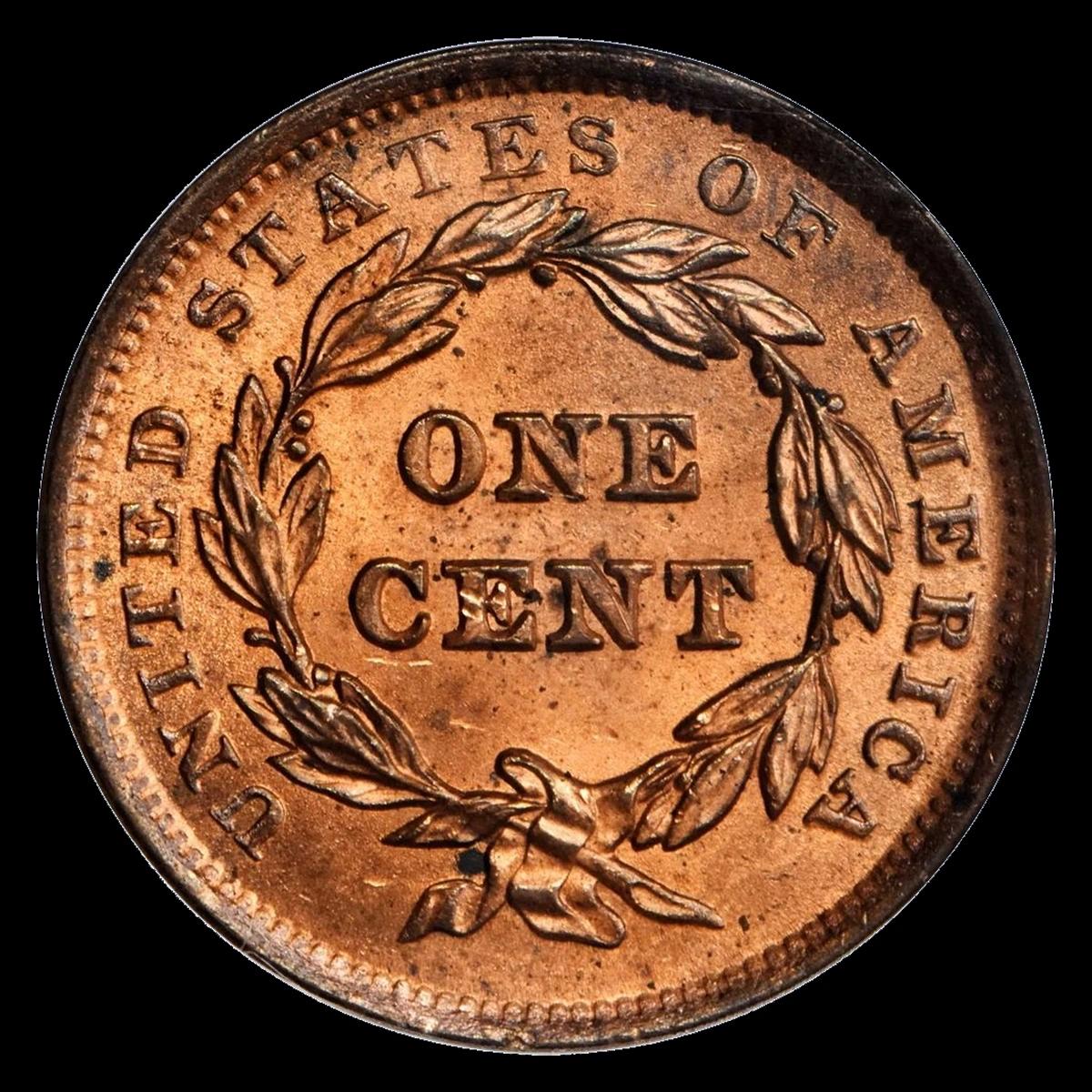
A red 1842 cent with slight reverse misalignment sold for $7,800 in August 2020. Its preservation and original color explain much of that whole-coin price.
Estimated values for 1842 Braided Hair cent errors run from $20 to $10,000. Begin by deciding whether the metal is raised, separating, missing, or simply carrying a shifted design; a small uneven border alone does not establish a major striking error.
| Visible clue | Possible category | Estimated value |
|---|---|---|
| Raised line or rim-connected patch | Reported die crack or cud | $20–$800 |
| Separating layer | Lamination | $30–$2,000 |
| Straight missing boundary | Clip | $40–$800 |
| Complete reverse slightly shifted | Misaligned reverse die | $20–$400 circulated; $4,000–$10,000 for comparable red preservation |
| Incomplete design beside blank metal | Off-center strike | $150–$1,500 |
This is a large cent: its normal weight is 10.89 grams and its diameter 27.5 millimeters, with a plain edge. Use those standards rather than the much smaller Indian Head or Lincoln cent specifications.
1. 1842 Penny Metal Rises above the Surface: Reported Die Cracks and Cuds Error
A crack in the die can leave a raised ridge where copper enters the opening. A larger missing edge section can create a cud, a raised patch connected to the coin’s rim.
How to Identify
Move the light across the feature to distinguish a raised line from a scratched groove. A scratch can have pushed-up sides while its center still cuts into the surface.
For a patch, inspect the edge and surrounding metal for folding, solder, corrosion, or impact damage. The general 1842 report supplies no fixed route or position, so a specific claim needs a documented same-year match.
What It’s Worth
An authenticated 1842 example is estimated at $20–$800. Small cracks may add little, while a clear substantial rim break can be more appealing.
An 1864 copper-nickel cent with a retained rim break and broadstrike brought $646.25 in 2016. That later small-cent combination is context, not an 1842 crack or cud sale.
2. 1842 Penny A Copper Layer Separates: Lamination and Retained Flakes Error
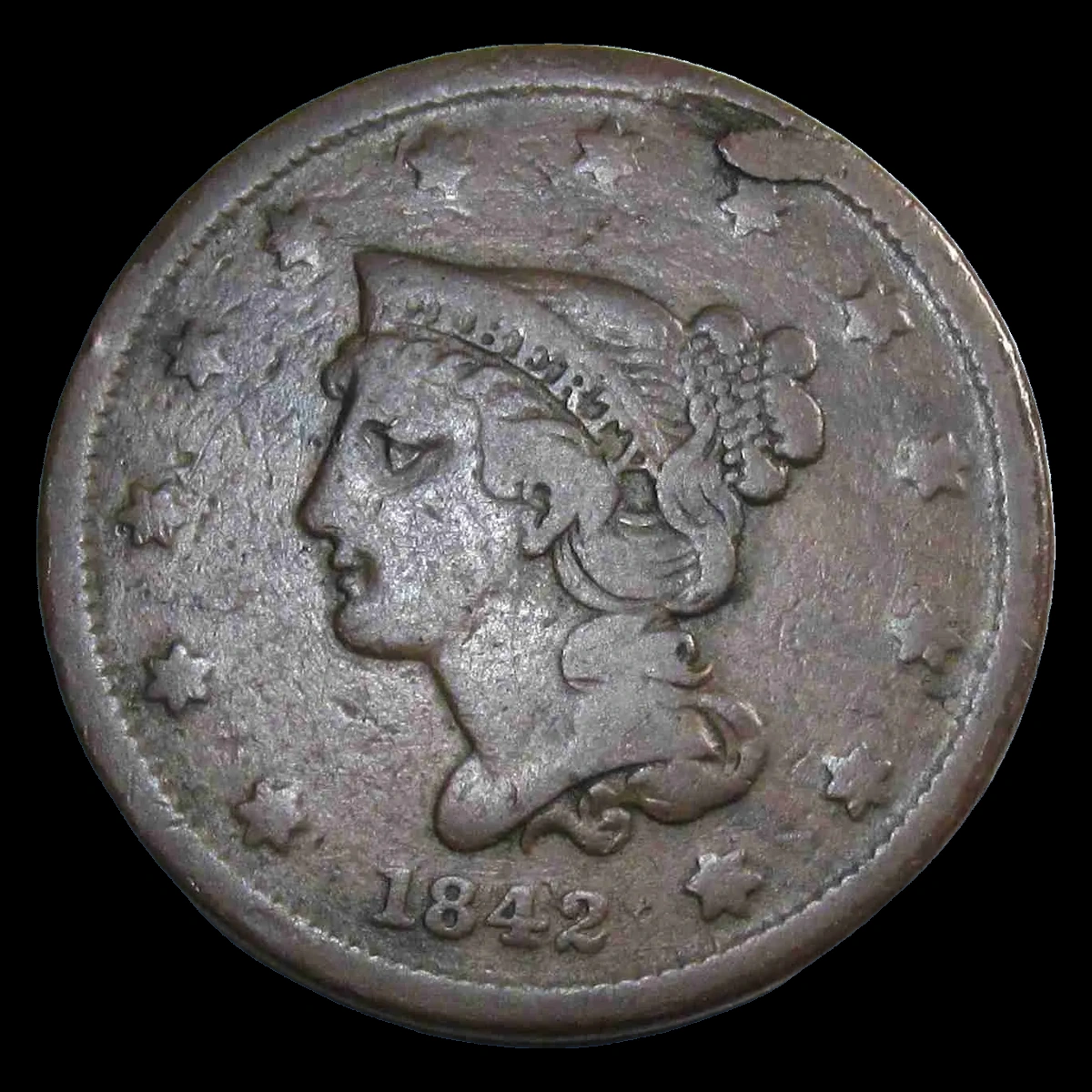
A weakness inside the copper can release a thin layer while leaving it partly attached. The recorded Large Date N-7 flaw lies among the border teeth between the second and third stars.
How to Identify
Count the stars from the lower-left date area to locate the N-7 defect. Naturally soft hair detail elsewhere on some N-7 coins is not evidence of a missing copper layer.
A separate N-9 example retains a layer above ONE on the reverse. Follow that layer’s existing boundary under low light without lifting it, and do not combine the two specimens’ locations.
What It’s Worth
The estimated whole-coin range is $30–$2,000 across worn and better-preserved laminations. Date variety, surface quality, and the stability of the remaining layer affect the result.
PCGS records a $750 result in September 2021 for the Large Date N-7 with unworn detail and a noted planchet flaw. No separate transaction is supplied for the reverse N-9 flake.
3. 1842 Penny A Straight Section Is Missing: Clipped Blank Error
The documented ANACS VF30 Details coin has a straight clip and a recorded weight of 10.63 grams. Its missing metal predates the strike rather than representing a section deliberately cut from a finished cent.
How to Identify
Inspect both ends of the straight boundary and how the rim and design approach them. File lines, a sharp fresh lip, or cuts through completed detail suggest later removal.
Compare the actual weight with the normal 10.89 grams and measure an intact span. The 10.63-gram figure belongs to the documented coin, and a low reading alone cannot establish an original clip.
What It’s Worth
Genuine straight clips are estimated at $40–$800. Missing area, remaining condition, and the recorded specimen’s Details qualification belong in the assessment.
A 1939 small-cent clip graded MS64 Brown sold for $180 in January 2023. Its different size, date, and unworn condition make it a broad error comparison rather than a direct price for the large cent.
4. 1842 Penny A Complete Reverse Sits Slightly Right: Misaligned Die Error
The documented Large Date cent has its reverse shifted gently toward three o’clock, with complete and sharply formed central detail. One die was displaced relative to the coin rather than the whole blank missing a large part of the strike.
How to Identify
Compare the two faces at the same scale, concentrating on reverse border spacing near three o’clock. The front should not show a matching loss of design for this described one-die shift.
Inspect the edge for filing or pushed metal that could make a border uneven. The coin’s red color indicates preservation; it does not prove the cause or severity of the displacement.
What It’s Worth
Ordinary circulated cents with a slight shift are estimated at $20–$400, while an 1842 cent with comparable exceptional red preservation may fit $4,000–$10,000. These are whole-coin condition comparisons, not a thousand-dollar premium for a tiny misalignment.
The PCGS MS64 Red example sold for $7,800 in August 2020. Its original color and strong preservation chiefly explain that result.
5. 1842 Penny The Design Runs off One Side: Off-Center Strike Error
A misplaced blank can receive an incomplete image with an untouched crescent opposite it. The supplied 1842 reports describe modest shifts of about 5%–10%.
How to Identify
Read the surviving 1842 date, then locate where outer lettering or border teeth leave the available disc. A matching portrait on an undated large cent cannot establish this year by itself.
Compare both faces and inspect the unused area for grinding or flattening. Complete design inside an uneven border, or displacement confined to one face, needs consideration of another cause.
What It’s Worth
Readable-date examples with modest displacement are estimated at $150–$1,500. Wear, surface problems, and how clearly design is missing influence the total.
An 1854 large cent struck about 50% off center and graded ANACS VF20 sold for $1,527.50 in September 2016. Its much larger shift should not be priced as equivalent to a lightly off-center 1842 report.
Conclusion
The distinction between missing metal and shifted design is especially useful on these large cents. Examine the complete outline and both faces before assigning a minor uneven border to a dramatic error category.
The $20–$10,000 estimates include exceptional red preservation as well as mint-made defects. Match the date style, variety, wear, and surface quality, and preserve any attached copper layer while comparing the evidence.