Rare 1899 Penny Errors (List & Pictures)
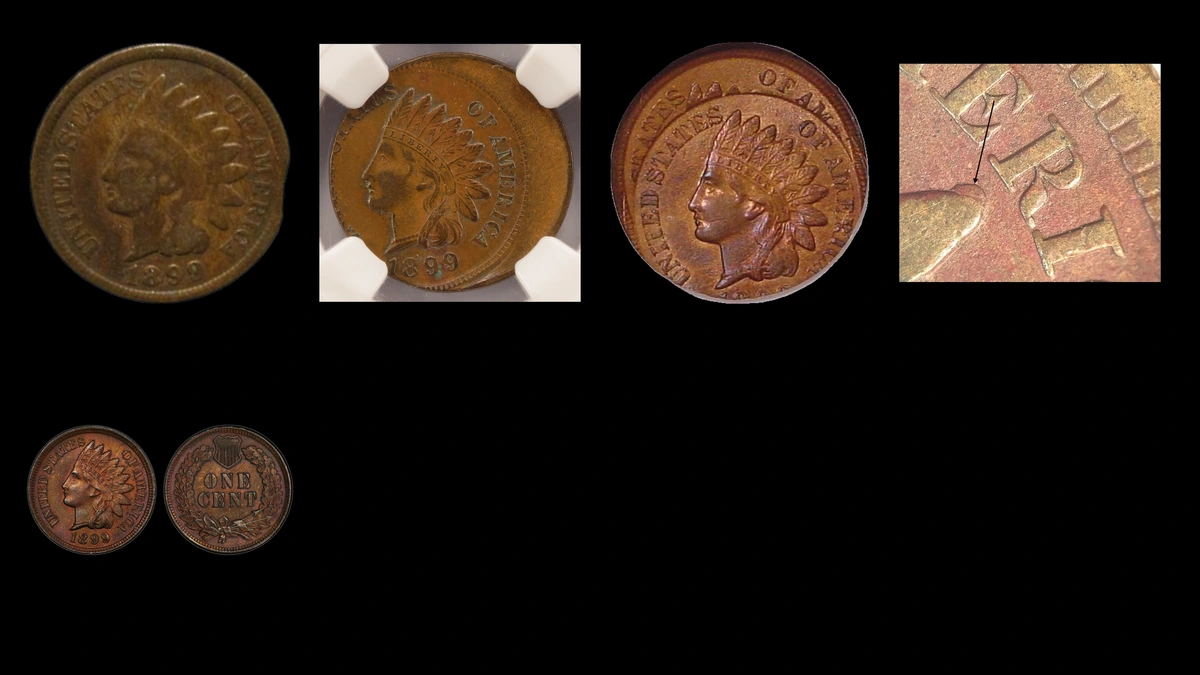
The highest supplied comparison for 1899 penny errors is a different-year coin: a 1909 cent struck over a 1906 dime sold for $37,375 in September 2006. An 1899 double strike itself brought $632.50 in July 2007.
Estimated whole-coin values span $5–$50,000. Begin with metal and large design changes, then inspect alignment, raised marks, and date fragments.
A normal bronze cent weighs 3.11 grams and measures 19.05 mm, with a plain edge. Record accessible measurements once without opening certified holders.
1. 1899 Penny A Cent Design Covers Traces of a Dime: Double Denomination Error
The reported 1899 piece received its cent design over an already struck 1899 Barber dime. Its modern record gives an NGC AU53 grade, indicating light wear.
Two denominations therefore share one piece of metal. This differs from a cent struck on an unused dime blank because faint earlier dime details should remain beneath the cent impression.
How to Identify
Identify specific Barber dime fragments on photographs of both faces before relying on silver color or small size. Plating, random scratches, or a joined edge cannot supply the earlier design.
A normal 1899 dime is 2.50 grams, about 17.9 mm, and 90% silver; those are comparison standards, not measured specifications assigned to this error. The later strike can change width and edge detail, so specialist examination and nondestructive metal testing should accompany the design match.
What It’s Worth
The estimated range is $10,000–$50,000 for an authenticated example. The recorded 1899 history identifies a struck Barber dime beneath the cent without supplying a sale used here.
An unworn 1909 cent struck over a 1906 dime sold for $37,375 in September 2006. That different-year comparison is not a transaction for the 1899 AU53 piece.
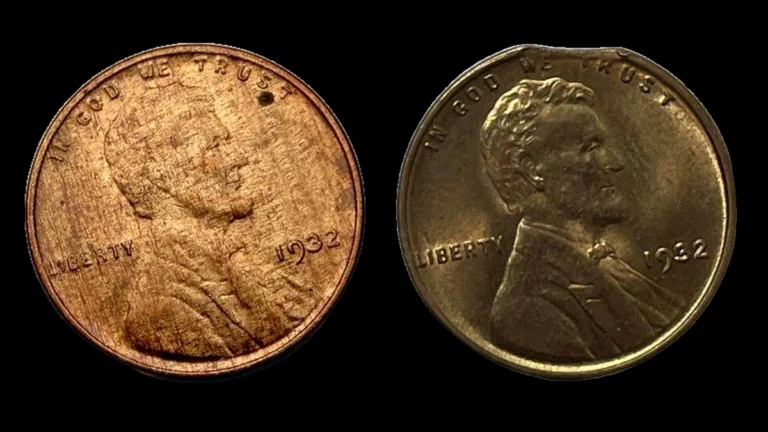
2. 1899 Penny A Section Is Missing from the Rim: Clipped Blank Error
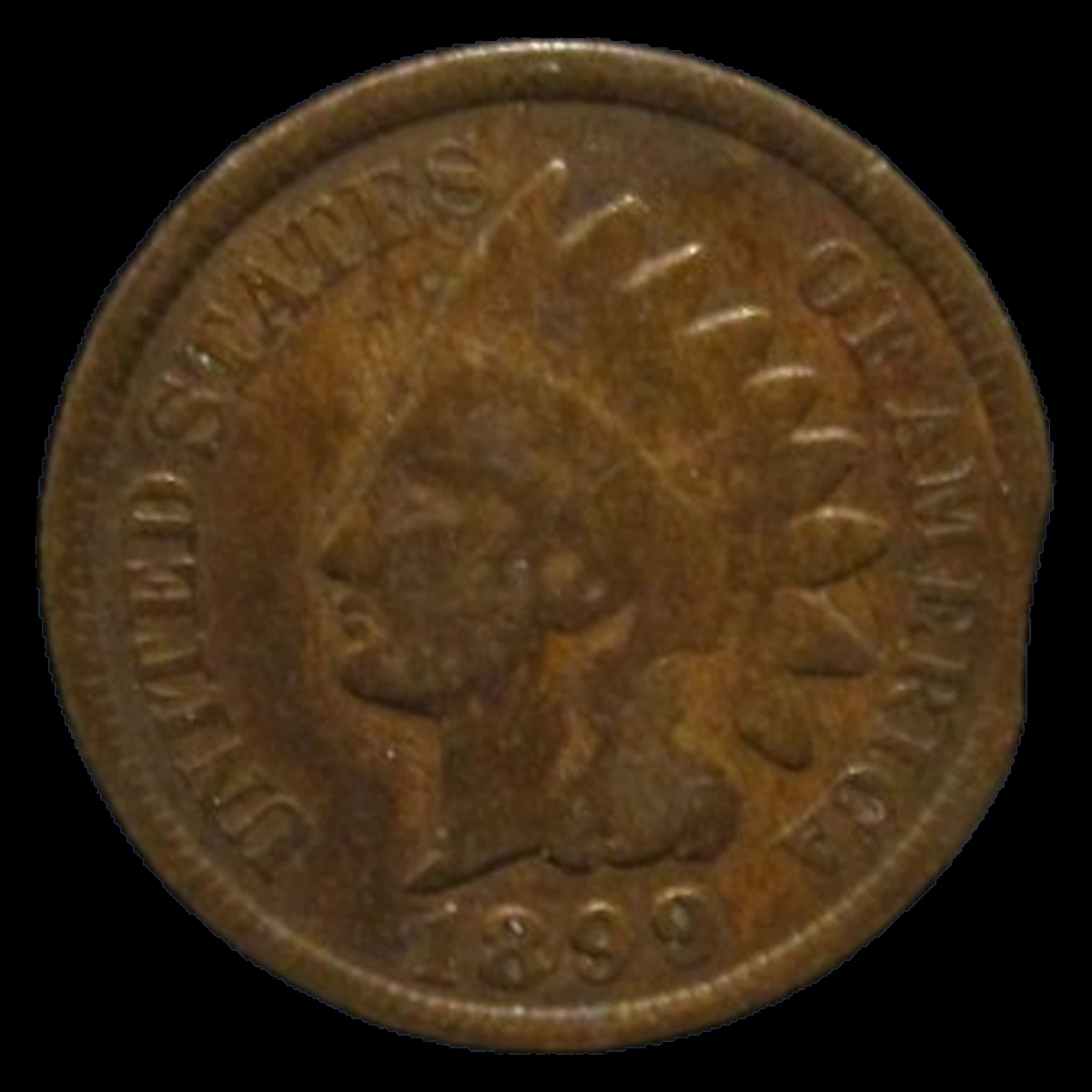
A rim clip begins when the blank-cutting process leaves an incomplete disc. An 1899 example in the Rippere collection records was graded ANACS XF45 Details.
XF45 indicates wear with substantial detail remaining, while Details flags an additional problem. The supplied listing does not specify that problem or establish a particular gap shape.
How to Identify
Photograph the entire outline, then inspect original rim formation at both ends of the gap. Saw marks or filing may reveal removal after striking.
Weakness opposite the missing section can support the identification but cannot replace examining the gap. Measure intact spans rather than treating a shortened distance across the clip as the original diameter.
What It’s Worth
The estimated whole-coin range is $40–$750. The XF45 Details coin should be compared with similarly qualified pieces, without assuming an unstated condition problem.
A 1910-S clip graded unworn MS63 Red and Brown sold for $134 in March 2025. That later Lincoln cent supplies context, not the 1899 specimen’s shape or final price.
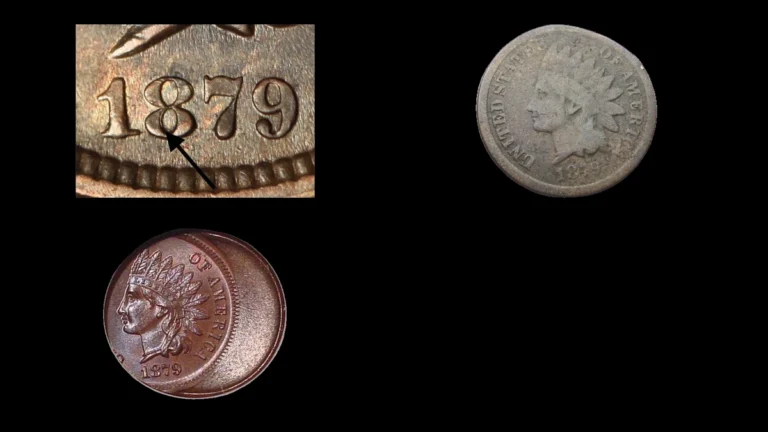
3. 1899 Penny A Bare Crescent Borders Incomplete Design: Off-Center Strike Error
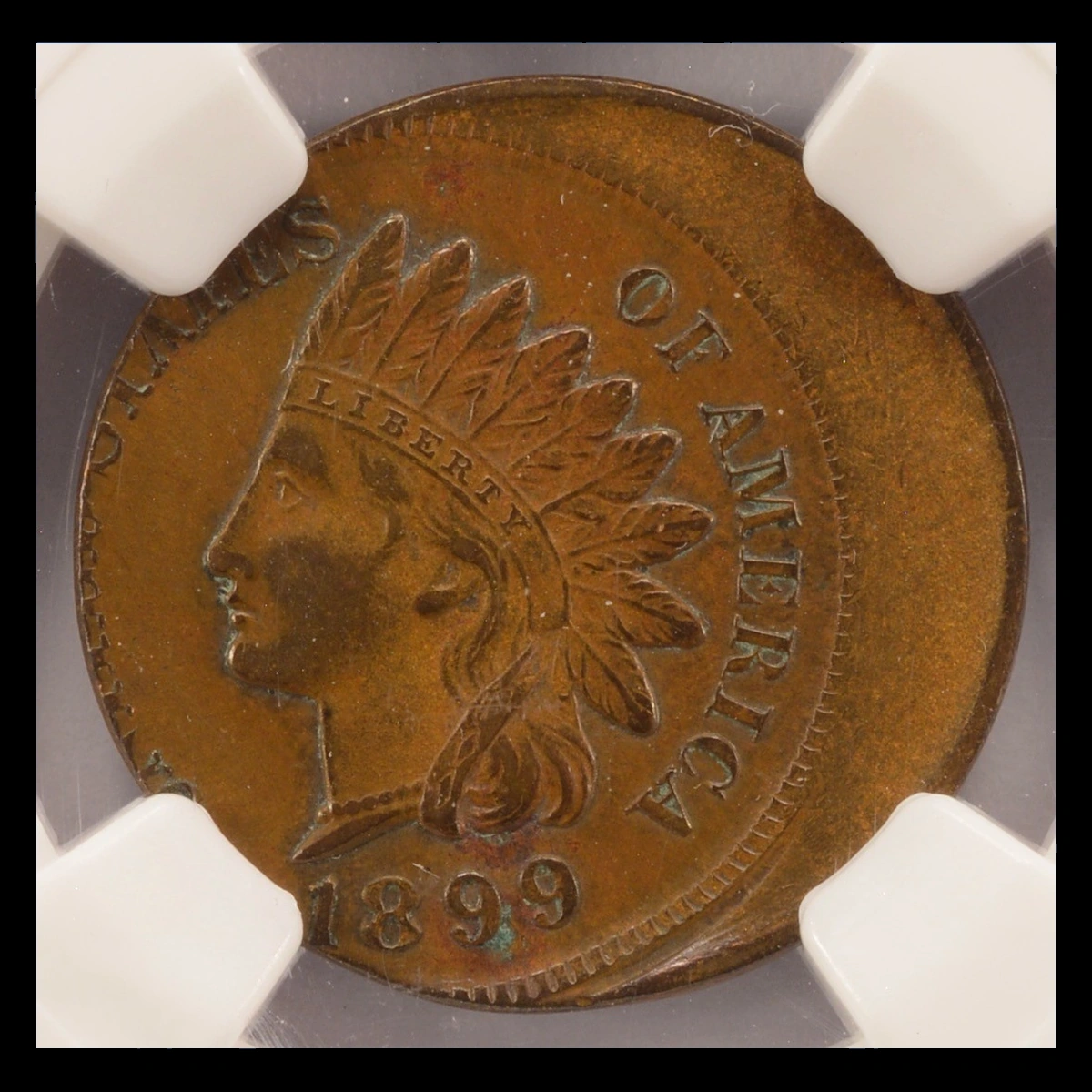
A recorded 10% off-center example shifts toward 2 o’clock and loses some upper-right front lettering. It was graded PCGS MS63 Red and Brown.
A separate 15% example received an NGC MS64 Red and Brown grade. Both are unworn, but their displacement, direction, and surface quality must be kept specimen-specific.
How to Identify
Set the date upright and compare the unused crescent with the opposite edge where detail falls beyond the blank. The reverse boundary should fit that same displacement.
Look for grinding that erased completed design, and distinguish a front-only shift from a misplaced blank. No direction is supplied here for the 15% coin.
What It’s Worth
Estimated values span $150–$2,500 for dated examples. Readable numerals and natural surfaces matter alongside the amount of displacement.
| Example | Grade | Sale |
|---|---|---|
| 10% toward 2 o’clock | PCGS MS63 Red and Brown | $402.50, September 2005 |
| 15%, separate specimen | NGC MS64 Red and Brown | $492.88, June 2026 |
4. 1899 Penny A Second Date Survives: Double Strike Error
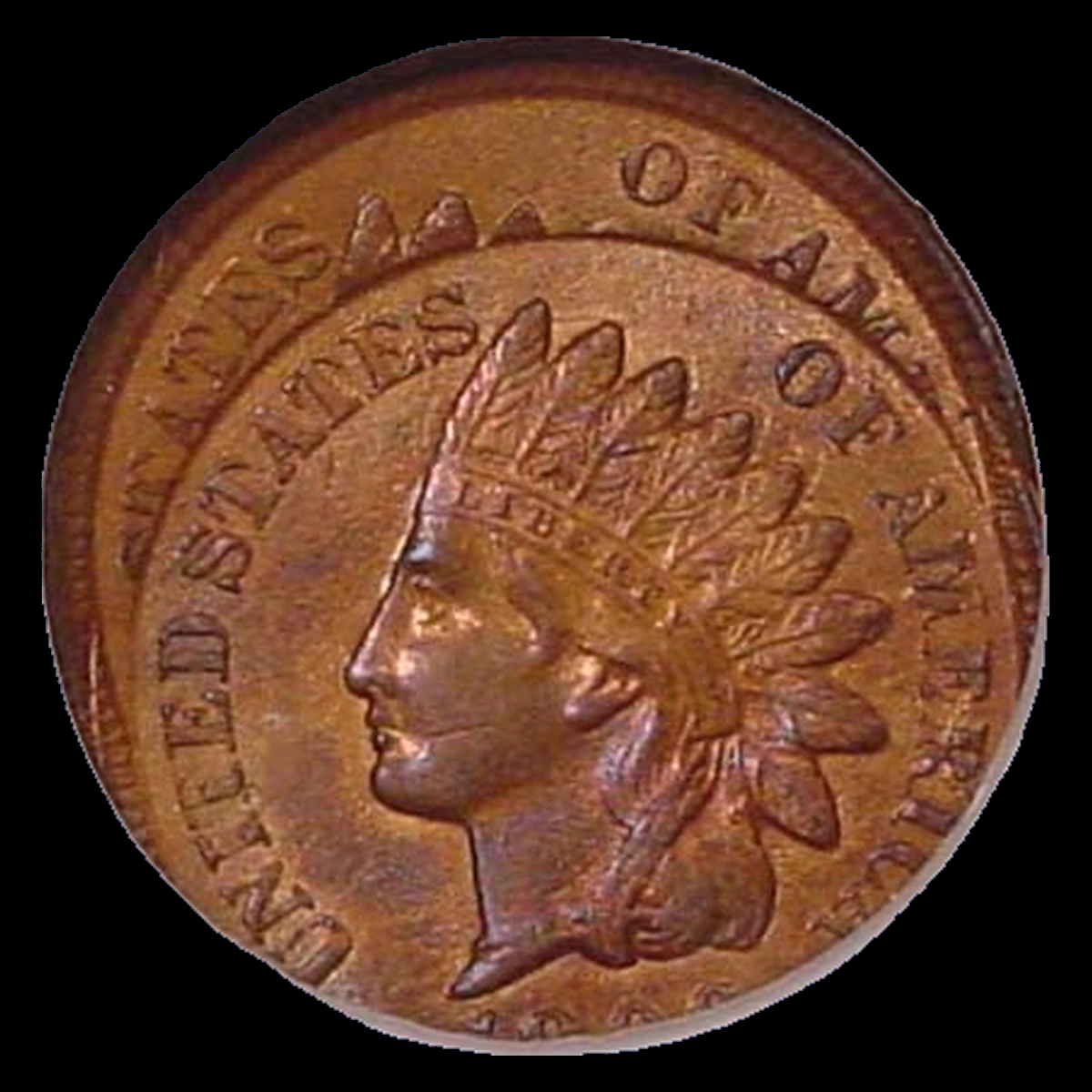
A coin that moves before another blow can preserve two dates and overlapping design. One worn 1899 example has a second strike 10% off center toward 11 o’clock.
Another lightly worn example has an 85% off-center second strike with nearly another full date; that later strike is uniface, meaning it formed a design on only one face. A separate cleaned coin has about 5% displacement toward 12 o’clock.
How to Identify
Connect each date with its corresponding border or portrait fragments and inspect where the newer blow flattened earlier detail. A small ridge beside 9 cannot establish two complete strikes.
Check the reverse to determine whether the later striking area received another design or remained one-sided. Keep the close 5% overlap separate from the distant second date on the 85% specimen.
What It’s Worth
The estimated range is $200–$5,000 for identifiable genuine examples. The 85% example sold for $632.50 in July 2007, while the 10% coin brought $603.75 in November 2003.
The cleaned 5% coin was sold in a two-coin lot. The lot total cannot be assigned to this penny alone.
5. 1899 Penny A Small Reversed Impression Sinks into the Surface: Partial Brockage Error
A republished 1978 sales catalog describes a heavily worn 1899 cent with about 10% partial brockage near 11:30. A previously struck coin had acted as a temporary stamping surface, transferring its raised design in reverse.
How to Identify
Find a recognizable fragment that is both backward and recessed. A dark stain, ordinary raised duplicate, or plain dent does not explain a brockage.
Inspect both faces and the edge for crushing that could result from two finished coins being squeezed together later. The historical description concerns a small partial impression, not a full-face mirror image.
What It’s Worth
Authenticated partial brockages of this kind have an estimated range of $200–$3,500. The clarity of the reversed design and the coin’s condition strongly affect its comparison.
The $632.50 July 2007 double-strike sale is a broad same-year striking-error reference only. It is not a brockage transaction.
6. 1899 Penny A Local Patch Lacks Normal Detail: Struck Through Material Error
A dealer lists a worn 1899 cent as struck through without identifying the obstruction. Material between the blank and die can interrupt design formation and leave weak detail or a depression.
This occurs while the coin is struck. The repeating fiber traces discussed later instead originated while a tool was being made.
How to Identify
Trace a clear design element into the affected area and determine whether it failed to form or was crushed afterward. A raised lip and displaced metal may suggest a later impact.
Photograph retained material without removing it. The dealer’s label alone does not justify calling the obstruction wire, cloth, or a metal fragment.
What It’s Worth
The estimated range is $20–$800 for an authenticated example. A substantial clear effect on a well-preserved coin is a different comparison from a small unexplained weak patch.
A 1920 bronze cent struck through a metal fragment sold for $134 in March 2025. That identified obstruction does not establish what affected the worn 1899 dealer coin.
7. 1899 Penny The Reverse Has a Slight Clockwise Tilt: Rotated Dies Error
Recorded 1899 die pairs include clockwise reverse rotations of 4, 5, 7, and 8 degrees. A separate example associated with tool-made fabric traces has a 10-degree turn.
These small changes concern the relationship between the faces, not a sideways shift across the metal. Their accompanying date or clash features help identify the dies but do not measure the angle.
How to Identify
Secure the front upright and flip it top to bottom without allowing the coin to turn in the holder. Repeat the motion and measure the reverse against a vertical guide.
A slightly tilted camera or loose grip can imitate these angles. The same clockwise tilt must return consistently, with the edge checked for an alteration seam.
What It’s Worth
Ordinary circulated examples have an estimated whole-coin range of $5–$100. Much of that value can come from condition or an associated variety rather than the small tilt.
A 13-degree rotation recorded on an 1870 Indian cent likewise belongs in a complete-coin assessment. An attractive unworn 1899 date variety may exceed the modest range for reasons beyond rotation.
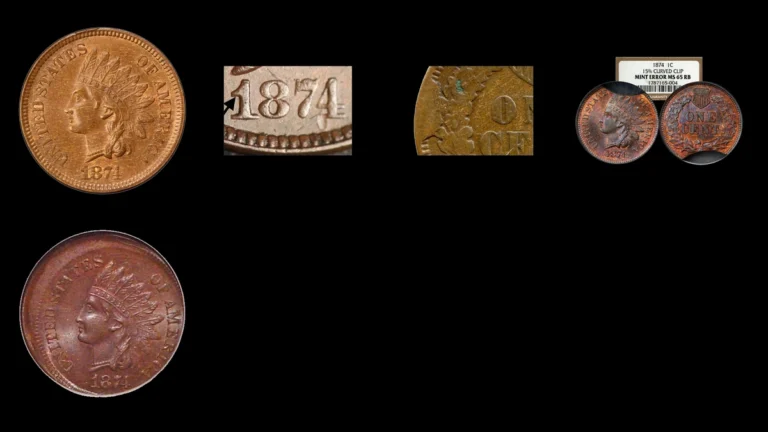
8. 1899 Penny Raised Lines and Lumps Affect Letters or the Rim: Cracks, Chips, and Breaks Error
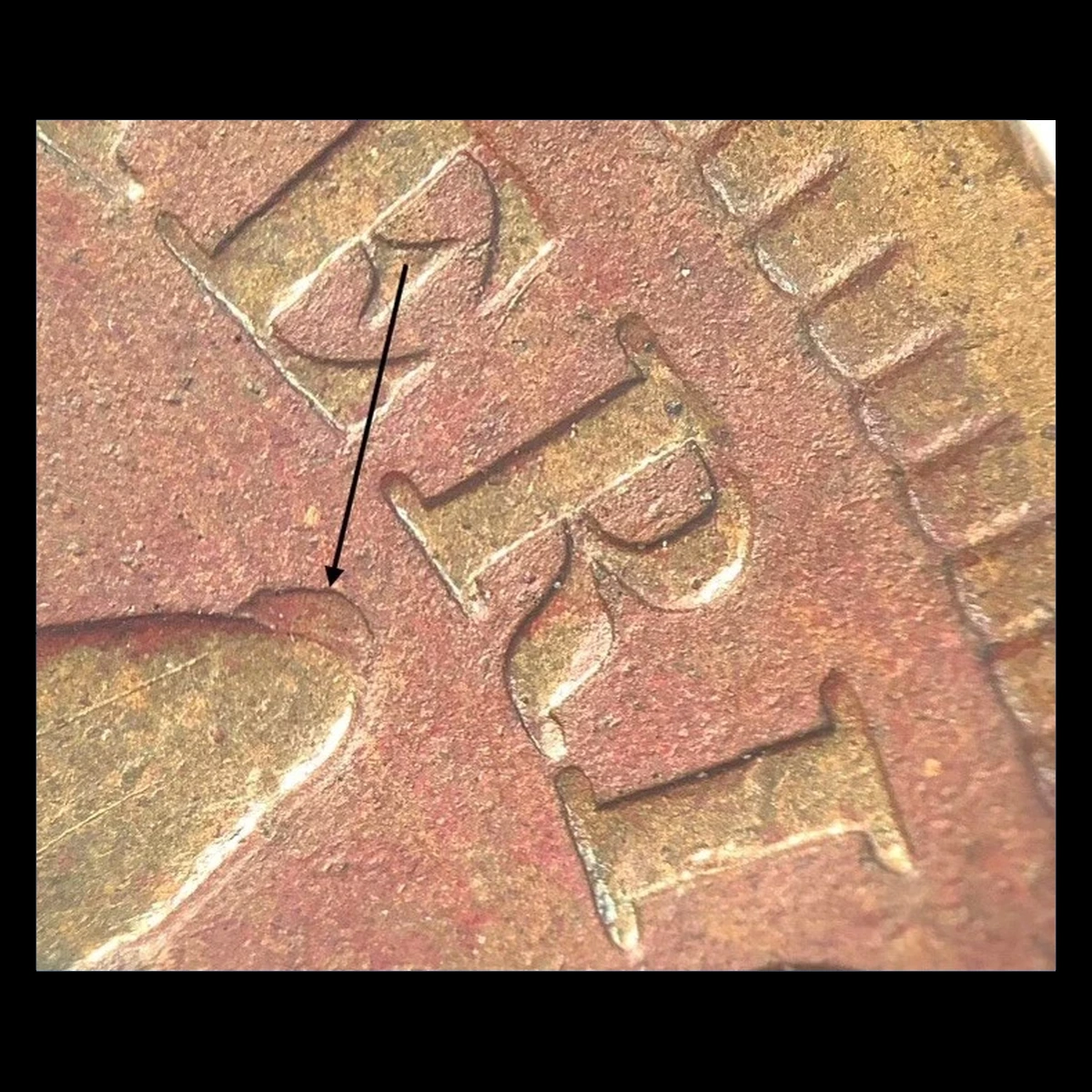
A small chip can fill part of the last 9, while other dies leave raised cracks through the shield, wreath, or lower ribbon. The coin reproduces openings in damaged steel.
A larger missing edge piece can make a rim-connected patch called a cud. A general cud report does not identify one specific outline, and interior feather chips or small border breaks should not automatically be called large cuds.
How to Identify
Use side lighting to distinguish a raised center from the groove of a scratch. At the final 9, compare the exact chip shape because similar lumps can occur on different dies.
For a claimed cud, examine its rim connection for folding or added metal. Follow each crack along its own documented route rather than combining shield, wreath, and ribbon paths.
What It’s Worth
Modest chips and cracks are estimated at $5–$150, while stronger authenticated rim breaks may fit $30–$750. A filled loop does not by itself prove an earlier numeral beneath it.
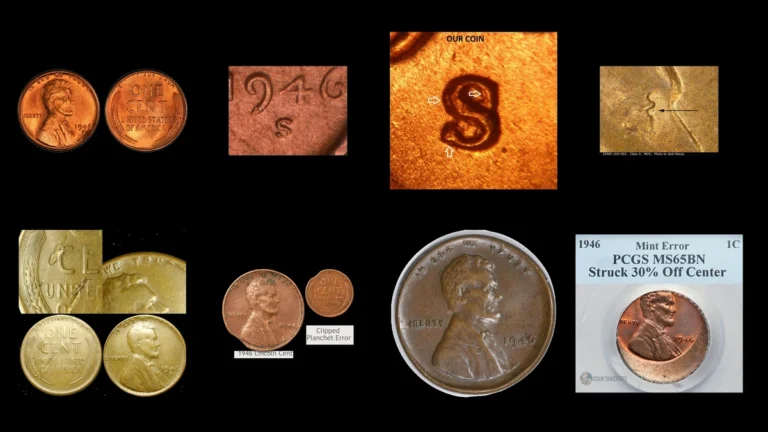
A 1946-S Lincoln cent cud sold for $288 in March 2021. That later result cannot price an unidentified 1899 date bump.
9. 1899 Penny Faint Foreign Shapes Appear beside the Design: Clashed Dies Error
Recorded clash traces occur before the face, near feathers, through C in CENT, and beside the denomination on different die pairs. The dies contacted each other without a blank and later transferred those unwanted outlines to coins.
One pair clashed while rotated and misaligned, but the catalog does not supply its measured angle. Continued use and polishing can weaken traces at later stages.
How to Identify
Compare the clearest unexpected outline with the opposite face’s design. Enough of the shape should survive to distinguish a transferred feature from a single scratch.
Use that die pair’s own photographs for displaced traces. A 7-degree rotation from a separate date variety cannot be assigned to the unmeasured rotated clash.
What It’s Worth
Ordinary examples have an estimated range of $10–$300. An accompanying date variety and preservation can influence the complete price.
The Snow-13 repunched-date coin sold for $288 in January 2025 offers a same-year price scale, not a clash transaction. Several related die features still receive one valuation.
10. 1899 Penny A Raised Spur Projects from the Upper Lip: Tool Lines and Gouges Error
Snow-28 has a distinct upper-lip spur copied from a groove in the die. The same variety includes an earlier date stroke below 1 and a clash through C in CENT, each with its own cause.
Separate dies have fine lower-border lines or unusual bumps in and beneath the date. Those shapes do not automatically represent punched numerals.
How to Identify
Follow the spur out from the lip and compare its outline with Snow-28, including the accompanying date remnant. Look for seams or disturbed metal that could indicate an attached fragment.
For a border or date-area mark, use its own reference with the complete date visible. The lip spur cannot identify every raised mark on an 1899 cent.
What It’s Worth
The estimated ranges are $10–$200 for a clear lip spur and $5–$150 for smaller matched tool marks. These price complete ordinary coins and are not sales assigned to catalog photographs.
The $288 Snow-13 result from January 2025 concerns a different date feature. An unexplained bump should not inherit that named variety’s value.
11. 1899 Penny Fine Fiber-Like Traces Repeat in the Border: Hub-Through Defect Error
Variety 30 has fine traces around UNITED and among the lower-left border teeth, including below 1 and 8. Fibers trapped during die preparation left marks that the die subsequently copied onto coins.
This tool-making defect is called hub-through. Repeated strokes within 899 and reverse clashes accompany it, with a crack and small wreath-leaf chip appearing at later stages.
How to Identify
Match the fine traces and their positions using the Variety 30 photographs. Confirm the associated date strokes instead of naming fabric from one rough tooth.
The later reverse crack starts near 11:15 and reaches the left wreath. Its leaf chip need not appear on an earlier-stage coin, so absence alone does not rule out the variety.
What It’s Worth
A matched ordinary example has an estimated range of $10–$250, including its condition and date pattern. The supplied catalog illustrates lightly worn coins without a realized price used here.
A dramatic fabric impression made directly during coin striking is a different comparison. Tiny obscured traces do not automatically confer a large premium.
12. 1899 Penny An Extra 9 Top Appears outside the Date: Misplaced Date Error
Snow-27 places an extra 9 fragment below and left of the first 9. Another die positions a 9 top beneath the right foot of 1, reflecting different misplaced date-punch impressions.
A further catalog entry combines misplaced digits and repunching without usable location detail. Musical-note-shaped marks reported beneath another date should not be promoted into numerals from resemblance alone.
How to Identify
Keep the full normal date in view and compare the fragment with its correct location reference. The first-9 and right-foot-of-1 patterns are not interchangeable.
Record the raised curve that actually survives rather than drawing in a complete numeral. Check the surrounding teeth for cutting or added metal.
What It’s Worth
Identified examples have an estimated whole-coin range of $25–$2,000. An 1878 Snow-2 with misplaced 78 fragments sold for $1,920 in October 2019 at MS65 Red.
That unworn coin’s original red color and different variety belong with its result. Any repunching on the same 1899 coin remains part of one combined assessment.
13. 1899 Penny Earlier Strokes Surround the Main Numerals: Repunched Dates Error
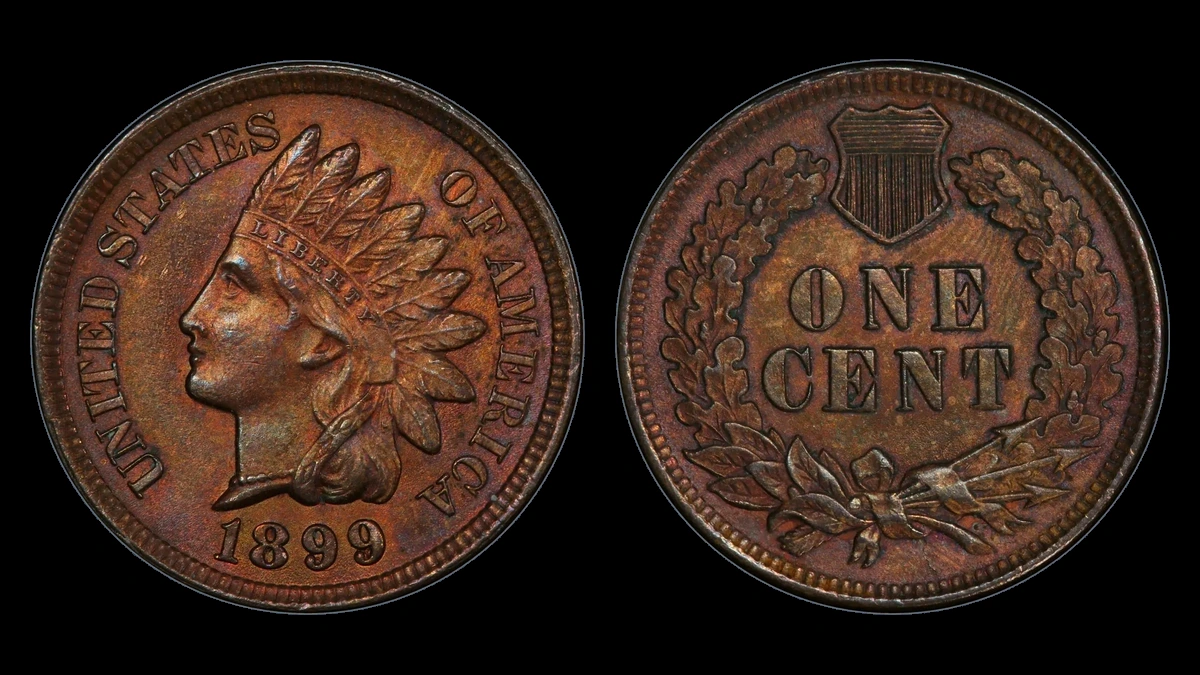
Some 1899 repunched dates repeat several digits, while others focus on one 9. The date punch was applied again without covering every stroke of its earlier position.
One die pair first produced Proof collector coins and later ordinary cents. Cracks developed on later ordinary coins need not be present on the earlier Proofs.
How to Identify
Photograph all four digits and map each extra stroke’s direction. Snow-1 repeats several digits, whereas Snow-13 has its own arrangement around the first 9.
Establish Proof manufacture from finish and the complete die pairing, not shininess or repunching alone. A chip filling a loop is also different from a recognizable earlier numeral stroke.
What It’s Worth
Estimated ranges are $15–$2,000 for ordinary coins and $300–$5,000 for matched Proofs. An unworn Snow-13 graded MS64 Red and Brown sold for $288 in January 2025.
The Proof range is an estimate, not a sale attributed to the later ordinary pairing. Date pattern, manufacture, and preservation must all support the comparison.
Conclusion
An 1899 cent may show a tiny repeated die feature or a major change involving another coin, but the visible evidence should determine the category. A reversed impression, two dates, and surviving dime details require different explanations.
Keep the specimens and their records separate, including group lots and comparisons from other years. Fine tool marks, Proof manufacture, and combined features all belong in the value of the complete coin, with condition assessed alongside identification.