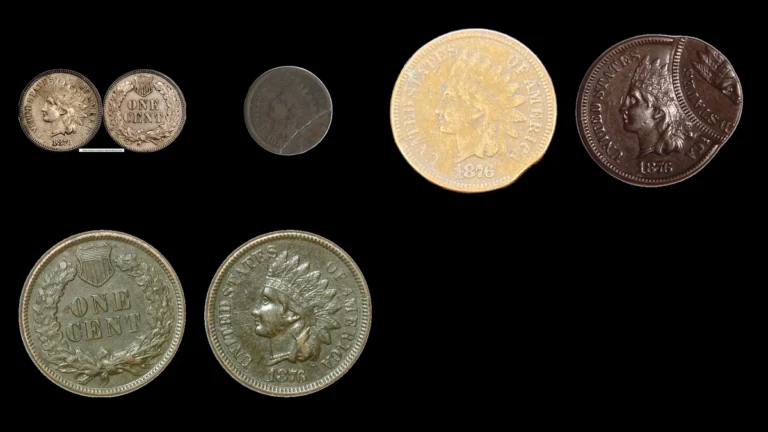
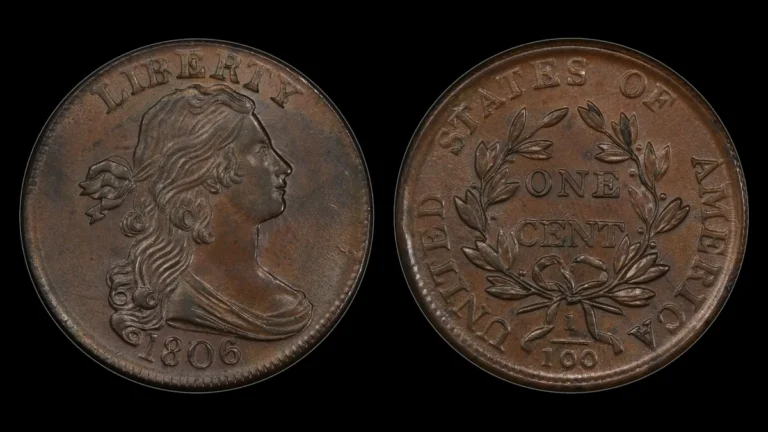
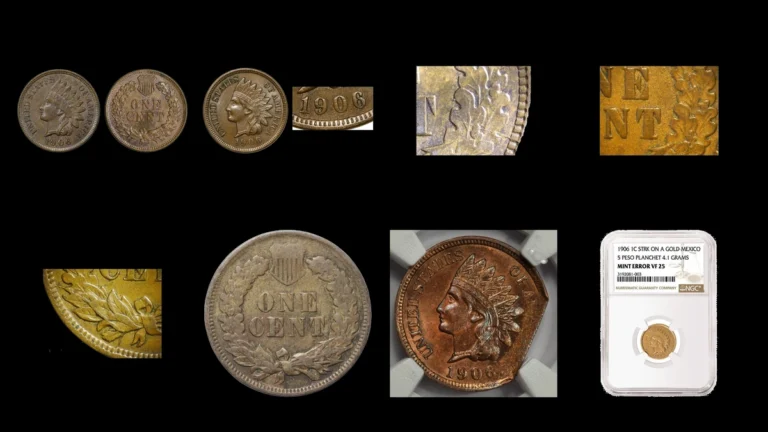
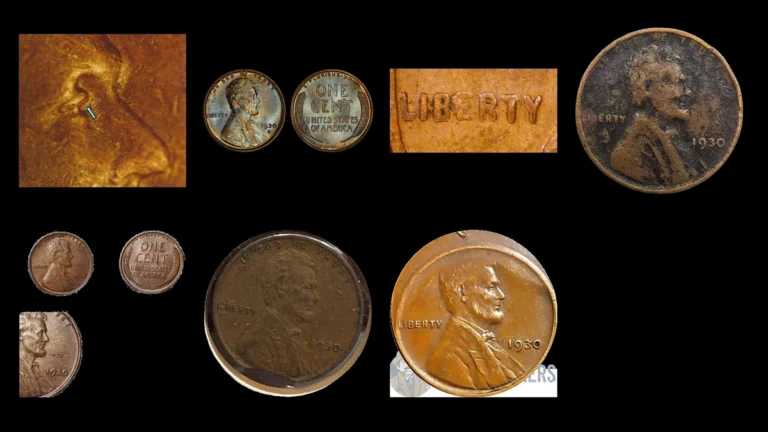
Rare 1858 Penny Errors (List & Pictures)
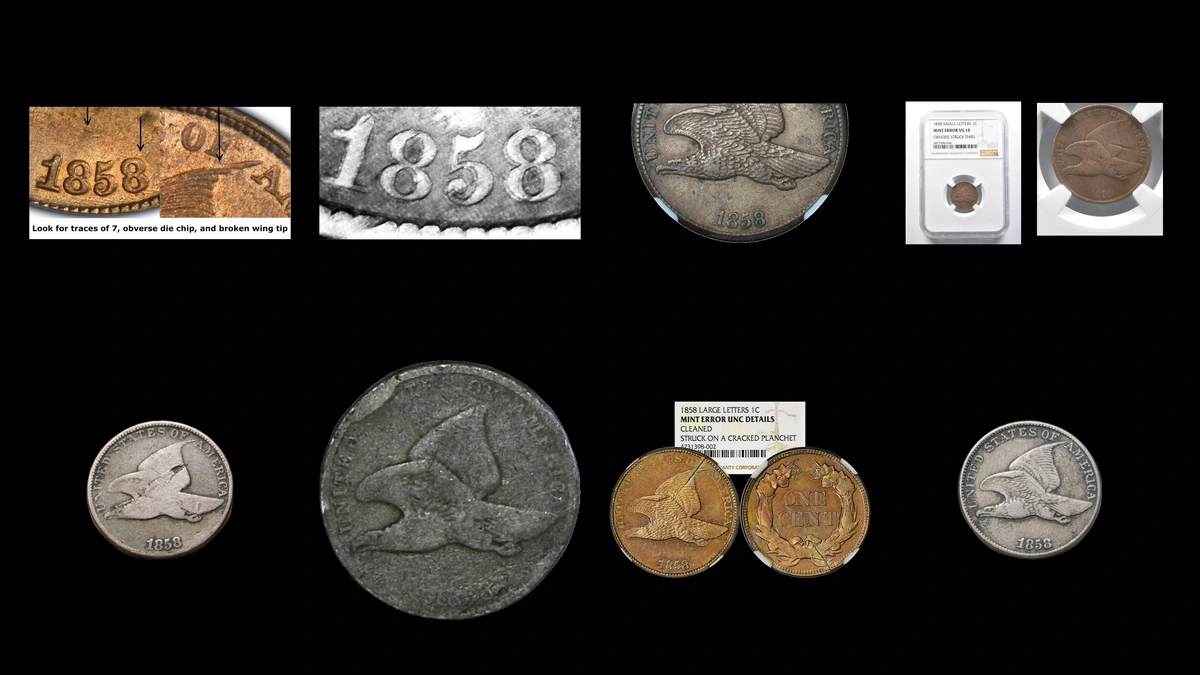
A strong 1858/7 overdate reached $74,025 at auction in 2014. The much wider field of 1858 penny errors includes faint missing letters, peeling metal, and displaced strikes, with estimated whole-coin values of $30–$75,000.
Work from the date and lettering to the rim, then compare the placement of both designs.
| Where to look | Possible finding | Estimated value |
|---|---|---|
| Date | Repunched date or 1858/7 | $50–$75,000 |
| Letters and surface | Doubled die, strike-through, or lamination | $30–$3,000 |
| Rim and metal | Cud, clip, or cracked blank | $75–$5,000 |
| Whole designs | Rotation, double strike, or off-center strike | $75–$15,000 |
A normal Flying Eagle cent weighs 4.67 g and measures 19.05 mm, with a plain edge and copper-nickel composition. Large Letters coins have a touching A and M in AMERICA; those letters are separated on Small Letters coins.
1. 1858 Penny An Earlier Digit Beside the 8: 1858/7 Overdate Error
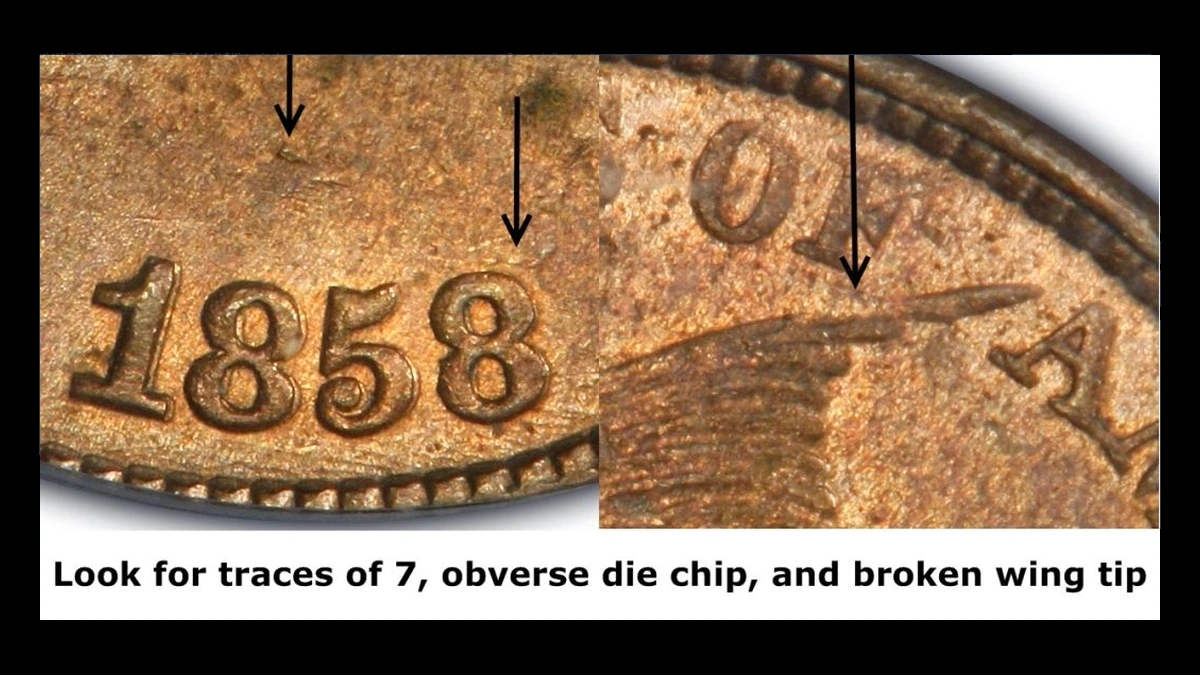
A tiny projection near the upper right of the last 8 can be the surviving tip of a 7. The recognized 1858/7 belongs to the Large Letters design and records an earlier date impression in the die.
How to Identify
Compare the final digit with the PCGS strong-overdate reference. A raised spot above the date and an incomplete wingtip below F in OF provide supporting evidence.
Neither supporting mark substitutes for the numeral match. Strong and weak overdates need separate comparisons, especially when wear obscures the tip.
What It’s Worth
Estimated values span $200–$75,000, with many circulated examples around $200–$5,000. The upper part of the range concerns selected unworn coins.
A strong overdate graded MS65+ brought $74,025 through Heritage in October 2014. A worn VF30 strong overdate sold for $451 at David Lawrence in May 2022.
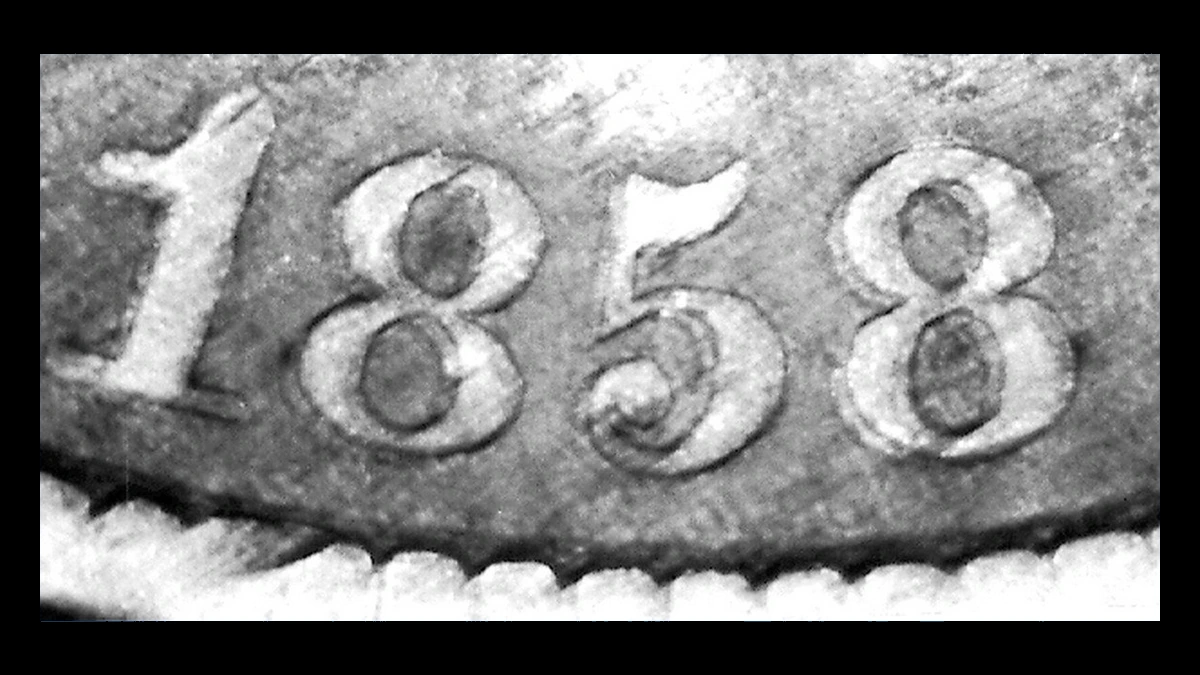
2. 1858 Penny Extra Strokes in the Same Date: Repunched Date Error
Repunched dates can retain parts of an earlier placement of the same numerals. An 1858 Large Letters listing identifies RPD-001 together with a doubled obverse die.
How to Identify
Match the complete date to the cataloged variety before naming an extra stroke. The supplied description does not establish which numeral edges should show on every candidate.
Keep this identification separate from an underlying 7. The Large Letters variety catalog is a starting point for comparing specific die pairings.
What It’s Worth
Allow an estimated $50–$1,500 for the whole coin, from circulated pieces to better preserved examples. No completed sale accompanies the supplied RPD example.
A coin combining repunching and a doubled die receives one overall valuation. The two labels do not create separate amounts to add together.
3. 1858 Penny Doubled Front Lettering: Doubled Die Error
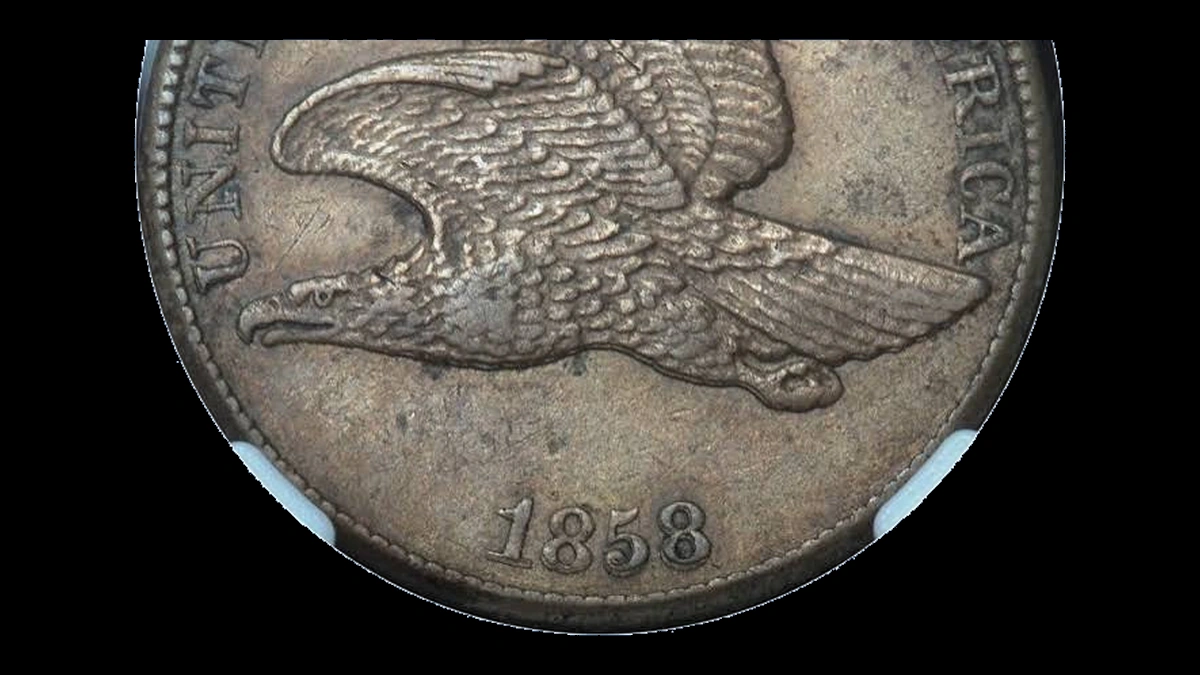
Some Large Letters varieties show repeated contours within UNITED STATES OF AMERICA. The doubling was built into the die, so its pattern can recur on other coins struck with that tool.
How to Identify
Select one suspected letter and compare its raised outlines with a named variety. Different dies affect different letters and show different directions of separation.
Flat, shelf-like edges from movement during striking are not enough to establish a doubled die. Check several matching letters rather than relying on one damaged corner.
What It’s Worth
Estimated whole-coin values are $75–$3,000, including roughly $75–$500 for circulated examples. Stronger unworn pieces need close matches for variety and preservation.
The supplied evidence does not provide a completed auction result for these doubled dies.
4. 1858 Penny Weak Words on the Back: Struck Through Grease Error
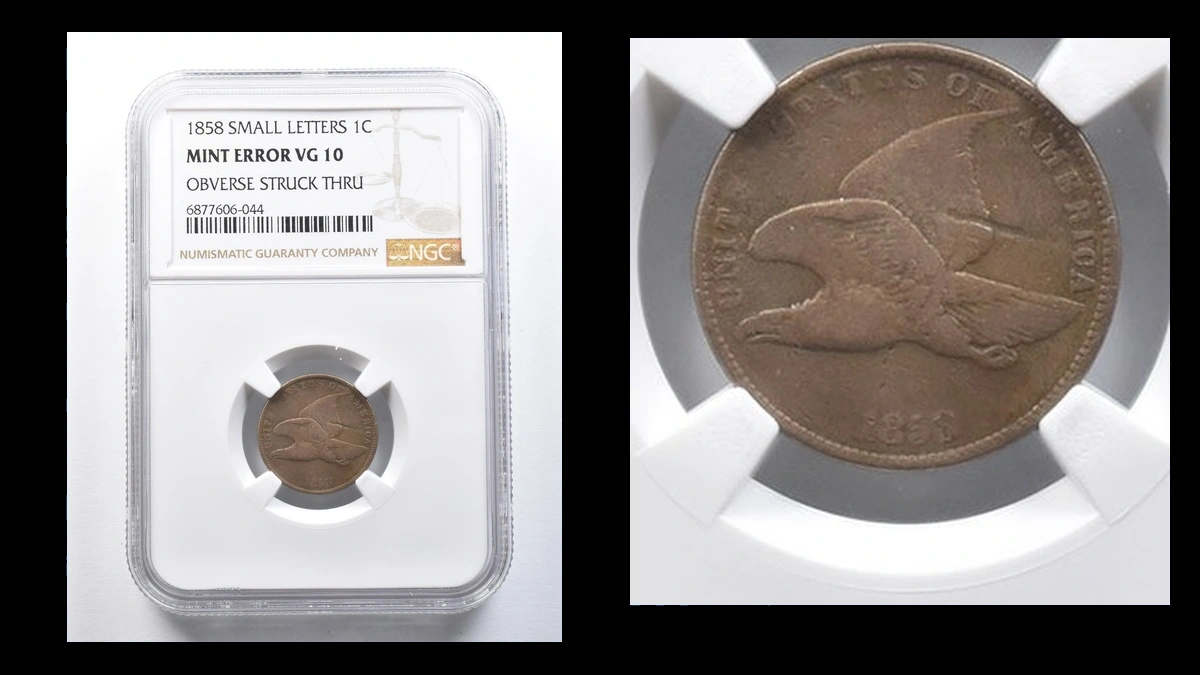
Letters can fade into a weakly struck area when grease blocks the corresponding recesses in a die. A dealer-described Small Letters coin shows this effect around ONE CENT.
How to Identify
Compare the weak center with nearby design that struck more clearly. Wear normally affects exposed high points, while a filled die can prevent particular details from forming.
The dealer example carries a Choice Fine description from the seller. Its listing does not establish retained foreign material or an independently assigned grade.
What It’s Worth
A circulated example may fit an estimated $30–$300, depending on its overall condition and how clearly the missing detail can be explained. This is a whole-coin estimate.
No completed sale is supplied for the dealer coin.
5. 1858 Penny A Flaking Surface: Lamination Error
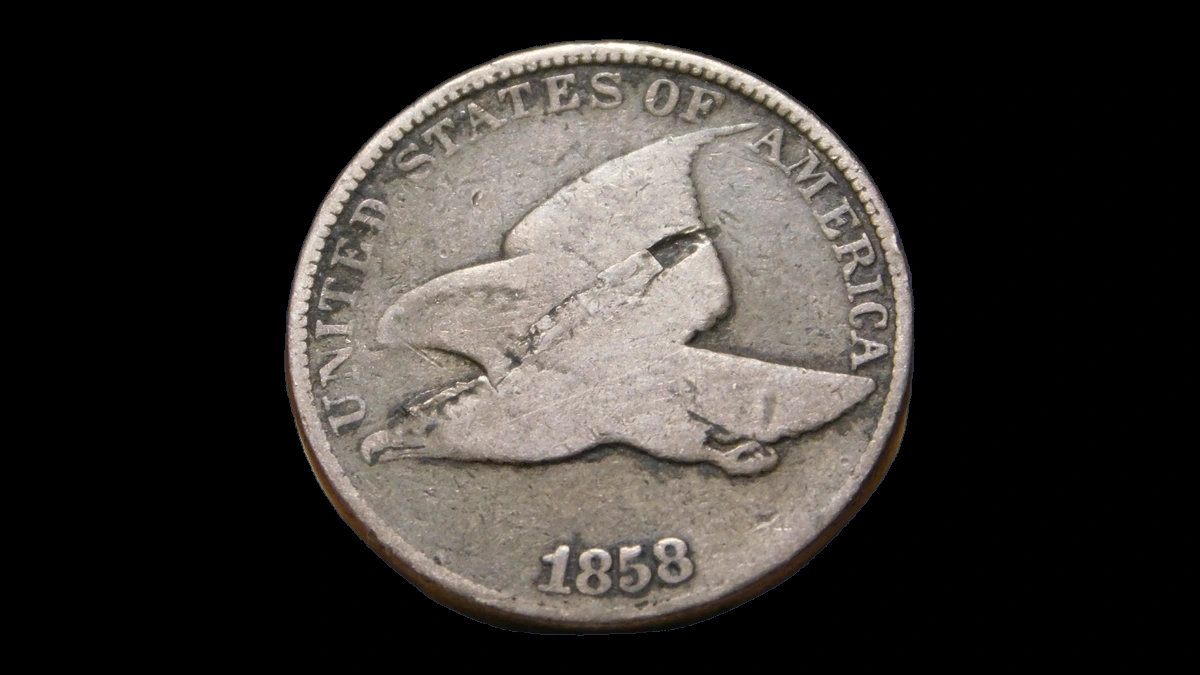
A thin section of poorly bonded coin metal can lift or peel away. This surface separation is called lamination and may leave an irregular shallow opening.
How to Identify
Look for a metal layer separating from the surface, then examine how the struck design meets it. A cut or gouge alone does not establish lamination.
The supplied general description assigns no particular face, letter style, or location to an 1858 example. Experimental pieces with other designs or metals are not ordinary Flying Eagle comparisons.
What It’s Worth
Estimated values are $35–$500, with modest circulated defects generally toward the lower end. Larger, clearer flaws on better coins may attract more attention.
The available range is guidance rather than a documented sale for one specified coin.
6. 1858 Penny A Raised Patch at the Edge: Cud Error
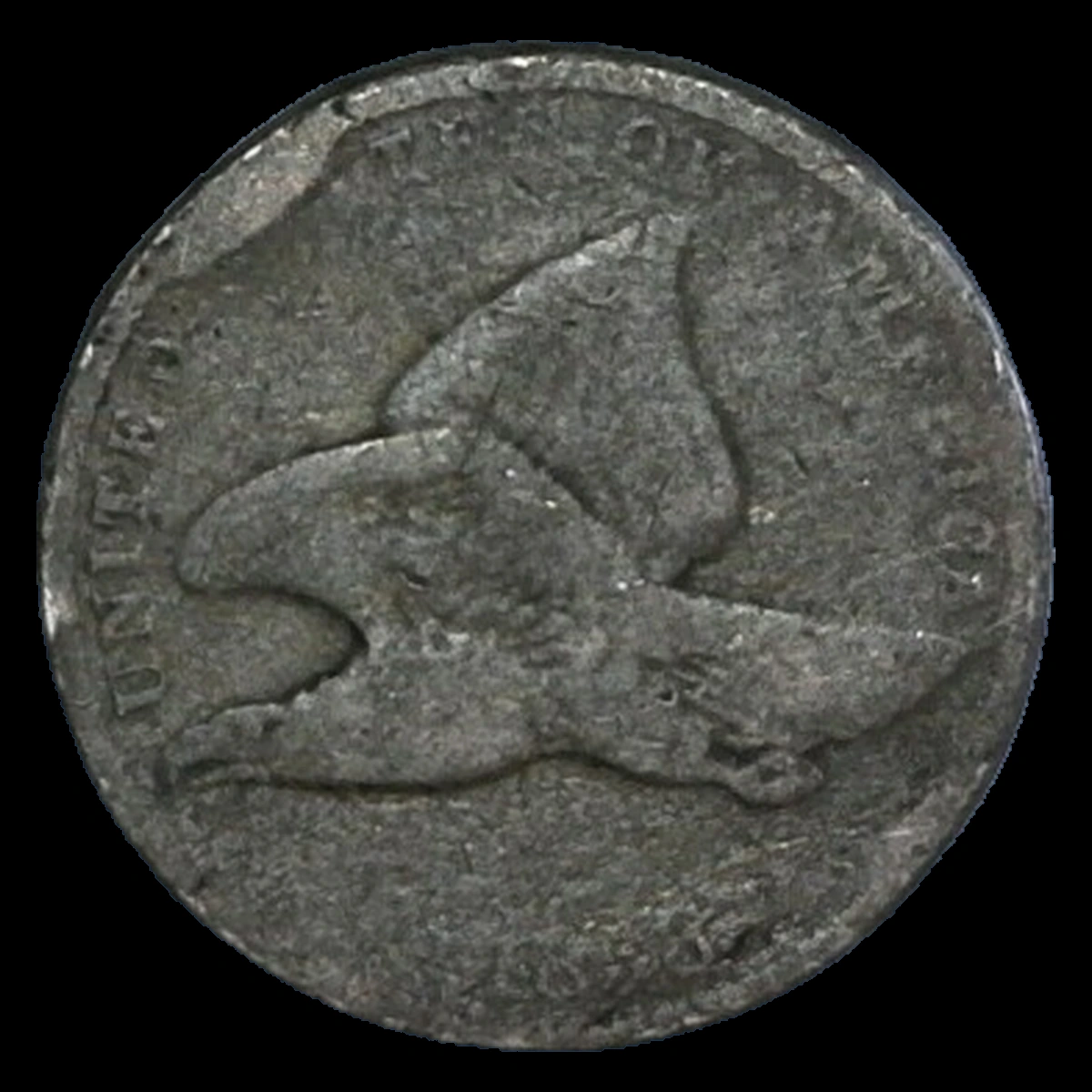
When a piece of the die breaks away at its edge, metal can rise into the gap. The resulting rim-connected lump is known as a cud.
How to Identify
Follow the raised area to the rim and check which normal details it replaces. A dent usually pushes existing metal aside instead of producing this missing-die pattern.
The Flying Eagle cud catalog includes both Large Letters and Small Letters coins. Do not assign one fixed position to the entire category.
What It’s Worth
Expect an estimated $75–$2,000, covering circulated examples and stronger pieces with better preservation. Size, clarity, and coin condition all affect the comparison.
No completed sale for a particular 1858 cud is supplied here.
7. 1858 Penny A Missing Rim Segment: Clipped Planchet Error
A clip removes part of the metal outline before striking. A documented Small Letters example was graded ANACS MS61, but the supplied description does not specify its clip shape or direction.
How to Identify
Inspect the boundary of the missing segment and the adjacent struck details. Compare them with a genuine clip, rather than assuming any incomplete rim escaped the mint that way.
A later cut may imitate the outline. Record both faces and the edge so an examiner can assess whether the metal was already absent during striking.
What It’s Worth
The estimated whole-coin range is $150–$4,000, including about $150–$800 for circulated examples. Unworn coins occupy a different market from heavily worn pieces.
The MS61 reference establishes an example, not a supplied auction price.
8. 1858 Penny An Opening Through the Metal: Cracked Planchet Error
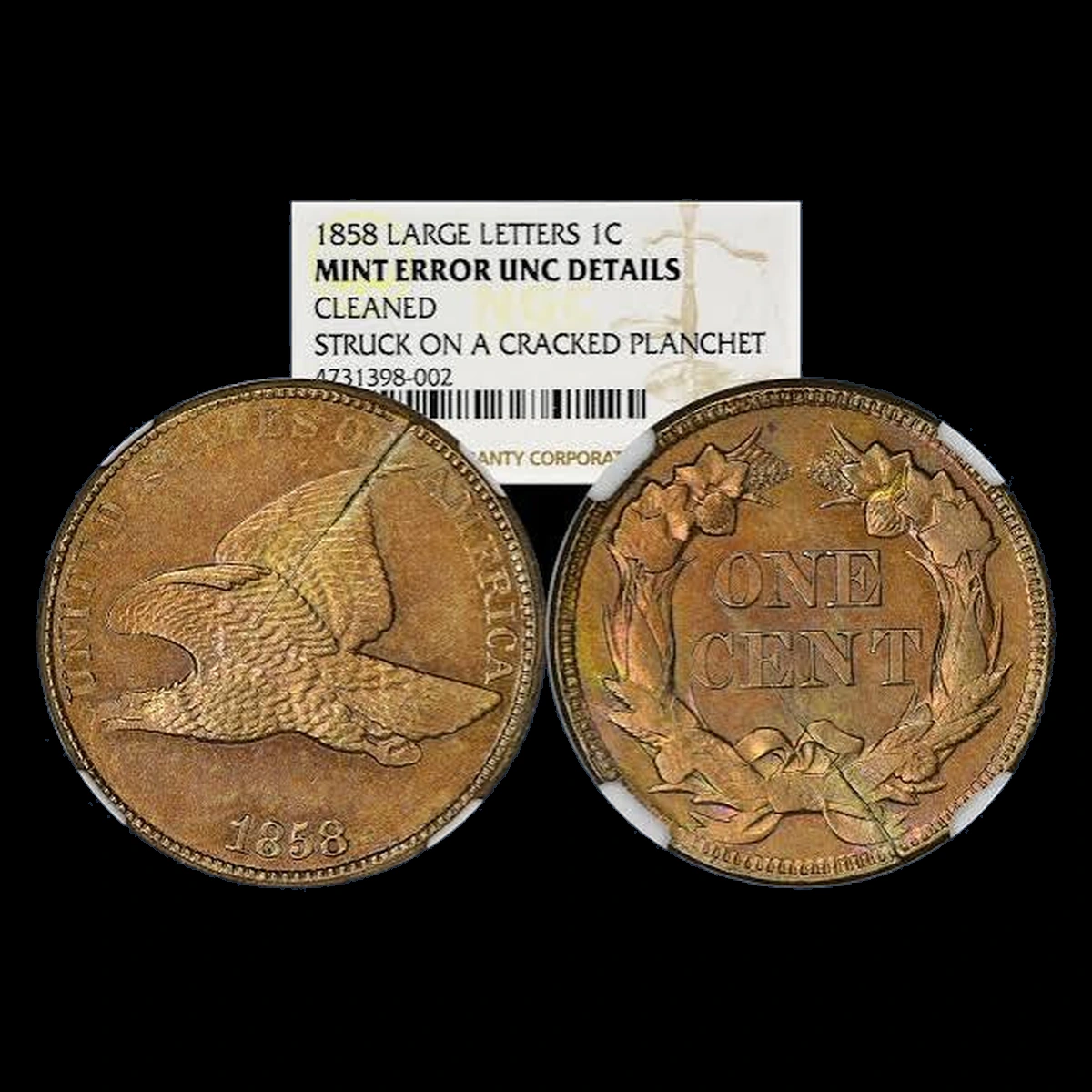
A blank can contain a crack before it enters the press. A Large Letters coin in Charmy Harker’s collection was described this way and received an NGC unworn Details grade.
How to Identify
Inspect both sides and the exposed edge without bending the coin. The design around the opening must help establish that the weakness existed during striking.
A raised line on intact metal is more consistent with a die crack. The collection description supplies neither the crack’s direction nor the condition problem recorded by the Details holder.
What It’s Worth
Estimated values extend from $100 to $5,000, with circulated examples often considered around $100–$750. Clarity of the pre-strike damage and preservation matter greatly.
No completed sale is supplied for the collection coin. Its holder’s condition qualifier must be considered before comparing it with problem-free examples.
9. 1858 Penny The Back Sits at an Unexpected Angle: Rotated Dies Error
A coin may receive correctly formed designs that are wrongly aligned with each other. This happens when a die turns away from its intended position.
How to Identify
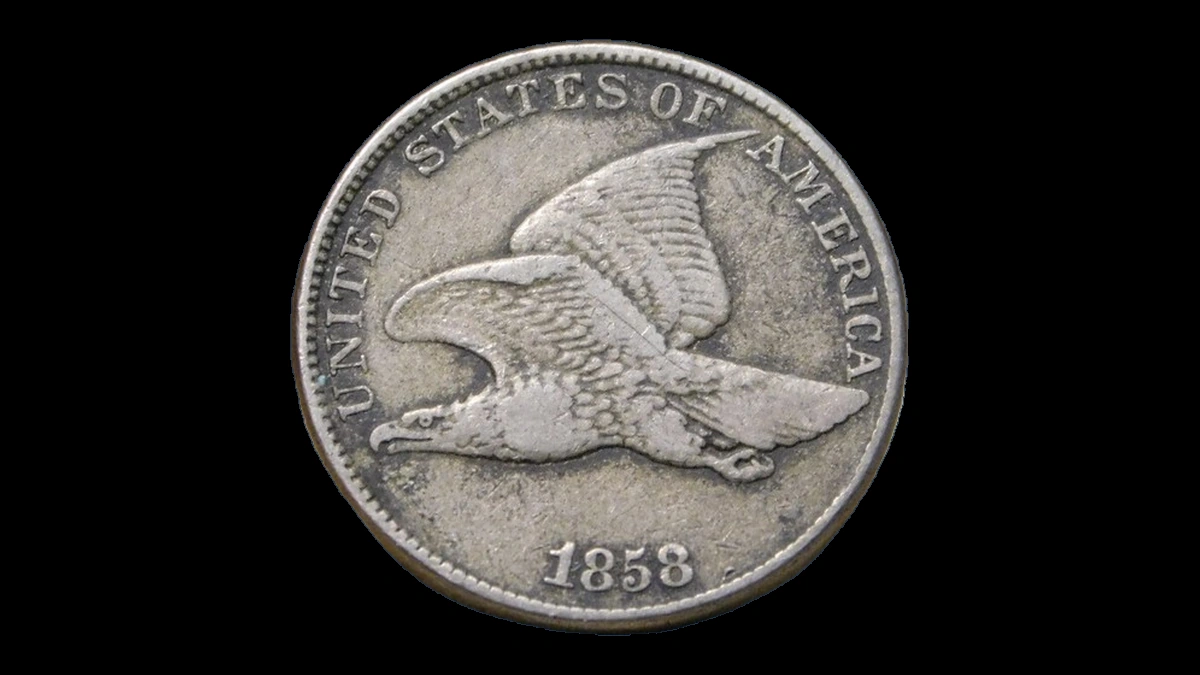
Hold the eagle upright and turn the coin top to bottom while keeping the same vertical axis. The reverse should then appear upright under normal United States coin alignment.
Published references include a Large Letters ANACS F12 and a Small Letters ANACS VF30 Details coin. Their supplied descriptions give no measured rotation angles.
What It’s Worth
An estimated $75–$1,000 covers a broad range of circulated and more striking examples. The size of the rotation and any condition problem influence the whole-coin value.
Neither referenced coin has a completed sale supplied here. A half-turn between two strikes is a separate event from persistent die rotation.
10. 1858 Penny Eagle and Wreath Details Overlap: Double Strike Error
A second blow can leave two readable design positions on one coin. If the coin flips between blows, details from opposite faces can overlap.
How to Identify
Trace recognizable feathers, leaves, or letters into two coherent impressions. Random marks do not establish a second strike.
A Small Letters PCGS VF25 reference flipped over and received its later strike 35% off-center. A separate NGC VF35 example turned halfway around between strikes; these are different coins and movements.
What It’s Worth
Estimated values are $750–$10,000 for genuine 1858 double strikes. Clear overlapping designs and readable identifying details help support a comparison.
No completed sale is supplied for those two examples. A copper-nickel 1862 double strike graded ANACS MS60 sold for $690 in 2001, providing only a different-date comparison.
11. 1858 Penny Bare Metal Beside the Design: Off-Center Strike Error
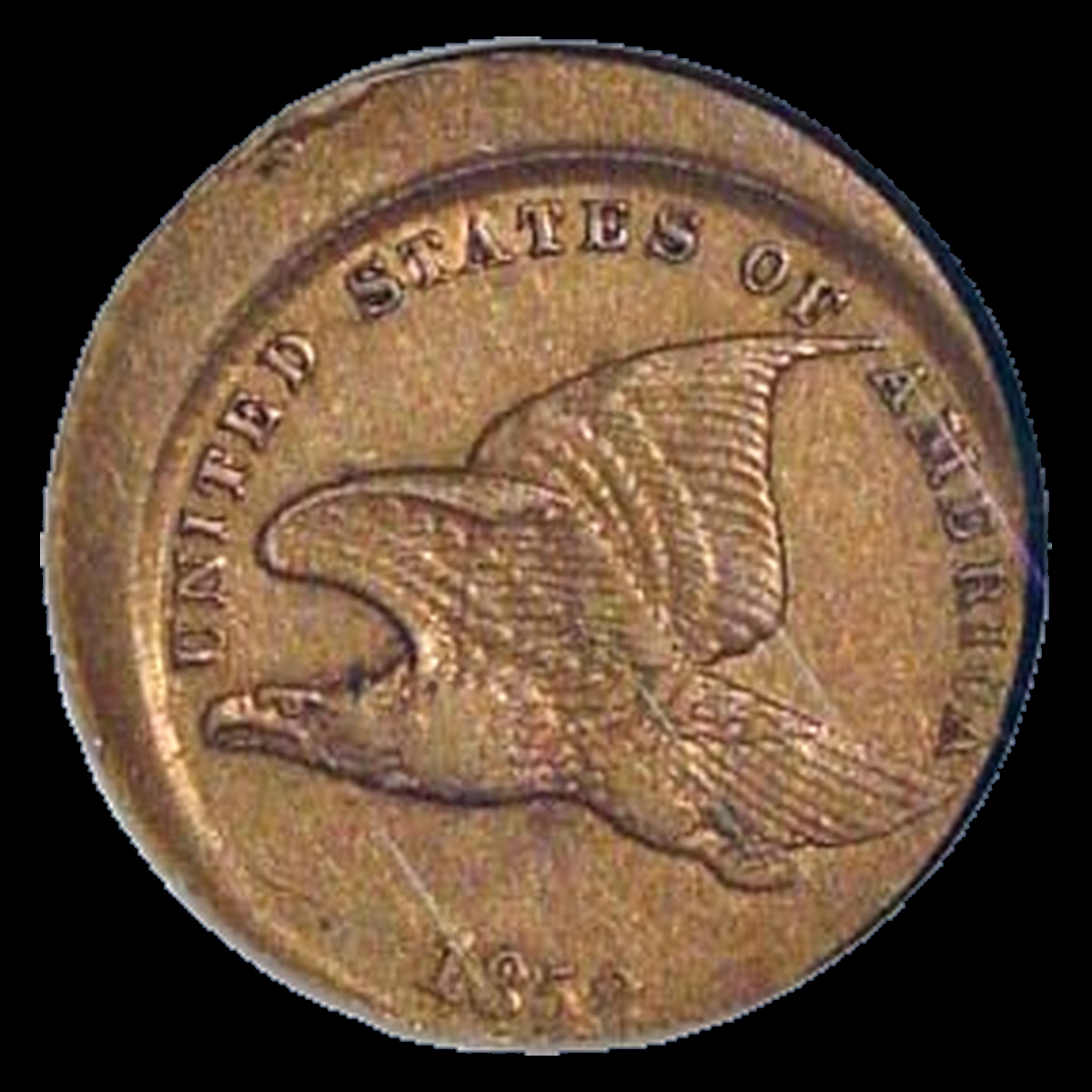
A misplaced blank can receive only part of each design, leaving a bare crescent. The metal remains present, unlike the missing segment of a clip.
How to Identify
Compare the bare area with the missing outer design on both faces. Keep the full outline and any remaining date visible in photographs.
A collection example described as 10% off-center points toward five o’clock. Separate references show a 25% PCGS VG10 coin and a 30% coin labeled MS63; neither inherits that direction.
What It’s Worth
Estimated values run from $500 to $15,000, with many circulated dated examples around $500–$5,000. Strong unworn pieces require separate comparisons.
The 25% off-center VG10 coin brought $4,080 at Heritage in December 2024. That result belongs to the auction coin, not either collection photograph.
Conclusion
Identify Large Letters or Small Letters before comparing small date and lettering details. Then use the metal outline and the relationship between both faces to separate missing metal, misplaced strikes, and rotation.
The $74,025 overdate represents exceptional preservation within a specific variety. A worn coin with a small surface flaw needs a comparison that matches its own feature and condition.