Rare 1816 Penny Errors (List & Pictures)
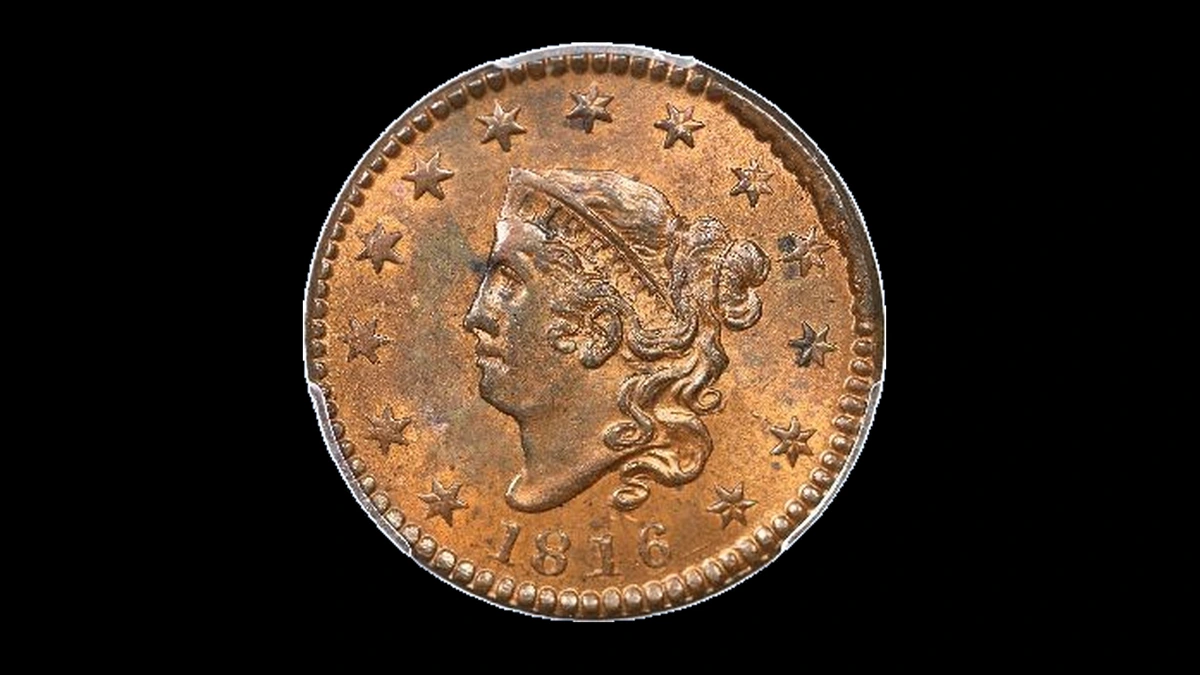
A tiny lamination above AMERICA accompanied a $5,520 sale including the buyer’s fee in August 2025. That result illustrates the importance of preservation when comparing 1816 penny errors.
Estimated whole-coin values span $40–$9,000. Begin with the readable date and design positions, then inspect raised rim patches and separating copper.
The copper Coronet cent normally weighs 10.89 grams and measures about 28 mm, with a plain edge. An undated coin labeled “1816–1839” does not establish the year 1816.
1. 1816 Penny One Displaced Design Leaves a Bare Crescent: Off-Center Strike Error
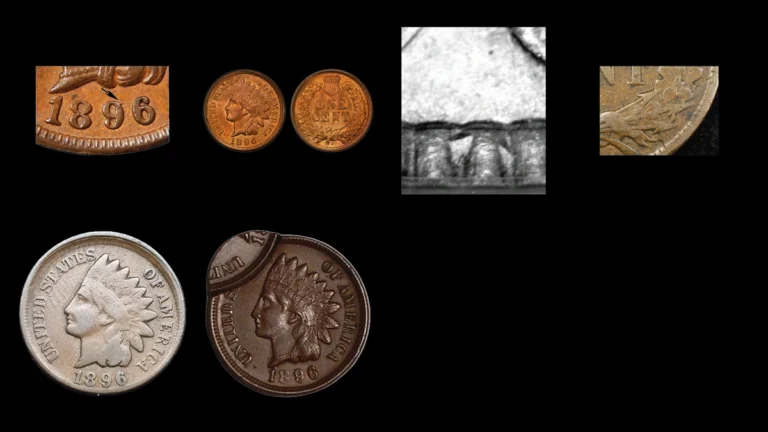
The year guide describes a moderately off-center example without a usable percentage or direction. A misplaced blank received one blow, leaving part of the design beyond its edge and original unused metal opposite.
This relationship matters more than a wide border by itself. The coin must also preserve enough of its actual date to support an 1816 identification.
How to Identify
Read the digits before mapping the crescent, then compare the design boundaries on both faces. One blank position should explain both.
Inspect where the design stops for grinding or flattening that removed completed detail. If only one face shifts while the other remains centered, investigate a die-alignment problem instead.
An off-center blow need not remove copper. Weight and several diameter measurements can document the coin without assuming the bare area represents lost metal.
What It’s Worth
The estimated range is $100–$6,000 for authenticated dated examples. The published 1816 coin was offered at $185, an asking price rather than a confirmed sale.
An 1855 large cent struck 70% off center sold for $1,092.50 in January 2009 at PCGS Fine 15. That worn different-year comparison supplies a specific displacement that should not be transferred to the 1816 report.
2. 1816 Penny A Small Extra Impression Catches the Edge: Double Strike Error
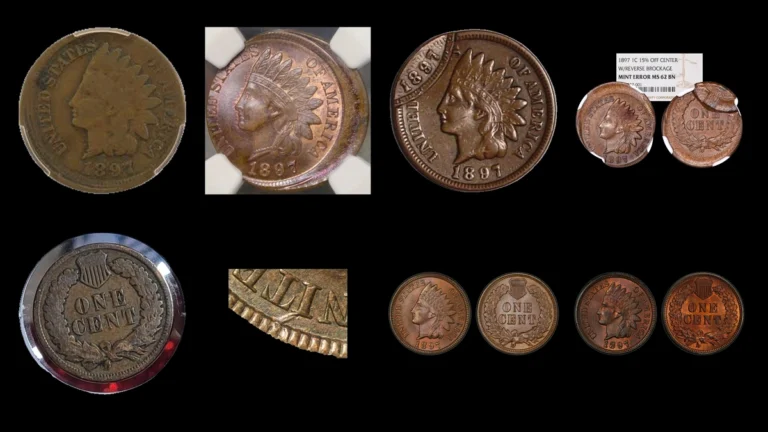
The reported double-struck 1816 cent has a second strike 85% off center. Its NGC Fair 2 grade describes extremely heavy wear, leaving limited detail for comparison.
The large percentage concerns the later blow’s displacement. It does not mean 85% of the coin’s copper is missing.
How to Identify
Identify actual letters, border teeth, or portrait detail within the second impression. An edge dent or vague doubled profile cannot demonstrate another strike.
Use full photographs of both faces to follow where the later blow flattened earlier design. With a Fair 2 coin, preserve the limits of what is visible rather than reconstructing worn-away shapes.
Inspect the edge for a join or crushing. The extra design must belong to the original coin, and its position must agree with the surviving overlap.
What It’s Worth
Recognizable examples have an estimated range of $300–$7,500. No supplied auction result belongs to the reported Fair 2 cent.
An 1881 Indian cent with a 70% off-center second strike brought $1,880 in August 2013 at PCGS MS64 Brown. Its unworn preservation, smaller bronze format, and later date make it a broad comparison only.
3. 1816 Penny Raised Patches Replace Parts of the Rim: Cuds Error
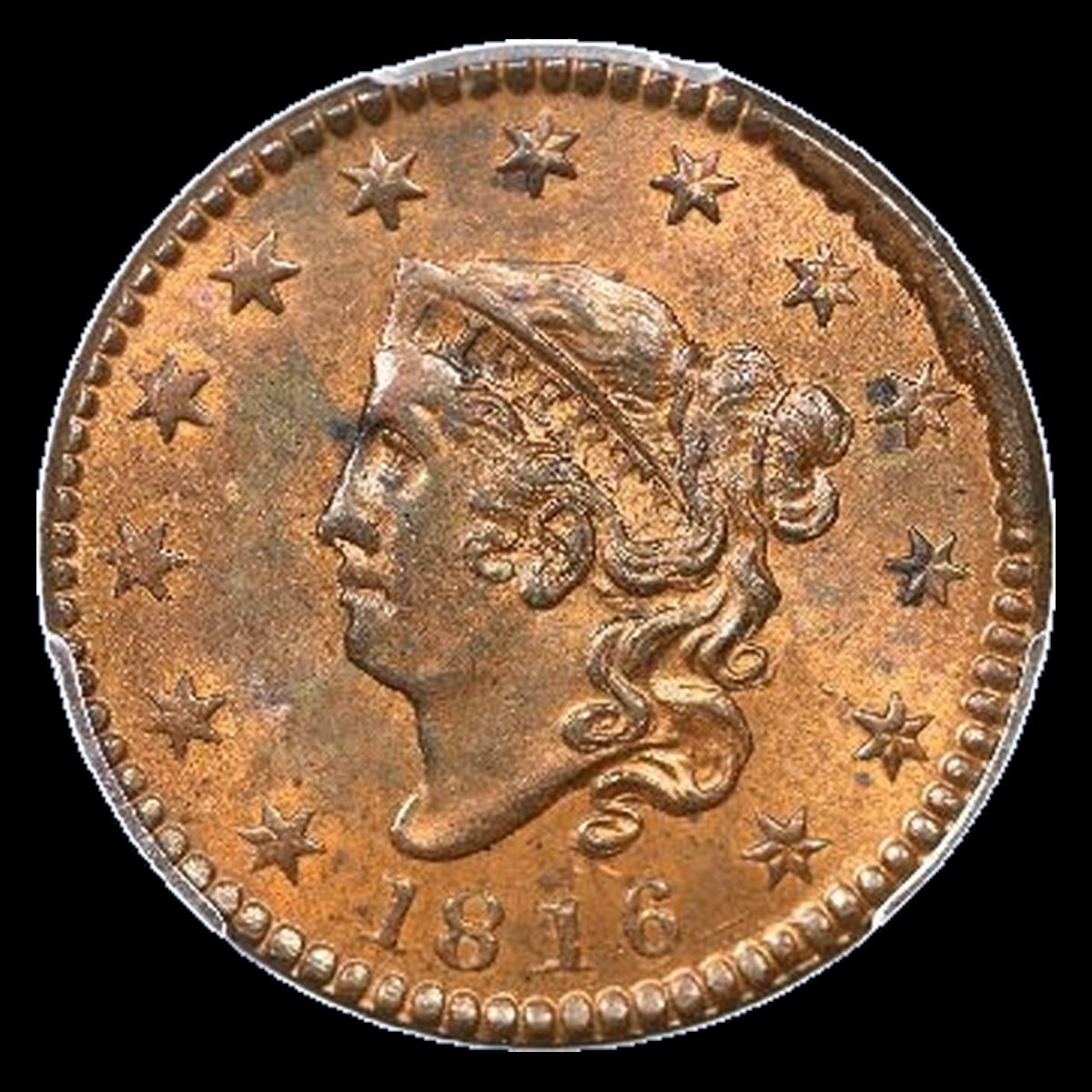
A cud forms when an edge piece breaks from the die and copper fills the resulting opening. The coin shows a raised patch connected to its rim where ordinary detail would have formed.
Research describes upper-rim breaks on 1816 cents and examples with another break between stars eleven and twelve. Different tools and stages produced different arrangements.
How to Identify
Follow the patch’s boundary into the original rim and compare it with the untouched border beside it. A folded edge can cover design but often reveals a seam or disturbed metal from the side.
Use the matching arrangement in the 1816 die-break study. A coin need not carry every upper and lower-right patch to match one recorded stage.
What It’s Worth
Identified cuds have an estimated whole-coin range of $40–$5,000. Clear boundaries and original surfaces strengthen the comparison.
An 1836 large cent with a front cud and reverse crack sold for $2,040 in August 2020 at PCGS MS65 Brown. That later unworn coin does not assign the same price to a worn 1816 merely because both have rim breaks.
4. 1816 Penny A Small Layer Flaw Sits above AMERICA: Lamination Error
The documented PCGS MS65 Brown coin has a small original lamination among the teeth above the left side of M in AMERICA. A weak layer within the copper separated locally.
Its limited size allowed much sharp design and attractive surface to remain. This describes a surface flaw rather than a disc split into complete halves.
How to Identify
Locate M on the reverse and compare the opening with intact teeth on either side. Side light should reveal a layer boundary rather than merely dark toning or flattened metal.
Leave any attached copper untouched and keep measuring tools away from the opening. Such a small defect may leave weight and diameter nearly unchanged.
What It’s Worth
The estimated whole-coin range is $40–$9,000, including worn examples and especially well-preserved coins. The small flaw is not an independent premium at the price of the entire cent.
The August 2025 auction record shows $4,600 plus a $920 buyer’s fee, totaling $5,520. MS65 Brown describes an unworn coin with relatively few marks.
A specialist had reduced the coin’s assessment because of the defect. That difference reinforces the need to consider the original flaw and overall preservation together.
Conclusion
The 1816 examples show why size alone is a poor guide to an error’s price: a tiny layer flaw can accompany superb preservation, while a dramatic second strike may be extremely worn. Identify the complete coin before selecting a comparison.
Keep one displaced blow separate from a repeated strike, match cuds to the correct die stage, and preserve fragile copper. Each estimate includes the coin’s condition and underlying collector value.