Rare 1806 Penny Errors (List & Pictures)
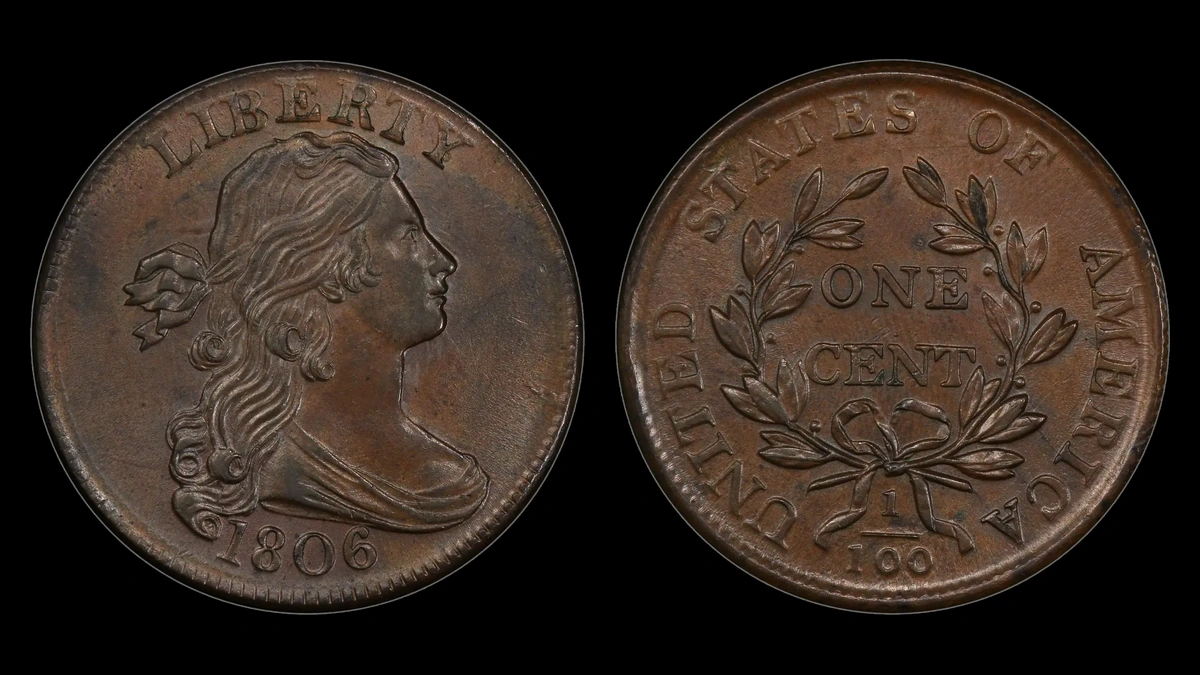
A thin line on an 1806 cent can be an opening in the copper, a raised die crack, or a faint transferred design. The direction and shape of the mark help separate those possibilities.
Estimated whole-coin values for 1806 penny errors range from $100 to $30,000. A PCGS MS63 Brown cent with light cracks and clashes brought $19,200 in August 2020, largely because of its scarce unworn condition; compare surface evidence first and strike position last.
| Clue | Possible feature | Estimated value |
|---|---|---|
| Layer line from CENT toward lower rim | Lamination | $100–$3,000 |
| Raised front ridge or upper-reverse patch | Crack or cud | $100–$30,000, depending heavily on condition |
| Opposite-design traces near the chin | Die clash | $100–$30,000, depending heavily on condition |
| Displaced design beside unused copper | Off-center strike | $300–$12,000 |
1. 1806 Penny A Fine Layer Opens Below CENT: Lamination Error
The documented copper separation runs from C in CENT to the rim beneath the fraction. A weak layer inside the blank can open into a fine line without producing a large flap.
How to Identify
Follow the physical boundary from the C downward using low side lighting. Avoid scraping the line or trying to widen it, since the existing separation is the evidence to preserve.
The PCGS AU Details example also has environmental damage and altered color. Those surface problems are separate from the lamination, and scattered pits or rough patches do not establish additional layer flaws.
What It’s Worth
$100–$3,000 is the estimated whole-coin range for authenticated 1806 laminations. Strong surviving detail must be considered together with any damaged surfaces.
Goldberg’s $600-and-up figure for the recorded coin was an auction estimate, not a completed sale. An 1842 large cent with a small layer flaw sold for $750 in September 2021, offering a different-year comparison without removing the 1806 coin’s condition problems.
2. 1806 Penny A Line Rises Above the Front or a Patch Joins the Back Rim: Die Damage Error
Metal entering a narrow crack in a die leaves a raised ridge on the coin. A larger missing die-edge piece can produce a rim-connected patch called a cud.
The reported 1806 cud occupies the upper reverse rim. It is a separate feature from light front cracks and from broad swelling near the lowest front curl.
How to Identify
Move the light across a thin mark to determine whether it rises or cuts into the surface. Broad swelling alone does not establish a crack where no narrow raised line is visible.
For the reverse cud, follow the raised connection to the rim and inspect the edge for a later blow that folded copper inward. An impact may leave crushed design or a dent rather than the original struck patch.
What It’s Worth
$100–$3,000 is the estimate for worn examples with genuine cracks or breaks. Attractive unworn coins occupy a separate whole-coin tier of roughly $10,000–$30,000.
The PCGS MS63 Brown ESM cent with light front cracks and clash marks brought $19,200 in August 2020. That is not a sale of the reported upper-reverse cud, and much of the result reflects its unworn preservation.
3. 1806 Penny Faint Outlines Appear Before and Below the Chin: Die Clash Error
The unworn ESM coin shows extra traces before and beneath Liberty’s chin. A separate worn 1806 example was described with light clash marks in the 2022 EAC sale.
Clashes originate when the dies contact each other without a blank and acquire portions of the opposing design. Coins later copy those traces without needing to be struck twice.
How to Identify
Compare the normal reverse design with the front trace at the proper scale and alignment. The mark should preserve a recognizable opposing shape rather than wander like a scratch.
Use the chin location when checking the ESM specimen, but do not assume all worn 1806 coins retain equally clear detail there. Random lines near the portrait are insufficient for a clash attribution.
What It’s Worth
$100–$3,000 is the estimated range for worn clashed examples, while attractive unworn coins may fit $10,000–$30,000. These are complete-coin figures, not separate clash premiums.
The PCGS MS63 Brown ESM specimen sold for $19,200 in August 2020. This is the same coin and transaction discussed under cracks, so its price cannot be counted twice.
4. 1806 Penny Both Designs Move Beside an Unstruck Area: Off-Center Strike Error
References record off-center 1806 cents without establishing one standard percentage or direction. A misplaced blank leaves some copper outside the strike while part of the intended design misses the metal.
How to Identify
Compare full views of both faces, keeping the date and unused copper visible. A tight crop can hide the key boundary, and one uneven border alone does not establish shared displacement.
For safely handled loose coins, use 10.89 g and about 29 mm as normal copper-cent references while recording the actual outline; keep certified specimens sealed. Inspect the edge and unstruck surface for trimming, grinding, or added metal that could explain the shape afterward.
What It’s Worth
$300–$12,000 is the estimated range for authentic 1806 off-center cents across different conditions and amounts of displacement. Readable dates and original surfaces improve the comparison.
A slightly off-center 1814 Classic Head cent brought $1,800 including fees in January 2026, with its good preservation contributing to the price. That different-series result supplies neither a sale nor a displacement measurement for an 1806 example.
Conclusion
A useful 1806 identification explains the physical mark: separating copper, a raised die ridge, transferred opposing design, or a displaced strike. Those distinctions remain important when more than one feature shares a coin.
The $100–$30,000 estimates span damaged worn cents through scarce unworn examples. Preserve the difference between the $600-and-up auction estimate and completed sales, and avoid treating the ESM coin’s high price as a premium for its small marks alone.