Rare 1893 Penny Errors (List & Pictures)
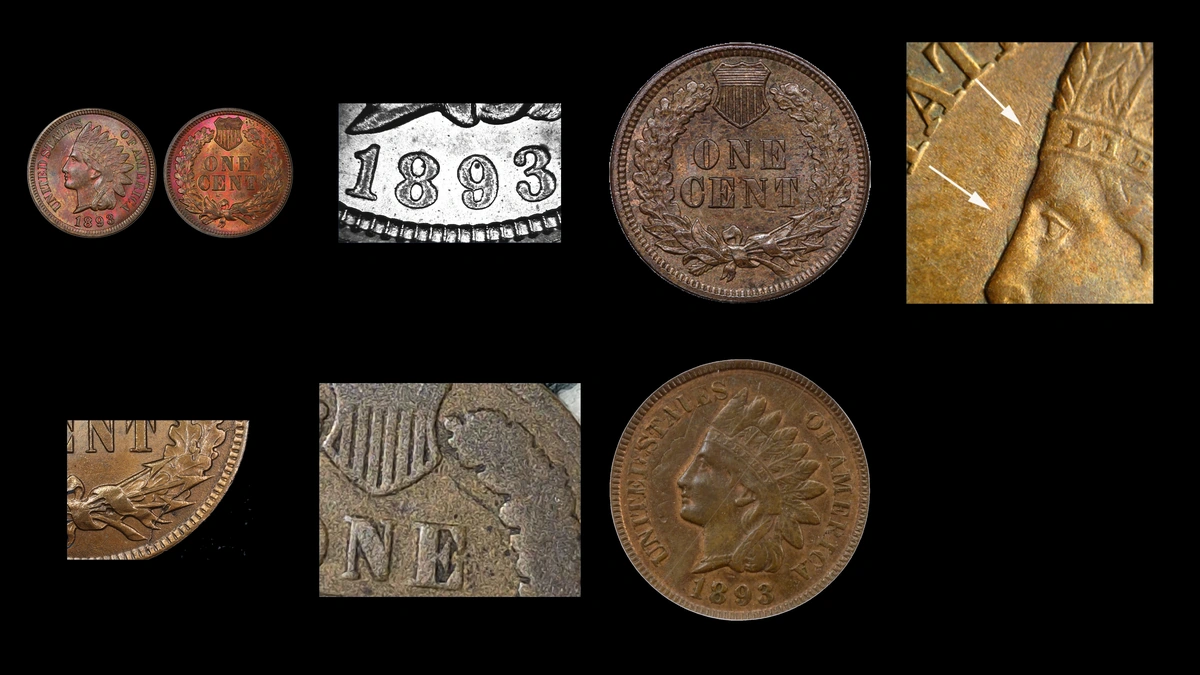
Turn an 1893 cent over before deciding what its error is: one normal-looking front hides a recessed mirror portrait on the back. That coin sold for $2,530.
This guide to 1893 Indian Head penny errors spans estimated values of $5–$15,000. The silver-blank tier uses comparisons, including a $10,200 sale of a 1938 Lincoln cent, rather than an adopted 1893 transaction.
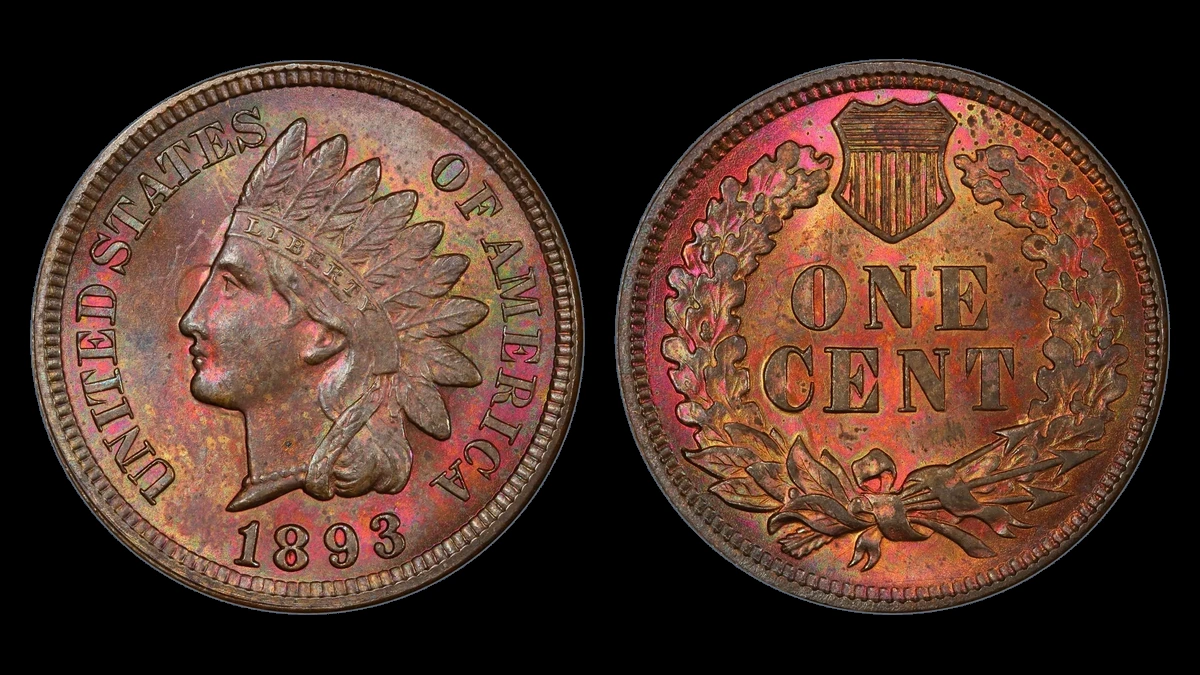
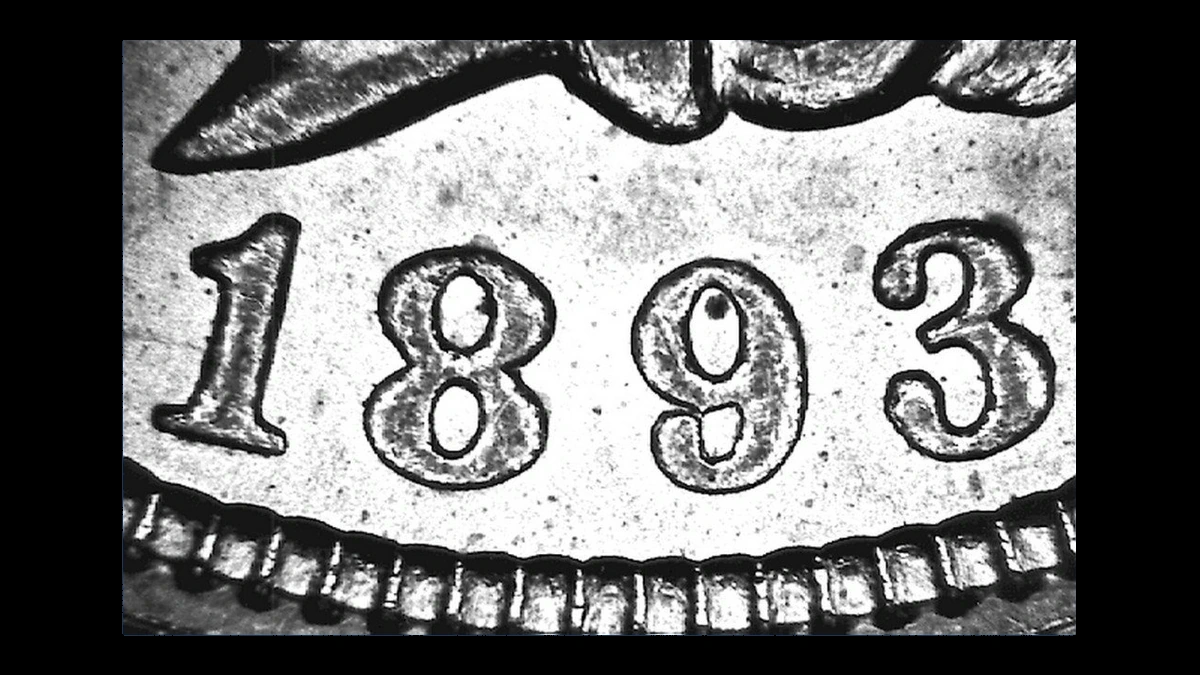
1. 1893 Penny Small Earlier Strokes Sit inside 893: Repunched Date Error
A date punch placed more than once on the die can leave pieces of an earlier impression. One recorded pattern has rightward remnants in the lower loop of 8, both loops of 9, and the upper loop of 3.
How to Identify
Keep the date upright and compare all the affected loops with one matching variety. A solitary flat shelf or unexplained speck cannot supply the whole pattern.
The portrait can remain single because the date was added separately to the die. Repunching does not require two blows to each finished coin.
What It’s Worth
$10–$1,000 is an estimate across identifiable patterns and conditions. A Snow-2 graded MS62 Brown by PCGS sold for $168 in December 2022.
That unworn coin with noticeable marks is a specific variety comparison. The same price should not be assigned to every doubled-looking 1893 digit.
2. 1893 Penny A Number Fragment Appears below the Date: Misplaced Date Error
An earlier punch placed outside the intended date area can leave part of a numeral in the border. One catalog suggests a possible extra 3 below and left of the main 3.
How to Identify
A specialist list also contains an 1893 misplaced-date entry, but the two reports are not automatically the same die. The suggested border 3 needs its own photographic match.
Compare only the raised fragment actually present. A worn border tooth or a scratch does not become a complete extra numeral because it sits in a promising place.
What It’s Worth
$20–$1,500 is an estimated range for identified examples. The tentative border mark requires confirmation before receiving a variety premium.
A 1908 misplaced date graded MS65 Red and Brown has a recorded $1,187 eBay result from 2021. That different-year price does not establish the identity or value of the proposed 1893 mark.
3. 1893 Penny The Ear or Headband Seems Repeated: Reported Doubled Front Error
A year-specific guide reports doubling around the ear, headband, and feather bases. A genuine doubled die has repeated design built into the tool before the coin is struck.
How to Identify
Begin away from the date and compare those portrait areas with a properly identified example. If only the date repeats, the repunched-date section provides a different explanation.
Look for related raised outlines instead of flat low shelves produced during striking. The general report names places to examine, but cannot authenticate every thick-looking feature there.
What It’s Worth
$15–$1,500 is an estimate for a genuinely matched doubled-front example. Stronger repeated detail and better preservation support the upper comparisons.
A recognized 1887 Indian cent doubled front sold for $1,380 in June 2025. Its established pattern belongs to another date, not to a confirmed 1893 transaction supplied here.
4. 1893 Penny The Right Wreath Lacks Detail: Weakly Transferred Design Error
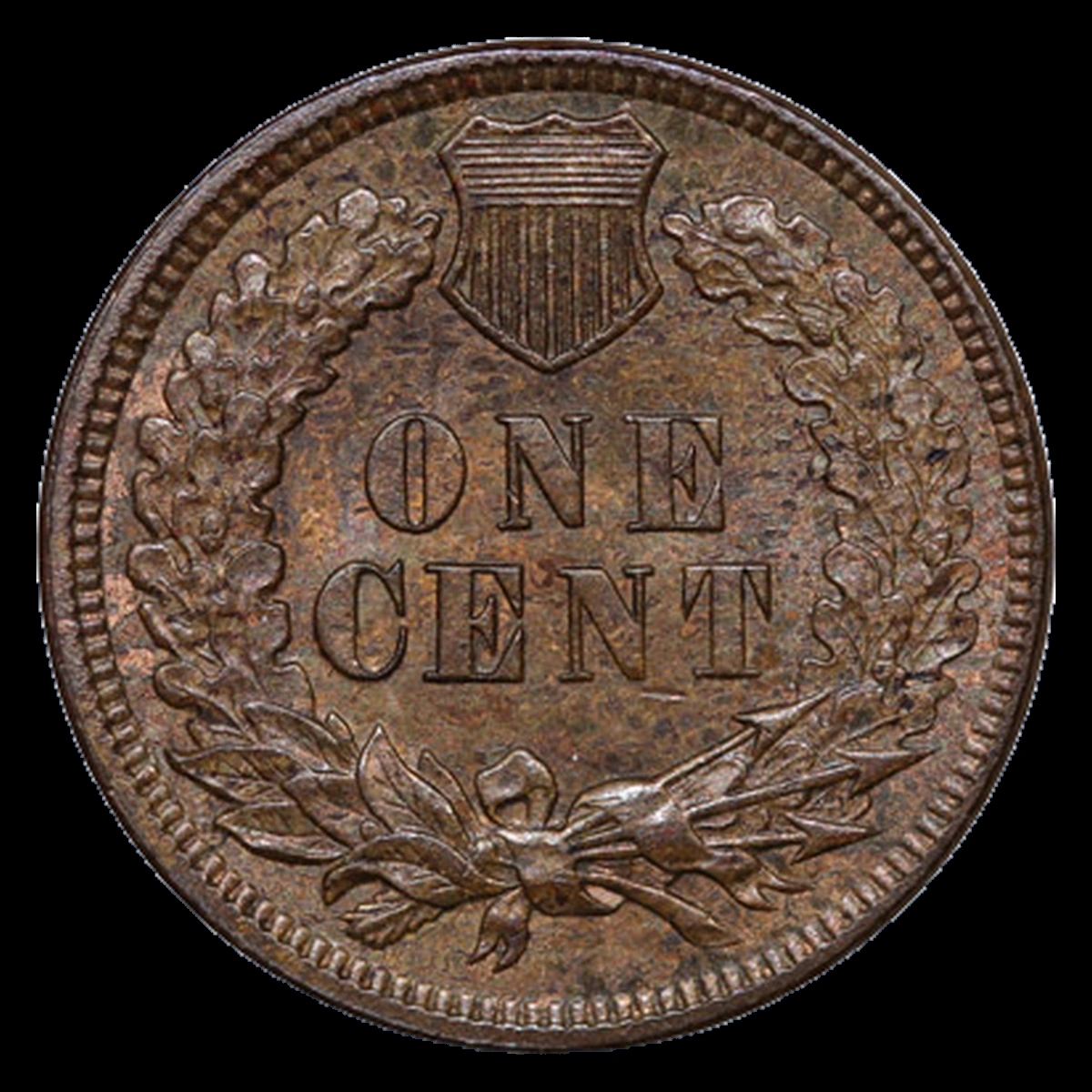
A specialist variety has a weak right wreath attributed to incomplete transfer of the design into the die. Coins made from that tool could repeat the weak area even if other details formed more clearly.
How to Identify
Compare the exact leaf pattern with the documented variety while keeping both sides of the wreath visible. General flattening of exposed details may instead be circulation wear.
A weak strike or blocked design can also soften leaves. Clash marks on the same die pair provide additional context, but do not establish the weak-transfer pattern by themselves.
What It’s Worth
$5–$150 is an estimated whole-coin range for an ordinary matched example. Heavy wear may hide the feature and leave little separate premium.
No fixed added value or specific realization is supplied for the weak wreath. The match must explain more than simply indistinct leaves.
5. 1893 Penny Faint Parts of the Opposite Design Appear: Die Clash Error
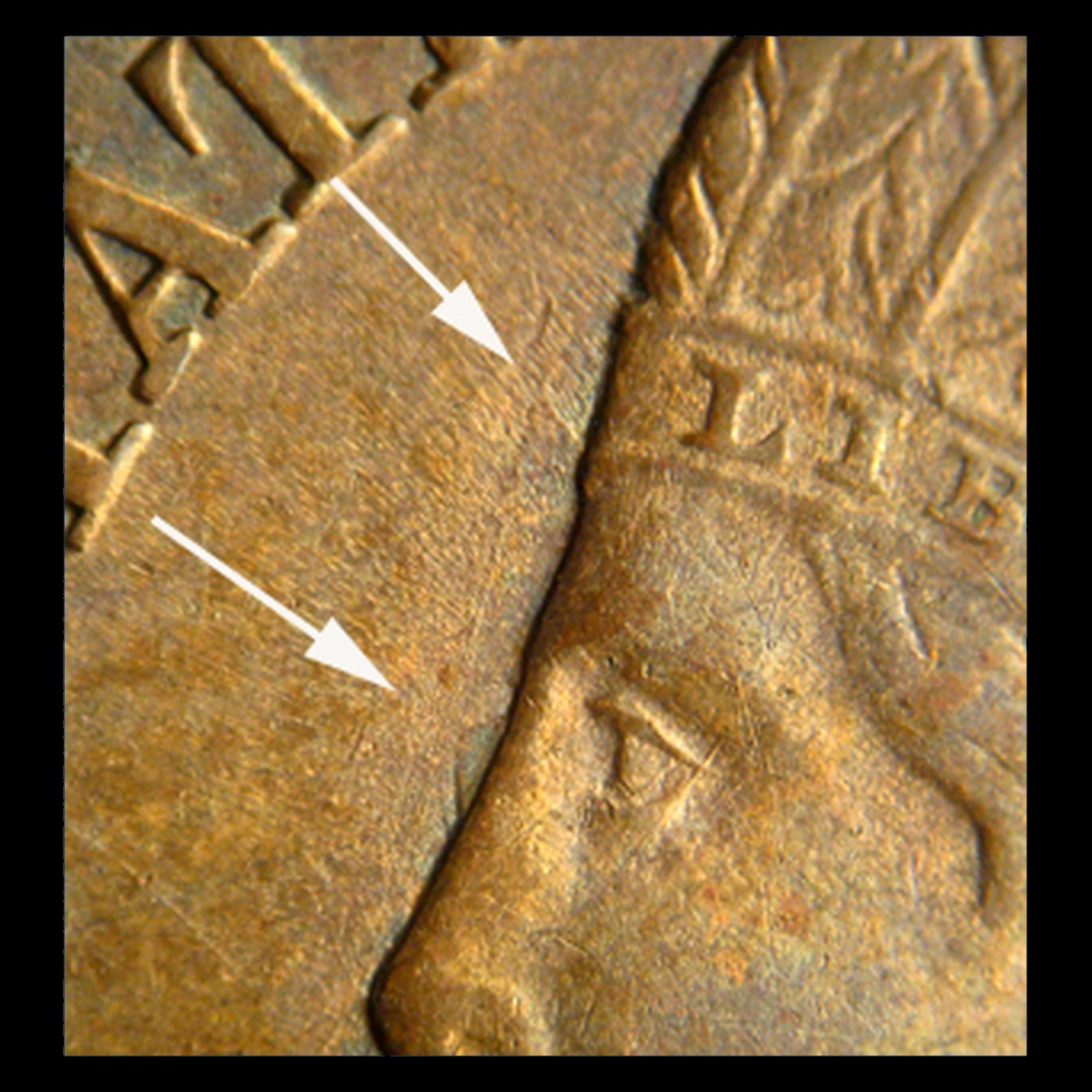
When the dies collide without a blank between them, they can acquire marks from the opposing design. Later coins may show those faint outlines.
How to Identify
The specialist catalog records clashes on several 1893 die pairs. Match a physical curve or design fragment to the correct photographed example rather than filling in a whole hidden picture from one line.
One pairing also has the weak right wreath described above. Keep the two features separate while examining the same coin.
What It’s Worth
$15–$500 is an estimate for recognizable clashes of differing strength and condition. A vague line on a worn coin may add very little.
The catalog supplies identities rather than a sale for every die pair. Other date or wreath features contribute to the same coin, so their maximum estimates should not be added together.
6. 1893 Penny A Line or Lump Rises from the Surface: Die Cracks and Chips Error
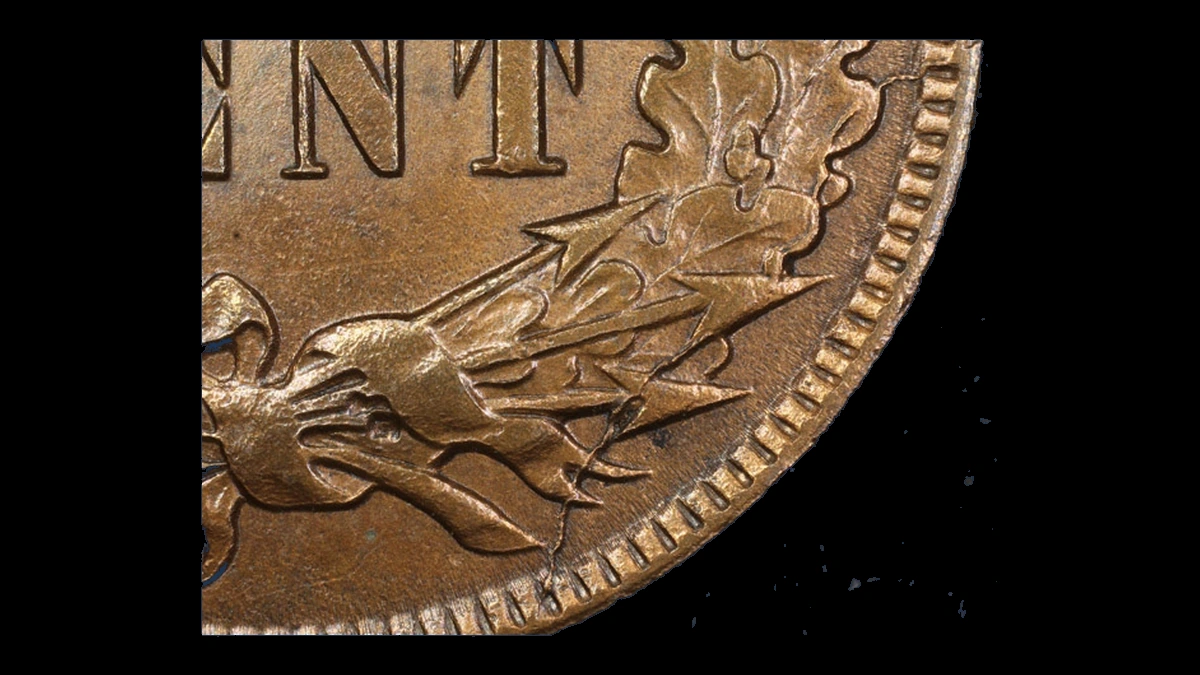
Ordinary examples include raised cracks through the arrow area toward the right ribbon end and a separately listed rim cud. A cud forms when an edge piece of the die is missing, rather than merely cracked.
How to Identify
Follow a raised line under side lighting and distinguish it from a cut. For a cud, check the connection to the rim and the loss of normal design inside the raised patch.
A separate Proof variety has a chip inside the lower loop of 9. Identify the specially made collector coin first; dirt filling the date on an ordinary strike is not the same feature.
What It’s Worth
$5–$75 suits small ordinary cracks, with stronger rim breaks around $50–$750. Complete Proof coins carrying the documented chip have a separate estimated range of $200–$3,000.
A 1946-S Lincoln cud brought $288 in March 2021, while an exceptional 1901 repunched-date Proof sold for $8,700 in August 2019. Neither prices the 1893 feature directly, and the Proof’s condition can account for far more value than a tiny die mark.
7. 1893 Penny A Patch Interrupted the Original Strike: Struck Through Material Error
An obstruction between the die and blank can leave a depression or prevent design from forming. The 1893 year report includes this category without identifying the material involved.
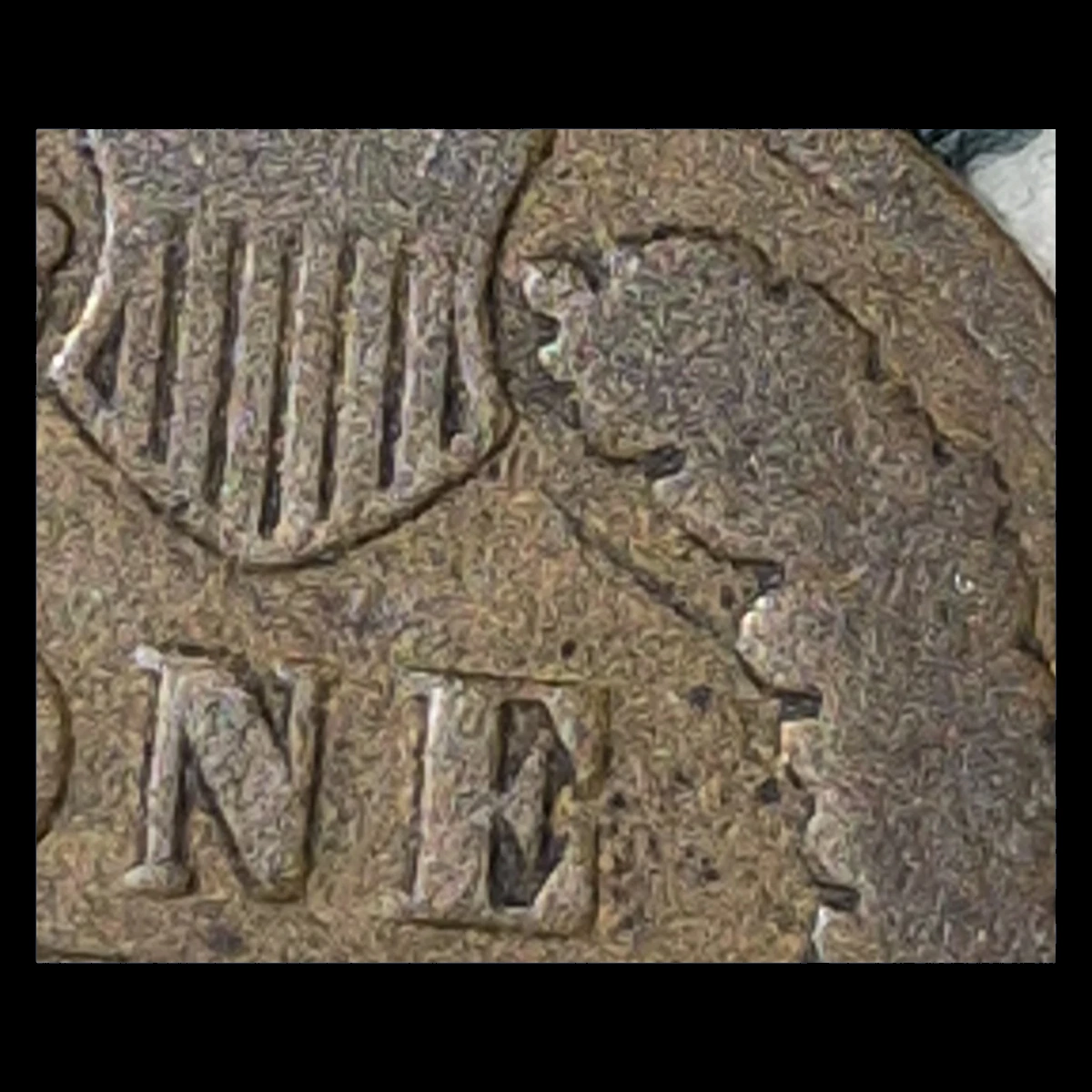
How to Identify
Follow a nearby letter into the affected patch. Examine whether the design was blocked at that boundary or crushed after it had formed.
Preserve any attached material and inspect the surrounding surface and edge for later impacts. A depression’s shape alone cannot establish cloth, grease, or a metal fragment.
What It’s Worth
$20–$500 is a working estimate for a genuine feature on an otherwise ordinary 1893 cent. Shape, clarity, and preservation determine the closest comparison.
A 1920 Lincoln cent struck through a metal fragment sold for $134 in March 2025. Its identified object does not establish the cause of the general 1893 report.
8. 1893 Penny Only the Front Sits Off to One Side: Misaligned Die Error
A front die can be displaced while the back die stays in its normal position. The resulting front border looks uneven, but the back design remains centered.
How to Identify
Take straight-on views of both faces at the same size. The year-specific report does not supply one fixed direction or percentage, so the actual borders must show the shift.
A tilted photograph can make a normal margin look narrow. If both designs lose detail in the same displaced area, compare an off-center blank instead.
What It’s Worth
$10–$300 is an estimate for a modest but clear front-die misalignment. Small differences can add little to the underlying penny.
No specific specimen sale accompanies this reported category. A front-only shift should not automatically take the value of a dramatic off-center strike affecting both faces.
9. 1893 Penny The Whole Design Moves toward One Edge: Off-Center Strike Error
The documented 12% example has its design shifted toward one o’clock. The unused metal lies opposite that direction, near seven o’clock.
How to Identify
Keep the design’s direction separate from the plain crescent’s location. The recorded coin is graded MS61 Brown by PCGS, and those details belong to that specimen.
Read the date and compare both faces to the same blank outline. A front-only shift, trimmed edge, or ground-down border does not establish this misplaced-blank event.
What It’s Worth
$100–$1,500 is an estimated range for dated 1893 off-center cents. A readable year and original surfaces matter alongside the amount of displacement.
A 1901 cent struck 10% off center and graded AU53 sold for $231.80 in March 2026. That lightly worn different-year example is not the price of the 12% 1893 MS61 coin.
10. 1893 Penny A Complete Picture Sits inside Extra Width: Broadstrike Error
A broadstrike spreads outward because the collar, the ring around the blank, does not contain it normally. The complete intended design still fits on the metal.
How to Identify
Trace all the outer lettering on both sides and inspect the expanded border. Hammering after minting can widen a coin too, but may crush existing detail or fold the edge.
A normal cent weighs about 3.11 grams and measures 19.05 millimeters across. Spreading changes width without necessarily removing metal, so use measurements together with the surfaces.
What It’s Worth
$50–$1,000 is a working range for worn through attractive, clearly expanded examples. A PCGS AU58+ broadstrike sold for $414.80 in March 2026.
That same-year specimen had very slight wear. Its price is for the complete coin, not a fixed rate for each extra fraction of a millimeter.
11. 1893 Penny A Step Runs along the Edge: Partial Collar Error
Only part of the blank’s thickness entered the collar on this type. Metal above the ring could spread more freely, leaving a step between the restrained and expanded portions.
How to Identify
The illustrated 1893 MS65 Red and Brown example needs a side view of its edge. A front photograph alone can hide the important change in level.
Both edge sections can be plain because Indian cents do not have reeded edges. Check for an original step rather than a filed groove or folded rim.
What It’s Worth
$75–$1,500 is an estimate across different conditions. A clear original step on an unworn coin makes a stronger comparison than a vague rim irregularity.
The illustrated MS65 coin has no adopted sale price here. The $414.80 AU58+ broadstrike provides related collar-failure context, with a different error and condition.
12. 1893 Penny A Second Date Shows Another Strike: Double Strike Error
A rotated second blow can leave overlapping designs within an almost normal outline. A larger sideways movement can instead put the second impression far off center.
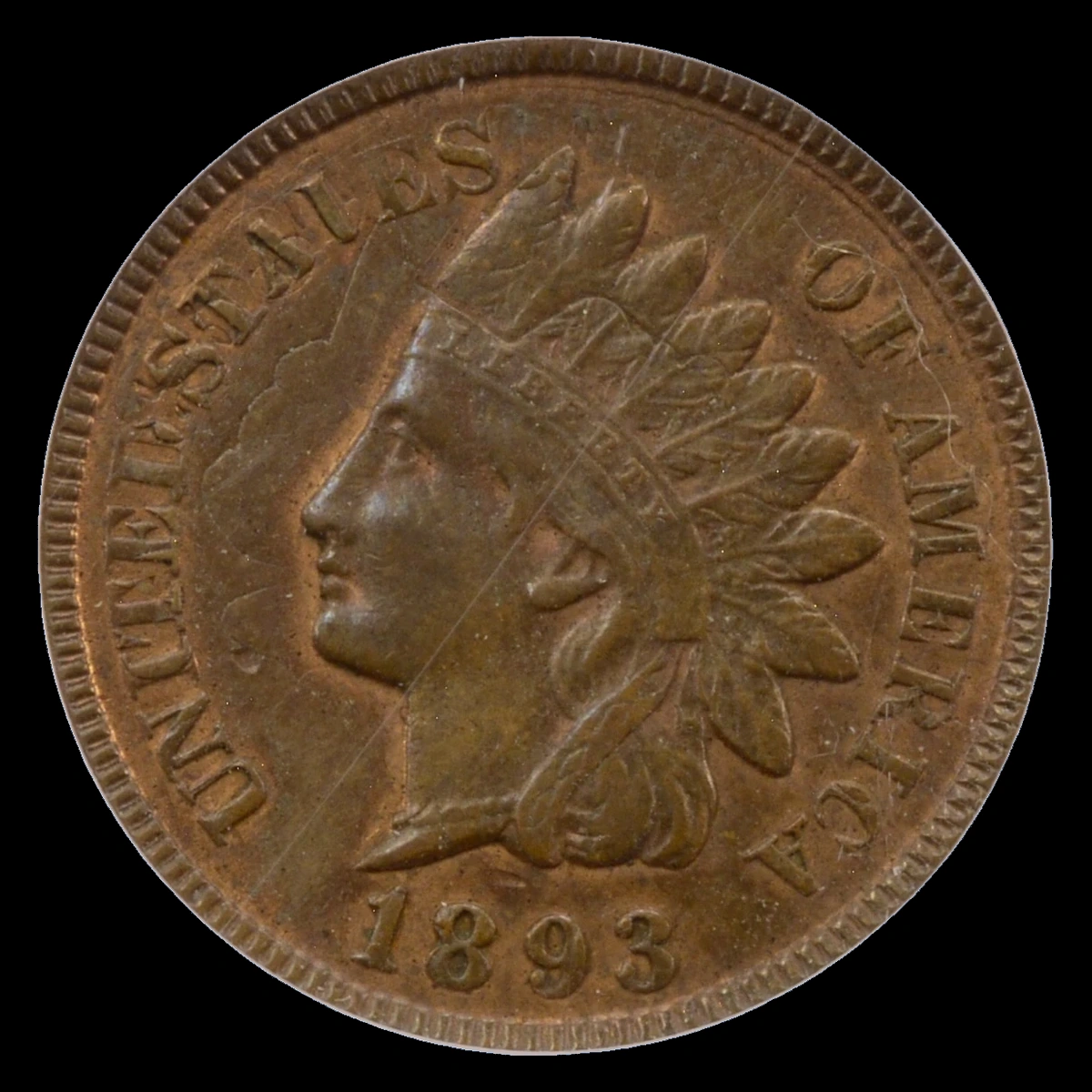
How to Identify
The dealer-listed PCGS AU53 example turned inside the collar and has another date near ten to eleven o’clock. A separate NGC MS63 Brown coin has a normal first strike and a 75% off-center second strike near three o’clock, with both dates visible.
Connect each date to its own portrait and lettering. Keep the two specimens’ positions and grades separate, and inspect the edge for a join between added pieces.
What It’s Worth
$300–$4,000 is an estimate across genuine double strikes of differing clarity and preservation. The AU53 coin was displayed at $1,950 on a Sullivan Numismatics page marked sold.
That displayed dealer price is not treated as a verified final transaction. Two dates help explain the error, but their distance apart does not set the whole coin’s value.
13. 1893 Penny A Recessed Mirror Portrait Replaces the Back: Brockage Error
A struck coin trapped in the press can act as a stamp against the next blank. Its raised portrait creates a backward, sunken copy called a brockage.
How to Identify
The documented NGC AU55 coin has a nearly complete mirror portrait on the back and a normal raised front. Its center is detailed, while the outer wording is weaker and the outline slightly spread.
Check both direction and depth of the copied image. A blank back, raised second portrait, or later coin-to-coin pressure mark is not the same evidence.
What It’s Worth
$1,000–$5,000 is a working range for examples with different preservation and image coverage. The lightly worn AU55 specimen sold for $2,530 in January 2010.
The slight spreading is included in that coin’s value. A separate broadstrike estimate should not be added simply because the edge is wider.
14. 1893 Penny Silver Carries the Cent Design: Reported Dime Blank Error
A historical reference records an 1893 example reported by Don Taxay on a silver dime blank. It does not provide a measured weight for that particular coin.
How to Identify
A standard silver dime blank starts near 2.50 grams and 17.9 millimeters across. These are comparison standards, not measurements of Taxay’s reported specimen.
Compare actual weight, size, and non-destructive metal testing together. The blank may spread under cent dies, while plating or filing can make an ordinary bronze penny appear misleadingly pale or light.
What It’s Worth
$2,000–$15,000 is an estimate for an authenticated 1893 silver dime-blank cent. It requires established blank identity and is not a claimed sale of the historical example.
A 1938 Lincoln cent on a silver dime blank sold for $10,200 in August 2025. That later design supplies a mechanism comparison, with its different date and portrait kept explicit.
Conclusion
A simple front-and-back comparison separates several of these errors: front-only misalignment differs from a misplaced blank, and a mirror portrait differs from a second raised strike. Edge photographs are especially useful for the collar errors.
Keep Proof chips, historical silver reports, and documented auction specimens tied to their own evidence. Each complete coin receives one value even when it has several related features.