Rare 1883 Penny Errors (List & Pictures)
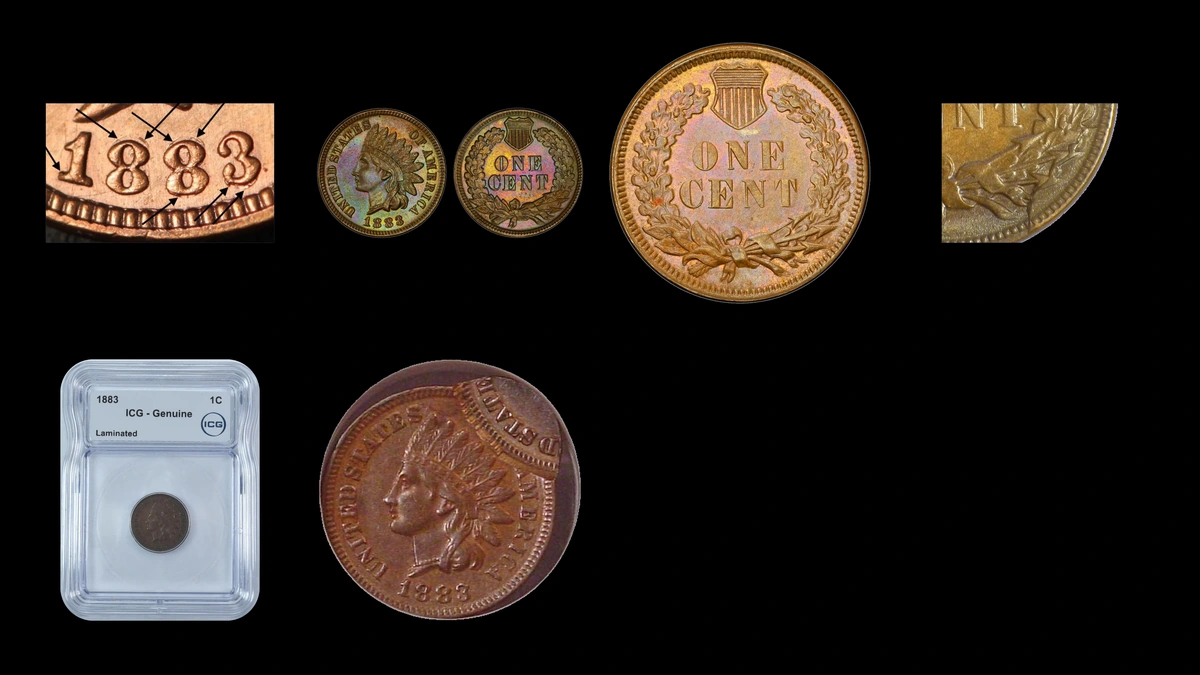
A different-year cent struck over a dime brought $37,375 in 2006; an 1883 double strike received a $450 winning bid before fees in 2008. These are separate comparisons within 1883 penny errors, whose estimated whole-coin values range from $5–$50,000.
Start with the date and portrait, examine the back, and reserve the highest range for an authenticated cent-over-dime overstrike.
| Clue | What to investigate | Estimated value |
|---|---|---|
| Extra numeral strokes | Repunched or misplaced date | $15–$3,000 |
| Extra outlines or ridges | Clash, doubled reverse, or die damage | $5–$3,000 |
| Peeling surface | Lamination | $10–$750 |
| Another cent impression | Double strike | $300–$6,000 |
| Earlier dime design | Cent over a struck dime | $10,000–$50,000 if authenticated |
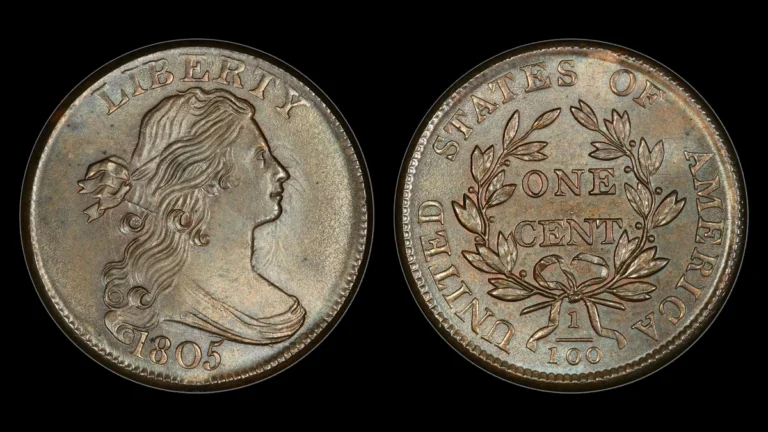
The regular bronze cent weighs 3.11 g and measures 19.05 mm, with a plain edge. A magnifier and side lighting help distinguish raised details from grooves cut into the surface.
1. 1883 Penny Earlier Strokes around the Numerals: Repunched Date Error
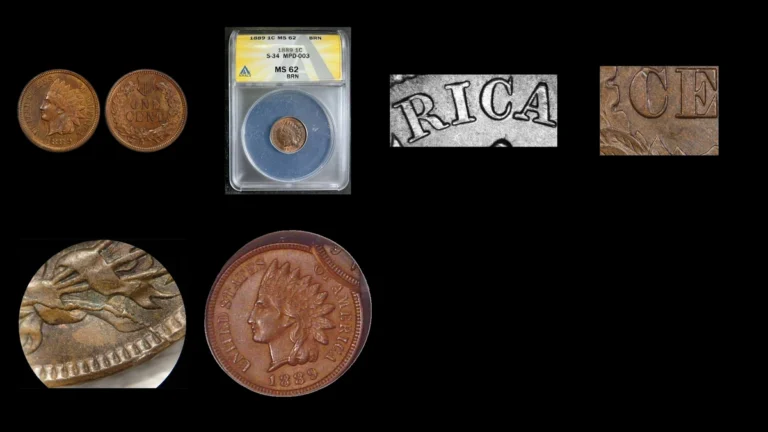
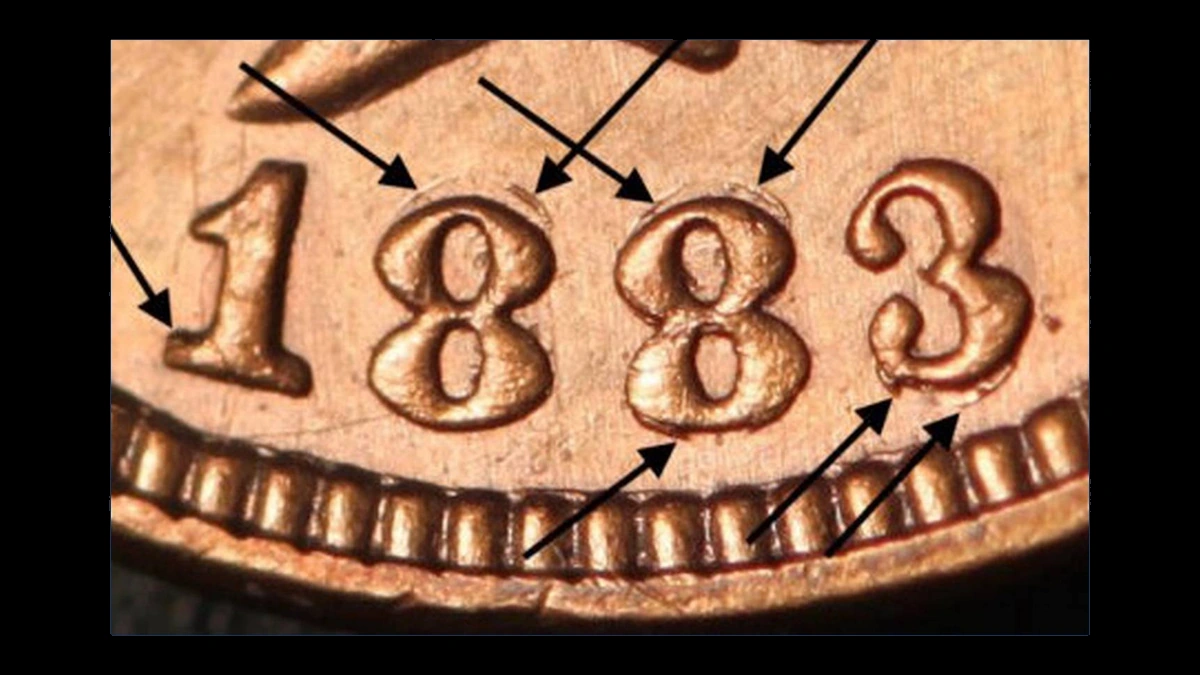
One recorded date pattern preserves parts of an earlier placement of all four digits. Extra strokes occur above and below the 1, inside the 8s, and toward the left and bottom of the 3.
These remnants came from repositioning a date punch in the die. Other 1883 varieties involve fewer numerals.
How to Identify
Compare the direction and shape of the remnants across the whole date. A combination assembled from several varieties will not identify one real die.
A damaged punch can produce a broken loop or a bump above the 3. That feature alone does not demonstrate a repeated date impression.
What It’s Worth
Estimated values are $15–$2,000 for identified examples, including the underlying coin. Wear and original surfaces can matter as much as the size of the repeated strokes.
An 1895 Snow-1 repunched date graded MS64 Brown sold for $264 in November 2022. It is a different-date comparison, not an 1883 result.
2. 1883 Penny Numeral Pieces near the Necklace: Misplaced Date Error
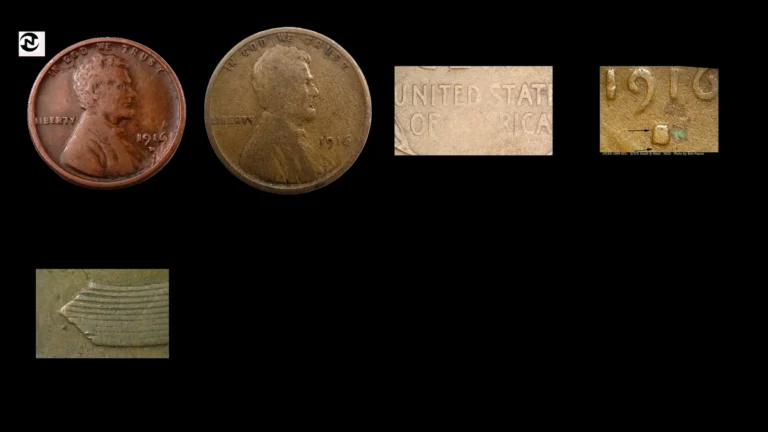
Some tiny marks near the lower portrait are fragments of date digits. They survived after a punch touched the die outside the intended date area.
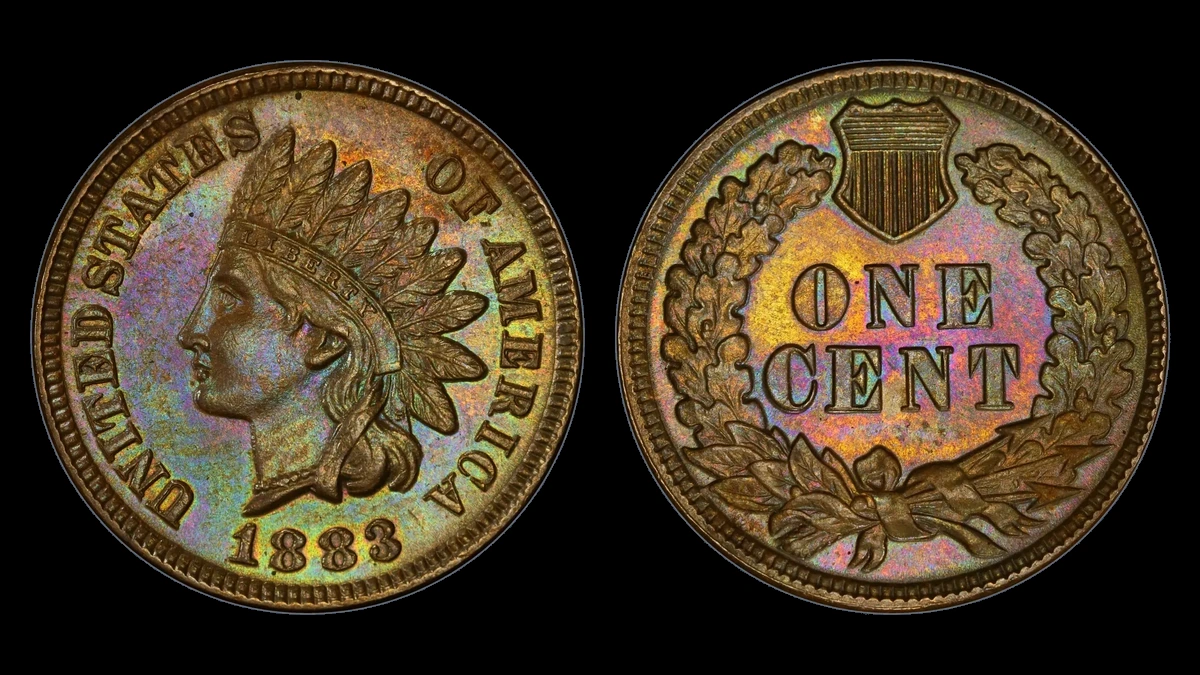
How to Identify
One pattern has the base of a 1 in the bust point and first pearl. Another shows a 1 among later pearls and an 8 between the ribbon end and the portrait’s lower edge.
A separate variety places the tops of 83 in the border below the date. Match each location with the documented 1883 varieties, keeping normal pearls and border teeth visible for reference.
What It’s Worth
Matched misplaced dates have an estimated whole-coin range of $25–$3,000. A recognizable numeral fragment provides stronger evidence than an unexplained raised speck.
An 1878 Snow-2 with misplaced 78 sold for $1,920 in October 2019 at MS65 Red. Its unworn state and retained copper color are important parts of that different-year comparison.
3. 1883 Penny Unexpected Outlines below STA: Misaligned Die Clash Error
Traces beneath STA in STATES can reflect contact between the two dies while they were out of alignment. With no blank between them, one tool marked the other, and later coins copied those marks.
How to Identify
Compare the shapes below STA with the recorded clash, using both faces to understand their origin. The ordinary designs may remain centered because the unusual contact happened before the coin was struck.
Scratches in the same area do not establish a clash. The extra outlines must correspond to the documented transferred pattern.
What It’s Worth
A matched example may fall within an estimated $10–$500. Faint evidence on a heavily worn or damaged coin can contribute little beyond the cent’s ordinary value.
No completed auction result accompanies this cataloged 1883 clash in the supplied evidence.
4. 1883 Penny Repeated Leaf and Ribbon Edges: Doubled Reverse Error
Snow-6 shows doubling in the lower wreath while the upper wreath can remain normal. The repeated details originated in the die’s manufacture and could appear after one strike.
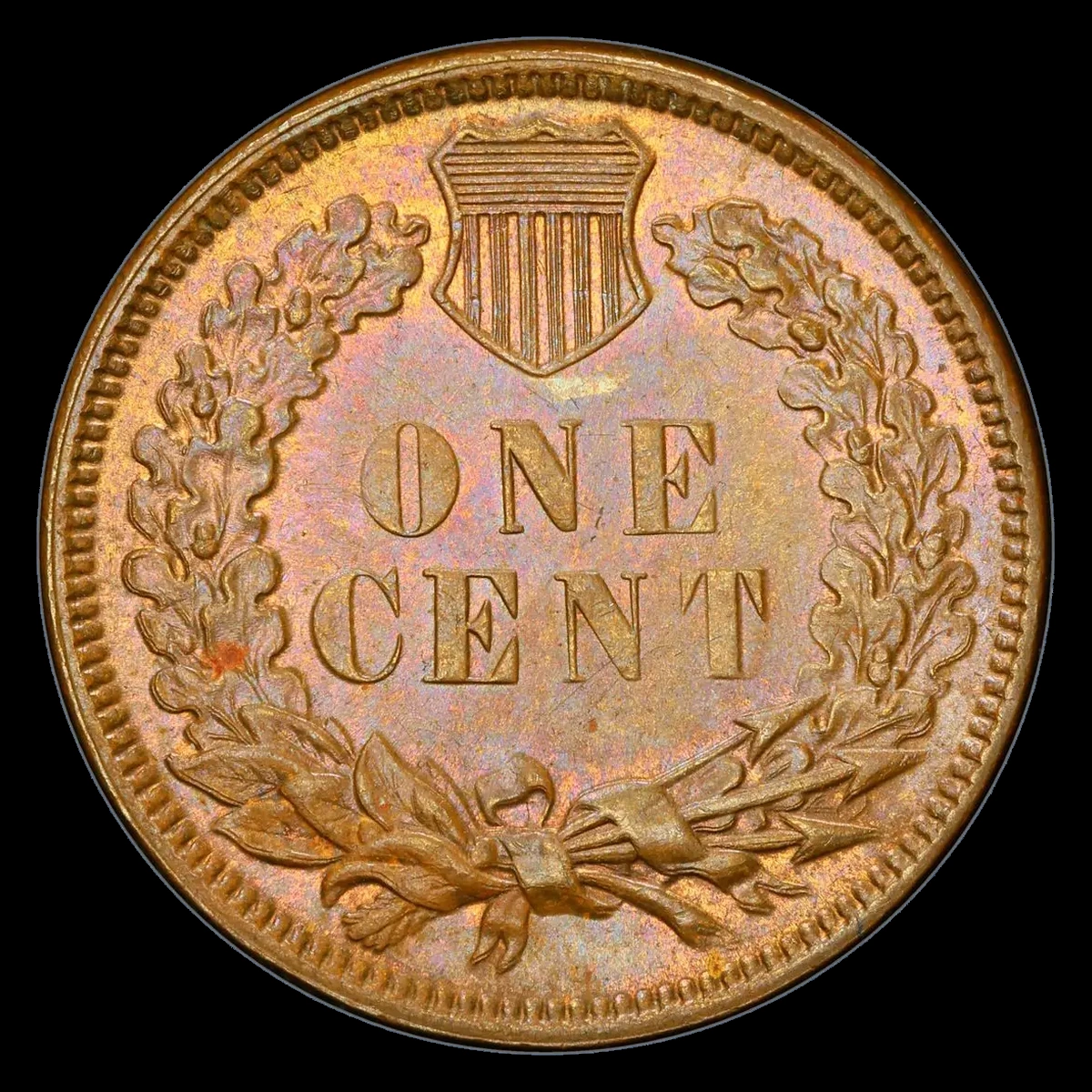
How to Identify
For Snow-6, compare the lower wreath from about three o’clock to nine o’clock. A separate pattern involves shield bars, leaves and their veins, the ribbon knot, and lower arrowheads.
Use the appropriate reference for each pattern. A flat shelf or random line beside one leaf is less persuasive than several correctly repeated shapes.
What It’s Worth
Estimated whole-coin values range from $20–$3,000 for identified doubled reverses. The particular die and condition both matter.
An 1889 doubled-reverse cent graded AU55 sold for $240 in July 2025. That lightly worn coin offers a same-series comparison, not a sale for either 1883 pattern.
5. 1883 Penny Ridges, Small Bumps, and Rim Patches: Die Damage Error
Cracked dies can leave raised lines near the nose and cheek, below BERTY, or through the reverse wreath. Small missing pieces of die steel instead produce raised chips.
A larger break that reaches the rim produces a cud. If broken steel stays partly in place, a retained break may preserve some design within its boundary.
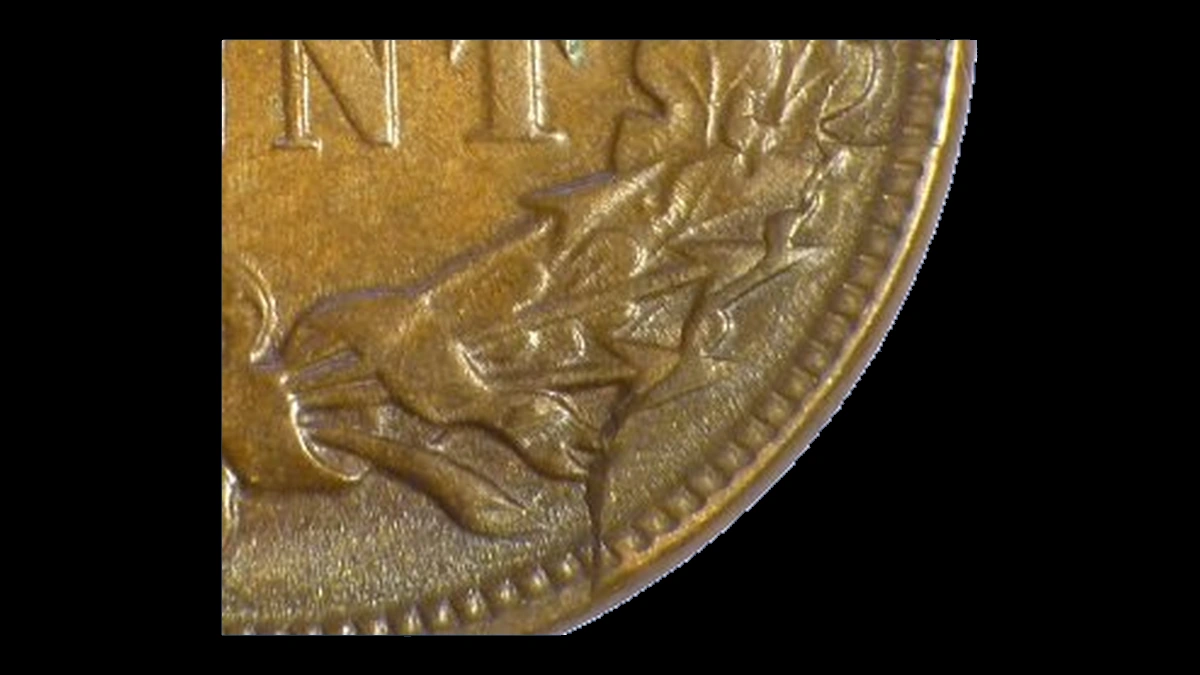
How to Identify
Two bumps below the right side of N in ONE belong to a different pattern from a single chip below O. Match the individual mark instead of treating these as features required on one coin.
Separate reverse breaks occupy roughly 3:30–5:00 and 8:45–10:15. Confirm a raised boundary and any surviving interior design before calling a patch a retained break.
What It’s Worth
Estimate $5–$150 for modest cracks and $25–$1,500 for clearer chips, retained breaks, or cuds. These figures include the coin’s condition and ordinary value.
An unworn 1866 Indian cent with a reverse cud sold for $504 in March 2021. A substantial rim break on that coin does not set the premium for a tiny 1883 interior bump.
6. 1883 Penny A Thin Layer Lifts from the Front: Lamination Error
A weak layer in the bronze can separate, leaving a shallow uneven patch. Northeast Numismatics offered an 1883 front-lamination example graded NGC About Good 3, a heavily worn grade.
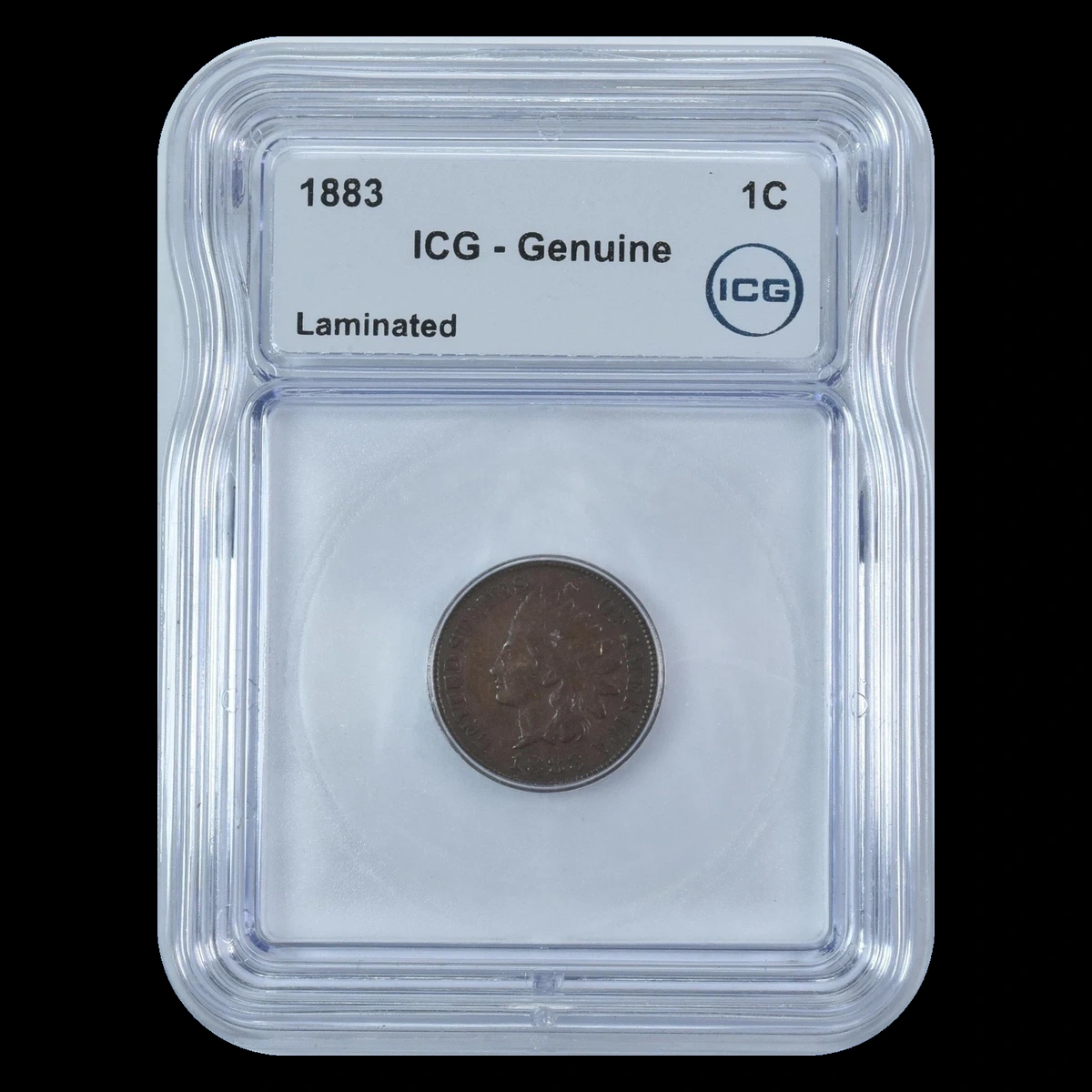
How to Identify
Locate the boundary of the separated layer and any attached lip without lifting it. Scattered corrosion pits or a scraped groove do not establish peeling metal.
The dealer description gives no exact path across the portrait. A surface lamination also does not mean the whole coin split into two thickness layers.
What It’s Worth
Estimated values are $10–$750 for genuine examples of different sizes and conditions. A dramatic flaw can still remove details that collectors would otherwise value.
The AG3 dealer coin had a $125 asking price, not a recorded sale. An unworn 1890 lamination sold for $104 in April 2010, illustrating a different-date transaction.
7. 1883 Penny A Small Extra Impression at the Edge: Double Strike Error
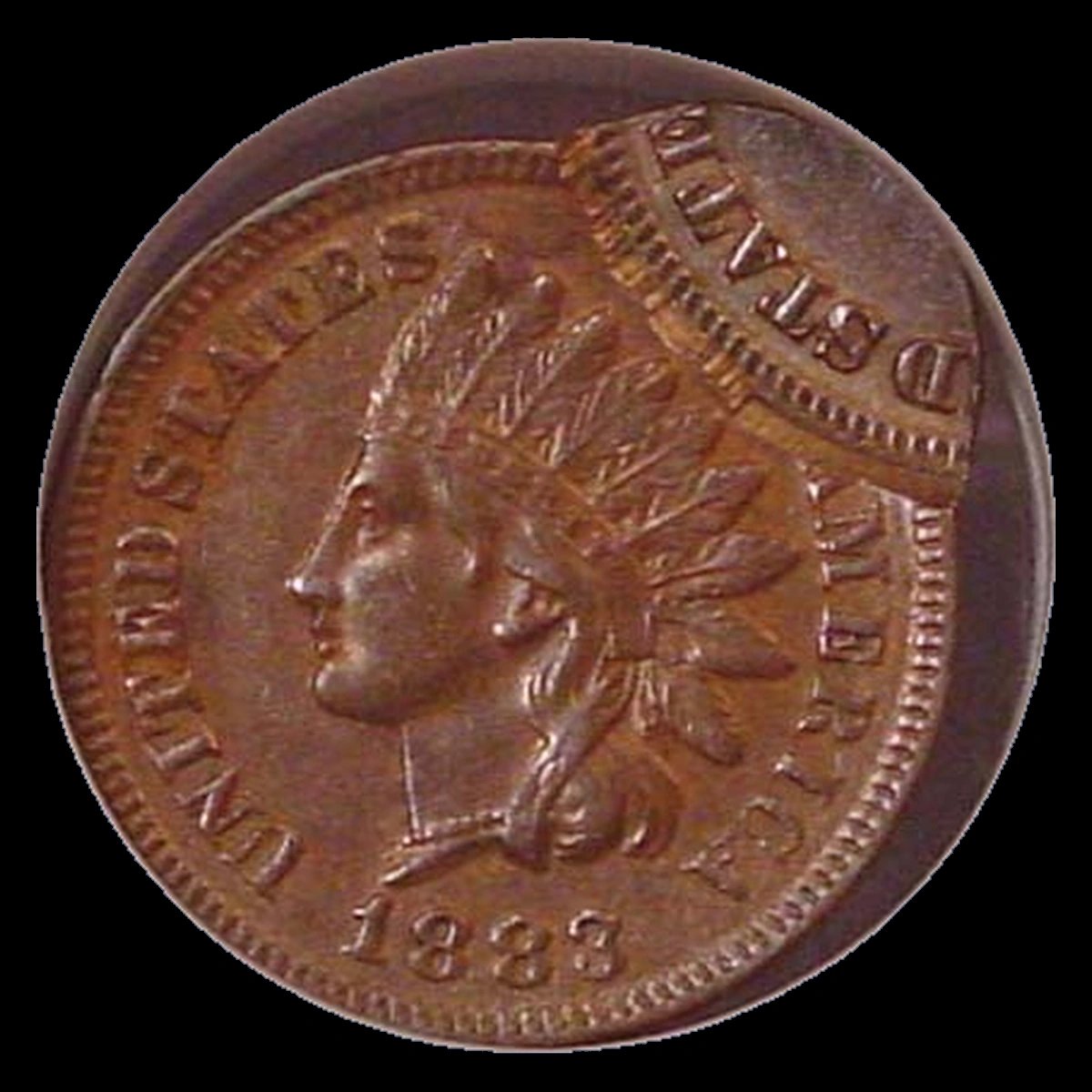
A coin that stays in the press can shift before another blow. One 1883 example has a centered first strike and a second impression 85% off-center toward one o’clock.
How to Identify
First follow the main design, then trace recognizable letters or portrait fragments in the small second impression. Their overlap should explain which details the later blow flattened.
The collection example was graded NGC MS62 Brown. A separate auction coin graded NGC VF30 had a 75% off-center second strike; it does not inherit the collection coin’s direction or grade.
What It’s Worth
Allow an estimated $300–$6,000 for identifiable 1883 double strikes. Clear surviving impressions and surface quality help distinguish close comparisons.
The 75% VF30 coin received a $450 winning bid before fees at Heritage’s January 2008 FUN auction. That amount is not a sale result for the unworn 85% example.
8. 1883 Penny Dime Details beneath the Cent: Double Denomination Error
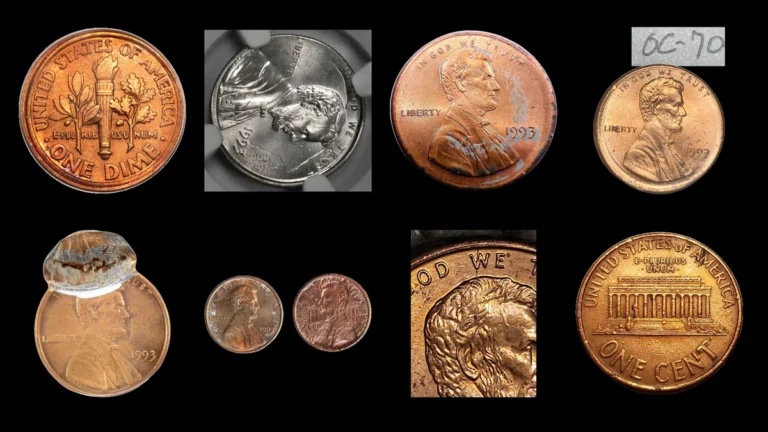
The historical record includes an 1883 cent struck over an already struck silver dime. Such an overstrike can preserve pieces of the earlier denomination beneath the cent design.
How to Identify
Look for identifiable dime letters or design that fit beneath the later cent impression. Silver color alone could result from plating and is not enough.
The USPatterns record, citing Don Taxay, supplies neither the dime’s date nor a current certification. A specialist should assess the metal, edge, and overlapping designs without assuming that the underlying dime was also dated 1883.
What It’s Worth
A conditional estimate of $10,000–$50,000 applies to an authenticated 1883 cent over a silver dime. The historical report has no completed sale assigned here.
A 1909 cent struck over a 1906 dime sold for $37,375 in September 2006 at NGC MS65. This different-date, unworn double denomination provides context without establishing an 1883 price.
Conclusion
Small date fragments need a precise variety match, while larger marks need an explanation of how the metal or dies changed. Preserve both full-face views when photographing an 1883 cent so isolated details retain their context.
Keep the $450 double-strike bid, dealer asking price, and different-year auction results separate. The historically reported cent-over-dime requires authentication before the highest estimated range becomes relevant.