Rare 2015 Nickel Errors (List & Pictures)
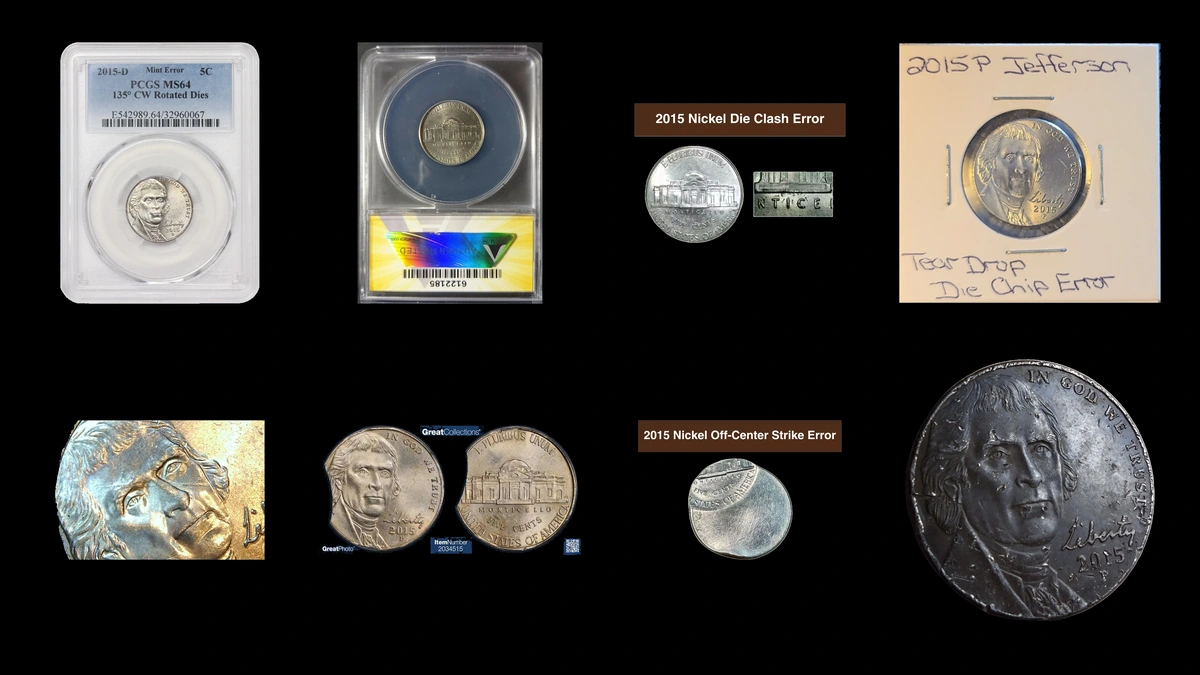
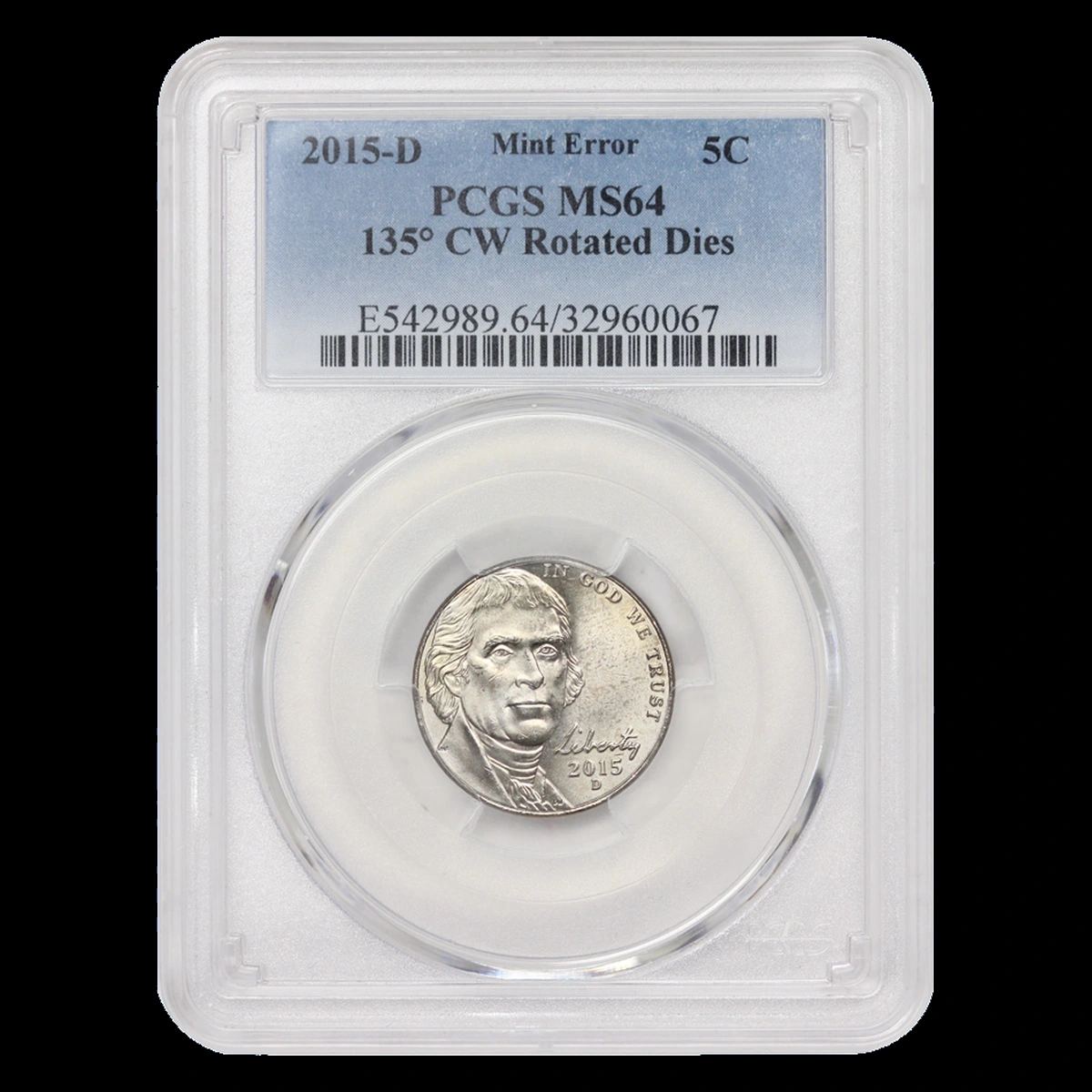
A controlled flip revealed a 90-degree reverse rotation on a 2015-D nickel that sold for $79 in October 2021. Other unusual nickels need closer checks of their design, surface, or outline.
The estimated range for 2015 Jefferson nickel errors is $3–$500, and the highest supplied completed comparison is $124 for a different-year 1997-P clipped nickel. Start by comparing both faces, then work through repeated details, raised marks, missing design, and metal changes.
| Observation | Feature to investigate | Estimated range |
|---|---|---|
| Reverse sideways after flipping | Rotated dies | $40–$300 |
| Extra outlines or transferred traces | Doubled die or clash | $3–$75 |
| Raised line, chip, or rim patch | Die damage | $3–$200 |
| Weak detail, embedded object, or flap | Struck-through error or lamination | $3–$400 |
| Missing edge or changed outline | Clip, broadstrike, or off-center strike | $15–$500 |
| Unusual dark or coppery surface | Possible improper annealing | $30–$250 if authenticated |
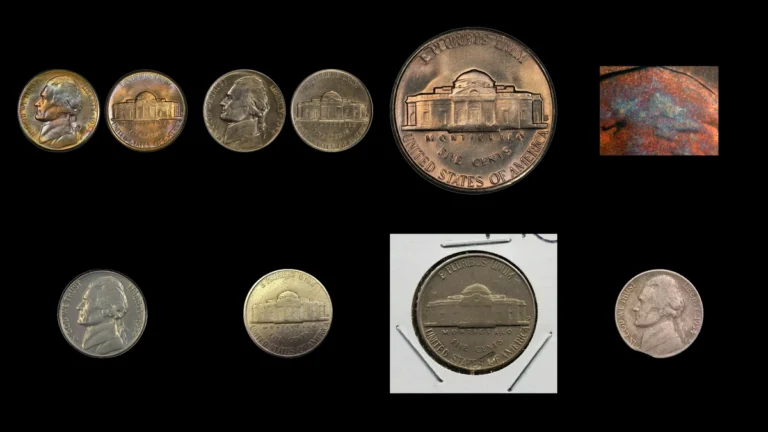
1. 2015 Nickel Monticello Lies Sideways After Flipping: Rotated Dies Error
The documented 2015-D example has its reverse rotated 90 degrees clockwise. A separate offered Denver coin shows a 135-degree clockwise turn, demonstrating that the year does not have one universal angle.
How to Identify
Hold Jefferson upright and flip top to bottom without a sideways twist. Repeat in a fixed holder or continuous video, then measure where Monticello finishes relative to upright.
Each face may look ordinary when viewed alone. Independently turned photographs cannot establish the relationship, and a seam along the edge can reveal joined altered halves.
What It’s Worth
$40–$300 is the estimated range for convincing 2015-D rotations in different conditions and angles. The PCGS MS64 90-degree specimen sold for $79 on October 6, 2021.
The separately offered 135-degree coin has no sale amount supplied here. Its sold-listing status should not be converted into another auction result.
2. 2015 Nickel Extra Outlines Follow Letters or Portrait Details: Doubled Die Error
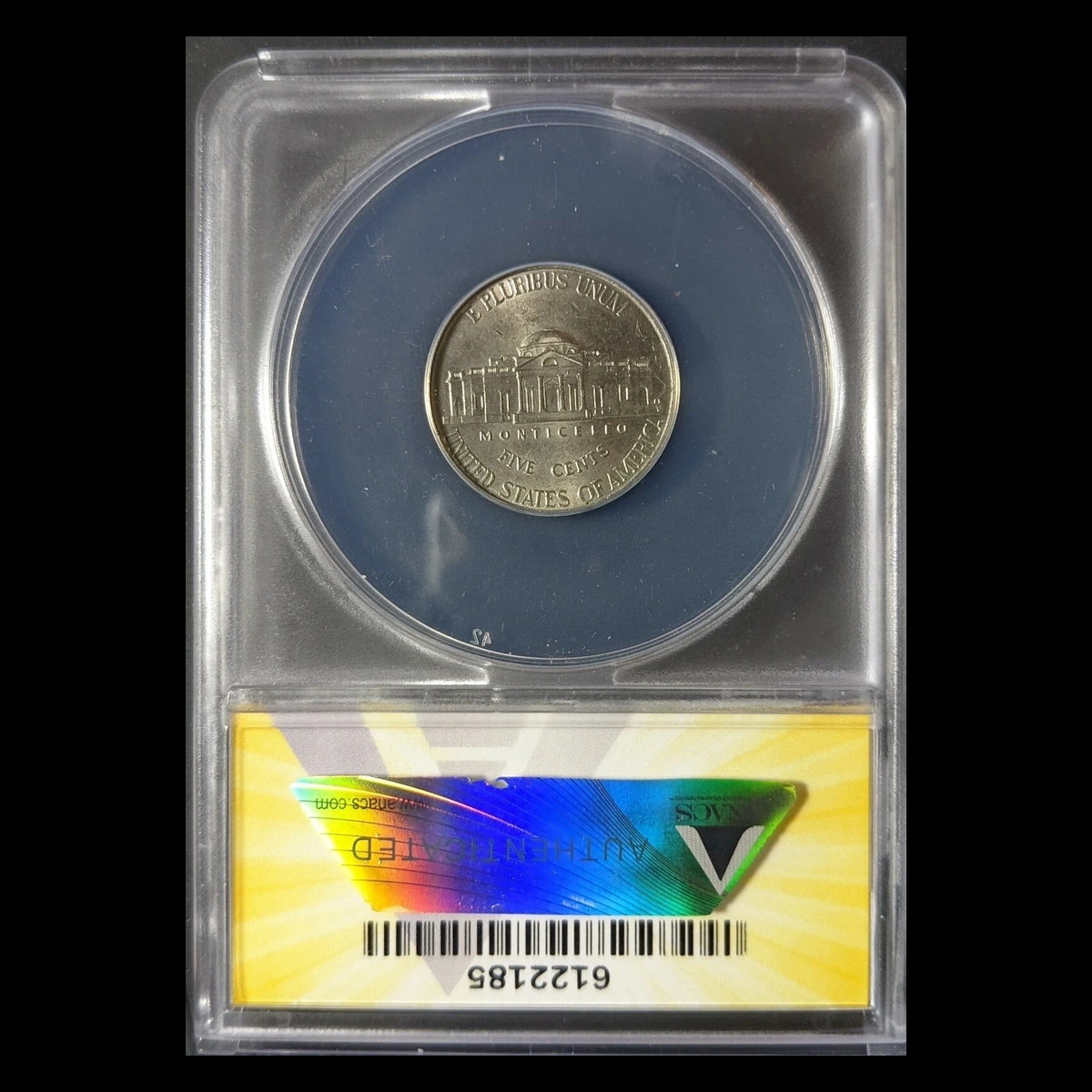
Reports for 2015-D describe front doubling around LIBERTY, the motto, or Jefferson. Separate reverse reports concern Monticello and FIVE CENTS without establishing that every reverse example is also Denver.
How to Identify
Read the actual mintmark and isolate one clear feature before expanding the comparison. Raised duplication should follow recognizable design, while a flat shelf from machine movement can reduce the apparent width of the main letter.
Match the specific additions with another documented example under varied light. A doubled die carries its duplicated detail before striking; it is not the same as a coin receiving a second complete blow.
What It’s Worth
$5–$75 is the estimate for an identified doubled design on a 2015 nickel. Slight worn details belong to a different comparison from clear additions on an unworn example.
No particular completed 2015 sale is supplied for these reports. Thick lettering or a mechanical shelf cannot inherit the prices of famous older doubled dies.
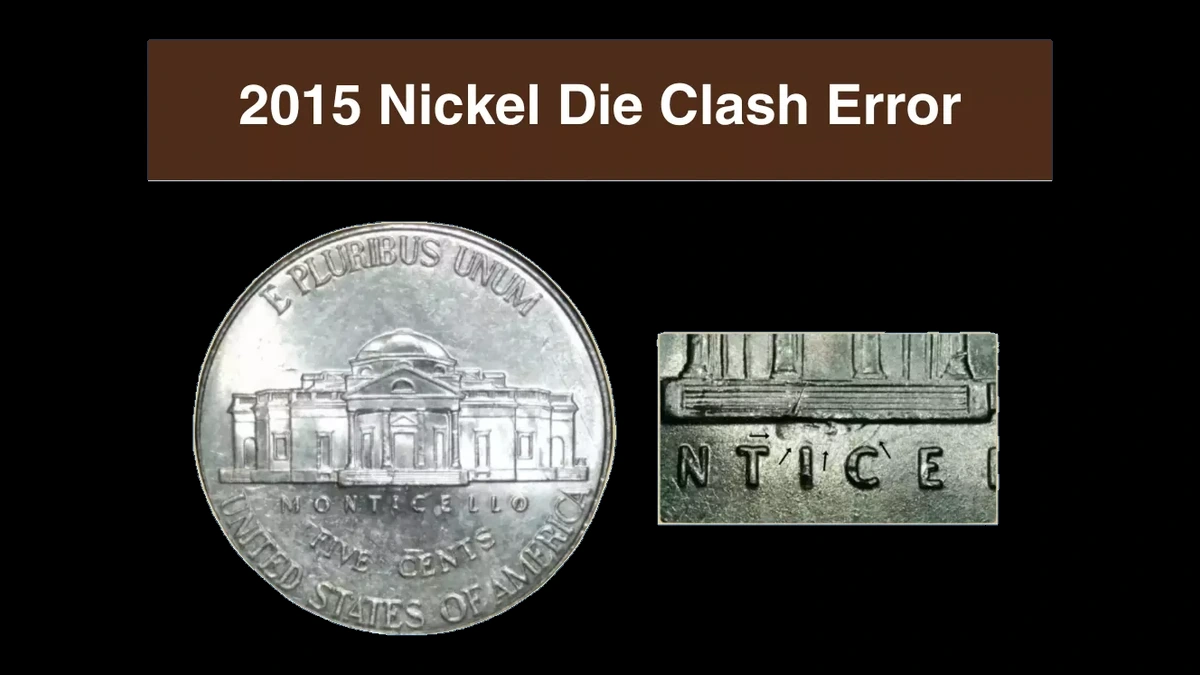
3. 2015 Nickel A Faint Outline Resembles the Opposite Face: Die Clash Error
A clash transfers portions of one die’s design to the other when the tools meet without a blank. Subsequent coins can show incomplete extra traces near otherwise normal features.
How to Identify
Compare the portrait and Monticello at the same scale, keeping nearby letters visible around the suspected mark. Its shape and position need to fit the opposing design rather than an isolated scratch or ordinary building detail.
Reported 2015 examples include Denver coins, but each specimen needs its own match. A full incuse mirror image produced by contact with another coin is a different error from faint die-transferred traces.
What It’s Worth
$3–$60 is the estimated range for visible identifiable clashes. Stronger recognizable shapes on an unworn nickel are easier to demonstrate than faint lines on worn surfaces.
This is an estimate rather than a completed price for a specific 2015 example. More unexplained lines do not automatically create a more valuable clash.
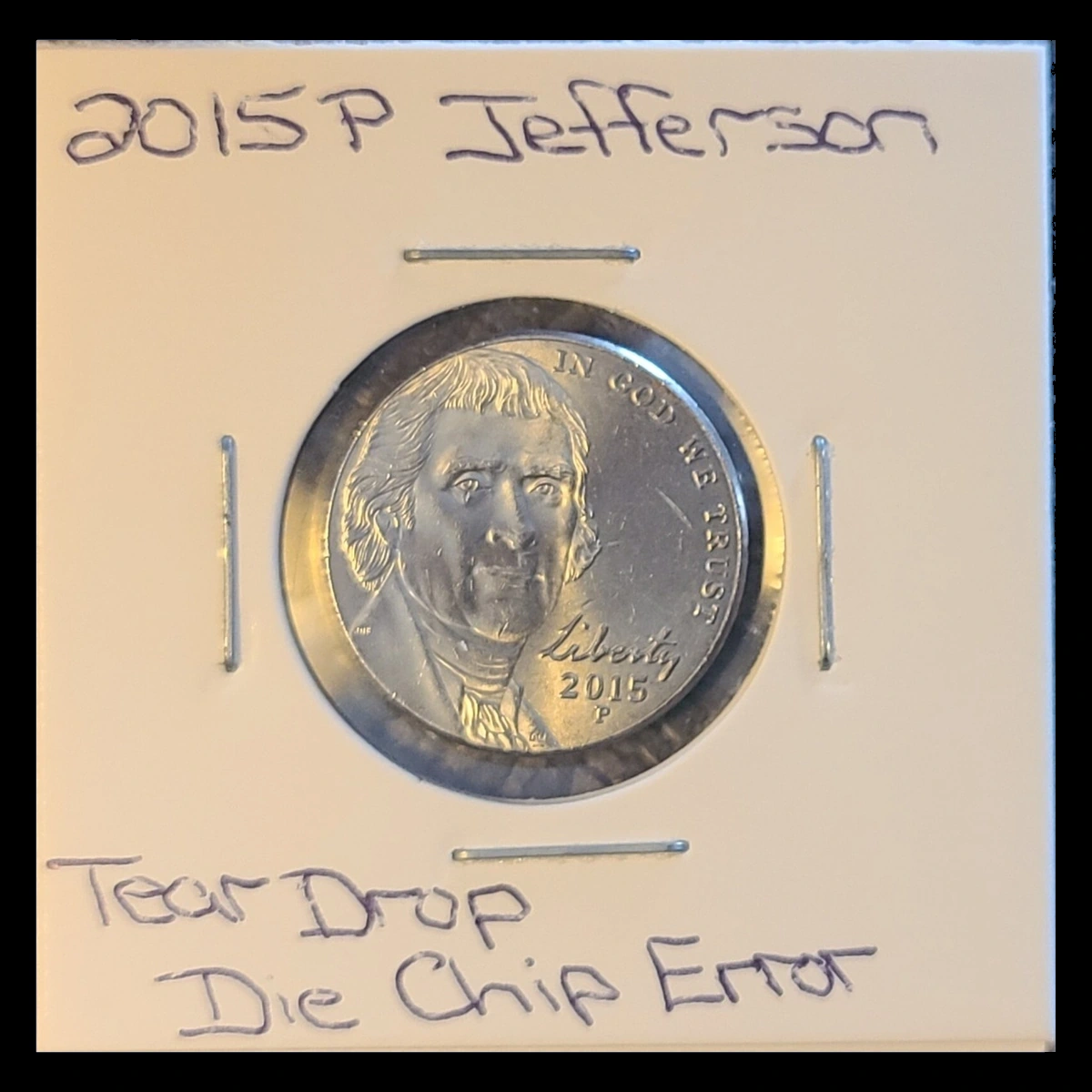
4. 2015 Nickel Raised Lines End in Blobs or Rim Patches: Die Cracks, Chips, and Cuds Error
The extent of a die opening determines the shape copied onto the coin. A narrow crack leaves a ridge, an interior chip creates a lump, and a larger missing edge section can leave a rim-connected cud.
How to Identify
Follow each raised feature to its endpoints before naming it. An interior blob does not become a cud unless the broader break connects to the rim and replaces normal design there.
Check for glue boundaries, cut-in scratches, folded edges, or later impact damage. The general 2015 categories establish no one common position for all cracks and breaks.
What It’s Worth
$3–$25 is the estimate for minor cracks and interior chips, while a substantial rim-connected break may fit $30–$200. Clear boundaries and strong surrounding detail help establish the comparison.
No specific transaction is assigned to these ranges. A crack and adjoining chip that developed together belong to one coin rather than separate full premiums.
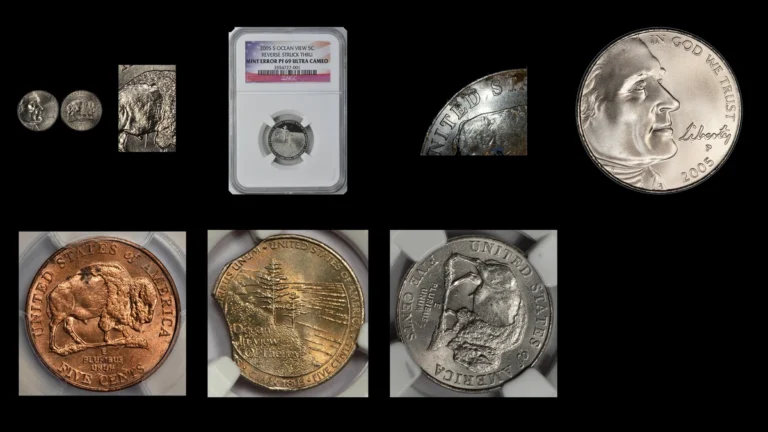
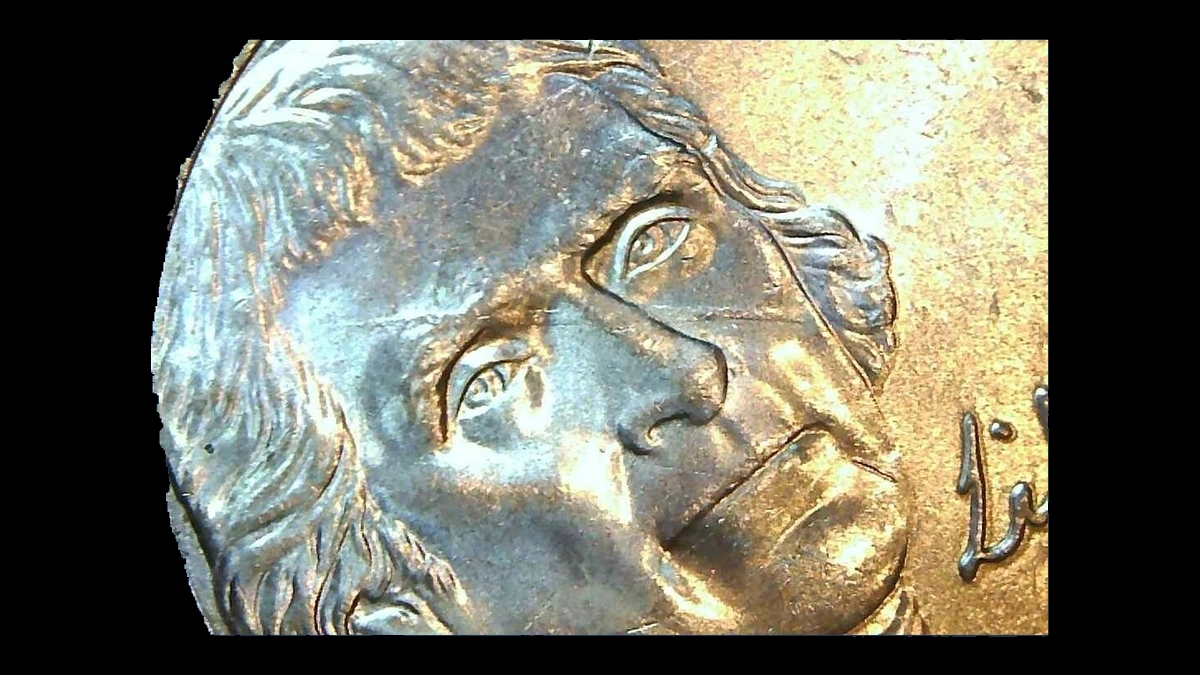
5. 2015 Nickel Detail Is Blocked or Material Remains Embedded: Struck-Through Error
The reports include weak areas around Jefferson, LIBERTY, or Monticello, plus retained material on a Philadelphia coin. Soft debris can prevent design from forming, while a solid object may leave an impression and remain attached.
How to Identify
At a retained object, examine how the strike formed around or against its boundary without pulling it. A piece resting on top or attached with glue does not establish embedding during the strike.
For weak detail, compare nearby sharp design with general circulation wear and later scrapes. Do not name the obstructing material merely from a rough appearance.
What It’s Worth
$3–$25 is the estimate for small grease-filled effects, with genuine retained-material errors roughly $50–$400. The object’s relationship to the strike must support the larger comparison.
A 2000-D nickel struck through a coin covering the die sold for $84 in September 2025. That different obstruction is not a sale of retained debris on the reported 2015-P.
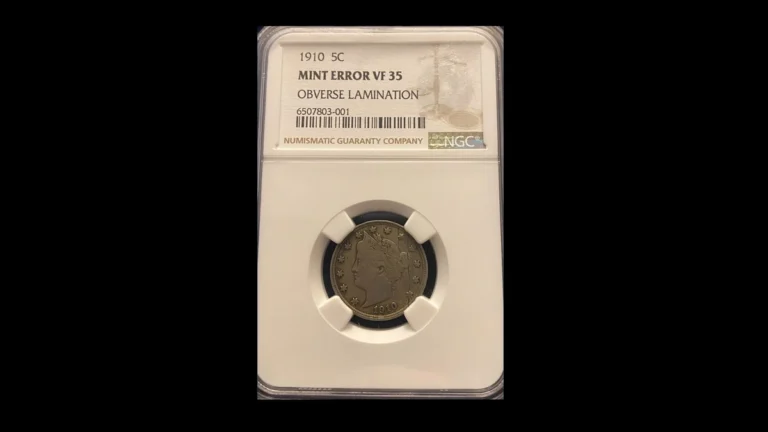
6. 2015 Nickel A Sheet Opens Beneath the Surface: Lamination Error
The reported 2015-D lamination involves separation within the nickel’s original metal. This denomination is a solid copper-nickel mixture, so a peeling area is not a missing clad layer exposing a separate copper core.
How to Identify
Keep the date and D in a full photograph before inspecting the layer boundary. Follow an existing split without lifting the flap, distinguishing internal separation from a scrape or an outside coating coming loose.
For safely handled loose nickels, 5 g and 21.2 mm are normal reference measurements; record intact spans without touching fragile layers. Retained material or lost metal can affect weight, and certified coins should remain in their holders.
What It’s Worth
$10–$100 is the estimate for clear 2015-D laminations. An attached sheet can explain the separation more clearly than a rough empty patch.
No completed price is supplied for a particular example. Corrosion or an unattractive large scar can still limit appeal even when the original layer weakness was mint-made.
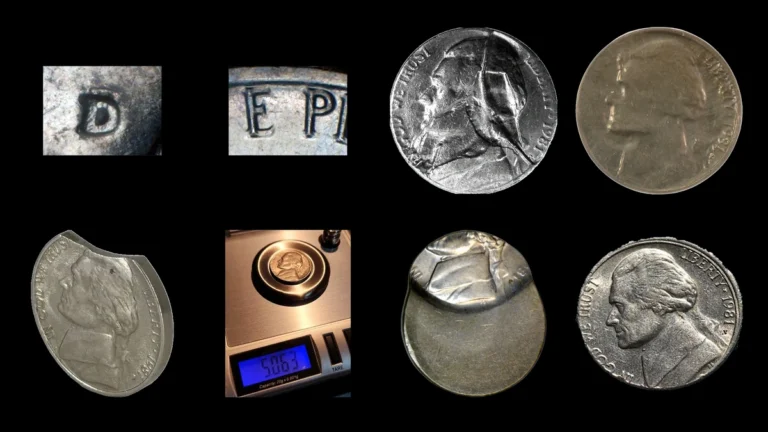
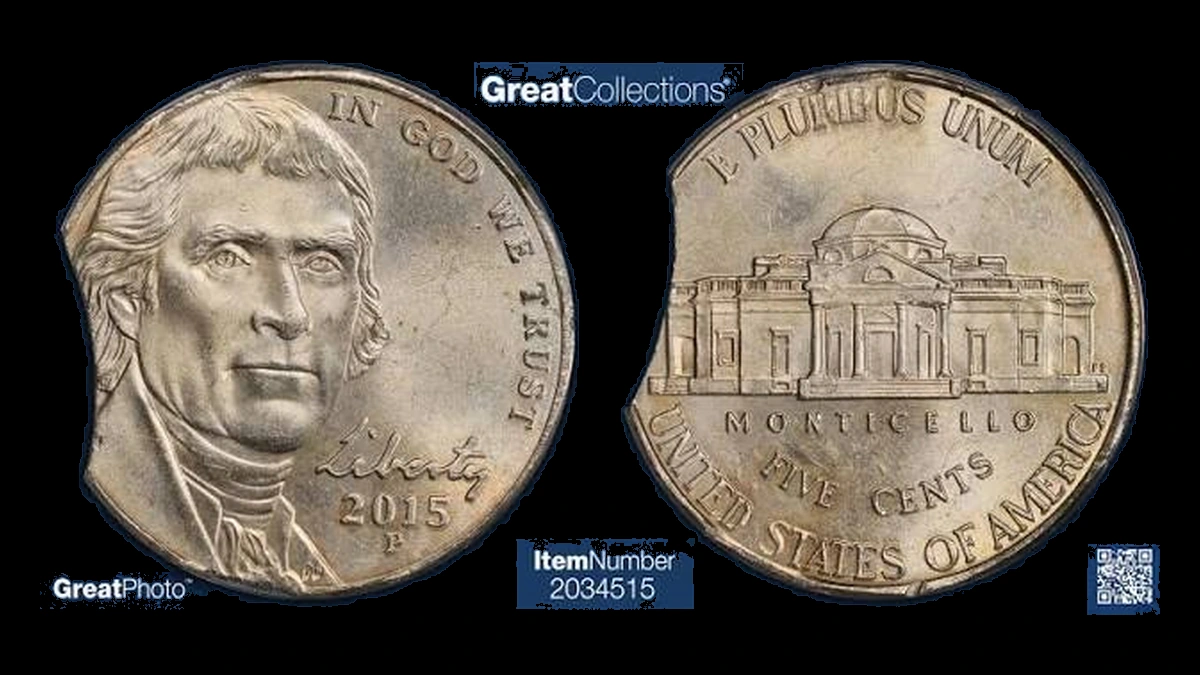
7. 2015 Nickel A Gap Removes Part of the Blank: Clipped Planchet Error
An incomplete disc can enter the press and receive its design around a missing section. Nearby detail may weaken as metal flows differently beside the gap.
How to Identify
Inspect the gap’s surface and both endpoints for natural rim formation. Saw marks, file grooves, or corrosion-related loss need different explanations from a blank-cutting error.
Include the opposite rim and both faces in photographs. Weakness opposite a clip can support the identification, but it cannot replace examination of the missing boundary itself.
What It’s Worth
$15–$150 is the estimate for genuine 2015 clips, with size and preservation considered together. A large later cut is outside that mint-error comparison.
A 1997-P nickel with a 20% curved clip sold for $124 in March 2025. That different-year result does not establish a 20% curved clip on every reported 2015 example.
8. 2015 Nickel Extra Width Surrounds Complete Lettering: Broadstrike Error
The reported 2015-D category involves spreading outside normal collar restraint. A genuine broadstrike retains the intended design while metal flows outward into a wider or uneven border.
How to Identify
Compare both faces’ outer lettering and the enlarged margin with a normal nickel. Complete designs and natural flow matter more than one unusually wide diameter.
Check for crushed letters or portrait details from later squeezing. Nickels ordinarily have plain edges, so lack of grooves supplies no evidence for a broadstrike.
What It’s Worth
$25–$250 is the estimated range for genuine 2015-D broadstrikes. Expansion and preservation determine how useful a particular comparison is.
A 1999-P example graded PCGS MS63 brought $89 in March 2025. It is a same-denomination sale from another year, not a completed result for the reported Denver category.
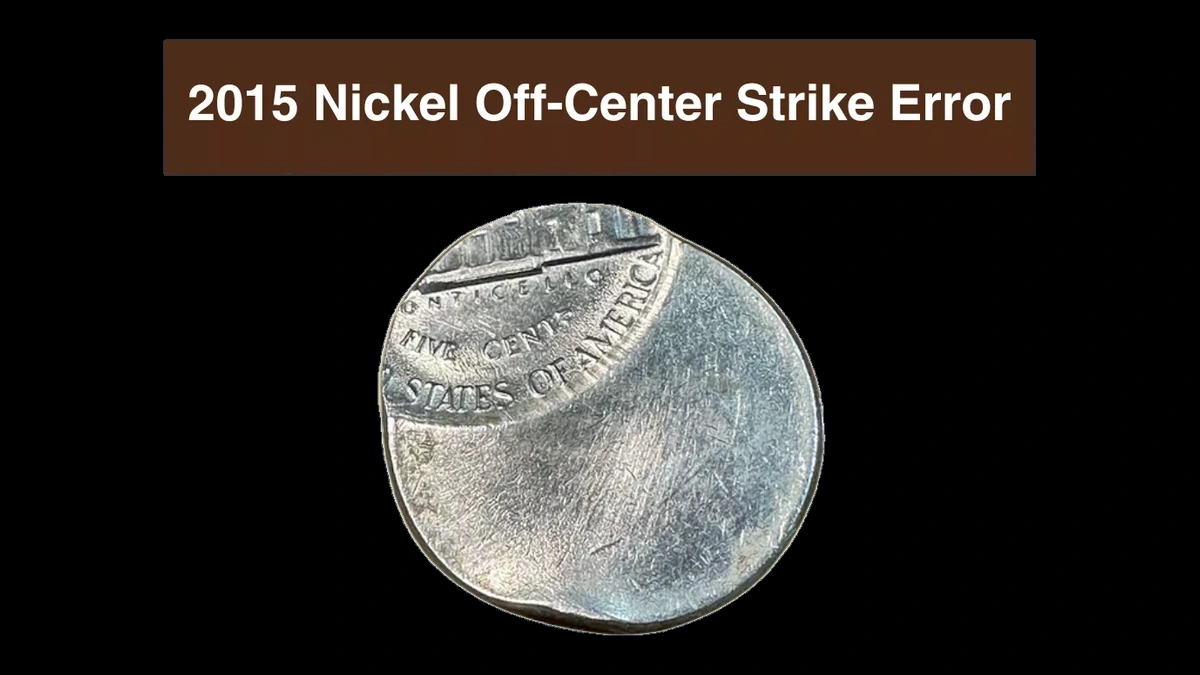
9. 2015 Nickel Design Falls Off the Edge Beside Bare Metal: Off-Center Strike Error
A misplaced blank can leave one side outside the die designs and lose intended detail at the opposite edge. Both faces should describe that same shifted disc.
How to Identify
Read the surviving date and mintmark rather than completing missing digits from a seller title. Follow the transition from struck detail to untouched metal and inspect it for grinding or filing.
A broadstrike retains its full design, while one misaligned die can shift only one face. The supplied 2015 category does not establish a universal displacement percentage or direction.
What It’s Worth
$30–$500 is the estimate from small to more dramatic genuine 2015 off-center strikes. Readable dates and attractive original crescents improve the comparison.
A 1999-P nickel described as 15% off-center sold for $64 in March 2025. Its modest result is a different-year reference rather than a price or percentage assigned to a 2015 specimen.
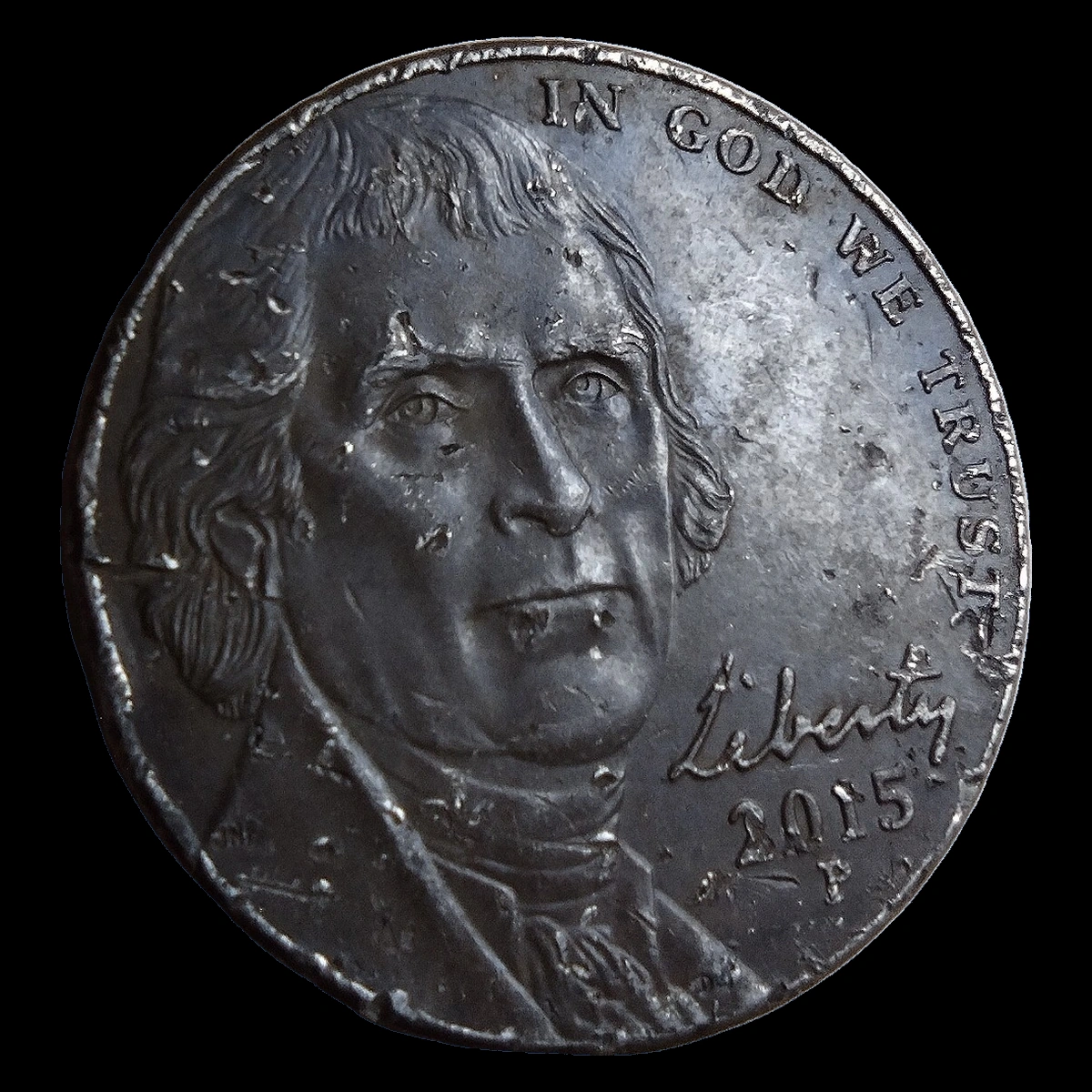
10. 2015 Nickel Brown or Coppery Surfaces Suggest Abnormal Heating: Improper Annealing Error
Annealing softens blanks before striking, and a problem in that process can change surface chemistry. The reported 2015 category concerns this minting-stage effect rather than any dark nickel encountered in circulation.
How to Identify
Compare both faces and the edge under neutral light, checking for deposits, pitting, coating wear, or later heat damage. Environmental change and chemical treatment can imitate the color without establishing improper annealing.
Normal measurements cannot explain when the surface changed. Leave dark patches and the edge unpolished so a specialist can assess the original evidence.
What It’s Worth
$30–$250 is the estimated range for authenticated 2015 annealing errors. Attractive original surfaces offer a stronger comparison than worn dark metal with an unclear cause.
A 2005-D Bison nickel with improper annealing, graded NGC MS62, sold for $119 in December 2022. Its similar color does not confer the same attribution or price on a stained 2015 nickel.
Conclusion
Both faces and the edge help explain an unusual 2015 nickel more reliably than a closeup of one stray line. Keep the mintmark, complete outline, and relationship between designs visible while examining the smaller features.
The $3–$500 estimates cover mostly modest modern errors. A measured rotation, original layer boundary, or clearly embedded object supplies useful evidence, while color, nicknames, and ordinary smooth edges require further explanation before supporting a premium.