Rare 1803 Penny Errors (List & Pictures)
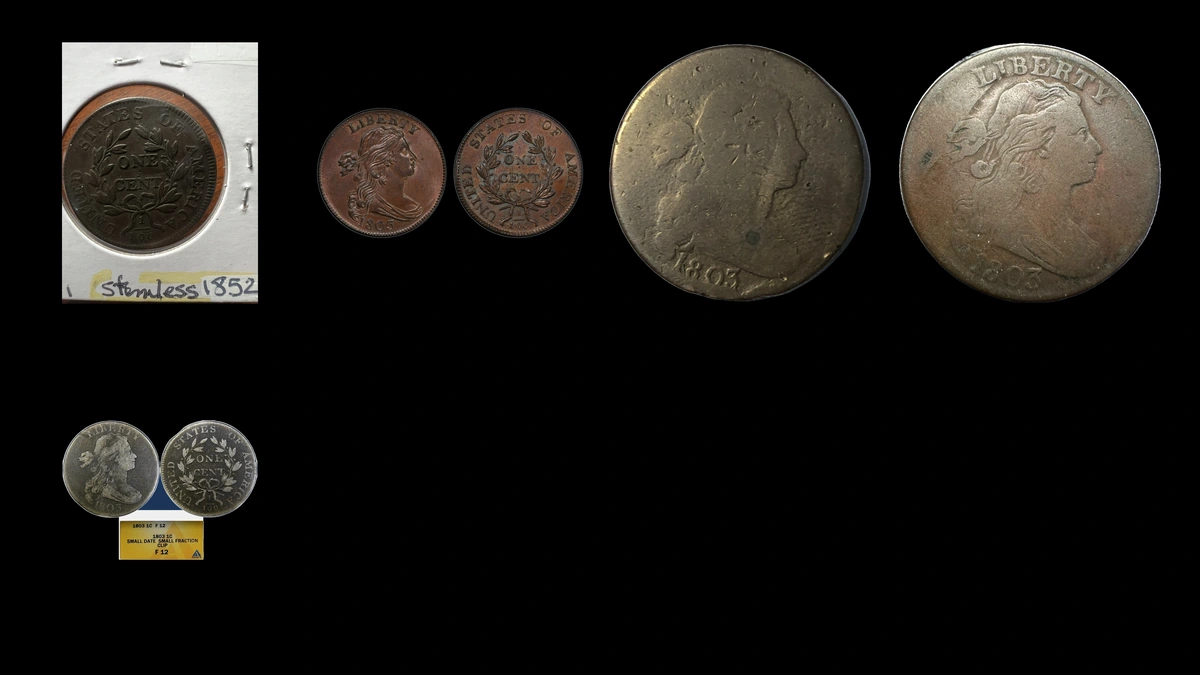
A missing stem can be tiny, yet identifying it correctly can matter on an 1803 cent. An exceptional Stemless Wreath example sold for $199,750 in January 2013, with its remarkable condition helping explain the result.
These ten groups of 1803 penny errors cover tool mistakes, copper flaws, and striking accidents. Estimated whole-coin values span $40–$200,000; the highest figures concern exceptional early cents, not every small mark on a worn coin.
1. 1803 Penny Missing Wreath Stems Error
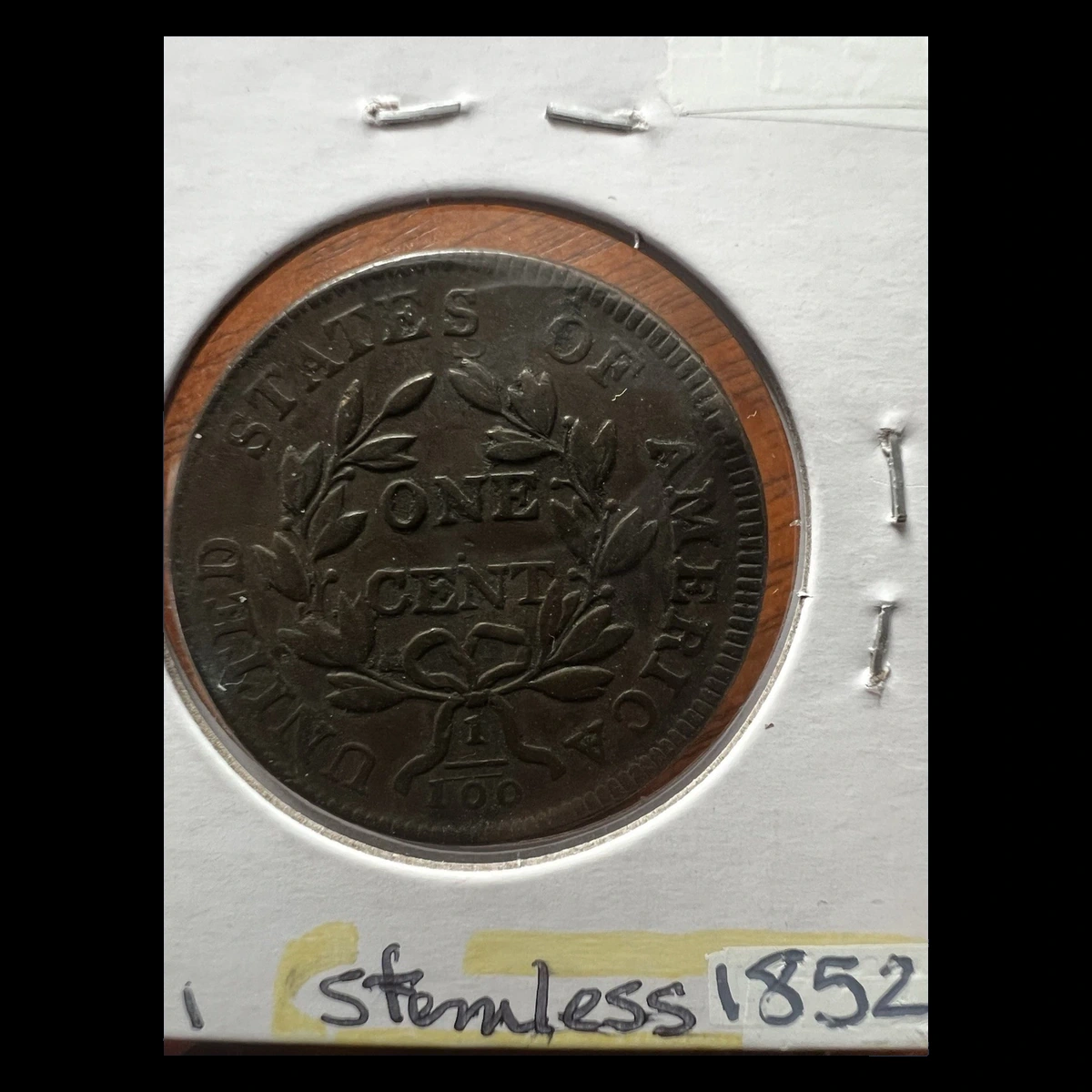
The Stemless Wreath variety lacks the two stem ends beside the lower bow. The omission was part of the back stamping tool, so even a sharply struck example can lack both stems.
A repeated final S in STATES and a second fraction bar help identify the same variety. These are related clues on one coin, not separate errors whose prices should be added together.
How to Identify
Compare both sides of the bow with a normal stemmed cent. Clear leaves and bow details make the absent stems easier to judge than a lower wreath flattened by wear.
Then match the extra fraction bar and repeated S. Missing stems alone on a heavily worn back are not enough to establish the variety.
What It’s Worth
$100–$200,000 is the estimated range across heavily worn examples and exceptional survivors. Ordinary circulated coins belong far below the top level.
A PCGS MS66 Red and Brown example sold for $199,750 in January 2013. Its outstanding unworn preservation and surviving original color are essential parts of that comparison.
2. 1803 Penny Corrected Fraction and Repeated Back Details Error
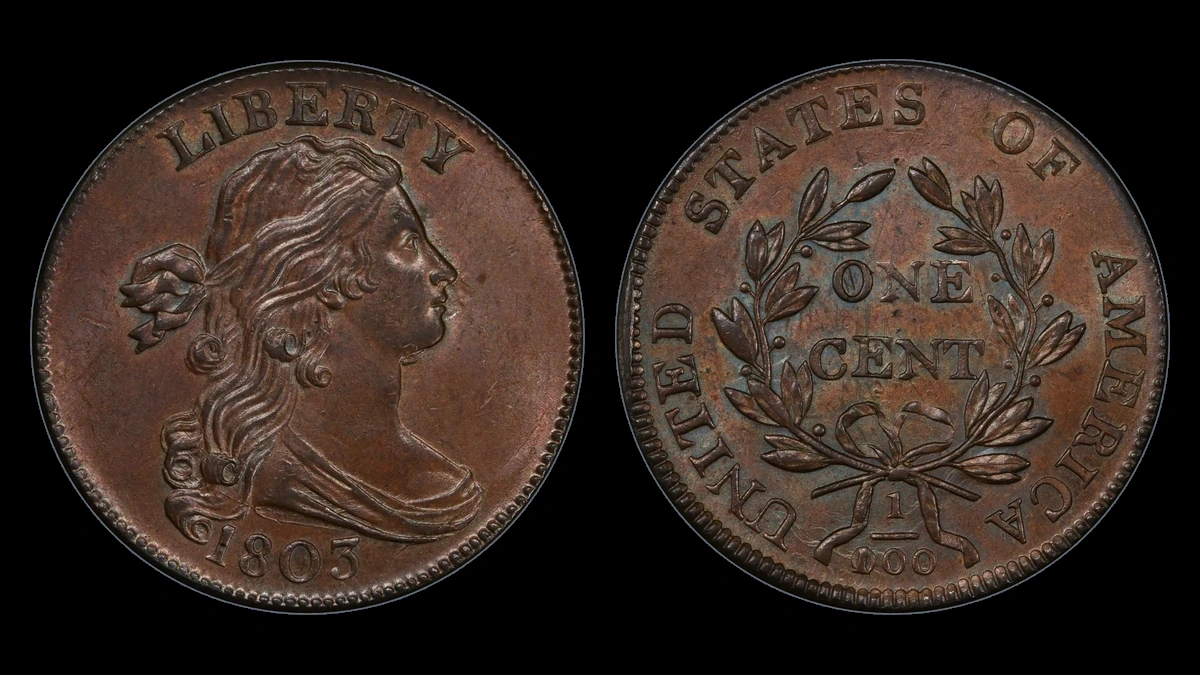
On a different 1803 variety, a 1 was punched over a mistaken 0 in the lower number of the fraction. The final design reads 1/100, with part of the earlier zero still visible.
The extra bar and S on the Stemless Wreath cent are a separate pattern. They should not be combined with the corrected lower digit as if every example carried both.
How to Identify
Read the final fraction first, then look around its lower 1 for a raised remnant of the older 0. A pit, stain, or cut beside the numeral does not establish a correction.
If the extra mark is another horizontal bar, inspect the stems and final S instead. That combination leads to the separate Stemless Wreath variety.
What It’s Worth
$150–$30,000 is the estimated range for corrected-fraction examples from worn coins through much stronger survivors. A Goldberg coin cataloged as VF35+ sold for $4,320 including fees.
The repeated bar and S belong to the Stemless Wreath coin valued above. Do not add a second corrected-fraction price to that different variety.
3. 1803 Penny Clash Traces through LIBER Error
Small tooth-like border shapes run through LIBER in LIBERTY on a documented S-254. They came from contact between the dies, the steel tools that stamp the front and back.
When the dies struck each other without a blank, marks transferred to their surfaces and then to later coins. The recorded cent also has cracks and a retained break, which are different signs of tool damage.
How to Identify
Compare the regular border teeth with the extra repeated shapes through LIBER. Follow the pattern under light from two directions to distinguish it from reflections and scratches.
A die crack can share the same area without copying a recognizable part of the design. Check the complete front before giving all its lines one explanation.
What It’s Worth
$50–$100,000 is the estimated whole-coin range across worn examples and exceptional unworn pieces. Worn coins may fit around $50–$4,000, while the broad $4,000–$100,000 upper band depends heavily on rare preservation and variety.
The red S-254 carrying the clash traces has a published $92,000 auction history from January 2006. That is the same complete coin discussed under retained breaks below, not another value to add.
4. 1803 Penny Cracks, Cuds, and Retained Breaks Error
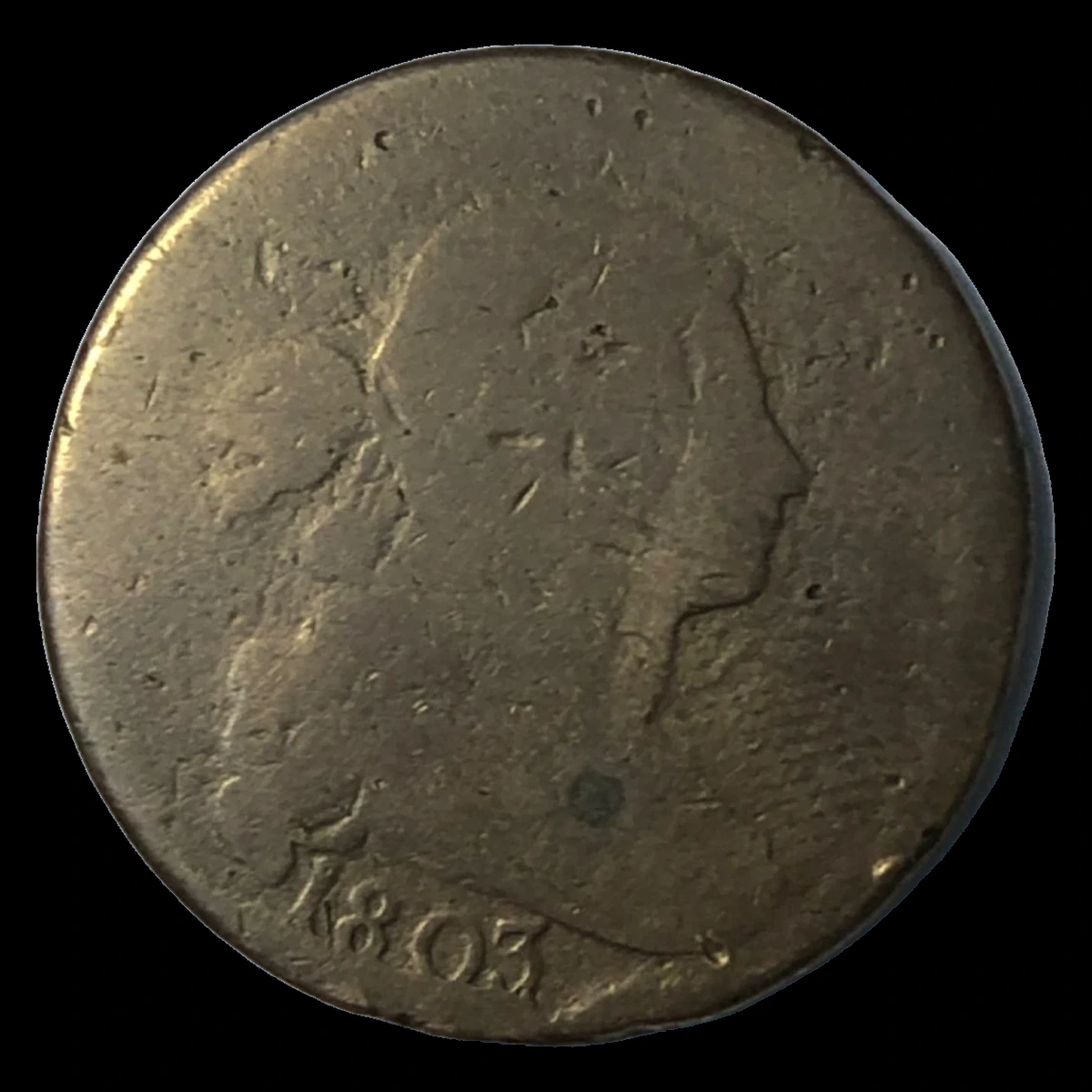
A raised patch over STA on the back records a rim-connected tool break called a cud. Another cent has a front break from below the 3 through the bust end toward four-thirty.
The front example is a retained break, where broken steel stayed in place and could still leave some design. A thin curved crack below the hair ribbon belongs to a separate example.
How to Identify
For the back cud, check whether the raised patch replaces letters and joins the rim. A dent may flatten letters and push copper inward without forming an original die break.
Follow the full boundary on a retained break even if details remain inside it. For the ribbon-area crack, side lighting should reveal a ridge rather than a groove cut into the copper.
What It’s Worth
$40–$100,000 is the estimated whole-coin range for this group. Worn cracked or cud-bearing cents may fit around $40–$5,000, with exceptional unworn varieties reaching roughly $5,000–$100,000.
The red S-254 with the retained front break has the $92,000 January 2006 history noted above. Its scarce preservation explains why a faint line or a worn rim patch cannot inherit that price.
5. 1803 Penny Lamination beside the Nose and behind the Head Error
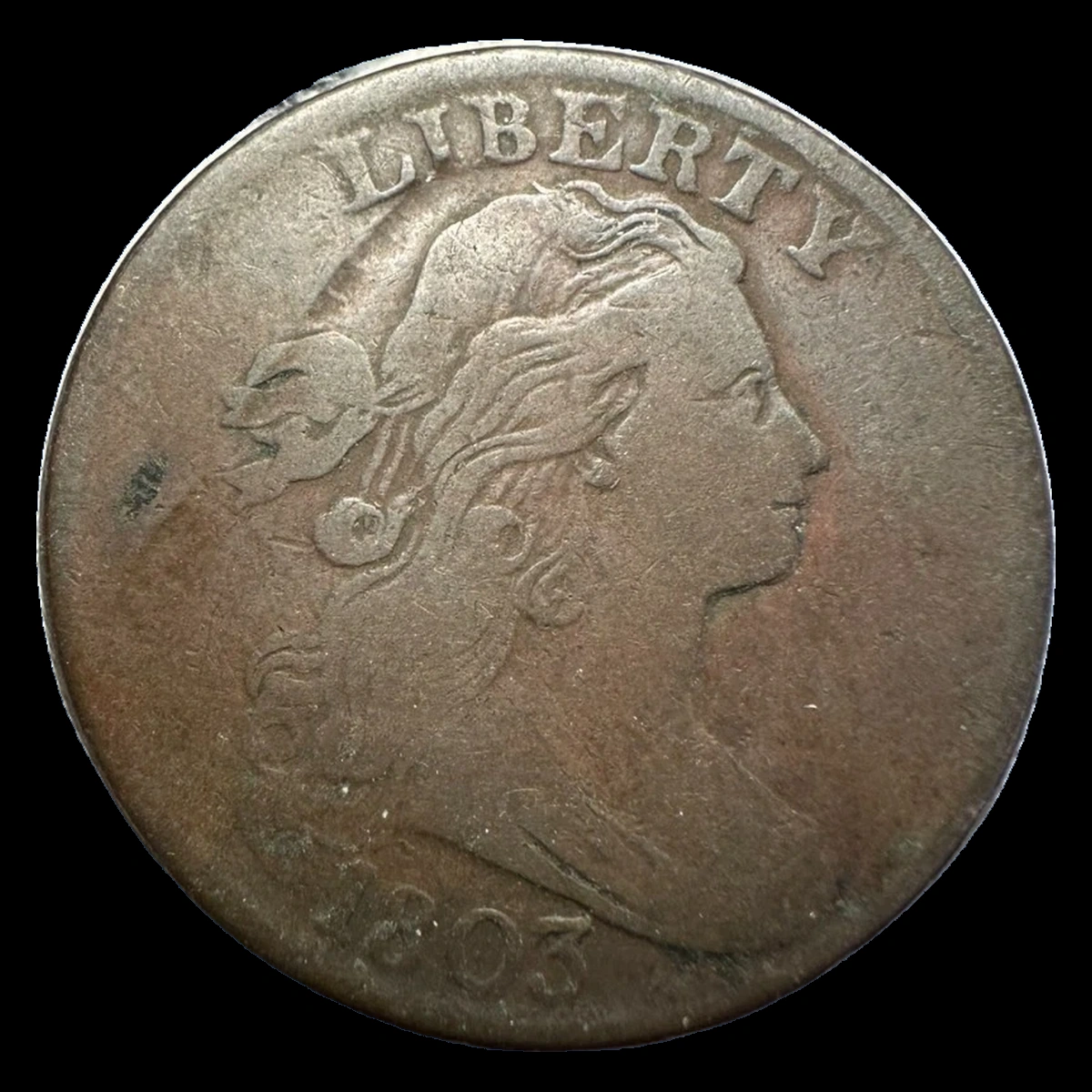
A cataloged VF20 cent has a thin copper separation extending from the nose into the open field, plus small missing flakes behind the head. These were described as original minting flaws in a 2022 auction catalog.
Lamination occurs when a weak layer of the coin’s metal separates. The same coin’s raised curved crack below the ribbon came from a damaged tool and is a different feature.
How to Identify
Find the nose-side boundary and follow any thin separating sheet under angled light. Leave loose material attached rather than cleaning or lifting it.
Compare that peeling edge with the raised ribbon-area line. One exposes a separation within the copper, while the other stands above it as a copy of a tool crack.
What It’s Worth
$40–$3,500 is the estimated range for identifiable 1803 laminations across worn to lightly worn examples. A missing flake’s position can reduce design appeal as well as attract error interest.
An 1839 large cent with two laminations brought $600 before fees in January 2026. That later, lightly worn coin is a recent comparison, not a transaction for the cataloged 1803 VF20.
6. 1803 Penny Small Struck-Through Depressions Error
Small depressions on a collector’s PCGS MS63 Brown cent were described as original striking marks. They occur on the right front, upper-right back, and near the front rim at eight o’clock.
A struck-through mark forms when something lies between the blank and a die. The description does not identify the material, and the coin’s grade does not supply that missing information.
How to Identify
Examine each depression’s boundary and the nearby struck design. A sharp scrape or metal pushed outward around an impact can point to later damage.
Use opposite lighting angles to show where the hollow ends. Do not turn a vague shape into a specific claim of wire, wood, or grease.
What It’s Worth
$75–$25,000 is the estimated whole-coin range for modest marks of this type. Worn examples may fit around $75–$3,000, with attractive unworn coins around $3,000–$25,000 chiefly because of their condition.
A different S-254 cent graded MS64 Brown brought $17,400 in February 2020. That is a same-variety preservation comparison, not a sale of the collector’s struck-through example.
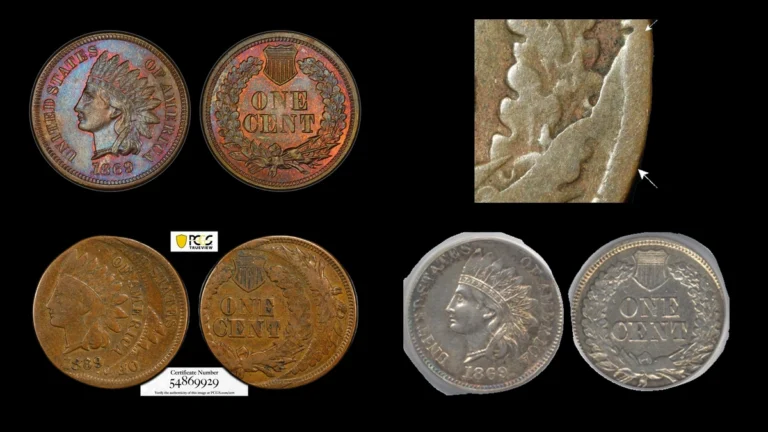
7. 1803 Penny Clipped Blank Error
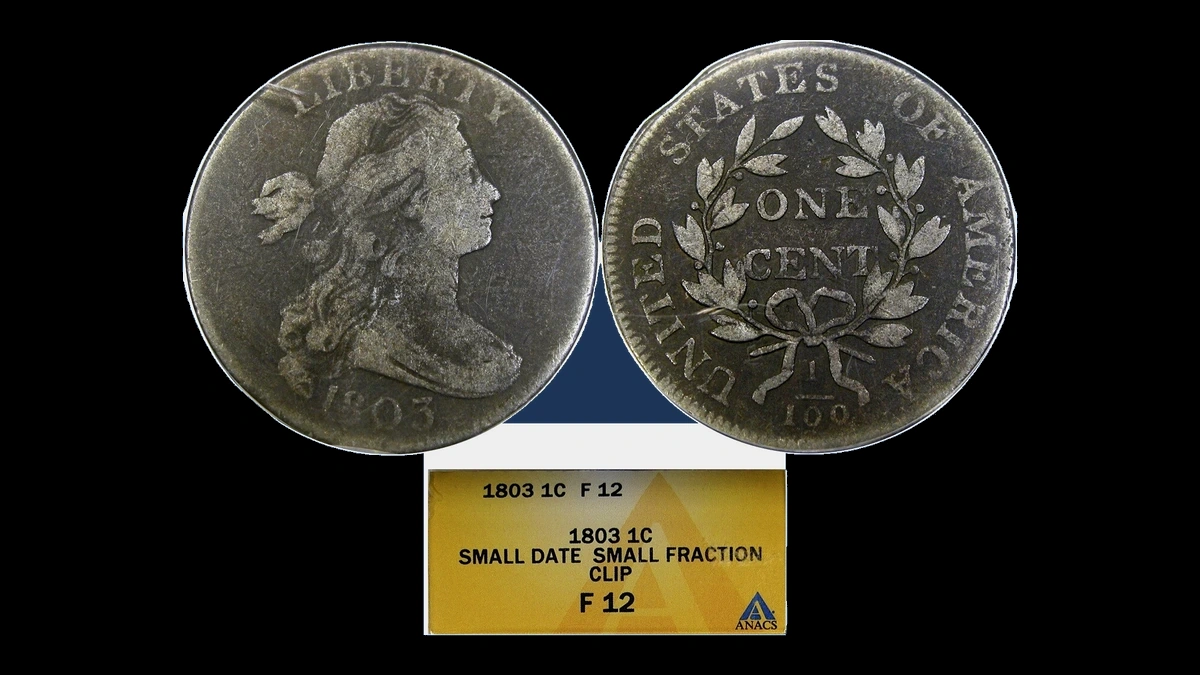
A blank missing a segment can still receive a full strike over the copper that remains. The gap then interrupts the outline of the finished cent.
Heritage lists an 1803 clip graded Fine 12. That grade describes wear rather than the shape, position, or size of the missing piece.
How to Identify
Examine both faces and the wall of the gap for saw lines, filing, or a cut through finished design. Nearby weakening can support an original clip when considered with the whole surface of the opening.
A normal 1803 cent weighs about 10.89 grams and measures roughly 29 mm across, with a plain edge. Both a true clip and a later cut lower weight, so a scale cannot settle the cause alone.
What It’s Worth
$75–$4,000 is the estimated range for genuine 1803 clips. Condition, variety, and the missing segment affect the complete coin’s price.
A clipped 1852 large cent graded NGC MS63 Brown sold for $384 in June 2024. Its later design and unworn condition make it a different-date comparison, not a price assigned to the 1803 Fine 12 coin.
8. 1803 Penny Off-Center Strike Error
A documented Small Date, Large Fraction cent was struck 15% off center. The blank’s misplaced position left some copper bare while part of the design missed the metal.
PCGS graded the example AG3, indicating very heavy wear. Its broad displacement survived even after much of the fine detail had worn away.
How to Identify
Compare the large pattern on both faces before relying on small worn letters. The design should end beyond the edge while an original bare crescent remains elsewhere.
Check the crescent and edge for grinding or trimming, then read the surviving date. A merely uneven border around a complete design does not establish the same error.
What It’s Worth
$150–$7,000 is the estimated range across heavily worn examples and larger clear offsets with better surfaces. The original date must remain identifiable for a year-specific comparison.
The PCGS AG3 15% off-center coin sold for $230 at Heritage in August 2004. That historical result is one very worn example, not a fixed price for every 1803 offset.
9. 1803 Penny Double Strike with Two Back Impressions Error
Two shifted sets of wreath and lettering details appear on a recorded NGC XF40 cent. Its front is slightly flattened without an equally clear second portrait.
Heritage proposed that another blank covered the front during the later blow. That suggested sequence explains the visible difference between the faces but should remain a proposed cause.
How to Identify
Trace one set of back leaves and letters on a photograph, then follow the second set separately. Both patterns must appear within that same face.
A top-to-bottom flip tests the angle between front and back, not this overlap of two strikes. Inspect the edge and flattened front for later squeezing as part of the whole-coin assessment.
What It’s Worth
$600–$12,000 is the estimated range for recognizable 1803 double strikes. Clear separation and better-preserved surfaces support stronger comparisons.
The NGC XF40 example brought $1,057.50 in January 2014. Heritage assessed it as VF20 under a different early-copper grading approach, and the two impressions still received one price.
10. 1803 Penny Full Brockage Error
A full brockage replaces one normal face with a broad sunken mirror image. A struck coin stayed in the press and impressed its raised design into the next blank.
Walter Breen’s reference includes 1803 examples in this group. The receiving coin with the backward image is different from a brockage maker that created the transfer.
How to Identify
Use side lighting to establish that the backward details are recessed. A digitally mirrored photo can help read them but cannot prove their depth or mint origin.
Compare the normal face and plain edge for later squeezing. Pressing finished coins together can also make a backward transfer, so a suspected full brockage benefits from specialist examination.
What It’s Worth
$800–$15,000 is the estimated range for authenticated 1803 brockages. Wear, surface quality, and the strength of the transfer affect the price.
In the Beymer auction, an 1811 brockage with deep later engraving sold for $1,440 including fees, while a more worn example without that engraving brought $4,080. Those different-year results show how damage through the mirror design can matter more than remaining detail alone.
Conclusion
Read the small back details before treating missing stems or a corrected fraction as damage. For larger effects, follow the metal boundary or separate design impressions to understand what happened.
The estimated $40–$200,000 span includes a few exceptionally preserved coins. Their results should not turn a faint mark on an ordinary worn cent into a six-figure claim, and features on the same coin should never be priced twice.