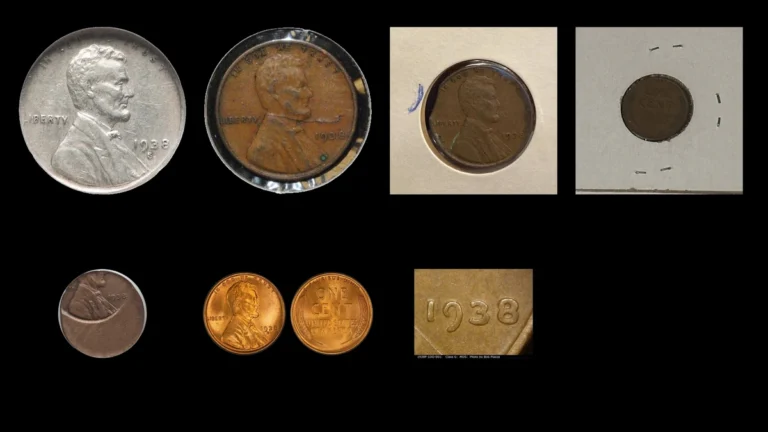
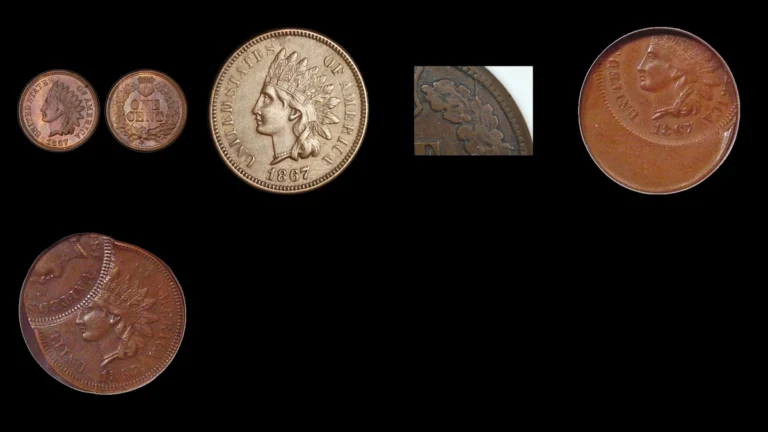
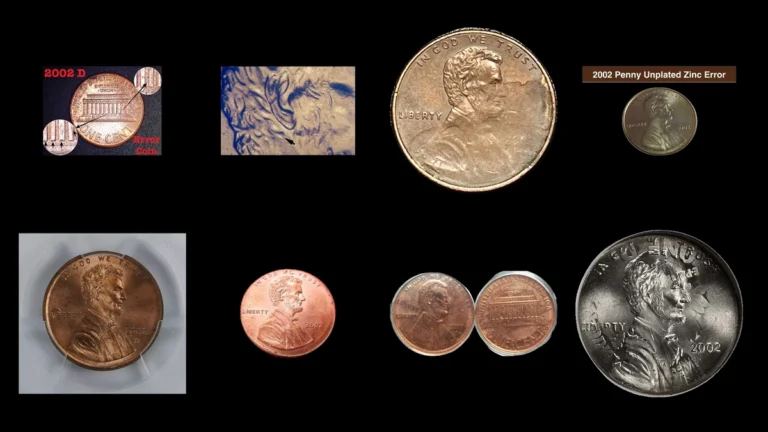
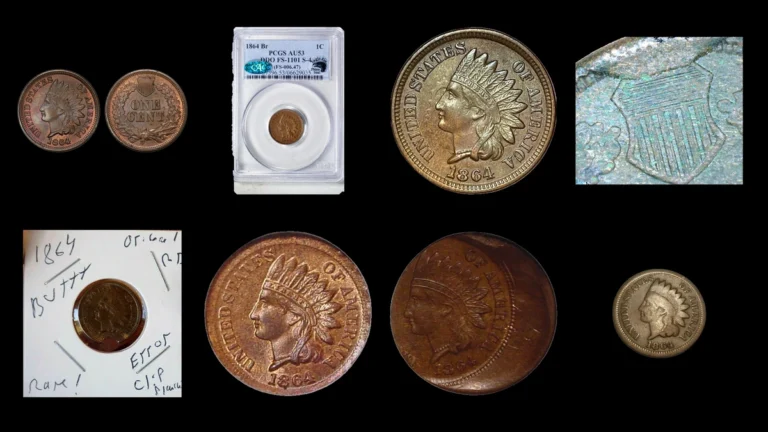
Rare 1925 Penny Errors (List & Pictures)
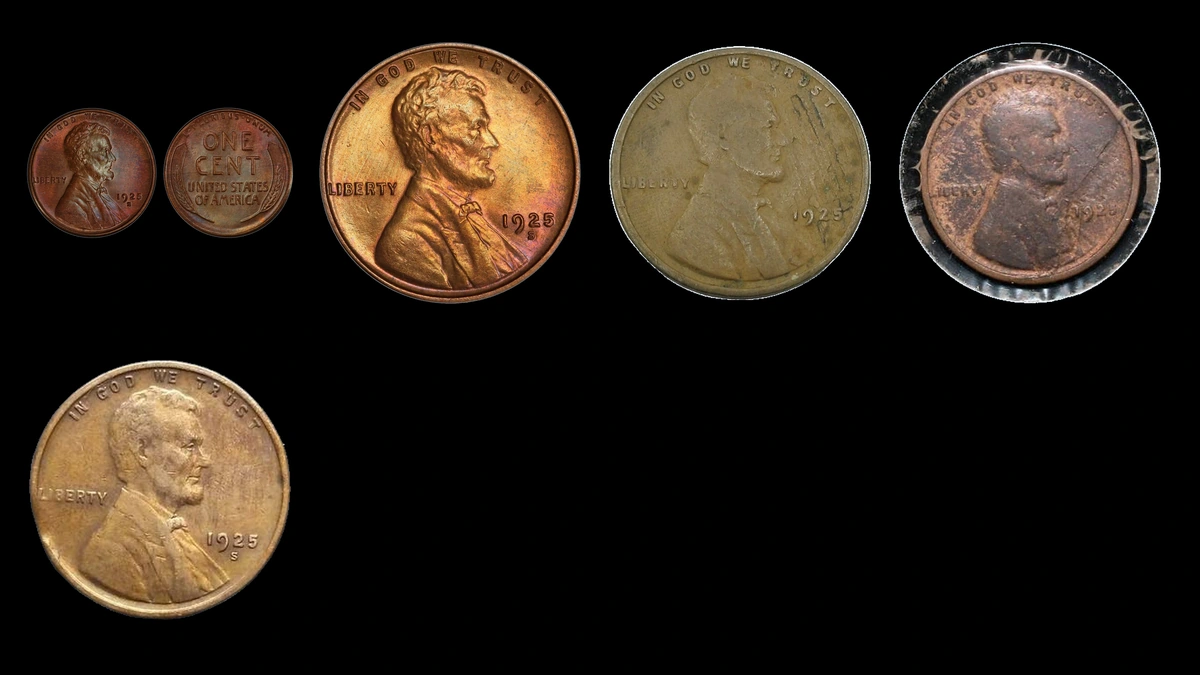
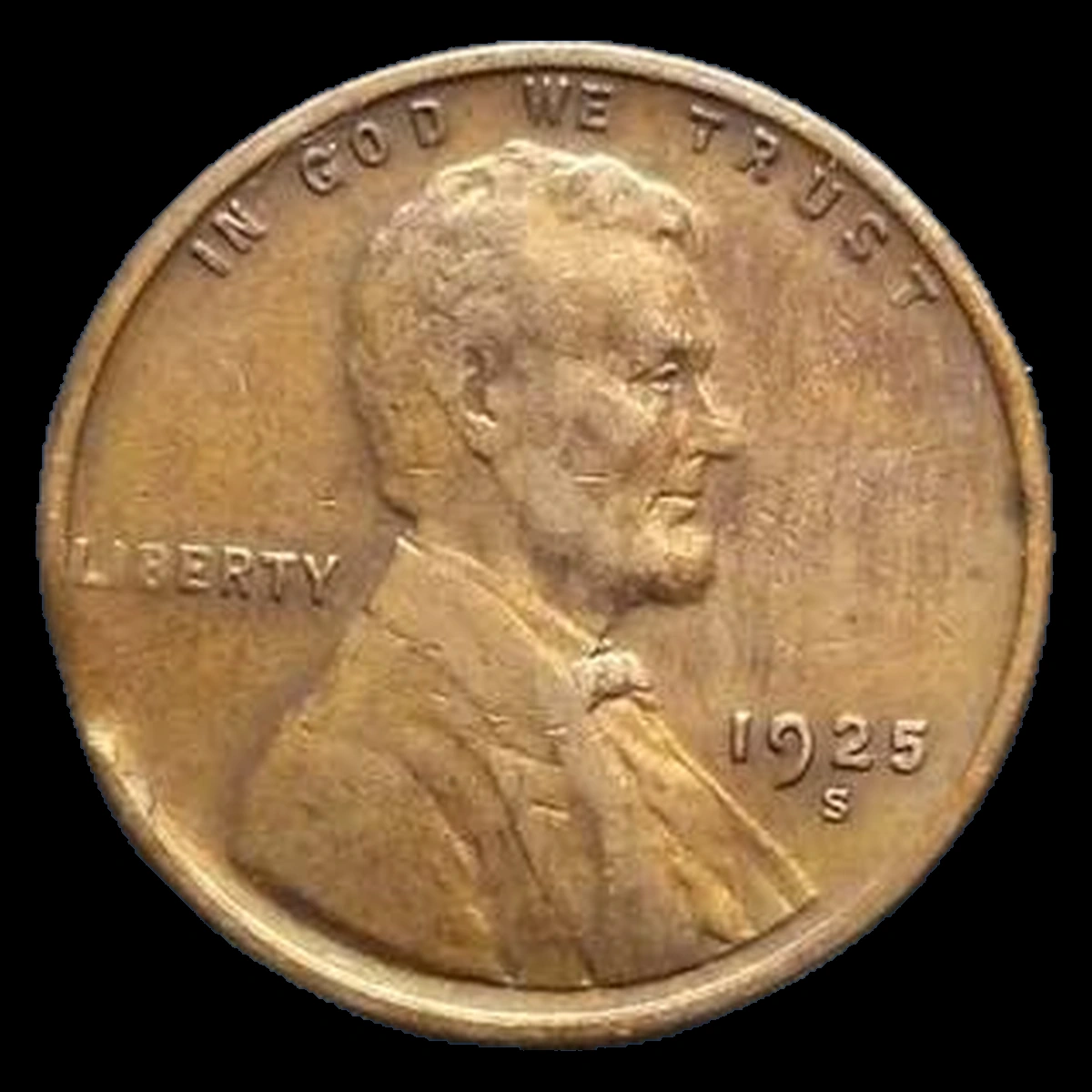
A clear earlier S helped a 1925-S FS-501 bring $1,920 in March 2018, the highest supplied completed sale among these 1925 penny errors. Estimated ranges extend from $3 for modest die or blockage features to $6,000 for stronger authenticated silver dime-planchet cents.
Read the mintmark and design first, then examine interruptions, missing metal, and the sequence of any additional strikes.
| Visible clue | Type to investigate | Estimated range |
|---|---|---|
| Earlier mint letter or repeated design | Repunched mintmark or doubled die | $5–$3,000 |
| Unexpected reverse mark or raised break | Clash, crack, retained break, or cud | $3–$750 |
| Faint detail or separating layer | Filled die or lamination | $3–$300 |
| Original gap or other blank flaw | Clip or defective planchet | $15–$400 |
| Displaced or repeated design groups | Off-center or double strike | $40–$2,500 |
| Small silver-colored coin | Silver dime-planchet error | $800–$6,000 |
The standard bronze cent weighs 3.11 grams and measures 19.05 millimeters across its plain edge. Record measurements when checking blank identity or missing metal, but use magnified photographs to resolve a tiny earlier letter or doubled feature.
Preserve flakes and original surfaces, and leave certified coins sealed. A later scratch or polished area remains part of the coin’s condition even when the mint error is genuine.
1. 1925 Penny An earlier D or S remains visible: Repunched Mintmark Error
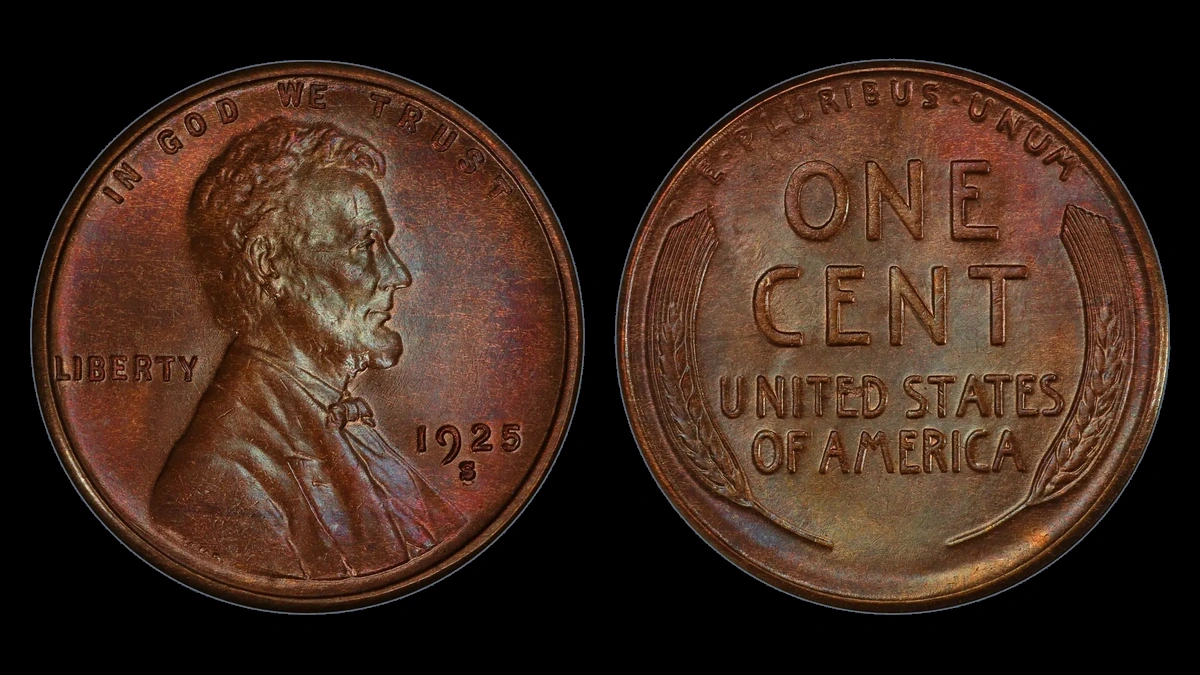
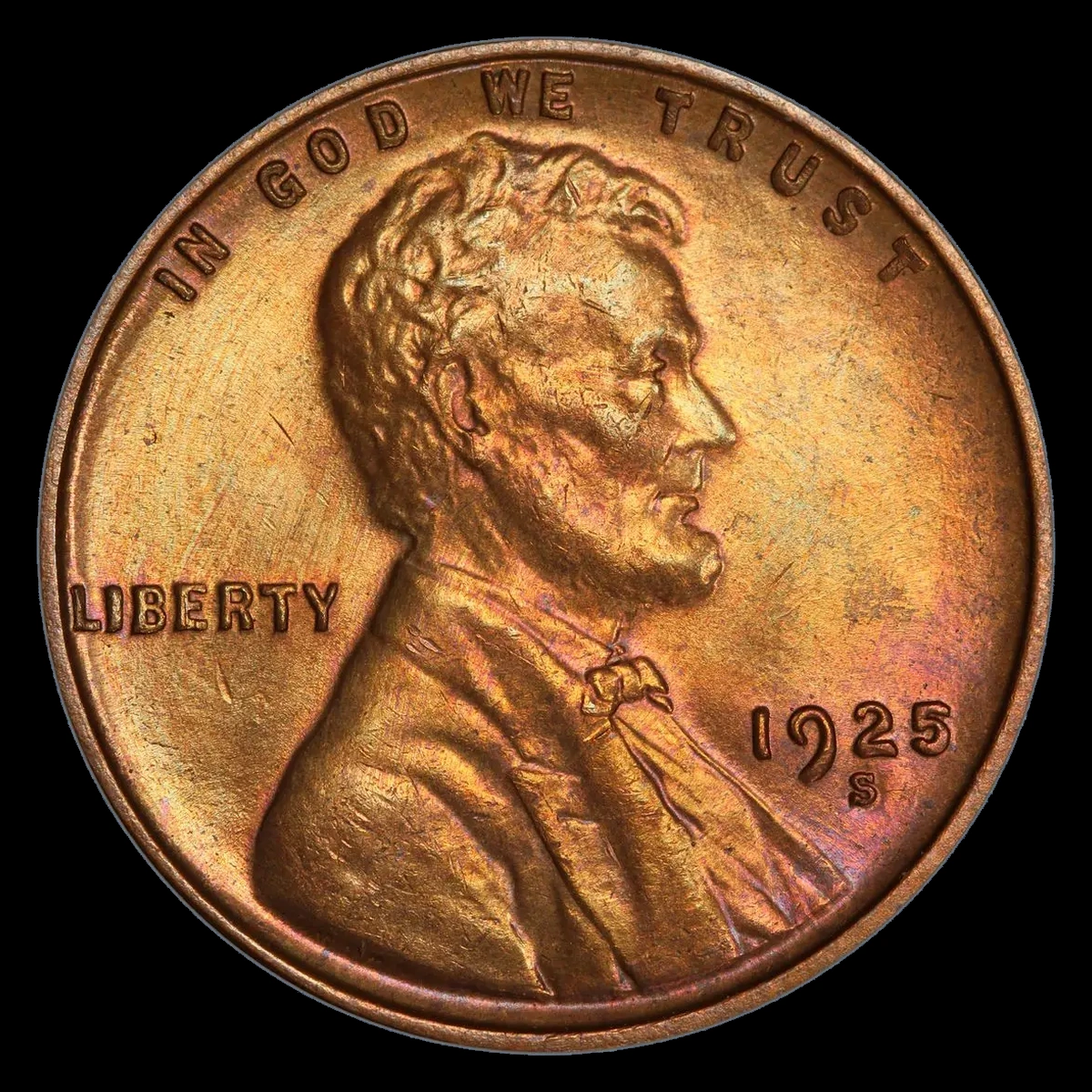
The familiar San Francisco FS-501 has an earlier S below the main S. Repeated hand punching in a changed position left those letter remnants on the die and the coins made from it.
Denver’s listed repunches also point downward, while other San Francisco patterns move sideways or rotate. A listed triple-S pattern additionally has doubled date and lettering.
How to Identify
For FS-501, compare the lower S remnant with early and later die-state photographs. Wear on the die can weaken the separation without necessarily changing the variety.
The two southward Denver repunches require more than a shared direction: compare mintmark placement relative to the date and the smaller diagnostic marks. A generic extra D cannot distinguish them.
For the triple-S and doubled-design combination, establish both features separately. Multiple lumps do not demonstrate multiple coherent letter impressions.
What It’s Worth
The mintmark group has an estimated range of $5–$3,000, from modest worn patterns to exceptional examples of named varieties. Preservation and the clarity of the earlier letter remain important.
A PCGS MS64 Red FS-501 sold for $1,920 at Stack’s Bowers in March 2018. That unworn red-copper example is not a predicted price for every small extra mintmark stroke.
2. 1925 Penny Thickened date or an extra eyelid: Doubled Die Error
The San Francisco FS-101 is identified by thickened date and lettering, including the 9’s tail and WE TRUST. The repetition originated in the die rather than from a second strike on the coin.
Philadelphia has separate extra-eyelid varieties and a doubled reverse, while another S variety has an extra eyelid below the principal one. The eyelid is not the main diagnostic for FS-101.
How to Identify
Compare the 9 and WE TRUST on an FS-101 candidate with the San Francisco variety photographs and an ordinary coin under similar light. Low flattened shelves need a different explanation from the intended raised pattern.
For eyelid varieties, use the correct eye and nearby-marker reference instead. The Philadelphia reverse requires its own E PLURIBUS UNUM and Wheat-detail comparison.
What It’s Worth
Minor identified eyelid or reverse varieties are estimated at $5–$250; stronger named FS-101 examples at $50–$2,000. The two ranges concern different design patterns.
PCGS lists a $1,150 January 2023 eBay result for an MS63 Red and Brown FS-101. Its partly red unworn surfaces and correct attribution are essential to that comparison.
3. 1925 Penny A mintmark-like trace appears below UNUM: Die Clash Error
The unusual mark below M in UNUM belongs to a particular 1925-S die pairing. It is described as a clash trace associated with obverse mintmark variety WRPM-006.
A clash occurs when the dies meet without a blank and transfer marks that can appear on later coins. The reverse trace is not an official second S punched onto the coin’s back.
How to Identify
Find the reverse mark below the correct letter and compare its outline with the recorded trace. On the obverse, match the tilted earlier S impression associated with WRPM-006.
The actual mintmark remains below the date. A seam, solder, or differing material around the reverse mark could indicate something added after striking.
What It’s Worth
A clear example of the small clash is estimated at $10–$150. Readable detail and preservation guide the comparison.
The associated repunch and clash belong to one coin, so their maximum estimates should not simply be added. The reverse mark is not valued as an additional official mintmark.
4. 1925 Penny Raised lines grow into outlined or rim-connected patches: Die Breaks Error
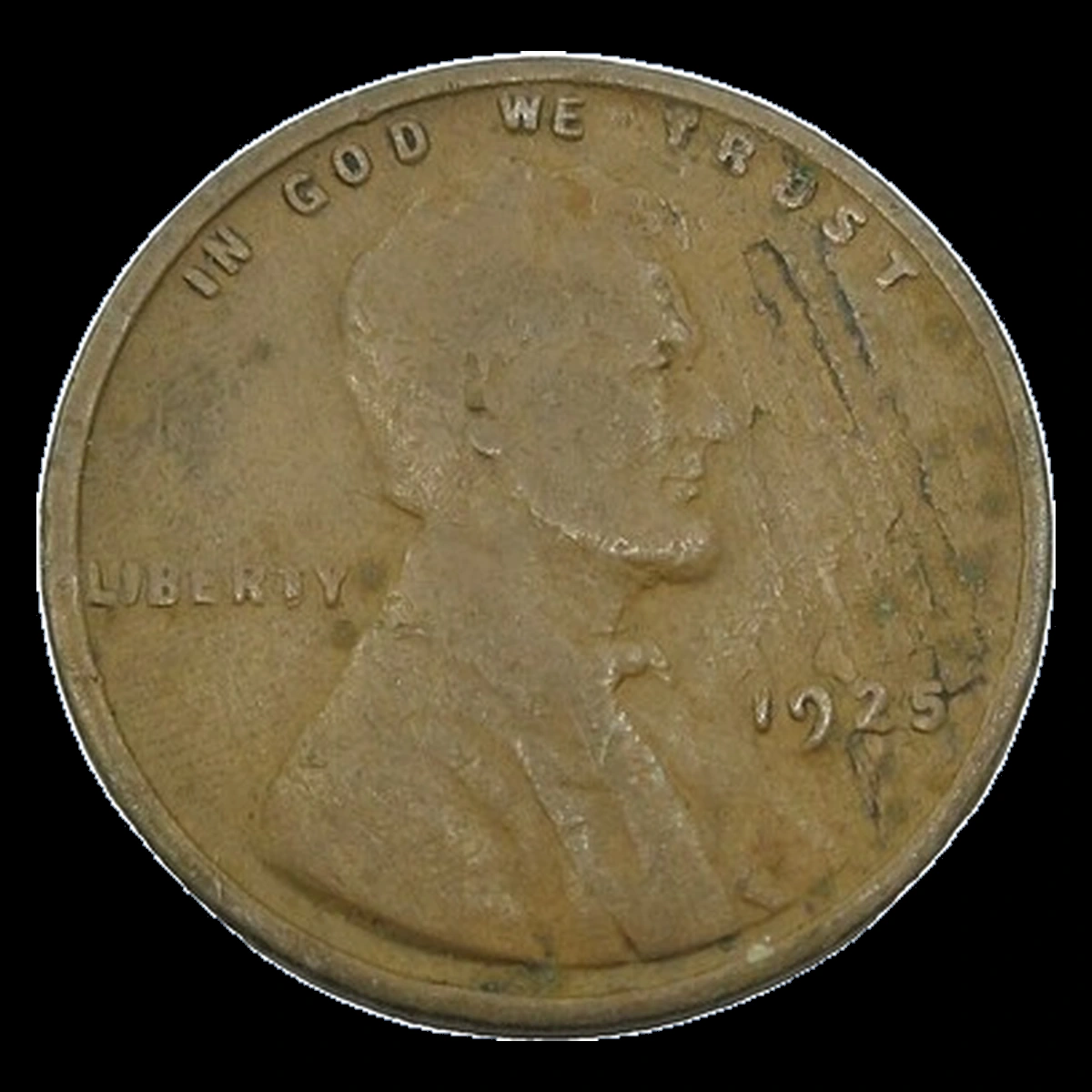
Die cracks can leave thin raised lines before a larger section moves or falls away. Late 1925-S FS-501 coins show changing cracks around the lower portrait, shoulder, or hair.
Denver and San Francisco also have larger breaks. A retained section may still strike design inside its outline, while a cud replaces normal detail with a raised patch meeting the rim.
How to Identify
Match the individual break with the recorded rim-break photographs, including any lettering inside a retained area. A scratch cuts into the surface rather than reproducing a raised die fracture.
One Denver sequence also records changing alignment between the faces. Compare that alignment with a controlled top-to-bottom flip while matching the same break outline; do not transfer rotation to every Denver cud.
A crack on an FS-501 candidate supports a die state only after the mintmark variety itself is established.
What It’s Worth
Small cracks are estimated at $3–$40, with visible retained breaks and cuds around $40–$750. Strength and preservation matter more than how many stages a catalog lists.
No separate realized sale is assigned to every break here. A variety coin carrying a crack receives one overall assessment rather than an additional full coin price.
5. 1925 Penny A localized letter or area fades: Grease-Filled Design Error
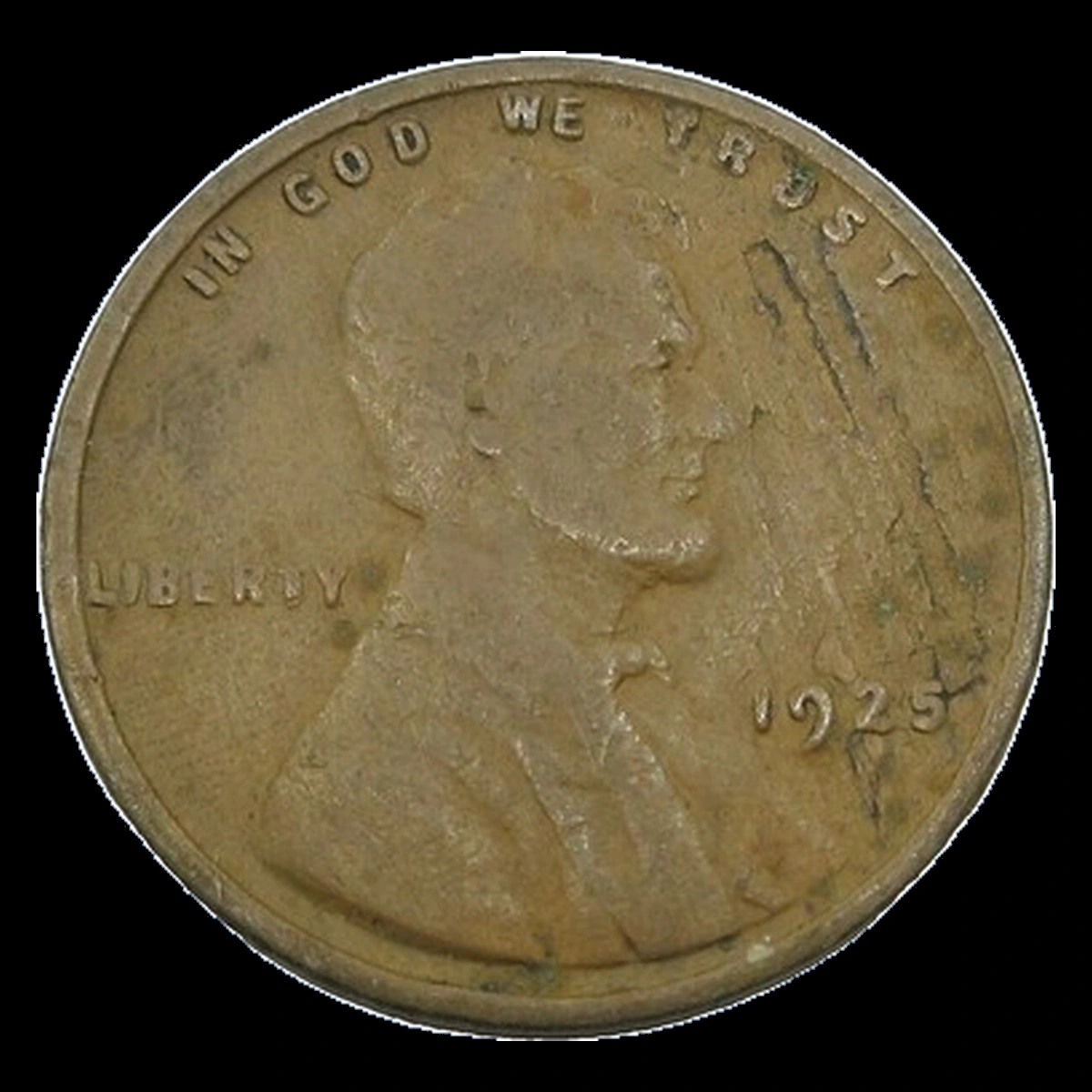
Material filling a die recess can prevent that portion of the design from forming. The 1925 year guide lists this effect without specifying one fixed letter, mint, or retained substance for every example.
Wear, scraping, and die deterioration also soften details. The proposed blockage needs evidence from the candidate’s own surface.
How to Identify
Compare the faint area with nearby details of similar height. Broad rubbing across the portrait and lettering may explain a worn coin more readily than a localized blockage.
Inspect the transition under several light angles for grooves or sharp cuts through completed design. An originally weak area without scraping is more consistent with a blocked impression, although the exact substance may remain unknown.
What It’s Worth
Modest identifiable filled-design effects are estimated at $3–$100. Small losses of detail may add little, while broader original interruptions are easier to demonstrate.
A 1933-D reverse struck-through cent graded PCGS VG10 sold for $30 in October 2022. That worn later-year example had an unspecified obstruction and does not prove grease on a 1925 candidate.
6. 1925 Penny A strip or flap separates from the surface: Lamination Error
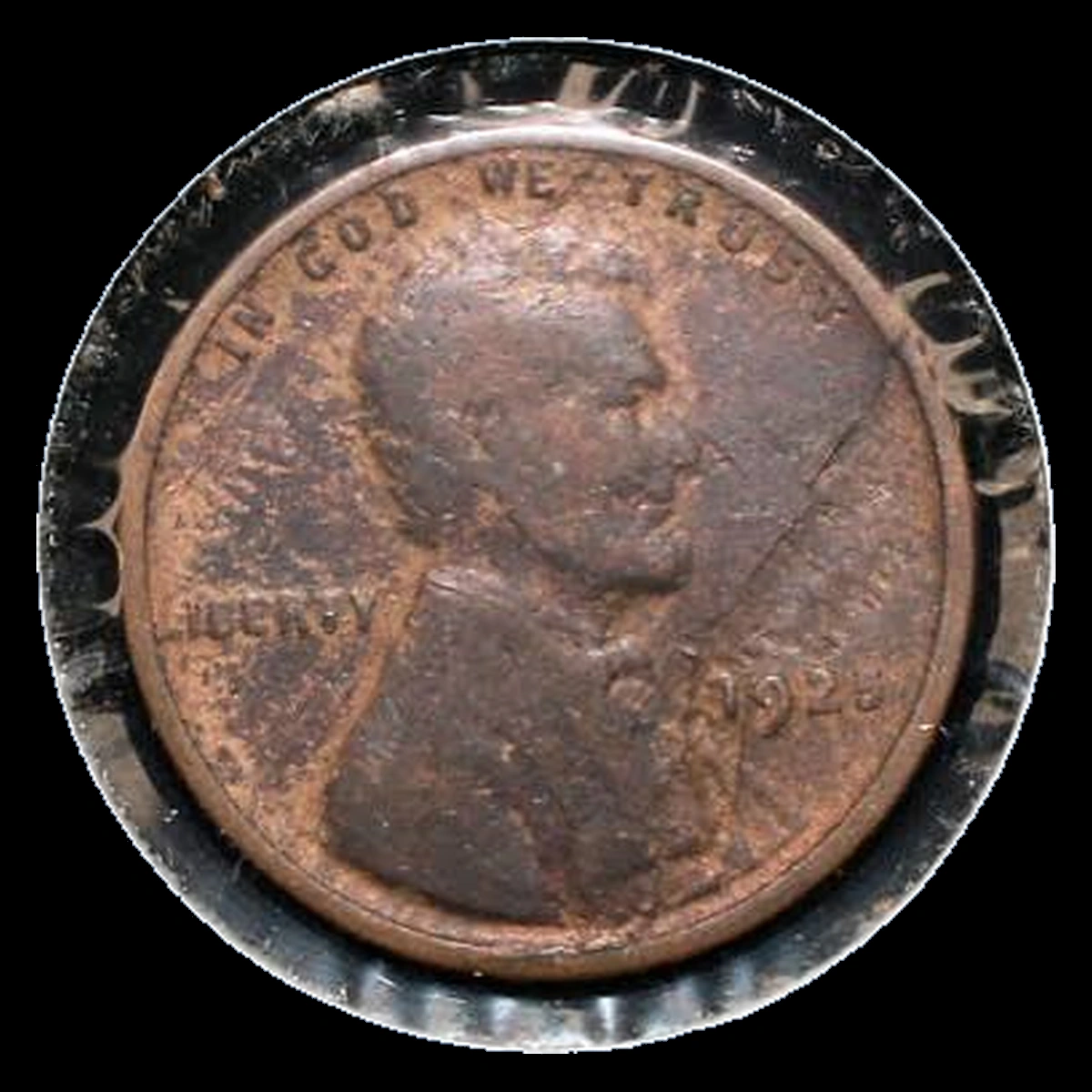
A thin layer of the original bronze can separate without being an added coating. One Philadelphia example has a long strip running roughly from six to eleven o’clock above the date.
A separate Philadelphia piece has reverse peeling near ten o’clock crossing ONE, while a San Francisco listing has an attached flap elsewhere. Their locations and extent belong to different coins.
How to Identify
View an already exposed edge from the side and follow the thin layer into the original metal. Do not lift a flap to determine whether it is attached.
A deep cut with pushed-up metal differs from a sheet separating along an internal boundary. A retained flap is also coin alloy, not a retained steel die fragment.
Read nearby date or ONE lettering to select the correct Philadelphia reference. An attached layer can leave weight nearly unchanged, while a lost fragment may reduce it.
What It’s Worth
Genuine 1925 laminations are estimated at $10–$300. Clear boundaries, retained structure, and overall condition influence the comparison.
A 1941-S retained reverse lamination graded PCGS MS66 Red sold for $69 in April 2020. That later unworn coin provides attached-layer context rather than a price for one of the 1925 specimens.
7. 1925 Penny An abnormal area belongs to the blank: Defective Planchet Error
A Denver 1925 cent appears in a Heritage catalog as a defective-planchet error. Its PCGS MS62 Red and Brown grade describes an unworn coin with noticeable marks and partly retained red color.
The supplied listing does not identify the defect’s exact cause. The broad label should not be turned into a claim of silver, foreign metal, or an experimental alloy.
How to Identify
Describe what the abnormal area actually shows before narrowing the diagnosis. Compare both faces and the edge with the full holder description and photographs.
Observe whether struck design enters the defect or later cuts cross completed details. Corrosion, scraping, and added metal must be distinguished from an original blank weakness.
What It’s Worth
An authenticated 1925-D defect of this general kind has a working estimate of $40–$400. The actual appearance and preservation determine the useful comparison.
No realized sale is supplied for the MS62 Red and Brown example. An unspecified defective-planchet label offers less pricing precision than a clearly documented particular flaw.
8. 1925 Penny A curved original gap cuts into the outline: Clipped Planchet Error
A curved clip can arise when the blanking punch overlaps an earlier hole in the strip. The resulting incomplete blank receives its design around the absent section.
A Philadelphia ANACS VF20 example weighs 2.92 grams. A separate cataloged clip lies near eight o’clock, which is not an established location for the weighed coin.
How to Identify
Inspect each end of the curve for natural rim formation and nearby design weakness. The opposite rim may also be weak, though that clue is not sufficient by itself.
Check the boundary for filing, cuts, or metal bent after striking. Compare diameter across an intact span rather than treating the gap as evidence of a smaller original blank.
What It’s Worth
Genuine clips are estimated at $15–$250. Size, readable identity, and original surfaces shape the comparison.
The 2.92-gram Philadelphia curved clip sold for $56 in March 2023. Its VF20 wear and sale belong to that coin, not the separate clipped double strike described below.
9. 1925 Penny Large areas of design miss the metal: Off-Center Strike Error
The reported Denver 20% example retains the date and D but loses the entire obverse motto, with reverse Wheat stems extending beyond the blank. Separate Philadelphia examples include a 60% shift toward ten o’clock and a 15% shift toward one-thirty.
The more displaced Philadelphia coin still retains a full date. A San Francisco report has a much smaller 5% shift.
How to Identify
Locate the date and mintmark before using the percentage. The Denver missing motto belongs to that specimen, not every example from another mint or position.
Compare the two faces for incomplete designs consistent with a displaced blank. Check the plain area for original texture rather than grinding that removed already-struck detail.
A small 5% shift can require closer rim inspection than a dramatic crescent. Displacement alone does not remove metal or establish a reduced blank weight.
What It’s Worth
The group is estimated at $40–$1,500, depending on date survival, shift, and surfaces. The Philadelphia 60% example graded PCGS AU58 sold for $960 in September 2019.
The separate Philadelphia 15% coin graded ANACS AU58 brought $159 in January 2022. Their similar slight-wear grades show why the actual strike’s appearance also matters.
10. 1925 Penny Two impressions overlap in different positions: Double Strike Error
One Philadelphia example has an off-center second strike and an NGC XF40 grade. Its exact second-strike percentage is not supplied.
Another coin rotated between strikes and also has a small clip near eleven o’clock, grading NGC VG10. Its missing edge is an additional blank feature, not a third strike.
How to Identify
Map connected date or letter groups from each impression to understand the movement. Flat shelves beside one letter cannot explain a second coherent design position.
Inspect where the impressions cross and separately document any clip. Do not assign the rotated coin’s gap to the XF40 example or infer an unreported percentage.
What It’s Worth
Genuine 1925 double strikes are estimated at $150–$2,500. Visible overlap, wear, and surface quality affect the whole-coin comparison.
The XF40 off-center second-strike coin sold for $360 in May 2018. The more worn rotated and clipped VG10 example brought $188 in May 2015, including both of its features in one result.
11. 1925 Penny A small silver blank carries the cent design: Dime Planchet Error
A dime blank from this period contained 90% silver and 10% copper. If it entered the cent press, its smaller surface could receive Lincoln and the Wheat design with less room for outer details.
The records include a Philadelphia ANACS VF20 Details coin with scratches and other damage, and a separate San Francisco PCGS AU Details example with polishing. Their condition problems do not change the blank identity, but do affect value.
How to Identify
A dime blank starts near 2.50 grams and 17.91 millimeters, with possible expansion under the cent dies. Compare measurements with professionally tested composition rather than silver color alone.
Inspect the edge for coating or filing and preserve readable date and mintmark evidence. Scratches or polishing should remain visible in photographs rather than hidden by a flattering angle.
What It’s Worth
Authenticated 1925 dime-planchet cents are estimated at $800–$6,000 across mints and conditions. The stronger end needs a better comparison than a heavily impaired worn coin.
The scratched Philadelphia VF20 Details specimen sold for $1,092.50 in February 2007. A separate Philadelphia PCGS VF Details coin with damage brought $1,080 in September 2024.
Neither Philadelphia sale establishes a result for the polished San Francisco piece.
Conclusion
A 1925 cent’s useful clues can be as small as an earlier S or as extensive as a second impression. Match each clue to the specific coin before assigning a variety, percentage, or metal.
Preserve attached layers and keep separate specimens’ locations and measurements apart. Combinations receive one overall value, while later polishing or damage remains relevant even when the underlying mint error is securely identified.