Rare 1821 Penny Errors (List & Pictures)
An unworn 1825 cent with a die crack sold for $12,650 in September 2011, providing a different-year auction comparison for 1821 penny errors. An 1821 N-1 with a fine crack was offered at $18,500, an asking price.
Estimated whole-coin values range from $75–$20,000. Begin with the raised line and edge, then investigate surface layers, design placement, and reverse alignment.
| Visible feature | Possible category | Estimated value |
|---|---|---|
| Raised line from the bust | Die crack | $75–$20,000 |
| Missing edge segment | Clipped planchet | $150–$2,500 |
| Peeling surface sheet | Lamination | $75–$2,000 |
| Design beside bare copper | Off-center strike | $500–$6,000 |
| Wreath tilted after a controlled flip | Rotated dies | $100–$4,000 |
A standard copper cent weighs 10.89 g and measures about 28 mm. Measure intact areas of a loose coin gently, avoiding fragile layers and leaving certified examples sealed.
1. 1821 Penny A Ridge from Liberty’s Bust to the Rim: Die Crack Error
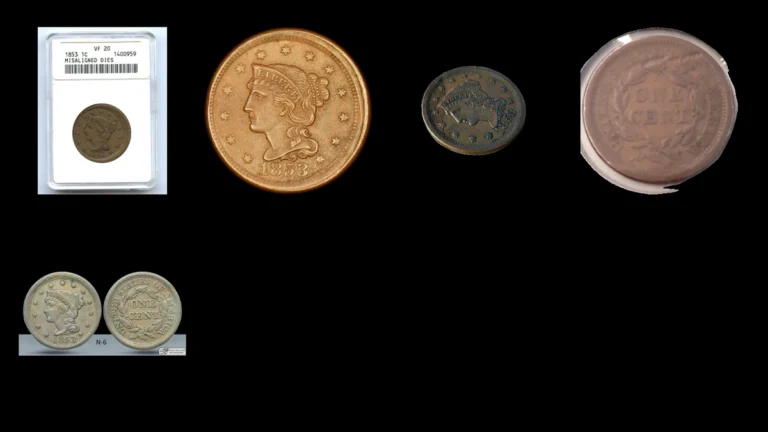
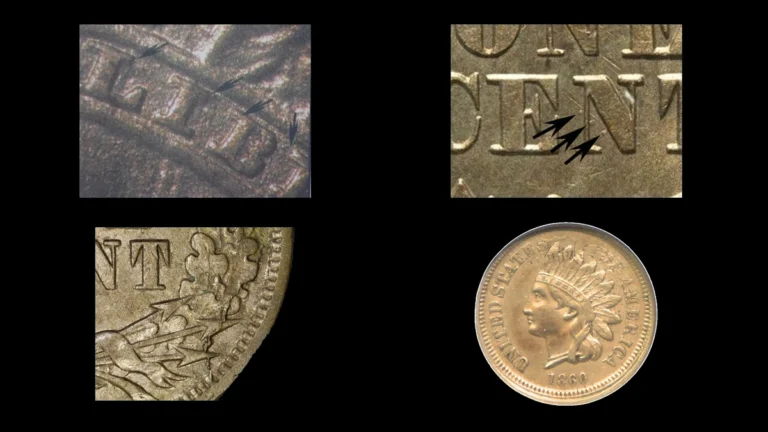
A dealer-described 1821 N-1 has a fine line extending from the bust tip to the rim just right of the first star. The dealer identified it as a die crack on a PCGS MS62 Brown coin.
Cracked steel can admit copper during striking and leave a raised ridge. The coin is copying a gap in the tool, rather than receiving a scratch afterward.
How to Identify
Follow the documented route under side lighting. A crack rises above intact metal, while a scratch has a recessed center even if it pushes up narrow lips.
A separate worn seller example combines a clip and a crack. Its crack is not established as following the N-1 path, so its own line needs examination.
What It’s Worth
Estimated whole-coin values are $75–$20,000, with fine cracks on worn cents often around $75–$800. Strong preservation can account for a much larger price than the crack itself.
The dealer’s MS62 Brown N-1 was offered at $18,500. That figure is an asking price.
An 1825 cent with a reverse crack sold for $12,650 in September 2011 at PCGS MS64 Brown. It supplies a completed transaction for a different date and higher unworn grade.
2. 1821 Penny A Gap in the Edge: Reported Clipped Planchet Error
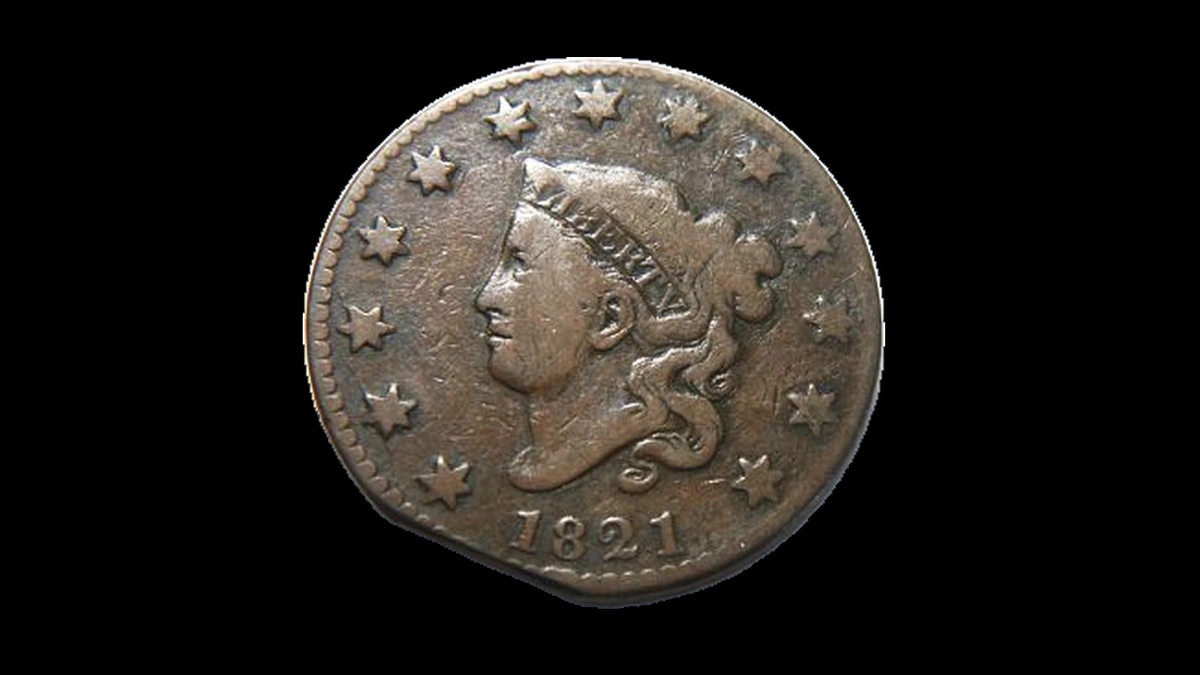
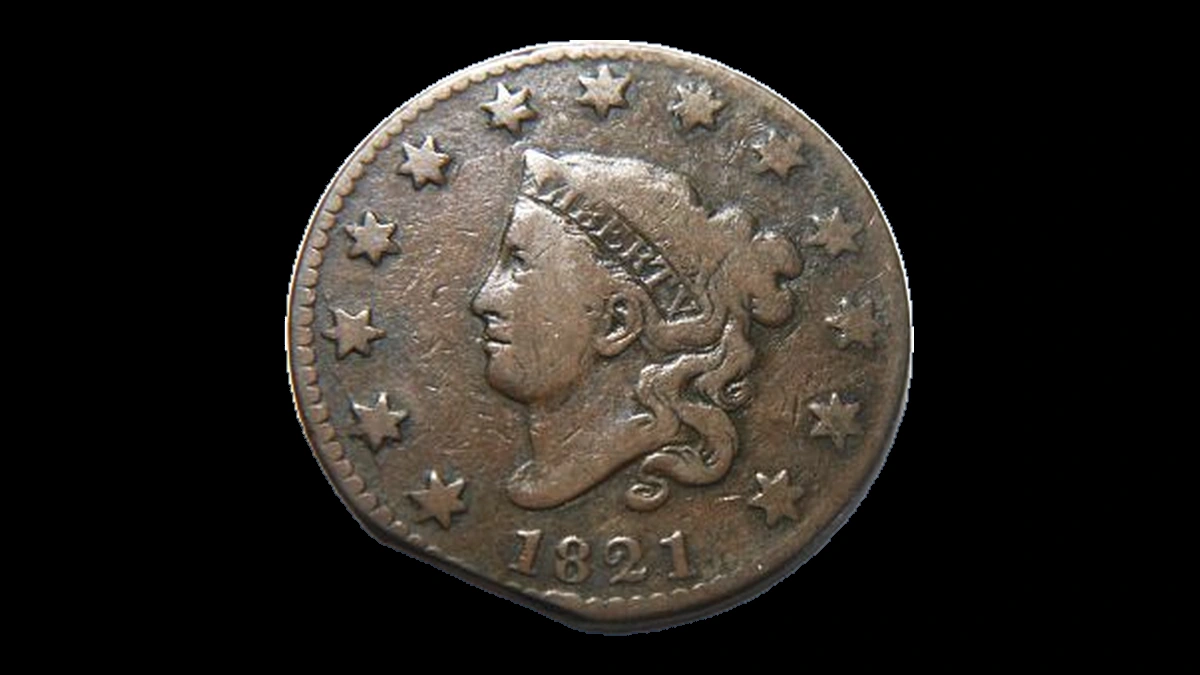
A seller lists an 1821 cent with both a clip and a die crack, describing it as VG+. That grade description indicates substantial wear.
An original clip means part of the blank was absent before the strike. The crack would have come from a separate fault in the die.
How to Identify
Inspect the side wall and both ends of the gap for filing, saw marks, or a sharp cut through finished design. Weakness in the opposite rim may support an original shortage but is insufficient on its own.
The supplied listing gives no clip shape, size percentage, or clock position. Photograph the complete outline so cropping does not exaggerate a small missing section.
What It’s Worth
A genuine 1821 clip has an estimated whole-coin range of $150–$2,500, with worn modest examples often around $150–$700. Larger, clearer defects on better surfaces need their own comparisons.
The seller’s VG+ clip-and-crack coin was listed at $269.95 before shipping. It is an asking price for one combined-error coin, not two separate values to add.
3. 1821 Penny A Thin Sheet Separates from the Copper: Lamination Error
The supplied year guide includes lamination among reported 1821 errors without identifying a particular specimen. This defect requires evidence of a layer separating within the copper.
How to Identify
Examine the boundary under low light without touching or lifting a flap. An attached sheet may retain struck detail, while a scrape cuts across the finished surface.
Scattered pits or a different-colored patch do not establish lamination. A peeling surface also does not demonstrate that the whole blank split into two complete thickness layers.
What It’s Worth
Estimated values are $75–$2,000, including approximately $75–$500 for worn coins with a clear layer defect. Better preservation and larger visible separations may support more.
An 1840 cent graded VF30 with lamination and other surface problems sold for $108 including premium in May 2025. That moderately worn, different-year coin is not a sale record for an identified 1821 lamination.
4. 1821 Penny Bare Copper beside a Displaced Design: Off-Center Strike Error
A blank sitting outside the correct position can miss part of the dies. The result combines unstruck copper with outer design that falls beyond the metal.
The supplied year guide reports this category without a measured 1821 specimen. No percentage or direction is established here.
How to Identify
Compare both faces to see whether one misplaced blank explains their design boundaries. A shift on just one face may instead involve a misplaced die.
Inspect the bare area for original surface rather than flattened letters or grinding marks. An unstruck crescent still contains metal, so the strike alone does not explain missing weight.
What It’s Worth
Estimated whole-coin values are $500–$6,000, with worn clear examples around $500–$2,500. Readable dates, better detail, and cleaner surfaces support stronger comparisons.
An 1829 cent struck 25% off-center sold for $1,380 in December 2024 at PCGS VG10. Its percentage belongs to that heavily worn coin, not to the general 1821 report.
5. 1821 Penny The Wreath Turns Away from Upright: Rotated Dies Error
A rotated die changes the relationship between the two faces. Each design may still sit normally within its rim.
Rotation is reported for 1821 without a measured example in the supplied evidence. General discussions of quarter turns or half turns do not establish those angles for this date.
How to Identify
Hold Liberty upright against a vertical reference and turn the coin top to bottom without twisting sideways. The reverse should normally appear upright after this movement.
Repeat the flip before measuring the wreath’s angle and recording its direction. Separately rotated photographs or a sideways grip can create an apparent tilt unrelated to the dies.
What It’s Worth
An estimated $100–$4,000 covers authenticated rotations, with worn examples often around $100–$700. A slight lean may add little, while larger rotations on better coins need stronger comparisons.
An 1852 rotated-die cent graded NGC MS65+ Red-Brown sold for $2,350 in November 2014. That unworn different-date example does not establish an 1821 sale or angle.
Conclusion
The documented N-1 crack has a specific route, while the seller’s clipped coin needs its own edge and crack assessment. General reports of lamination, off-center strikes, and rotation require visible evidence on the actual candidate.
The $18,500 asking price and $12,650 different-year auction result mainly concern well-preserved cents. A worn 1821 coin should be compared with similar surfaces and detail before its unusual feature is valued.