Rare 1849 Penny Errors (List & Pictures)
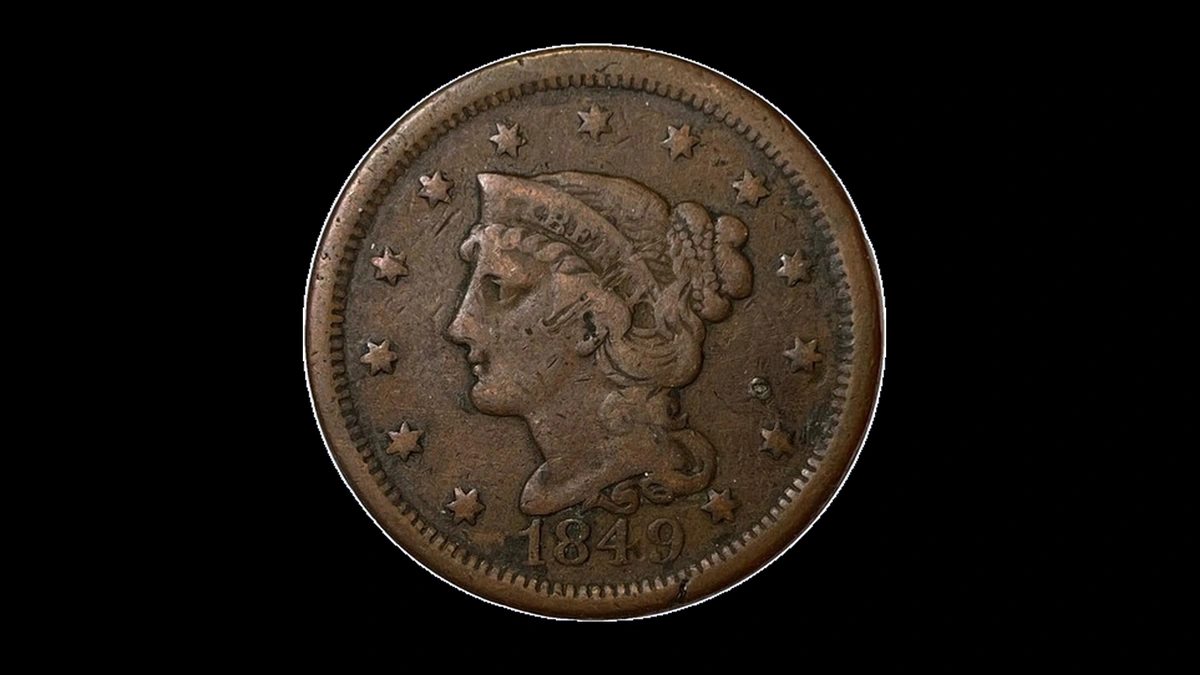
For 1849 penny errors, the relationship between an unusual feature and the surrounding copper is often more informative than its size. Raised metal, a loose sheet and an empty crescent point to different events.
Estimated whole-coin values range from $25 to $15,000. A related 1808 off-center cent brought $6,462.50 in February 2018, but that different-year sale does not price either reported 1849 off-center specimen.
Use the surface checks first, then decide whether an unusual outline retains the full design.
| Observation | Possible cause | Estimated whole-coin value |
|---|---|---|
| Raised line, bump or rim-connected patch | Die crack, chip or cud | $25–$750 |
| A sheet separates within the copper | Lamination | $40–$1,000 |
| Expanded outline and complete detail | Broadstrike | $100–$2,000 |
| Bare crescent with design missing opposite it | Off-center strike | $400–$15,000 |
1. 1849 Penny Raised Metal near the Design: Die Crack, Chip and Cud Error
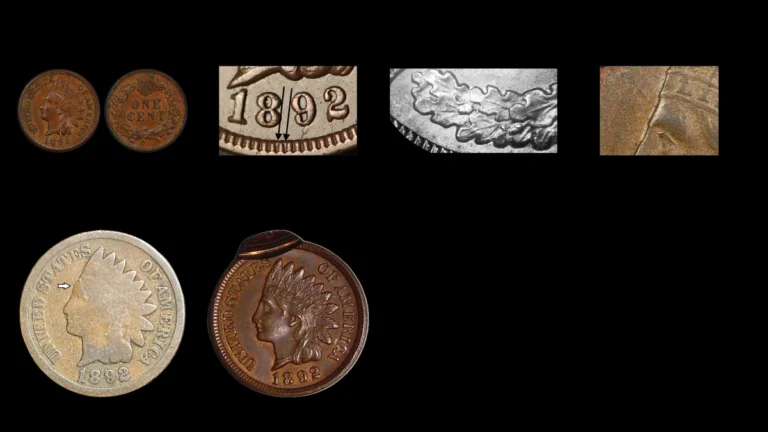
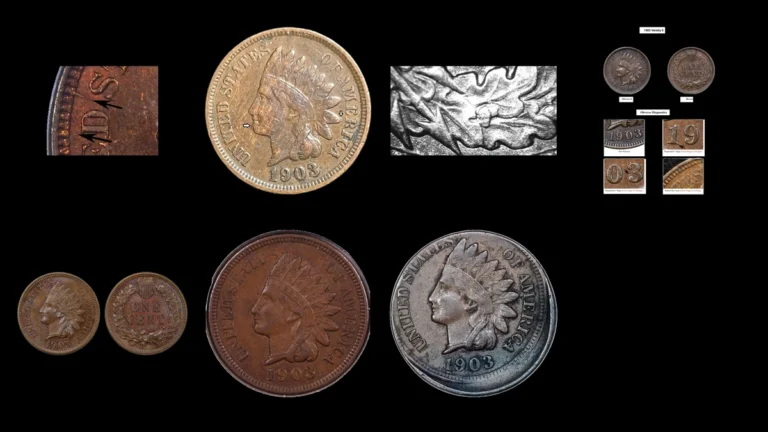
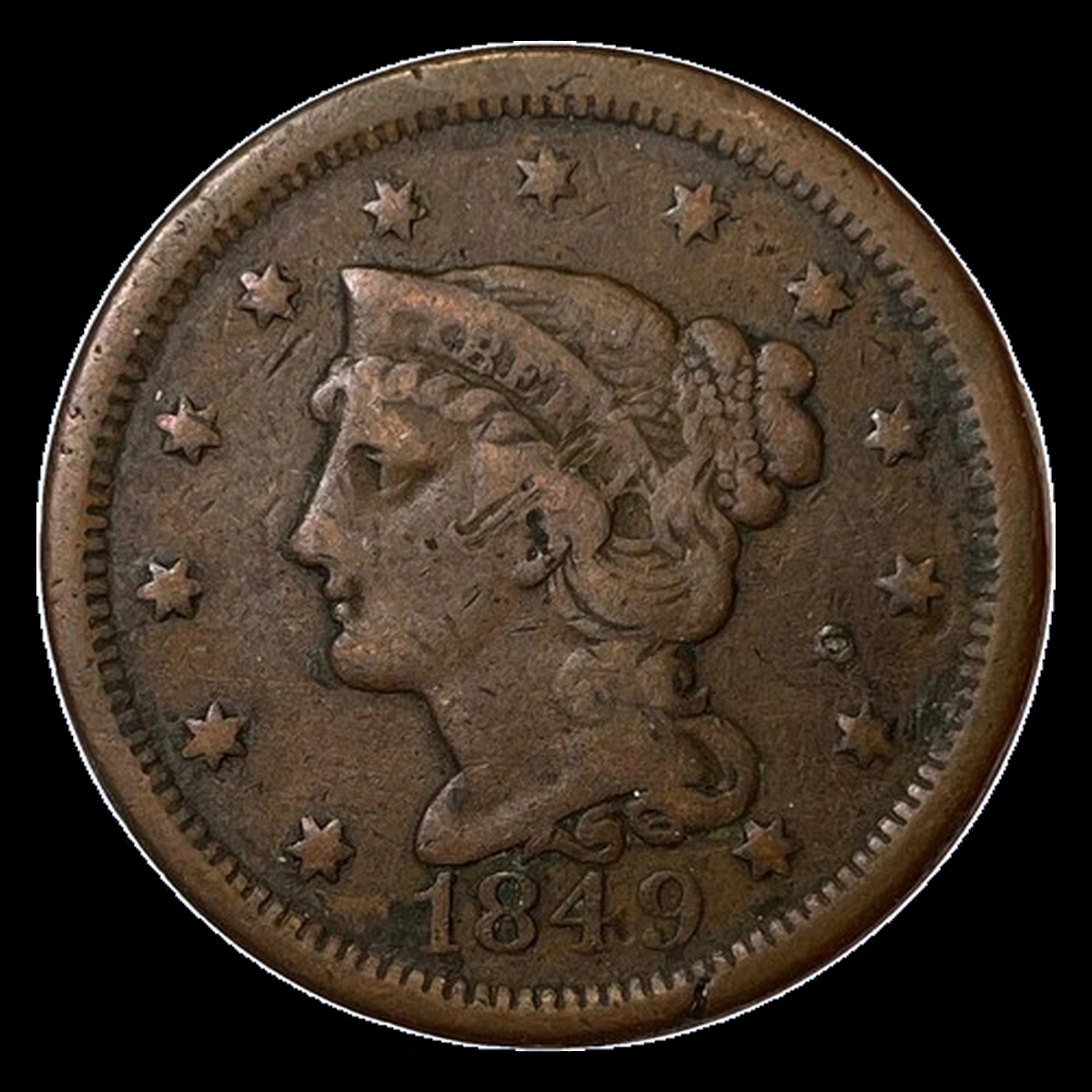
The reported 1849 N-2 has a break below the E in UNITED on the reverse. N-2 identifies a particular die pair, so that location is useful for comparing the report rather than for identifying every raised mark of this date.
A thin crack in a die can leave a raised line on the cent, while a small missing piece of steel leaves a bump. A larger break extending to the edge produces a rim-connected patch known as a cud.
How to Identify
Find the E in UNITED and examine the metal immediately below it before considering the N-2 attribution. For a claimed cud, follow the feature all the way to the rim.
Inspect the edge beside the patch for an impact that could have pushed copper inward. A raised area made by rim damage should not be mistaken for metal filling a missing section of the die.
Elsewhere, use angled light to distinguish a raised ridge from a scratch. Small interior die chips need not touch the rim, but an irregular stain does not become a chip merely because its color makes it stand out.
What It’s Worth
$25–$150 is an estimated whole-coin range for worn 1849 cents with small cracks or chips. More evident rim breaks are estimated at $75–$750.
These are category estimates, not a quoted sale of the reported N-2. Surface quality can outweigh size when comparing a clean small break with a conspicuous feature on badly corroded copper.
2. 1849 Penny A Sheet Lifts from the Copper: Lamination Error
Follow the edge of a suspected peel to see whether a thin sheet separates from the cent itself. Internal weakness in the copper can allow a layer to lift, remain attached or eventually fall away.
This is called lamination, and it is reported for 1849 without a single established face or location. The solid-copper coin has no modern plated coating that should peel from a different core.
How to Identify
Look across the attachment point and nearby original design with low-angle light. Leave any retained flap in place, since bending it removes evidence and can break it off.
A missing sheet can leave a shallow opening with a layered boundary. Scattered pits or a scraped area with metal pushed to one side need a different explanation.
For safe measurements on a loose cent, the normal starting references are 10.89 grams and roughly 28 millimeters across, with a plain edge. Keep measuring tools away from fragile metal, and remember that corrosion can lower weight as well as a missing flake.
What It’s Worth
$40–$300 is a working estimate for worn laminated cents, rising to $300–$1,000 for attractive unworn examples with stronger defects. Each range values the entire coin.
No individual 1849 transaction supports a more precise figure in the supplied material. A clear sheet can display the error well, but cleaning, fresh damage or widespread corrosion may reduce interest.
3. 1849 Penny A Larger Outline around Complete Detail: Broadstrike Error
An unusually wide cent can qualify as a broadstrike when metal spread outward during striking while the intended design remained complete. The 1849 category is reported without a specific priced specimen.
Unequal borders alone are not enough. Slight misalignment can change the border widths without the same overall expansion, and later hammering can also widen a coin.
How to Identify
Compare several diameters and the entire outline with an ordinary large cent. A photograph taken at a different scale can make a normal coin look oversized.
Trace the outer letters and other intended design on both faces to establish completeness. If the design actually missed the blank, use the off-center checks instead.
Examine the expanded area and edge for evidence of later compression. Repeated impact marks and flattened finished lettering do not explain the coin in the same way as natural metal spreading during its strike.
What It’s Worth
$100–$500 is estimated for genuine worn broadstrikes, with $500–$2,000 for attractive unworn examples showing clear expansion. These are whole-coin estimates for the reported category.
A barely uneven border should not inherit the value of a visibly expanded error. The amount of spreading, complete detail and condition of the copper all influence the comparison.
4. 1849 Penny A Large Bare Crescent beside the Strike: Off-Center Strike Error
Two recorded 1849 cents moved toward two o’clock during striking, but their other descriptions differ. An old Mike Byers catalog offered an unworn example 50% off center with all four date digits visible.
A separate N-8 is 30% off center and graded NGC VF Details. Its moderate wear is accompanied by a condition problem: initials scratched into the unstruck front area.
How to Identify
With Liberty upright, connect the direction of the struck design to the empty copper opposite it. This geometry should agree on both faces of a blank that was out of position beneath the dies.
Preserve the date in a full-face photograph and distinguish original unstruck metal from later flattened detail. The coin still has its blank metal; an off-center strike does not require a piece cut from the outline.
The scratched initials on the N-8 are later damage, not part of the minting error. Keep that specimen’s 30% displacement and Details grade separate from the unworn 50% catalog coin.
What It’s Worth
$400–$2,500 is an estimated range for worn off-center examples, with $2,500–$15,000 for stronger unworn coins retaining a readable date. Surface problems can substantially change a comparison even when displacement is dramatic.
The old Byers catalog’s $750 figure was an asking price for its 50% example. It is neither a confirmed sale nor a current valuation.
An undated cent attributed to 1808, struck 30% off center and showing light wear, sold for $6,462.50 in February 2018. That different-year auction provides context for major large-cent errors without supplying a completed 1849 sale.
Conclusion
Small raised features usually direct attention to the die, while peeling copper directs it to the blank’s metal. An unusual outline then requires a separate decision about whether the design is complete or partly missing.
For either reported off-center cent, keep its displacement, condition and price history together. Preserve fragile layers and old surfaces so that the coin’s original evidence remains available for examination.