Rare 1826 Penny Errors (List & Pictures)
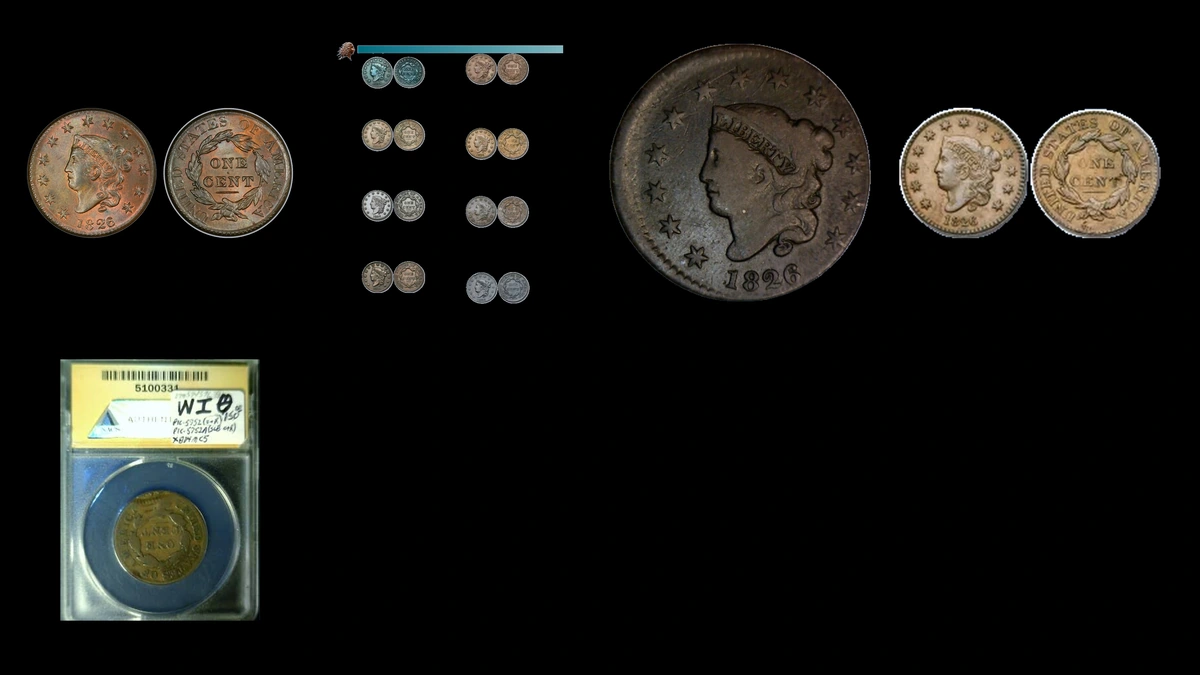
The last digit deserves a close look on an 1826 large cent: an older 5 may hide inside the 6. Other 1826 penny errors affect much larger areas, with whole-coin values of roughly $50–$5,000.
A cent that flipped over and received another strike sold for $460 in February 2003. Work from the date toward the rim, then turn the coin over to compare its two faces.
1. 1826 Penny An Older 5 inside the Date: 1826/5 Overdate Error
The extra stroke inside the upper part of the final 6 comes from a previous 5 on the die. A die is the stamping tool, so this change happened before the coin was made.
It is not an 1825 coin with a new digit scratched into it. Wear can make the small remaining stroke hard to see.
How to Identify
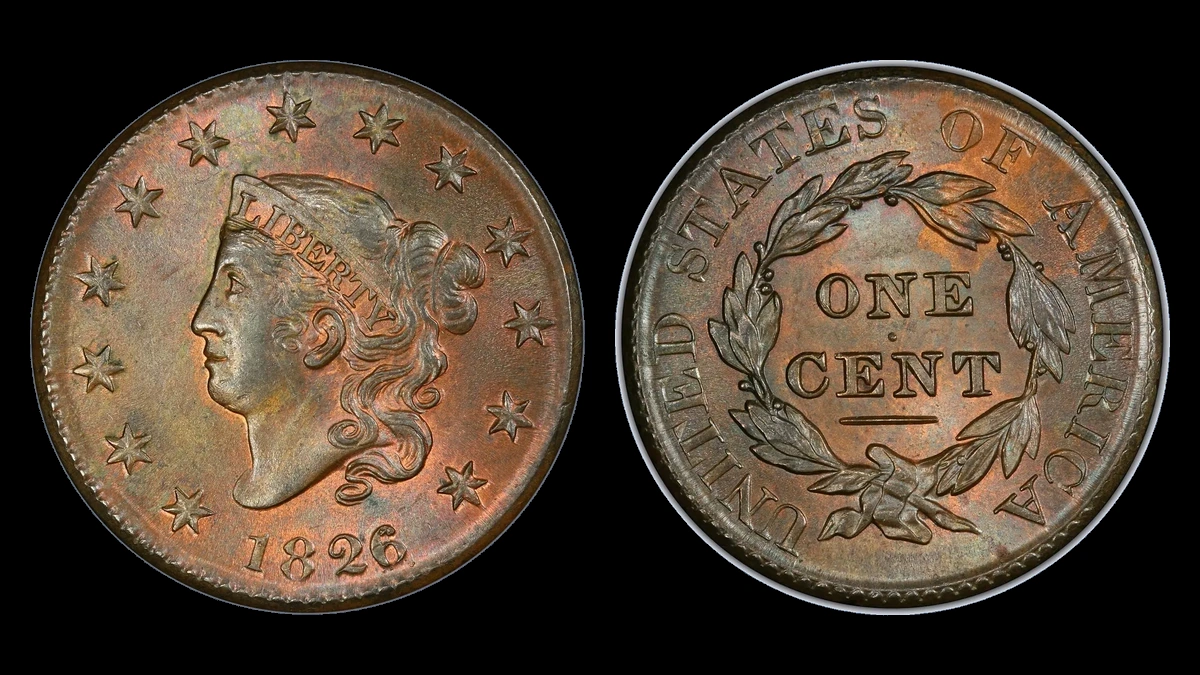
First check ONE CENT on the back to confirm the denomination. An 1826 half cent is a different coin.
Light the final 6 from several directions and compare its interior with a clear 1826/5 example. Dirt and scratches can imitate a stroke, so do not dig inside the numeral to investigate.
For reference, a normal large cent began at about 10.89 grams and measures roughly 28–29 mm across. Its edge is plain, and circulation can reduce its weight.
What It’s Worth
$100–$3,000 covers identifiable worn coins around $100–$600 and sharper pieces around $600–$3,000. The date’s clarity and the copper’s condition help explain that wide spread.
A documented PCGS AU55 example also has the metal flake described below. Its two features belong to one coin and should not be priced by adding two full estimates.
2. 1826 Penny Extra Portrait Edges from Strike Doubling Error
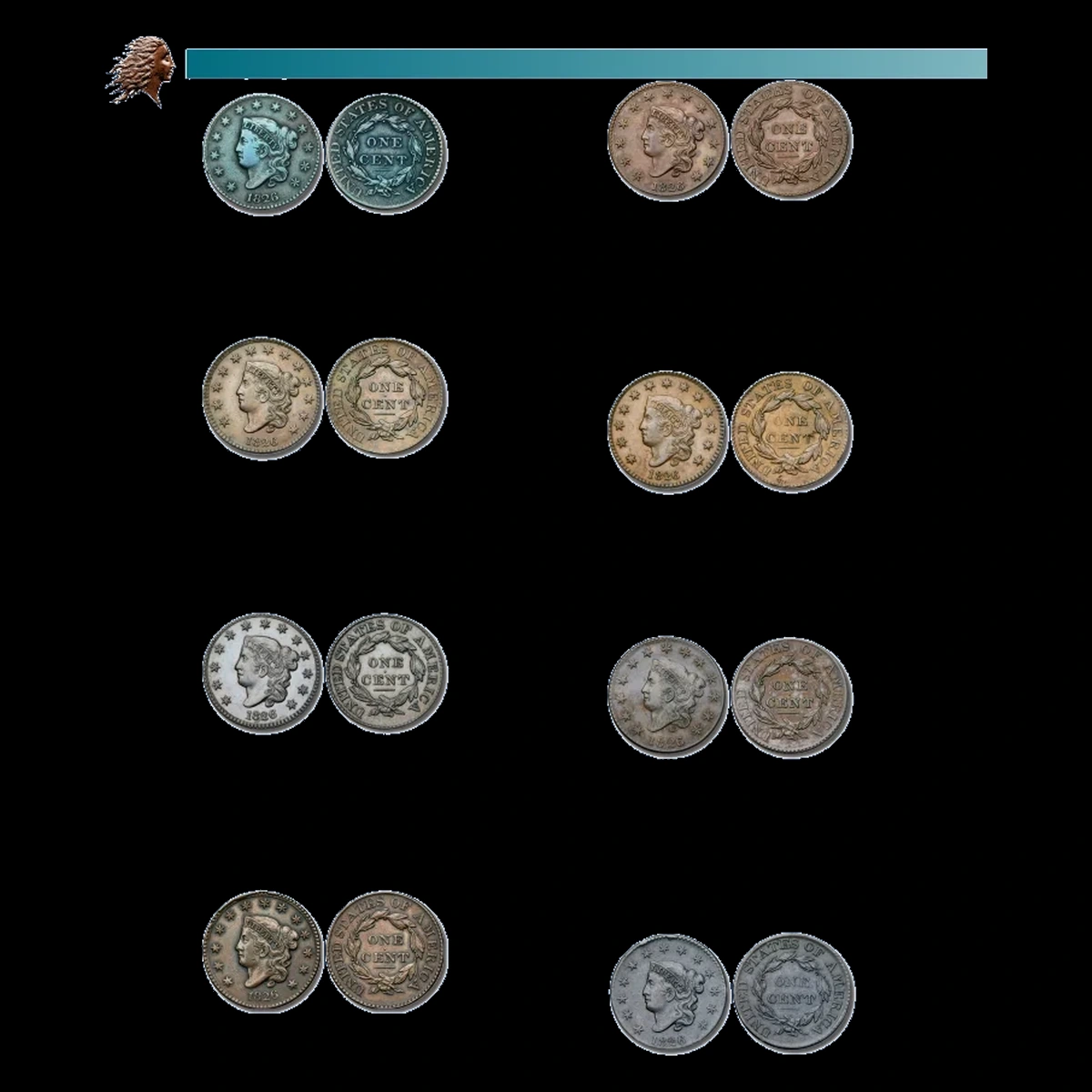
Some 1826 cents show an extra outline along Liberty’s face or coronet. Early American Coppers descriptions also record doubling on the upper stars, including a separate coin with that feature.
These outlines formed during the strike. They do not automatically establish a doubled die, where the extra design was already on the stamping tool.
How to Identify
Trace the extra edge along several connected features under a magnifier. A shallow step beside a face or star differs from a whole second design shifted across the coin.
Take a steady photograph and change the lighting. Camera movement can double an edge in a picture, while a later blow may push the coin’s metal sideways.
What It’s Worth
$50–$800 is the estimated whole-coin range. Visible doubling on a worn cent can fit $50–$200, while a sharper coin with an appealing double profile can fit $200–$800.
The catalog descriptions identify features rather than individual sale prices. Much of the value still comes from the old cent’s date, preservation, and surfaces.
3. 1826 Penny Raised Rim Patches from Cuds Error
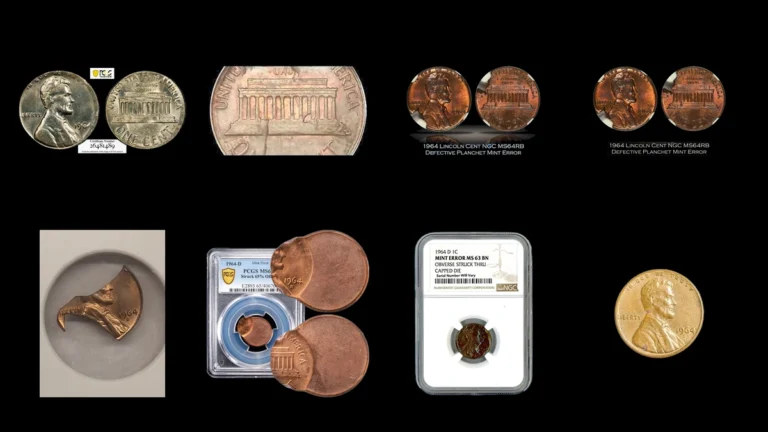
A cud joins the rim and replaces part of the normal design with raised copper. It forms when a piece breaks off the edge of a die and metal fills the resulting gap.
Recorded 1826 locations include beside the fifth star, above the seventh star, and across stars five through eight. These are different examples, not a checklist that every coin must match.
How to Identify
Count the stars from the lower left around Liberty to locate the affected area. Follow the raised patch all the way to the rim.
Look for a folded edge, dent, or seam around added metal. A genuine cud belongs to the struck surface and may leave weakness on the opposite face.
What It’s Worth
$100–$1,500 allows about $100–$400 for a smaller cud on a worn coin and $400–$1,500 for larger, clearer examples. A recognizable break surrounded by readable design is especially useful to collectors.
An 1829 large cent with three cuds brought $810 in September 2020. That different-date sale shows the scale of the market without establishing a price for any one 1826 cud.
4. 1826 Penny A Copper Flake from Lamination Error
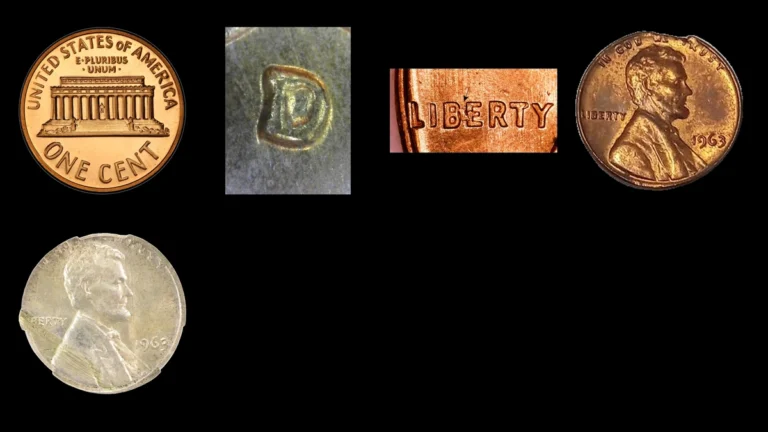
The back of one 1826/5 cent has a retained copper flake above IT in UNITED. The separation extends toward the left wreath near the bow.
Stack’s Bowers described the coin in its March 2016 Twin Leaf catalog. A weak area within the copper allowed the surface to separate while part of the flake stayed attached.
How to Identify
Use low side lighting to find the thin layer and its boundary. A flap stands apart from the surrounding metal; a scratch cuts a groove into it.
Leave the flake exactly where it is. Do not lift it, press it flat, or clean around it, since those actions can destroy the most useful evidence.
What It’s Worth
$75–$1,000 covers a worn coin with a visible separation at $75–$300 and a better-preserved example at $300–$1,000. The documented overdate coin also carries value for its date variety.
A front lamination on an 1841 large cent sold for $564 in December 2021. It offers a different-year comparison for a clearly visible copper flaw.
5. 1826 Penny A Missing Edge from a Clipped Blank Error
The recorded Rippere collection example has a clip and an ANACS G4 Details grade. That means it is heavily worn and has an additional condition issue.
A clip begins before striking, when the blank is incomplete. The listing does not state this coin’s gap shape or direction.
How to Identify
Examine the gap’s ends together with the adjacent rim. Striking around an incomplete blank can leave a different border from a saw or file cutting through a finished coin.
Weakness opposite the gap can help, though wear may hide it. Lower weight alone cannot settle the question because a later cut removes copper too.
What It’s Worth
$75–$1,200 is a practical estimate, with worn examples around $75–$350 and clearer, stronger pieces around $350–$1,200. These are not claimed sale results for the Rippere clipped cent.
An unworn 1852 clipped large cent sold for $384 in June 2024. A heavily worn 1826 coin with other problems needs to be judged on its own appearance.
6. 1826 Penny An Off-Center Design beside Bare Copper Error
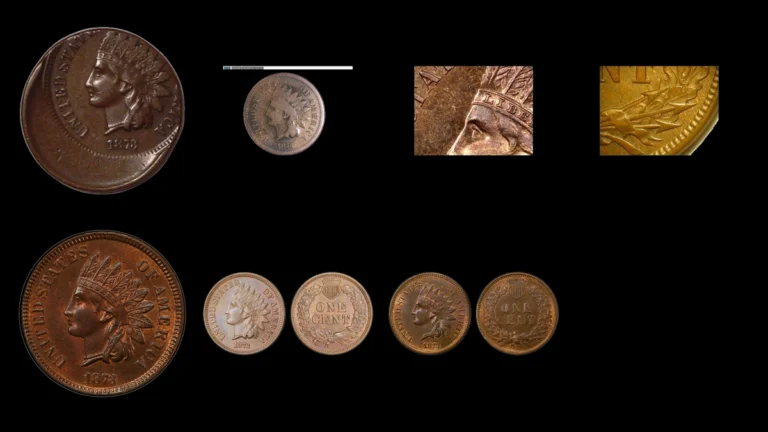
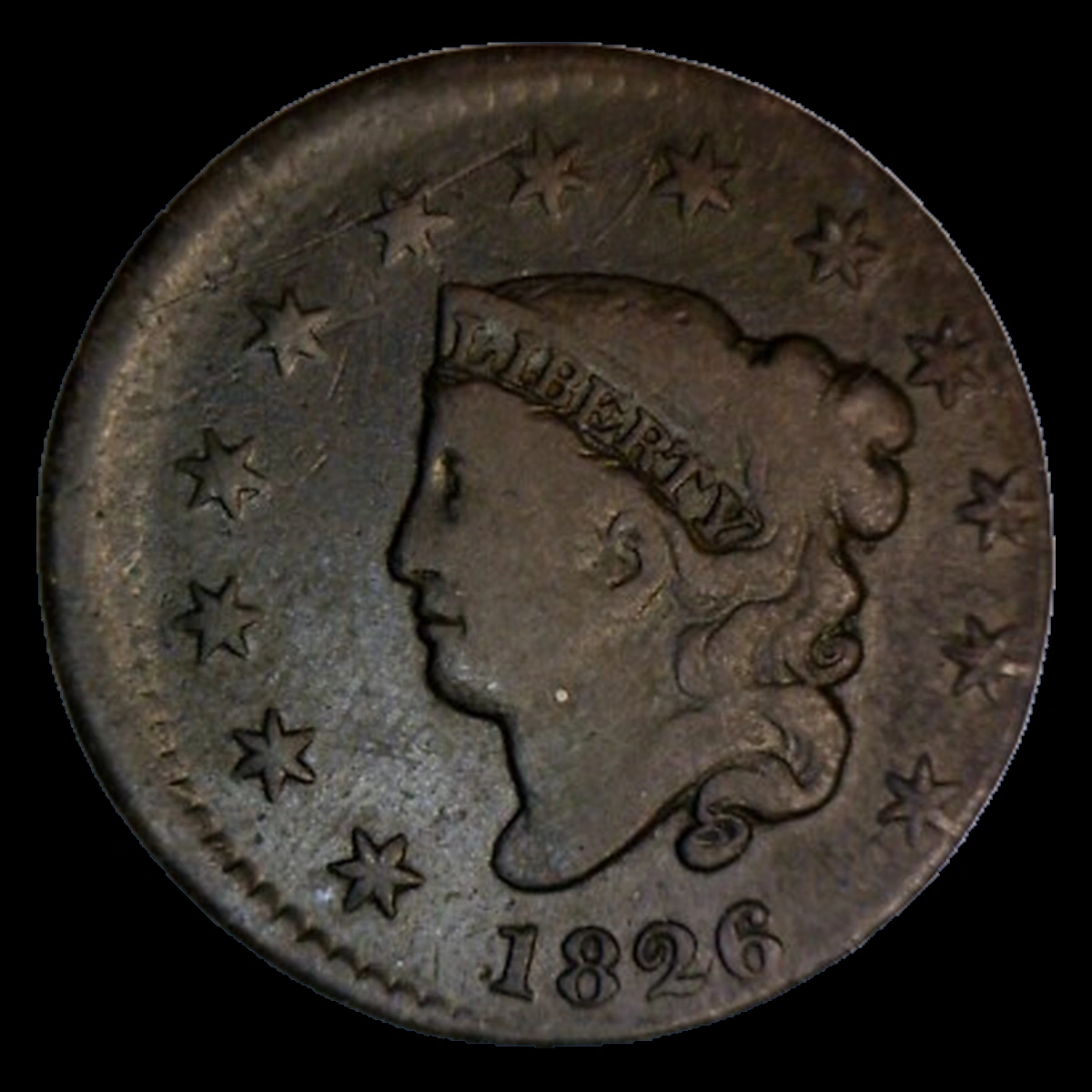
An older catalog reproduced by Mint Error News records an 1826 large cent about 10% off center toward nine o’clock. With Liberty upright, the design shifts left.
The blank sat partly outside the dies, leaving some copper unstruck. This affects the placement of the design, rather than removing a piece of the coin.
How to Identify
Find the date and examine the unused crescent without cropping the outline in photographs. Part of the intended design should run beyond the coin’s edge.
Compare both faces using the same physical edge as a reference. A misplaced die can shift just one side, while grinding may remove letters but leave tool marks.
What It’s Worth
$250–$4,000 spans worn, clear examples at $250–$900 and sharper, more dramatic coins at $900–$4,000. The recorded 10% example has no individual sale figure supplied here.
For perspective, a cent attributed to 1808 and struck 30% off center brought $6,462.50 in February 2018. Its different date, larger shift, and better condition make it a comparison above the ordinary worn range.
7. 1826 Penny A Ghost Portrait from a Die Clash Error
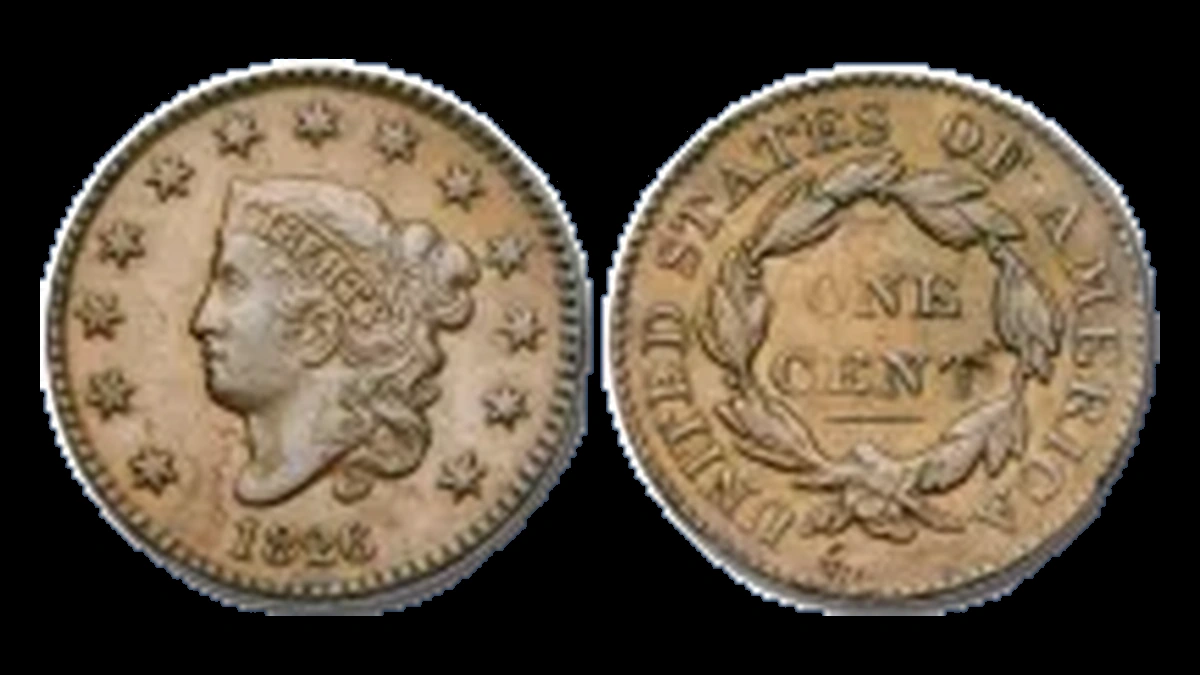
A faint Liberty outline can appear among the back’s wreath and lettering. When the dies hit each other without a blank between them, they can pick up traces that transfer to later coins.
On a documented 1826 N-7 cent, the ghost portrait is turned about 30 degrees clockwise. N-7 identifies a particular die pairing; the coin’s main designs still align normally.
How to Identify
Look for several connected curves that match Liberty, rather than one isolated scratch. Side lighting can reveal the faint pattern beside the wreath and ONE CENT.
Keep the ghost separate from the main lettering when comparing alignment. A tilted clash image does not prove that the entire back was struck at that angle.
What It’s Worth
$100–$2,500 covers whole coins with recognizable clashes, from worn pieces around $100–$500 to sharper examples around $500–$2,500. Better preservation contributes strongly to the upper range.
The Goldberg N-7 example was graded PCGS MS64, an unworn grade. Its description establishes the unusual ghost pattern, not a supplied auction price.
8. 1826 Penny A Tilted Main Design from Rotated Dies Error
A rotated-die error changes the angle between the front and back designs. The back’s main lettering provides the guide, rather than any extra portrait left by a clash.
How to Identify
Hold Liberty upright, then flip the coin from top to bottom without turning it sideways. ONE CENT and the surrounding lettering should finish upright under normal American coin alignment.
Repeat the turn against a fixed guide to measure a consistent tilt. Inspect the edge for a seam or alteration before relying on the result.
What It’s Worth
$100–$2,000 is the estimated range for an 1826 cent with an established rotation. A worn piece can fit $100–$500, while a sharper coin with a pronounced turn can fit $500–$2,000.
Small differences are less striking to buyers. The 30-degree ghost described in the clash section is not a measured rotation of the whole coin and should not be priced as one.
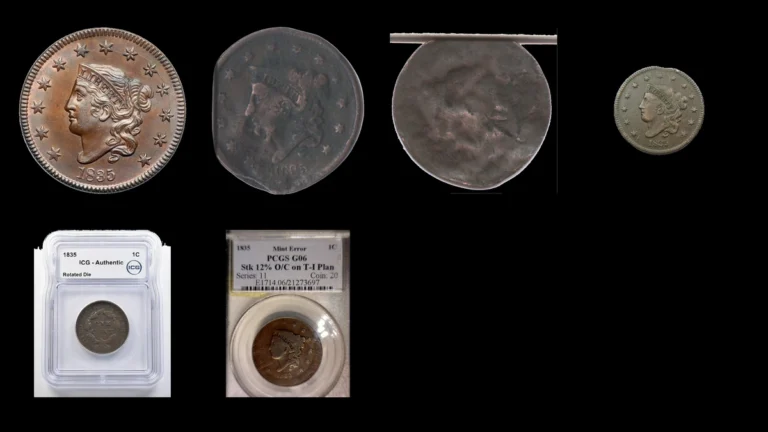
9. 1826 Penny Overlapping Designs from Multiple Strikes and Brockage Error
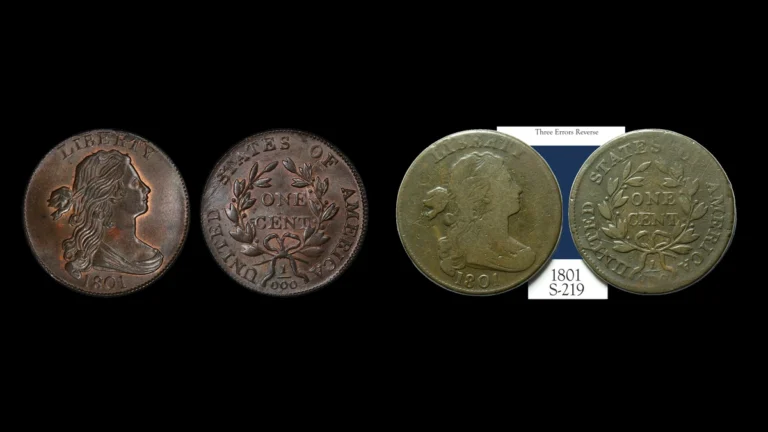
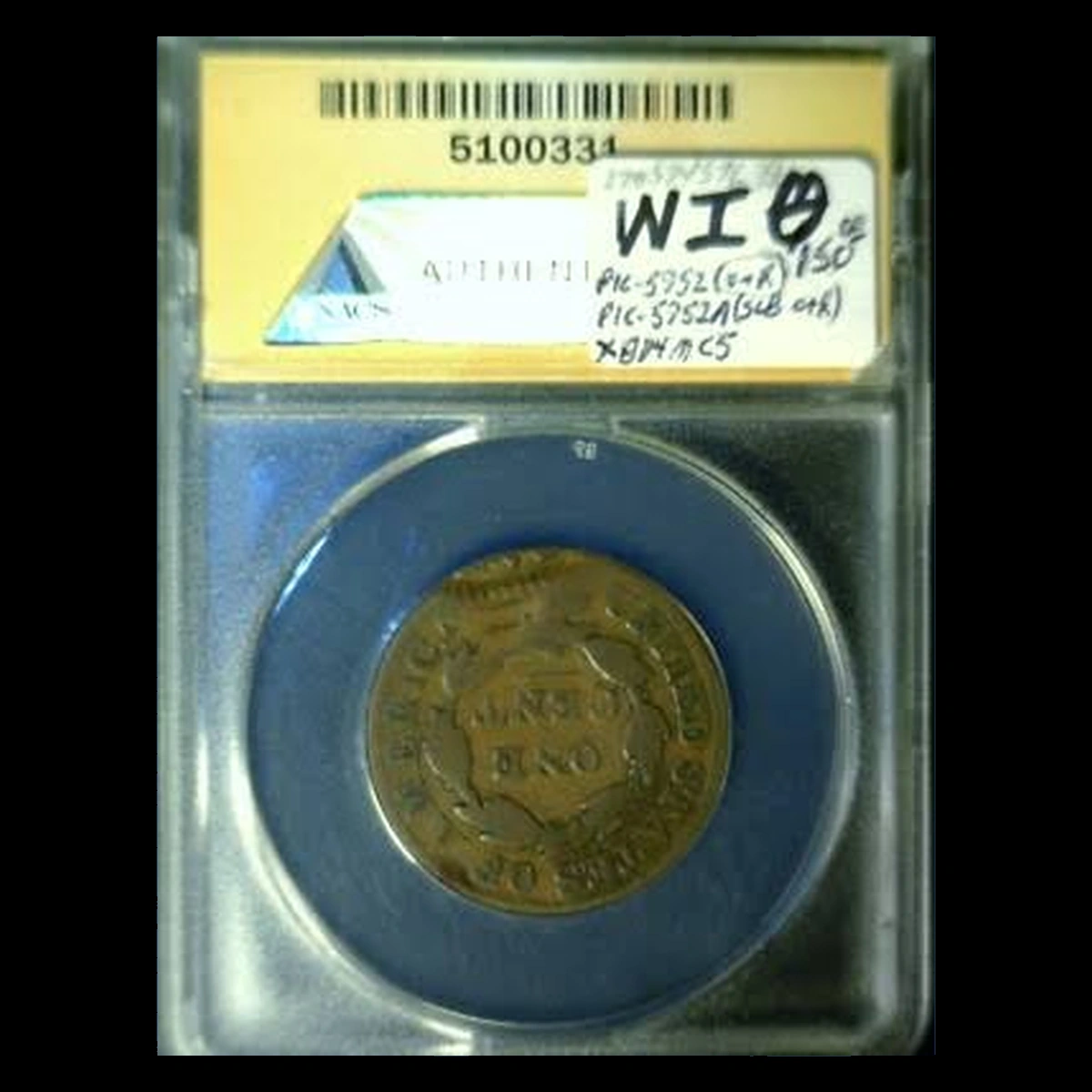
One documented 1826 cent flipped over before another strike, placing parts of opposite designs together. A separate coin received three strikes and also carries a brockage on the back.
A brockage is a sunken, backward design impressed by another coin. It differs from the faint extra lines of a die clash.
How to Identify
For the flip-over example, look for parts of the opposite face under the stronger design. Several surviving letters or portrait features explain the movement better than one thick edge.
On a brockage, check that the extra design is both recessed and reversed. Photograph its depth in side light, and look for squeezing or damage along the edge.
What It’s Worth
$350–$5,000 includes readable worn multiple strikes around $350–$1,500 and stronger compound errors around $1,500–$5,000. Clear overlapping detail matters more than counting blows alone.
The PCGS VG10 flip-over cent brought $460 in February 2003 and $352.50 in January 2014. Both records concern the same coin.
The separate triple-struck brockage was graded NGC VG8. No sale amount is supplied for it, so the flip-over coin’s results should not be transferred to that example.
Conclusion
On an 1826 cent, begin with a recognizable shape: the old digit inside the 6, a rim-connected patch, or a second design. Wear makes those clues less obvious, but it does not automatically erase an error’s interest.
Protect loose copper and record both faces before making an identification. Keep the main designs separate from faint clash marks when checking alignment, and value a coin with several features as one complete object.