Rare 1991 Nickel Errors (List & Pictures)
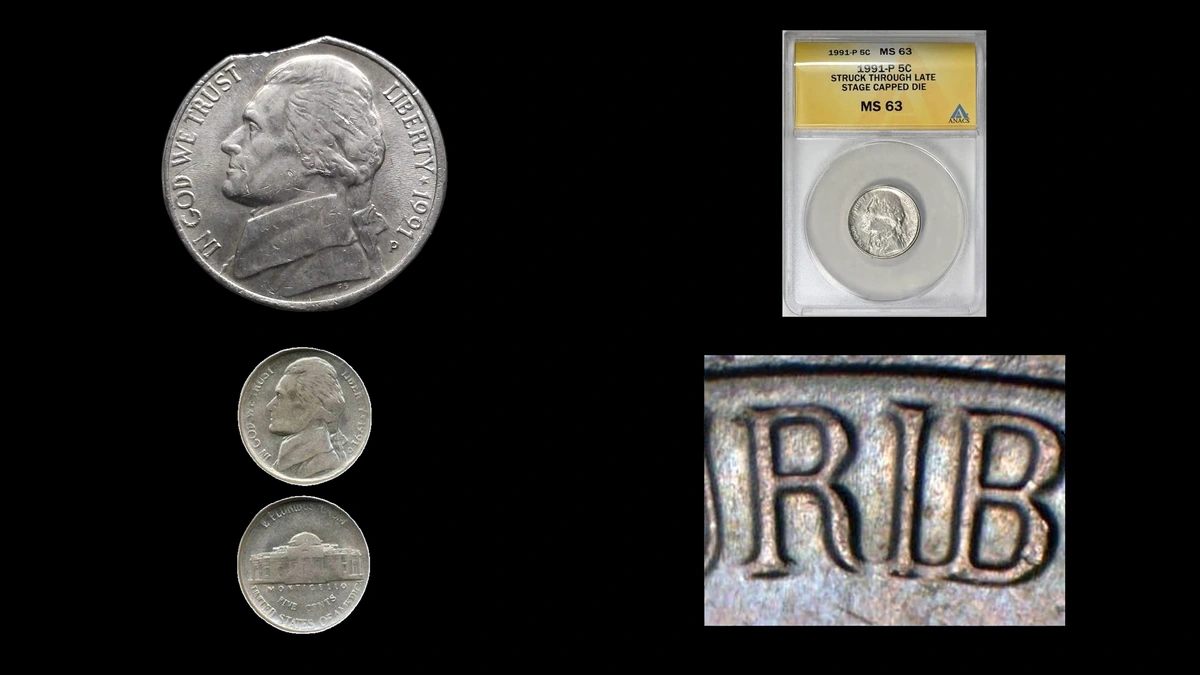
Lincoln’s Memorial does not belong across Jefferson’s portrait. On one 1991-P nickel, it survives because a finished cent went through the nickel press and received another denomination’s design.
A 1991-P cent overstrike sold for $660 in December 2024. Estimated values for the eleven groups of 1991 nickel errors run from $5–$6,500, but even the smallest doubled motto needs a precise match before it earns an error premium.
1. 1991 Nickel Nickel Designs over a Finished Cent or Dime Error
The recorded cent overstrike has an upside-down Memorial across Jefferson and remnants of Lincoln and LIBERTY beside Monticello. Its visible 1991 nickel date does not identify the date of the underlying cent.
A separate NGC MS64 example was struck over a 1990-P dime. These coins carry surviving designs from two denominations, rather than nickel designs on unused smaller blanks.
How to Identify
Find several parts of the earlier design and follow where the later nickel impression crosses them. For the cent example, check both the inverted Memorial and the Lincoln-side remnants near Monticello.
The separate dime needs matching Roosevelt or torch details from its 1990-P base coin. An earlier raised design beneath the new strike differs from a backward image pressed into a finished coin.
What It’s Worth
$350–$6,500 spans two different comparisons: clear cent overstrikes around $350–$2,000 and convincing dime overstrikes around $1,500–$6,500. How much of the older design remains visible has a strong effect on appeal.
The NGC MS62 cent overstrike sold for $432 in September 2019. Another 1991-P cent overstrike, graded PCGS MS64, brought $660 in December 2024.
A 1999-P nickel over a struck dime brought a reported $5,462.50 in 2008. That is a different-year reference for the dime group, not a sale of the 1991-P over 1990-P piece.
2. 1991 Nickel Nickel Design on a Smaller Unused Blank Error
Jefferson’s larger design can run off a disc intended to become a cent or dime. In this case the disc had not yet received Lincoln’s or Roosevelt’s design.
Both blank types are reported for 1991 without one measured specimen established in the summaries. Cent blanks have copper over zinc, dime blanks have bonded metal layers, and ordinary nickels are a uniform copper-nickel mixture.
How to Identify
Choose the correct starting standards: about 2.5 grams and 19.05 mm for a modern cent blank, or 2.27 grams and 17.91 mm for a dime blank. A normal nickel is 5 grams and about 21.2 mm.
The strike may spread a small blank, so combine measurements with the naturally cut-off design and metal evidence. Check for filing or added plating, and do not require dime grooves on an unused blank struck with nickel tools.
What It’s Worth
$200–$800 is the estimated range for an authenticated 1991 nickel on an ordinary cent or dime blank. A readable date and reliable identification of the smaller disc support that comparison.
Later-year results include $336 for a 1995-P dime-blank example in July 2022 and $360–$588 for three 1999-P cent-blank examples in September 2024. These guide the estimate without becoming 1991 transactions.
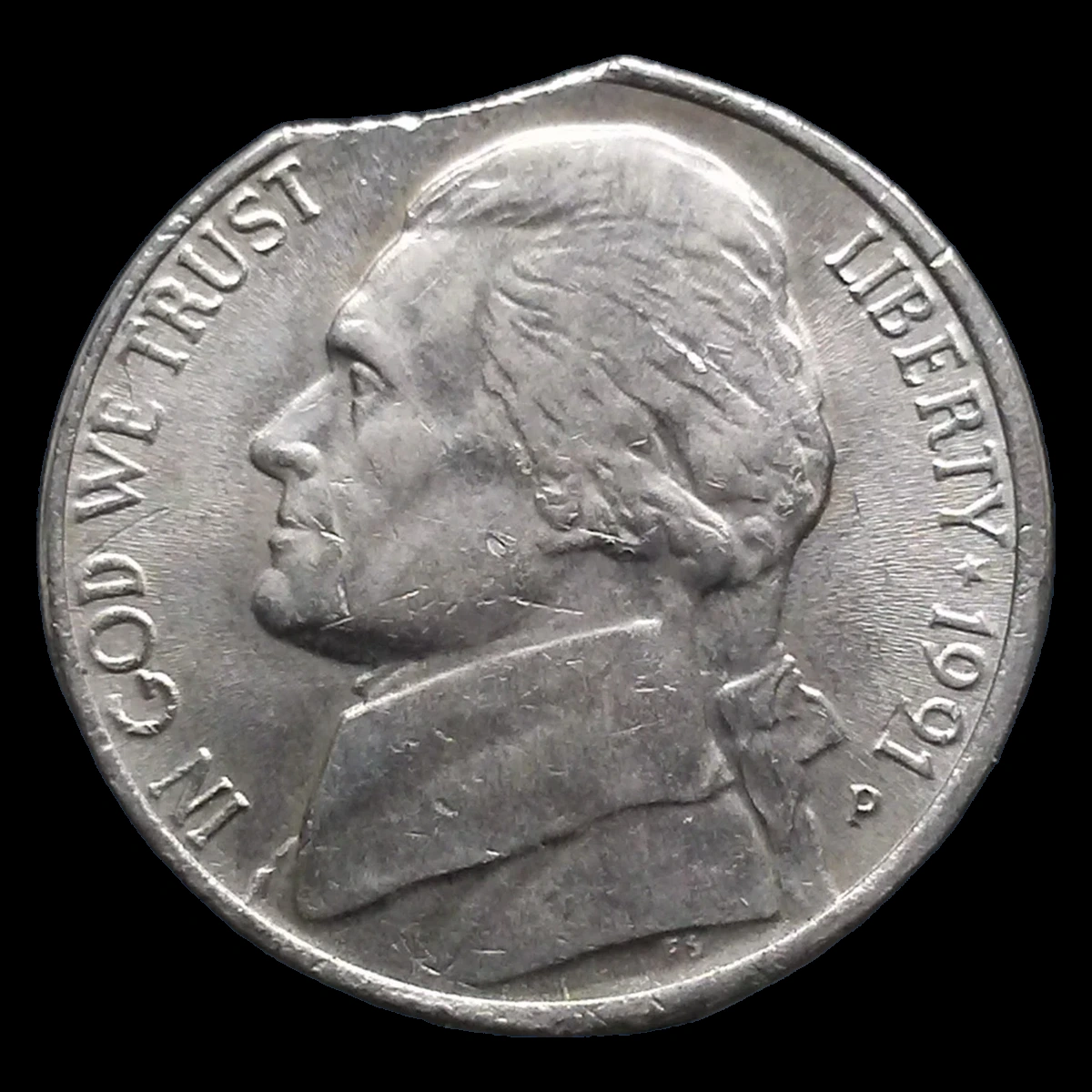
3. 1991 Nickel Straight Clip with an Off-Center Strike Error
One offered 1991-P nickel combines a straight missing edge with a displaced design. The blank was incomplete before it entered the press and then sat off center during striking.
The missing section and unstruck metal serve different roles. At the clip there is no disc; beside the shifted design there may still be bare metal.
How to Identify
Map the absent metal separately from the bare crescent. Check both ends of the straight opening for cuts through completed detail or fresh filing.
Turn the coin over to see whether the back design fits the same displaced blank. A low weight can follow either a true clip or later cutting, so it cannot replace inspection of the surviving edge.
What It’s Worth
$25–$500 is the estimated combined value for one genuine coin with both features. Many examples may fit around $25–$250, reaching about $500 with strong displacement and attractive preservation.
A 1999-P nickel with a 20% curved clip and 5% off-center strike sold for $54 in March 2025. Its curve and measurements are not properties of the reported 1991 straight-clip coin.
4. 1991 Nickel Broadstrike Error
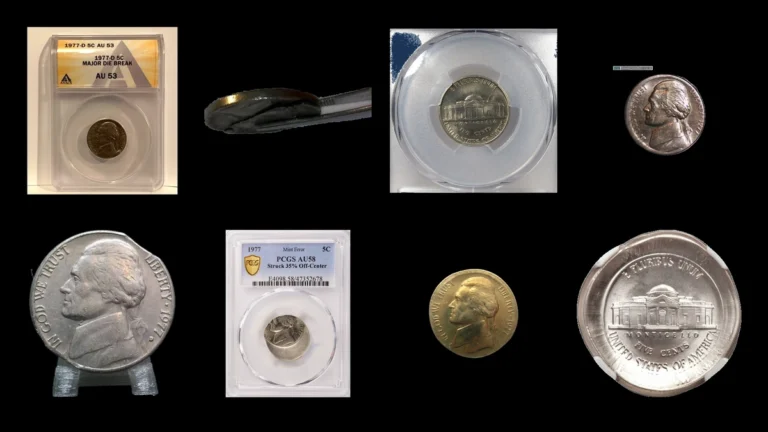
A complete design on a widened disc points toward a broadstrike. The collar ring did not properly contain the metal as the dies pressed it outward.
The Smithsonian records a specific 1991-D example. A smooth edge is ordinary for a nickel and does not establish the error.
How to Identify
Use the Smithsonian’s Denver broadstrike as a whole-coin comparison. Check that the complete portrait and building remain on the expanded outline.
Measure several diameters and examine the wider border for crushed lettering, folds, or fresh tool marks. A finished coin pressed flat can grow wider too.
What It’s Worth
$25–$300 is the estimated whole-coin range, from worn or marked examples around $25–$150 to cleaner strong spreads around $150–$300. The museum coin is not assigned a sale price.
A later 1999-P broadstrike graded PCGS MS63 sold for $89 in March 2025. Its unworn condition gives useful context for the same process on a different date.
5. 1991 Nickel Double Strike Error
A coin that moves and receives another blow may keep two sets of portrait or lettering details. The later impression can flatten portions of the first, leaving fragments rather than two complete designs.
The 1991 reports do not establish a single second-strike angle. Each coin must show its own movement and surviving overlap.
How to Identify
Follow one clear raised contour through the overlap, then locate other details that shifted consistently. Check the opposite face for a corresponding pattern.
A flat shelf beside one letter does not establish another strike. Inspect the edge for later squeezing or trimming, and avoid inventing an order of blows where the earlier design has disappeared.
What It’s Worth
$150–$1,500 is the estimated range for recognizable 1991 double strikes. Clear overlap, degree of movement, and surface quality determine the useful comparison.
A broadstruck, repeatedly struck 1995-P nickel sold for $154 in December 2025. That different-year combined error shows that extra blows do not always produce a large sale price.
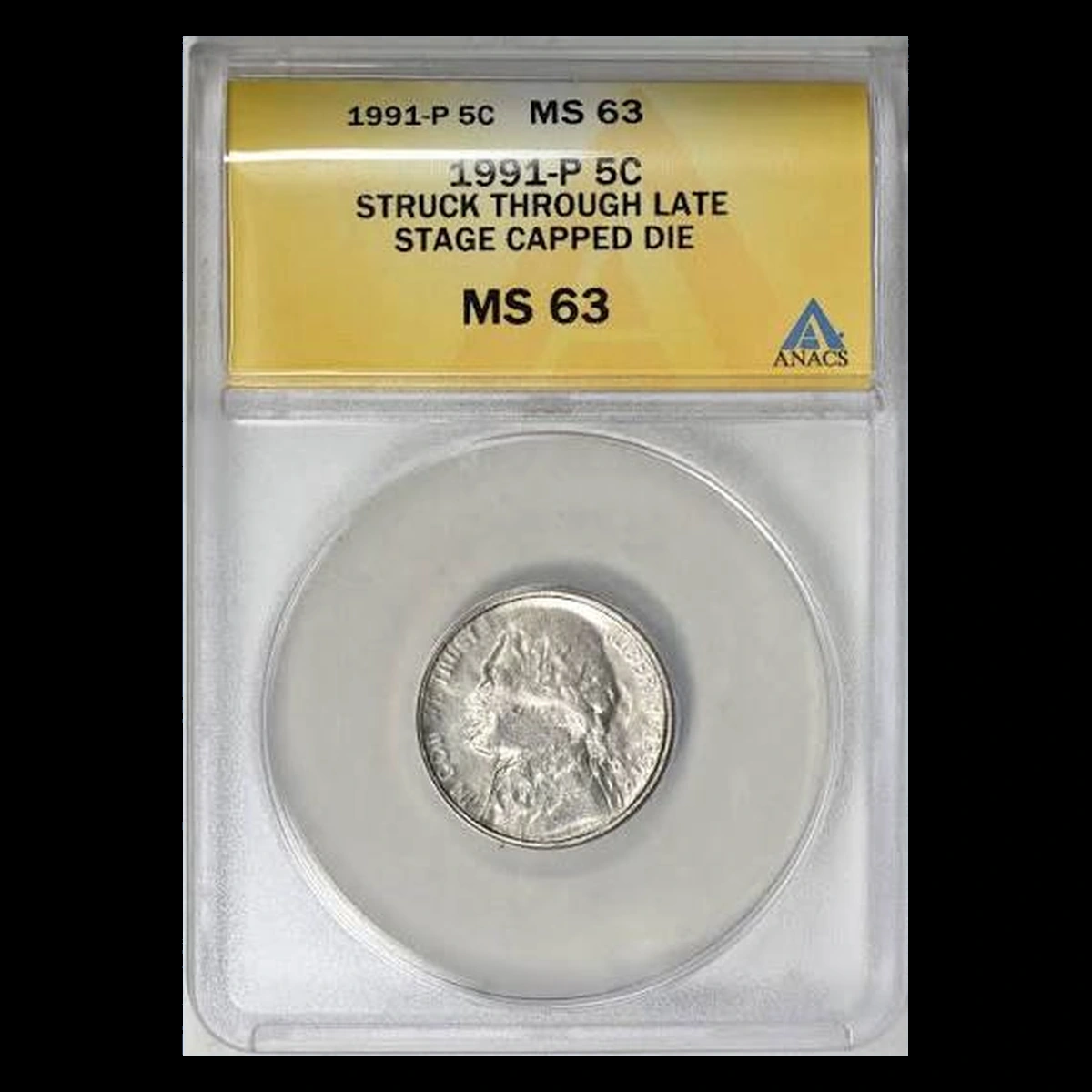
6. 1991 Nickel Die Cap or a Coin Struck beneath a Cap Error
A nickel stuck to a die can spread into a cup with a raised wall. Later blanks struck beneath that cap can instead remain fairly flat with a blurred or blocked design.
The 1991-P report mixes these descriptions. The actual shape must determine whether the coin is the cap or a piece struck beneath it.
How to Identify
Start with a side view and look for a genuinely stretched wall. Sharp folds or plier marks can reveal a cup made by later bending.
For a flat example, compare the weak face with the opposite design and rule out ordinary wear or a local blockage. Never flatten a possible cap to measure it.
What It’s Worth
$50–$2,000 covers the two alternatives, with confirmed cap-struck coins estimated at $50–$300 and true cup-shaped caps at $300–$2,000. Choosing the correct object comes before choosing a price.
A 2000-D cap-struck nickel sold for $84 in September 2025. That result supports the flatter receiving-coin comparison, not a deep cap valuation.
7. 1991 Nickel Low-Pressure Strike Error
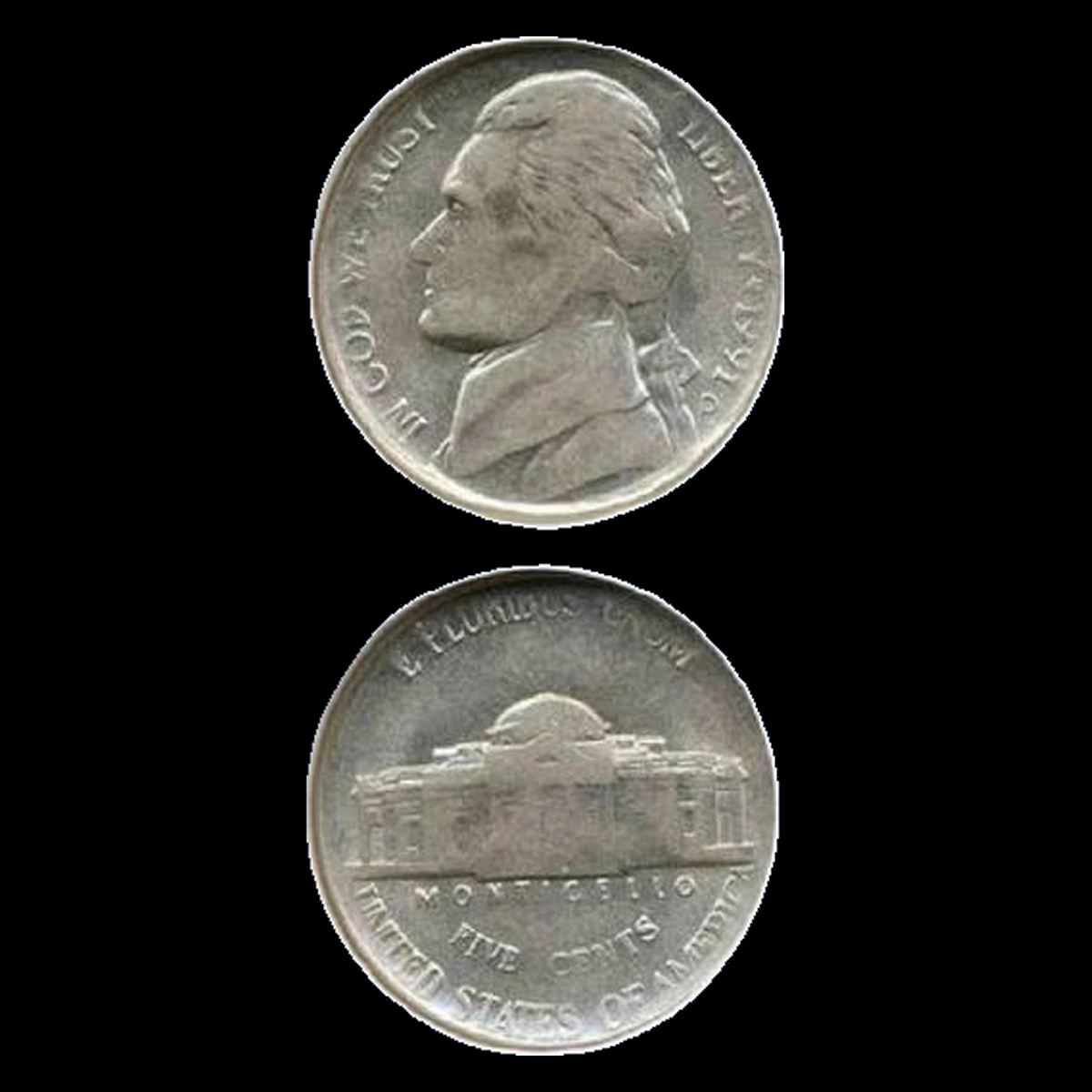
Shallow detail on both faces can result when too little striking force pushes metal into the dies. Error specialist Mike Diamond identified a reported 1991-D example as a low-pressure strike.
That describes the visible result without proving a deliberate press adjustment or test. Equipment trouble can also cause insufficient pressure.
How to Identify
Compare both designs with the condition of the surrounding surface. Original poorly formed detail differs from high points rubbed smooth through circulation.
Use the discussed 1991-D example to compare the widespread weakness. Normal weight helps rule out substantial lost metal, while the edge should be checked for later flattening.
What It’s Worth
$50–$350 is the estimated range for an authenticated low-pressure 1991-D strike. A readable date with clear original weakness is more useful than a nearly featureless piece.
The estimate does not add a premium for an unsupported press-test story. Wear, rubbing, and corrosion still affect the whole coin.
8. 1991 Nickel Struck-Through Depression or Missing Detail Error
A local hollow beside otherwise strong detail can mark an obstruction between a blank and a die. Soft material can blur the design, while a hard object may leave a clearer impression.
The 1991 reports do not identify a particular object. A narrow groove is not automatically wire, and roughness does not automatically mean cloth.
How to Identify
Compare nearby lettering and high points before studying the patch. Widespread wear offers a different explanation from a local interrupted strike.
Inspect its boundary for cuts, dragged metal, or an impact lip and examine the opposite face for pressure damage. Leave any attached material intact for closer examination.
What It’s Worth
$10–$300 is the estimated range for genuine 1991 struck-through features. Small clear interruptions may fit around $10–$75, with larger defined impressions around $75–$300.
The range assumes the surfaces support a mint-made blockage. It does not assign value to a named piece of wire or cloth that the record never identified.
9. 1991 Nickel Lamination Error
A thin flap or a shallow missing layer can reveal separation within the copper-nickel alloy. This flaw is called lamination.
Ordinary 1991 nickels have a uniform metal mixture rather than separate outer sheets. Peeling in this group should not be described as loss of a normal coating.
How to Identify
Use low light to follow the lifted layer into its attachment. Keep fragile material in place instead of prying it upward.
Compare the exposed patch with scratches and corrosion nearby. A scraped trench, rounded impact pit, or scattered surface pitting needs different evidence from a separating sheet.
What It’s Worth
$10–$150 is the estimated range for identifiable 1991 lamination. Clear separation with healthy surrounding design supports more interest than a tiny rough spot.
This range concerns the coin’s own metal and does not describe a nickel on a lighter wrong blank. Low weight alone cannot distinguish those situations.
10. 1991 Nickel Die Clash Outlines Error
A faint part of the opposite design can appear after the dies touch without a blank. The contact marks remain on the tools and then reach later coins.
Clashes are reported for 1991 without one universal location. An unfamiliar line near the hair or building needs a design match before it qualifies.
How to Identify
Use a mirrored comparison of the opposite face and align the designs. Follow a recognizable shape beyond the most suggestive short fragment.
Check that the mark is not a scratch cutting through unrelated detail. Later squeezing can also transfer an image, so examine both faces and the edge for pressure damage.
What It’s Worth
$10–$150 is the estimated range for convincing clash traces. Many examples fit around $10–$100, with a particularly clear pattern on attractive surfaces reaching about $150.
These are estimates for the reported category rather than a transaction tied to a specific 1991 clash variety. Faint marks hidden by wear generally make a modest comparison.
11. 1991 Nickel Doubled Back Motto Error
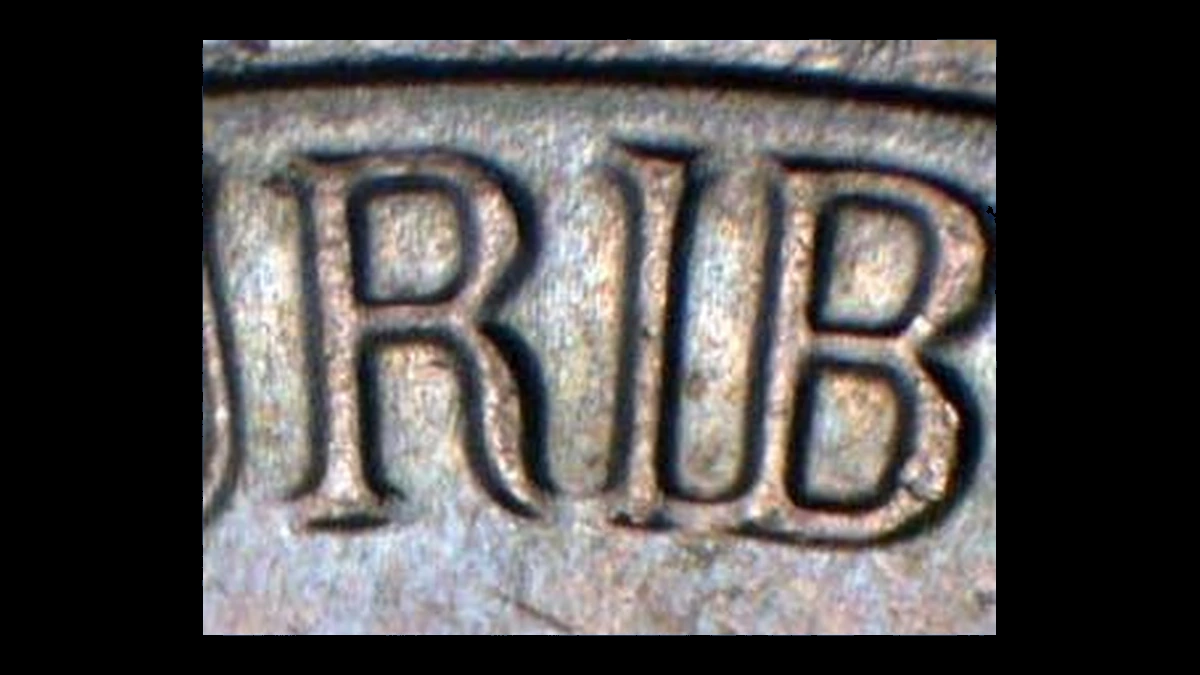
Two recorded 1991-D varieties add small contours to E PLURIBUS UNUM above Monticello. Their doubled details began in the die and could reach the coin in one strike.
The listings are WDDR-001 and WDDR-002. They are Denver varieties, so the D mint letter is part of the match.
How to Identify
Compare the motto with the two Denver listings under changing light. Rounded added contours should remain distinct from bright flat ledges caused by movement during striking.
WDDR-001 has two small raised marks below Jefferson’s nostril as supporting clues. WDDR-002 instead has a vertical tool line inside O in OF; do not require both sets on one coin.
What It’s Worth
$5–$100 is the estimated range for matched examples. Clear circulated coins may fit around $5–$40, with attractive unworn pieces around $40–$100.
No auction record is claimed for either catalog entry here. The correct letter pattern matters more than a high grade on a coin with ordinary flattened lettering.
Conclusion
Evidence of another denomination is different from a smaller unused blank, and a cup-shaped cap is different from the flat coin struck beneath it. Keep those distinctions visible in photographs of the whole coin.
The estimated $5–$6,500 range stretches from small Denver motto varieties to major two-denomination pieces. Match the actual design, metal, and condition before applying a comparison from another coin.