Rare 1856 Braided Hair Penny Errors (List & Pictures)
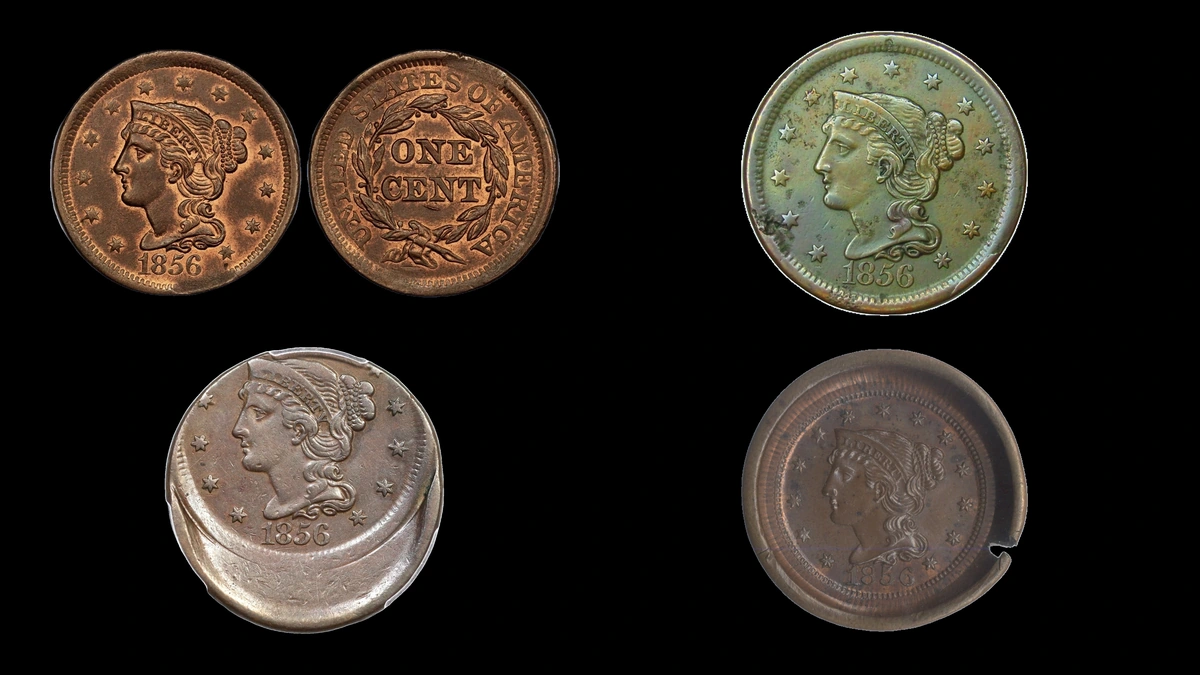
The year 1856 appears on both large Braided Hair cents and smaller Flying Eagle cents. This guide concerns the large copper coin, including an example shaped into a deep cup during striking.
Five groups of 1856 Braided Hair penny errors have estimated whole-coin values of $50–$40,000. A scratched double strike sold for $2,640 in January 2023, showing that a clear minting accident can remain collectible even when the surfaces have problems.
1. 1856 Penny Rim Clip Error
A missing edge section can begin in the copper blank before the design is stamped. The finished cent then has struck details beside an outline that was never complete.
A listed Slanted 5 example is graded ANACS VF30 with a rim clip. A separate collector coin has a gap near eight o’clock; the date style is normal, and that position should not be assigned to the auction example.
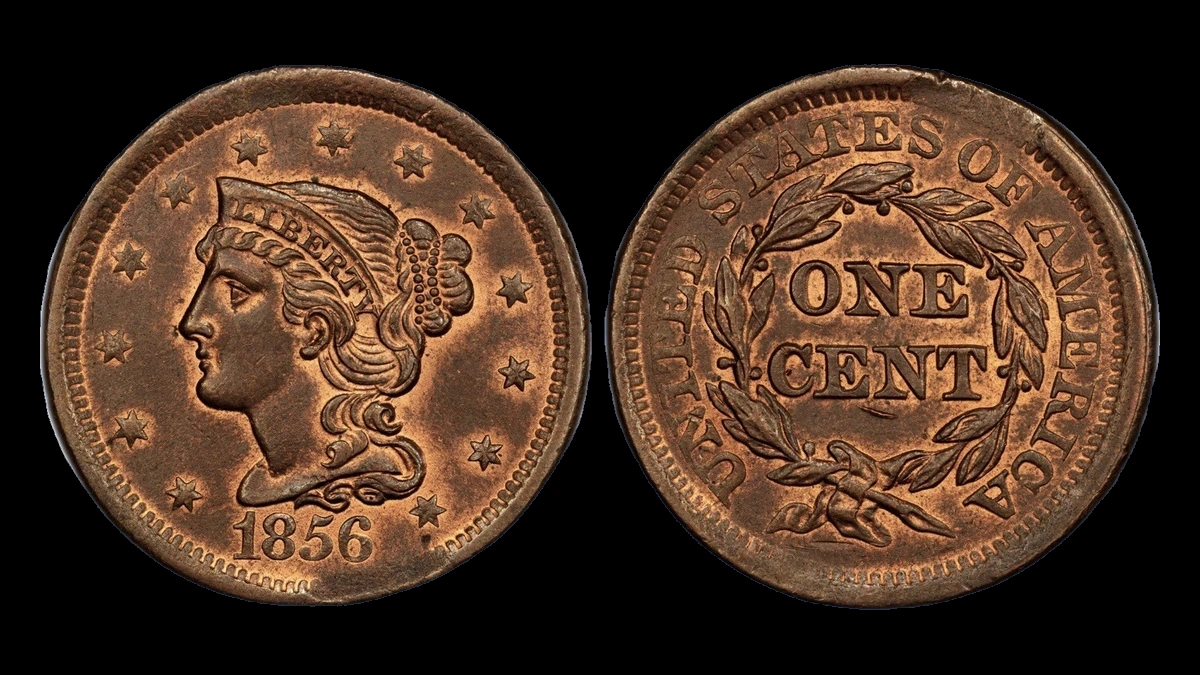
How to Identify
Follow the wall of the gap and the border at both ends. Saw lines, sharp burrs, or filing through finished detail suggest copper was removed after striking.
A normal large cent weighs about 10.89 grams and measures 27.5 mm, with a plain edge. Lower weight can support missing metal but does not distinguish an original clip from a later cut.
Compare the ANACS VF30 listing with the actual opening on your coin. Moderate wear does not tell you how big the clip is.
What It’s Worth
$75–$2,500 is the estimated range for identifiable 1856 clips. Circulated examples may fit around $75–$500, with attractive unworn coins around $500–$2,500.
An 1852 clip graded NGC MS63 Brown sold for $384 in June 2024. That is a same-series unworn comparison rather than a known result for the listed 1856 VF30.
2. 1856 Penny Cud beside the Upper-Right Stars Error
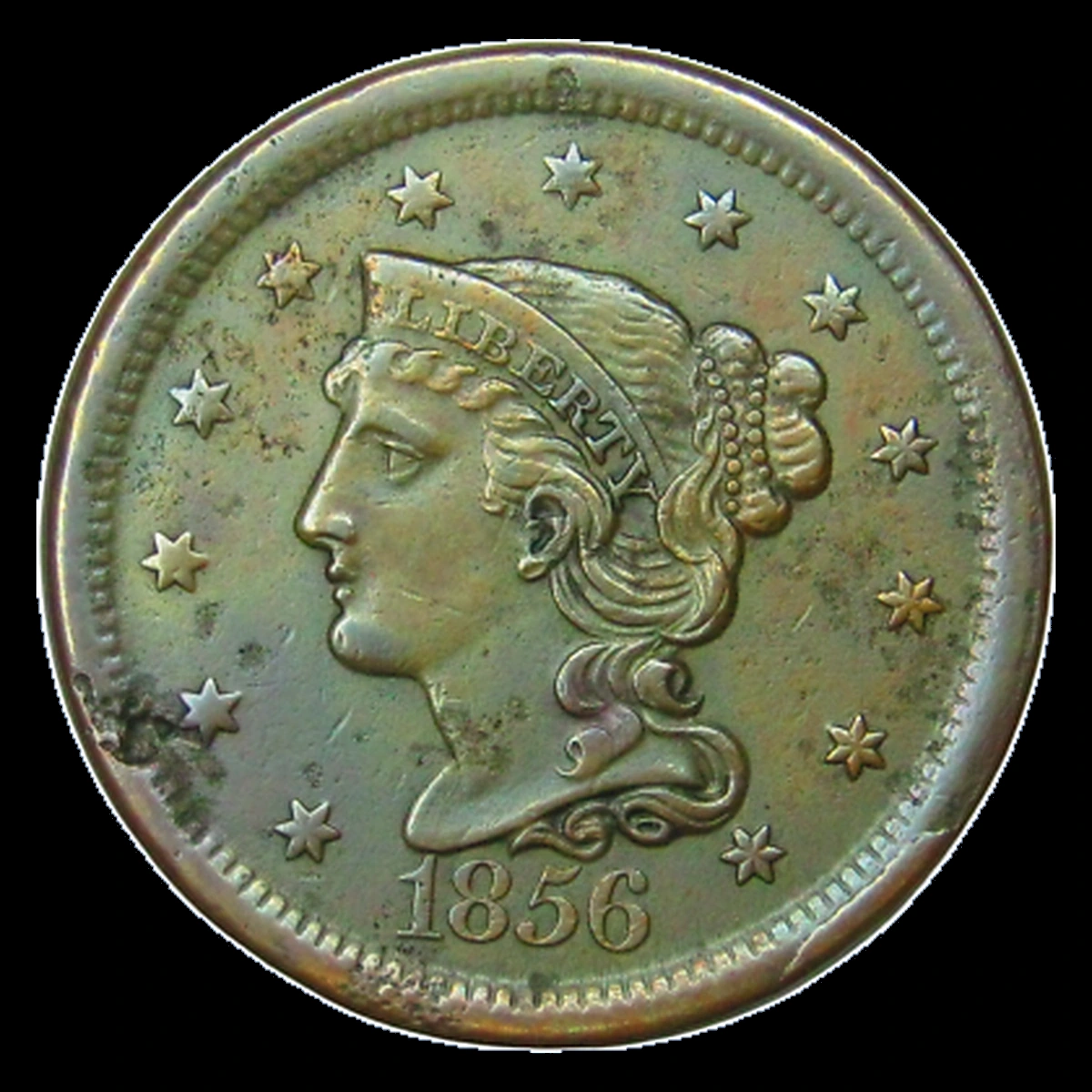
A raised patch joining the outer star points can show where part of the stamping tool broke away. Copper filled the opening and formed a rim-connected lump called a cud.
The recorded Slanted 5 variety has a strong break between stars ten and eleven. A later stage reaches toward star nine as more of the tool fails.
How to Identify
With Liberty upright, count from the lower-left star and locate the upper-right group. Match the patch’s actual boundary instead of expecting every coin to have the larger extension toward star nine.
Inspect the edge for a dent that folded copper over the stars. Original metal shaped by a broken die differs from a damaged rim pushed inward after the design was already complete.
What It’s Worth
$50–$3,000 is the estimated range for these rim breaks. Worn examples may fit around $50–$600, with attractive better-preserved coins around $600–$3,000.
One cataloged star-ten-to-eleven example was lightly cleaned despite its strong remaining detail. A bigger patch does not automatically outweigh cleaning, corrosion, or other surface problems.
3. 1856 Penny Off-Center Strike Error
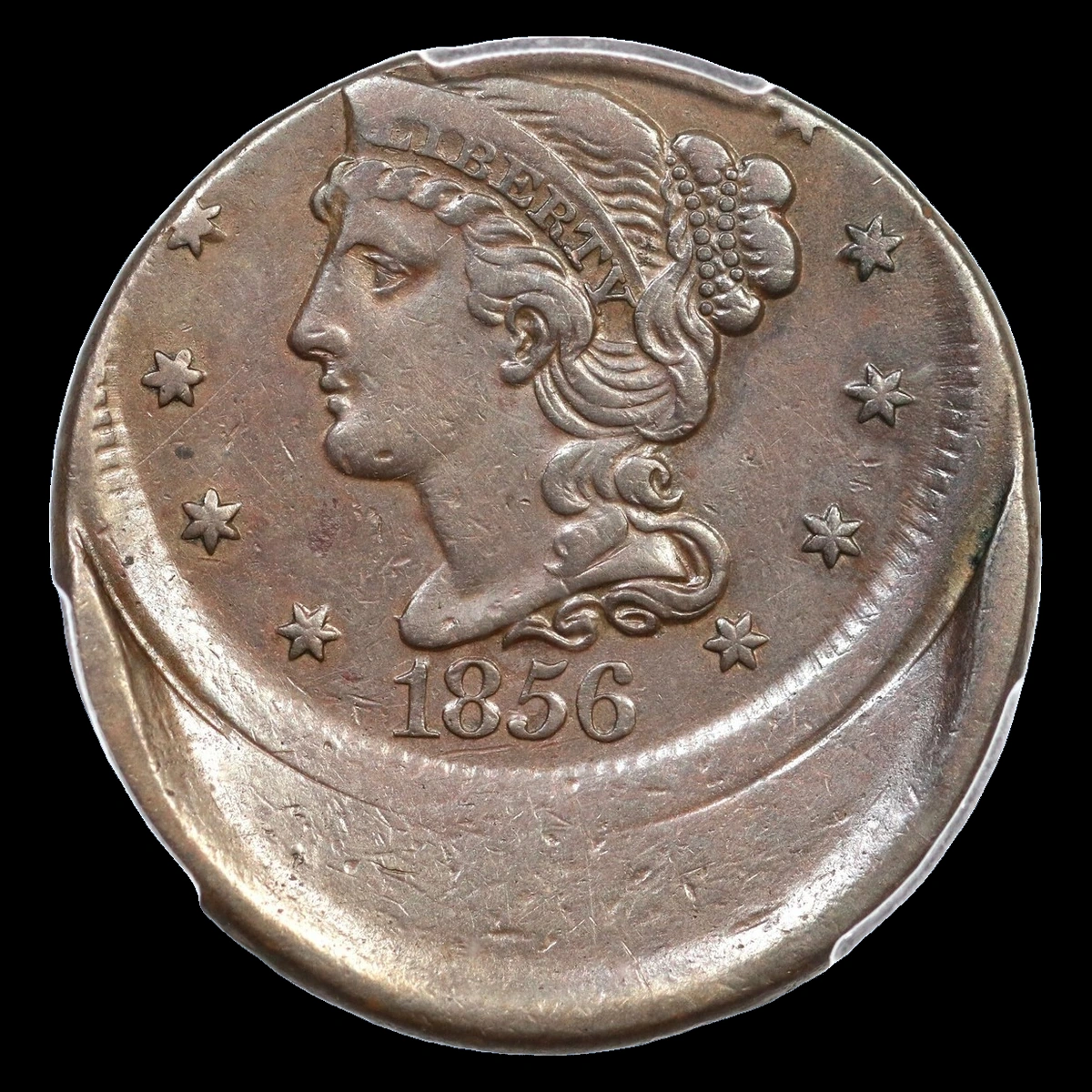
A misplaced blank can receive only part of the intended design, leaving a bare crescent on the other side. A year guide reports an 1856 Braided Hair cent struck 25% off center and graded PCGS XF40.
That grade describes a circulated coin with substantial detail. The report concerns the large cent, so a smaller Flying Eagle coin dated 1856 is not the same comparison.
How to Identify
Confirm the Braided Hair portrait and large copper format, then locate the date. Both faces should support the blank’s displaced position rather than only one shifted tool.
Look closely at the boundary between struck design and bare metal. Grinding can remove finished letters, but it may leave tool marks instead of original unstruck copper.
What It’s Worth
$400–$7,500 is the estimated range for genuine 1856 off-center large cents. Worn examples may fit around $400–$2,500, with clearer better-preserved pieces around $2,500–$7,500.
The guide reports a $4,250 asking price for the 25% PCGS XF40 example. That shows the seller’s request rather than a completed auction result.
4. 1856 Penny Double Strike with the Second Blow off Center Error
Overlapping designs can remain when a struck cent moves and receives another blow. The second impression can reach beyond the metal and change the coin’s outline.
A recorded 1856 example has an off-center second strike and an NGC XF Details assessment with scratches. The scratches are later damage, separate from the two impressions.
How to Identify
Use both faces to trace the earlier portrait, date, or wreath alongside the later design. A single photograph may hide much of the first impression.
Follow scratches across the designs to keep later cuts separate from struck detail. Two ordinary raised impressions also differ from a sunken backward image transferred by another coin.
What It’s Worth
$750–$12,000 is the estimated range for recognizable double strikes. Circulated examples may fit around $750–$4,000, with clearer overlap and better surfaces around $4,000–$12,000.
The scratched NGC example sold for $2,640 on January 23, 2023. Its off-center second blow is part of the same coin’s value, not another complete error price to add.
5. 1856 Penny Deep Die Cap with a Backward Portrait Error
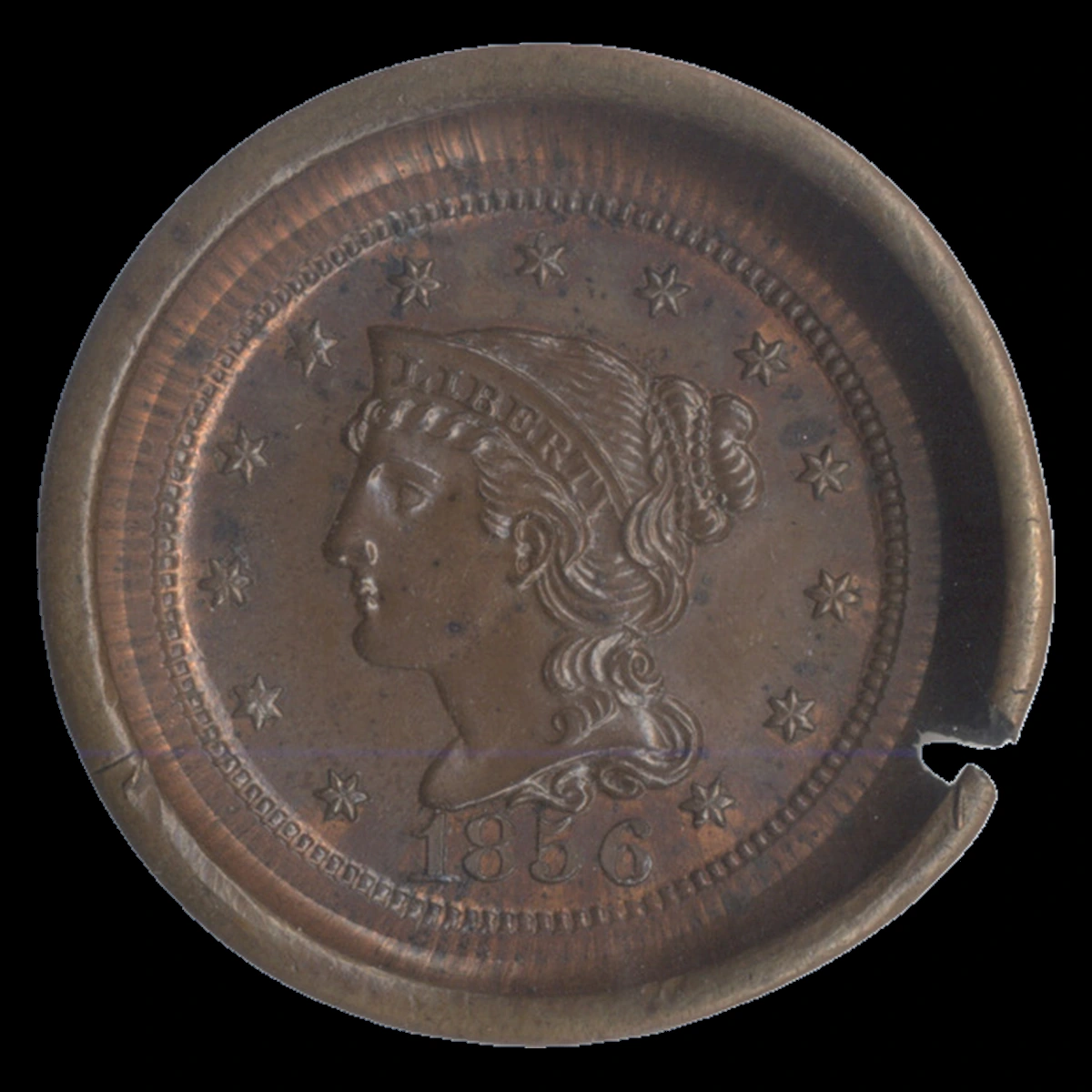
One 1856 cent has a deep cup around its front and a sunken backward portrait on its back. The cup formed as the coin stuck to a die and repeated blows stretched its metal around the tool.
The backward image is a brockage made by contact with an already struck coin. The listed NGC MS63 example combines both features on one unusually shaped large cent.
How to Identify
Photograph the wall and base from the side without flattening them. Compare the stretched shape with the listed NGC MS63 cap and check for sharp folds or later tool marks.
On the opposite face, establish that the backward portrait lies below the surface. The cup and transferred image both need to fit the original striking sequence rather than later bending or squeezing.
What It’s Worth
$10,000–$40,000 is the estimated range for an authenticated 1856 cap with a clear brockage. Depth, surfaces, and the strength of the reversed design affect the complete price.
The dealer marks the MS63 example sold without giving a price. A different, smaller 1863 Indian cent cap sold for $18,000 in August 2020, providing context from another cent type and metal mixture.
Conclusion
A rim clip removes part of the outline, a cud adds a raised patch, and another strike adds a second design. The deep cap is more complex because its shape and backward portrait record different parts of the accident.
The estimated $50–$40,000 span applies to large Braided Hair cents. Keep the coin’s type, visible error, and surface condition together when choosing a price comparison.