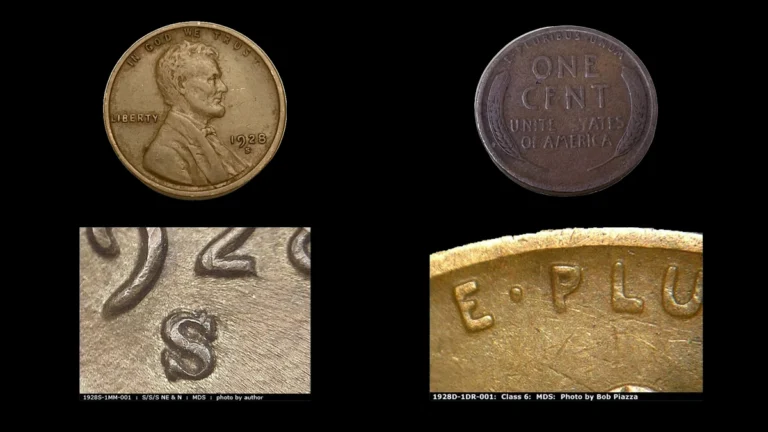
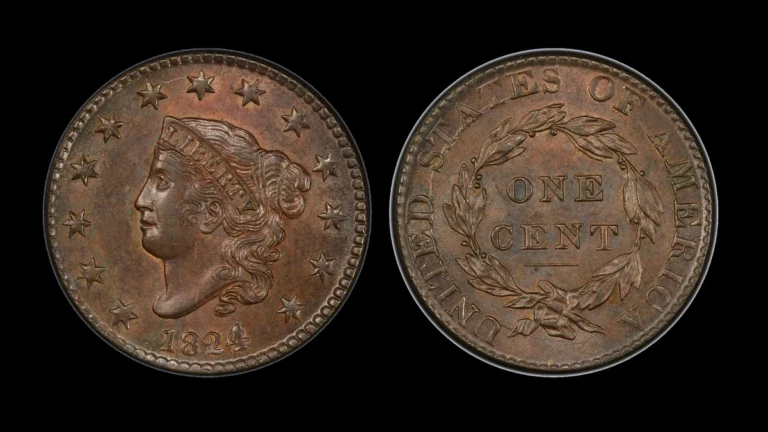
Rare 1859 Penny Errors (List & Pictures)
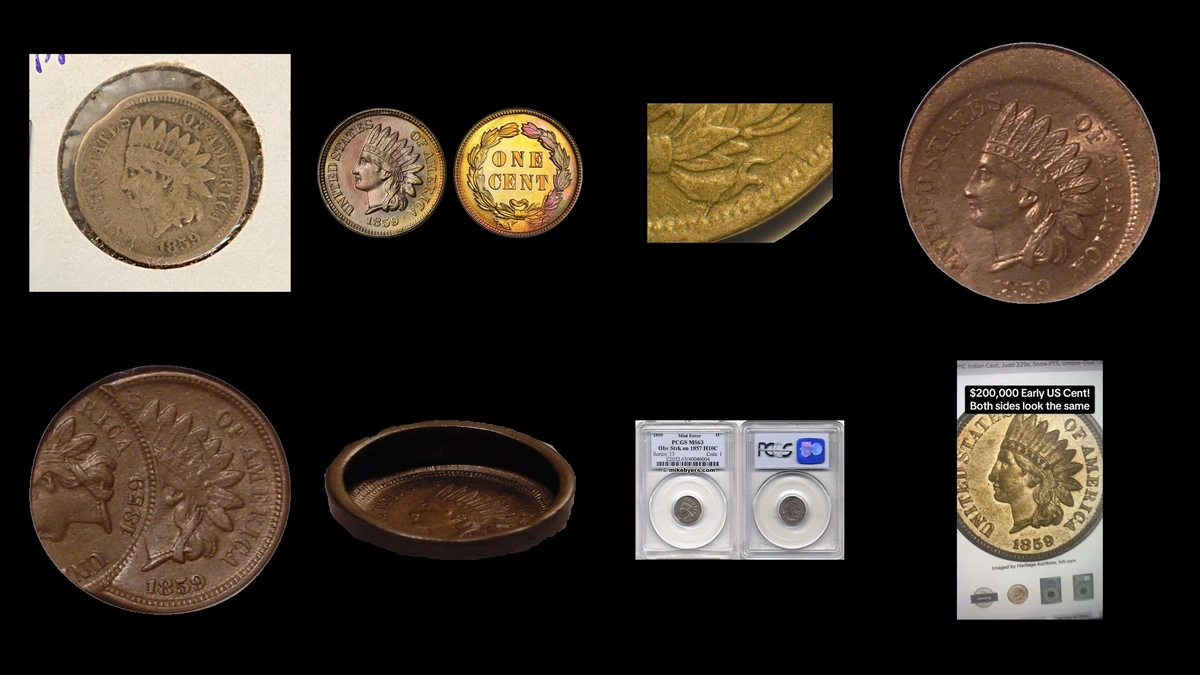
The shieldless laurel wreath helps identify an ordinary 1859 cent, even when an error hides part of its date. This guide to 1859 Indian Head penny errors moves from small metal and die features to coins whose shape or entire design changed.
Estimated whole-coin values run from $25 to $225,000. The exceptional two-headed specimen reached $195,500 in August 2008, although its later sale was considerably lower.
| What changes? | Type | Estimated whole-coin value |
|---|---|---|
| Surface metal peels | Lamination | $25–$1,000 |
| A curved edge section is missing | Clipped planchet | $65–$2,000 |
| Date strokes repeat | Repunched date | $50–$6,000 |
| Other design details repeat | Doubled die | $50–$4,000 |
| Lines or a broad patch rise above the surface | Die crack or retained cud | $25–$5,000 |
| Design misses part of the blank | Off-center strike | $150–$7,500 |
| Large designs overlap | Double strike | $500–$15,000 |
| Sides rise into a cup | Die cap | $7,500–$35,000 |
| Half-dime details survive under a cent design | Double denomination | $50,000–$100,000 |
| Both sides have normal raised heads | Dual-obverse mule | $75,000–$225,000 |
1. 1859 Penny A Sheet of Surface Metal Separates: Lamination Error
Lamination is a split within the cent’s metal, sometimes visible as a thin attached flap. A piece that has already fallen away can leave a shallow, irregular opening.
The reported 1859 category involves the copper-nickel alloy itself. It does not describe a coating applied over a different core.
How to Identify
Study how the separation meets the surrounding original design without lifting the flap. Scattered corrosion pits and a scrape with metal pushed aside are different surface changes.
A normal 1859 cent has a plain edge, weighs about 4.67 grams and measures 19 millimeters across. Measurements can support an examination of a loose coin, but avoid fragile sheets and keep certified or unusually shaped pieces in their holders.
What It’s Worth
$25–$250 is an estimate for worn examples, with $250–$1,000 possible when preservation is stronger. These figures include the cent itself, rather than representing a lamination premium to add to a separate ordinary-coin value.
No completed sale for a particular laminated 1859 cent is established in the supplied evidence. An intact flap can make the cause clearer, while a large rough area may still limit eye appeal.
2. 1859 Penny A Curved Gap at the Edge: Clipped Planchet Error
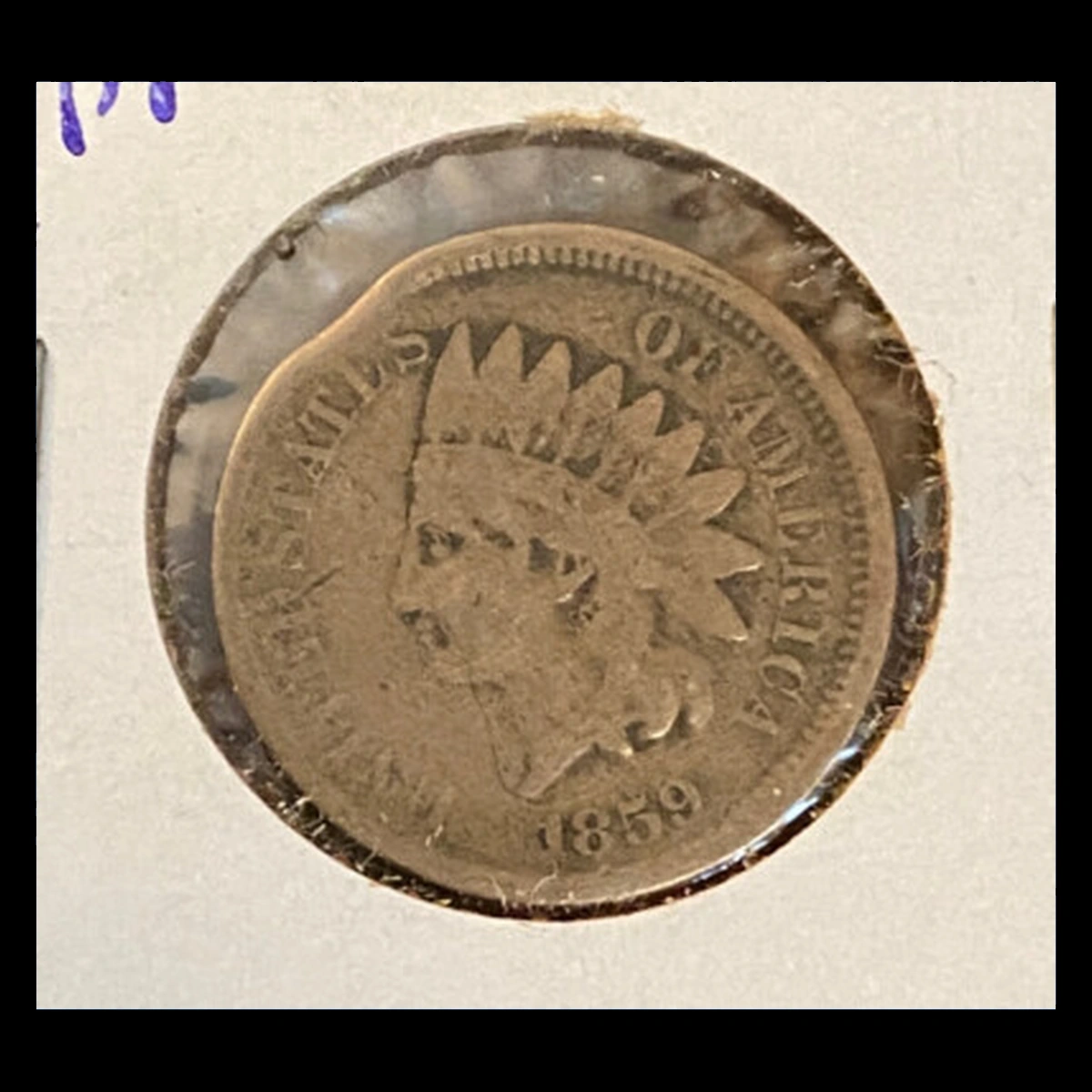
A recorded NGC MS63 cent has a curved missing section near five o’clock with the portrait upright. The blank-cutting operation left the disc incomplete before the design was struck.
How to Identify
Check the gap’s boundary and both places where it meets the original rim. Striking may leave nearby details soft, whereas fresh filing or saw marks suggest later removal.
Weakness in the rim opposite the gap can support a clip, but it is not mandatory on every example. Keep front and back photographs aligned to show that both views concern the same missing section.
What It’s Worth
$65–$450 is a working range for recognizable circulated clips, increasing to $450–$2,000 for attractive unworn cents. The recorded MS63 example belongs to the unworn group, though that grade still allows noticeable marks.
An unworn clipped 1852 large cent brought $384 in June 2024. Its larger copper format and different design make it a broad comparison rather than an 1859 price record.
3. 1859 Penny Extra Strokes below Date Numerals: Repunched Date Error
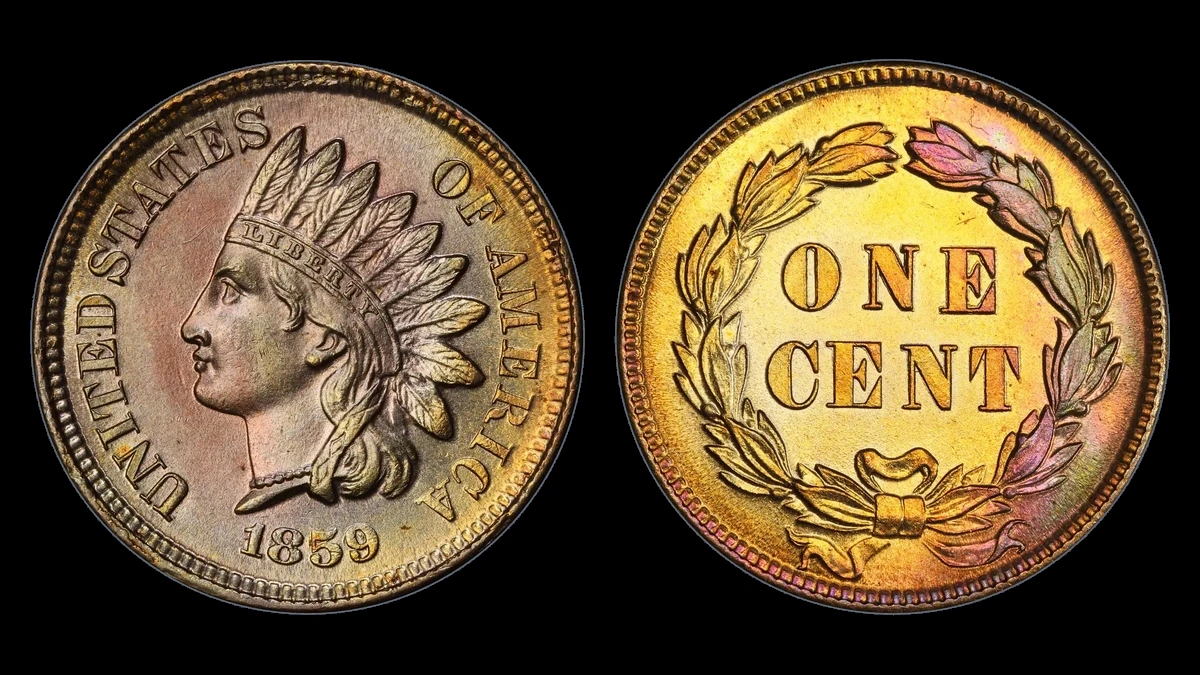
The date offers two specific patterns to compare: Snow-2, also known as FS-302, has earlier detail below the 8, while Snow-3 or FS-303 has its main extra stroke below the 1. These are separate varieties.
A second placement of the date punch in the die left traces of its first position. The extra stroke was already in the tool when a cent received its design.
How to Identify
Include all four numerals in the first photograph, then enlarge the relevant lower stroke. Its shape should relate to the numeral rather than resemble an isolated corrosion bump.
The PCGS Snow-3 reference concerns the pattern beneath the 1. A Snow-2 photograph beneath the 8 cannot establish that attribution.
What It’s Worth
$50–$750 is an estimated range for circulated repunched dates, with $750–$6,000 for stronger unworn examples. The particular variety and the preservation of its identifying strokes matter.
A PCGS MS65 Snow-2 sold for $1,740 in February 2025 and also carried a retained reverse break. That single price includes both features and should not be counted once for the date and again for the break.
4. 1859 Penny Repeated Letter or Leaf Outlines: Reported Doubled Die Error
Front-side reports point to LIBERTY and the feathers, while reverse reports concern the O in ONE and laurel-leaf veins. Unlike a repunched date, a doubled die involves duplicated portions of the design transferred during die manufacture.
How to Identify
Compare the affected face with a matching attributed example of the 1859 design. The later shield-and-oak wreath provides the wrong leaf pattern for this date.
Rounded, separated raised outlines are more persuasive than a flat shelf that narrows a letter. Reflections move as the lamp moves, so check that the apparent extra detail is actually in the metal.
A reverse leaf feature does not establish front-side doubling on the same coin. Treat the supplied front and back reports as claims needing their own variety matches.
What It’s Worth
$50–$600 for circulated coins and $600–$4,000 for unworn pieces are conditional estimates for specialist-confirmed doubled designs. Unverified thickness or glare should not receive those values.
A recognized 1863 doubled-reverse cent in MS62 sold for $1,560 in March 2023. That result concerns a different date and leaf pattern, not proof that a reported 1859 variety matches it.
5. 1859 Penny Raised Lines and a Shifted Reverse Patch: Die Crack and Retained Cud Error
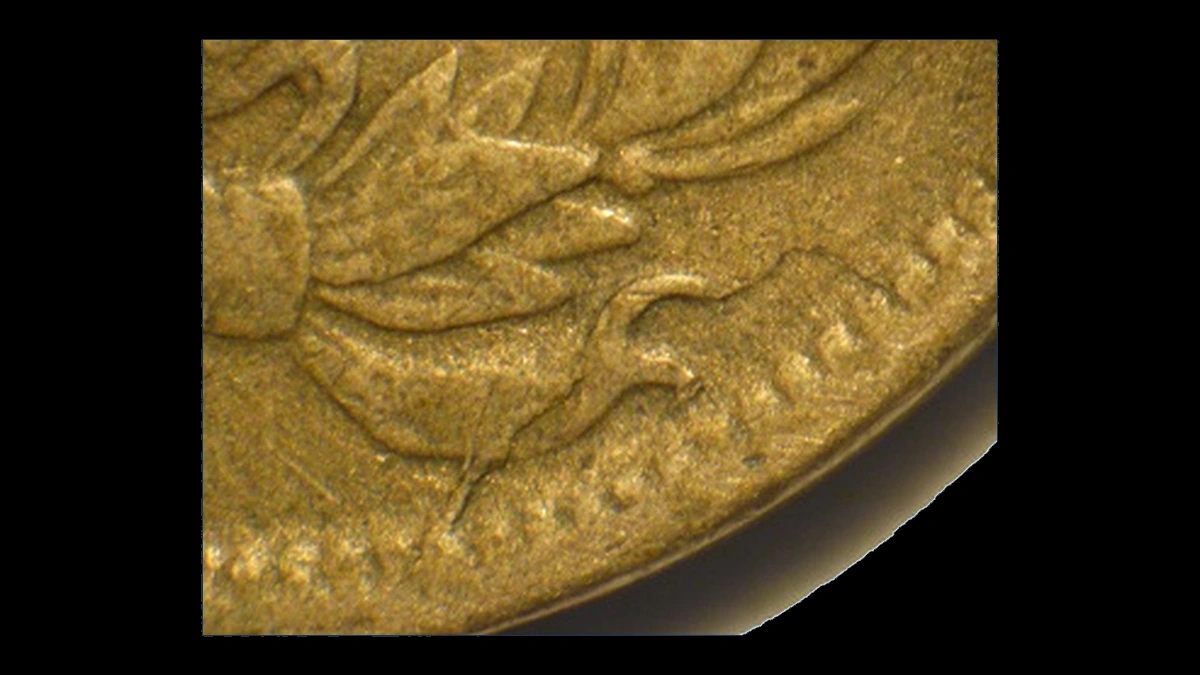
Fine raised lines can record small cracks in the striking die. The Snow-2 example has a more substantial feature in the lower-right reverse: a broken die section that remained in place.
Collectors call that larger feature a retained cud. Because the broken steel was still present, some original design could survive within the affected area.
How to Identify
On Snow-2, follow the lower-right break’s boundary and any change in the level of the design. Surviving wreath or lettering inside the patch is compatible with a retained break.
For smaller cracks, establish that the line rises above the coin rather than cutting into it. Inspect the adjacent edge too, since an impact can push metal inward and imitate a raised patch.
What It’s Worth
$25–$400 covers worn cents with modest cracks, while conspicuous rim breaks are estimated at $100–$5,000 across different conditions. The upper part requires more than a small line on a worn coin.
The PCGS MS65 Snow-2 with the retained reverse break realized $1,740 in February 2025. Its repunched date and strong unworn preservation are part of that whole-coin result.
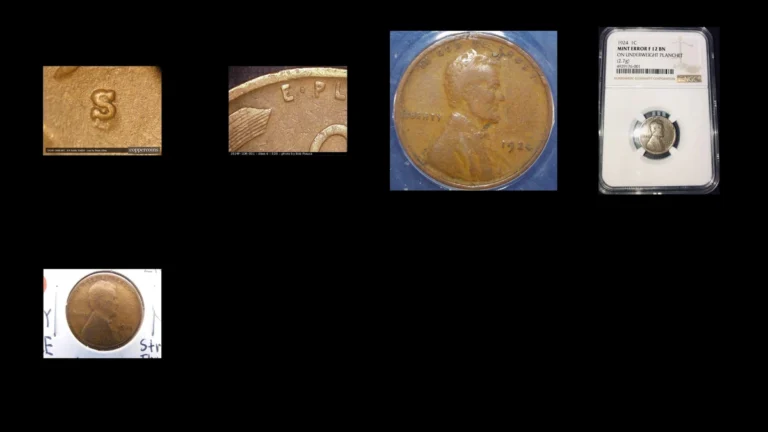
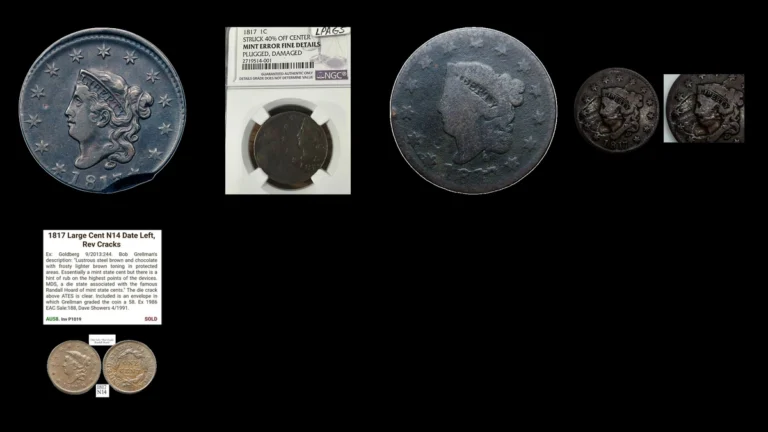
6. 1859 Penny Bare Metal Beside Missing Design: Off-Center Strike Error
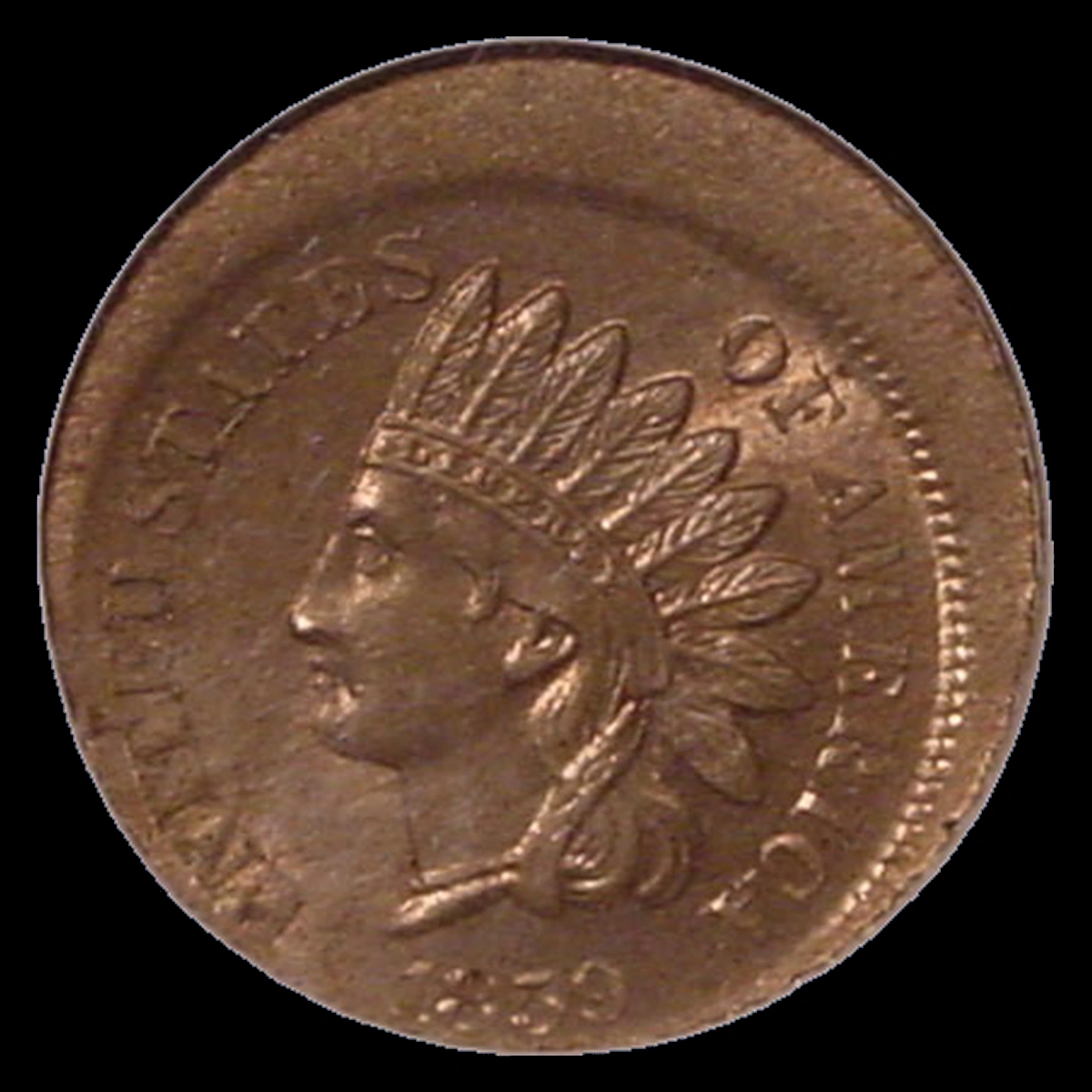
Two reported specimens show how differently this error can present: one is 15% off center toward seven o’clock, while an NGC VG8 example is 60% off center toward six o’clock. They are separate coins with different surviving detail.
The 15% example is described as struck on a Type 1 blank, meaning its rim had not yet been prepared. That term describes blank preparation, not a different Indian cent design.
How to Identify
The blank’s displacement should explain both the untouched crescent and design lost at the opposite side. Grinding away an ordinary design leaves a different surface from original unstruck metal.
The heavily worn 60% example lacks a complete readable date, so its attribution uses the surviving design. The shieldless laurel wreath is particularly useful when deciding whether a dateless candidate belongs to 1859.
What It’s Worth
$150–$1,500 is an estimate for identifiable circulated examples, with $1,500–$7,500 for attractive coins retaining stronger detail. More displacement does not automatically overcome severe wear or poor surfaces.
A worn 1875 Indian cent struck 12% off center sold for $391 in February 2005. Its date and degree of displacement differ from both reported 1859 examples.
7. 1859 Penny Two Large Overlapping Impressions: Double Strike Error
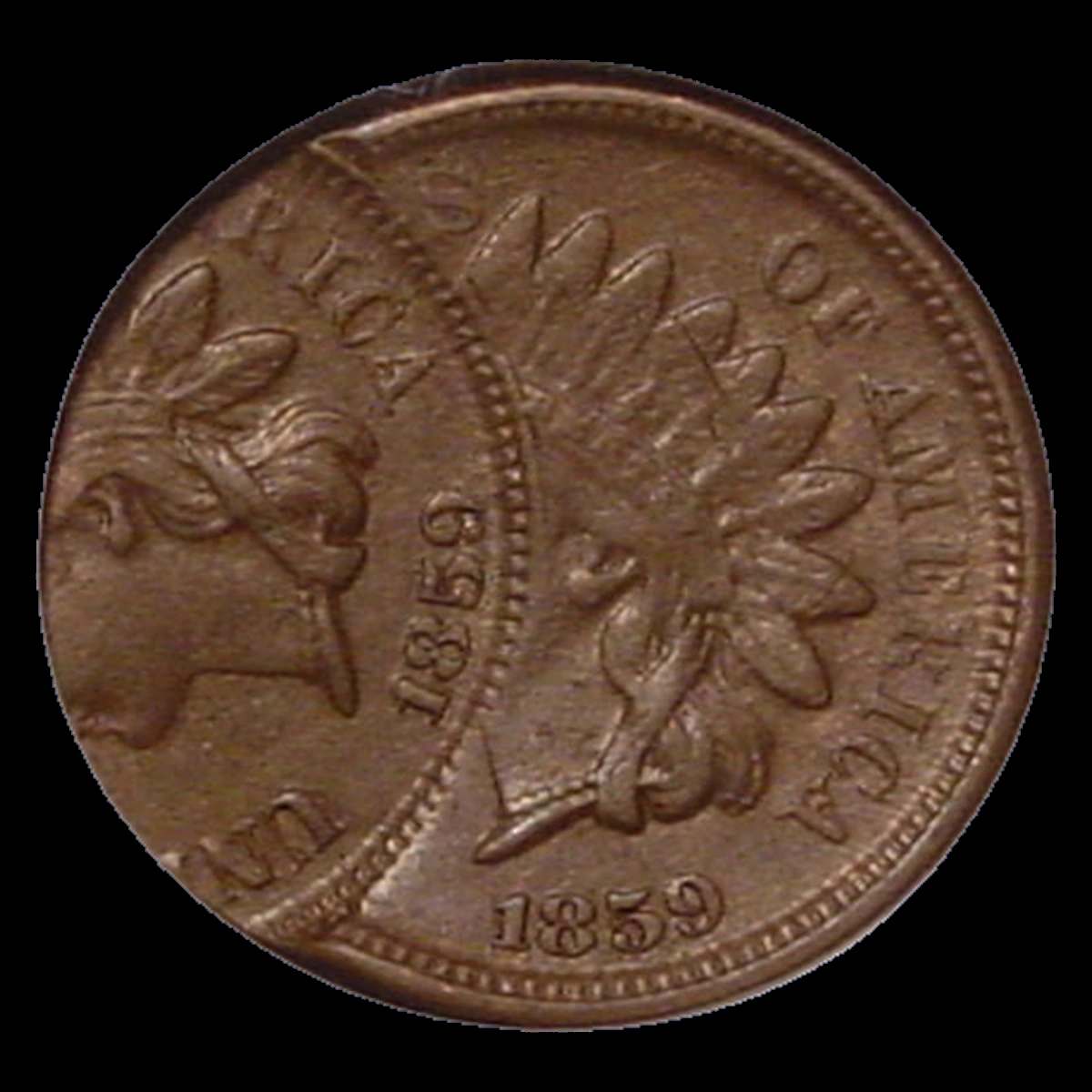
A recorded NGC MS61 cent preserves a second strike displaced by 55%. The coin moved between separate blows, leaving large portions of two designs on the same piece of metal.
How to Identify
Locate a surviving portion of the first design and then trace the later impression across it. Tiny duplicated edges from a doubled die cannot explain an entire displaced second portrait or group of letters.
The collector’s recorded 1859 double strike supplies the 55% figure. No clock direction is established here, so derive any positional description from the actual specimen photographs.
What It’s Worth
$500–$3,000 for worn coins and $3,000–$15,000 for clearer unworn examples are estimated ranges. MS61 means unworn with notable appearance limitations, rather than a guarantee of an exceptionally clean surface.
A corroded 1867 cent with an 85% off-center second strike sold for $517.50 in January 2006. That comparison demonstrates the influence of damage; it does not price the 1859 MS61 coin.
8. 1859 Penny Walls Rise around the Design: Obverse Die Cap Error
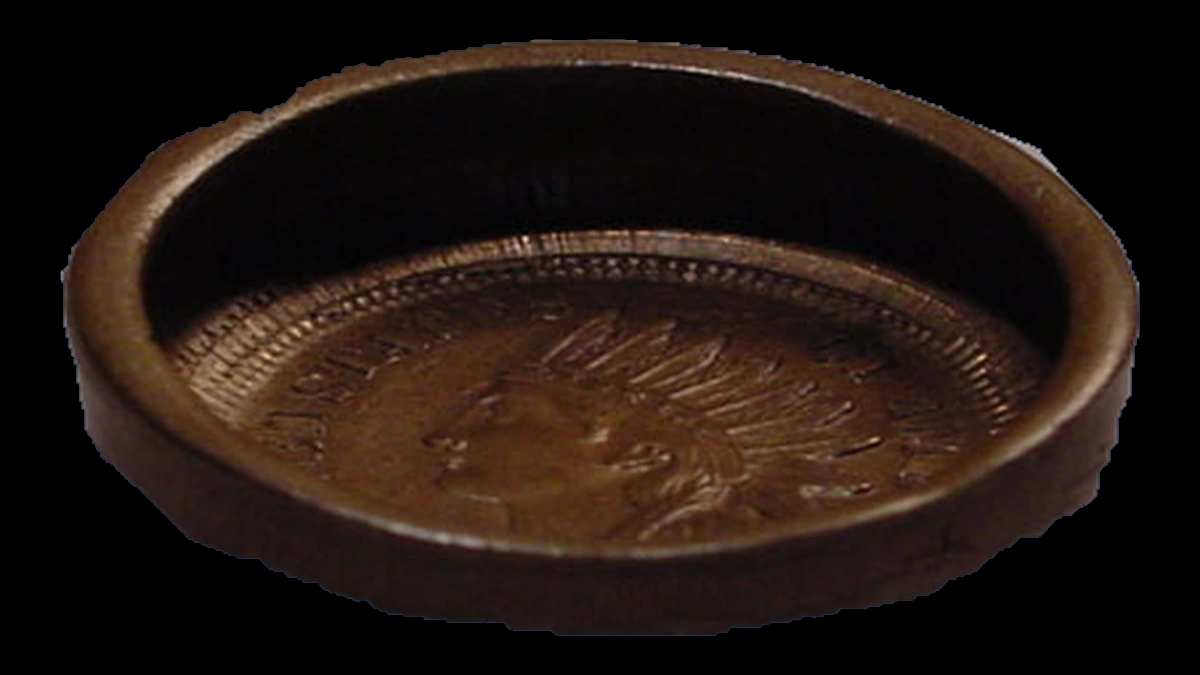
The PCGS MS66 1859 die cap has a cup-like shape and an enlarged, stretched reverse. A cent that stayed on the obverse die spread around that tool during further striking.
How to Identify
Side views reveal the walls, while both face views show whether the design stretched with the metal. Merely bending a normal cent into a bowl can fold letters without producing the same expansion.
This specimen is the coin that became the cap, rather than a second coin struck through one. Its thin sides should be protected from pressure or attempts to straighten them.
What It’s Worth
$7,500–$35,000 is an estimated range for authentic examples with differing depths and preservation. The recorded PCGS MS66 cap sold for $23,500 at Heritage in March 2014.
Its unusually strong unworn condition is relevant to that result. A shallower cap or one with bent walls would need its own comparison.
9. 1859 Penny HALF DIME Survives beneath a Cent Design: Double Denomination Error
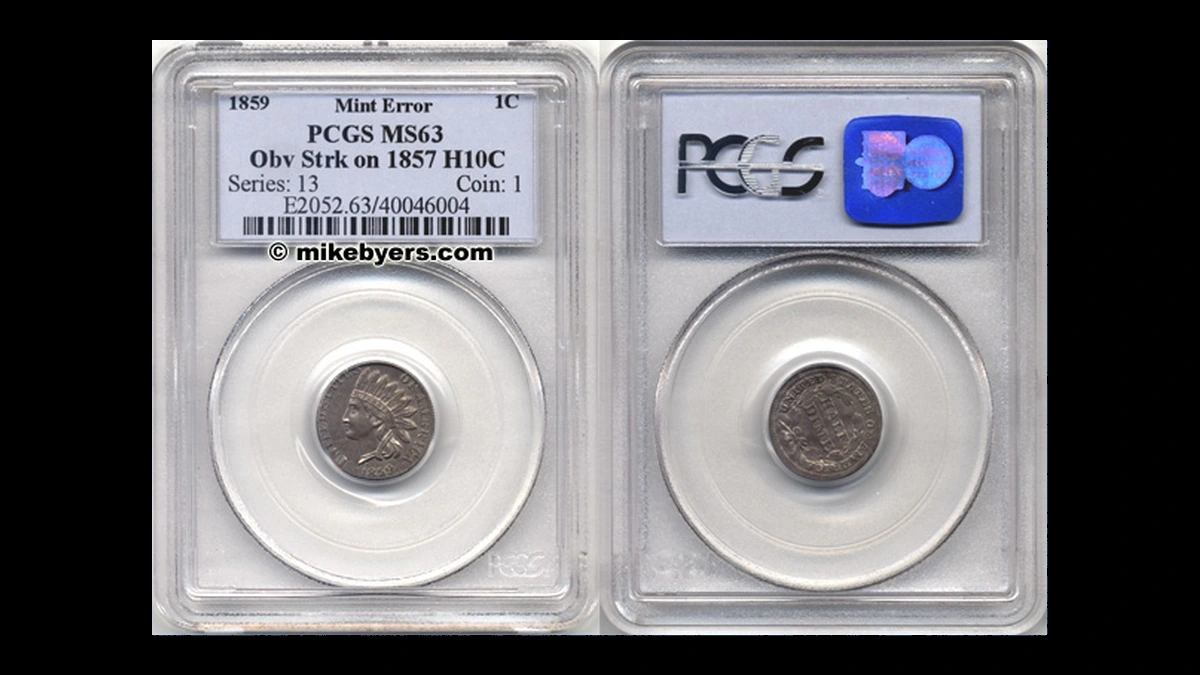
The small silver piece in this case was already an 1857 half dime before receiving an 1859 cent obverse impression. HALF DIME remains on its flattened, wavy reverse, and traces of 1857 survive beneath STA in STATES ahead of the Indian portrait.
Heritage proposed that the half dime rested above a cent blank during the blow. That reconstruction explains the unusual faces but is not a witnessed account of its manufacture.
How to Identify
Start with the earlier denomination and date traces, since silver color alone says little about the error. A normal 1857 half dime began near 1.24 grams and 15.5 millimeters, much smaller than the cent standard.
Both designs and the edge need specialist examination to distinguish a genuine overstrike from joined or later squeezed coins. An unused silver blank would lack the earlier half-dime design and represent a different error.
What It’s Worth
$50,000–$100,000 is a working estimate for this extraordinary identified piece. The PCGS MS63 example sold for $71,875 in January 2007.
That comparison depends on its surviving earlier design and documented collecting history. It cannot be applied to an ordinary plated cent or an unidentified silver-colored piece.
10. 1859 Penny A Normal Raised Head on Each Face: Dual-Obverse Mule Error
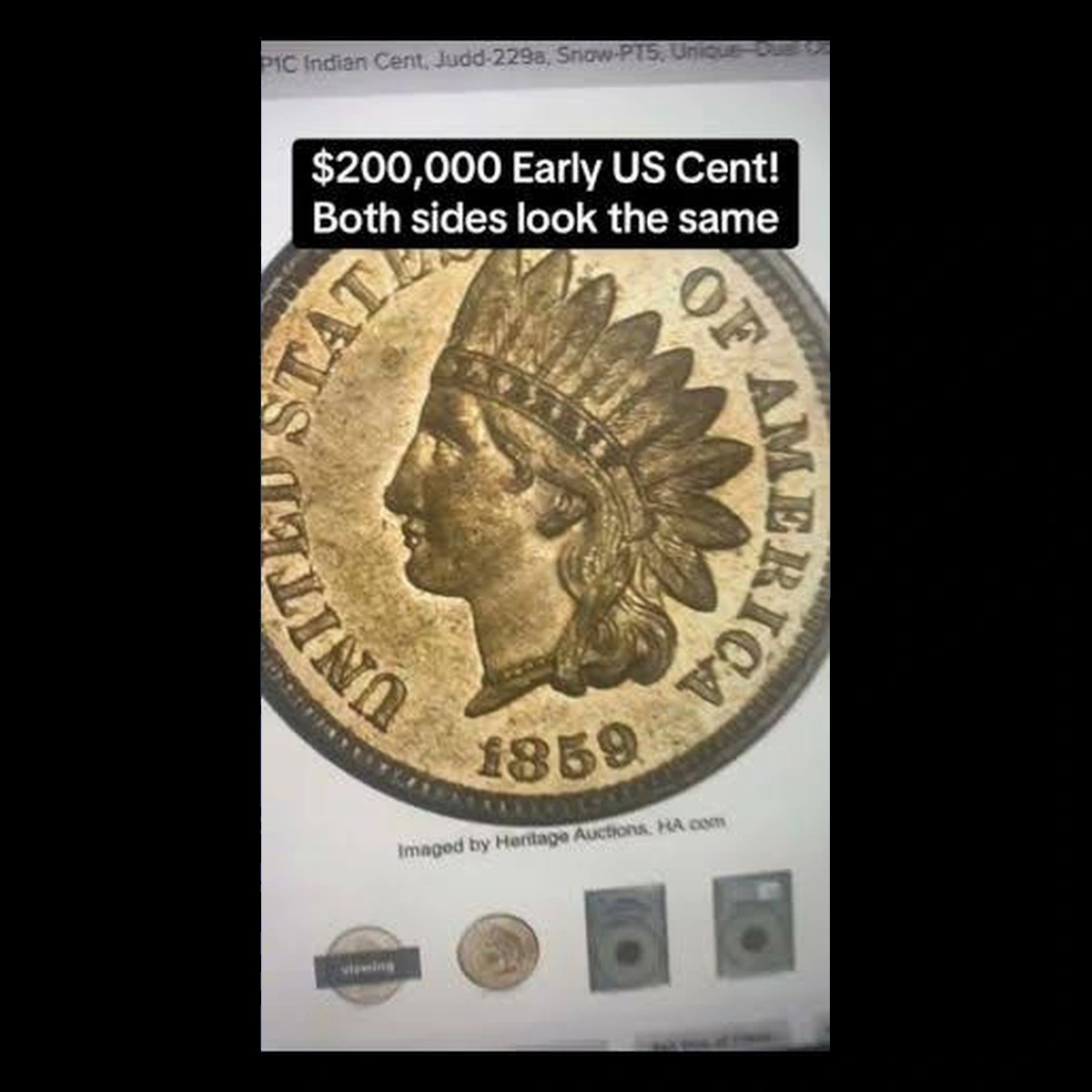
Two obverse dies produced raised, normally reading Indian portraits on both faces of the recorded two-headed cent. This unusual die pairing is called a mule, with the same piece also cataloged as Judd-229a and Snow-PT5.
How to Identify
Confirm that both heads rise from the surface and read normally. A backward, recessed head would suggest a brockage instead of this die pairing.
The documented identifiers include a tiny dot between BE in LIBERTY on one face and another beside the ear on the other. A full edge inspection is also necessary because joined ordinary fronts can create a two-headed novelty.
The auction describes an orientation about 10 degrees clockwise from medal alignment, measured by turning side to side. That starting alignment differs from a normal top-to-bottom coin flip, so this is not simply a 10-degree rotation from ordinary coin alignment.
What It’s Worth
$75,000–$225,000 is an estimated range for this exceptional documented specimen. The PCGS MS63 dual-obverse cent sold for $90,000 in September 2020 after bringing $195,500 in August 2008.
Those different results show that an earlier record does not guarantee a later price. Authentication and a convincing match to the known piece are essential before using either figure.
Conclusion
Identify which part of an 1859 cent changed before choosing a price comparison. A repunched numeral, an incomplete blank and a coin struck over a half dime describe very different production events.
Preserve the full face and edge evidence, especially when a fragile flap or altered shape is involved. The celebrated two-headed coin sets the top of this guide’s range, while everyday cracks and small clips occupy a much more accessible level.