Rare 1983 Nickel Errors (List & Pictures)
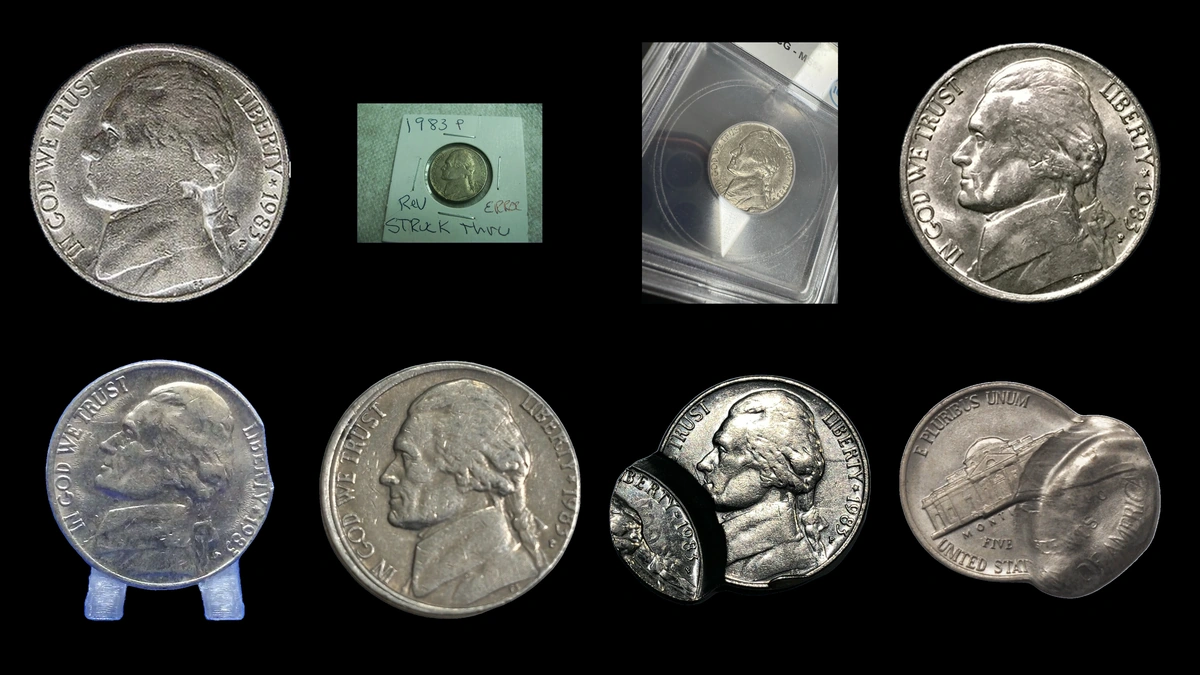
A weak face on a 1983 nickel can have several explanations, from a blocked die to metal that resisted the strike. Color is another clue that needs more than a quick glance.
One Philadelphia nickel on an old bronze cent blank sold for $4,800 in April 2021. Estimated values for the eleven groups of 1983 nickel errors below span $10–$7,000, with that leftover bronze blank belonging to a very different price level from a small clash mark.
1. 1983 Nickel Weak Centers from a Hard Blank Error
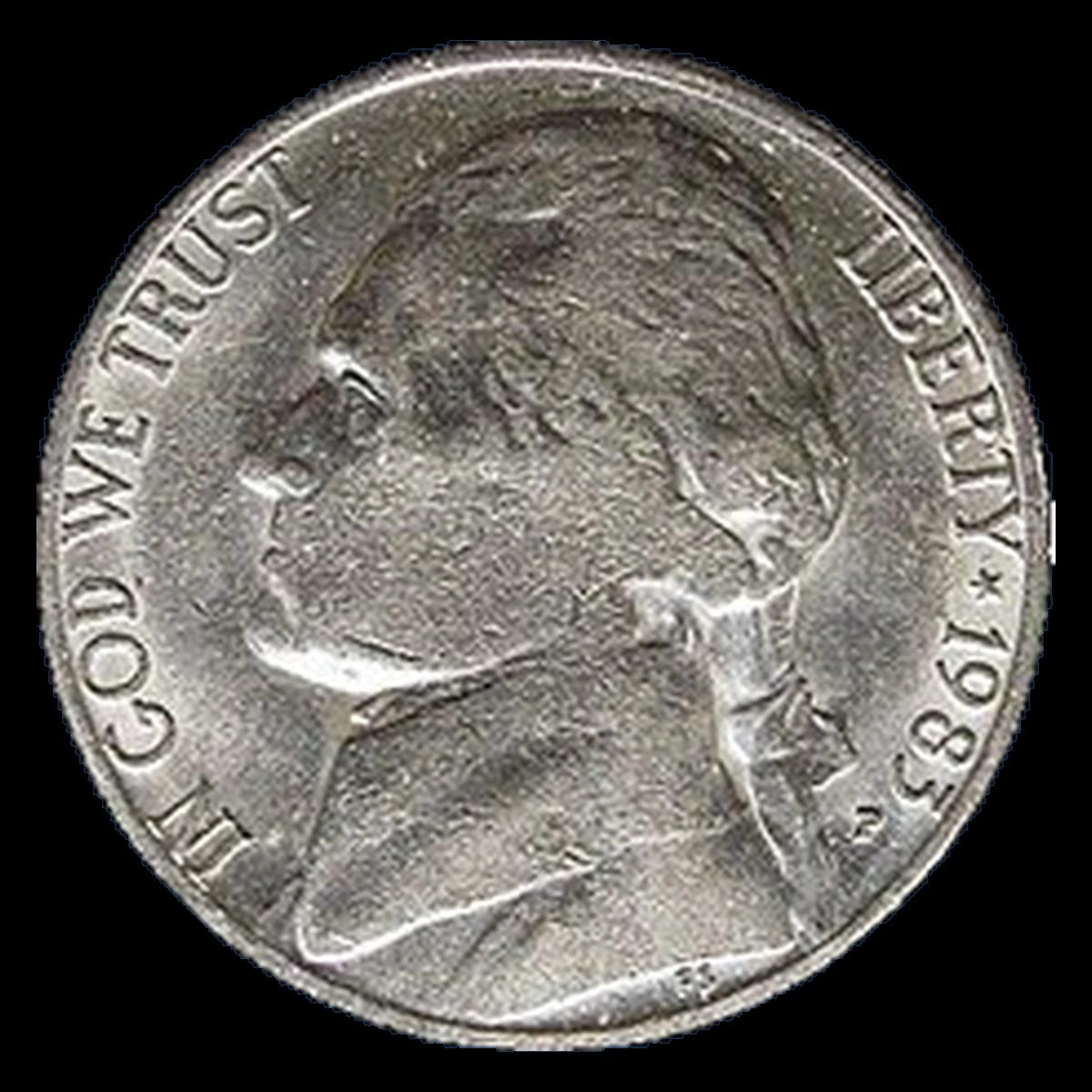
An unusually hard blank can resist flowing into the deeper parts of the dies, the stamping tools. Jefferson’s face and the center of Monticello may remain shallow while surrounding details are visible.
Error specialist Mike Diamond reports examining several 1983-P examples with this metal problem. The two-sided pattern differs from an object blocking one local patch.
How to Identify
Go directly from the weak face center to the weak building center and compare the surrounding surface. Worn high points, scratches, or a sharply bounded object mark may support a different cause.
A normal nickel is about 5 grams and 21.2 mm across, with a plain edge. Ordinary measurements help rule out some wrong or thin blanks but do not prove hardness; leave that assessment to a specialist without scratching or bending the coin.
What It’s Worth
$50–$350 is the estimated range for a clearly identified 1983-P hard-blank strike. Both weak centers and the rest of the surface need to support the explanation.
No transaction price is assigned to the expert’s examined examples. A damaged, nearly featureless nickel does not automatically qualify for the upper estimate.
2. 1983 Nickel Late-Stage Cap Strike Error
A blurred Jefferson with a normally formed Monticello can tell a different story. A coin stuck to the front die may have covered it, stretched through repeated blows, and left soft impressions on later blanks.
An expert forum discussion identifies this appearance on a reported 1983-P nickel. That opinion is distinct from grading-service certification, and the receiving coin need not be a cup-shaped cap itself.
How to Identify
Study the preserved back before comparing the broadly softened front with an identified late-stage cap strike. A single weak letter is a much smaller effect and may have another cause.
Look for rubbing, flattened high points, or pressure marks on the plain edge. Those signs can explain lost detail after minting rather than a cap covering the tool.
What It’s Worth
$50–$300 is the estimated range for a confirmed 1983-P late-stage cap strike. A clear difference between the affected front and preserved back strengthens the comparison.
A 2000-D cap-struck nickel graded NGC MS64 Full Steps sold for $84 in September 2025. That later coin’s clear Monticello steps concern its condition; the result is not a sale of the forum example.
3. 1983 Nickel Back Struck-Through Impression Error
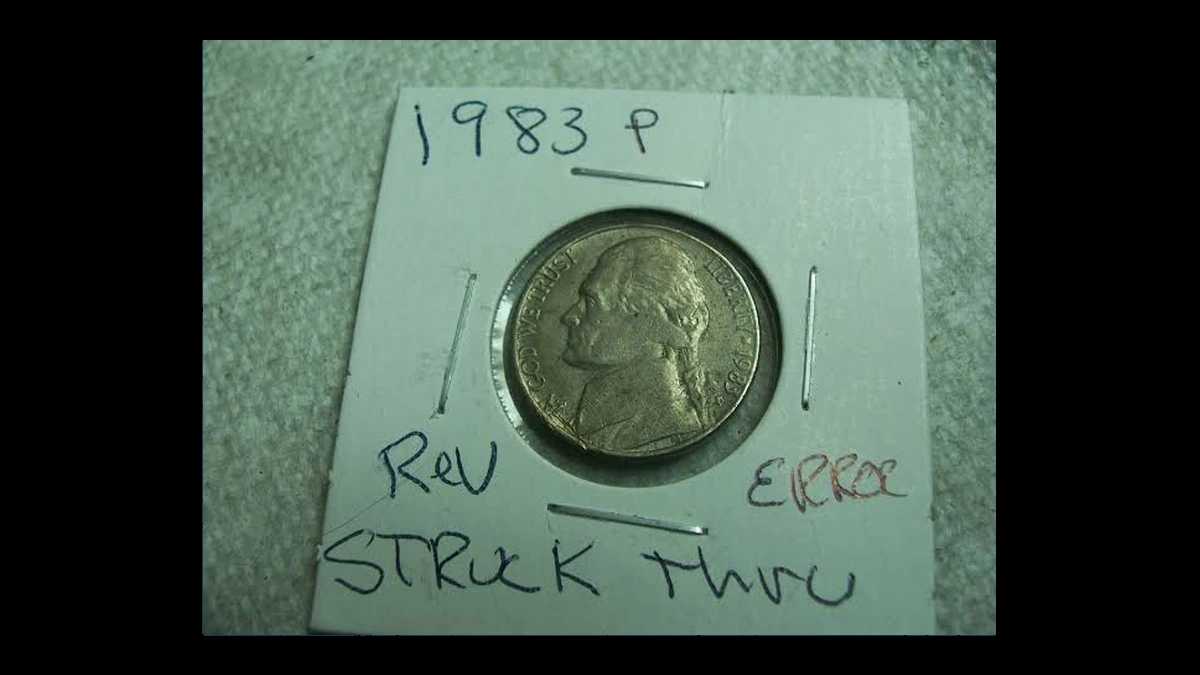
A local depression or missing design can result from material caught between the blank and the back die. The obstruction stops the tool from shaping that section normally.
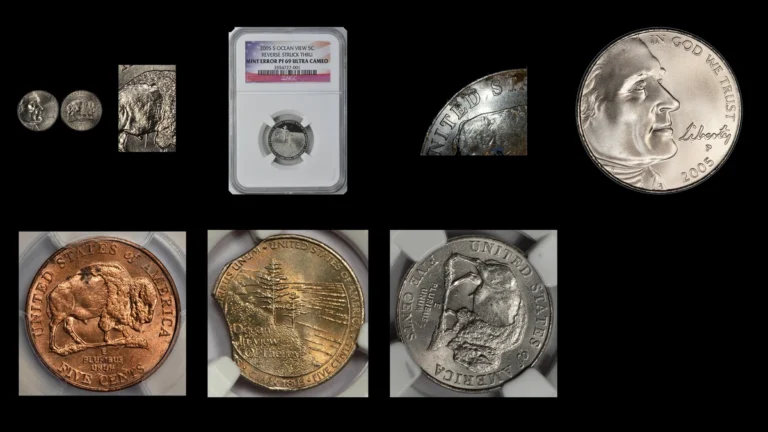
GreatCollections lists a 1983-P reverse struck-through nickel graded NGC MS62. Reverse means the back, and the listing does not identify what blocked it.
How to Identify
Follow the border between the interruption and nearby lettering. Scrapes or displaced metal may show later damage rather than an obstruction during striking.
Examine the front opposite the hollow and keep any attached material in place. Its actual remains or texture would need to support a specific wire, grease, or cloth description.
What It’s Worth
$15–$300 is the estimated range, with modest clear examples around $15–$100 and larger impressions with attractive surrounding detail around $100–$300. These figures do not claim a realized price for the NGC MS62 listing.
An unworn grade allows marks and does not determine how important the error is. A sharply defined original boundary is more informative than a vague worn patch.
4. 1983 Nickel Cuds and an Unusual Grainy Surface Error
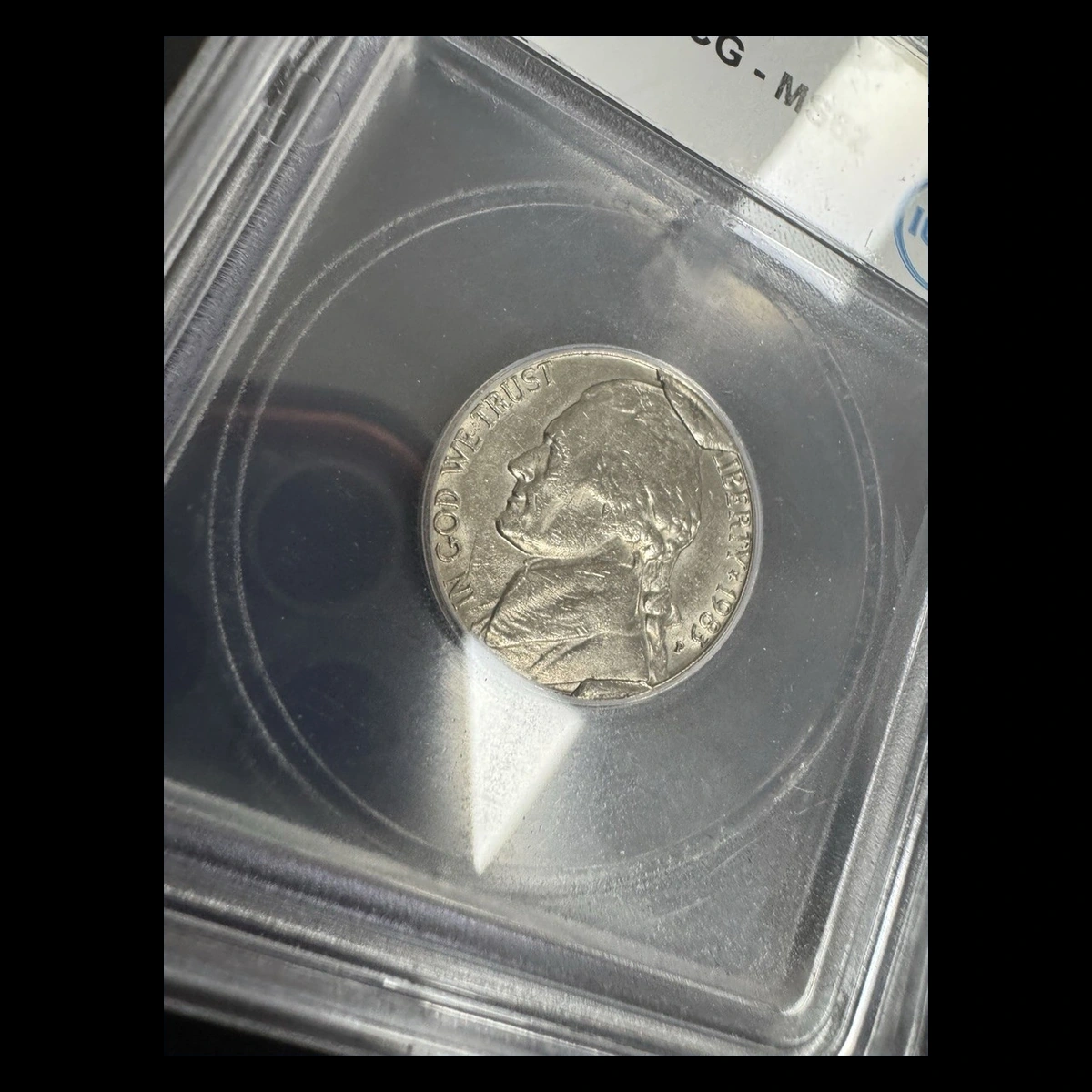
A rim-connected raised patch forms when part of a die breaks away. Several 1983-P cuds are recorded, including an unusual coin with a large left-front break containing smooth depressed spots.
That coin’s right side is grainy with faint thin letters, and an expert proposes that a layer of tool steel peeled away. It also has slight front misalignment and a cracked back die, all on the same specimen.
How to Identify
Check the patch’s rim connection for a dent that pushed metal inward. A separately recorded AU58 has a break at twelve o’clock, which is not a required location for other examples.
For the unusual half-face specimen, compare the smooth depressed spots on the left with the grainy right side and thin lettering. The suggested steel peeling remains a proposed cause, not a conclusion based on texture alone.
What It’s Worth
$20–$1,500 covers ordinary cuds and the unusual combined-feature example. Recognizable cuds are estimated at $20–$300, while the documented large-break combination is estimated at $200–$1,500.
A PCGS AU53 cud-bearing nickel sold for $63 in July 2022. The upper estimate for the unusual surface is not a sale record and does not prove the proposed tool-peeling explanation.
5. 1983 Nickel Clash Marks on Both Faces Error
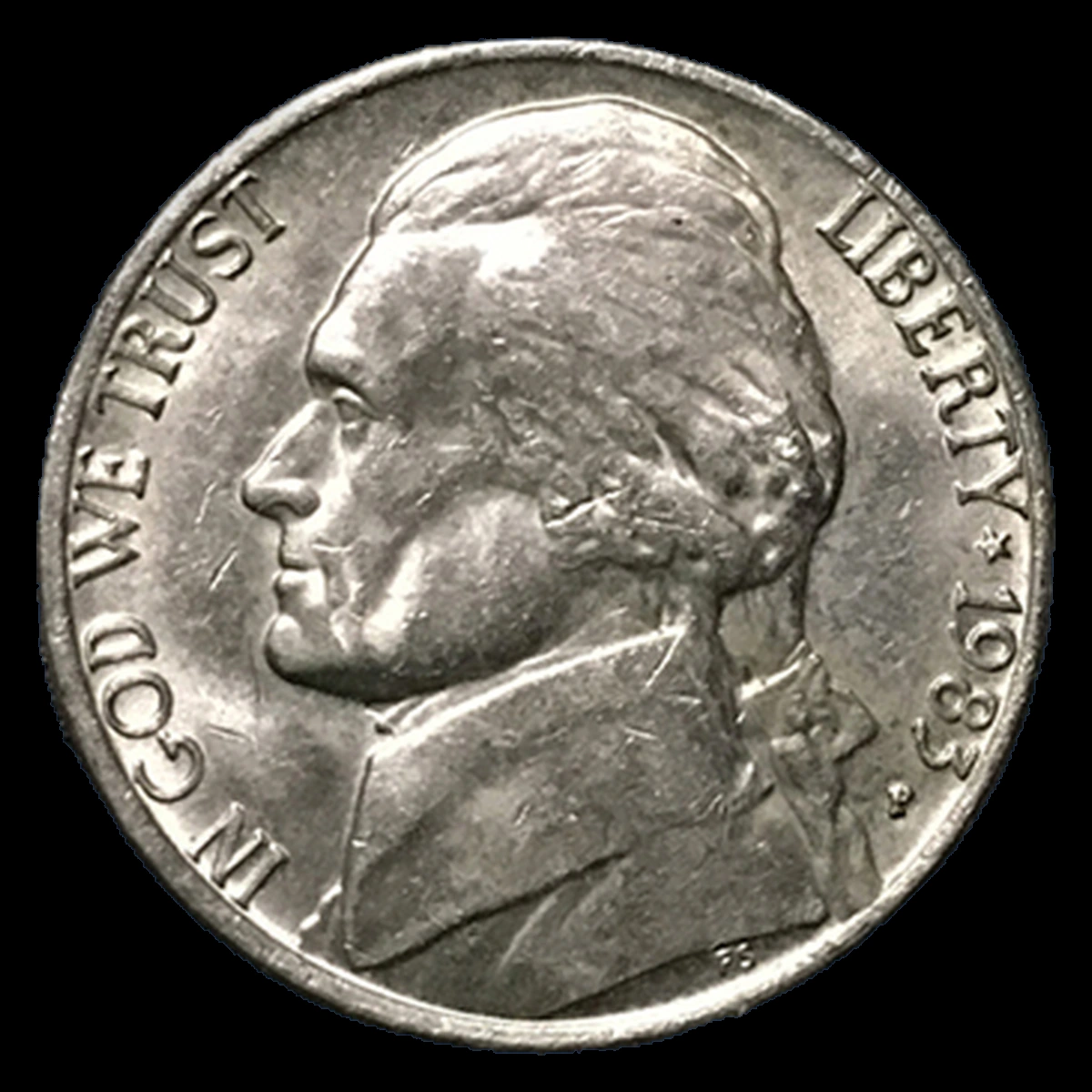
Faint traces of the opposite design can follow a collision between the two dies when no blank is present. The marks stay in the tools and reach coins struck afterward.
A dealer recorded a 1983-P with strong clashes on both sides, graded PCGS AU53. The report does not fix the location of every trace.
How to Identify
Align mirrored reference images with the suspected traces and look for several matching fragments. One suggestive scratch near the portrait does not establish a transferred design.
Check both faces and the edge for later squeezing or grinding. A deep sunken mirror image involves direct coin contact and should not simply be labeled a stronger die clash.
What It’s Worth
$10–$150 is the estimated range for identifiable 1983-P clashes. Clear patterns on both faces are easier to compare than shallow traces softened by wear.
No auction result is assigned to the AU53 dealer example. The extra shapes must fit the opposite design before this estimate becomes useful.
6. 1983 Nickel Clipped Blank Error
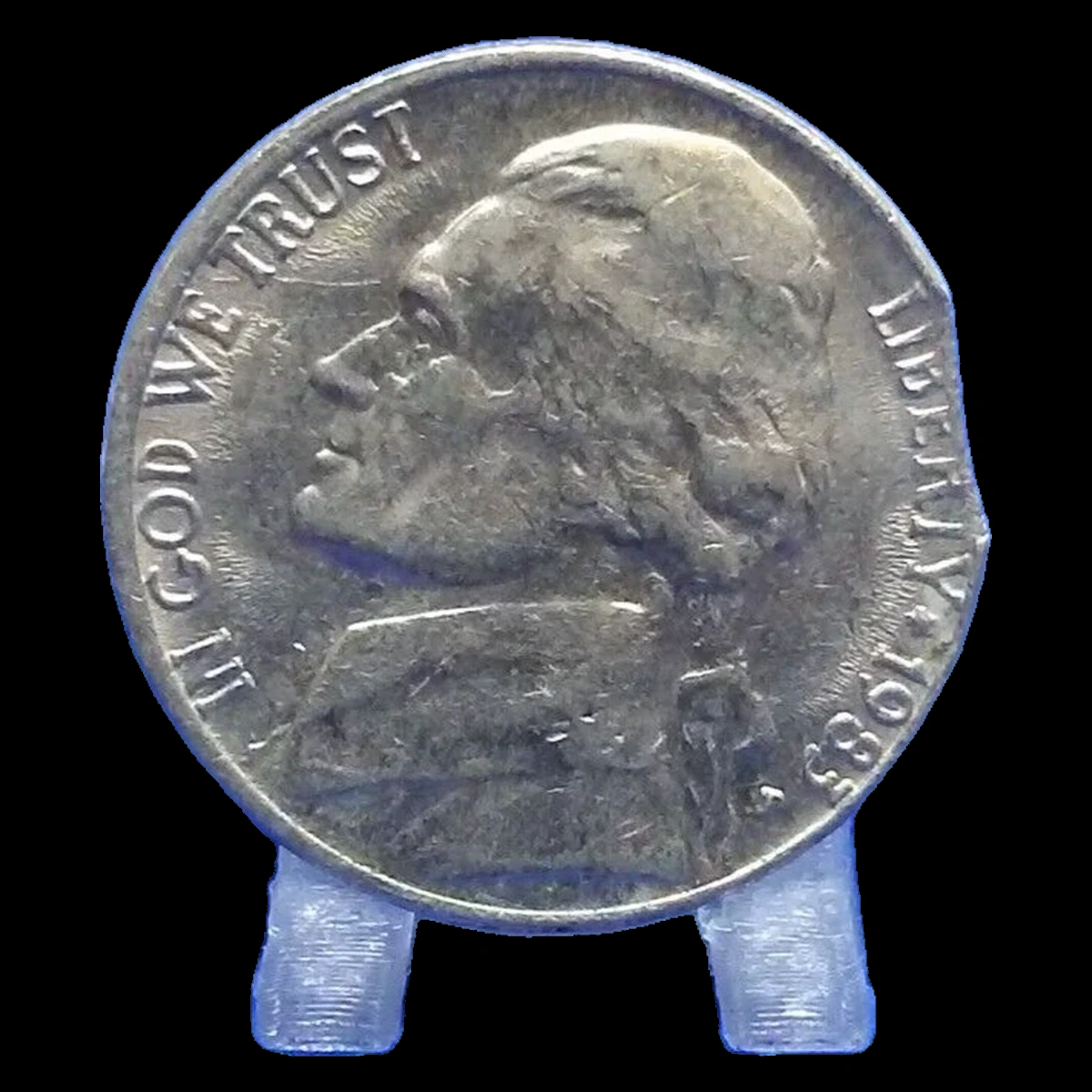
A blank can arrive at the press with part of its edge already absent. The designs form around that incomplete outline.
A 1983-P clip is reported without a stated gap shape or direction. Its opening must be assessed on the actual coin rather than borrowed from a more dramatic example.
How to Identify
Inspect the gap and both ends for saw marks, file lines, or a sharp cut through finished detail. The nearby struck surface should fit a blank that was incomplete from the start.
Possible weakness on the opposite rim can help, but not every clip shows it clearly. A lower weight also occurs with later cutting and is only part of the evidence.
What It’s Worth
$15–$150 is the estimated range for a genuine 1983-P clip with a clear original boundary. The amount missing and the remaining surfaces affect the comparison.
A 1999-P nickel with a 20% curved clip and slight off-center strike sold for $54 in March 2025. Those specific features belong to that later combined-error coin.
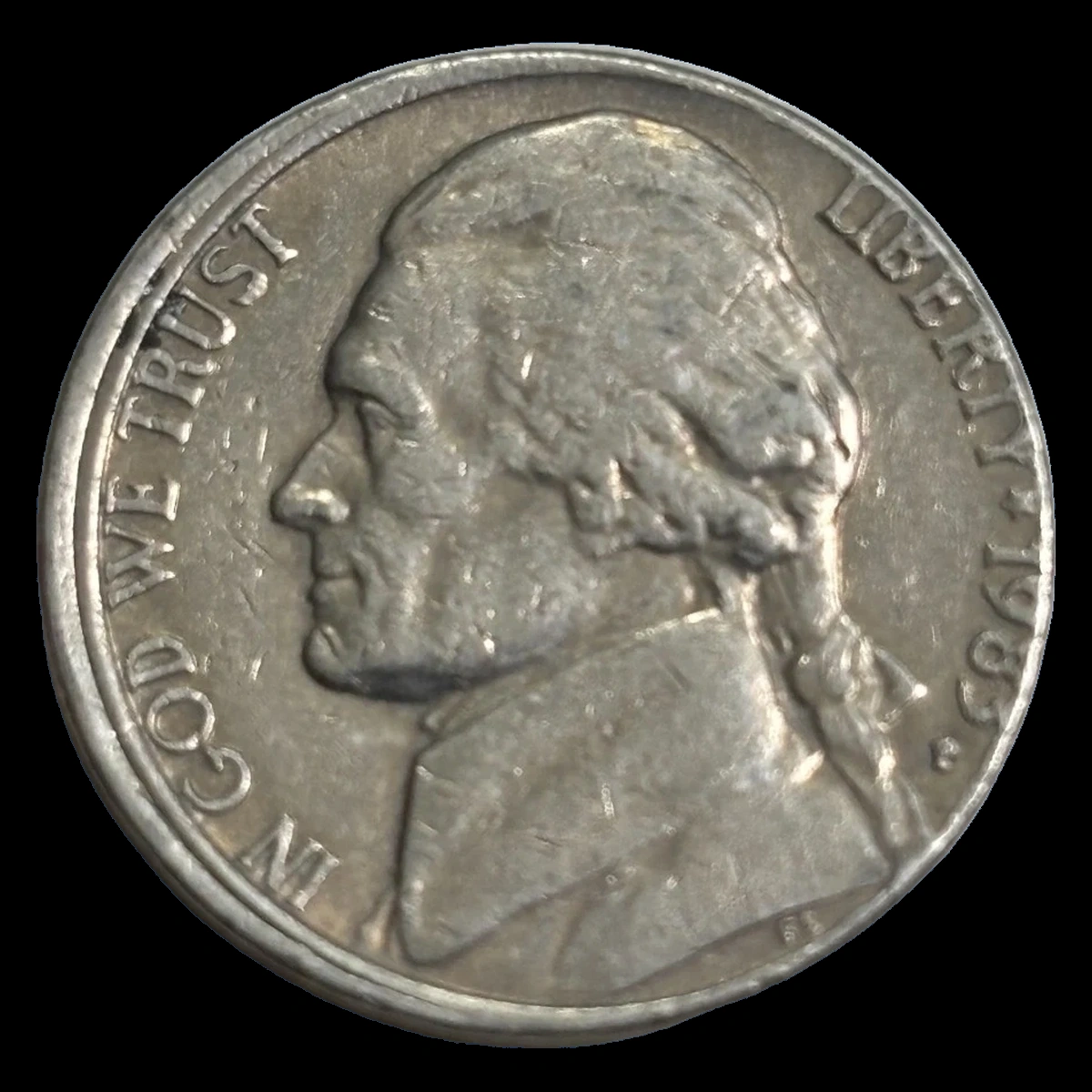
7. 1983 Nickel Shifted Front with a Partial-Collar Edge Error
A recorded 1983-P combines a misplaced front die with a step in its edge. The front design shifts while part of the blank spreads beyond the portion held by the collar ring.
This is a partial collar strike alongside a die misalignment. The collector-display example was graded PCGS MS62, an unworn grade that still allows substantial marks.
How to Identify
View the edge at eye level and follow the step without pressing it flat. The narrower section should fit collar restraint while the exposed metal spread outward.
Then compare the centering of Jefferson and Monticello. The front-to-back difference helps separate a displaced tool from an entire blank struck off center between both dies.
What It’s Worth
$50–$350 is the estimated range for the confirmed combination. A clear step and a visible centering mismatch support the stronger comparison.
A cleaned 1987-P nickel struck by a tilted, misaligned die sold for $32 in July 2022. It is a different-year damaged example, not a sale of the 1983 partial-collar coin.
8. 1983 Nickel Broadstrike Error
An expanded border around the complete design can result when the collar fails to contain the blank. The metal spreads outward during the blow.
A 1983-P broadstrike was cataloged in ANACS MS65 without a measured diameter. A plain edge is normal and cannot identify the error by itself.
How to Identify
Measure several spans and compare the full portrait, date, building, and outer lettering. All intended design should remain on the wider disc.
Crushed high points, sharp lips, or fresh pressure marks can indicate later flattening. Extra width also does not prove a second strike without separate overlapping design evidence.
What It’s Worth
$25–$350 is the estimated range for genuine broadstrikes. Worn or marked pieces may fit around $25–$150, with attractive clear expansion around $150–$350.
A 1999-P example graded PCGS MS63 sold for $89 in March 2025. It provides a practical later-year reference without creating a sale price for the ANACS MS65 1983 listing.
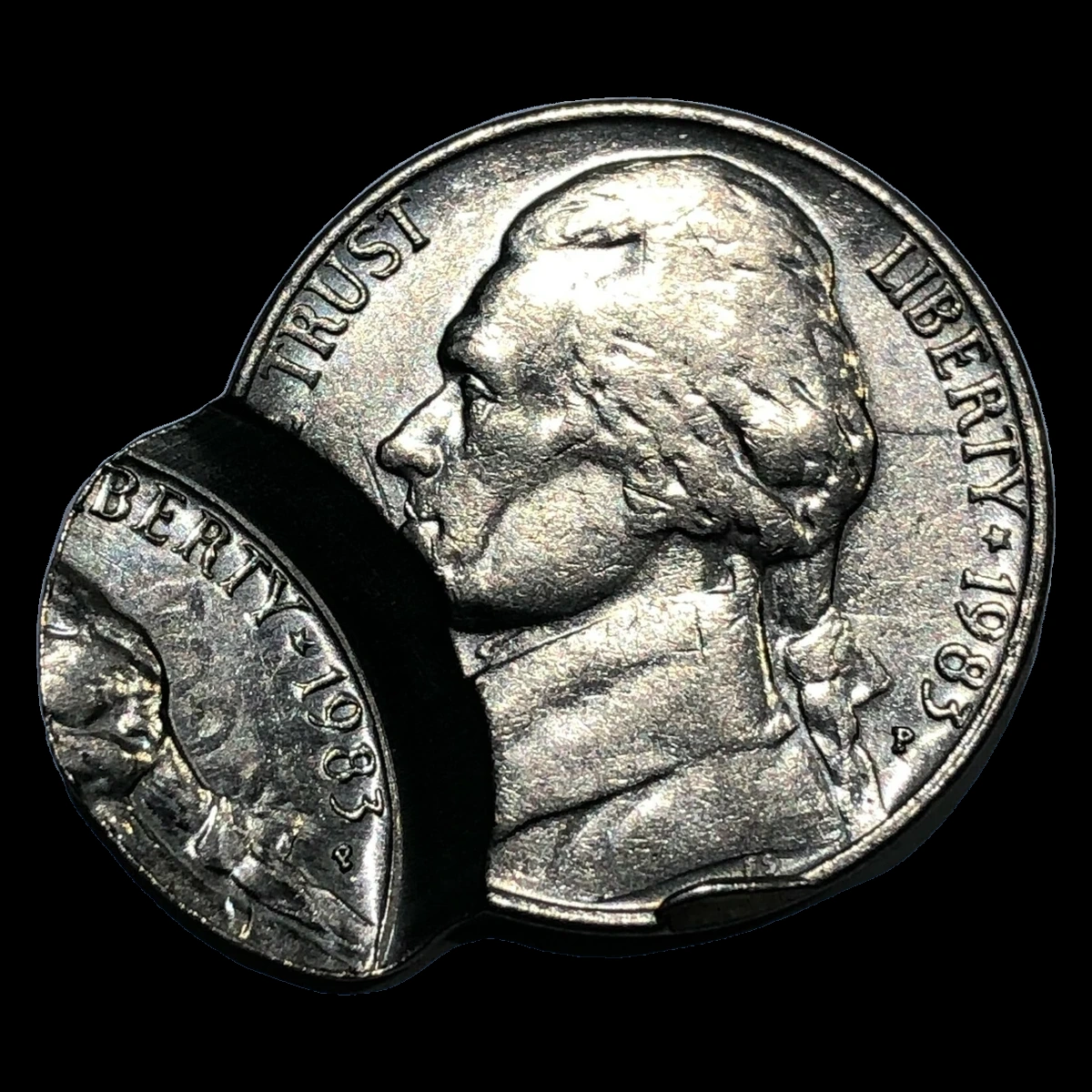
9. 1983 Nickel Off-Center Strikes and a Blocked Face Error
One 1983-P nickel was struck 15% off center toward one o’clock. Another Philadelphia example is 75% off center toward eight o’clock with a face blocked from receiving the design, called a uniface strike.
A separate Denver example is reported 50% off center. The percentages and directions describe different coins.
How to Identify
Match the mint letter before measuring the displacement and inspect both faces of the blocked example. The summary does not establish which face was shielded.
Original bare metal differs from a face ground smooth after striking. Check for abrasive lines, faint removed lettering, or actual missing metal, which an unstruck crescent alone does not explain.
What It’s Worth
$25–$800 covers the estimated group, with ordinary clear offsets around $25–$250 and stronger blocked-face combinations around $100–$800. Date visibility and surfaces remain important.
A 1999-D nickel struck 65% off center sold for $75 in September 2024. That separate result shows that a large percentage does not guarantee a high price.
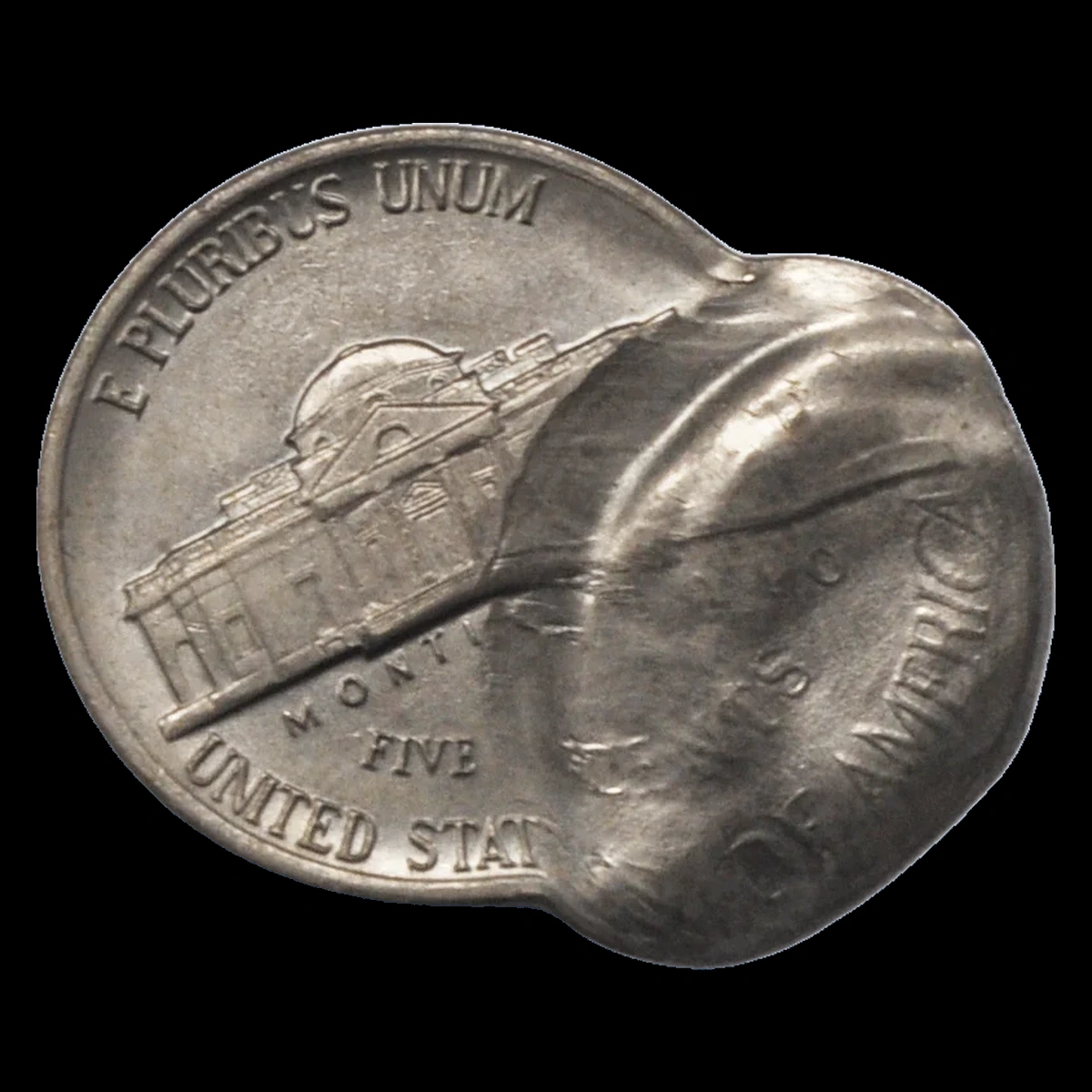
10. 1983 Nickel Repeated Strikes, Flipovers, and Brockage Error
A recorded 1983-P has a second strike 85% off center. A separate 70% off-center example flipped between blows, allowing front and back details to appear together on one face.
A dealer also reports an off-center double strike with a back brockage. Brockage means a sunken mirror image transferred by contact with an already struck coin, rather than another ordinary raised impression.
How to Identify
Separate raised detail from sunken detail before deciding how the coin moved. Mixed raised fragments can support a flipover, while recessed backward features call for the brockage explanation.
Follow how the later impression interrupts the first and inspect the edge for later squeezing. Do not transfer the 70% specimen’s movement to the distinct 85% second-strike coin.
What It’s Worth
$50–$2,500 is the estimated range across these repeated strikes. Ordinary clear overlaps may fit around $50–$750, with attractive flipover or brockage combinations around $300–$2,500.
The 85% second-strike example, graded NGC MS65, sold for $69 in January 2016. Its result reinforces that a dramatic amount of displacement is only one part of the comparison.
11. 1983 Nickel Old Bronze Cent Blanks and a Damaged Dime Blank Error
The Philadelphia bronze-blank nickel weighs 3.1 grams, while a Denver bronze example weighs 3.06 grams. Old bronze cent material reaching a nickel press in 1983 came after cents had switched to copper-coated zinc during 1982.
A separate Denver nickel used a dime blank with heat-related damage reported by a specialist. Slits and peeling in its bonded layers expose reddish metal, and its measured weight was not supplied.
How to Identify
Compare the recorded bronze weights with the 2.5-gram standard for a modern zinc cent blank. On the Philadelphia coin, IN GOD WE TRUST is cut off; on the Denver bronze coin, a shift toward one o’clock removes much of STATES OF.
The dime-blank example instead needs inspection of its slits, peeling border, and copper-colored edge. A normal dime blank weighs 2.27 grams, but that is a reference rather than this damaged coin’s actual reading.
Check for added plating or artificial surface damage and use specialist metal testing where needed. Copper color alone cannot distinguish these three specimens.
What It’s Worth
$250–$7,000 spans the different wrong-blank types. Authenticated old-bronze examples are estimated at $2,500–$7,000, while the reported damaged dime-blank type is estimated at $250–$1,500.
The Philadelphia bronze coin sold for $4,800 on April 24, 2021, and the Denver bronze coin for $4,312.50 on August 13, 2010. They are separate specimens with their own measured weights.
A 1995-P nickel on a dime blank sold for $336 in July 2022. That later comparison does not carry the same reported layer damage as the 1983 Denver piece.
Conclusion
Compare both centers when a 1983 nickel looks weak, and inspect the edge when its outline looks unusual. A blurred front, hard blank, and grainy tool-damage surface do not share one automatic explanation.
Estimated values run from $10–$7,000, with the leftover bronze blanks in a special group. Keep each specimen’s measurements, mint, and visible details together instead of borrowing them from another example.