Rare 2017 Nickel Errors (List & Pictures)
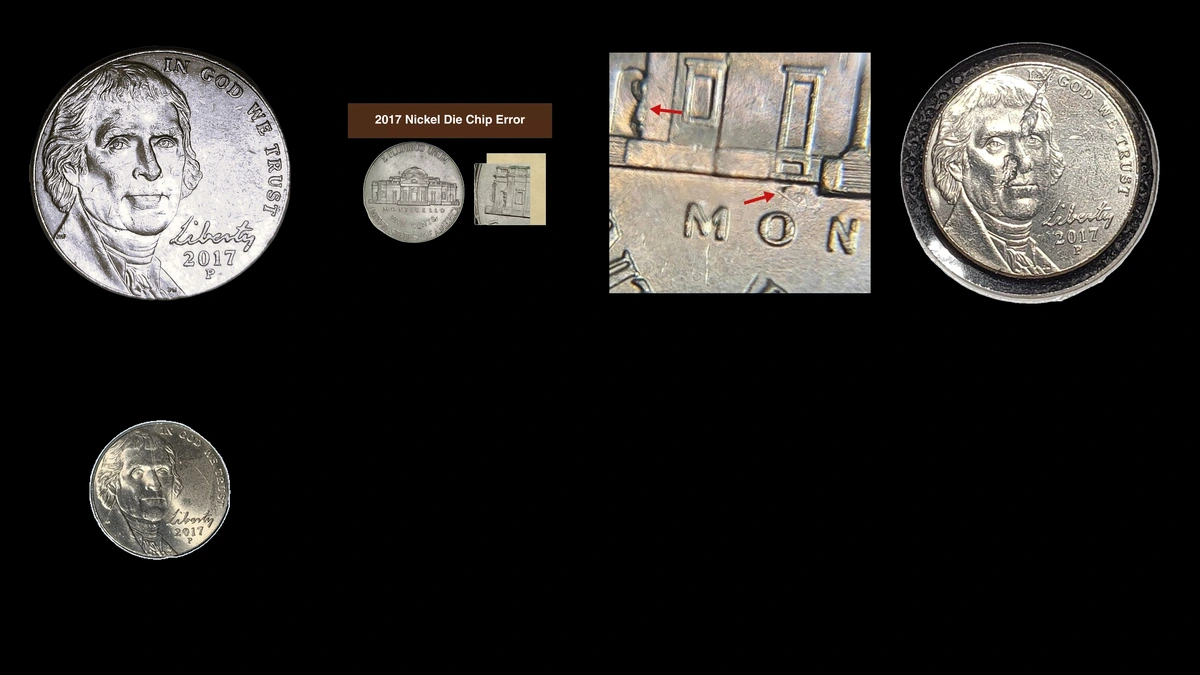
A slight rim shift and a nickel struck over a dime sit at opposite ends of the 2017 nickel errors group. The supplied estimates span $0.05–$6,000, including minor effects that may add nothing above face value.
The highest supplied comparison is $7,800 for a 1977-S Proof nickel over a dime in January 2022, not a 2017 sale. Compare the shape and both faces first, then investigate smaller design or surface changes.
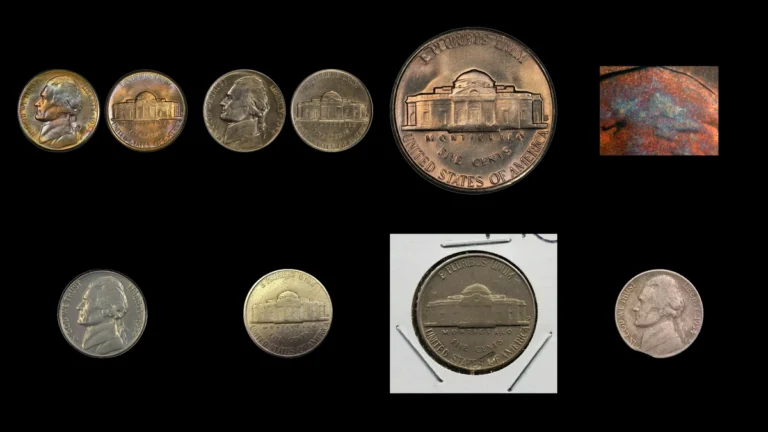
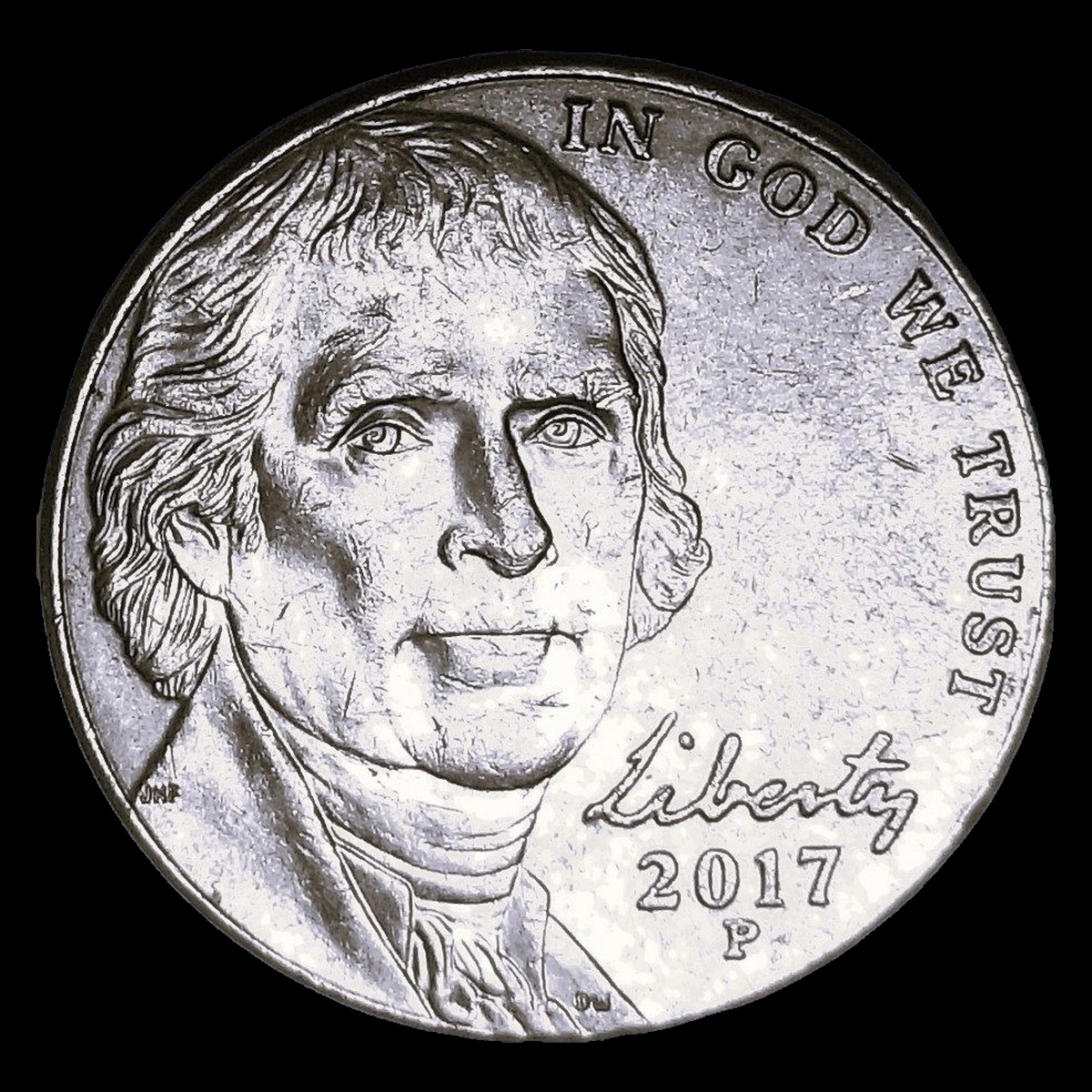
1. 2017 Nickel One Border Is Narrow but the Reverse Is Centered: Misaligned Die Error
Uneven rim spacing can come from a die sitting slightly to one side while the blank remains correctly positioned. That can move one face’s design without similarly displacing the other.
A 2017 owner discussion describes a narrow lower-left border and identifies the effect as minor die misalignment. It does not establish a dramatic off-center strike.
How to Identify
Compare the spacing around Jefferson with the spacing around Monticello. Check whether only one design has moved and whether an impact flattened the rim where it looks narrow.
For general comparison, a normal nickel weighs 5 grams, measures about 21.21 millimeters, and has a plain edge. A small alignment shift does not require a larger blank or a missing crescent of metal.
What It’s Worth
$0.05–$5 is the supplied estimate for the slight shift described. The lower end is simply five-cent face value, and no completed sale is supplied for the discussion coin.
A clearly illustrated example may interest someone studying minting. Prices for major off-center strikes are not useful comparisons for this small rim difference.
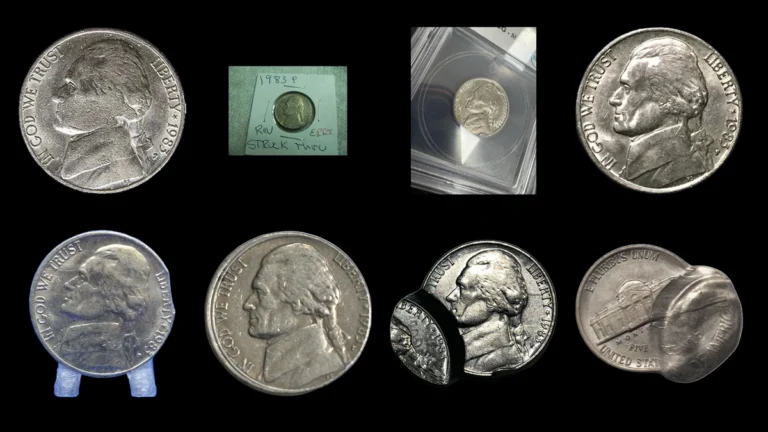
2. 2017 Nickel A Wide Outline Surrounds Both Complete Designs: Broadstrike Error
The reported 2017-P broadstrike retains its complete designs despite expansion and somewhat uneven spacing. Metal spread outward because the collar, the ring around the blank, did not contain it normally during the blow.
This can be described as an uncentered broadstrike. Unequal border widths do not automatically make it an off-center strike if the full designs remain on the coin.
How to Identify
Measure the outline in several directions and follow all the outer lettering on both faces. Look for genuine outward spreading rather than flattened letters and impacts from later hammering.
A plain edge is normal for nickels and does not prove collar failure. The useful evidence is the expanded metal together with complete struck designs.
What It’s Worth
$20–$100 is the supplied estimate for modest to clearly expanded examples. The year guide reports a $75 transaction in 2018 for an MS64 coin, an unworn grade with visible marks.
No original auction lot is identified for that amount. Treat it as a secondary report and compare the actual degree of spreading and preservation.
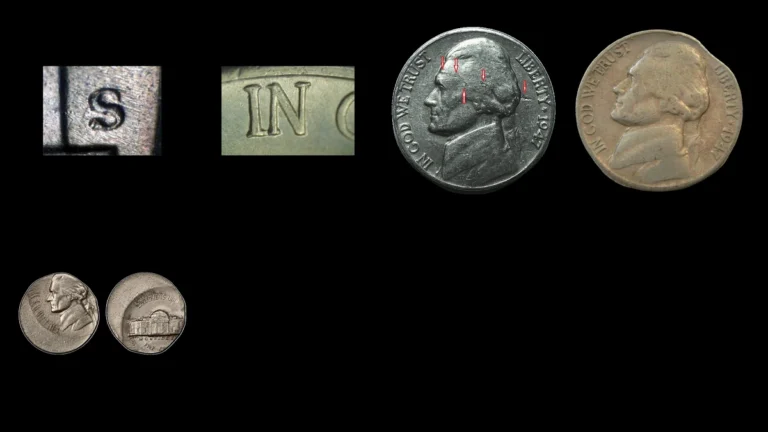
3. 2017 Nickel A Blank Crescent Adjoins Missing Design: Off-Center Strike Error
The reported 2017-D off-center coin retains its date but has roughly 15% of the strike outside the blank. The blank was misplaced, leaving an unstruck crescent opposite the portion of the design that missed the metal.
How to Identify
Identify the date and D, then compare both faces using the same physical edge as a reference. Both should support the same displaced blank rather than a shift restricted to one die.
Check the blank area for untouched surface rather than grinding or flattened lettering. No direction is supplied for the reported Denver coin, so a photograph of another specimen cannot establish it.
| Observed feature | Likely category to investigate |
|---|---|
| One shifted face, opposite face centered | Misaligned die |
| Expanded outline with complete designs | Broadstrike |
| Unstruck crescent and design cut off on both faces | Off-center strike |
What It’s Worth
$75–$300 is the supplied estimate for a clear, dated example. The guide reports a $220 eBay transaction in 2020 for the roughly 15% Denver piece, described as MS62.
That is a guide-reported amount without an identified original auction lot. The surviving date, condition, and displacement determine how well it fits another coin.
4. 2017 Nickel Dime Details Remain Under the Nickel Design: Double Denomination Error
Recognizable Roosevelt or torch details beneath Jefferson and Monticello would indicate a coin that had already been struck as a dime. The later nickel strike then placed two denominations on the same metal.
The Mint Error News specimen list records a 2017-P example graded PCGS MS65. It changed hands in a trade without a stated cash price, and the underlying dime’s date is not established.
How to Identify
Follow recognizable dime lettering or design beneath the newer impression. A small disc alone could instead be an unused dime planchet, which would lack the earlier design.
A modern dime begins at 2.268 grams and 17.91 millimeters, though an overstrike can expand its diameter. These are standard dime figures, not a supplied measurement of the recorded 2017-P.
Recessed mirror-image marks may result from contact with another coin rather than an earlier normal strike. Keep certified coins in their holders and use photographs that show how the two designs overlap.
What It’s Worth
$2,000–$6,000 is the supplied estimate for the recorded type. There is no cash sale amount for the 2017 trade.
A 1977-S nickel over a 1977-S dime brought $7,800 at Heritage in January 2022. That highly preserved Proof was specially made for collectors, so its different date and finish limit comparison with an ordinary-finish 2017 nickel.
5. 2017 Nickel Raised Lines, Lumps, or Rim Patches: Die Cracks and Breaks Error
Damage to a steel die can leave extra metal on the coin it strikes. A narrow crack makes a ridge, a small missing piece makes a chip, and a larger rim-connected break makes a cud.
The supplied reports include a Philadelphia front crack and separate rim cud, Denver lumps on the portrait and Monticello, and an interior Philadelphia chip. These locations describe different examples rather than one combined pattern.
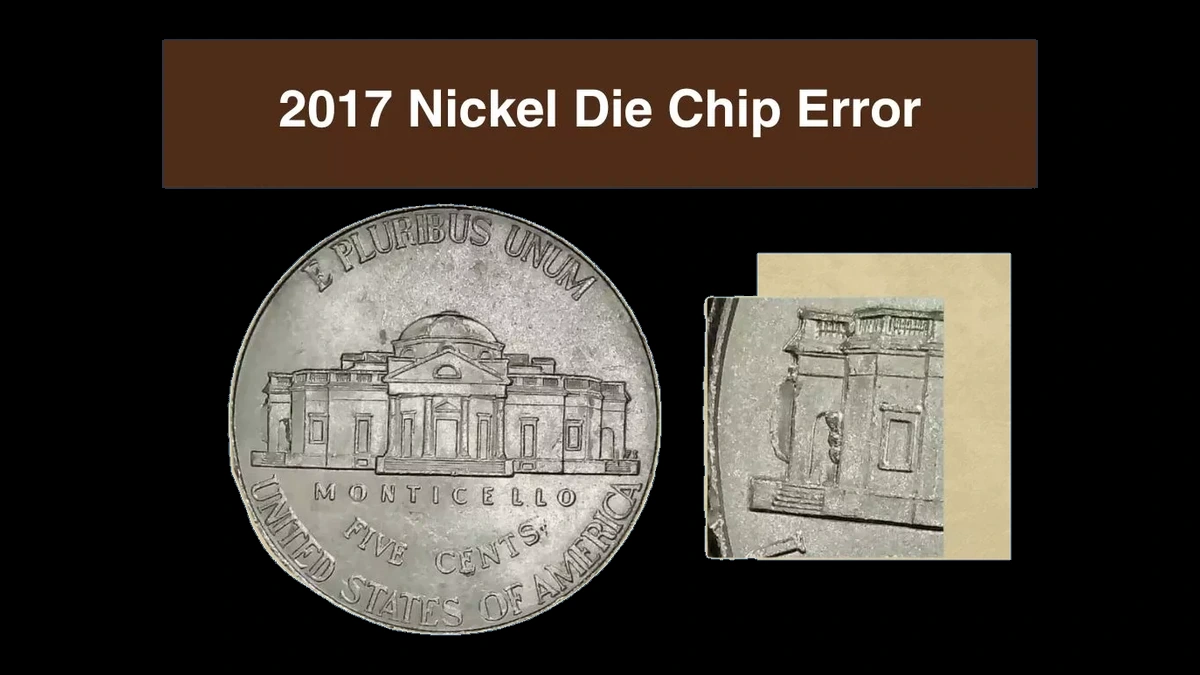
How to Identify
Determine whether a patch connects to the rim before calling it a cud. An interior bump remains a chip even if it is prominent.
Inspect thin lines for a cut floor and larger patches for added material, a separate boundary, or a different surface texture. Do not scrape a bump to test it; side lighting can help show its relationship with the original coin.
What It’s Worth
$5–$125 is the estimated range across this group, with small interior chips generally toward the low end. The year guide reports $70 for a rim cud, $85 for a front crack, and $120 for chips on both faces.
Those are secondary reports rather than independently identified auction records. Multiple lumps still belong to one complete coin and do not guarantee the highest figure.
6. 2017 Nickel Jaw or Building Fragments Appear on the Wrong Face: Die Clash Error
The reported 2017-P clash includes a jaw-like line beside Monticello and building-like lines on the portrait face. Such traces can result when the dies meet without a blank and mark each other.
Later coins receive the unwanted fragments alongside their normal designs. This explanation involves contact between the tools, not a finished nickel being squeezed against another coin.
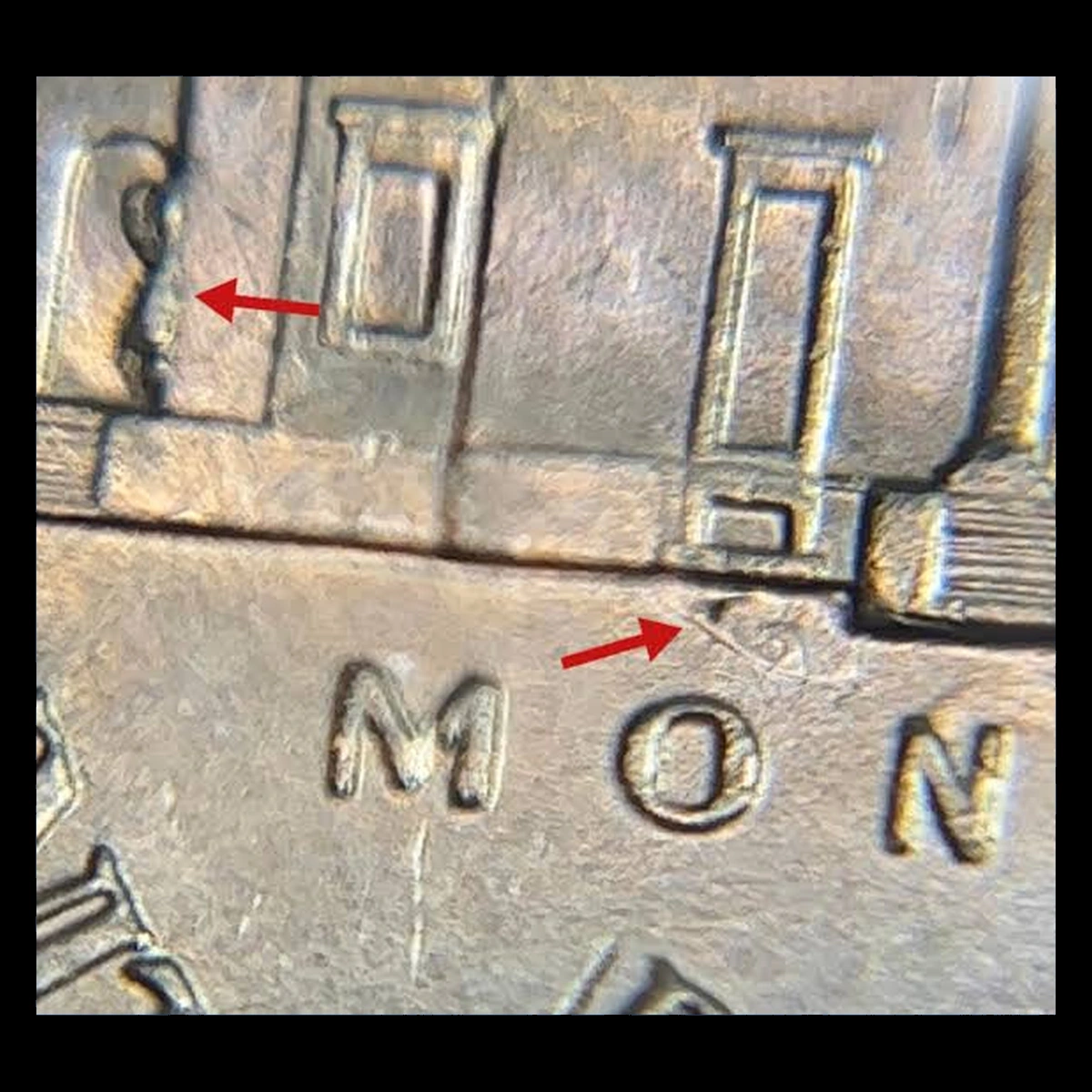
How to Identify
Compare the reverse line with Jefferson’s jaw and examine whether the portrait-side traces match parts of Monticello. A recognizable relationship to the opposite design is more useful than simply finding several bright lines.
Scratches and polishing lines can imitate fragments, and height alone does not settle the question. Keep the surrounding architectural detail in the photograph so that normal building lines remain distinguishable.
What It’s Worth
$25–$100 is the estimate for a clear genuine clash. The supplied guide gives a broad price category rather than a particular 2017 auction result.
Easy-to-recognize fragments on attractive surfaces make stronger examples than faint, disconnected traces. Several related marks from one clash should not be priced separately.
7. 2017 Nickel Fixed Extra Outlines on Jefferson: Reported Doubled Die Error
The 2017-D report points to the eye, hair, collar, and LIBERTY as places to examine for extra detail. A true doubled die carries the repeated feature in the tool itself and can reproduce it on more than one coin.
No original variety listing is supplied for this Denver report. The described locations guide inspection but do not replace a documented pattern match.
How to Identify
Check the D and photograph several reported areas at the same angle. Rounded extra outlines should stay fixed when the lamp moves, whereas glare can shift or disappear.
Flat shelves caused by movement during striking are common lookalikes. One ledge on LIBERTY does not establish that the eye, hair, and collar match the reported doubled die.
What It’s Worth
$20–$100 is the estimate for a clearly matched genuine example. The guide cites an $80 result in 2020 but does not identify an original auction lot.
Use that figure as a guide report with limited documentation. Sharp photographs of actual extra design are necessary before treating an apparent doubled edge as collectible die doubling.
8. 2017 Nickel A Smooth Patch Lacks Expected Detail: Struck Through Grease Error
Grease in a die’s recessed design can block metal from filling the affected area. A coin may then have weak or missing detail beside better-formed features.
The supplied year guide reports a Philadelphia example without establishing the patch’s exact location. General illustrations involving hair or columns should not be presented as that specimen’s diagnostics.
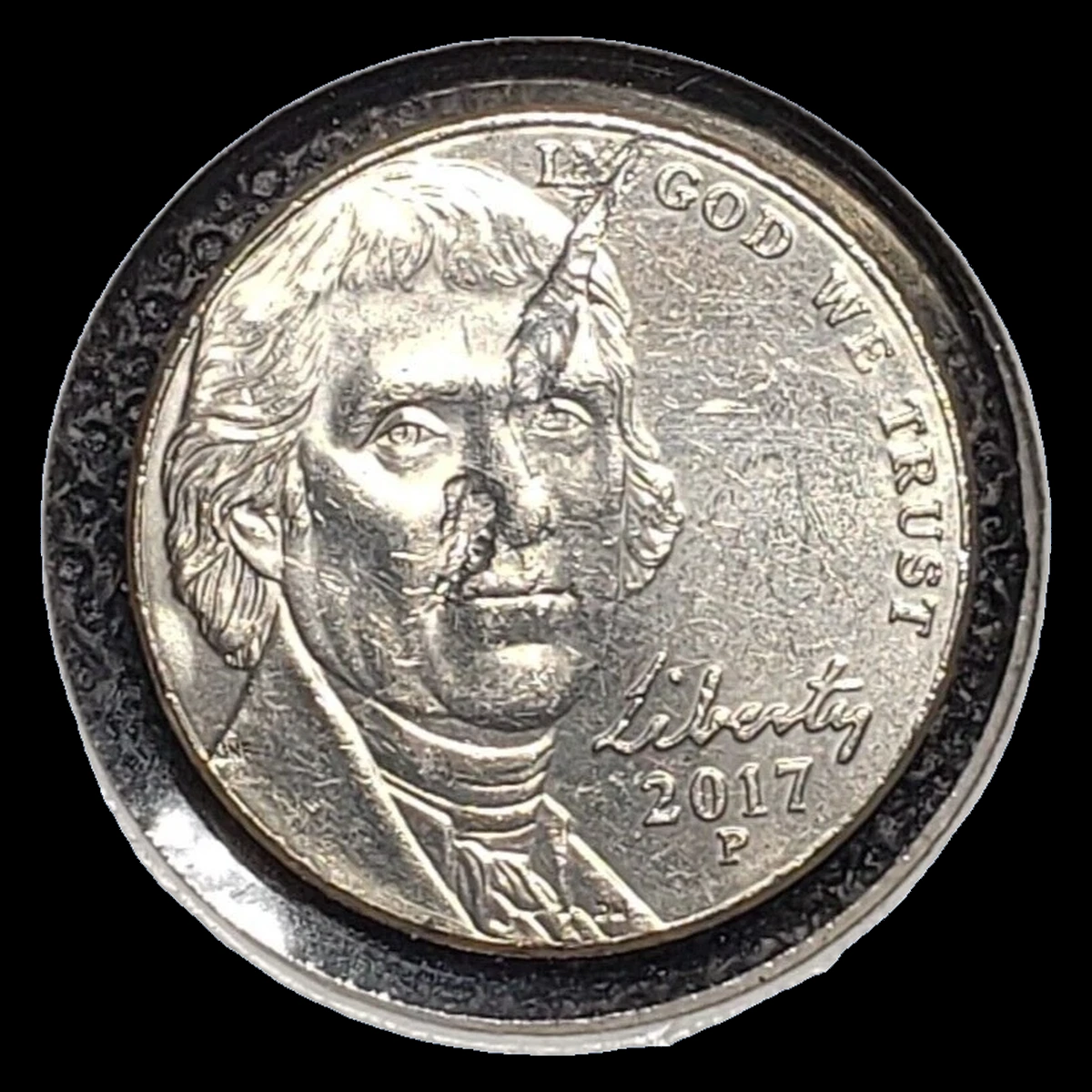
How to Identify
Compare the weak area with high points elsewhere on the coin. General wear or an overall weak strike may explain softness that is not confined to a local blockage.
Use low light to inspect for sanding, scraping, or a lowered damaged surface. Missing design from an obstruction normally leaves the underlying metal in place, so it differs from metal ground away afterward.
What It’s Worth
$5–$150 is the supplied estimate, with the size and clarity of the blocked area affecting interest. The guide reports $132 in 2019 for an MS61 2017-P, an unworn coin with noticeable marks.
No original lot is identified for that transaction. The upper range requires a convincing localized effect, not ordinary softness on a worn nickel.
9. 2017 Nickel Abnormal Color Across the Surface: Improper Annealing Error
Yellow, brown, purple, or dark areas may prompt examination of how a blank was heated before striking. This softening process, called annealing, can alter the surface when conditions go wrong.
The supplied report concerns a 2017-P, but color alone cannot establish a minting error. Nickels are solid copper-nickel alloy rather than plated coins with a thin silver-colored skin.
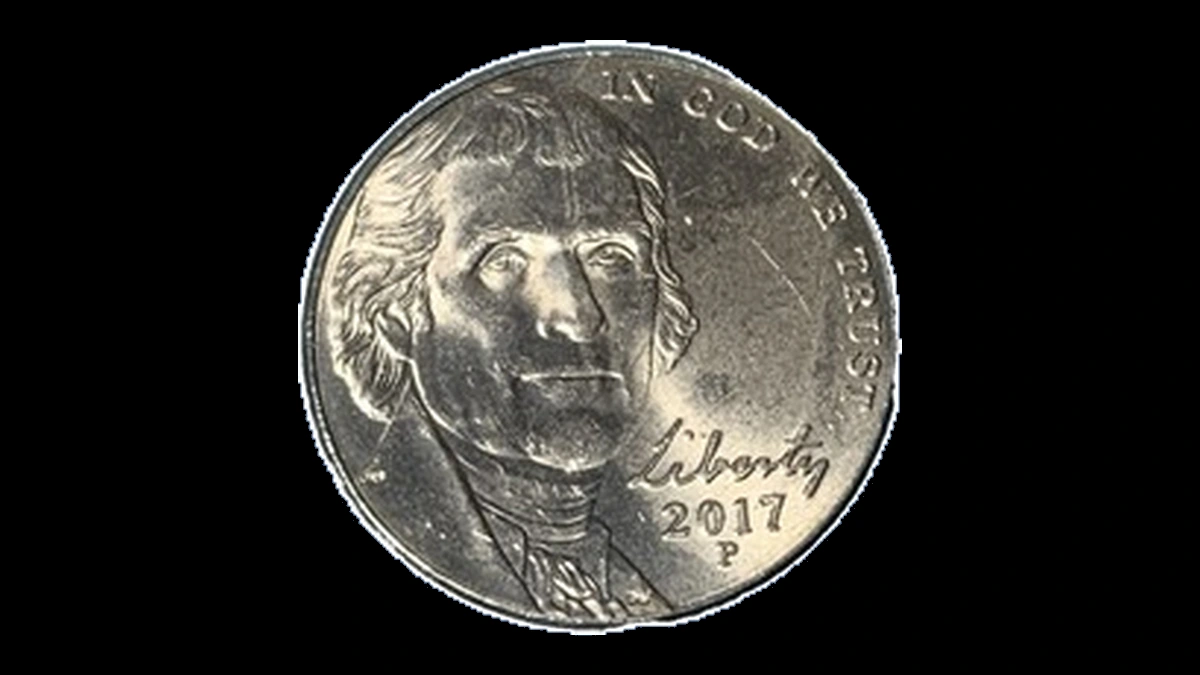
How to Identify
Compare both faces and the edge in neutral light, checking for crust, pits, deposits, or scratches that reveal a coating. Warm illumination can exaggerate coppery tones.
Normal weight and size rule out some alternatives but do not distinguish mint heating from later heat or chemicals. Leave the surface untouched so that its original texture and struck detail can be examined.
What It’s Worth
$30–$225 is the conditional estimate once improper annealing is established. The guide reports a $215 eBay transaction in 2018 for an MS60 coin, an unworn grade with substantial marks.
The reported amount does not authenticate similarly colored nickels. Original surface evidence matters more than color intensity or the number of shades visible.
Conclusion
For 2017 nickels, start with what changed: the position of one design, the whole outline, a small raised feature, or the surface itself. Matching the physical evidence keeps a minor rim shift from being confused with a much larger striking error.
Use the guide-reported prices with their stated limits. The recorded nickel-over-dime trade establishes a specimen, while its value estimate remains separate from a documented cash sale.