Rare 2013 Nickel Errors (List & Pictures)
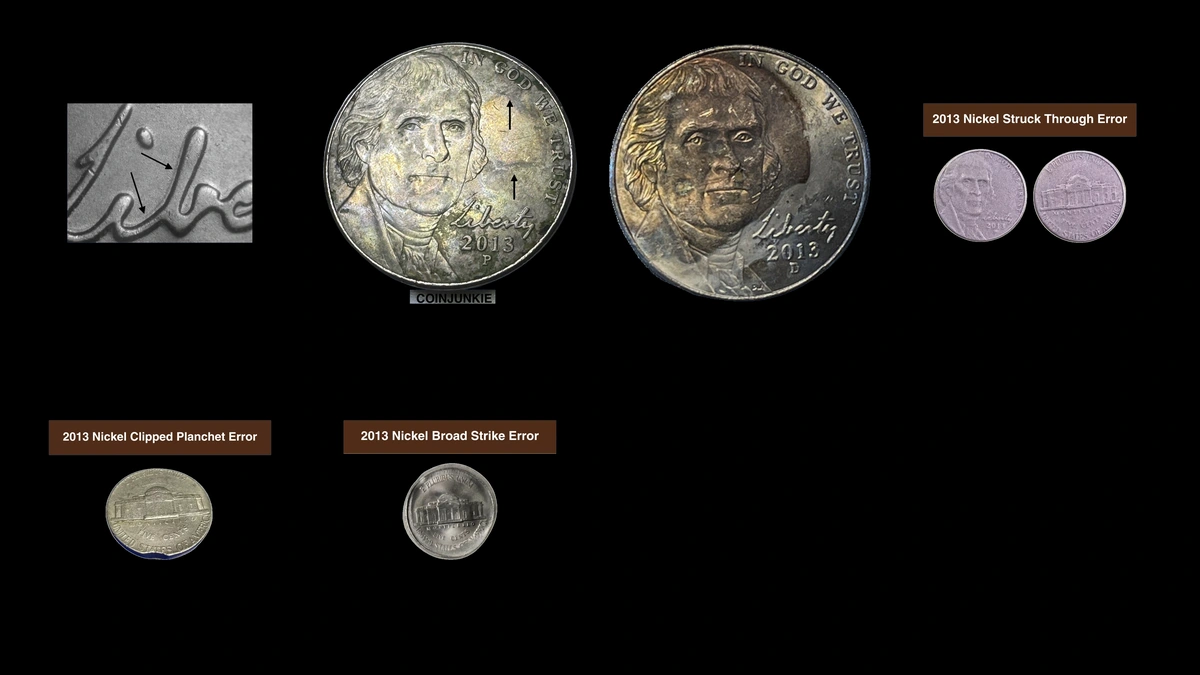
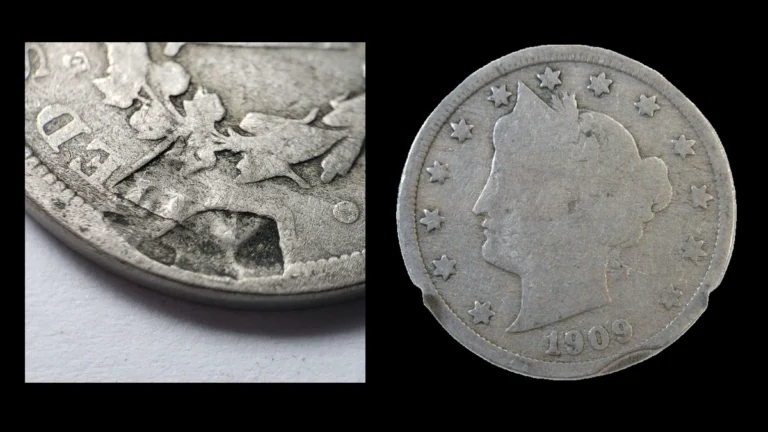
A 1982-P nickel with a rim break sold for $84 in September 2024, providing a documented different-year comparison. Estimated values for 2013 nickel errors span $5–$650, while several higher figures in year guides remain secondary reports.
Begin with small raised details, then inspect surface interruptions, the outline, and the direction and depth of any transferred design.
| Observation | Category | Estimated value |
|---|---|---|
| Extra portrait or doorway detail | Doubled die | $5–$50 |
| Raised line, lump, or rim patch | Die crack, chip, or cud | $5–$150 |
| Unusual original color | Improper annealing | $25–$225 if confirmed |
| Depression or peeling metal | Strike-through or lamination | $15–$650 |
| Missing, expanded, or displaced outline | Clip, broadstrike, or off-center strike | $15–$300 |
| Raised forward-reading transferred design | Counterbrockage candidate | $50–$300 if identified |
A normal nickel weighs 5.00 g and measures 21.21 mm. It uses one alloy of 75% copper and 25% nickel, with a plain edge and no separate copper core or outer skins.
1. 2013 Nickel Tiny Extra Portrait or Doorway Lines: Doubled Die Error
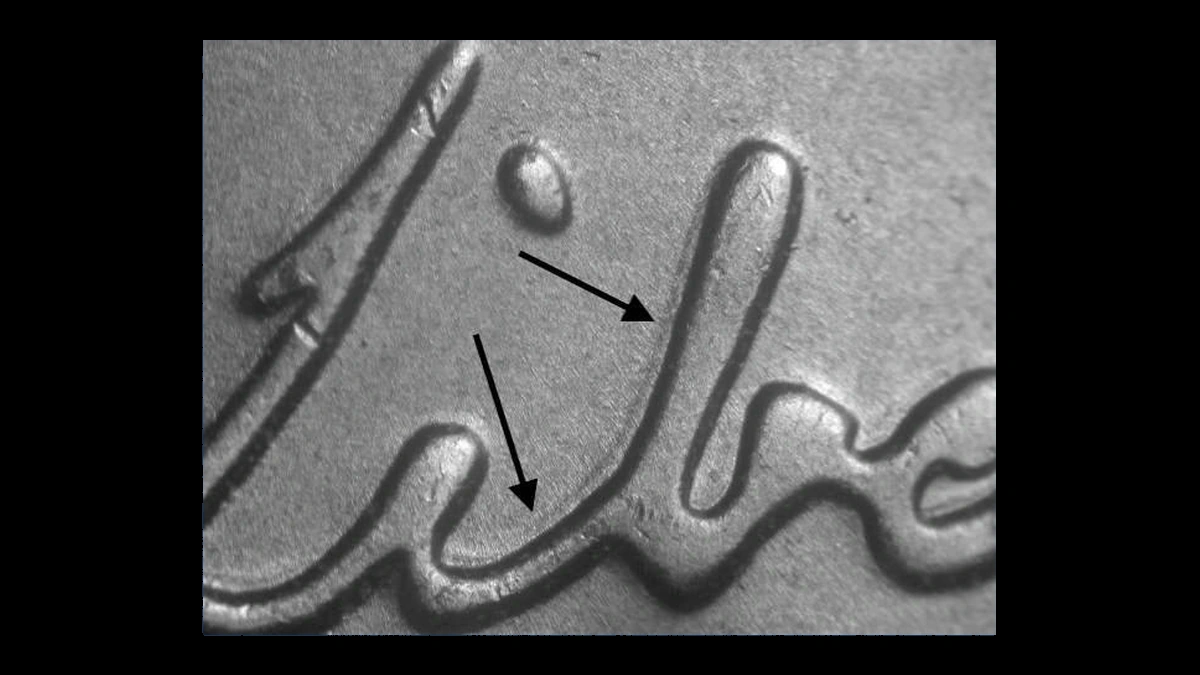
Cataloged 2013-P varieties show extra detail on the front or at Monticello’s central doorway. These are separate examples, not one coin required to show every feature.
How to Identify
For front varieties, compare the eye, hair, lettering, date, and P with the same entry in Brian’s Variety Coins. Reverse examples need a precise match at the top or inside of the doorway.
The doubled P belongs to the die’s design, not a mintmark punched twice by hand. Distinguish fixed added contours from glare or flat shelves that narrow the original details.
What It’s Worth
The small cataloged varieties have an estimated value of $5–$50. Clear matches and attractive surfaces support the stronger end.
A guide mentions a $215 reverse-doubling result without a clearly linked original lot for these doorway varieties. That figure should not automatically price them, and Full Steps is a detail-quality label rather than another error.
2. 2013 Nickel Raised Lines and Lumps: Die Cracks, Chips, and Cuds Error
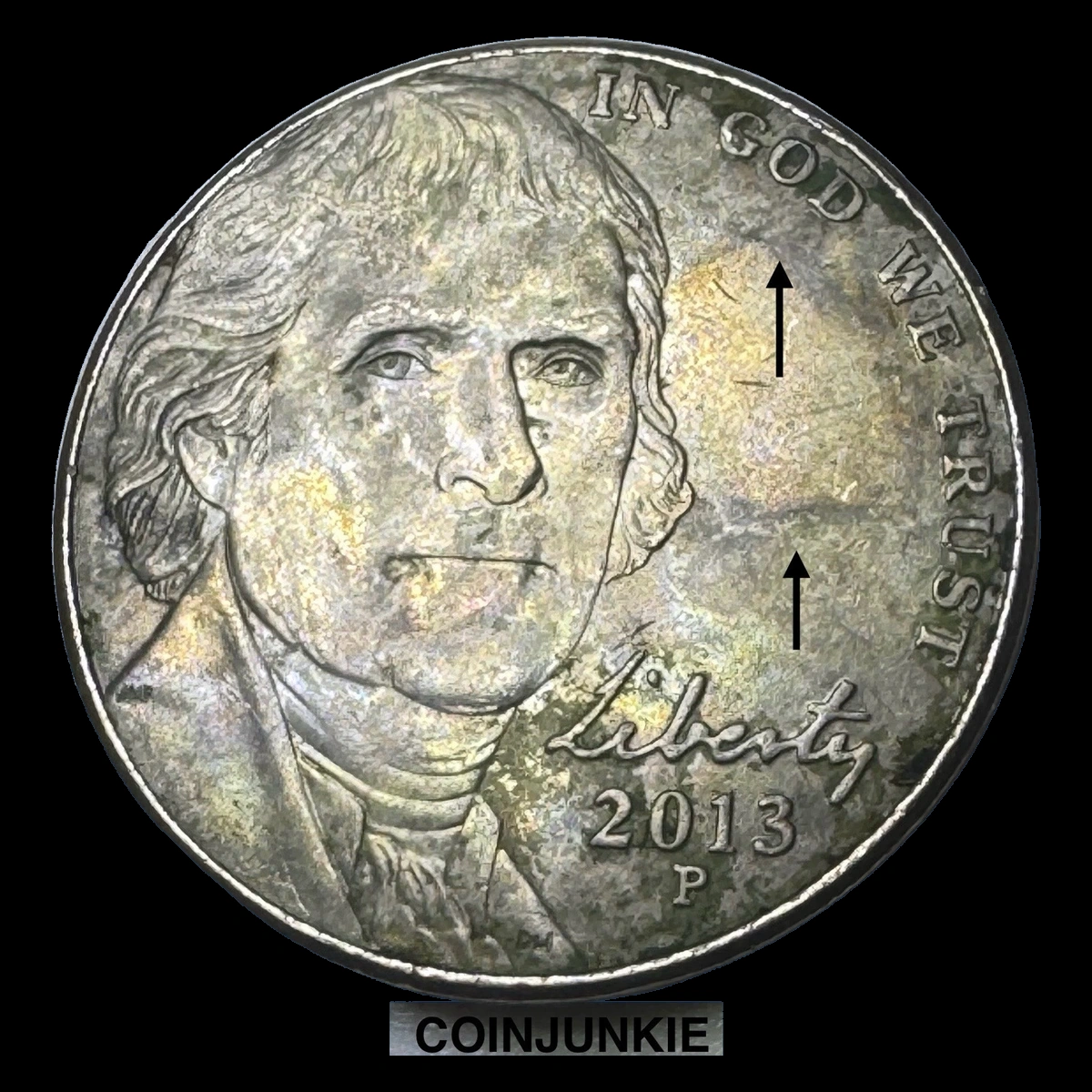
The reports distinguish a Philadelphia front crack, Denver reverse chips, and a separate Philadelphia rim cud. Broken areas in the dies left raised metal on the coins.
How to Identify
Choose the comparison by mintmark, face, and exact position. A thin ridge, interior chip, and rim-connected patch are different forms of die damage.
For a cud, confirm the connection to the rim and the missing normal design. A dent, groove, or attached lump requires another explanation.
What It’s Worth
Estimated values are $5–$150 across small chips and prominent genuine rim breaks. Condition remains part of the complete price.
A 1982-P rim-break nickel graded CACG MS66 sold for $84 at Heritage in September 2024. This unworn different-date example is not a 2013 transaction.
3. 2013 Nickel Unusual Color on a Denver Coin: Improper Annealing Error
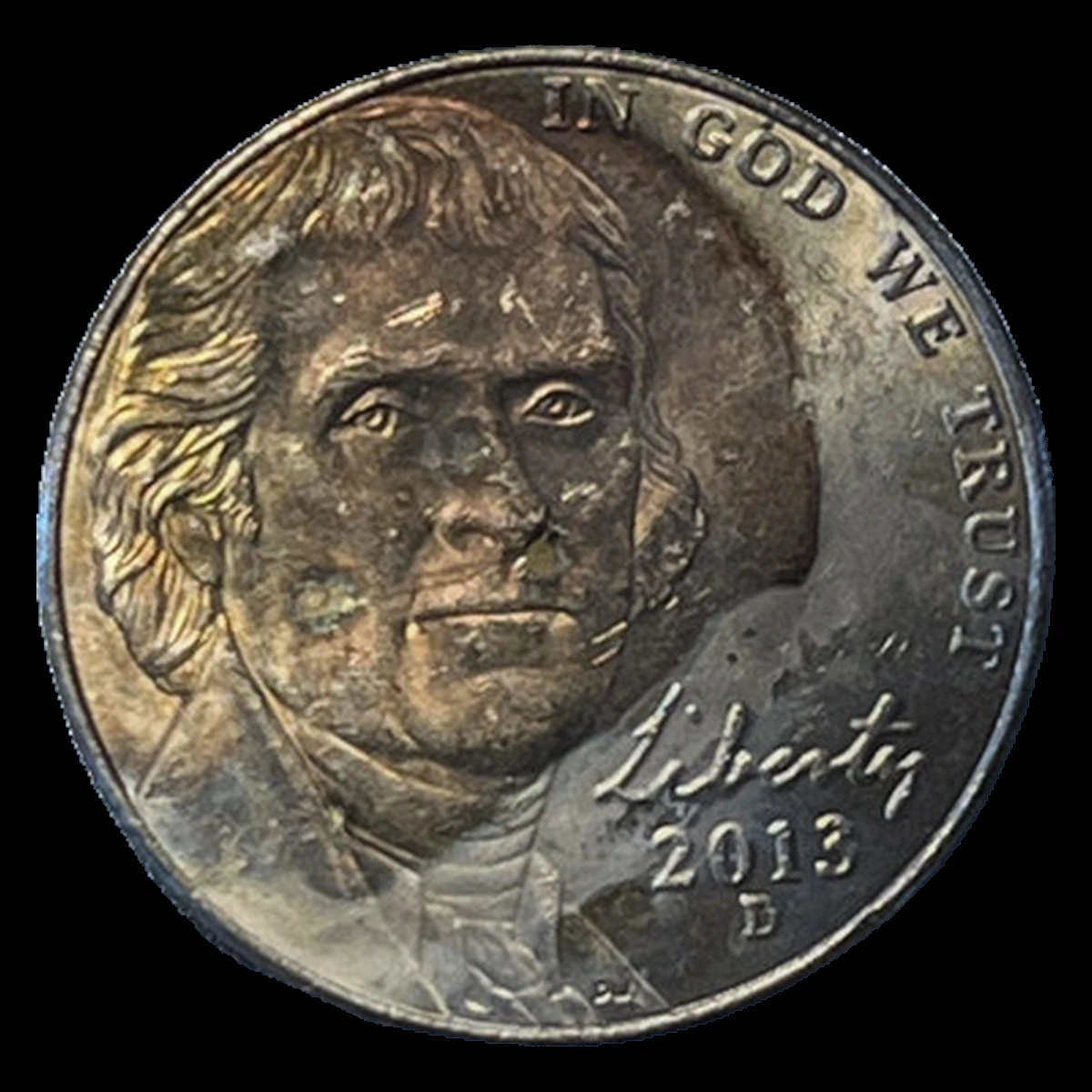
The Denver report concerns an unusual surface associated with heating blanks before striking. Later chemicals, storage, or heat can also change a nickel’s appearance.
How to Identify
Examine both faces and the edge under neutral white light. Residue, pitting, paint, and scratches may point to a later surface change.
Normal weight does not authenticate annealing. The assessment must explain the color’s relationship to the original struck surface, without rubbing or heating the coin to test it.
What It’s Worth
A confirmed mint-related heating error has an estimated value of $25–$225. Ordinary staining or artificial coloring falls outside that error range.
The year guide discusses $215 for an unusually colored Denver coin. That reported amount does not establish the cause of color on another specimen.
4. 2013 Nickel A Weak Patch or Depression Interrupts the Design: Struck Through Material Error
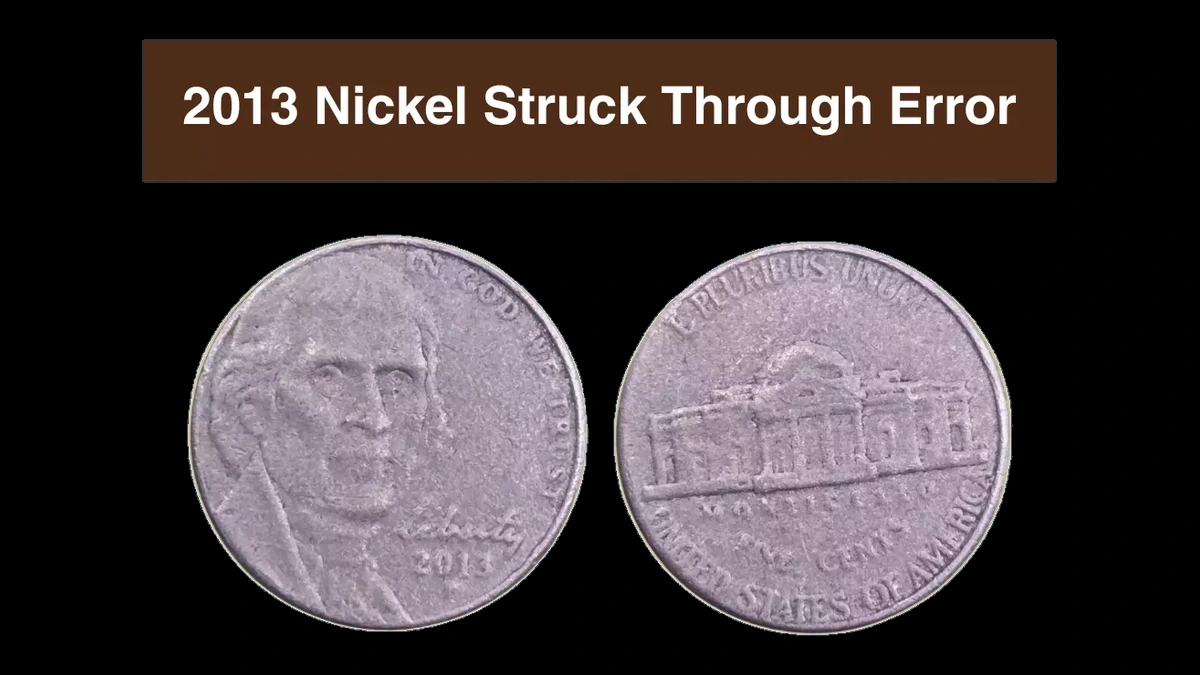
A reported 2013-P example has a struck-through feature without a firmly established object or location. Material between the die and blank can block design or impress its shape into the coin.
How to Identify
Follow the transition from sharp detail into the affected area under several lighting angles. Later impacts can displace metal, while scraping may leave fine lines through finished design.
Keep attached material untouched. Do not assign wire, cloth, or grease to the report without evidence from the actual impression.
What It’s Worth
Estimated values are $15–$450, from small weak spots to large clear interruptions. The range assumes a genuine mint-made feature.
The year guide reports $412 for a Philadelphia MS63 coin. That secondary account does not identify which material made the impression or authenticate an unrelated dent.
5. 2013 Nickel A Metal Flake Separates: Lamination Error
A thin layer can split within the nickel’s uniform alloy. The 2013-P report includes lamination but provides no exact position to transfer to another coin.
How to Identify
Look for a continuous separation beneath the flake rather than a film lying on top. Preserve an attached piece so its connection remains visible.
An orange core with separate outer skins would need a different explanation. A normal nickel has neither a copper core nor a silver-colored coating to lose.
What It’s Worth
Estimated values are $15–$650, with ordinary small flaws much closer to the lower end. The upper range requires a major clear separation and attractive condition.
The supplied year guide reports $620 for a Philadelphia lamination graded MS62. It is a secondary price report, not evidence of a missing clad layer.
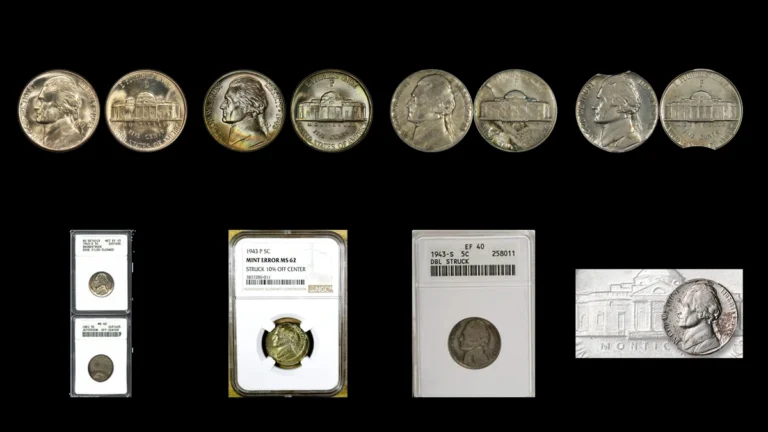
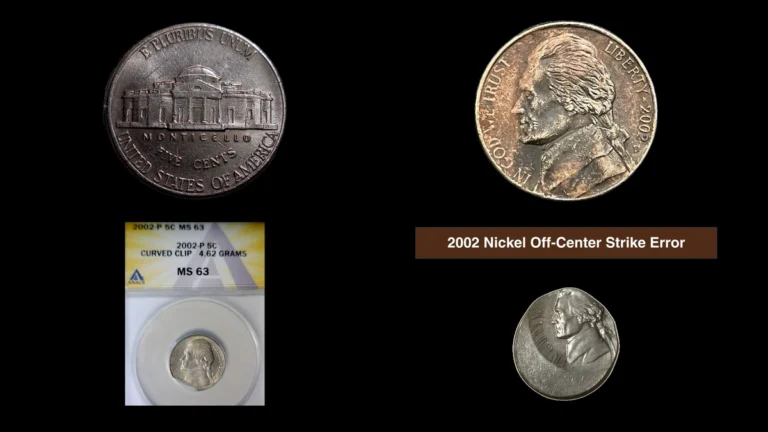
6. 2013 Nickel A Section of the Outline Is Absent: Clipped Blank Error
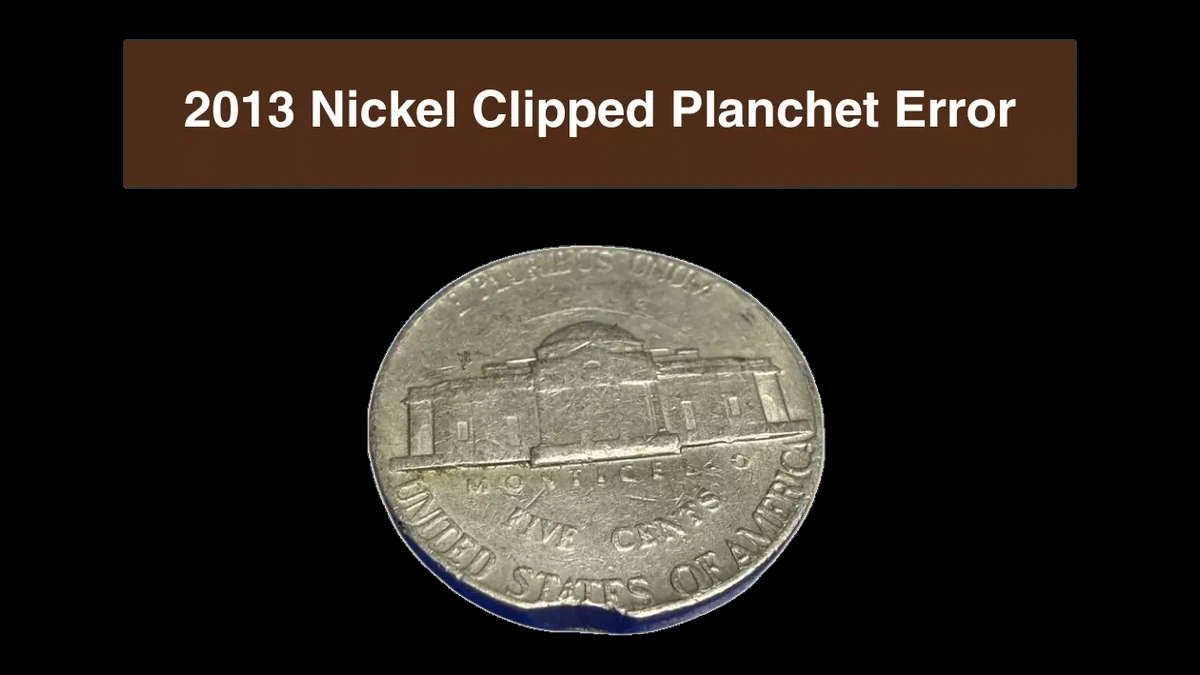
An incomplete blank can receive the nickel design around a missing section. Curved and straight gaps belong to the same broad clipped-planchet category.
How to Identify
Inspect both ends of the gap and the way adjacent design was struck. Saw lines or repeated file marks can indicate removal after minting.
The source establishes no specific mint or opening for every illustrated example. Opposite-rim weakness can support an original curved clip but does not authenticate it alone.
What It’s Worth
Estimated values are $15–$125 for genuine clips. Size, surface quality, and the clarity of the original boundary matter.
The year material gives about $75 as guidance for ordinary clipped examples without establishing the exact specimen. It is not a confirmed sale of the candidate being examined.
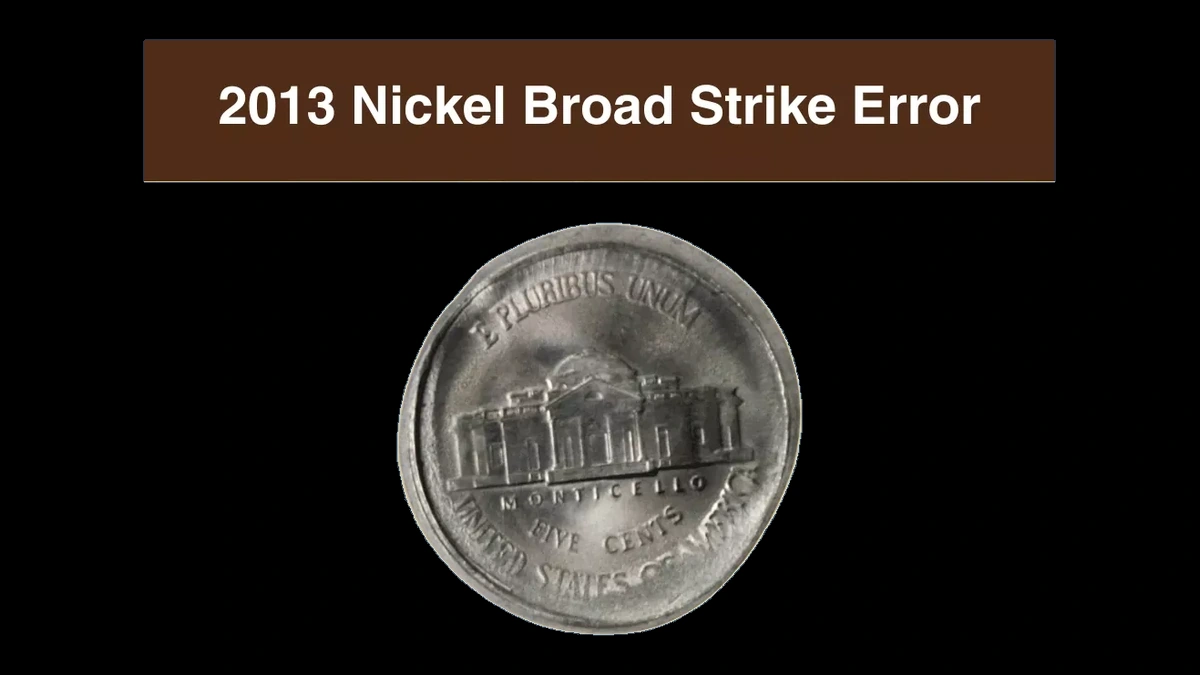
7. 2013 Nickel Complete Designs within a Wider Outline: Broadstrike Error
A broadstrike forms when the collar fails to limit outward metal flow. Both intended designs remain on the expanded coin, even if the border is uneven.
How to Identify
Follow the outer lettering on both faces before measuring the width. Loss of design beyond the metal points toward off-center striking instead.
Check for flattened letters and hammer or compression marks from later damage. The 2013 report gives no exact diameter or mintmark, and a normal smooth edge is not proof of collar failure.
What It’s Worth
Estimated values are $20–$100 for ordinary broadstrikes. An obvious original expanded border is more useful than a barely oversized outline.
The year material uses a 2017-P coin reported at $75 for comparison. That other-year amount is not a 2013 sale.
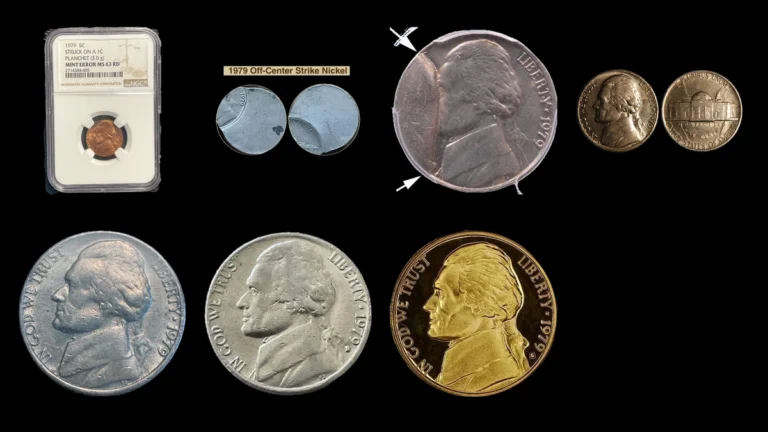
8. 2013 Nickel An Unstruck Crescent beside Missing Design: Off-Center Strike Error
A displaced blank can miss part of both dies. The result links a bare area of metal with intended details that fell beyond the opposite edge.
How to Identify
Keep the readable 2013 date and full outline together in photographs. Compare both faces against the same physical blank rather than a separately rotated crop.
The general report discusses possible displacement ranges but no individual measured percentage or direction. Inspect the bare surface for grinding or flattened lettering that could indicate later alteration.
What It’s Worth
Estimated values are $25–$300 for genuine modest through strong off-center strikes with an identifiable date. Attractive surfaces and readable details strengthen the comparison.
No specific 2013 auction record is supplied for this category. A lost date can limit demand despite a dramatic appearance.
9. 2013 Nickel A Transferred Image Needs Its Direction Checked: Counterbrockage Candidate Error
A counterbrockage is normally raised and forward-reading, often enlarged. A recessed backward brockage first forms, and that surface then transfers its design into another blank.
The 2013-D report uses the counterbrockage name but describes a backward hollow. Those conflicting details leave the identification unresolved.
How to Identify
Read the letters and assess their height under side lighting. Error-Ref’s explanation distinguishes the raised forward-reading result from a sunken mirror image.
A backward hollow instead needs assessment as brockage or later coin-to-coin damage. Include the ordinary face and edge so the transfer can be evaluated as part of one coin.
What It’s Worth
An identified example has an estimated value of $50–$300. The 2024 Mint Error News guide places ordinary Jefferson counterbrockages around $50–$200 across its condition categories.
The upper allowance here is an estimate for a stronger transfer. The disputed description does not support treating its $685 figure as a confirmed counterbrockage auction record.
Conclusion
On a 2013 nickel, a small extra doorway line needs a precise variety match, while a flake requires proof of separation within the alloy. An unusual outline should explain both the metal and the surviving design.
Keep secondary price reports separate from documented transactions. For the counterbrockage candidate, the first unresolved question is physical: whether the transferred design is raised and forward-reading or sunken and backward.