Rare 2021 Nickel Errors (List & Pictures)
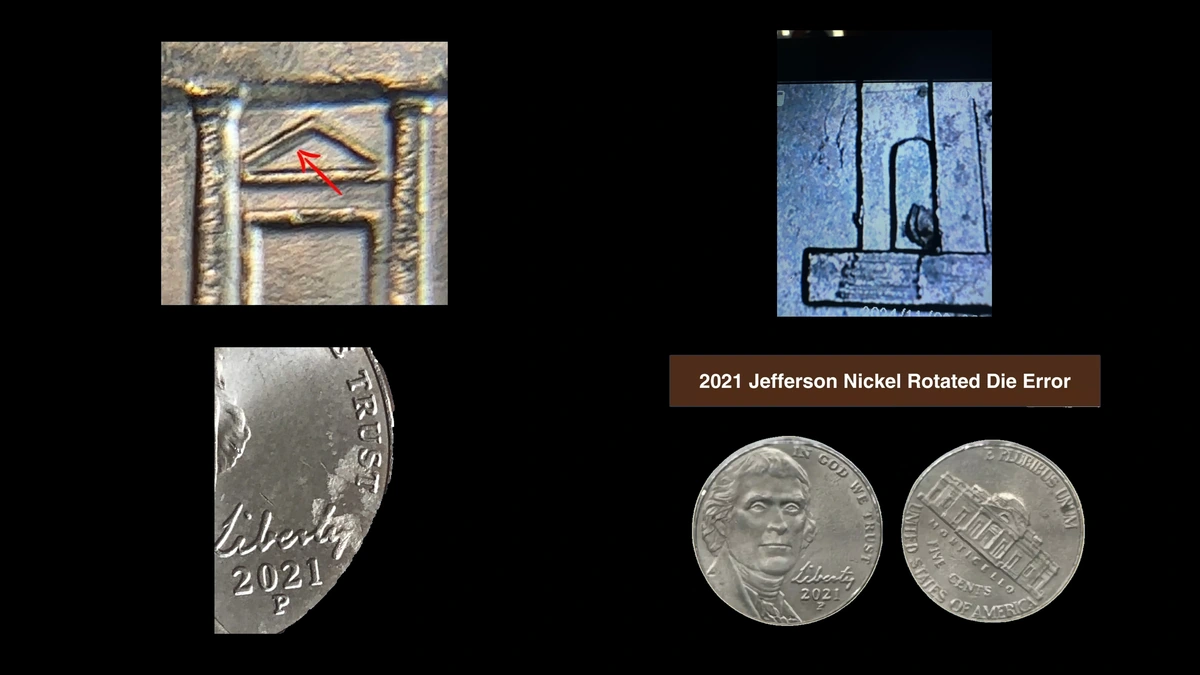
Monticello’s doorway is a useful starting point for 2021 nickel errors, but an extra raised shape there is different from a weak patch or a sideways reverse. Estimated values for the categories below run from $5 to $150.
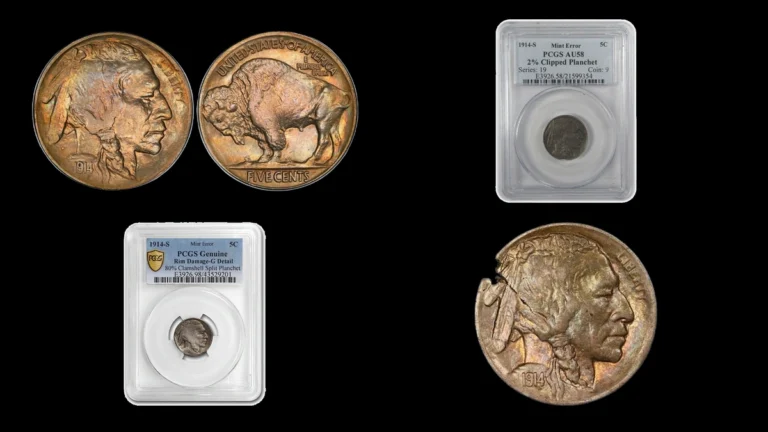
A related 1970-D nickel with debris-struck detail and major die breaks realized $94 in March 2023. That is a comparison from another year; inspect the small surface features before testing the coin’s alignment and overall color.
| What attracts attention? | Possible explanation | Estimated range |
|---|---|---|
| Extra detail inside the central doorway | Doubled reverse die | $10–$40 |
| Raised facial lines or little bumps | Die crack or chip | $5–$25 |
| Specific unusual marks on both faces | Hubbing induced damage | $15–$50 |
| Missing detail or a recessed patch | Struck through | $15–$150 |
| Opposing-design fragments on a proof | Reported proof die clash | $50–$100 |
| Monticello tilts after a controlled flip | Rotated dies | $20–$150 |
| Dark and silver-colored areas | Reported improper annealing | $25–$75 |
1. 2021 Nickel Added Detail in Monticello’s Doorway: Doubled Die Reverse Error
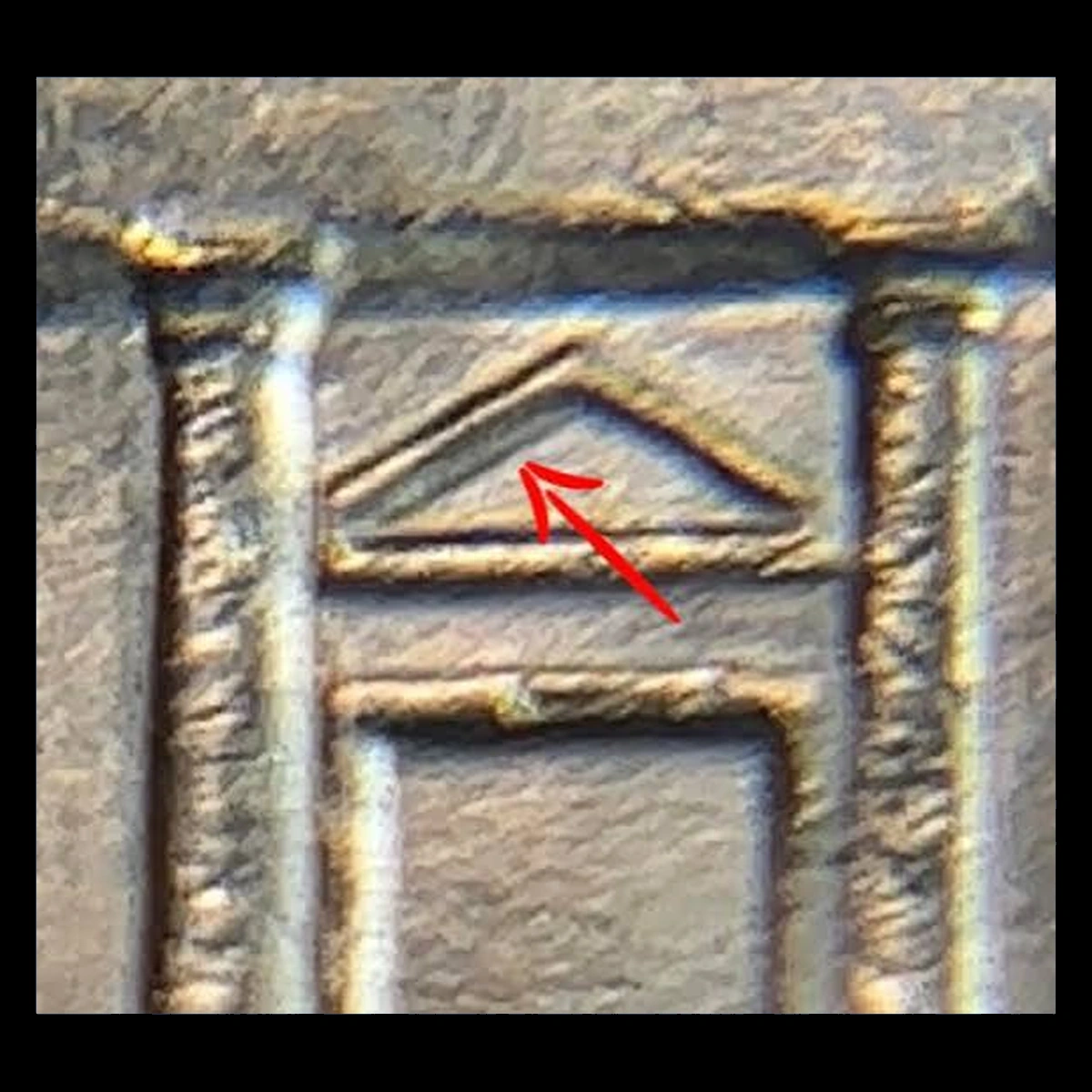
Several listed Philadelphia varieties have small raised additions at the central doorway’s upper frame or inside its opening. The rest of the building need not appear doubled.
Those repeated features originated while the die was made, so one normal blow can transfer them to a nickel. Movement during striking can create a different, flat shelf-like effect.
How to Identify
Confirm P below the date, then compare the doorway with the appropriate 2021-P listing at Brian’s Variety Coins. The extra shape must occupy the same location, rather than merely make the building look thick.
Take a straight-on view and change the light to confirm that the addition is metal rather than reflection. General softness across Monticello does not establish a doorway variety.
What It’s Worth
$10–$40 is an estimate for a clearly matched example with readable detail. The supplied evidence provides variety references rather than a completed 2021 auction sale.
Sharp small features and clean surrounding surfaces strengthen the comparison. Tiny doorway additions should not inherit prices from bold doubled lettering on unrelated older coins.
2. 2021 Nickel Raised Lines and Small Lumps: Die Crack and Chip Error
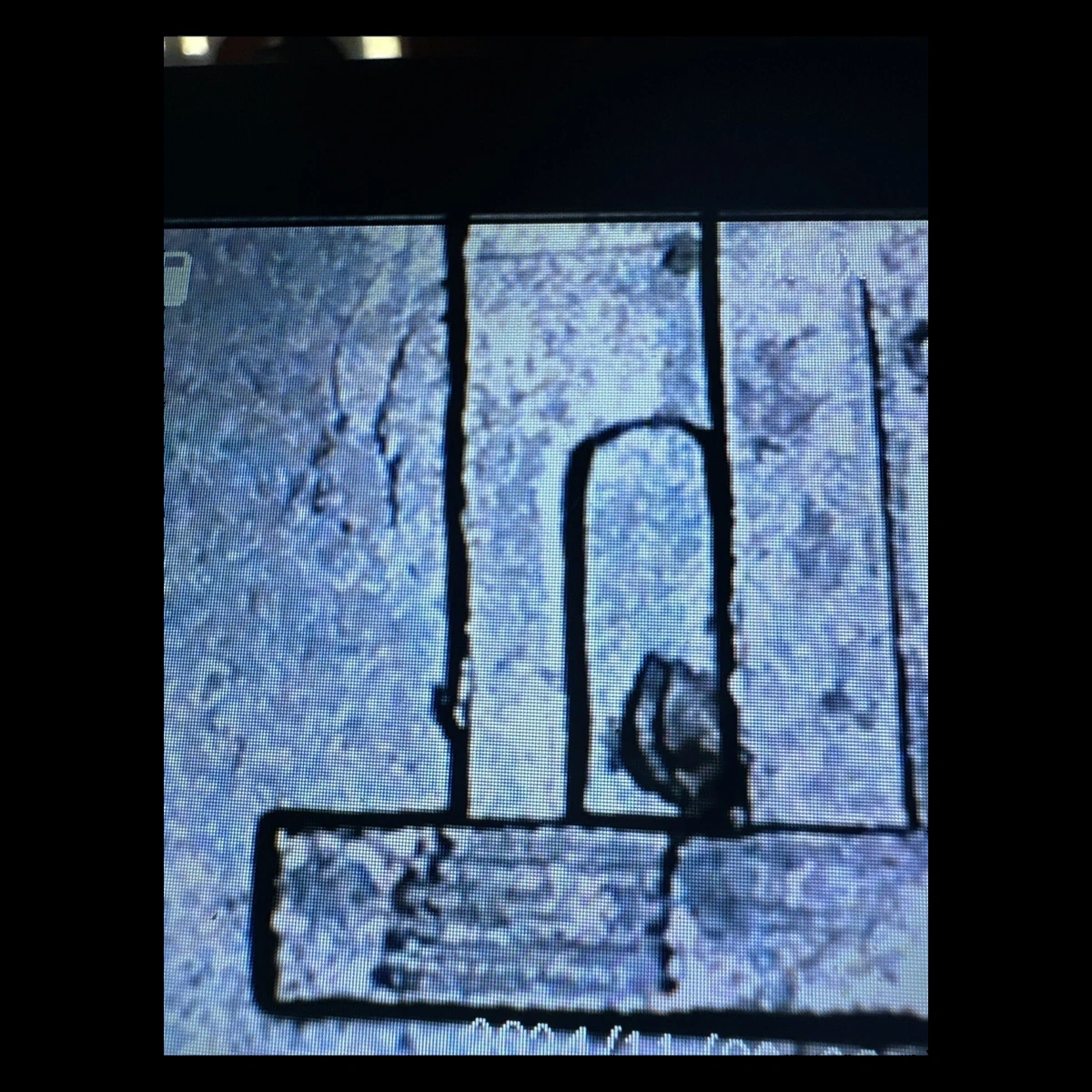
Philadelphia reports include marks near OF, bumps on Monticello and a separate eye-area chip. Denver facial lines above the eye and across the lips are commonly described with the Scarface nickname.
A crack in the die leaves a raised ridge, while a small piece missing from it can leave a solid bump. These interior features differ from a cud, a larger break joined to the outer rim.
How to Identify
Check the mintmark before selecting a position to compare. The Denver facial pattern should not be applied to every Philadelphia bump.
Use angled light to distinguish a raised line from the cut center of a scratch. At the edge, an impact may push metal onto the face and imitate a die-break patch.
What It’s Worth
$5–$25 is an estimated range for visible small cracks or chips on otherwise ordinary 2021 nickels. Several tiny marks do not multiply the whole-coin value.
Published asking prices include about $5 for small P chips, $10–$15 for the OF crack and $20 for the Denver facial marks. These are offers, not confirmed auction results.
3. 2021 Nickel Matching Unusual Shapes on Both Faces: Hubbing Induced Damage Error
Some marks originate before the die ever strikes a coin. Hubbing induced damage, shortened to HID, can form when trapped material interferes as a hub presses the design into a working die.
A 2022 CONECA report describes a 2021-P with such features on both faces. This is damage associated with making the dies, separate from debris pressed directly against a coin during its strike.
How to Identify
Compare each shape and its position relative to nearby design with the illustrated report. Two-sided random damage is not enough to establish the same toolmaking problem.
Another coin repeating the exact marks can support a die-borne origin. Later impacts on unrelated coins would not be expected to reproduce the same small shapes and positions.
What It’s Worth
$15–$50 is an estimated range for a specialist-matched example, including a clear two-sided coin. It is not a recorded sale of the specimen published by CONECA.
A convincing illustrated match makes the description more useful to a buyer. Marks on both faces still belong to one coin and one valuation.
4. 2021 Nickel Weak Detail or a Local Hollow: Struck Through Grease or Debris Error
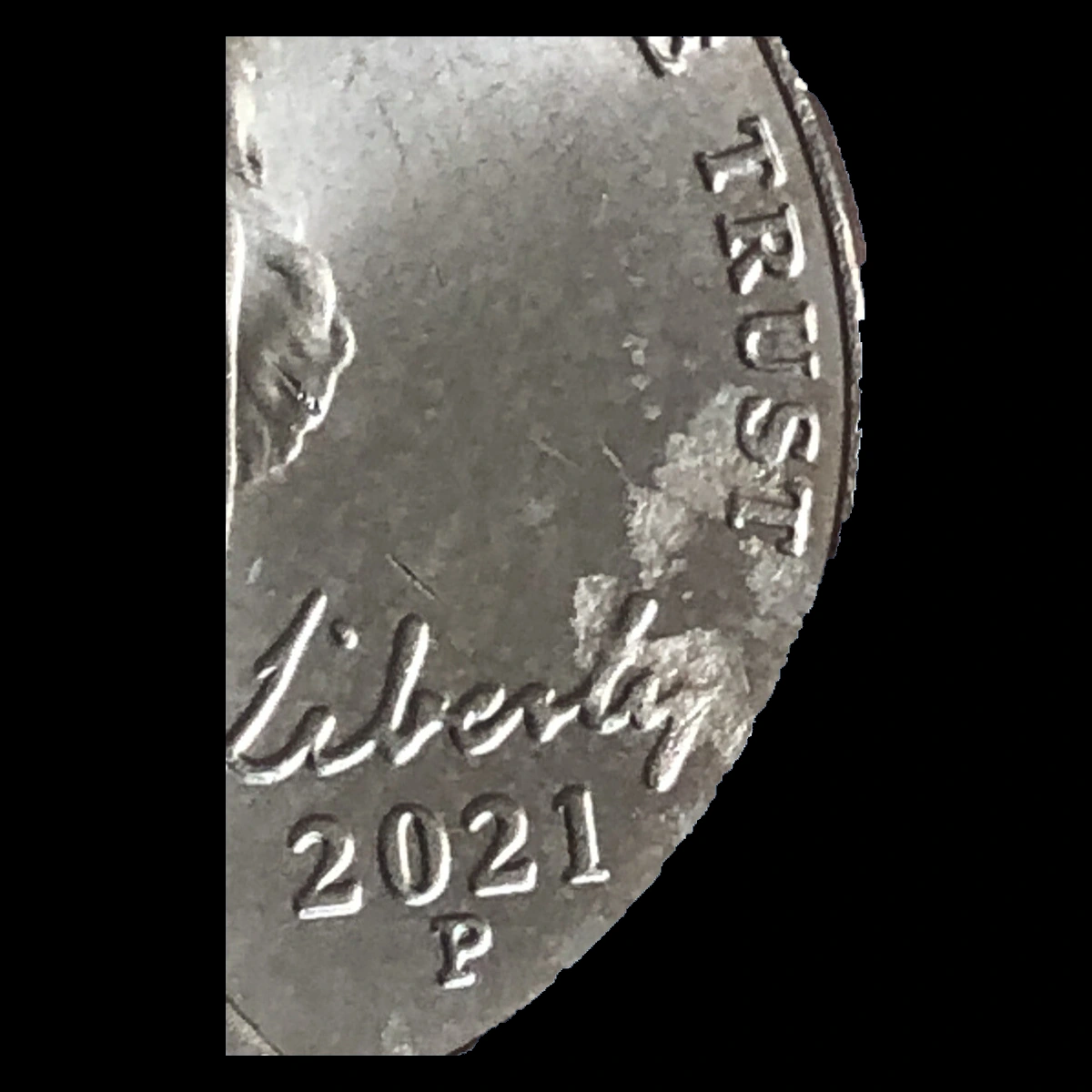
Grease can block fine die detail, while a harder obstruction may leave a more defined depression. Reported 2021 effects include weak Monticello detail and lettering on Denver coins, as well as interruptions on the portrait side.
How to Identify
Compare the affected area with immediately adjacent sharp detail. Wear generally smooths exposed high points across the design, while a localized blockage can leave one patch weak and its surroundings intact.
For a hollow, inspect the boundary and opposite face for signs of a later impact or squeeze. Leave any retained material in place rather than cleaning out the mark.
A loose, intact nickel normally weighs about 5.00 grams and measures 21.21 millimeters, with a plain edge. A blocked strike can agree with those measurements because it need not remove metal.
What It’s Worth
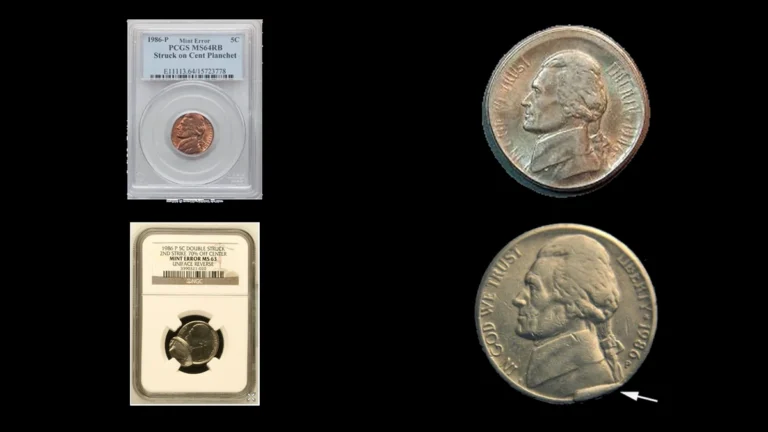
$15–$150 is estimated for genuine struck-through effects, with faint grease patches generally below large clear impressions. The 1970-D ANACS AU50 comparison sold for $94 in March 2023.
That coin had light wear, major die breaks and a strike through debris. Its price covers the combined coin, rather than the debris mark alone or a documented 2021 sale.
5. 2021 Nickel Opposing-Design Fragments on a Proof: Reported Die Clash Error
A year guide lists die clash as a possible 2021-S proof error without identifying a particular specimen. A clash occurs when the dies touch without a blank and acquire fragments of each other’s design.
Later coins can reproduce those fragments alongside their intended images. A proof is a specially made collector coin, so its reflective surfaces require careful handling during examination.
How to Identify
Confirm the S mintmark and proof characteristics before comparing the proposed clash. A shiny P or D coin is not thereby a San Francisco proof.
The unusual trace should match a recognizable portion of the opposing design in a plausible position. Fine parallel polishing lines or an impact mark do not establish that relationship.
The nickel remains copper-nickel even when included in a Silver Proof Set. Its set packaging does not change the coin’s metal into silver.
What It’s Worth
$50–$100 is a conditional estimate for a confirmed 2021-S proof with a clear clash. The guide’s $50 starting figure is not a completed sale.
Visible transferred design and preserved reflective surfaces matter to the comparison. Ordinary proof value alone cannot support a separate error premium.
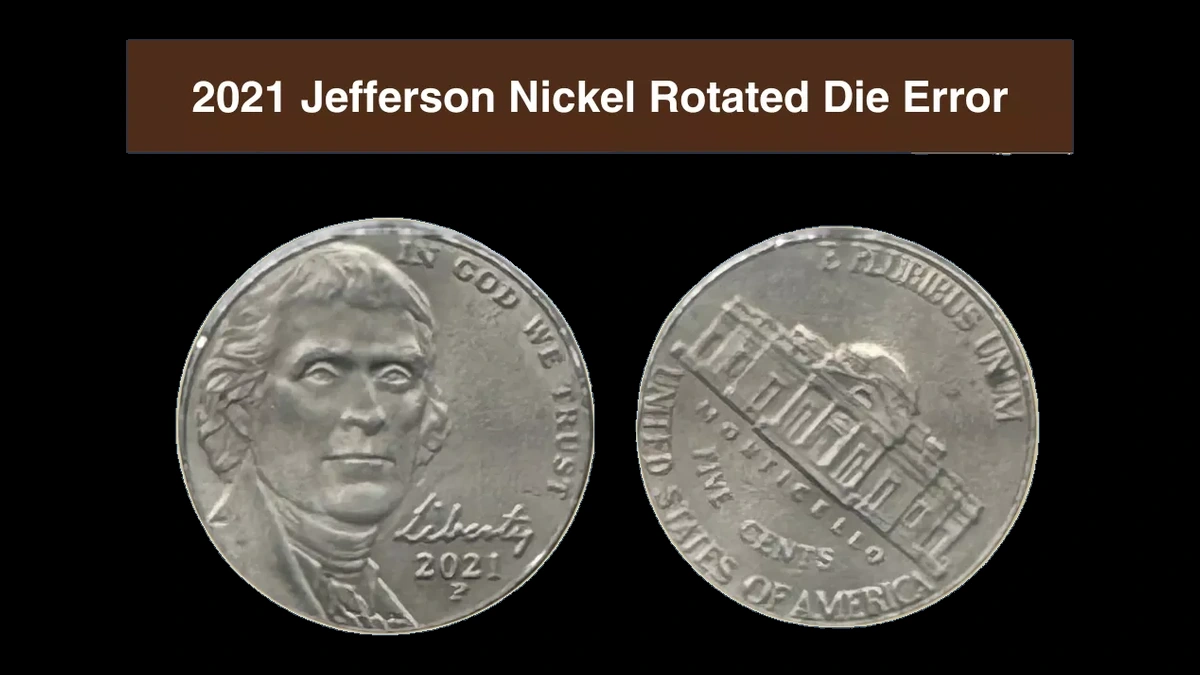
6. 2021 Nickel Monticello Tilts after the Coin Is Flipped: Rotated Dies Error
A coin can have complete centered designs while the reverse is turned relative to the obverse. The error concerns the rotational relationship of the dies, rather than blank placement beneath them.
A year guide reports rotations around 30–45 degrees and discusses stronger examples. Those figures should not replace measurement of the coin being examined.
How to Identify
Hold the coin securely with Jefferson upright and flip it top to bottom without a sideways twist. Monticello should then be upright; measure any remaining tilt and repeat the test.
A side-to-side turn normally leaves the reverse upside down, so keep that motion separate from the top-to-bottom test. Record both views with the coin fixed in the same holder to avoid misleading camera rotation.
What It’s Worth
$20–$150 is an estimated range for clearly measured rotations. The guide places modest ungraded examples around $20–$50, with larger effects assigned higher estimates.
These are guide figures rather than a supplied completed sale. A stable, demonstrable angle is more useful than a photograph in which the coin itself may have turned.
7. 2021 Nickel Dark Areas beside Silver-Colored Metal: Improper Annealing Error
A reported 2021-P has dark and silver-colored surface areas attributed to improper annealing. Annealing is the heating used to soften blanks, and a process-related surface change can persist through the strike.
How to Identify
Inspect the boundary under neutral light and compare both faces with the edge. Crust, pits, scratches or an added coating may point toward later exposure or treatment.
Keep the surface dry and uncleaned for assessment. Color alone cannot tell whether heat or chemicals acted before striking or after the coin entered circulation.
What It’s Worth
$25–$75 is an estimate once the change is identified as mint-made. A year guide reports 2021-P examples around $45–$50 but supplies no directly matched auction record.
Use that information as a guide rather than a guaranteed sale price. An ordinary dark stain does not receive the range merely because it covers a large area.
Conclusion
A specific doorway match is stronger evidence than generally thick detail, just as a repeatable measured tilt is stronger than a crooked photograph. Let the visible feature determine which comparison is relevant.
The documented HID report and the possible proof-clash category have different levels of specimen evidence. Preserve that distinction, keep asking prices separate from sales, and leave unusual surfaces untouched while their origin is assessed.