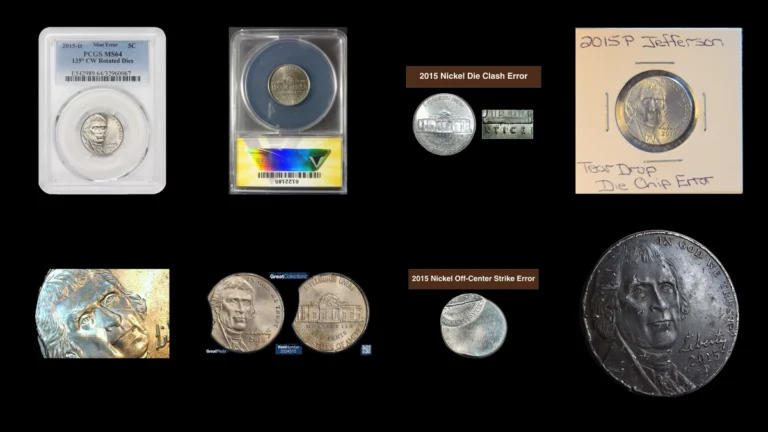
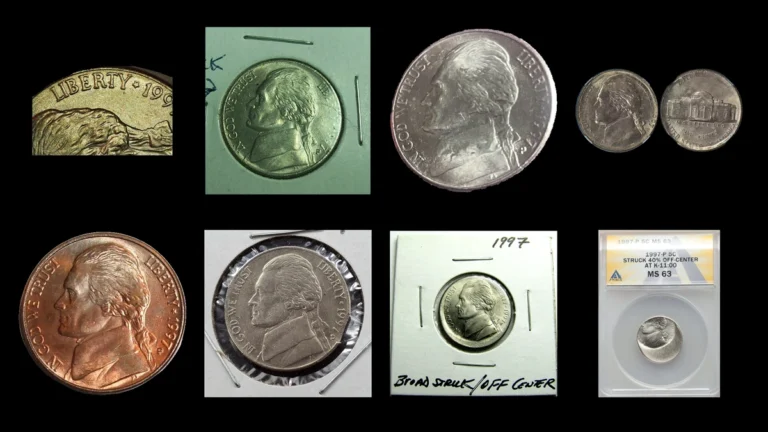
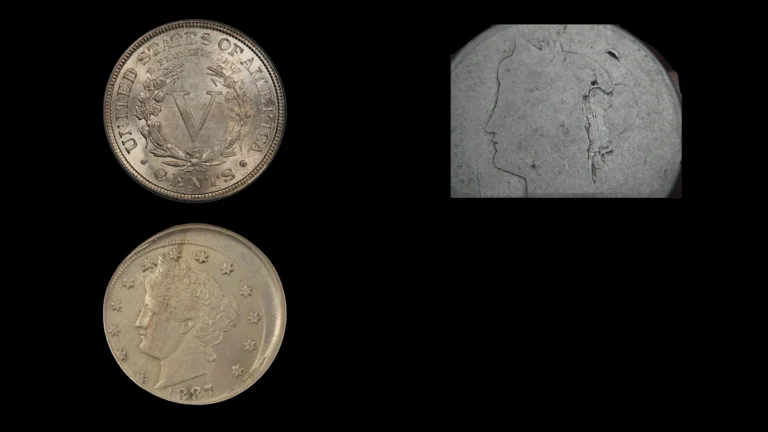
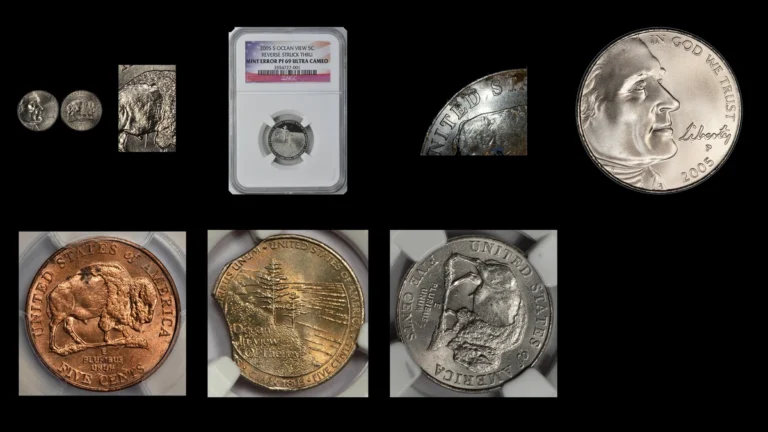
Rare 1950 Nickel Errors (List & Pictures)
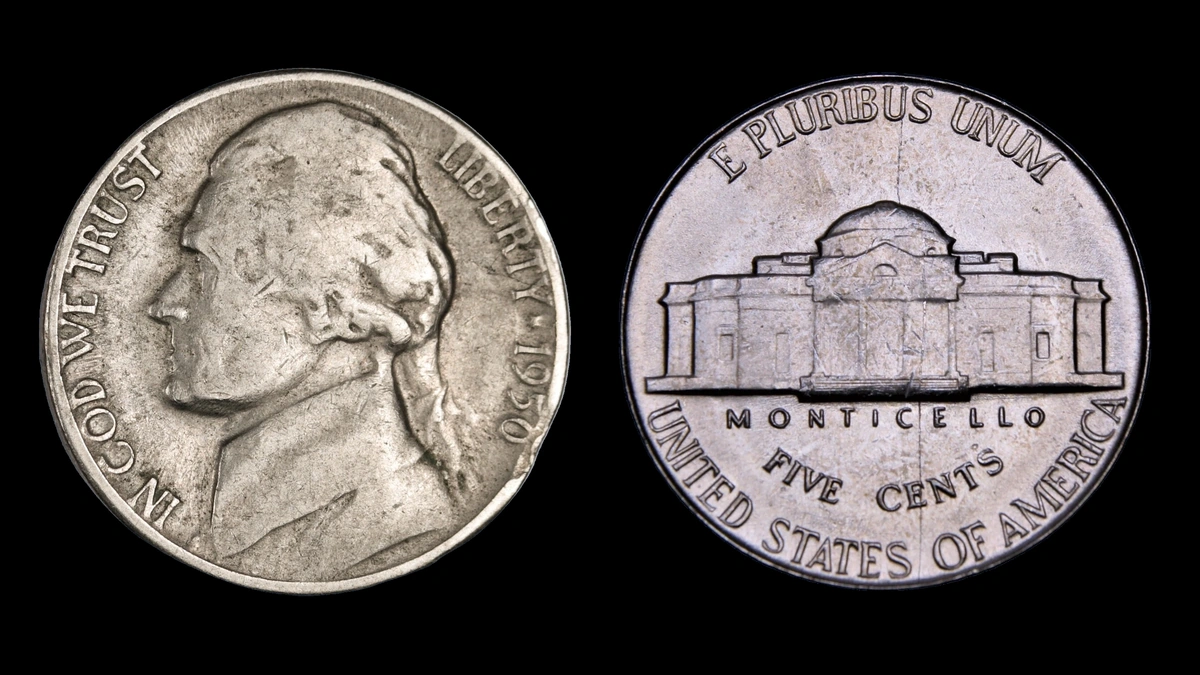
A smaller silver disc offers one way to recognize 1950 Jefferson Nickel errors. The reported May 2022 auction result for a Philadelphia nickel on a silver dime blank is $2,040.
Estimated values in this guide span $5–$3,000. Examine metal and outline first, then distinguish repeated designs, raised cracks, and extra mintmark strokes using the specific examples below.
1. 1950 Nickel Jefferson Appears on a Small Silver Disc: Dime Planchet Error
The nickel press can strike a blank intended for a smaller denomination. A Philadelphia example from the Fred Weinberg Collection was cataloged as struck on a silver dime planchet and graded PCGS MS62.
The contemporary dime blank contained 90% silver. Its smaller starting size could not accommodate the nickel design in the usual way.
How to Identify
A normal nickel weighs 5 grams and measures 21.21 millimeters, with a plain edge. A silver dime blank starts near 2.50 grams and 17.91 millimeters, although striking can enlarge its outline.
Those dime figures are standards, not published measurements of the MS62 specimen. Record the candidate’s actual weight before interpreting its color.
Inspect the outer design and edge for natural cropping rather than trimming or coating. Non-destructive composition testing may be needed because silver-colored plating alone cannot establish a dime blank.
What It’s Worth
Comparable genuine silver-dime-blank nickels are estimated at $800–$3,000. The cataloged Philadelphia MS62 example is reported at $2,040 in May 2022.
Readable date detail, preservation, and the visible mismatch of design and blank affect the whole value. These figures are not simply prices for the silver content.
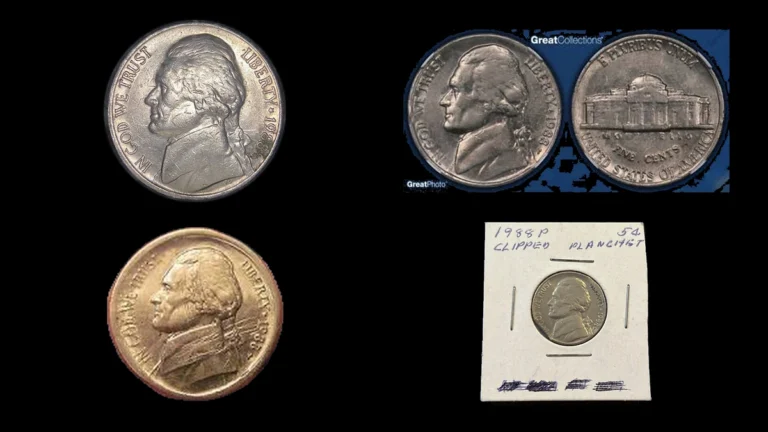
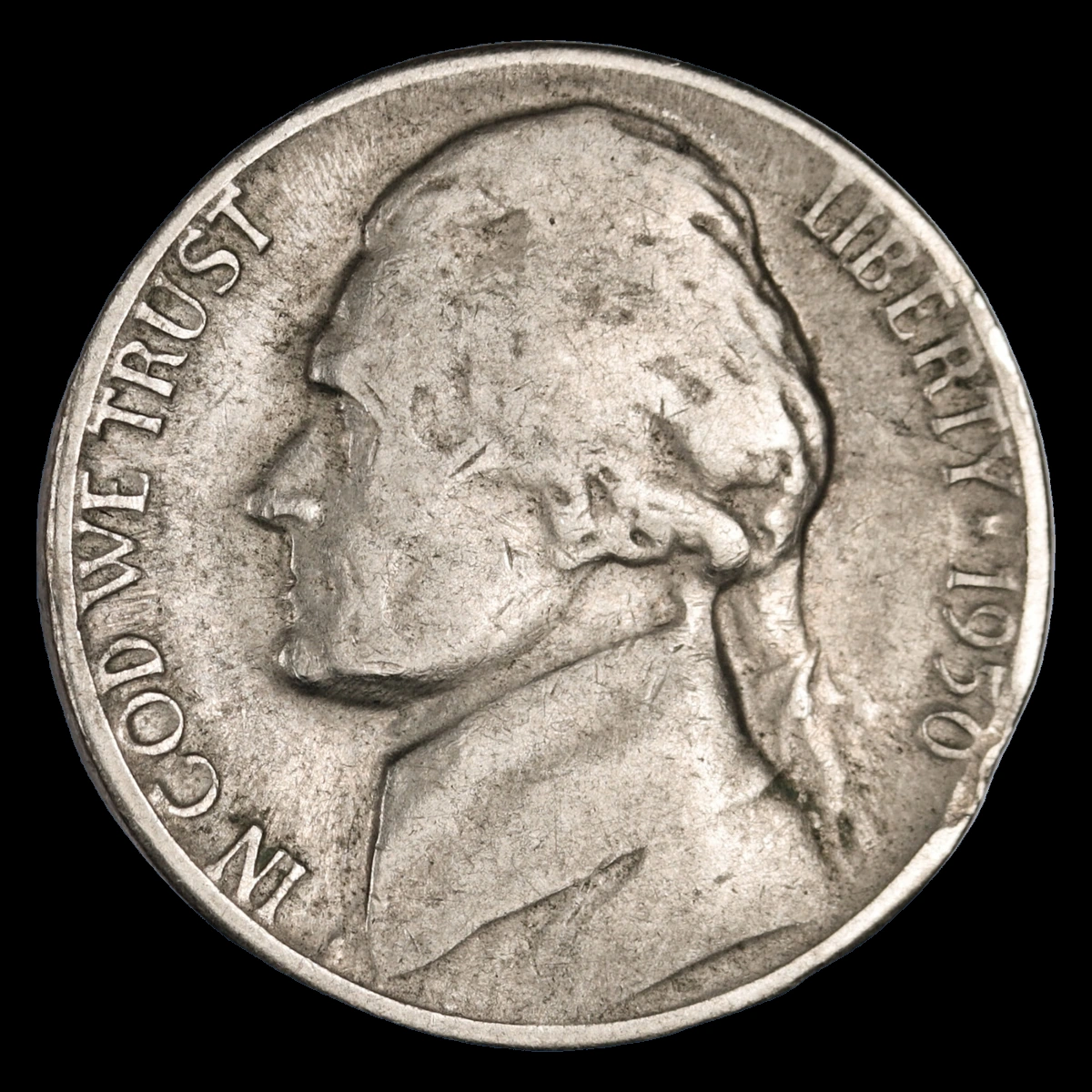
2. 1950 Nickel A Rim Gap or Straight Shortage Removes Metal: Clipped Blank Error
Two reported Denver clips need separate comparisons. The PCGS MS64 rim-clip coin has an opening near 8 o’clock, while an ANACS MS65 straight-clip coin weighs 4.91 grams.
Both concern blanks that were incomplete before striking. The straight boundary and recorded weight do not describe the same specimen as the 8 o’clock gap.
How to Identify
Use the whole coin or holder description to establish which specimen is being compared. The MS64 rim-clip listing supplies the clock position, not the 4.91-gram measurement.
Examine the endpoints for naturally struck rim detail approaching the shortage. Sharp cuts through finished lettering, burrs, or filing marks can indicate later removal.
Opposite-rim weakness can support a clip, while weight loss only establishes that some metal is absent. The slightly light straight clip especially needs convincing original boundary evidence.
What It’s Worth
Genuine Denver clips are estimated at $30–$400 across the reported general quality levels. Shape, visibility, and preservation influence their appeal.
A 1974 nickel with two curved clips sold for $132 in July 2021. That other-year result prices neither of the two 1950-D specimens directly.
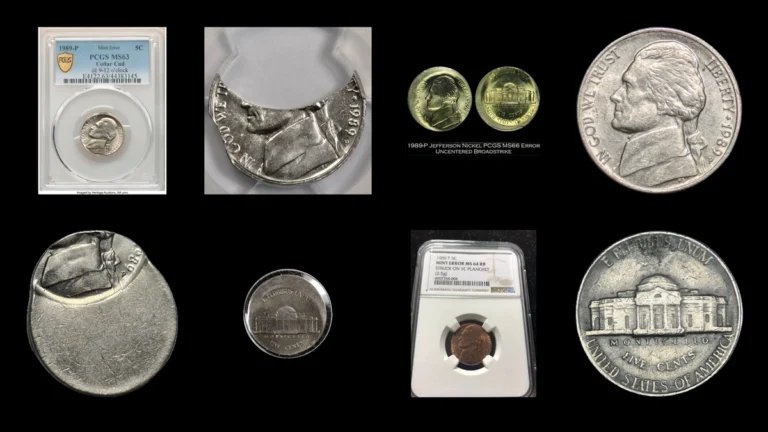
3. 1950 Nickel A Large Unused Crescent Borders the Strike: Off-Center Error
The documented Philadelphia coin combines a strike 65% off center with a reverse die crack. PCGS graded it MS64.
Most of the blank missed the normal striking area, leaving untouched metal beside the surviving design. Separate Denver off-center reports do not establish the same displacement or crack.
How to Identify
Read the date and compare both faces at the boundary between struck and unused metal. They should fit the same misplaced blank, rather than an uneven rim limited to one side.
Inspect the reverse crack independently as a raised line. The listing gives no clock direction and does not connect this crack to the separate step-crack report below.
Off-center striking need not remove metal, so a dramatic outline can still retain roughly normal weight. Check the edge for filing or other later alteration.
What It’s Worth
Genuine dated 1950 off-center nickels are estimated at $50–$1,000. A clear date and original surfaces can matter more than the amount of bare metal.
Greysheet’s auction records report $528 in July 2022 for the MS64 Philadelphia coin with the 65% displacement and reverse crack. That is one price for the combination, not an off-center amount plus another full crack value.
4. 1950 Nickel Complete Lettering Lies within a Wider Border: Reported Broadstrike Error
A broadstrike forms when the collar fails to contain the blank during the blow. Metal spreads outward while the entire intended design remains on the enlarged disc.
The 1950 reports establish no single mint, finish, or diameter for this category. A naturally plain nickel edge does not supply evidence merely by lacking grooves.
How to Identify
Trace all the outer wording on both sides and confirm that it fits within the expanded metal. Design running off the edge beside an unused crescent calls for an off-center comparison.
Check Jefferson, Monticello, and the border for crushed detail or repeated hammer marks. Later flattening can widen a nickel without a manufacturing error.
What It’s Worth
A confirmed ordinary-strike 1950 broadstrike is estimated at $25–$500. Clear expansion and preserved surfaces support stronger comparisons than a slight uneven border.
A 1974 Philadelphia MS64 broadstrike sold for $24 in August 2021. It provides context for a modest different-year example, not a fixed value for this report.
5. 1950 Nickel Repeated Designs Remain inside a Round Edge: Reported In-Collar Double Strike Error
A coin can move between two blows while the collar still limits its outline. Recognizable parts of Jefferson or Monticello may then overlap in different positions.
A year-page report describes a 1950 ANACS VF30 example without establishing its mint or exact rotation. The proposed double strike requires actual repeated impressions.
How to Identify
Separate relative orientation from strike count. A tilted or upside-down reverse can result from die rotation without any second blow.
Find two recognizable design positions and trace where one impression flattened the other. An ordinary round outline is compatible with the collar containing both strikes, but it cannot prove their existence.
Check the edge for squeezing or joined pieces and keep both faces in the comparison. Vague distorted letters provide less evidence than a coherent second portrait or building segment.
What It’s Worth
A genuine example with clearly repeated design has a conditional estimated value of $200–$1,500. The strength of the visible sequence matters despite the wear implied by VF30.
The year page reports $756 for its example without a dated auction record. That reported amount establishes neither a specific mint nor a turning angle and should not be treated as a fully documented transaction here.
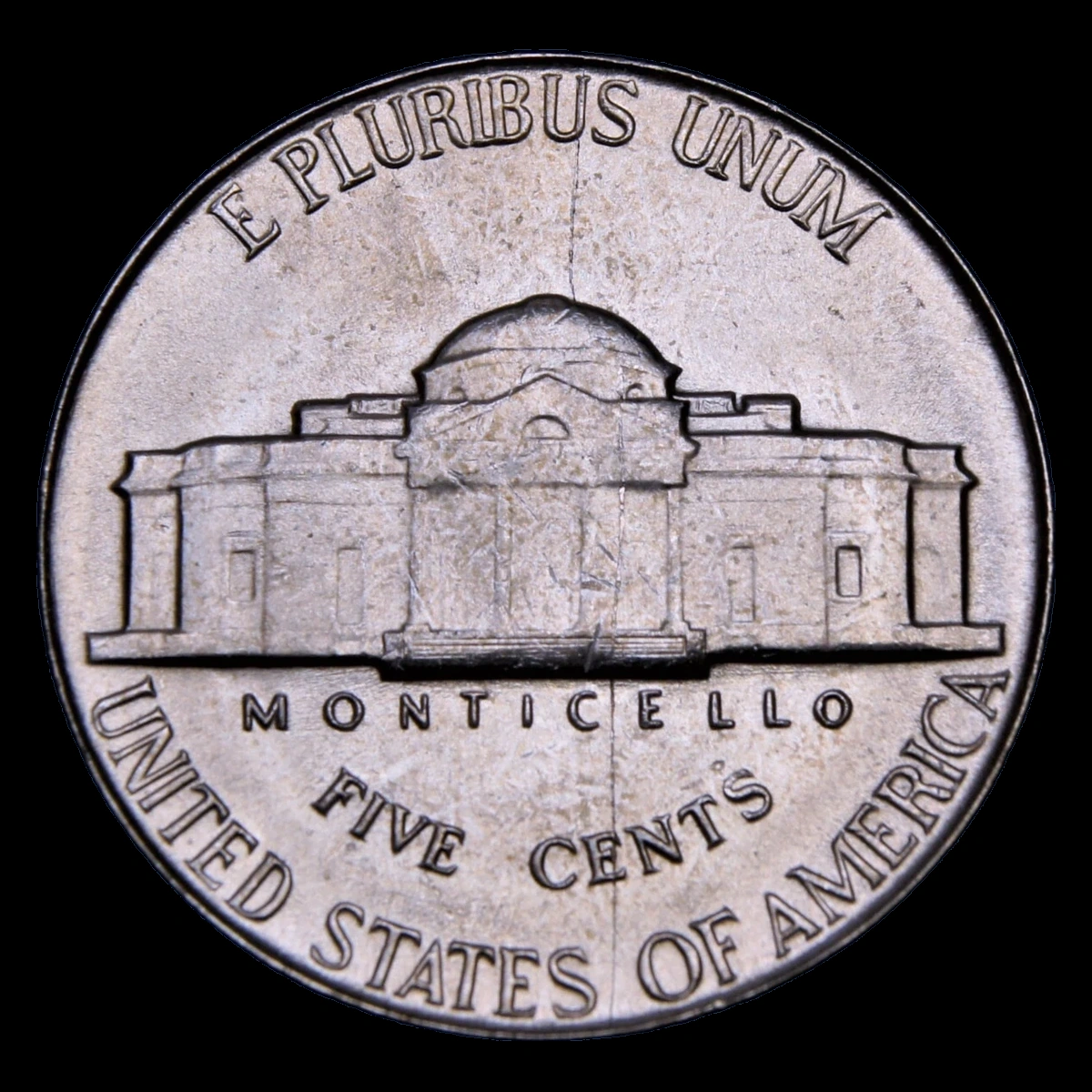
6. 1950 Nickel A Raised Line Crosses the Steps: Reverse Die Crack Error
A collector reports a crack through Monticello’s steps on a Philadelphia nickel. The line formed when metal entered a narrow opening in the die during striking.
The separate coin with a large off-center strike also has a reverse crack. Its listing does not establish that both pieces share the same crack path.
How to Identify
Use side light to follow the line across the steps only as far as it remains visible. Do not extend the reported path across the entire building without evidence on the coin.
A crack produces a ridge, while a scratch generally leaves a central cut with possible raised lips. Examine adjacent surface and edge damage to distinguish a later impact.
What It’s Worth
Ordinary 1950 nickels with clear small die cracks are estimated at $5–$100. A strong visible ridge on attractive surfaces compares better than a faint obscured line.
The 65% off-center coin’s price belongs to a much more dramatic combined error. Its value cannot be used as a crack-only comparison for an otherwise normal nickel.
7. 1950 Nickel Another D Stroke Shows at the Mintmark: Reported Repunched Mintmark Error
A D-over-D results when workers apply the mintmark punch to the die in more than one position. Part of the earlier letter can remain beside the final one.
The 1950 report does not establish a specific direction or cataloged pattern. A thick-looking D therefore needs a better match before it supports the attribution.
How to Identify
Find the D to the right of Monticello and compare any extra stroke with the normal letter’s straight and curved parts. The mintmark is not beside the front date on this issue.
Change the light to separate rounded extra detail from a flat ledge or glare. A seller’s numbered identification needs the same recognizable extra-letter pattern in a reliable comparison.
What It’s Worth
An identified 1950-D repunched mintmark is estimated at $20–$250 across ordinary collectible examples. The underlying Denver coin forms part of that whole value.
Clear curves on an attractive coin generally provide a stronger comparison than a worn ambiguous bump. The range does not assign a premium to every unusually thick D.
Conclusion
The 1950 reports range from a tiny raised step crack to a nickel design on a silver dime blank. Match the actual feature, mint, and condition before selecting a price range.
Keep the Denver clips’ separate positions and measurements distinct, and do not confuse reverse rotation with another strike. For the silver-blank candidate, composition and actual measurements must support the visible mismatch rather than relying on silver color alone.